REVIEW · SAPA
2D1N Buffalo trek by Hmong Sister House and Trekking
Book on Viator →Operated by Hmong Sister House and Trekking · Bookable on Viator
Two days, one very different side of Sapa. This trek by Hmong Sister House and Trekking takes you through forests, terraced rice paddies, and ethnic villages, with an overnight at an authentic family home connected to buffalo-raising. You’re hiking in “their footsteps,” not just chasing views.
I especially like two things. First, the trip is guided by an English-speaking H’mong guide (often Li), who shares everyday details and family stories as you go—how people live, work, and keep traditions while also adapting. Second, the logistics are genuinely helpful: pickup from the bus station around 7am, luggage drop at Zizi homestay, and a hot shower plus breakfast cooked by Zizi before you start walking.
The main consideration is the physical side. It’s listed as moderate fitness, with trekking over village paths and farm areas, so if you want flat, easy walking or very slow pacing, ask about route options ahead of time.
In This Review
- Key highlights you can plan around
- Why a buffalo-house night in Sapa feels different than a normal homestay
- Day 1: 7am pickup, luggage drop at Zizi homestay, and a real start
- What to expect on Day 1 (and where it can feel tiring)
- Day 1 trekking theme: forest, farms, and the “co-existing” reality
- Day 2: sunrise pace, rice fields, and Red Dao village time
- The waterfall finish: why it’s a great last-day reward
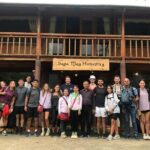
- Private group energy (and why it matters on a trek)
- Pickup, start window, and how to avoid first-day stress
- What makes the price feel fair: $110 for 2 days of guided trekking
- Who should book this trek (and who should think twice)
- Booking smart: when planning helps (because the mountains don’t wait)
- FAQ
- FAQ
- How long is the Buffalo trek?
- How much does it cost?
- Where does the trek start and end?
- Is pickup included?
- What’s included for meals on the trek?
- Is this tour private?
- What fitness level do I need?
- What language will the guide speak?
- Does the tour run in all weather?
- What is the cancellation policy?
- Should you book this 2D1N Buffalo trek?
Key highlights you can plan around
- Overnight at a family Hmong house connected to buffalo-raising, giving you real village life for one night
- English-speaking H’mong guiding with personal stories from guides such as Li
- Pickup near the bus station around 7am, plus time to rest, shower, and eat breakfast at Zizi homestay
- A Day 1 route that moves through Hau Thao village life, including animals co-existing with residents
- Day 2 sunrise start with early rice-field activity and a stop in a Red Dao village
- A waterfall day at the end of the trek (because the full experience isn’t only about villages)
Why a buffalo-house night in Sapa feels different than a normal homestay
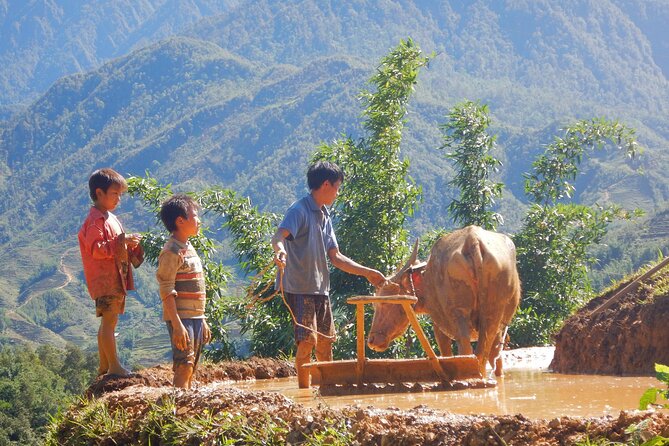
Most homestays are built to be cozy. This one also feels useful. The focus is on how Hmong families manage livestock and daily routines in the mountains, and that shows up in where you sleep and what you see on the paths leading to the family.
The overnight part matters for your understanding. When you stay in the same family space where people care for animals and move through their day, you notice small things: how work shapes timing, how the household is organized, and how village life connects to the land. You’re not just passing through for a photo and leaving before things get busy.
There’s also a person-centered angle. The experience is described as created by Zizi, and breakfast is cooked by Zizi. That kind of personal ownership often means the schedule and tone feel steady instead of rushed. In a region where a lot of tours are “transport-you-and-stand-there,” this one is more like: follow the rhythm for a couple of days.
You can also read our reviews of more hiking tours in Sapa
Day 1: 7am pickup, luggage drop at Zizi homestay, and a real start
Your day begins with a pickup around 7am from the bus station. This is one of those small details that changes the whole experience. If you’ve arrived in Sapa and then had to figure out transport, you’ll know how quickly “starting late” turns into “feeling behind.”
Once you arrive at Zizi homestay, you can drop your luggage and reset. The tour includes time for a hot shower and a breakfast cooked by Zizi. After that, you start trekking with enough energy to enjoy the walk instead of just surviving it.
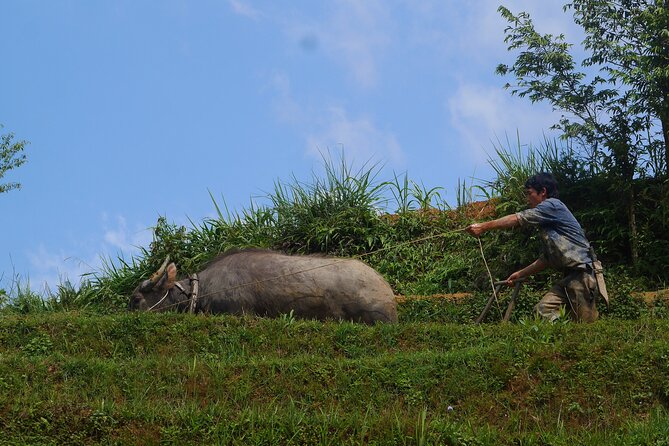
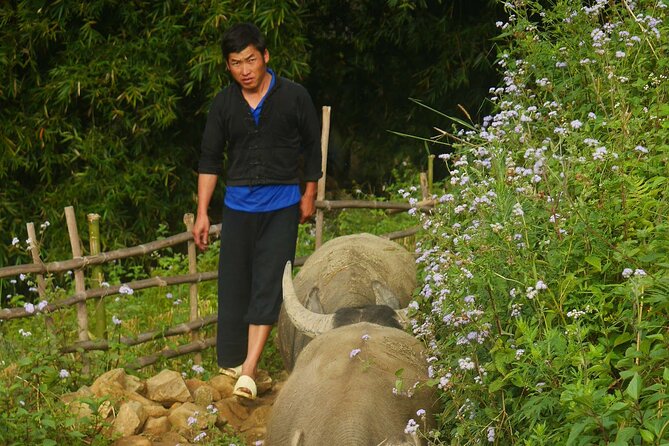
From there, the trek moves out from Hau Thao village. The idea here is simple: you follow daily life in an area where Hmong minorities live among working farms. You’ll explore villages and see traditional life up close, including animals that live alongside residents. That animal-life detail isn’t just “cute.” It’s part of the whole reason buffalo-raising is central to this trek. You begin to understand why certain paths and schedules matter.
What to expect on Day 1 (and where it can feel tiring)
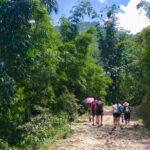
Day 1 is built around community and movement. You walk through villages, you eat lunch prepared by the guide, and you keep moving through mountain areas—forest paths and farm areas—so the countryside is not just scenery. It’s the setting for people’s routines.
If you’re a fast walker, you might be tempted to push ahead. Don’t. This trek works best when you take time to look, ask, and go at the guide’s pace. The route includes both village areas and natural paths, so footing can vary. Plan on wearing shoes that work on uneven ground and won’t make you regret every step.
Day 1 trekking theme: forest, farms, and the “co-existing” reality
Sapa’s big draws are views and rice terraces—but what makes this trek memorable is that it connects those elements to lived practice.
You’ll pass through a mix of:
- village areas where people are actively working and caring for livestock
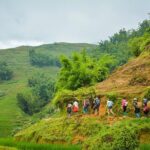
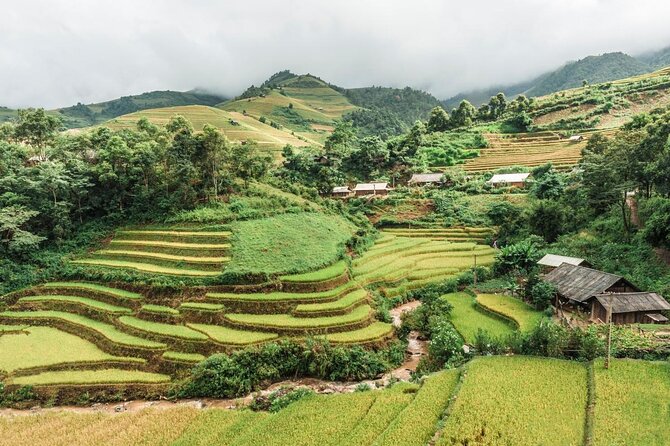
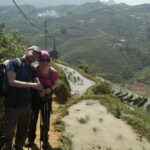
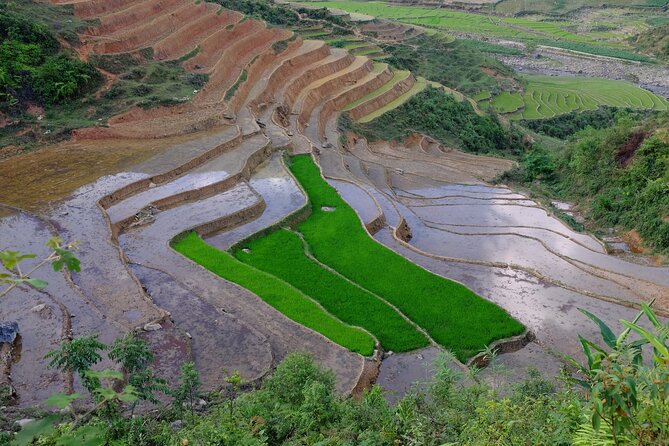
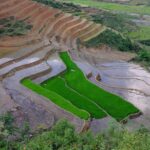
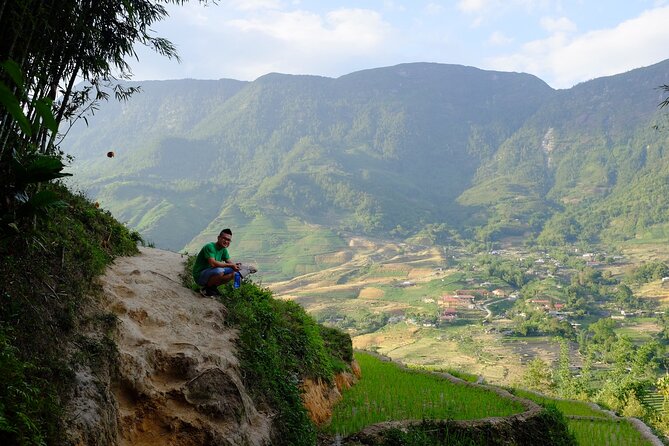
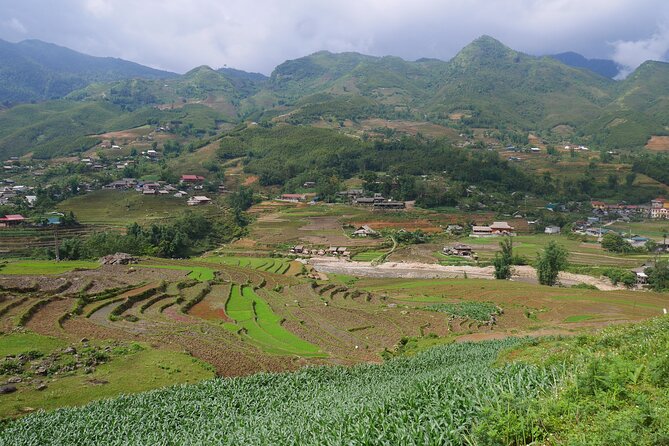
- terraced farming scenes that show how agriculture shapes the mountainside
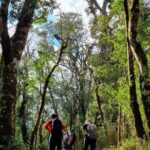
- forest paths that cool the air and break up the walking rhythm
The “animals co-existing with inhabitants” line is worth paying attention to. It’s a reminder that this is not a wildlife safari. It’s daily human life in the same physical space where livestock is present. That changes what you notice. You look beyond the postcard and into the routine.
This is also where a good guide earns their pay. An English-speaking H’mong guide like Li can connect what you see to how families think about their land, their work, and their stories. When the guide talks about childhood and what life looked like back then—and what’s changed now—it turns the walk into something you can remember after you’ve left the trail.
Day 2: sunrise pace, rice fields, and Red Dao village time
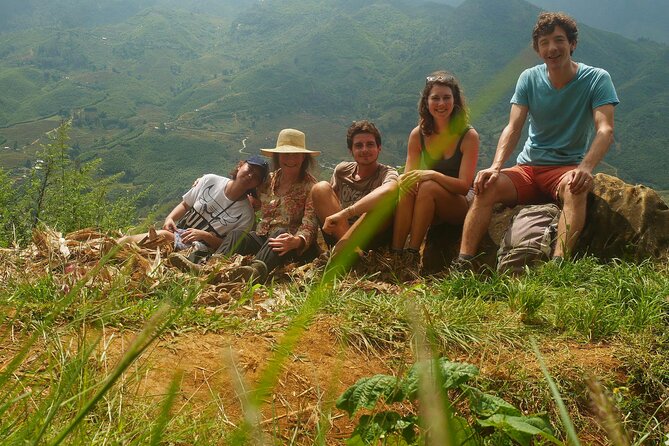
Day 2 starts slower, with breakfast and a sunrise-style wake-up. The structure is meant to get you moving during the early hours, when farmers are working and the day feels less crowded and more grounded.
A key moment on Day 2 is seeing farmers working early in the rice fields. Even if you’ve visited rice terraces before, this feels different because you’re watching real early-day farm activity rather than standing at a lookout after the day is already rolling.
From there, you reach a Red Dao village. The plan includes exploring village life again, but now with a different ethnic village context. That’s an important part of the trek’s value: it’s not one single “cultural stop,” it’s a sequence that lets you compare how people live across the region.
A few more Sapa tours and experiences worth a look
The waterfall finish: why it’s a great last-day reward
The overall tour description includes trekking down toward new villages and a waterfall. That matters because Day 2 isn’t only about seeing more places. It’s also about ending with something that feels like a payoff for the downhill effort.
A waterfall stop gives you a natural reset point: the group’s energy often shifts from “work” to “reward.” It’s also a good time to take photos, rest your legs, and refocus before the day ends.
Private group energy (and why it matters on a trek)
This is listed as a private tour/activity, meaning only your group participates. That’s a real advantage on a trek like this.
When you hike with a private group:
- you can move at a pace that feels right for your comfort level
- you’re more likely to get direct answers and follow-up questions
- you can handle timing more smoothly—especially when the route involves villages, livestock areas, and uneven paths
If you’re traveling with a small group or want a more personal cultural experience without the pressure of matching strangers’ energy, this format fits well.
Pickup, start window, and how to avoid first-day stress
The meeting point is listed as Hmong Sister House and Trekking, Ta Van, Mường Hoa, Sa Pa, Lào Cai, Vietnam. The activity opening hours run Monday through Sunday from 6:00 AM to 2:00 PM, so the trek has a wide start window on paper—but your Day 1 flow starts around 7am with the pickup.
In practice, that means you should plan for an early morning on arrival day. If you’re coming from elsewhere in Vietnam or you arrive to Sapa late, try to build in a buffer so you don’t feel rushed.
Also, keep in mind that this trek requires good weather. Mountain conditions can change quickly, so if the weather isn’t right, the experience may shift dates or you may get a refund (details are covered in the FAQ).
What makes the price feel fair: $110 for 2 days of guided trekking
At $110 per person for 2 days and 1 night, this isn’t a “cheap add-on.” But it also isn’t priced like a luxury retreat. It sits in the middle, and that’s where value is most interesting to judge.
Here’s what that price appears to cover in a practical way:
- Pickup from the bus station around 7am
- Homestay night with the family experience, including the buffalo-house setting
- Hot shower and breakfast cooked by Zizi before you begin hiking
- Lunch prepared by the guide on Day 1
- An English-speaking H’mong guide who helps you navigate village areas and explain what you’re seeing
- The tour can be customized above request, which matters if you want a specific route focus
Add in the fact that this trek is often booked well ahead—on average 85 days in advance—and you can see why early planning helps. When a small, guide-led experience fills up, it’s usually because people feel it’s worth the cost.
Group discounts are also mentioned, which can make the deal noticeably better if you’re traveling with friends.
Who should book this trek (and who should think twice)
This is a strong choice if you want:
- a cultural trek where the guide is part storyteller, part navigator
- an authentic overnight stay connected to buffalo-raising and village life
- walking that includes villages, rice terraces, and a waterfall finish, not only “scenic stops”
You’ll get the most from it if you’re comfortable with a moderate hiking level and you’re okay with uneven village and farm paths.
It’s also a plus that service animals are allowed, which can matter for some travelers.
You might reconsider if you:
- need fully predictable, easy terrain
- have very limited mobility
- want a trip that is mostly viewpoints with minimal walking
Booking smart: when planning helps (because the mountains don’t wait)
Because this experience is booked ahead on average and because it depends on weather, planning matters. If you’re set on going during a peak travel month, lock it in early so you aren’t stuck with whatever dates remain.
And when you book, it’s worth asking about customization if you have preferences—especially around pace or focus. The tour notes that it can be customized differently above request, so your best trip comes from matching your needs to the route.
FAQ
FAQ
How long is the Buffalo trek?
It runs for 2 days (approx.).
How much does it cost?
The price is $110.00 per person.
Where does the trek start and end?
It starts at Hmong Sister House and Trekking (Ta Van, Mường Hoa, Sa Pa, Lào Cai, Vietnam) and ends back at the meeting point.
Is pickup included?
Yes, pickup is offered, including being picked up at the bus station around 7am.
What’s included for meals on the trek?
You’ll have breakfast at Zizi homestay on Day 1. Lunch is prepared by the guide on Day 1, and breakfast is also included on Day 2.
Is this tour private?
Yes. It’s private, so only your group participates.
What fitness level do I need?
The trek is listed for travelers with a moderate physical fitness level.
What language will the guide speak?
The tour includes a local English-speaking H’mong guide.
Does the tour run in all weather?
It requires good weather. If it’s canceled due to poor weather, you’ll be offered a different date or receive a full refund.
What is the cancellation policy?
You can cancel for a full refund up to 24 hours before the experience’s start time. Within 24 hours, the amount paid is not refunded.
Should you book this 2D1N Buffalo trek?
If you want Sapa that feels lived-in—villages, rice work, animal life, and a family stay—this is an excellent match. The combination of an overnight at a buffalo-house family home, an English-speaking H’mong guide who shares real-life context (like stories from Li), and the Day 2 flow from rice fields to a Red Dao village and a waterfall makes it more than a basic trek.
Book it if you’re okay with moderate hiking and you can be flexible with weather. I’d also say it’s especially worth it if you care about understanding daily life, not just collecting scenic photos. If that sounds like your kind of travel, go for it.