REVIEW · SA PA
Sapa 1 Day Long Trek: Trek to Hau Thao and Sa Seng Villages
Book on GetYourGuide →Operated by Cat ba memories · Bookable on GetYourGuide
This long day trek starts with Sa Seng ridge views of Mount Fansipan and the Muong Hoa Valley, then swings into Black Hmong village visits for real mountain-life glimpses. One heads-up: fog or rain can erase the summit panoramas and turn the trail into slippery mud.
I like that you don’t just stand and look. Your local guide (I’ve seen guides like Mao and Su named by guests) keeps the pace workable and explains everyday Hmong life in plain, practical ways. Pickup and drop-off are handled in Sapa town, so you spend energy hiking, not figuring out transport.
The hike is set up for a moderate day: uphill first, then downhill walking and village time, finishing back in Sapa by around 3:30 PM. If you want a gentle stroll with zero effort, this one may feel longer and more physical than you expect.
In This Review
- Key things to know before you go
- Sa Seng, Hang Da, and Hau Thao: What this one-day trek is really like
- Price and value: Why $24 can feel like a bargain in Sapa
- The route walkthrough: From a 1 km uphill push to Sa Seng’s panoramas
- Hang Da Village: The Black Hmong welcome and the everyday details you notice
- Muong Hoa Valley and rice terraces: Why the views matter even when it’s cloudy
- Lunch at a family-run restaurant: A break that also teaches context
- Hau Thao Village: Rice work in season and the stories behind Hmong house-building
- Giang Ta Chai finish: Wrapping up around 3:30 PM with a transfer back to Sapa
- Weather, mud, and how to plan for foggy Sapa days
- Guides make or break it: What to look for in your day
- What to bring (and what not to): Simple checklist for comfort
- Should you book this Sapa 1-Day Trek?
- FAQ
- How long is the trek and when does it start?
- Where do you get picked up in Sapa?
- Which villages are visited during the trek?
- Is lunch included?
- What should I bring for the trek?
- What is the cancellation and payment policy?
Key things to know before you go
- Sa Seng first, then the valley: You’ll hike up to a high point for wide panoramas before heading down toward village trails.
- Muong Hoa Valley viewpoints: You get a sweeping look over the rice-terrace scenery and the valley below.
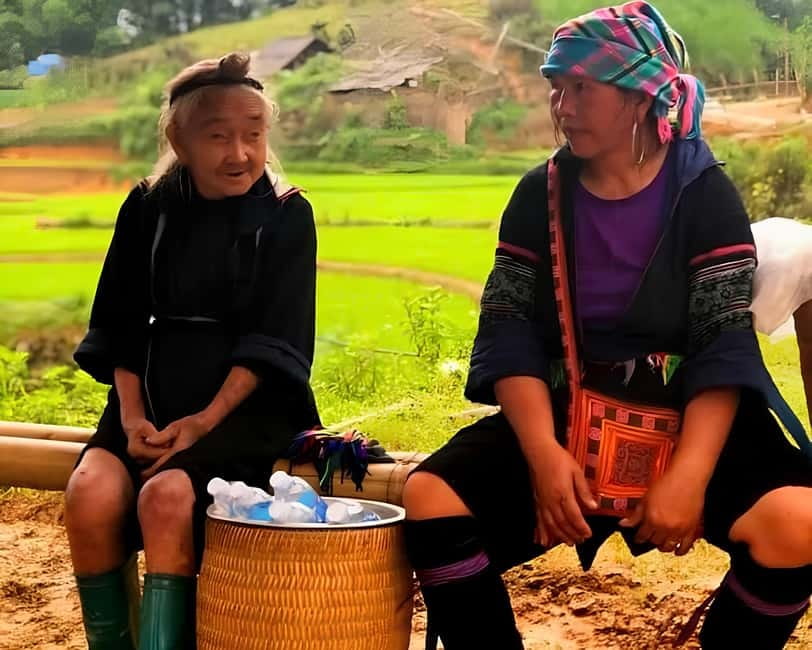
- Hang Da and Hau Thao Black Hmong villages: You’ll meet communities that farm these hills and keep traditions alive.
- A family-run lunch around noon: You eat local-style food at a homestyle restaurant while you’re already out in the countryside.
- Trail variety can mean mud: Bamboo forest and rice-field paths can get wet and slick, especially in colder months or after rain.
Sa Seng, Hang Da, and Hau Thao: What this one-day trek is really like
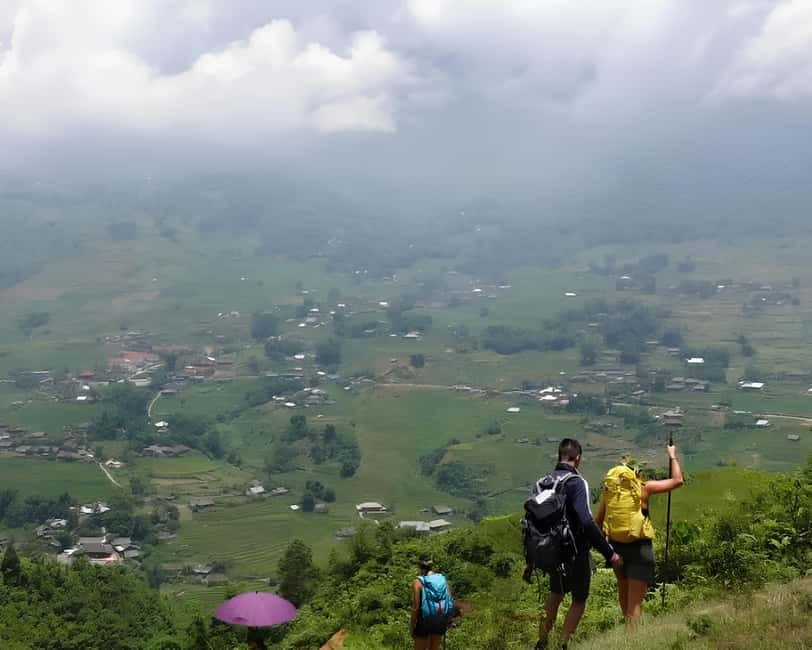
This is one of those Sapa days that feels like a whole mini-journey, even though you’re sleeping in town. The route is built around a sequence: climb to a ridge for distance views, walk down through working farmland, then spend real time in remote Black Hmong communities.
What makes it work is the order. You start with the hardest-looking part in the morning—an uphill climb—so the big effort comes before lunch. Then the day shifts into village rhythm: walking, greeting, photo stops, and guided cultural explanations. By the time you’re finishing around 3:30 PM, you’re back in the “how does daily life work here?” mood, not just “how far is left?”
You also get the best value in two ways. First, the day includes village entrance fees, bottled water, and a traditional lunch. Second, the guide is doing the heavy lifting of translation and context. Without that, you’re just passing houses and fields. With it, you start noticing how farming, building, and community roles shape everything around you.
You can also read our reviews of more hiking tours in Sa Pa
Price and value: Why $24 can feel like a bargain in Sapa
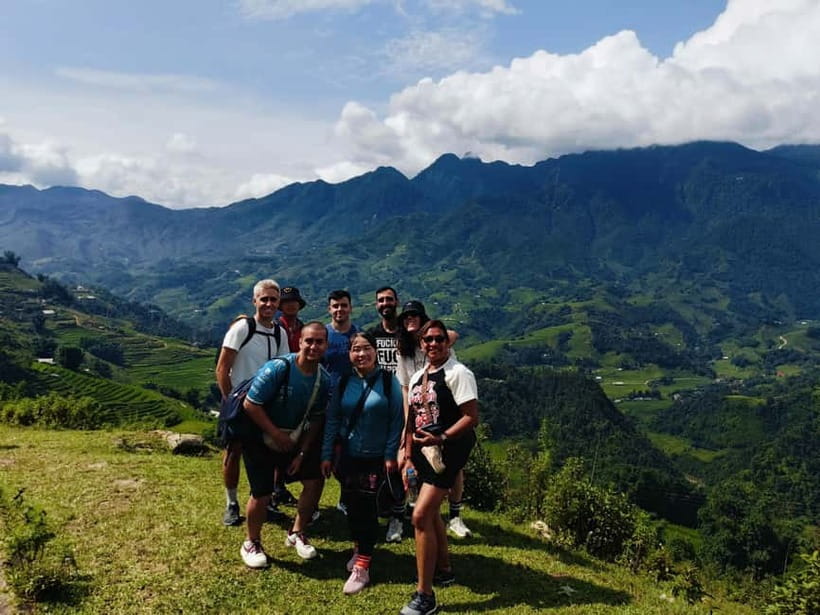
At $24 per person for a 7–10 hour experience, the value comes from what’s bundled. You get:
- hotel pickup and drop-off in Sapa town
- private transport back to Sapa after the trek
- an English-speaking local trekking guide
- village access and entrance fees
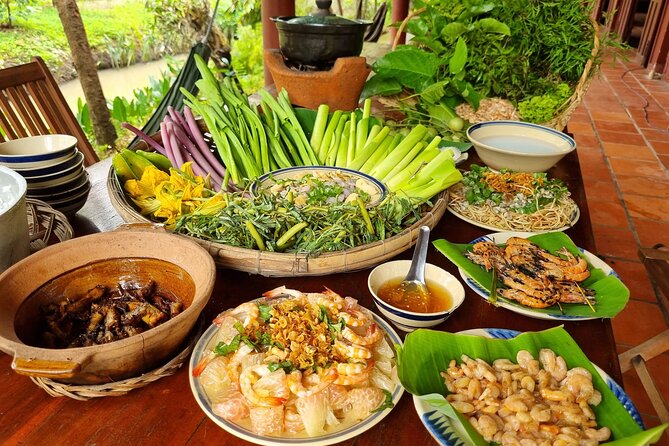
- a traditional lunch at a family-run restaurant
- bottled water during the trek
For Sapa trekking, that’s the math that matters. The most expensive parts are usually transport and guide time, plus the practical stuff like village access. Here, you’re also not left hunting for food mid-walk—the day includes a lunch stop around noon.
Is there a catch? Not really, but you should calibrate your expectations. This is still a hiking day. You’re paying for a structured route and cultural guide support, not for a cushy tour-bus day.
The route walkthrough: From a 1 km uphill push to Sa Seng’s panoramas
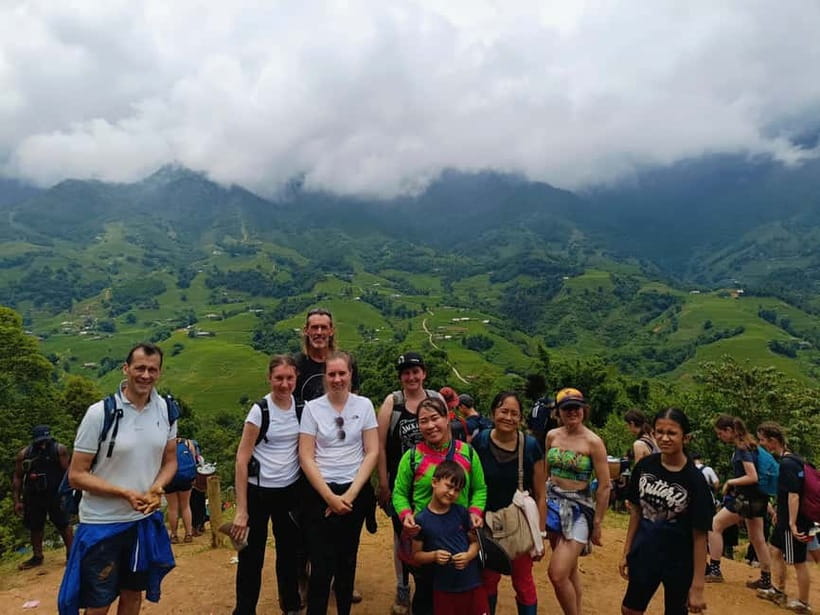
Your day begins with pickup in Sapa town at about 9:00 AM. After a short briefing, you start with a scenic mountain trail and a first push—about a 1 km uphill walk. After roughly an hour of moderate trekking, you reach the top of Sa Seng Mountain.
This is the moment the whole route is aiming for. From the ridge, you can look out toward Mount Fansipan, the highest peak in Indochina at 3,143 meters, and across the Sapa valley below. Even when clouds roll in, there’s still value here: you can watch the terrain layer by layer, the way the valleys open and close as you move away from town.
Then you move on. The trail continues downhill, and that descent is more than just easier steps. It changes what you can see. As you drop toward the valley, the Muong Hoa Valley comes into view—rice terraces, the larger river system, and the big sense of scale that makes Sapa feel like more than a viewpoint town.
One practical tip: if the morning is foggy, don’t assume it’s hopeless. Some guests described fog early that later cleared up enough for views. In mountains, visibility is weather’s mood, not your fault.
Hang Da Village: The Black Hmong welcome and the everyday details you notice
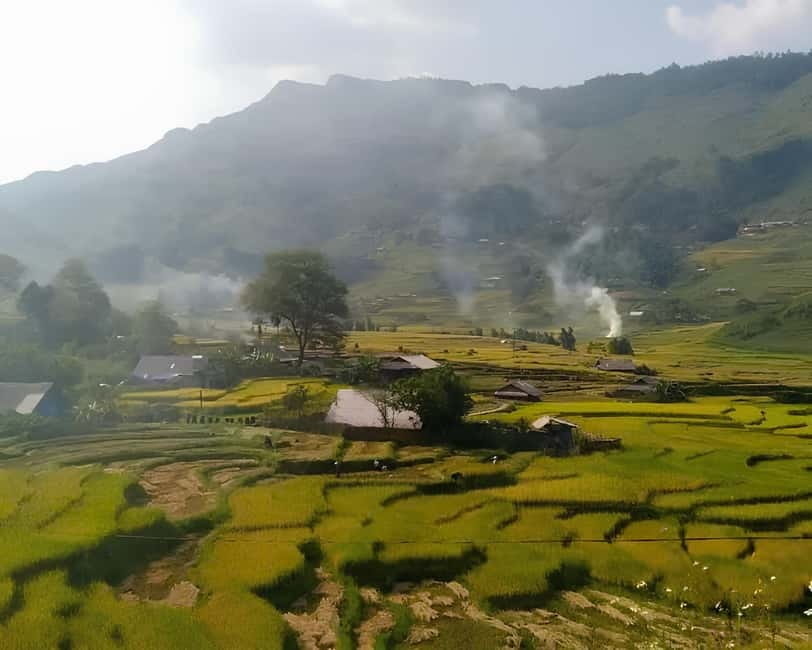
After the downhill section, you reach Hang Da Village. This is where the trek becomes more than scenery. You’ll be welcomed by the Black Hmong ethnic community and move through the village area with guided context.
Along the way, you may see free-roaming animals—buffaloes, pigs, and horses. These aren’t staged. They’re part of how farming and household life overlap here, which is exactly why the guide matters. Your guide doesn’t just point at structures; they connect what you’re seeing to how people farm and live.
This stop tends to be a good “settle in” point. You’ve already climbed and looked out over the valley, so your energy is focused. Now you can slow down and pay attention: how paths connect homes to fields, how people use the land, and why certain building choices make sense in the mountains.
Muong Hoa Valley and rice terraces: Why the views matter even when it’s cloudy
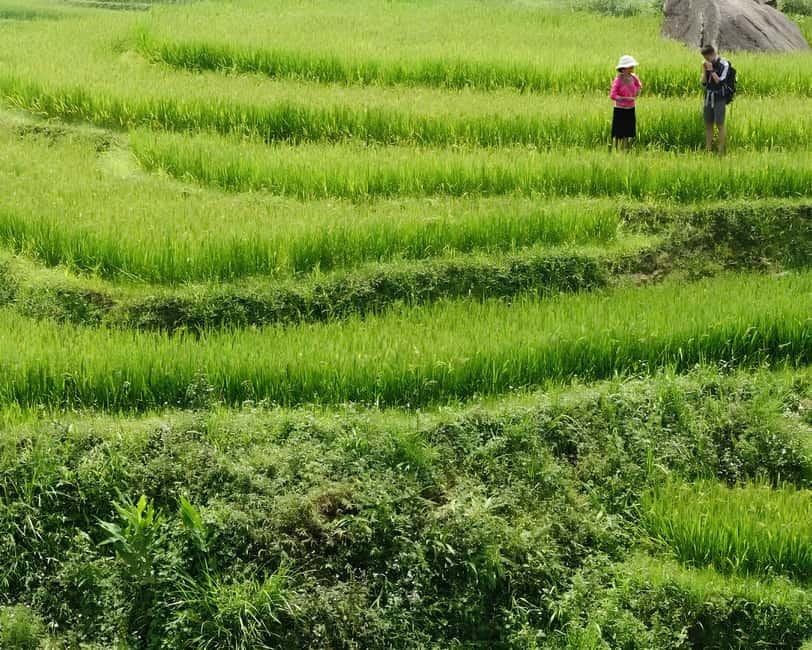
You came for the Sapa look. But here’s the part that often surprises people: you don’t have to have perfect sunshine to learn something from those valley views.
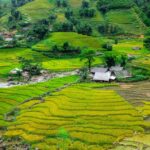
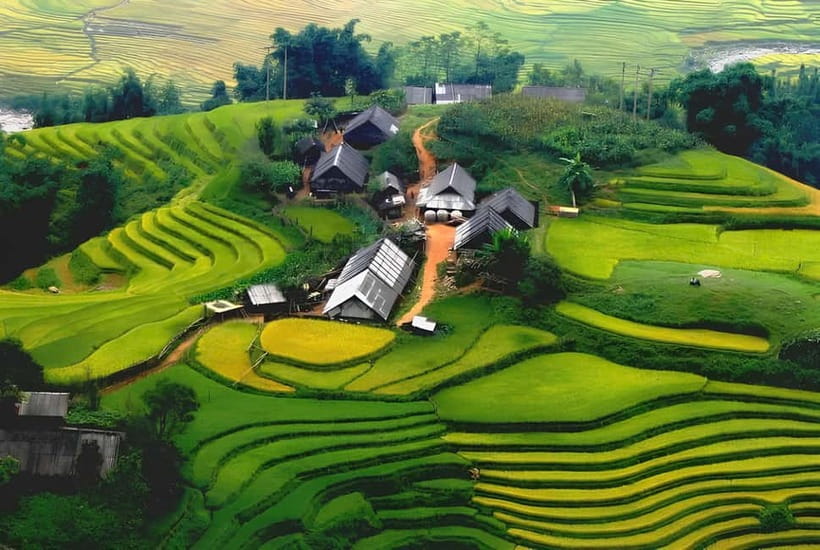
From above, the Muong Hoa Valley rice terraces look like a system, not a postcard. You can see how the terracing follows slopes, how water management shapes the fields, and how the valley floor stays productive despite being surrounded by steep mountains.
On clear days, you’ll likely get more dramatic visibility. On foggy days, you may not see Mount Fansipan sharply, but you can still make out layers of valleys and ridgelines. One guest even described zero visibility early and still having an amazing day because the guide kept the experience meaningful. That’s the key: don’t anchor your whole day on a single summit photo.
Still, choose your footwear based on weather reality. Fog usually means damp ground. Bamboo forests and trail edges can get slippery fast.
A few more Sa Pa tours and experiences worth a look

Lunch at a family-run restaurant: A break that also teaches context
Around noon, you stop for lunch at a family-run restaurant. This is included, and it’s not just a random meal stop to keep you from complaining. It’s part of the day’s flow.
The lunch experience matters because you’re eating in a place connected to the villages you’re visiting. Your guide uses the break to explain more about Hmong culture and daily life—how farming ties to seasons, what roles look like within the community, and why house-building choices connect to mountain living.
You’ll also have water during the trek, so you’re not constantly tracking what’s available. That makes it easier to stay present during the walk, instead of turning the day into a self-managed logistics project.
Hau Thao Village: Rice work in season and the stories behind Hmong house-building
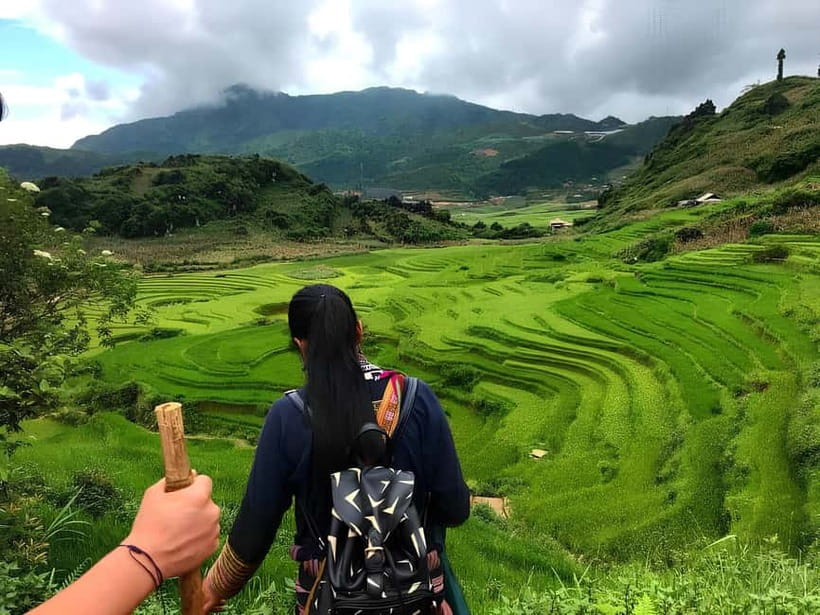
After lunch, the trek heads toward Hau Thao Village, another Black Hmong community tucked into the mountains. Depending on when you go, you might see farmers planting or harvesting rice. That seasonal element is one of the best ways to make the village visit feel real instead of museum-like.
As you walk, your guide shares cultural insights that go beyond general background. You’ll hear about traditional Hmong customs—marriage rituals, rice cultivation, and house-building techniques. The goal isn’t to memorize facts. The goal is to understand why the landscape you’re walking through has the shape it does.
House-building is especially interesting in a mountain context, because it connects shelter design to weather, materials available locally, and how families move through their spaces year-round. When your guide explains it while you’re standing near the homes and paths, everything clicks faster.
If you’re the kind of person who likes photos, this is where you’ll get them. If you’re more cautious around village photography, it’s still a good time to ask your guide what’s appropriate before taking pictures. Your guide is your translator for both language and social etiquette.
Giang Ta Chai finish: Wrapping up around 3:30 PM with a transfer back to Sapa
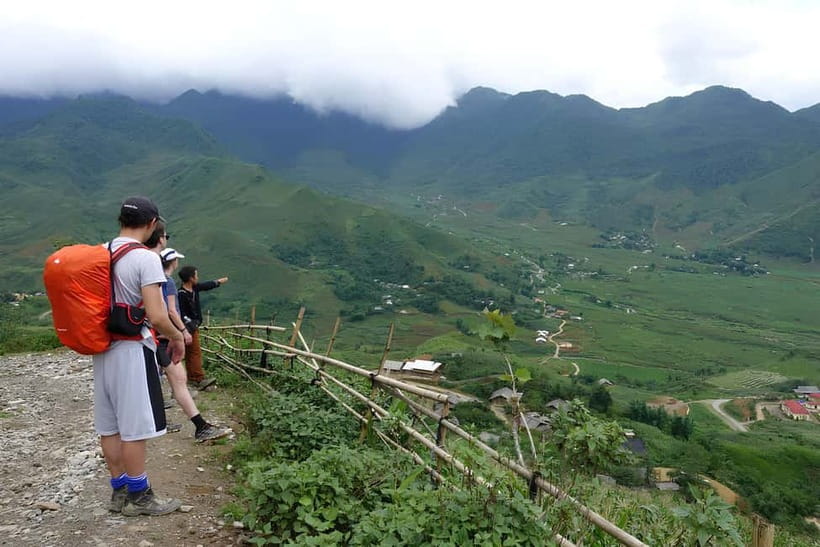
The trek ends around 3:30 PM in Giang Ta Chai village. That timing matters. You still get a full day, but you’re not dragging yourself home late in the evening.
Once you finish, the vehicle is waiting to transfer you back to Sapa town. You’re done with walking for the day, and the transport connection prevents that common trekking disappointment—arriving back exhausted but still needing to figure out where you’ll eat or how you’ll get to your hotel.
Also, you can request a driver drop-off at your desired location after the trek. Depending on where you’re staying, it may be free or with a fee, but at least the option exists.
Weather, mud, and how to plan for foggy Sapa days
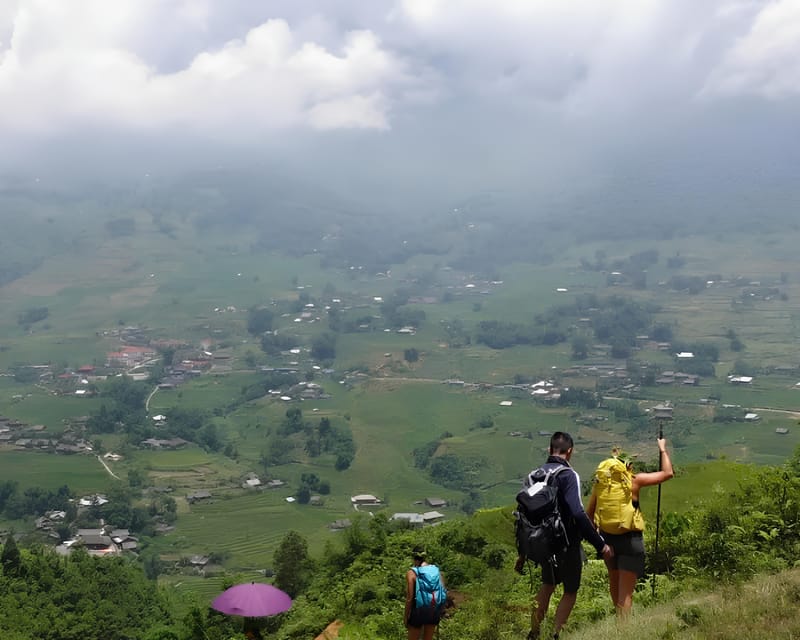
In Sapa, weather is not a background detail. It’s part of the hike.
- Fog can limit views from Sa Seng and reduce how sharp Fansipan looks in the distance.
- Rain makes the trail more slippery, especially in forested or muddy sections.
- Even without heavy rain, mountain mist can leave the ground damp.
Some guests described bamboo forest sections getting very muddy and slippery. If you go in cooler months, assume the same risk. Bring shoes with real grip. If you’re thinking of wearing sneakers with worn soles, don’t. In at least one rain day scenario, gum boots were offered, but you shouldn’t treat that as your default plan.
The good news: the day can still be memorable in cloudy conditions. When the views are muted, the village interaction and cultural explanations carry more weight.
Guides make or break it: What to look for in your day
This trek runs on the guide relationship. It’s not just “lead the way.” Your guide is the reason you understand what you’re seeing.
Guests have singled out guides like Mao, Su, Zozo, and Zu Zu for energy, humor, and clear explanations. Even when the weather was rough, those guides kept the day moving with good pacing and practical help.
What I’d look for (and what you’ll likely feel in a good guide day):
- they explain farming and daily routines so you can connect fields and homes
- they adjust the hike to the group’s pace
- they check in when the trail gets challenging
This is a small-group experience, too. One review example mentioned a group of five, which is the kind of size where you can actually talk to your guide and get answers without feeling rushed.
What to bring (and what not to): Simple checklist for comfort
Here’s the stuff you’ll be glad you packed:
- sunglasses
- sun hat
- extra hat (yes, weather changes fast up here)
- cash
You’ll also want proper footwear. The tour info doesn’t list shoes, but mud and slippery sections are part of the reality on this route. If you only pack light footwear, you’ll feel it in your ankles.
What’s not allowed includes weapons or sharp objects, baby strollers, intoxication, alcohol and drugs, fireworks, and explosive substances. Bare feet aren’t allowed either. If you’re traveling with anything that could look like a sharp object, leave it at your hotel.
One more practical note: you should be ready to use WhatsApp to confirm details prior to the trek. The operator reaches out before the day to confirm timing and updates.
Should you book this Sapa 1-Day Trek?
Book it if:
- you only have one day in Sapa and want countryside hiking plus village cultural time
- you enjoy mountains where walking matters, not just viewpoints
- you want guided context about Black Hmong farming, traditions, and daily life
- you can handle some uphill effort and uneven trail sections
Skip it or think twice if:
- you have mobility limits or health concerns (this experience is not suitable for people with mobility impairments, heart problems, altitude sickness, kidney problems, or wheelchair users, among others)
- you’re hoping for an easy flat walk
- you’re going in during expected bad weather and you’re extremely view-dependent
One more real-world consideration: village trekking days sometimes include people approaching you to offer textiles or items for sale at the end. If you hate shopping pressure, set a boundary early and keep it polite.
If that all sounds manageable, this is a strong value day. You leave with more than photos: you’ll understand how the terraces, the ridges, and the houses connect—piece by piece—over the span of a single long hike.
FAQ
How long is the trek and when does it start?
The experience lasts about 7 to 10 hours and starts at around 9:00 AM with pickup in Sapa town. The trek finishes around 3:30 PM, with transport back to Sapa.
Where do you get picked up in Sapa?
If your hotel is in Sapa town, pickup is included. If not, you can request pickup to a meeting point in town or meet at either Sapa TT Homestay (812 Dien Bien Phu street) or July Hotel Central Sapa (02 To Vinh Diem street).
Which villages are visited during the trek?
You’ll hike through Sa Seng, then visit Hang Da Village, Hau Thao Village, and finish in Giang Ta Chai village.
Is lunch included?
Yes. You’ll enjoy a traditional lunch at a family-run local restaurant around noon, and bottled water is provided during the trek.
What should I bring for the trek?
Bring sunglasses, a sun hat (and/or an extra hat), and cash.
What is the cancellation and payment policy?
There is free cancellation up to 24 hours in advance for a full refund. You can also reserve now and pay later to keep your plans flexible.