REVIEW · SA PA
H’Mong traditional beeswax batik
Book on GetYourGuide →Operated by Saigonese Trekking House · Bookable on GetYourGuide
Beeswax art in Sa Pa is oddly calming. This H’Mong batik workshop brings you hands-on with the wax-resist process, using a traditional tjanting pen and natural dye to make patterns with meaning. I especially like that you learn directly from a local H’Mong artisan and leave with a take-home piece that feels personal, not souvenir-by-the-numbers.
The biggest draw for you: you’ll get guided step-by-step enough to create your own design, plus you get cultural context about what batik means in ethnic minority communities in Northern Vietnam. One thing to consider is that the workshop’s finishing steps can vary in how much you physically do yourself, especially around the indigo dye stage.
In This Review
- Key things to know before you go
- H’Mong Beeswax Batik in Sa Pa: Why This Workshop Feels Worth It
- Where You Start: Saigonese Trekking House in Sa Pa
- The First Lesson: Tjanting, Beeswax, and Motifs With Stories
- Drawing With Wax: What You Actually Do During the Workshop
- Indigo Dye and the Question of Finishing Steps
- Tea Break and Instructor Interaction (Including Names People Mention)
- What You Take Home: A Souvenir With Real Weight
- Price and Value: Is $25 Fair for 150 Minutes?
- Logistics That Affect Your Day (Without Making It Complicated)
- Who Should Book This Workshop (And Who Might Skip)
- Should You Book H’Mong Beeswax Batik in Sa Pa?
- FAQ
- Where does the H’Mong batik workshop start in Sa Pa?
- How long is the workshop?
- Is it a small group?
- Do I get to take my artwork home?
- What materials and tools are included?
- Is transportation to and from the workshop included?
- Can I cancel for a full refund?
Key things to know before you go
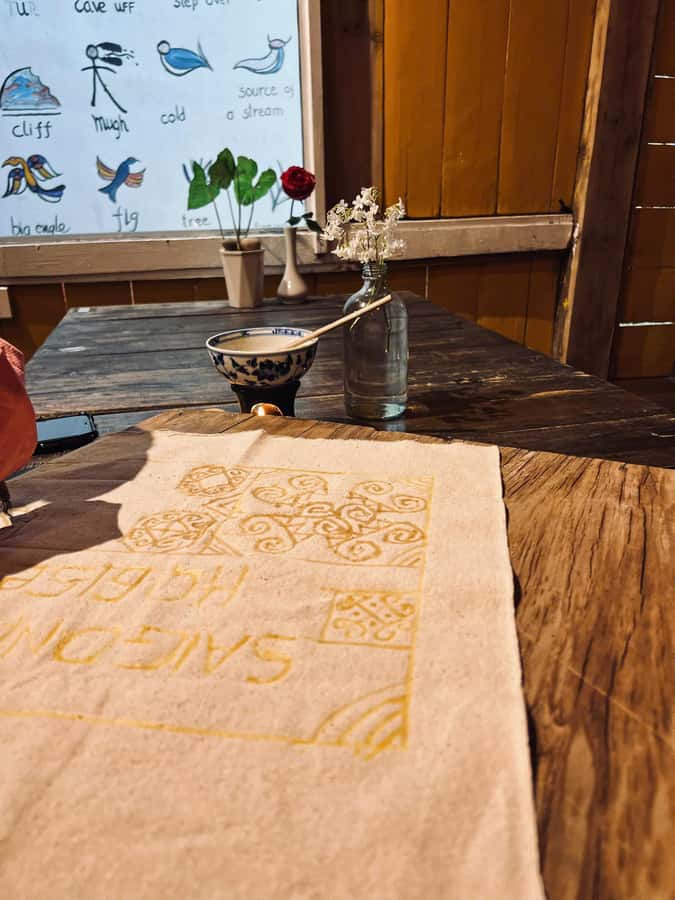
- Small group (up to 10): more time with the instructor and fewer waiting turns.
- Hands-on wax-resist: you’ll draw with beeswax using a traditional tjanting pen.
- Natural materials: beeswax plus natural indigo dye, not synthetic shortcuts.
- Take-home artwork: your finished fabric piece is part of the value.
- English support: an English-speaking guide/translator helps if you’re not fluent.
- Tea break included: tea or a herbal drink during the session, so it doesn’t feel rushed.
H’Mong Beeswax Batik in Sa Pa: Why This Workshop Feels Worth It
Sa Pa has plenty of scenery and plenty of markets. This activity gives you something different: a craft you can understand, make, and carry home. For many people, that’s the point. You’re not just looking at culture. You’re practicing a technique.
I like that the whole experience is built around traditional H’Mong batik methods rather than a quick demo. You’ll work with the actual tools and materials, and you’ll also hear why the patterns matter in H’Mong life. That cultural thread is what turns a craft class into a real memory.
The workshop runs about 150 minutes. That’s long enough to feel productive, but short enough that it won’t hijack your whole day in Sa Pa.
You can also read our reviews of more tours and experiences in Sa Pa.



Where You Start: Saigonese Trekking House in Sa Pa
You begin at Saigonese Trekking House, where you’ll be welcomed by a local H’Mong artisan and an English-speaking guide/translator if needed. Starting here matters because it keeps the experience grounded and organized. You’re not wandering around trying to find the right corner of a craft market.
From the start, the session sets a learning tone. You’ll get some background on batik in H’Mong tradition, then you’ll move quickly into doing the real work. Expect a “listen, try, adjust” rhythm rather than a lecture-heavy class.
The First Lesson: Tjanting, Beeswax, and Motifs With Stories
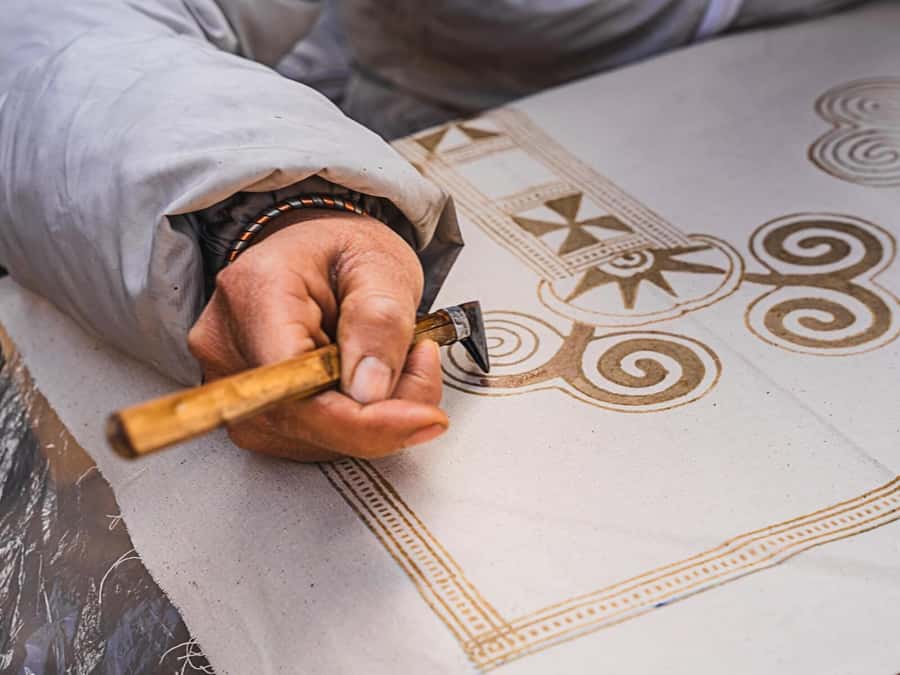
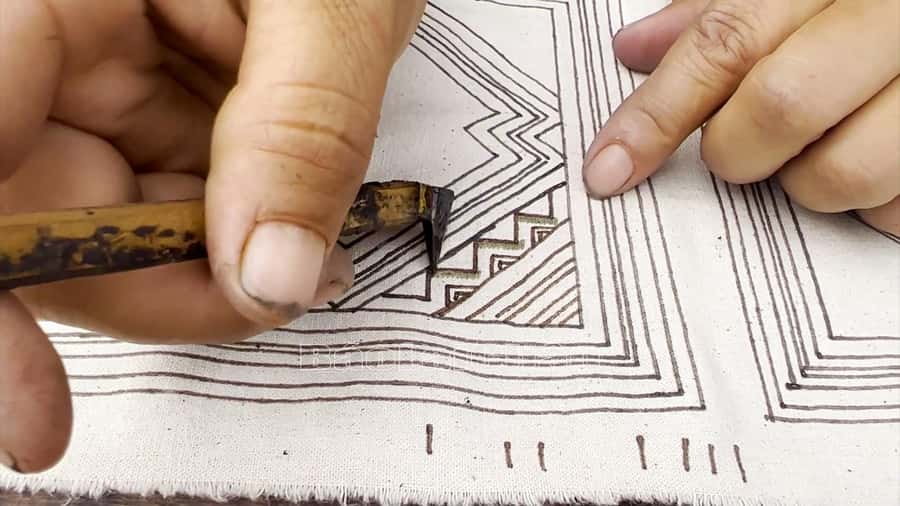
Once you’re settled, you’ll learn how the tjanting pen works with beeswax. The tool is the key to the look of batik: it controls wax flow so you can make thin lines, repeat patterns, and build contrast by planning where dye will and won’t go.
Then you’ll start designing. You may get a template to help guide your first shapes, and you’ll also create your own version of the pattern. Either way, the goal is the same: you’ll use H’Mong-inspired motifs and pattern logic that connect to storytelling.
Here’s why that matters for you: if you’ve never done batik, the hardest part is knowing what to draw. Having guidance means you still get creative choices without the blank-page stress.
And yes, some instructors are more conversational than others. One person’s wish is for more detail about the history of batik, so if that’s your thing, ask questions early while you still have the instructor’s attention.
Drawing With Wax: What You Actually Do During the Workshop
This is the core of the class, and it’s where most of the satisfaction tends to come from. You’ll draw directly on fabric with beeswax to create your pattern. The wax works like a resist: wherever wax goes, dye can’t penetrate in the same way.
You’ll be guided on:
- how to hold and use the tjanting pen smoothly
- how to keep lines consistent enough for the dye process
- how to plan where your motif should sit on the fabric
This is also where small-group size pays off. With a group limited to 10 participants, you’re less likely to get stuck waiting for help. It’s the difference between figuring it out and getting it right.
A practical note: the workshop includes all the materials and tools you need, so you don’t have to hunt down supplies in Sa Pa.
Indigo Dye and the Question of Finishing Steps
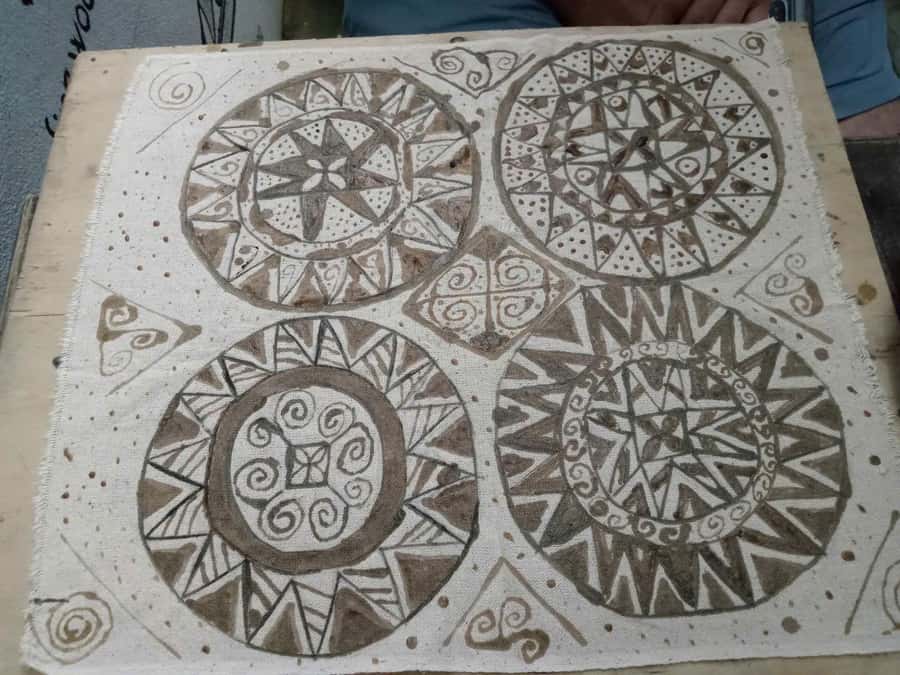
After your wax-resist drawing, you’ll work with natural indigo dye as part of the process. The class description suggests you’ll create your hand-drawn batik masterpiece using beeswax and natural indigo.
But here’s the consideration worth thinking about before you book: some people find that they don’t get to complete the full dyeing/staining step themselves, and the fabric can feel unfinished if you were expecting to do everything end-to-end in the same sitting.
So how do you handle that?
- If you want to personally do the final dye soak and see the transformation happen in front of you, ask whether the staining step is done during the workshop or handled afterward by the team.
- If you mainly care about the art-making part (the wax drawing and motif design), you’ll probably feel satisfied because that’s the heavy lift you’re doing.
Either way, you should walk in understanding that batik is a process, not a one-step craft. Wax first. Dye second. Timing and handling can affect what you personally complete on-site.




Tea Break and Instructor Interaction (Including Names People Mention)
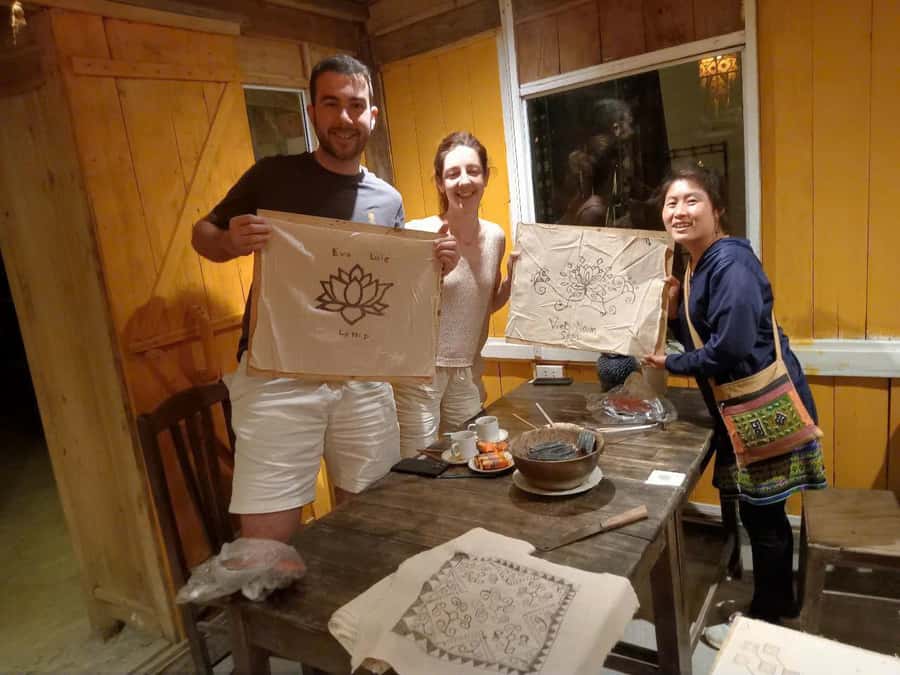
During the session, you’ll have tea or a herbal drink, which is a small comfort—especially if you’re doing this on a cooler Sa Pa day. One practical tip from the experience vibe you’ll hear around Sa Pa: bring layers. Some participants were cold during the workshop.
Instructor interaction seems to be a highlight for many people. Names that come up are Sisi and Su, both described as friendly and helpful. That’s exactly what you want in a craft class: someone who can explain the process clearly and still make you feel comfortable trying.
If you’re nervous about your drawing, don’t be. The class is designed for beginners. Your job is to focus on technique and pattern placement, not to be an artist already.
What You Take Home: A Souvenir With Real Weight
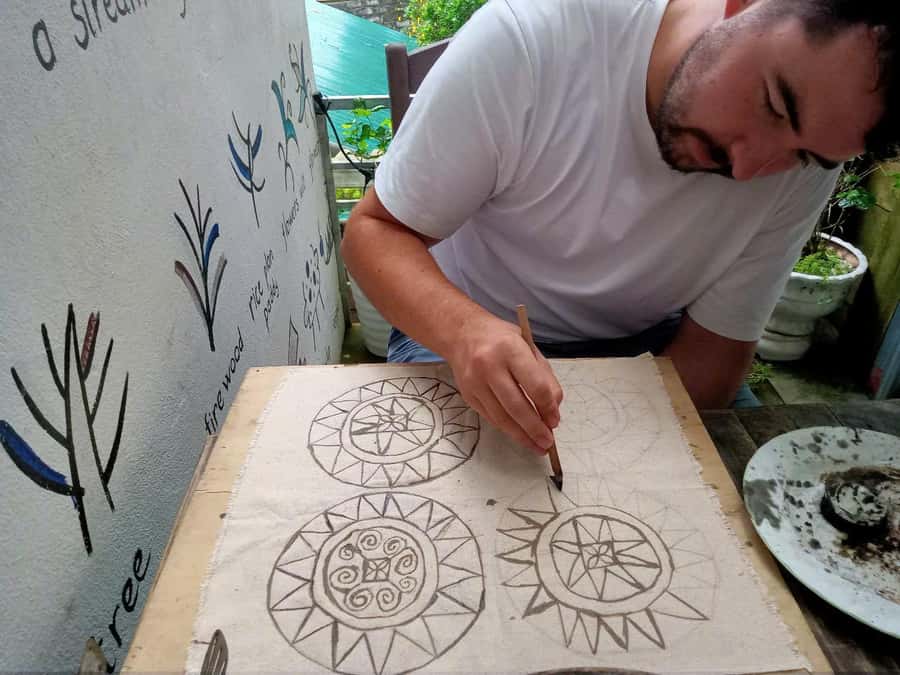
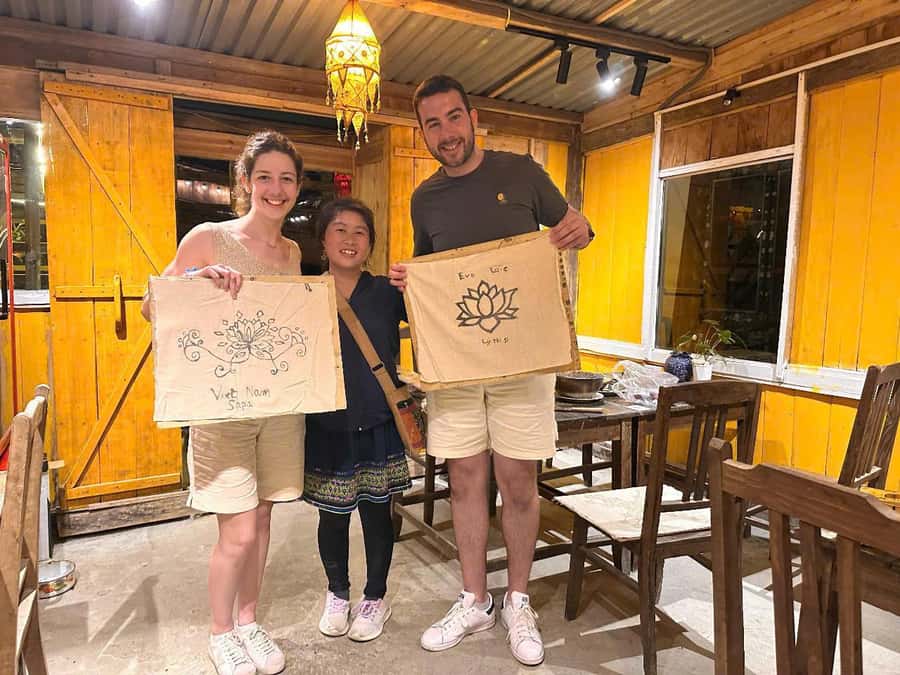
At the end, you’ll take home your personalized batik artwork. That matters more than you might think. A handmade item is usually more fragile to pack, but it also tends to earn a spot in your home because the process is memorable.
This class also leans into meaning. You’re not just buying cloth. You’re creating something tied to H’Mong cultural patterns and a method that uses beeswax and natural dye. If you’ve been moving through Sa Pa shopping for normal souvenirs, this is a different kind of purchase: time-made, not factory-made.
One more value detail: because you make the piece yourself, you’re more likely to keep it. That’s the best form of “worth it.”
Price and Value: Is $25 Fair for 150 Minutes?
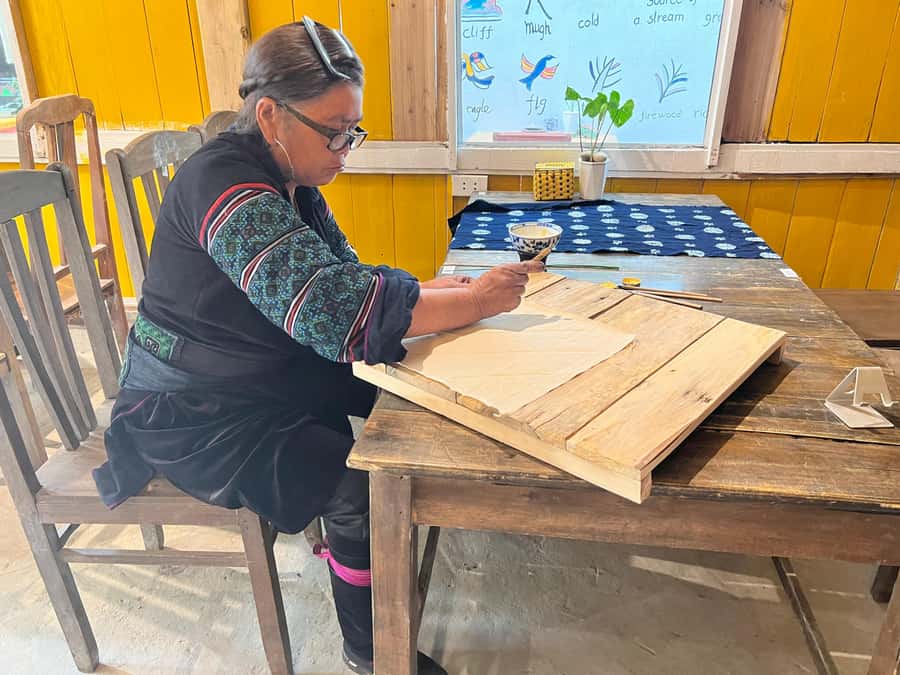
At $25 per person for a roughly 150-minute small-group workshop, this sits in the fair range for hands-on cultural crafts in Sa Pa. But value comes from what you actually do.
Here’s what you get for your money:
- guided workshop with a local H’Mong artisan
- all materials and tools (fabric, beeswax, tjanting tool, natural indigo dye, etc.)
- a take-home batik artwork
- English support through a guide/translator if needed
- tea or herbal drink
The main “value question” isn’t whether you’ll have fun. It’s whether you expect the dye stage to be fully handled in front of you. If you come in thinking you’ll personally finish every step, you might feel slightly short if the workshop handles some of the final staining off-site or at a later stage.
If you come in focused on wax-resist drawing, learning the technique, and leaving with your own piece, $25 usually feels reasonable for the experience type.
Logistics That Affect Your Day (Without Making It Complicated)
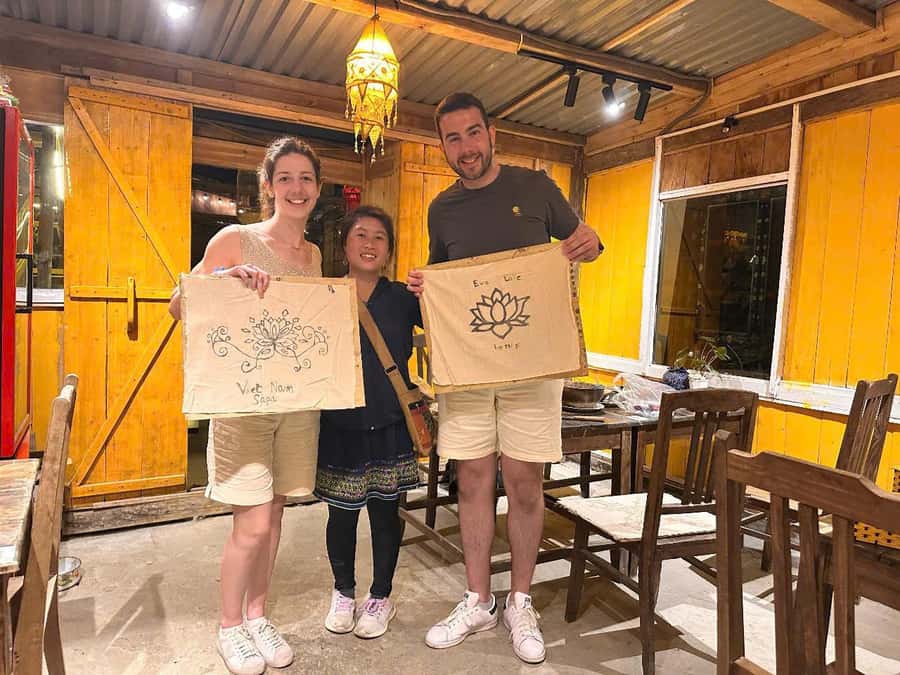
Transportation to and from the workshop is not included, so plan your trip to Sa Pa accordingly. If you’re walking around old-town-style areas, it might be simple. If you’re staying farther out, you’ll want to factor in a short taxi or ride.
The duration is clearly 150 minutes, so pair it with something low-key before or after. After you’ve been drawing and dyeing-adjacent for a couple hours, you’ll likely be in the mood for a warm drink, a shower, and a calm dinner.
Also, since it’s Sa Pa, weather can change your comfort fast. Dress like you expect cool indoor air, even if you’re arriving from brighter outdoors.
Who Should Book This Workshop (And Who Might Skip)
You should book if:
- you love hands-on crafts and want a tangible souvenir
- you’re interested in ethnic minority traditions in Northern Vietnam
- you want a small-group class with real guidance, not a big group show-and-tell
- you’re traveling with kids or family members who can sit and focus for about 2.5 hours
You might want to rethink it if:
- you’re extremely dye-focused and want the full indigo transformation done entirely by you on-site
- you prefer long, detailed lectures on the cultural history side (some people want more detail)
- you’re sensitive to cool indoor settings and didn’t plan for layers
This is still a strong choice for rainy-day energy. It gives you structure when outdoor plans get messy.
Should You Book H’Mong Beeswax Batik in Sa Pa?
Yes, you should consider booking if you want an authentic, skill-based activity with a clear outcome. The combination of wax drawing with tjanting, natural beeswax + indigo, and a take-home piece is exactly the sort of thing that makes Sa Pa feel more personal.
My call comes down to one question: how much of the finishing step do you want to personally do during the 150 minutes? If you’re excited about learning and drawing with wax, you’ll likely love it. If you’re expecting the full dye transformation to be fully in your hands during the workshop, confirm the exact workflow first.
If you’re even a little curious about H’Mong patterns, this class is a smart use of time.
FAQ
Where does the H’Mong batik workshop start in Sa Pa?
The workshop begins at Saigonese Trekking House in Sa Pa, where you meet the H’Mong instructor and the guide/translator as needed.
How long is the workshop?
It lasts about 150 minutes.
Is it a small group?
Yes. The group is limited to 10 participants.
Do I get to take my artwork home?
Yes. You’ll leave with your personalized batik artwork.
What materials and tools are included?
The workshop includes all materials and tools such as fabric, beeswax, the tjanting pen/tool, natural indigo dye, and other supplies needed for the session.
Is transportation to and from the workshop included?
No. Transportation is not included.
Can I cancel for a full refund?
Yes. You can cancel up to 24 hours in advance for a full refund.