REVIEW · SA PA
Sapa Motorbike Tour With Easy Rider – 1Day
Book on GetYourGuide →Operated by Sapa Local Trekking & Home · Bookable on GetYourGuide
Fog, rain, or shine, it still works. This 1-day Sapa motorbike tour takes you beyond town with a local guide and driver, threading together mountain passes, waterfalls, and village stops in one smooth day. I like that it mixes real scenery with cultural learning (you don’t just “see places,” you meet the Black H’Mong family part of the route), and I also like the photo-friendly pacing, from O Quy Ho Pass viewpoints to the Lonely Tree.
My other favorite part is the human touch: I’ve seen guides named Lucas, Nhu (with her father-in-law driver), and Tung and Giang pop up in feedback for being attentive with safety and stopping for pictures. One thing to keep in mind: it’s a motorbike day with some walking, including a forest walk to Love Waterfall and a trail at Silver Waterfall, so you’ll want comfortable shoes and a little stamina.
In This Review
- Key highlights you’ll actually care about
- How the Sapa motorbike day tour really flows (pickup to return)
- O Quy Ho Pass: the viewpoint that sets the tone
- Silver Waterfall: power, a short trail, and fresh mountain air
- Love Waterfall and the 1-hour forest walk at 2,000 meters
- Lonely Tree (Haven Gate): the photo stop with real payoff
- Muong Hoa Valley villages: Sin Chai, Y Linh Ho, and Lao Chai
- Lunch at a small H’Mong spot by the stream
- Meeting a Black H’Mong family: the part that adds meaning
- Ta Van, Hau Thao, and Su Pan: riding village paths by motorbike
- Motorbike practicality: what to wear and how to stay comfortable
- Price and value: is $70 a good deal for this much ground?
- Weather realities: what happens if it’s foggy or wet
- Who should book this tour (and who should skip it)
- Should you book? My straight call
- FAQ
- What time does the tour start, and where do they pick me up?
- How long is the tour?
- What does the tour include?
- What is not included in the price?
- Is there walking involved?
- Who should not take this tour?
Key highlights you’ll actually care about
- O Quy Ho Pass viewpoints with big mountain views and the chance to see cherry blossoms in spring
- Silver Waterfall with a 1 km walking trail near the base of the falls
- Love Waterfall inside Hoang Lien Son National Park, including a 1-hour forest walk and a possible cool-water dip if weather allows
- Muong Hoa Valley villages such as Sin Chai, Y Linh Ho, and Lao Chai, plus Ta Van, Hau Thao, and Su Pan
- Lunch by the stream at a small H’Mong restaurant, followed by time with a Black H’Mong family
- Private driver + English-speaking guide so you’re not guessing what you’re seeing
How the Sapa motorbike day tour really flows (pickup to return)
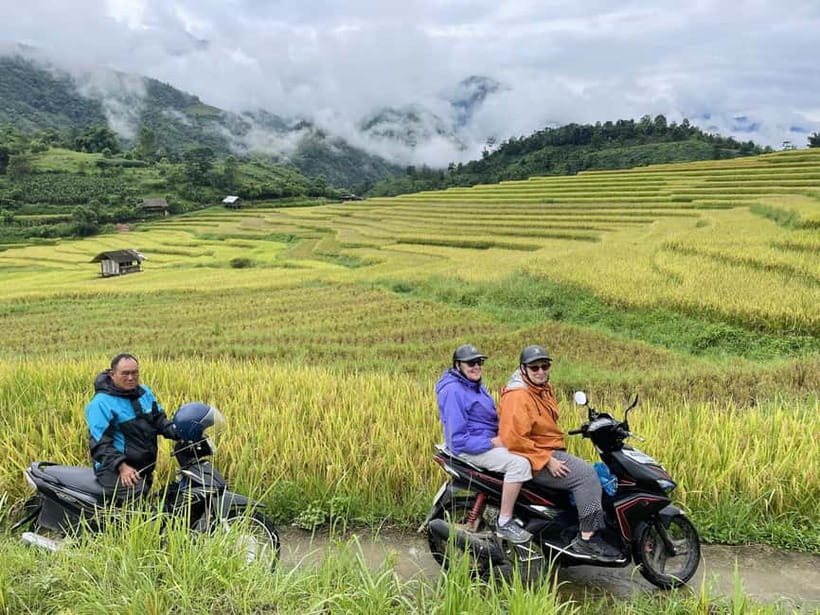
This tour is built like a day loop. You start in the morning—around 8:30 to 9:00 AM—when the guide and driver pick you up either at your hotel in Sapa or at the Stone Church in the town center. From there, the plan is simple: get out of the town traffic, hit the best viewpoints, then work your way through waterfalls and valleys before coming back by about 2:30 to 3:00 PM.
What makes this format worth your time is that Sapa’s best stuff is spread out. If you try to hop between places only by taxi or on foot, you’ll waste daylight. Here, the motorbike transport does the heavy lifting, while the stops focus on the parts you’d actually want to slow down for—views, walks, and cultural time.
I also like that the itinerary includes both “wow” nature stops and cultural learning stops. You get the Hoang Lien Son mountain range panorama moments, then you get out of the car again to experience daily life in the Muong Hoa Valley.
You can also read our reviews of more tours and experiences in Sa Pa.
O Quy Ho Pass: the viewpoint that sets the tone
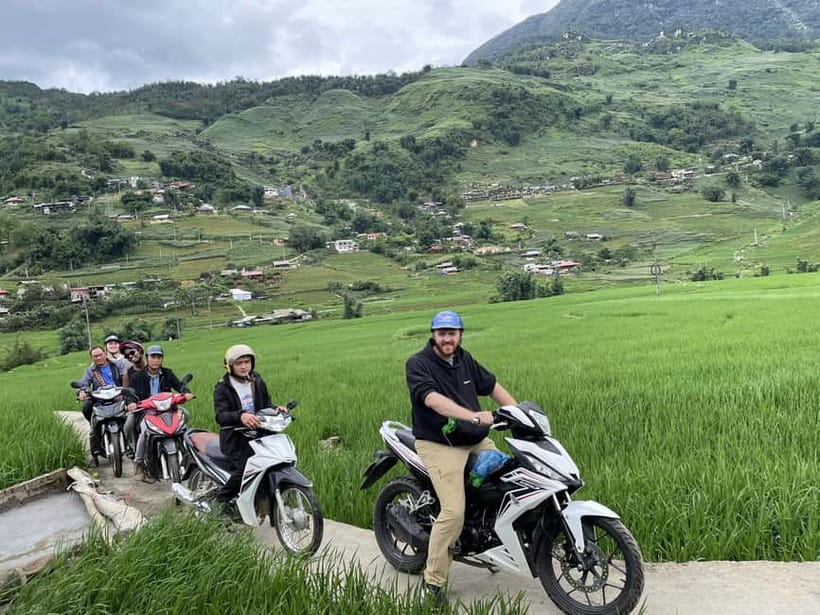
The ride out of Sapa takes you to O Quy Ho Pass, one of the four most beautiful mountain passes in Vietnam. The road winds through the Hoang Lien Son mountain range, and you’ll get regular chances to look out over the valleys and ridges as you climb.
Along the way, the tour specifically calls out O Long tea hills—green when the light is right, and a nice break from straight-up “mountain road fatigue.” If you’re traveling in spring, you may also catch cherry blossoms along the route, which is a seasonal bonus worth building your timing around.
A practical tip: this is a long day, so use the pass viewpoints to reset your expectations. If you’re lucky with weather, the views can be dramatic. If it’s foggy, the whole place gets softer and quieter—still pretty, just more atmospheric than sharp. Either way, it’s one of those stops where you can tell you’ve come to the northern highlands, not just “took a ride.”
Silver Waterfall: power, a short trail, and fresh mountain air
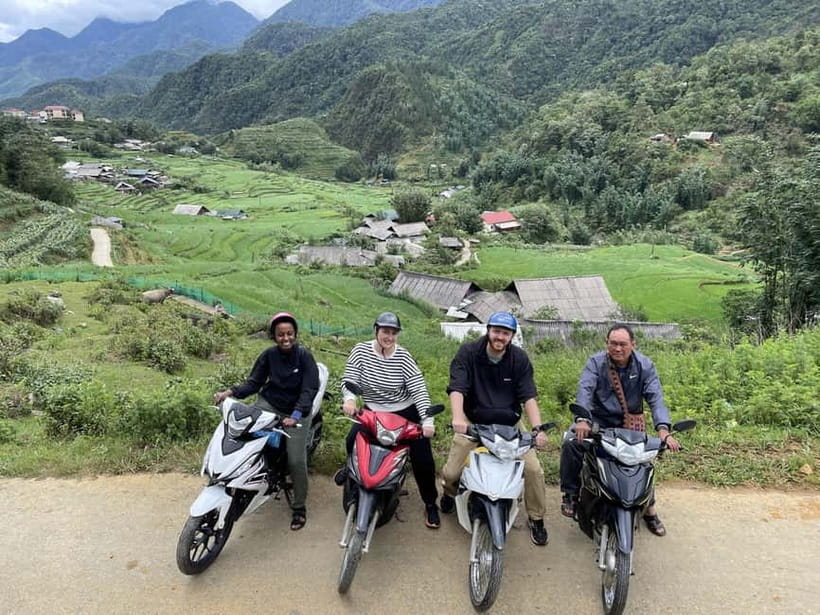
After about 30 minutes by motorbike, you’ll reach Silver Waterfall, known for dropping over 200 meters at the foot of O Quy Ho Pass. You don’t just park and stare either. The plan includes a walk along a 1 km trail that winds around the waterfall area.
This is a good stop for two reasons. First, it’s active without being exhausting; that 1 km stretch helps you get different angles without turning the day into a hike-fest. Second, the falls create a constant soundscape. You’ll feel the mist in the air on breezy days, and it makes the whole area feel alive.
One consideration: if your weather is really wet or slippery, treat the trail like it matters. Wear shoes with grip, take it slow, and you’ll enjoy it more.
Love Waterfall and the 1-hour forest walk at 2,000 meters
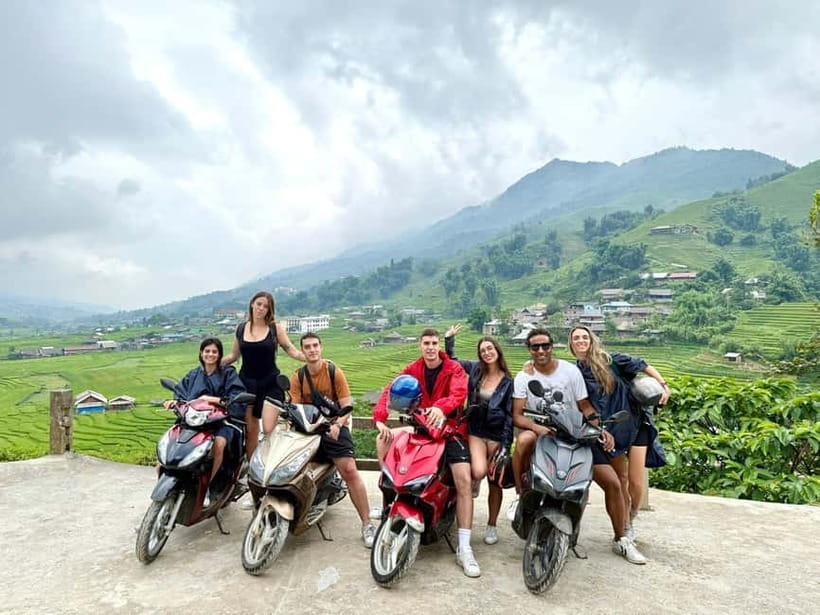
Next up is Love Waterfall, deep inside Hoang Lien Son National Park. This is where the tour slows down in a satisfying way. You’ll do a 1-hour walk through lush forest, designed to cool you off both physically and mentally.
Love Waterfall is described as being at about 2,000 meters altitude, with a 100-meter drop. That combination matters. At elevation, even a normal cool day feels colder, and you’ll likely feel that shift as soon as you leave the road and get into the tree cover. The walk is also framed as a sensory experience—soothing stream sounds and that “mountain air” feeling you don’t get in the lowlands.
If conditions are favorable, there’s also the option of a refreshing dip at the base. Don’t count on it blindly—just be ready with the ability to change your plan if it’s too cold, rainy, or the water access isn’t comfortable.
For me, this stop is one of the best “balance” moments on the route: you’re not just riding, and you’re not stuck hiking all day either. It’s structured enough to feel doable, but it still gives you that nature-and-silence payoff.
Lonely Tree (Haven Gate): the photo stop with real payoff
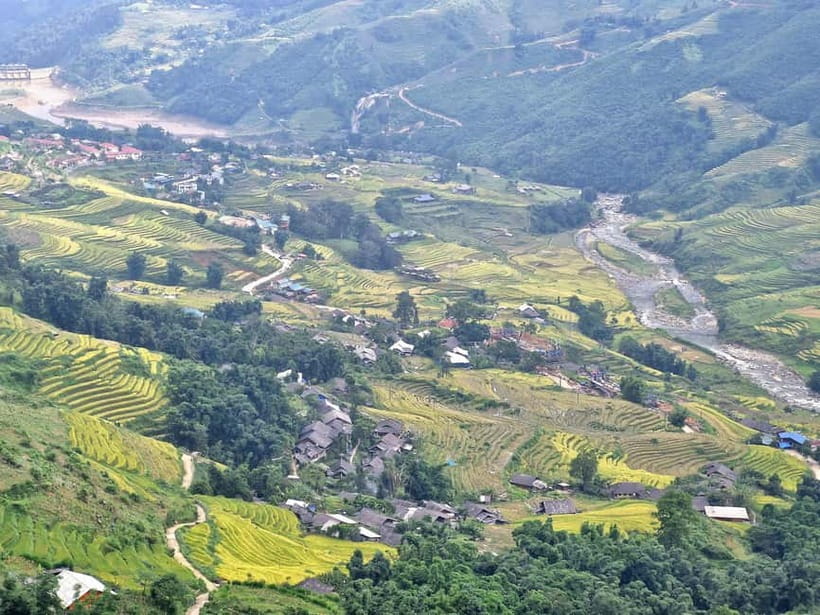
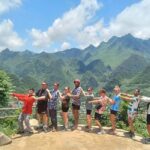
After the waterfalls, you head to the Lonely Tree (Haven Gate). This is one of those places that looks simple on paper but hits hard in real life. The whole point is the scenery around it—especially the panoramic views tied to the Hoang Lien Son mountain range.
This is where you’ll want to take your time. The tour gives you the chance to get photos, but it’s also a breather after the walking. If you’re traveling with a camera, use this moment to reset your settings (fog and mist can mess with exposure), and if you’re traveling with a phone, clean the lens before you start shooting.
If weather is clear, you’ll get crisp ridgeline views. If fog rolls in, the scene can look more “dreamy” than detailed. Either way, it’s a good stop for quick perspective.

Muong Hoa Valley villages: Sin Chai, Y Linh Ho, and Lao Chai
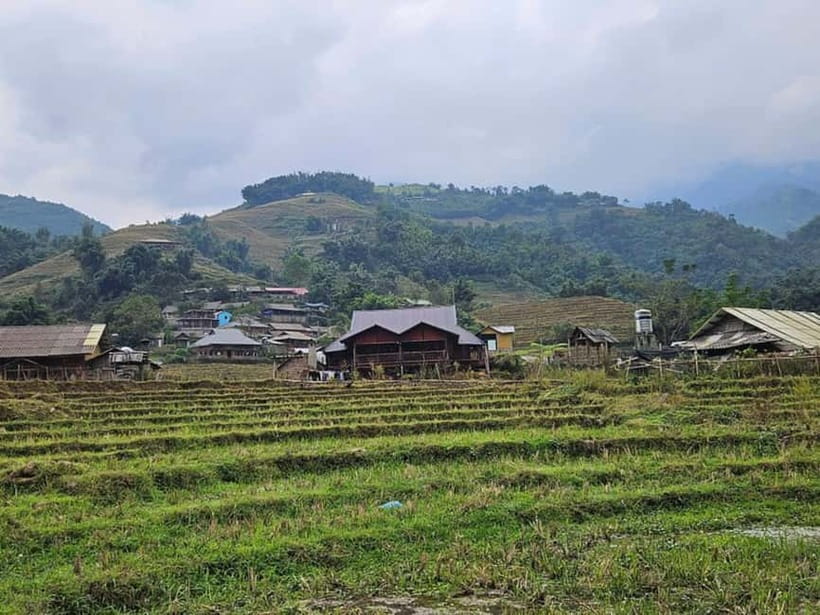
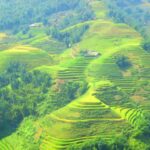
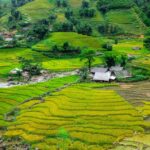
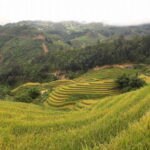
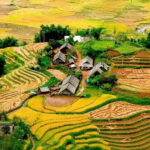
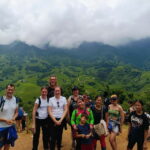
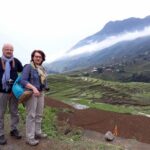
Then the day turns cultural in a grounded way. You head into the Muong Hoa Valley, where you’ll visit villages including Sin Chai, Y Linh Ho, and Lao Chai. This isn’t a quick roadside photo pull-and-leave. You get to look at terraced rice fields and traditional wooden homes associated with the H’Mong community.
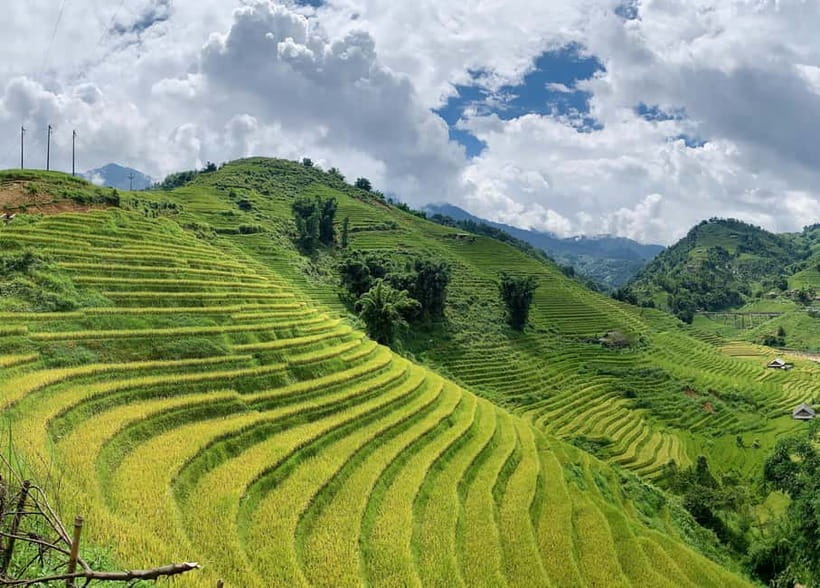
Why this matters: terraced rice isn’t just a pretty pattern. It reflects how people live with steep terrain—how they manage water, how they farm, and how seasons shape daily routine. Even if you don’t speak the local language, you can see the relationship between slope, fields, and homes.
Also, since the tour includes time later to meet a Black H’Mong family, these village views work like context. You’re not waiting until lunch to start learning. The visuals set up what you’ll hear afterward.
Lunch at a small H’Mong spot by the stream
When it’s time to eat, you’ll stop at a small H’Mong restaurant by the stream. The tour frames it as a chance to taste authentic local cuisine with flavors unique to Sapa.
Even without a detailed menu list, this kind of lunch stop is usually the right move for a tour like this. You’re eating in the landscape you’ve been traveling through, not in a random town restaurant that feels disconnected from what you came for.
Practical note: since this is a full day starting in the morning, you’ll feel it if you arrive hungry. Eat calmly, drink water, and then save your energy for the post-lunch cultural visit.
Meeting a Black H’Mong family: the part that adds meaning
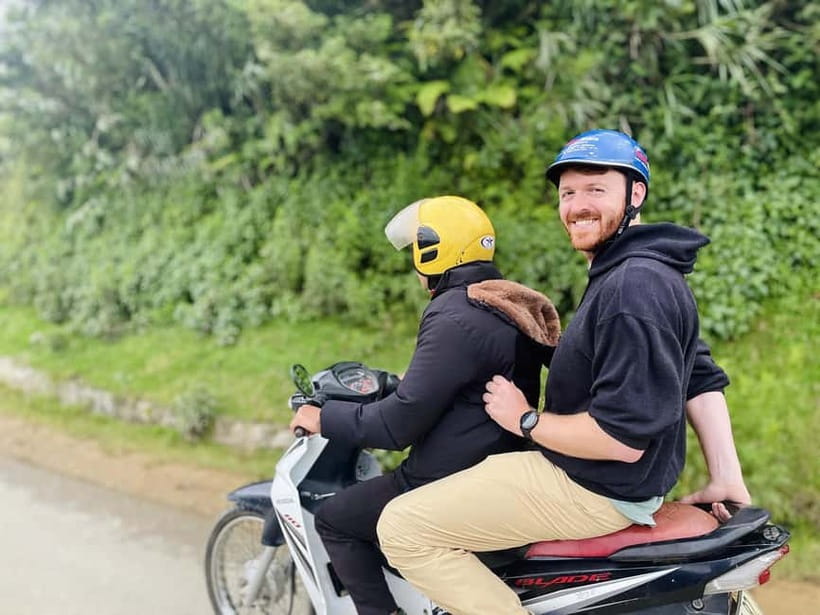
After lunch, the guide takes you to visit a Black H’Mong family in the village. The focus is on learning about lifestyle, culture, and customs—and the tone is described as getting a deeper understanding of a life connected to nature.
This is one of the most meaningful parts of the itinerary, because it shifts from scenery to people. You’ll likely ask questions through your guide, and the day becomes less about checking boxes and more about understanding what you’re seeing.
One small “be smart” tip: keep your questions respectful and simple. If you’re not sure what to ask, start with what you see—clothing, daily routines, farming, or household tasks. The tour is set up for this kind of exchange.
Ta Van, Hau Thao, and Su Pan: riding village paths by motorbike
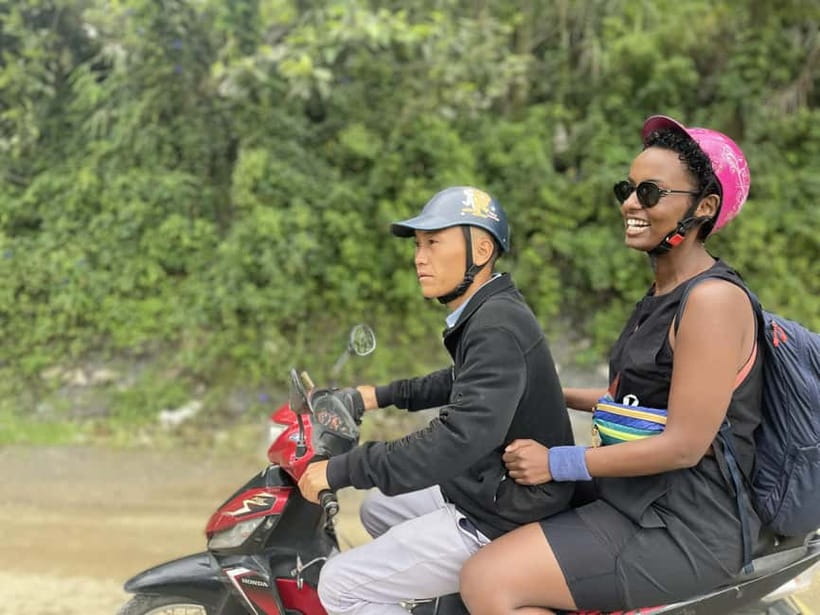
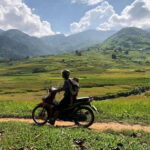
After the family visit, you continue to Ta Van, Hau Thao, and Su Pan. Here, you ride along village paths associated with H’Mong and Red Dao communities, keeping the scenic, cooler-highland vibe going while still making progress.
This segment is where the motorbike really proves its value. The itinerary suggests you’ll be moving through areas that would be slow to reach by foot. You get the sense of distance and remoteness without spending the whole afternoon walking.
Just remember: roads in rural valleys can be bumpy. That’s part of the “get used to it” experience, and it’s worth dressing and sitting in a way that helps your back and legs. If you’re someone who gets motion sick easily, consider how you’ll handle winding roads all day.
Motorbike practicality: what to wear and how to stay comfortable
This tour is not a stroll-only day. It blends riding, viewpoints, and walking. That’s why the packing list is so specific. You’ll want:
- Comfortable shoes (especially for Silver Waterfall’s 1 km trail and the forest path)
- Warm clothing (mountain weather can cool quickly)
- Hat and sunscreen (yes, even in the mountains)
- Camera (the viewpoints earn photos)
- Insect repellent (because you’re in a natural setting)
- Water (you’re also provided water on the tour, but you should stay in control)
Also, the tour doesn’t present itself as gentle. It’s marked as not suitable for pregnant women and not suitable for wheelchair users. If you fall into either category, don’t force it—there’s too much riding and uneven ground in the route.
Finally, think about timing. You’re out all day, with a couple of walks. Go light on heavy bags and keep what you need within easy reach.
Price and value: is $70 a good deal for this much ground?
At $70 per person for roughly 7 hours, this tour can feel like a bargain or a splurge depending on how you’d otherwise travel. Here’s the practical way to look at value.
You’re paying for:
- Private driver + English-speaking guide
- Transportation by motorbike across several major stops
- Water + lunch
- Entrance tickets
If you tried to recreate this yourself, you’d likely spend money on multiple transport hops, and you’d still lose time coordinating. The guide also matters here. In Sapa, the “why” behind the scenery and the village life is what turns photos into understanding.
So for many visitors, the $70 price tag works because it bundles the day into one plan with less stress. The only catch is your personal comfort with the walking and bumpy road elements—if you’re not confident on that, a different style of tour might suit better.
Weather realities: what happens if it’s foggy or wet
One of the most useful parts of your planning is accepting that Sapa weather can change fast. The route includes multiple outdoor stops—O Quy Ho Pass viewpoints, Silver Waterfall trail, Love Waterfall forest walk, and the Lonely Tree.
If it’s foggy, you still get a good day, but the views may be softer instead of sharp. If it rains, the falls can look fuller, but trails can be slippery and the forest walk can feel colder. Bring warm layers and wear shoes that can handle damp ground.
And if you’re hoping for a base-of-water dip at Love Waterfall, keep expectations flexible. The tour notes it’s only possible when conditions are favorable.
Who should book this tour (and who should skip it)
This experience is a strong match if you want:
- A short, efficient Sapa day with real variety
- Motorbike transport to cover more than town itself
- A guide who can explain H’Mong and Black H’Mong life
- A balance of nature stops + village time
- Photo opportunities without having to plan every turn
I’d also say it’s a great pick for first-timers who feel overwhelmed by how spread out Sapa is. The structure prevents you from wasting time.
Skip it if:
- You can’t handle walking (Silver Waterfall’s trail and Love Waterfall’s forest hour)
- You’re not comfortable on uneven roads
- You fall into the tour’s stated restrictions (pregnancy, wheelchair use)
Should you book? My straight call
If you want a full Sapa experience in one day—two waterfalls, the Hoang Lien Son mountain views, multiple villages, and a Black H’Mong family visit—this is the kind of tour that makes sense. The private guide + private driver setup keeps it personal, not crowded, and the included lunch and entrance tickets help the math.
Book it if your body can handle a couple of walks and you’re okay with a bumpy mountain ride. Don’t book it if you’re looking for an easy, mostly flat sightseeing day with minimal movement.
If you do book, bring warm layers, solid shoes, and your appetite. This route rewards people who show up ready to move a bit and look closely.
FAQ
What time does the tour start, and where do they pick me up?
The tour typically starts around 8:30 to 9:00 AM. Pickup is available at your hotel in Sapa or at the Stone Church in the town center.
How long is the tour?
The duration is about 7 hours, and it usually ends around 2:30 to 3:00 PM.
What does the tour include?
It includes a private driver, an English-speaking guide, water, lunch, and ticket entrance.
What is not included in the price?
Personal expenses and travel insurance are not included.
Is there walking involved?
Yes. You’ll do a 1 km trail around Silver Waterfall and a 1-hour walk in the forest to Love Waterfall.
Who should not take this tour?
The tour is marked as not suitable for pregnant women and not suitable for wheelchair users.