REVIEW · SA PA
From Sapa:Cable Car Ticket To Fansipan Legend & Car Transfer
Book on GetYourGuide →Operated by Izitour · Bookable on GetYourGuide
Climb to Fansipan’s peak without the stress. This tour stacks a round-trip cable car with hotel pickup and a packed day of iconic sights at the Roof of Indochina, from the 12m bronze Guanyin to the huge Great Buddha. I like that you’re not just chasing photos; you’re also moving through a whole spiritual complex with classic Vietnamese pagoda-style architecture. One thing to watch: cold weather and fog can blur views and make outdoor walking less fun.
For me, the best part is how much you fit into one 9-hour block, especially if you’re short on time in Sapa. I also like that the stops are clearly defined and easy to aim for, so you can pace yourself rather than wandering. The main drawback is that a tour guide is not included, so if you want context and smooth directions between stops, you may need to add that (for a surcharge) or show up with a plan.
In This Review
- Key things to know before you go
- Fansipan by cable car: what makes this day feel worth it
- Private hotel pickup in Sapa center: a big part of the value
- Check-in at the Fansipan Peak area: where your day starts
- The main route on Fansipan: major stops that shape your experience
- Guanyin on Fansipan: the 12m bronze start that sets the tone
- Zen monasteries and temple architecture: Bao An and Bich Van
- The Enlight Path of Thanh Van: walking as part of the experience
- Grand Belfry and bells: when tradition becomes a landmark
- The Great Buddha statue: 21.5m of scale you feel in your chest
- 9 Storey Waterfall and the Alahat Path: where your feet get a workout
- The Stupa, Mountain God Shrine, and Kim Son Bao Thang Pagoda
- How long it really takes and how to pace your day
- Price and value: what $96 includes, and what doesn’t
- Weather on Fansipan: cold months, fog, and what to pack
- Who this Fansipan package suits best
- Should you book this Fansipan tour?
- FAQ
- What’s included in the Fansipan ticket and tour?
- How long does this experience take?
- Is a tour guide included?
- Is lunch included?
- Do I need to pay extra for children?
- What should I bring for Fansipan?
- What if the weather is foggy or cold?
Key things to know before you go
- Hotel-to-station private car means you start the day already in motion, not negotiating transport on your own
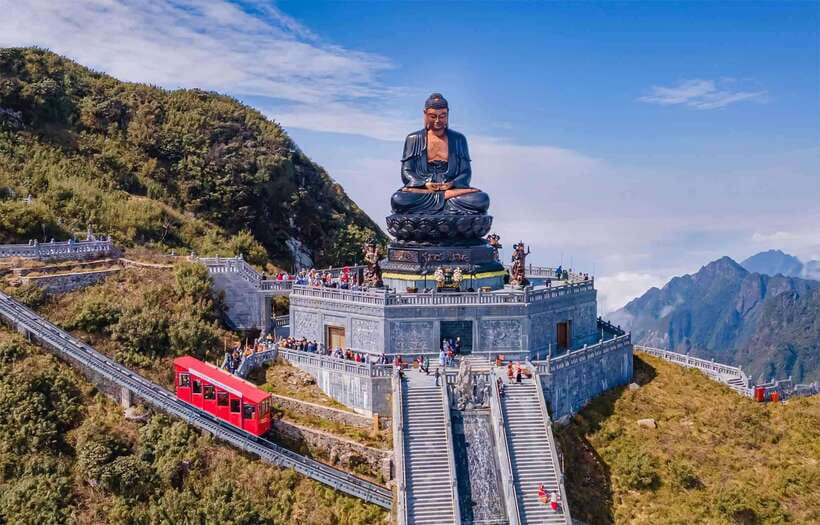
- One of the longest cable car routes in Vietnam gives big panoramic views if the weather cooperates
- Fansipan’s spiritual sights include major statues and multiple Zen/temple stops, not just a quick summit
- Cold and fog are real at altitude in cooler months, so pack warm layers even if you land in Sapa on a mild day
- Ticket pricing is height-based, so double-check sizes for kids before you pay
- You’ll be moving between shrines, paths, and viewpoints, so comfortable footwear matters
Fansipan by cable car: what makes this day feel worth it
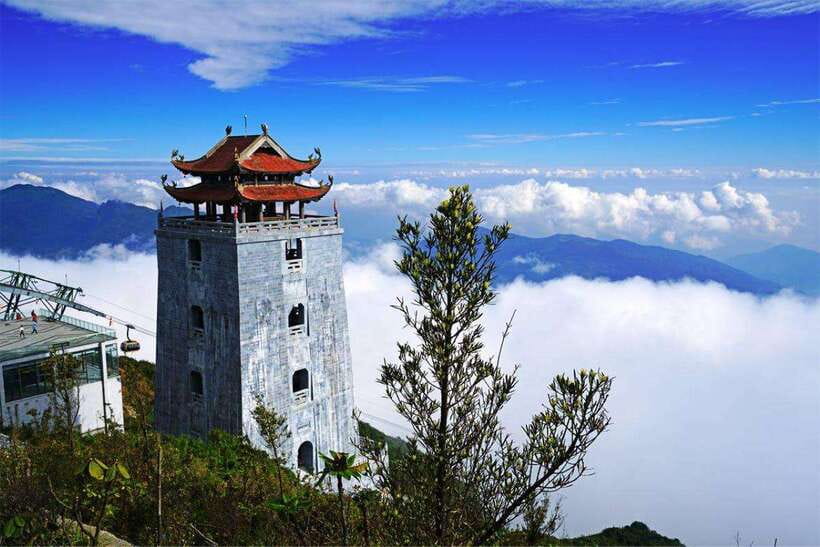
Fansipan is known as the Roof of Indochina, and the height matters when you’re actually there. The cable car does two key things for you: it saves energy and it keeps you working with the mountain instead of fighting it.
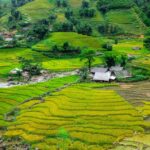
When the sky is clear, the cable car ride is where the day starts paying off. You get wide views over dense forest, cascading waterfalls, and rice terraces that look almost like a pattern from above. Even if it’s not clear, you’ll still feel the scale—mountains wrap around you, and the air turns sharper the higher you go.
If you’re the type who gets tired easily, the cable car is a lifesaver. If you’re hoping to spend hours hiking trails on your own, this tour is less about that and more about seeing the peak complex efficiently.
A few more Sa Pa tours and experiences worth a look
Private hotel pickup in Sapa center: a big part of the value
This tour includes private car pickup and drop-off from your hotel in the Sapa center area. That detail matters more than it sounds, because Fansipan days can get chaotic: timing, queues, and travel time all stack up.
You’ll want to be extra careful with meeting points. There’s a real risk of losing time if your driver drops you at the wrong destination, and once that happens, you can end up behind schedule through check-in and cable car timing. To reduce stress, send your exact pickup address to the operator team after booking and keep your confirmation details ready in your phone.
Also, keep expectations realistic about timing. The day is listed as 9 hours, but cable car lines and visibility conditions can stretch or compress your experience on the mountain. If you’re the kind of person who hates waiting, this is still usually a smooth plan—just don’t assume the day will feel like 3 hours of action.
Check-in at the Fansipan Peak area: where your day starts
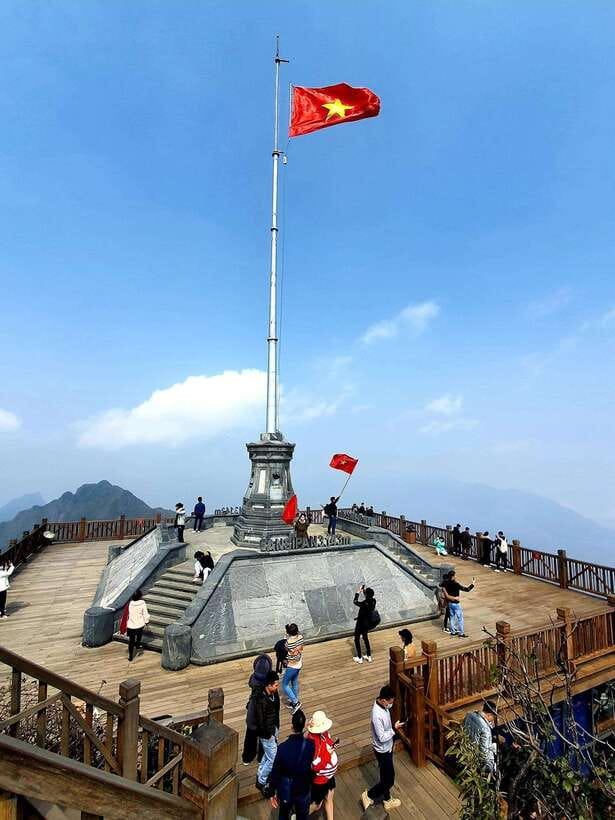
Once you arrive at the Fansipan station area, you’ll check in for your entrance and start moving through the peak complex. The tour’s structure is built around specific stops, so you’re not guessing where to go next.
This is also the moment to dress for altitude, not for Sapa town. The tour data is direct about it: it’s normally cold in September through March, and fog can show up in December, January, February, and March. Warm layers, a hat, and warm shoes aren’t “nice to have.” They’re what keep you comfortable enough to enjoy all the stops.
If visibility is poor, you can still enjoy the statues and architecture up close. Just know you might not get crisp wide-angle photos.
The main route on Fansipan: major stops that shape your experience
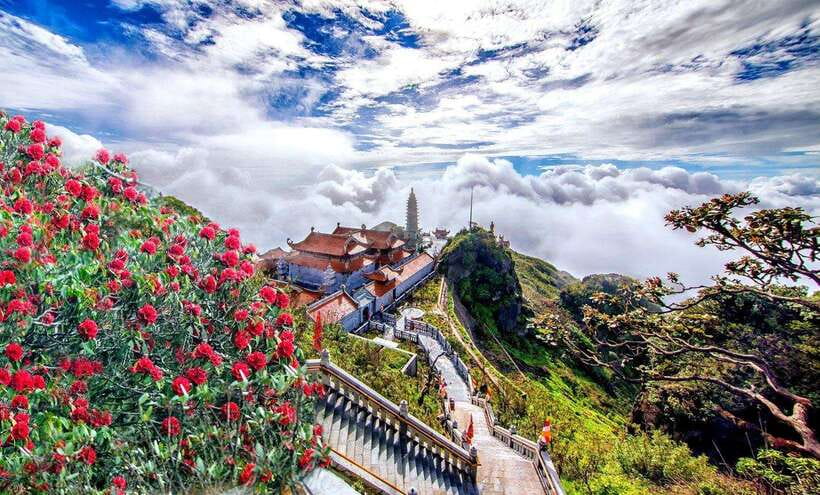
This is a sight-heavy day. You’ll see major points of interest tied to the spiritual theme of Fansipan, plus big landmark statues that are visible from multiple angles.
What you’ll like most is the variety: religious sculpture, Zen monasteries, temple halls, ceremonial structures, a waterfall, and several shrines and pagoda-style buildings. What can slow you down is pacing. When you’re in cold fog, every pause outside costs more energy and time—so wear layers you can easily adjust.
Here’s how the major stops work and why they matter.
Guanyin on Fansipan: the 12m bronze start that sets the tone
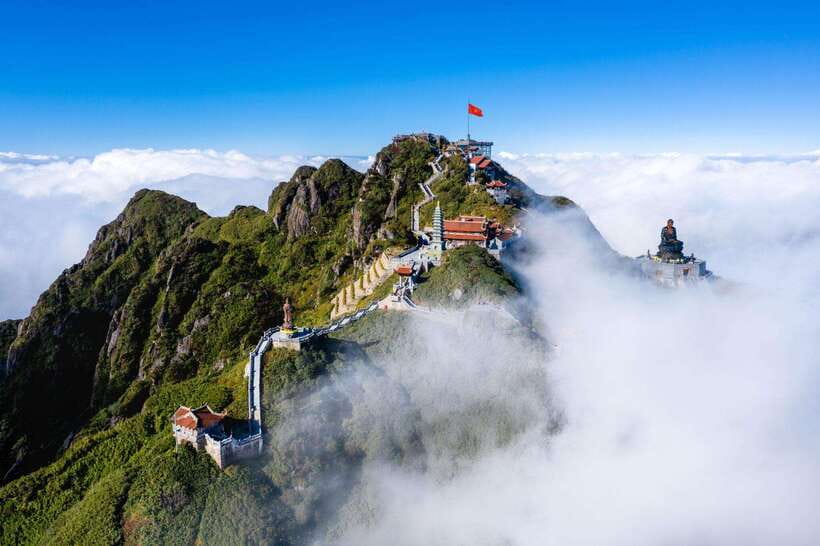
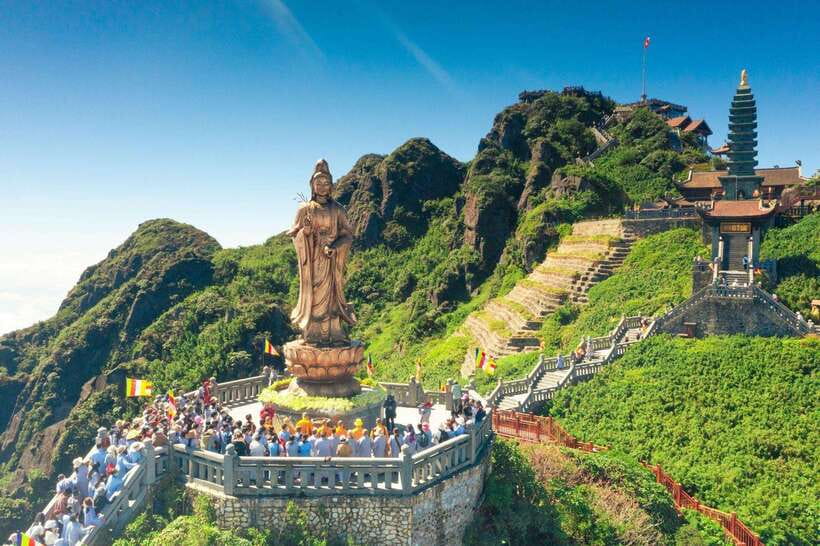
Your day includes a visit to the Guanyin Statue, a 12m bronze figure weighing about 18 tons. The details are part of what makes it feel intentional rather than random: Guanyin’s eyes glare east, one hand holds a willow branch, and the other holds a sacred vase—symbols tied to benevolence and kindness.
This stop is a good anchor point. It’s early enough to set the mood for the rest of the mountain complex, and it gives you a sense of scale right away. If you’re trying to decide whether to spend the extra money for a structured package, this is one of the reasons the tour can feel like more than a cable car ticket.
In foggy weather, you might get less dramatic skyline backdrop, but the bronze and its carving still read clearly up close.

Zen monasteries and temple architecture: Bao An and Bich Van
You also visit multiple Zen sites, which is where Fansipan stops feeling like a theme park. One key stop is Bao An Zen Monastery – Trinh Pagoda. It sits high, around 1,604m, and it’s described as the first stop before visitors move on to the Buddha realm area.
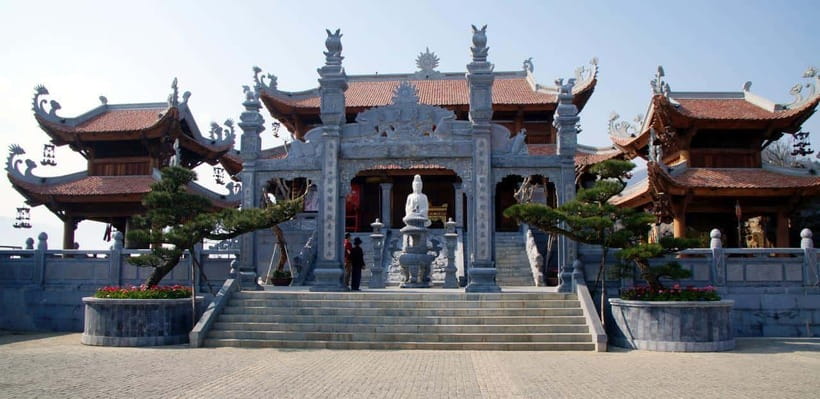
Next is Bich Van Zen Monastery, positioned around 3,037m against a misty sky. It’s linked to Tran Dynasty influences, especially in roof lines and decorative patterns. That’s the kind of detail that helps you notice what you’re actually looking at—ceremony and design, not just scenery.
If you enjoy architecture, these monasteries give you something to “read.” If you’re more of a view-first traveler, you’ll still get nice mountain glimpses between stops, but the mood shifts from scenery to meaning.
The Enlight Path of Thanh Van: walking as part of the experience
Between major buildings, you’ll follow the Enlight Path Of Thanh Van. The tour doesn’t describe it like a casual stroll, and that’s the point. On a mountain complex like this, paths are part of how the place flows—one shrine leads to the next, and your movement builds the rhythm of the visit.
If fog rolls in, paths can feel longer than they look on clear days. The best approach is simple: pace yourself, keep moving steadily, and stop to appreciate details rather than rushing for the next viewpoint.
Grand Belfry and bells: when tradition becomes a landmark
One of the most specific landmarks on the list is the Grand Belfry, standing about 32.8m tall and built with five stories. The structure description is detailed: four stories are built of rock, and the upper section is modeled after a traditional two-compartment pavilion with eight roofs.
What makes this stop interesting is the bell theme. Each storey hosts a bronze bell cast after an original in the Tran Dynasty, and bells toll on fixed dates. Even if the timing isn’t perfect for you, the structure itself tells a story about ceremonial sound and heritage.
This stop works well for both photo people and architecture people because you can appreciate the layers and proportions even when the background is cloudy.
The Great Buddha statue: 21.5m of scale you feel in your chest
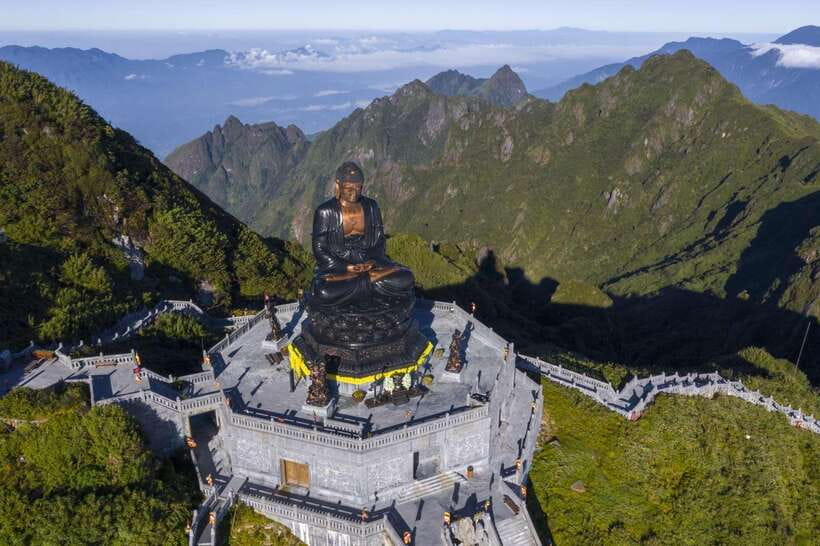
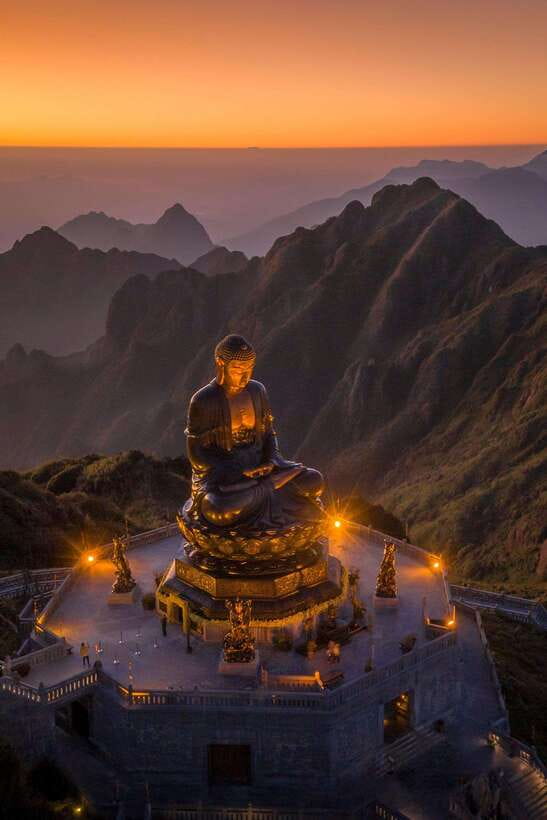
If you only “do one big thing” on Fansipan, the Great Buddha Statue is the obvious candidate. It’s described as the highest seated bronze Buddha statue in Vietnam, with a height over 3,000m, and it rises 21.5m. The casting is impressive in practical terms: over 50 tons of copper.
It’s built in three stories, with an upper copper Buddha nested on an 8m lotus pedestal. Standing in front of something like this changes how you see the mountain complex. You stop thinking of Fansipan as just a summit and start treating it like a designed space.
In cold fog, photos may not turn out crisp, but the presence still comes through. Up close, it’s hard to ignore the craftsmanship.
9 Storey Waterfall and the Alahat Path: where your feet get a workout
The itinerary includes 9 Storey Waterfall and the Alahat Path, and this is where the day becomes more physical. Waterfall areas can be damp, and paths can feel slick or chilly when temperatures drop.
This part matters because it breaks up the heavy statue/temple focus. You get a natural element, plus that sense that water is part of the mountain’s religious symbolism and spectacle. It’s also a relief if the earlier stops feel too much like indoor-looking architecture and you want something that feels outdoors.
Wear shoes you trust on uneven surfaces. You’re not trying to race. You’re trying to finish the day comfortable enough to enjoy it.
The Stupa, Mountain God Shrine, and Kim Son Bao Thang Pagoda
You’ll also visit several additional landmark structures:
- The Stupa rises 11 stories with stone cladding and a lotus-shaped copper finial, described as reminiscent of Northern Delta iconic structures
- Mountain God Shrine adds a local spiritual note alongside the Buddhist landmarks
- Kim Son Bao Thang Pagoda sits around 3,091m and is modeled after Tran Dynasty architecture, with halls and corridor wings
These stops round out the story of the mountain complex. It’s not only statues; it’s also the web of shrines and temple spaces that make the whole area feel like a living cultural site.
If fog is thick, these structures can still feel satisfying because you can focus on form and detail rather than panoramic views.
How long it really takes and how to pace your day
The tour is listed as 9 hours. In practice, your experience depends on two things you can control a little: cable car wait times and walking comfort in cold weather.
If visibility is good, you might spend extra time at overlooks. If it’s foggy, you’ll likely spend more time indoors or closer to structures because the background becomes less rewarding. Either way, the trick is pacing.
A smart approach:
- Start warm and ready for quick movement at the station area
- Plan on short stops for photos, not long freezes outside
- Keep layers on until you know whether you’ll be outdoors much longer
- Use the waterfall and path stops to reset your legs
The day is full, so if you hate structured timing, you might feel a bit rushed. If you’re okay with a packed schedule, you’ll probably feel like you got your money’s worth in one trip.
Price and value: what $96 includes, and what doesn’t
At $96 per person, the tour isn’t the cheapest way to reach Fansipan—but it’s not just paying for a ticket either. The price includes:
- entrance to Fansipan
- round-trip cable car
- private car transfer from your hotel in Sapa center
- visits to multiple major statues and structures across the peak complex
What’s not included:
- a tour guide (you can request one with a surcharge)
- buffet lunch
- Muong Hoa Train tickets
So the value question comes down to how much you want a “managed day.” If you’d rather organize transport and tickets yourself, you might find a cheaper route. But if you want someone to handle the pickup and keep you moving in one circuit, the structured package can feel fair.
One reality check from real-world experience: some travelers feel the transfer portion is the main cost saver, while others feel they could replicate the cable car trip with less money. Your decision should depend on your comfort level with directions, your tolerance for waiting, and whether you’ll benefit from the preplanned stop sequence.
Weather on Fansipan: cold months, fog, and what to pack
The tour data is clear: unpredictable weather, with cold conditions typical in September through March. Fog is specifically noted for December through February.
That means you should pack for temperatures that don’t behave like town Sapa. Bring:
- warm clothing
- sunglasses
- sun hat
- sunscreen
- warm shoes
Even on a gray day, sunlight can reflect off mist and pale rock. And altitude can make you feel colder than you expect.
Also bring cash. The guidance says banking in Sapa can be unreliable, so it’s smart to carry Vietnamese Dong. The tour notes that US dollars and euros are accepted in Sapa, which can help if you’re short on local currency.
If you’re prone to getting sick, bring basic medicine too. There are chemist shops, but it’s better to be prepared.
Who this Fansipan package suits best
This tour fits best if you:
- want a full-day Fansipan experience without arranging multiple pieces
- like religious and cultural architecture as much as views
- prefer fewer logistics and more structure, especially if you’re traveling with limited time
- are comfortable with a chilly mountain day and moderate walking between stops
It might be less satisfying if you:
- hate group-style schedules or fixed circuits
- expect a lot of deep hiking time
- want a guide’s interpretation but don’t want to pay extra for one
Should you book this Fansipan tour?
My take: book it if you want an efficient, structured day with a private transfer and a cable-car-first approach to the peak. It’s one of the better ways to see the big landmark stops—Guanyin, the Great Buddha, monasteries, the stupa, and the waterfall—without spending your time piecing logistics together.
Skip it or adjust expectations if you’re hoping for flexible free time on the mountain, or if weather uncertainty would seriously ruin your day. On foggy, cold days, the views may soften, but the statues and architecture still give you something solid to experience.
If you do book, prep smart: send your exact pickup address, pack warm layers, and arrive ready for a full schedule rather than a slow scenic wander.
FAQ
What’s included in the Fansipan ticket and tour?
You get a Fansipan ticket, round-trip cable car, and private car transfer from your hotel in Sapa center, plus visits to multiple sites including the Guanyin Statue, Bao An Zen Monastery, Bich Van Zen Monastery, the Grand Belfry, the Great Buddha Statue, 9 Storey Waterfall, the Stupa, Mountain God Shrine, and Kim Son Bao Thang Pagoda.
How long does this experience take?
The duration is listed as 9 hours. Starting times depend on availability.
Is a tour guide included?
No. A tour guide is not included, and you’d need to contact the operator to request one with a surcharge.
Is lunch included?
No buffet lunch is included. Lunch is available as a surcharge.
Do I need to pay extra for children?
Yes. Tickets are based on height: children 140cm and above pay adult rates, 100–140cm pay child rates, and 99cm and below enter free.
What should I bring for Fansipan?
Bring warm clothing, sunglasses, a sun hat, sunscreen, and warm shoes. It’s typically cold at altitude during many months of the year.
What if the weather is foggy or cold?
Cold and fog are expected in certain months, and the tour notes that weather can be unpredictable. Pack warm layers and plan for visibility to change while you’re up on the peak.