REVIEW · HANOI
Hanoi Coffee Workshop Brew Taste and Culture Experience
Book on Viator →Operated by Cook & Dine Hanoi · Bookable on Viator
A strong cup starts with better technique. This 1-hour Hanoi Coffee Craft class mixes hands-on brewing with stories about the drinks you see everywhere in Vietnam. I like that you leave with recipes and real brewing know-how, and you get to taste what you make in the session itself. One thing to consider: the class is short, so you’ll move quickly from intro to brewing.
Two things I really appreciate: first, the instructors (Maxie, Alex, Trung) consistently focus on clear steps and patient guidance so you can actually nail the process. Second, you’re not just watching a demo. You brew and taste Vietnamese favorites like Egg Coffee and specialty styles such as Dreamy Phin.
The main drawback is simple: with only about an hour, your menu choices depend on whether you join the shared class or book a private session, and you might not have time to try everything.
In This Review
- Key highlights you’ll notice right away
- Entering the Old Quarter: Finding 35–37 Mã Mây
- The warm welcome and the Vietnamese coffee mindset
- Brewing in 1 hour: how the phin technique shapes the taste
- What you learn to make: shared class versus private menu
- Join-in class (learn 3 coffee types)
- Private class (learn 4 coffee types)
- Egg coffee and the drinks that work in Vietnam
- Dreamy Phin and salted flavors: the sweet-salty logic
- Snacks, tasting, and what you take home
- Instructors who make the steps feel doable
- Price and value: is $30 a fair deal?
- Who should book this Hanoi coffee workshop
- Booking tips and small things to plan for
- Should you book Hanoi Coffee Craft?
- FAQ
- What is the duration of the Hanoi coffee workshop?
- Where does the experience start and end?
- What drinks can I expect to make in the class?
- Is a warm drink included?
- Does the price include snacks?
- Is there a private class option?
- Is there free cancellation?
- Is the tour location easy to reach by public transport?
Key highlights you’ll notice right away
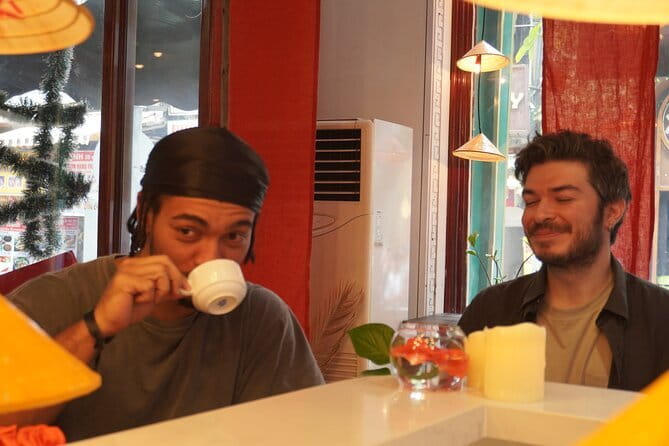
- Old Quarter location near 35–37 Mã Mây, easy to slot into a Hanoi day
- Warm welcome drink when you arrive, so you’re not starting from zero
- Hands-on brewing: you learn multiple Vietnamese coffee styles, not just one
- Egg Coffee and phin-focused technique, plus optional coconut, brown, salted, yogurt, and Dreamy variations
- Tasting in the same session, so you connect flavors to the steps you took
- Friendly instructors like Maxie, Alex, and Trung who explain origins and process clearly
Entering the Old Quarter: Finding 35–37 Mã Mây
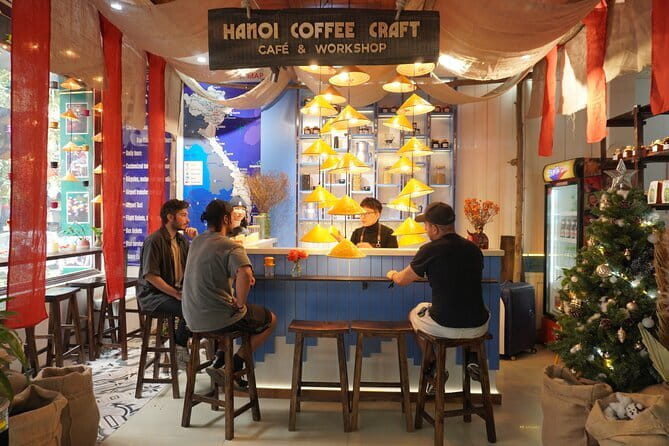
This workshop is set in Hanoi’s Old Quarter, starting at 35–37 Mã Mây (Hoàn Kiếm area). The meeting point matters because Old Quarter streets can feel like a maze until you’ve got your bearings, and you don’t want to waste time hunting.
You’ll also get a practical buffer: the activity ends back at the meeting point. That means no awkward “now how do I get back?” moment after your coffee session. And since it’s close to public transportation, it’s usually easy to pair with other nearby sights.
If you’re traveling with a group, note the scale: the activity has a maximum of 100 travelers. That’s still large, but it’s not the kind of mega-tour feel where you’re constantly waiting your turn. In the reviews, people specifically praise the instructor attention and clarity, which suggests the group format still works for hands-on learning.
A few more Hanoi tours and experiences worth a look

The warm welcome and the Vietnamese coffee mindset
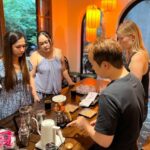
When you arrive, you’ll get a complimentary drink. It’s a small thing, but it sets the mood fast: you’re in coffee mode from the first minute, and you have a baseline for comparison once you start brewing.
Then you’ll get an intro to Vietnamese coffee culture, including why these drinks became iconic. For me, the useful part of this kind of talk is not facts for their own sake. It helps you understand the logic behind the flavor choices—like why certain coffees lean sweeter, creamier, or salt-forward, and how that fits local taste.
This background also makes the brewing steps easier to remember. If you understand what the final drink is meant to taste like, you’re less likely to treat each step like random instructions.
Brewing in 1 hour: how the phin technique shapes the taste
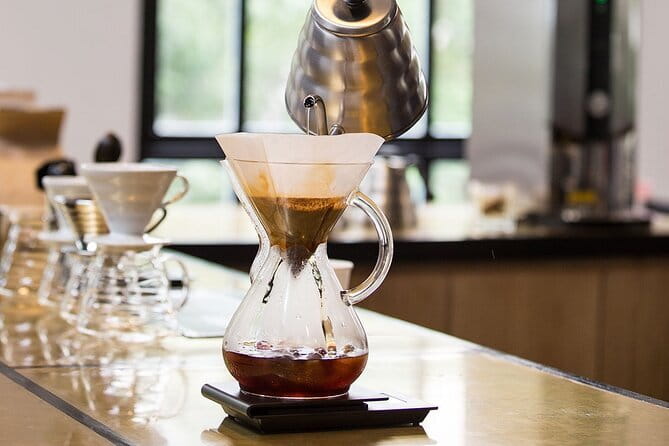
You’re working with Vietnamese coffee craft, which centers on the phin method (the small metal filter used across Vietnam). Even if you’ve had Vietnamese iced coffee before, making it yourself changes everything—because you feel how the grind, the layering, and the timing affect the final cup.
The workshop is designed as a tight loop:
- learn the core steps,
- brew multiple drinks,
- taste what you made,
- and then take your notes and recipes home.
Because the duration is about 1 hour, the best strategy is to show up ready to follow instructions closely and move step-by-step. If you’re the type who wants to slow down, ask five extra questions, and linger over every stage, you’ll likely still enjoy it, but you may find the pace brisk. That’s not a deal-breaker. It just changes how you experience the class.
What you learn to make: shared class versus private menu

Your options depend on whether you join a join-in class or a private class.
Join-in class (learn 3 coffee types)
In the shared format, you’ll learn to make:
- Black Coffee
- Egg Coffee
- plus one choice from options like Coconut Coffee or Brown Coffee, or Vietnamese salted coffee, or the special Dreamy Coffee
So you’re not stuck making only one “signature” drink. You get contrast: plain black coffee for body and bitterness, egg coffee for texture and sweetness, and then one chosen variation with its own flavor personality.
A few more Hanoi tours and experiences worth a look



Private class (learn 4 coffee types)
For a private booking, you master:
- Egg Coffee
- and choose from a longer menu that can include Salt Coffee, Yogurt Coffee, and more
This is the better pick if you want variety, or if you’re traveling with someone who has a strong opinion (sweet vs not sweet, cream-forward vs fruit-forward, etc.). Private classes also tend to suit people who want extra explanation during the brewing steps rather than waiting your turn.
Egg coffee and the drinks that work in Vietnam
Egg Coffee is the headline here for good reason. The workshop teaches you the full process, and the payoff is tasting something that feels like dessert and coffee at the same time.
From an “is this worth my time” angle, Egg Coffee is a smart learning target because it highlights technique. If you get the foam or mixing wrong, the drink stops tasting right. If you get it right, it becomes smooth, lightly sweet, and very satisfying with the coffee base.
Then you’ll likely try another style—often one with a twist:
- Dreamy Coffee (often described in relation to Dreamy Phin)
- Vietnamese salted coffee
- Coconut coffee
- Brown coffee
- and, in private options, variations such as yogurt coffee
Why these choices matter: they help you learn how Vietnamese coffee can shift from bold and bitter to creamy, sweet, and even salty. Once you’ve tasted your own batch, you start understanding which flavors “fit” Vietnamese coffee rather than assuming coffee drinks are all variations of one template.
Dreamy Phin and salted flavors: the sweet-salty logic
The standout in the feedback is how people connect technique to flavor, especially with specialty drinks like Dreamy Phin and Egg Phin coffee. That’s exactly what you want from a workshop: not just a new drink name, but an understanding of what makes it different.
Salted coffee deserves a quick note. It sounds unusual if you’ve only had sweet dessert coffees, but in practice it can make the coffee taste cleaner and more balanced. Salt can pull sweetness into focus, and it can round off harsh edges in darker roasts. During the class, you’ll taste your result right away, so you’ll know within minutes whether it works for your palate.
For coconut and other creamy variations, the logic is similar. Vietnam’s coffee often leans toward richer textures. Making these drinks teaches you how texture changes everything: how it clings, how it cools, and how quickly the flavors show up as the drink settles.
Snacks, tasting, and what you take home
This experience includes snacks, which helps if you’re fitting the class into a busy day in Hanoi. It also keeps the tasting portion comfortable—you won’t be sipping multiple homemade drinks on an empty stomach.
At the end, you’ll do more than drink. You’ll get authentic recipes and expert tips to recreate your favorite Vietnamese coffee at home. This is a key value point. A cooking class is only half a win if you can’t repeat it later, and here the goal is explicitly take-home knowledge.
I also like that the wrap-up is practical. The tips aren’t just “how to enjoy coffee.” They’re about how to recreate the flavors you just made—so you can actually remember your steps and not rely on vague memories.
Instructors who make the steps feel doable
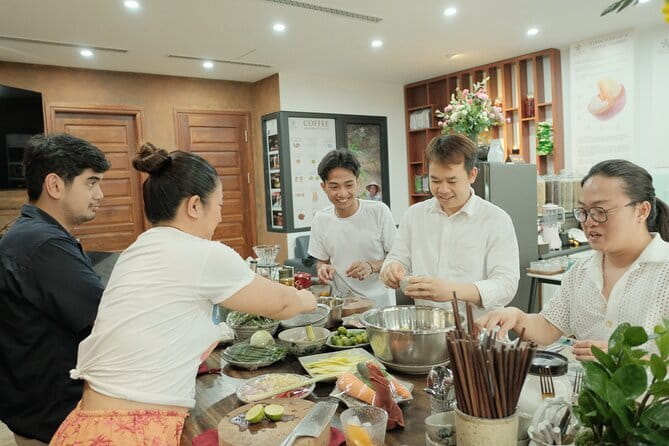
A big reason this class gets such strong marks is instruction style. Multiple instructors are named in the feedback—Maxie, Alex, and Trung—and the themes are consistent: clear explanations, patience, and friendliness.
You’ll likely feel it in how the brewing steps get broken down. People specifically call out that instructors explain the process well and are easy to chat with. One instructor-focused detail that comes up is attention to the difference between bean types and even where they originate from. That matters because coffee isn’t just a drink. It’s raw material. When you understand the ingredients, you can adjust better later.
If you’re a coffee nerd, this is a fun bonus. If you’re brand new to Vietnamese coffee, it’s still useful because it prevents the class from becoming overly technical.
Price and value: is $30 a fair deal?
At $30 for about 1 hour, the price is reasonable if you want hands-on value, not just a tasting.
Here’s why it’s likely worth it:
- You brew multiple drinks (typically three in a join-in class, four in private).
- You get a complimentary arrival drink plus snacks included.
- You take home recipes and tips, which extends the value beyond the hour.
- The instructors are hands-on and patient, which reduces the chance you feel lost.
What could make it feel less “deal-y” is if you’re expecting a long, slow culinary experience with lots of downtime. This is a focused class with a lot packed into one session. If that pace matches your travel style, $30 makes sense. If you prefer leisurely tours, you might want to pair it with something calmer afterward.
Who should book this Hanoi coffee workshop
This workshop is a great fit if:
- you love coffee and want a new skill you can repeat,
- you enjoy food-and-drink experiences more than museum stops,
- you want a short activity that still feels hands-on,
- you like guided explanation rather than solo experimentation.
You might consider skipping if:
- you only want one drink and don’t care about technique,
- you’re sensitive to a quick schedule (about an hour total),
- you want a huge tasting menu with lots of extra add-ons (the structure is built around a set number of drinks).
Booking tips and small things to plan for
You’ll receive confirmation at booking time, and the workshop uses a mobile ticket. That’s easy, but do make sure your phone is charged and your confirmation is accessible offline just in case.
It’s also allowed to travel with service animals, and the area is near public transportation. If you’re walking in from nearby sights, this helps you keep your day flexible.
If you’re trying to juggle plans, there’s free cancellation as long as you cancel at least 24 hours in advance. That gives you room to book confidently, then adjust if your Hanoi schedule shifts.
Should you book Hanoi Coffee Craft?
I’d book it if you want a practical coffee skill and a flavorful, Hanoi-specific experience that fits into a busy day. You’re not just paying for drinks. You’re paying for the steps, the reasoning, and the recipes you can recreate later.
Choose join-in if you want the classic trio (Black, Egg, and one specialty like Dreamy or Salted). Choose private if you want more variety, more time with the instructor, and extra drink options like yogurt or additional salted-style variations.
If you’re even mildly curious about Vietnamese coffee beyond just ordering it, this class is a smart use of your time.
FAQ
What is the duration of the Hanoi coffee workshop?
The workshop lasts about 1 hour.
Where does the experience start and end?
It starts at 35–37 Mã Mây, Hoàn Kiếm, Hanoi and ends back at the same meeting point.
What drinks can I expect to make in the class?
In the join-in class you make Black Coffee, Egg Coffee, and one additional choice (such as Coconut Coffee, Brown Coffee, Vietnamese salted coffee, or Dreamy Coffee). In a private class you make Egg Coffee plus four total drinks, with Salt Coffee, Yogurt Coffee, and other options.
Is a warm drink included?
Yes. You’ll receive a complimentary drink upon arrival.
Does the price include snacks?
Yes. Snacks are included.
Is there a private class option?
Yes. You can book a private class, which covers 4 coffee types and lets you choose from an extended menu.
Is there free cancellation?
Yes. You can cancel up to 24 hours in advance for a full refund.
Is the tour location easy to reach by public transport?
Yes. It’s described as near public transportation.