REVIEW · HO CHI MINH CITY
Cuchi Tunnel Tour
Book on GetYourGuide →Operated by Ace Travels Viet Nam · Bookable on GetYourGuide
Getting ready for Cu Chi is one thing; understanding it is another. This Vietnam tour focuses on how the Viet Cong built and used an underground network of hiding spots, workplaces, and fighting zones during the French and American wars. You’ll cover key areas like traps, underground rooms, and wartime tools, with an English-speaking guide who keeps the day clear and human.
I especially like the way the experience mixes facts with visible, hands-on moments. You get map and tunnel model briefing before you go underground, plus tactile stops like the rice paper workshop and a tapioca tasting—food that matches what underground life demanded.
One thing to consider: this isn’t just walking through exhibits. Parts are tight, dark, and physically a bit awkward, and if you add the optional shooting range, it’s extra cost and it can get loud on-site.
In This Review
- Quick Hits
- The Real Point of the Cu Chi Tunnels Tour: Understanding the Underground System
- Morning vs Afternoon Departure: Picking a Time That Fits Your Day
- Price and What You Actually Get for About $23
- The Group Size Reality: 10 to 20 People (and Why It Matters)
- Pick-Up Tips: Avoid the Common Start-of-Day Stress
- First Stop: VC Map and Tunnel Model Briefing (Before You Crawl)
- Traps, Workshop Areas, and How the VC Turned Space Into Strategy
- Going Underground: Choice, Constriction, and the Weight of the Dark
- Underground Rooms You’ll See: Kitchen, Health Care, Meeting, and Fighting Bunker
- Tapioca Tasting: The Small Food Moment That Tells a Big Story
- Rice Paper Workshop: When You See Vietnamese Craft Up Close
- Lacquer Ware Art Studio Visit: Fine Art, Not Just a Photo Stop
- Optional Shooting Range: A Fun Add-On With a Real Cost and Loud Timing
- Return Drop-Off: Sometimes More Convenient Than You Expect
- Who This Tour Suits Best (and Who Might Skip It)
- What You’ll Hear From Guides Like Cory and Harry
- The Bottom Line: Book It If You Want Meaningful Value
- FAQ
- What time does the Cu Chi Tunnel Tour depart?
- How long is the tour?
- Is there an English-speaking guide?
- What is included in the ticket price?
- What group sizes should I expect?
- Is the shooting range included?
- Can I cancel or book later?
Quick Hits
- English guidance that actually connects the dots (guides like Cory and Harry are praised for clear, on-topic explanations)
- Map and tunnel model briefing before you go underground so the 250 km system makes sense
- VC life details you can see and compare: smokeless kitchen, health care, meeting room, fighting bunker
- Optional underground crawling so you can choose your comfort level
- Tapioca tasting plus workshops: rice paper and lacquer ware (art studio visit)
- Shooting range add-on is extra and it sits right by the on-site buffet area, so plan for noise if you go
The Real Point of the Cu Chi Tunnels Tour: Understanding the Underground System
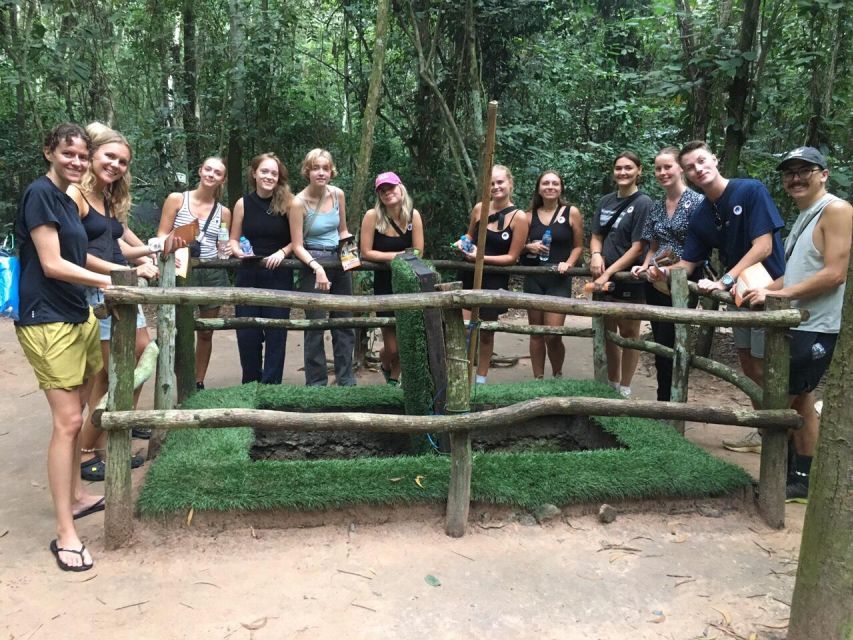
Cu Chi is famous for tunnels, but the most valuable part of this tour is how it explains what the tunnels were for. It’s not framed as a spooky attraction. It’s framed as a survival strategy: hiding, living, attacking, and ambushing from the darkness. That theme matters because it helps you understand why the Viet Cong invested in engineering, training spaces, food routines, and medical areas underground.
This tour operates as a guided loop through representative sections of the Cu Chi tunnel network in the Cu Chi district. The total network length is described as about 250 km, which is a big number until you see how the layout works and how quickly you can move between function-based zones.
I also appreciate that the tour gives you a choice about going underground. You’ll get a setup that explains the risks and the design—so it feels like you’re making an informed decision, not just trying to tough it out.
You can also read our reviews of more tours and experiences in Ho Chi Minh City.



Morning vs Afternoon Departure: Picking a Time That Fits Your Day
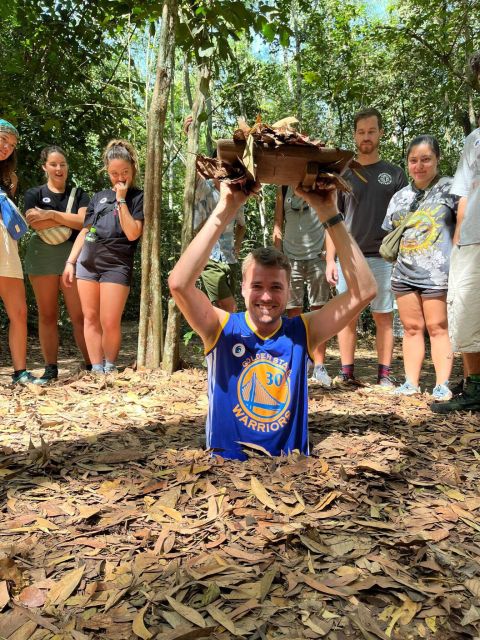
You can choose a departure at 7:30am or 12:00pm. The full experience runs about 330 minutes (roughly 5–6 hours), which is long enough to feel like a real day trip but not so long that it crowds your entire Vietnam schedule.
The bus ride is part of the deal. One guest highlighted that the ride is pleasant because you still see parts of the city along the way, not just time on a coach. If you’re traveling with a mix of energy levels—early risers and people who hate mornings—this schedule is flexible enough to help everyone compromise.
If you’re sensitive to heat or you prefer cooler mornings for outdoor walking, the 7:30am option usually feels more comfortable. If you slept in, the 12:00pm departure is a smooth way to still get out to Cu Chi without wasting the morning.
Price and What You Actually Get for About $23
At $23 per person, this tour is priced like a value day trip, not a luxury experience. That’s important because Cu Chi tours can cost more when they add extra stops or push add-ons.
Here’s what this price typically covers:
- transportation with pick-up and drop-off
- entrance fees
- an English-speaking guide
- snack and water
- wet tissue
This is a good deal for most travelers because the biggest costs in a day trip are usually the transport and guide time. You’re also not stuck figuring out how to get there on your own.
The main “watch your wallet” moment is the optional shooting range. You can do it at your own expense, and the minimum described is 10 bullets for 600,000 VND. That’s enough to turn an otherwise straightforward tour into a more expensive one if you were planning to shoot a lot.
The Group Size Reality: 10 to 20 People (and Why It Matters)
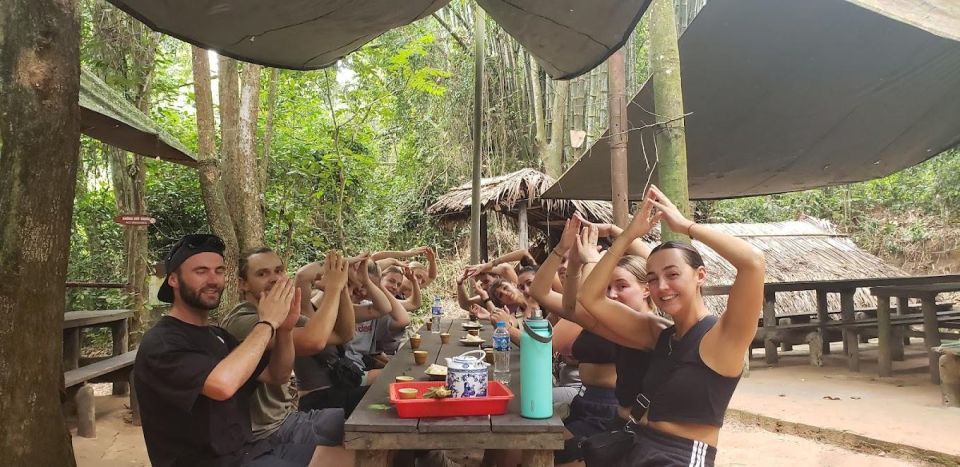
The tour runs with a maximum group size that can be around 10–12–20 people, depending on the format. You can also book a private group if you want quieter pacing and fewer waiting moments.
Smaller groups can be easier for photos, and they can help you stay together when you’re moving between indoor and outdoor sections. Bigger groups can mean more pauses, more people slowing down, and more time listening before you move on.
The upside is that even in larger groups, the tour stays structured with briefing and specific stops. The tour isn’t designed as free-form wandering, which is a big reason it works as a first-time Cu Chi trip.
Pick-Up Tips: Avoid the Common Start-of-Day Stress
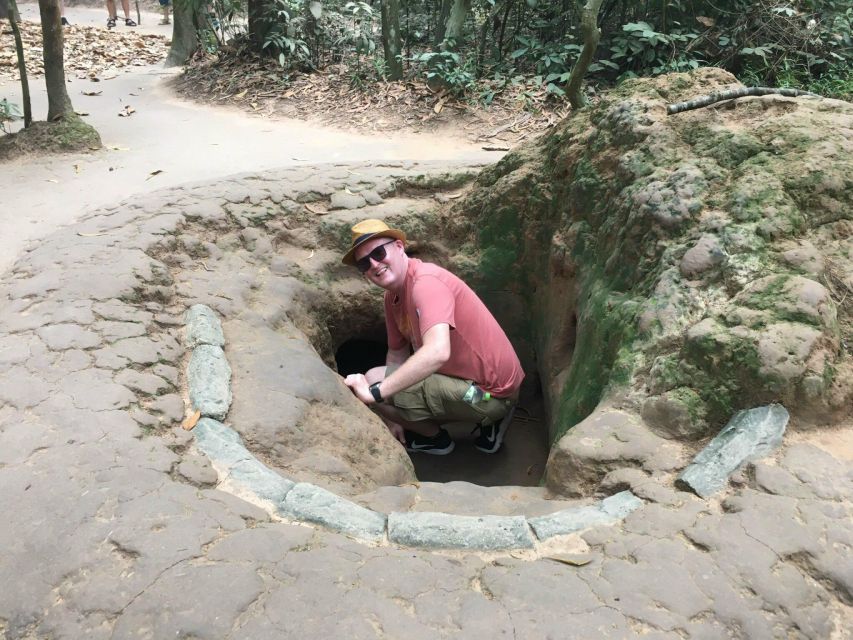
Pick-up is included, but you’ll want to show up on time. You’re instructed to wait in the hotel lobby 10 to 20 minutes before your pickup window. If your hotel is outside District 1, 3, 4, you should contact the provider.
That might sound basic, but it matters. Cu Chi is a long day, and if you lose 20–30 minutes at the start, you feel it by the time you’re underground or at workshop stops.
Quick practical advice: keep your phone charged and open to the provider contact. Also, be ready with your name as it appears on your booking when the guide arrives.



First Stop: VC Map and Tunnel Model Briefing (Before You Crawl)

Before you head underground, you get a map and tunnel model briefing. This is one of the most useful parts because Cu Chi can feel like a maze without orientation.
The tour’s message is practical: the network was built for hiding, living, attacking, and ambushing. The briefing helps you connect what you’re about to see—traps, workshop areas, food and health spaces—with the “why” behind the design.
If you’re the type who likes to understand how things work, this section makes the rest of the day click. Without it, the stops can feel disconnected. With it, you start seeing patterns: narrow passages for concealment, functional rooms placed to support daily underground life, and escape possibilities built into the system.
Traps, Workshop Areas, and How the VC Turned Space Into Strategy
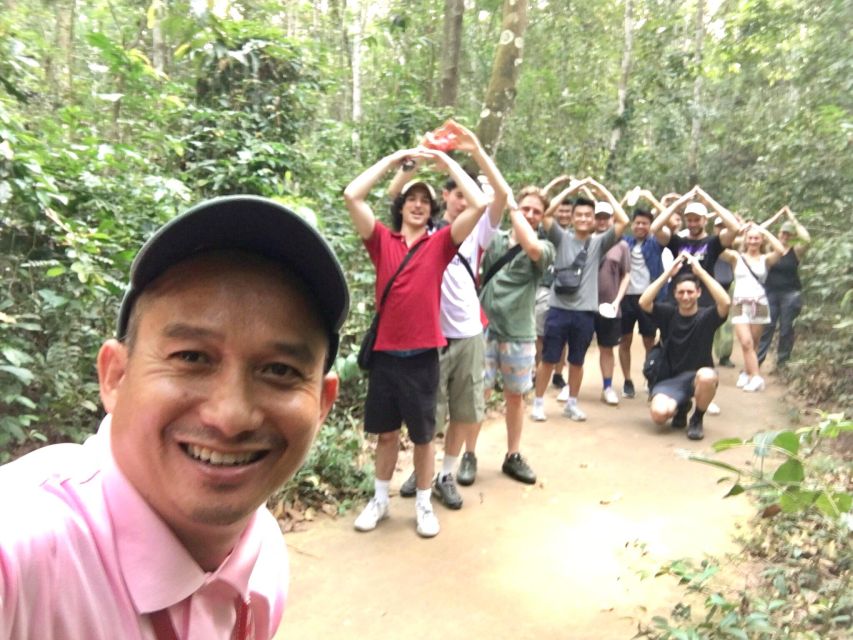
The tour explicitly covers VC-made features such as:
- traps built by the VC
- a VC workshop
- and the wider network logic behind them
This is where the tour turns from “tunnel attraction” into “survival engineering.” Traps weren’t just scary details; they were part of a defense system designed to slow, confuse, and deter enemy movement.
The workshop area also helps you understand daily capability. Underground communities had to manufacture, repair, and adapt. Even when you’re only seeing representative sections, you can feel the idea that survival required routine.
Going Underground: Choice, Constriction, and the Weight of the Dark
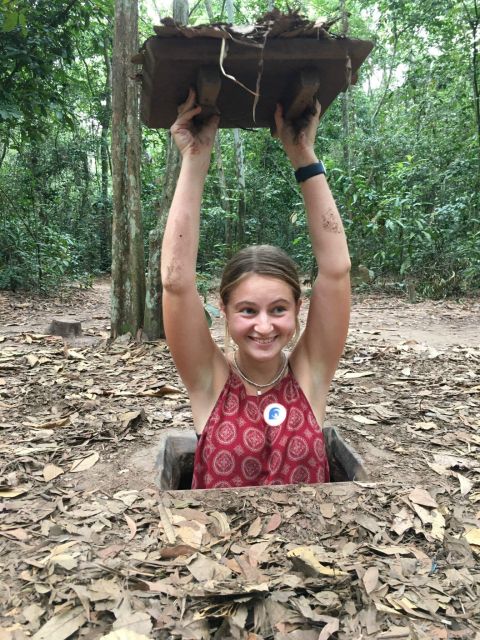
One of the standout elements in this tour description is that you can choose to go underground. That’s a big deal for comfort and safety expectations.
Even with only part of the network accessible, you’ll be dealing with:
- narrow spaces
- low light
- the need to duck and move carefully
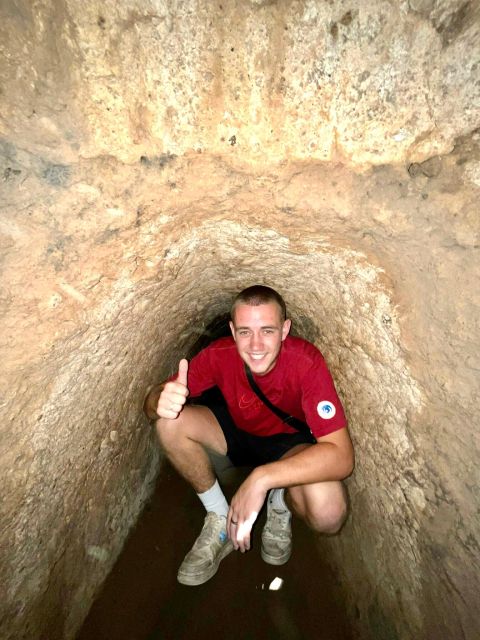
If you don’t want to go all the way in, you can still learn from the briefing and the visible underground rooms. If you do go in, your reward is perspective. You’re not just seeing history; you’re experiencing the kind of movement and constraints that shaped tactics.
This is also where you should mentally prepare for the heavy theme. The tour is built around war-era realities. It’s not designed to be a fun theme park day, and it shouldn’t be.
Underground Rooms You’ll See: Kitchen, Health Care, Meeting, and Fighting Bunker
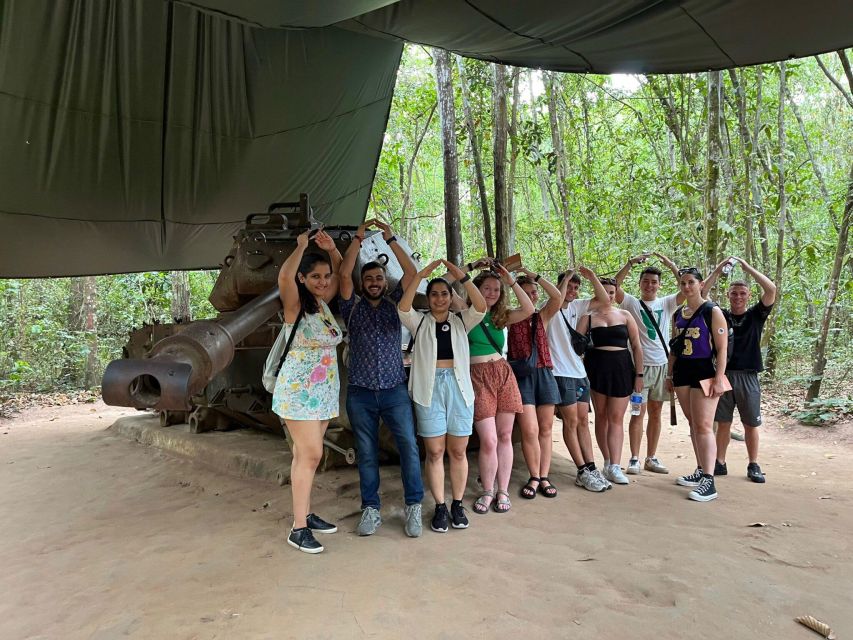
The tour lists several specific underground spaces you should expect to encounter:
- Underground smokeless kitchen
- Health care
- Meeting room
- Fighting bunker
These stops are powerful because they show that “underground” wasn’t only about hiding. It was a functioning community system.
The smokeless kitchen is especially meaningful in terms of strategy and survival. Keeping smoke down reduces detection risk. It also hints at the daily work needed to keep people fed and functioning despite constant danger.
Health care rooms show that injuries weren’t handled with improvisation only. Meeting rooms remind you that communication, planning, and morale mattered—war isn’t just combat; it’s coordination.
The fighting bunker closes the loop by returning you to the network’s defensive and offensive purpose. You start to understand how the same underground system could support both ordinary life and urgent action.
Tapioca Tasting: The Small Food Moment That Tells a Big Story
You’ll get a tapioca root tasting described as VC food. Food stops on tours are often forgettable, but this one has context: it connects the tunnel system to what people could grow, process, and survive on.
Tapioca is practical. It fits the idea of underground resilience—food that can be prepared even when conditions above are unsafe.
If you like food that comes with meaning rather than just flavor, this small tasting adds real value to the day.
Rice Paper Workshop: When You See Vietnamese Craft Up Close
A rice paper workshop is included. This is one of the best “balance” elements in a war-focused tour. It shifts the mood without turning the day into a distraction.
Workshops work because they slow you down. Instead of rushing between exhibits, you watch the process. You get a better feel for everyday Vietnamese production that has nothing to do with tunnels—just skill, technique, and attention.
If you’re the type who learns better by watching hands work, this stop will stick with you.
Lacquer Ware Art Studio Visit: Fine Art, Not Just a Photo Stop
The tour also includes a visit to an art studio where you can see how to make lacquer ware fine art.
This isn’t just decorative. Lacquer ware is a Vietnam craft tradition, and seeing it in an art studio setting gives you a more grounded sense of local culture beyond the war narrative.
Practical note: art studios often have products you can purchase. Even if you don’t buy, it’s worth looking closely at the process and materials described during the visit.
Optional Shooting Range: A Fun Add-On With a Real Cost and Loud Timing
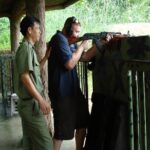
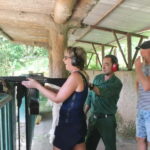
The shooting range is available on your own expenses. The tour info says you need to buy a minimum of 10 bullets for 600,000 VND.
This can be a cool “what it’s like” add-on, but it changes the day in two ways:
1) it adds cost
2) it can take time and energy
One important consideration: the shooting range sits next to the small on-site buffet area, and it can be painfully loud. If you’re sensitive to noise or if you’re planning to eat during the range slot, you might want to eat earlier or plan your timing carefully.
If you’re deciding whether to do it, treat it like an optional activity with a budget, not like a free extra.
Return Drop-Off: Sometimes More Convenient Than You Expect
On the way back, you may have some flexibility. One guest noted choosing to be dropped at the war museum on the return, which can save hassle if that’s on your list.
Because drop-off details can vary by route and time, the safest plan is to ask the guide what the return options look like for your specific schedule.
Who This Tour Suits Best (and Who Might Skip It)
This Cu Chi Tunnels tour is a strong match for:
- first-time visitors to Cu Chi who want a guided, structured explanation
- history-minded travelers who like clear, direct English narration
- people who want choice: you can opt for going underground or stay above
- travelers who enjoy pairing a serious topic with practical Vietnamese craft stops (rice paper and lacquer)
It might be less ideal if:
- you want a light, purely scenic day
- you dislike tight spaces or claustrophobic environments
- you don’t like war-related themes, even when explained with care
Also, if you’re traveling with mobility limitations, the included “go underground is your choice” is helpful. Still, the day includes movement and physically awkward spaces, so you’ll want to judge your comfort level honestly.
What You’ll Hear From Guides Like Cory and Harry
The tour’s human factor is repeatedly praised. English guides such as Cory and Harry are highlighted for being organized, friendly, and excited about teaching the story.
One particularly memorable detail: Harry is described as giving a strong explanation of Viet Cong defense tactics, with a personal family connection. His family involvement is tied to long-term impacts from agent orange, which adds emotional weight to the history without turning the tour into a lecture.
That kind of guide energy can make a big difference. Cu Chi can be grim. A clear guide helps you understand the logic and the human stakes, so the day feels meaningful instead of chaotic.
The Bottom Line: Book It If You Want Meaningful Value
For about $23, you’re getting transportation, entrance, an English guide, and a structured set of stops that go beyond a basic tunnel walk. The mix of tunnel zones, traps, VC workplaces, tapioca tasting, and included workshops makes this more than a single-note attraction.
If you’re willing to handle tight spaces and accept a war-focused tone, this is one of the more practical ways to see Cu Chi without guessing what everything means.
And if you’re tempted by the shooting range, treat it as an optional upgrade with a clear price and a noisy setting.
FAQ
What time does the Cu Chi Tunnel Tour depart?
The tour has a morning departure at 7:30am and an afternoon departure at 12:00pm.
How long is the tour?
The duration is listed as 330 minutes, which is about 5–6 hours.
Is there an English-speaking guide?
Yes. The tour includes an English speaking guide.
What is included in the ticket price?
The included items are transportation, pick up & drop off, entrance fee, English speaking guide, wet tissue, snack & water.
What group sizes should I expect?
The tour notes maximum group sizes of 10 pax / 12 pax / 20 pax, or it can be booked as a private group.
Is the shooting range included?
No. The shooting range is optional and you pay your own expenses, with a minimum purchase of 10 bullets for 600,000 VND.
Can I cancel or book later?
The tour offers free cancellation up to 24 hours in advance for a full refund and also supports reserve now & pay later.
![Trang An Hoa Lu Mua Cave Tour [Japanese guide, limousine bus, lunch and dinner included] - Hoa Lu’s Ding dynasty remains: ancient bones before the views](https://2.thevietnamtraveler.com/wp-content/uploads/trang-an-hoa-lu-mua-cave-tour-japanese-guide-limousine-bus-lunch-and-dinner-included.jpg)