REVIEW · HOI AN
From Hoi An: Cooking Class at Organic Farm
Book on GetYourGuide →Operated by Lemon Basil Cookery & Restaurant · Bookable on GetYourGuide
A farm tour leads straight to dinner. At Lemon Basil Cookery & Restaurant in Tra Que vegetable village, you learn Vietnamese cooking with English-speaking chefs right where the ingredients grow.
I especially like the hands-on rhythm and the friendly energy that turns a 3-hour class into a real food moment.
I love that you start in the organic garden and use fresh produce for Tra Que Spring Rolls. I also love the way the teaching focuses on taste-building, so dishes like Green Papaya Salad make more sense than just copying a recipe.
One thing to plan for: no pickup is included. You’ll need to get yourself to the meeting point, so bring a bike if you’re comfortable or arrange a taxi before you arrive.
In This Review
- Key highlights to look for
- Entering Tra Que at Lemon Basil: where the class starts
- The organic farm tour: herbs, soil work, and spring rolls ingredients
- Hands-on cooking in the kitchen: four Vietnamese dishes, taught step by step
- Tra Que Spring Rolls: fresh, herb-forward, and satisfying
- Green Papaya Salad: learning the balance, not just the recipe
- Fish in Clay Pot: slow, savory comfort
- Vietnamese Crispy Pancake (Bánh Xèo): the fun challenge
- Communal dining: eating together changes the lesson
- English-speaking chefs and a small group that actually teaches
- Price and logistics: is $27 good value for 3 hours?
- Who this cooking class suits best
- A short, honest verdict: should you book Lemon Basil Cookery & Restaurant?
- FAQ
- Where is the meeting point?
- How long is the cooking class?
- What does the class cost?
- Is pickup included?
- What dishes will I cook?
- Is instruction available in English?
- How big is the group?
- Are dietary restrictions accommodated?
- Do I get anything when the class ends?
- Can I cancel for a refund?
Key highlights to look for
- Tra Que organic farm tour first, then straight to cooking with ingredients you recognize
- Four iconic dishes you’ll learn hands-on: spring rolls, green papaya salad, fish in clay pot, and Bánh Xèo
- English instruction with a small group capped at 10 participants
- Communal dining so you eat what you cooked together, not just watch
- Dietary flexibility is supported if you tell them your needs in advance
- A completion certificate, so you leave with a small souvenir beyond photos
Entering Tra Que at Lemon Basil: where the class starts
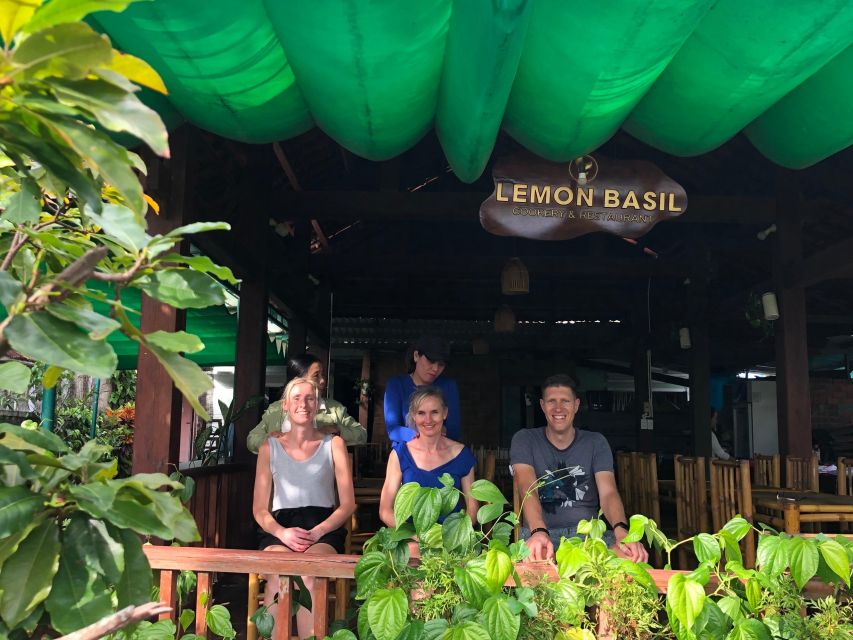
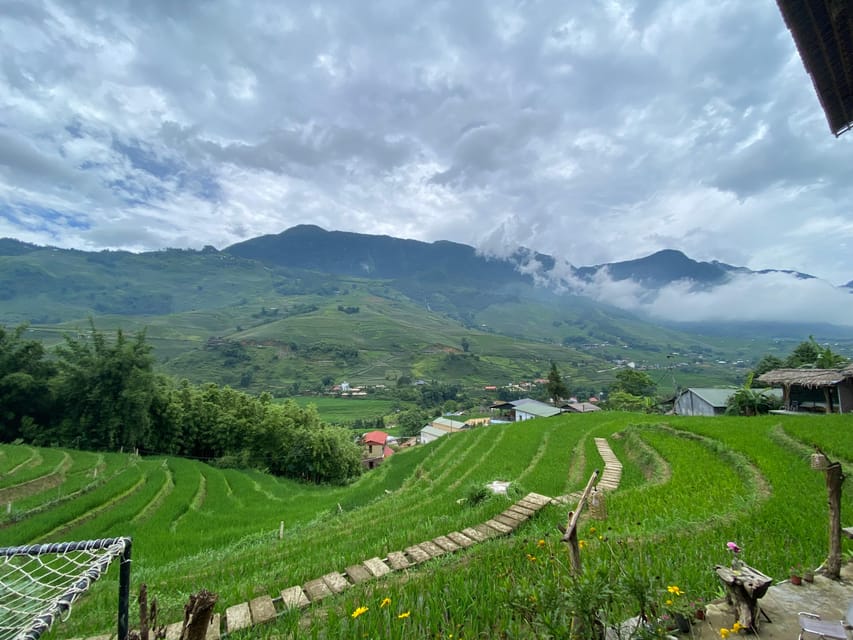
This cooking class is set up like a food walk that ends at the stove. The meeting point is Lemon Basil Cookery & Restaurant in the heart of Tra Que vegetable village. That matters because you’re not just visiting a kitchen—you’re learning where the flavors come from.
Expect a welcome, then a flow that keeps you busy from the start. You’ll be working with ingredients tied to the farm-to-table idea, and the atmosphere feels like a family-run operation rather than a factory of tourists. People talk about the hosts in warm terms, and the vibe matches what you’d hope for in a small class.
One practical note: arrive 5–10 minutes early. The class runs on a tight 3-hour schedule, and getting there on time helps you settle before the first lesson begins.
You can also read our reviews of more cooking classes in Hoi An
The organic farm tour: herbs, soil work, and spring rolls ingredients
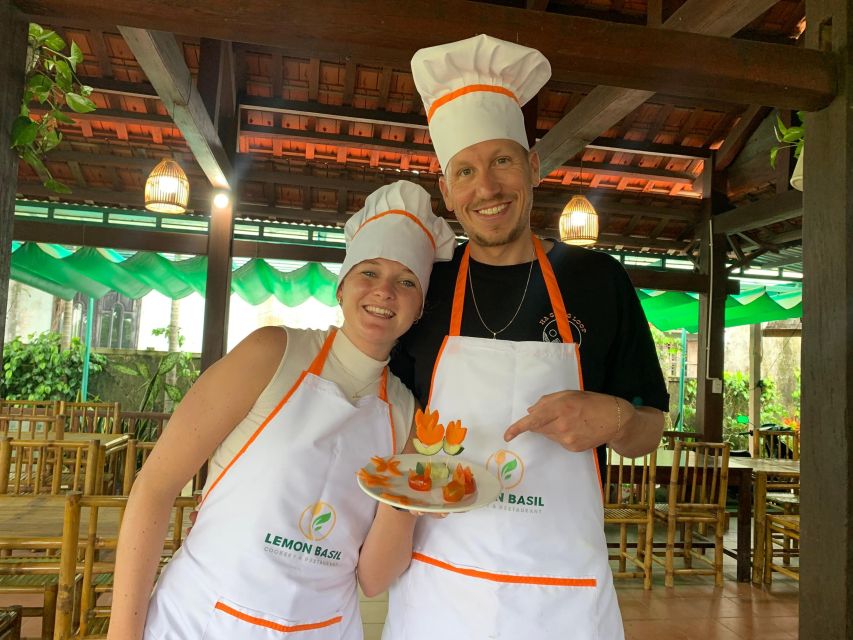
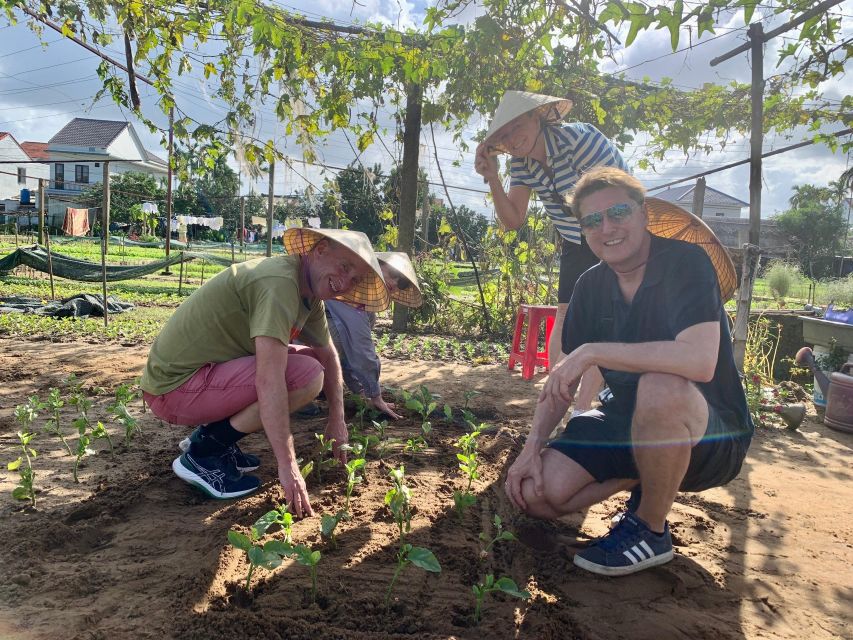
You begin with an organic farm tour around the kitchen area, where you learn what’s growing and how herbs and vegetables show up in Vietnamese cooking. Tra Que is known for vegetables, and this part gives you a quick education you can use later. You see the ingredients before you cook them, so the recipes feel less like mystery and more like cause-and-effect.
A few extra details come up in real-life classes:
- You may get involved with simple garden tasks like watering or hands-on prep.
- You’ll get to learn about herbs and crops used for cooking, not just walk past them.
- There’s a connection to spring rolls early on, since fresh produce from the farm ties into what you’ll make.
If you like food that tastes fresh, this first segment is doing more than filling time. It teaches you what to notice: scent, texture, and how leafy herbs can change the whole dish.
And yes, the spring rolls connection is intentional. The class links the garden to the meal so you don’t just end up cooking random steps—you’re building toward specific flavors.
Hands-on cooking in the kitchen: four Vietnamese dishes, taught step by step
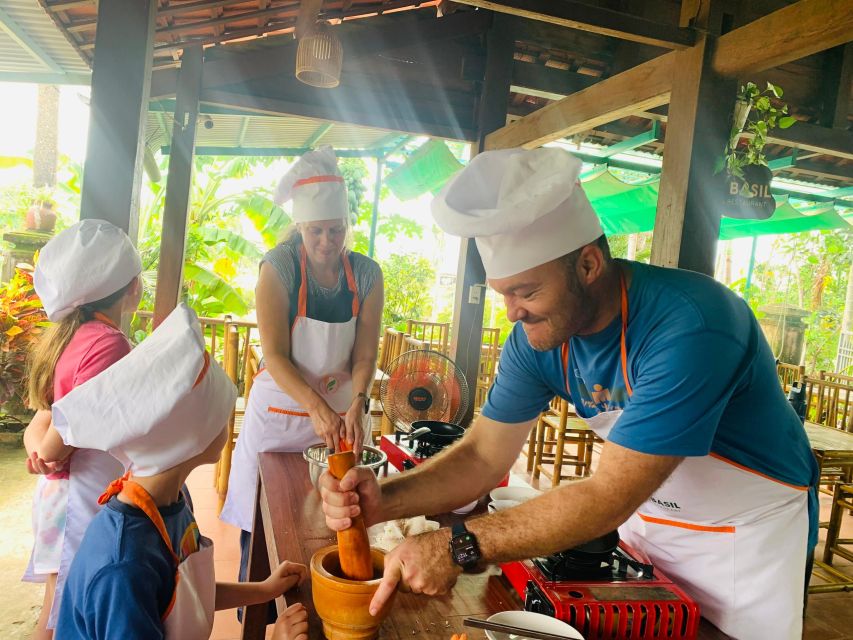
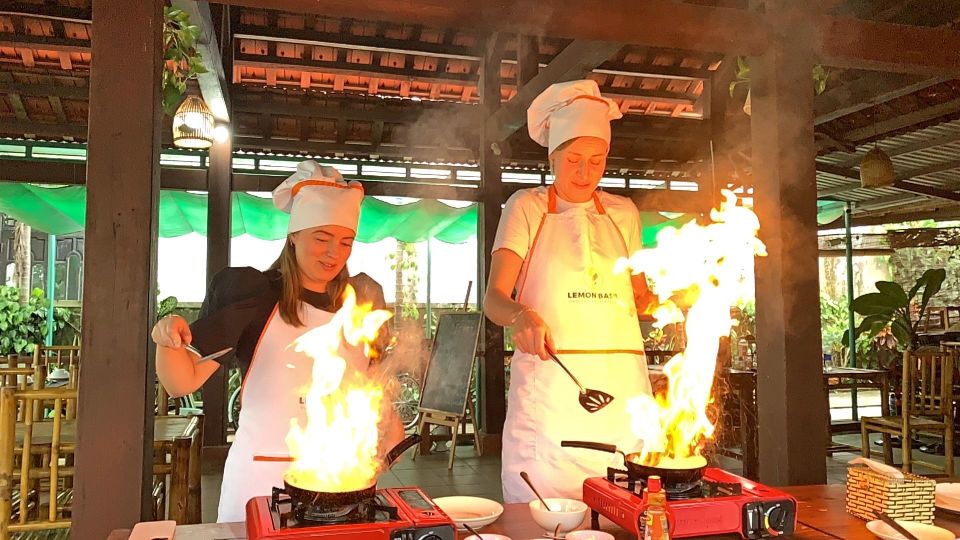
Now the class moves into the kitchen, where you’ll cook four iconic Vietnamese dishes. The teaching is designed for all skill levels. You don’t need knife skills or pancake-flipping confidence. The format is hands-on, with English-speaking chefs guiding you through each dish as you go.
Tra Que Spring Rolls: fresh, herb-forward, and satisfying
Spring rolls are a great entry dish because they show Vietnamese flavor logic clearly: fresh herbs plus crisp components plus the right dipping balance. You’ll work with the ingredients in a way that makes the final result feel earned.
What I like about teaching spring rolls in a farm class is the “why” behind the ingredients. You understand the herbs and vegetables as living things, not just toppings on a plate.
Green Papaya Salad: learning the balance, not just the recipe
Green papaya salad is where many cooking classes either stay vague or get too complicated. Here, the focus is on balancing flavors as you cook. That means you’ll learn how Vietnamese salads get their snap and seasoning complexity without needing a long list of hard-to-find ingredients.
The most useful takeaway is technique thinking: you’re tasting and adjusting as you go. Once you understand that balance, you can recreate the flavor style elsewhere later, even when you’re cooking with different produce.
A few more Hoi An tours and experiences worth a look


Fish in Clay Pot: slow, savory comfort
Fish in clay pot is classic Vietnamese comfort food. In this class, you’ll get hands-on experience and learn why this dish works: the ingredients combine in a way that feels cohesive and warm, with a cooking method that supports gentle flavor development.
Clay pot cooking also teaches you patience. The dish doesn’t feel like fast street food; it feels like food that’s meant to come together. If you’ve ever wondered why restaurant fish tastes deeper than home-cooked versions, this is a good place to start understanding that gap.
Vietnamese Crispy Pancake (Bánh Xèo): the fun challenge
Bánh Xèo is the dish people remember. It’s also the one that can be a little intimidating at first—because crisp edges and the right pour take practice.
The good news: the class doesn’t treat it like a test. You’ll follow instructions, learn the method, and likely end up with a crispy pancake that’s more about learning than perfection. One real perk: the instructors often keep things light and funny, which makes the learning curve feel shorter.
You’ll also leave knowing what to watch for—thickness, heat, and how the pancake should set. That helps if you ever try making it at home later.
Communal dining: eating together changes the lesson
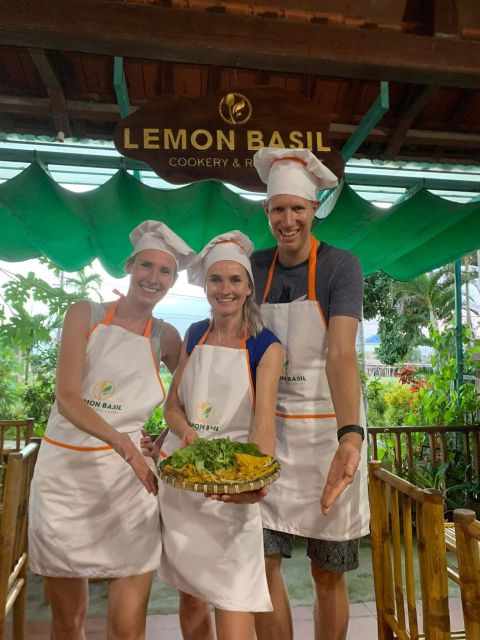
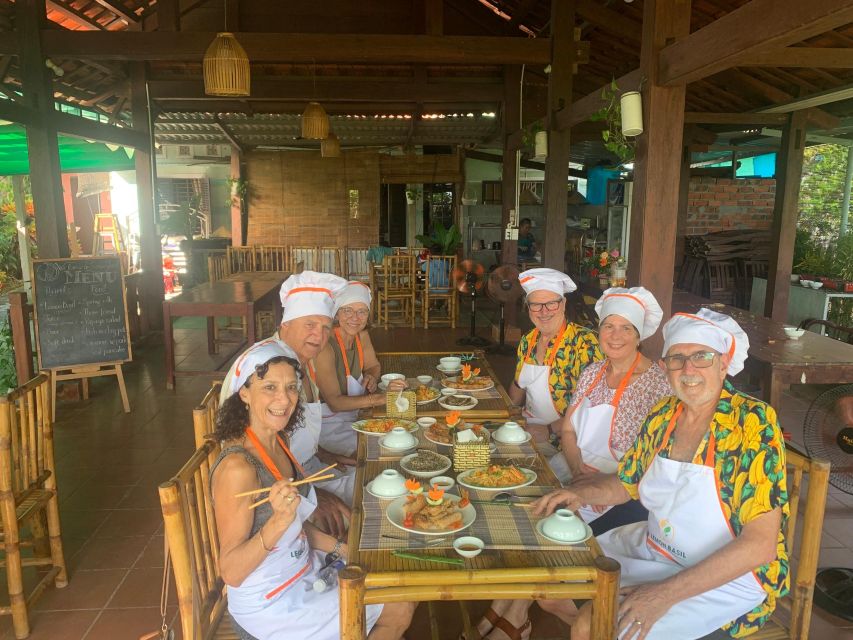
After the cooking, you sit down and eat the dishes in a communal dining setting. This part is not an afterthought. Sharing the meal right after you cook helps you connect taste to technique. When you’re tasting, you instantly notice what worked and what you’d tweak next time.
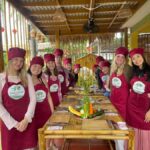
The communal setup also builds easy conversation. You’re cooking with a small group (limited to 10 participants), so you actually get time to talk to the other food lovers at your table. If you like learning socially, this format fits.
I also like that you’re not stuck with a single plate. The meal includes a variety of Vietnamese dishes you made, so you get a more complete picture of the cuisine styles you practiced during the class.
Some classes reportedly include finishing touches like fresh fruit at the end. The core included meal is the dishes you prepare, so treat fruit as a possible bonus rather than a guarantee.
English-speaking chefs and a small group that actually teaches
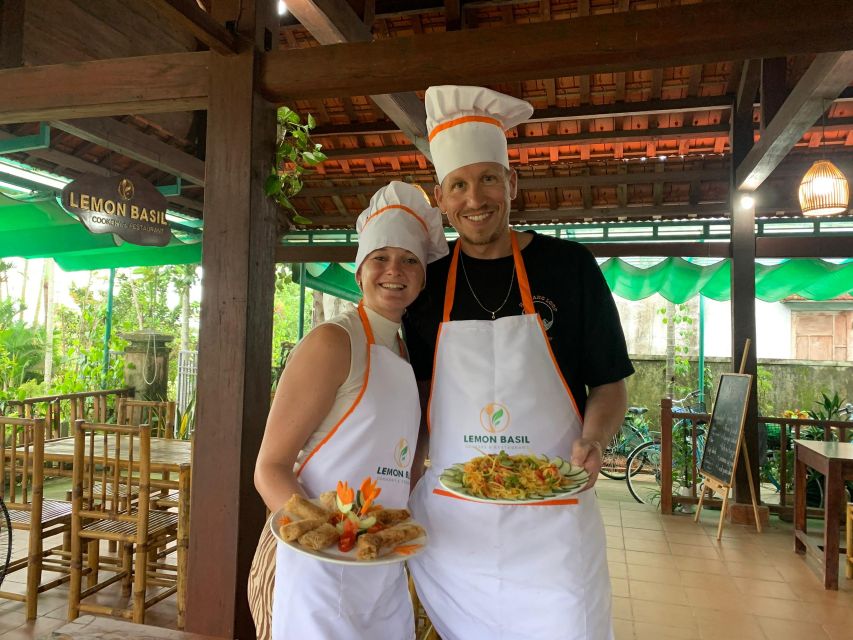
One of the strongest parts of this experience is communication. The class is taught by English-speaking chefs, and the instruction is practical: you get guidance while you cook, not a lecture before the action starts.
Also, the small group size is real. When you’re capped at 10 participants, chefs can respond to what you’re doing in the moment. That matters for dishes like Bánh Xèo, where heat and timing can vary.
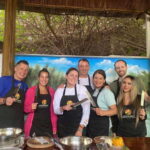
In real sessions, hosts like Min (and her family members, including an aunt and uncle in some class setups) are described as friendly, funny, and encouraging. You get the feeling that this is a home-style operation rather than a scripted show.
If you’re the type who needs reassurance, you’ll likely get it here. People mention feeling taken care of, even when cutting shapes or flipping pancakes doesn’t go perfectly.
One extra perk from at least one class: the chef took photos and videos of the group during the activity. If you’re hoping for content for later, it’s worth asking on the day—just know it may depend on the session.
Price and logistics: is $27 good value for 3 hours?
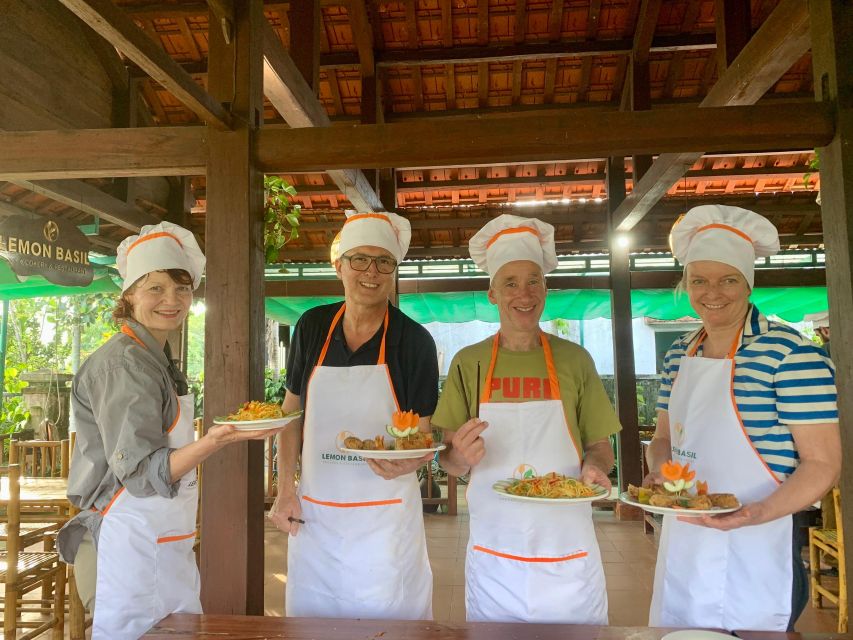
At $27 per person for about 3 hours, this class feels like fair value if you judge it by what you actually get:
- Organic farm tour tied to the ingredients
- Hands-on cooking with ingredients provided
- English instruction from a chef
- Four dishes you cook and then eat
- Communal meal plus a completion certificate
- Small group attention (limited to 10)
For Hoi An-area budgets, this is the type of activity that costs less than a fancy restaurant night yet gives you more than a cooking demo. You’re not paying only for a meal; you’re paying for process, guidance, and practice.
The main logistics consideration is simply access. Since pickup isn’t included, your cost-effective plan is to travel to Tra Que on your own: taxi or your own transport. If you’re already staying nearby in Hoi An, it’s usually manageable. If you’re far out, you’ll want to plan the ride so you don’t rush at the end.
Who this cooking class suits best
This class is a strong fit if you:
- Want a hands-on introduction to Vietnamese flavors without prior cooking skill
- Like food learning that starts with the farm, not just a kitchen counter
- Enjoy communal meals and small-group interaction
- Prefer English guidance and clear step-by-step support
It’s also a good choice if you like cooking formats that give repeatable technique. Green papaya salad flavor balance and Bánh Xèo timing are the kinds of learning that stays useful after the class ends.
If you’re traveling solo, small-group cooking can be a nice way to meet people without awkward icebreakers. If you’re a couple, it’s equally friendly since both of you can cook together and share the meal.
A short, honest verdict: should you book Lemon Basil Cookery & Restaurant?
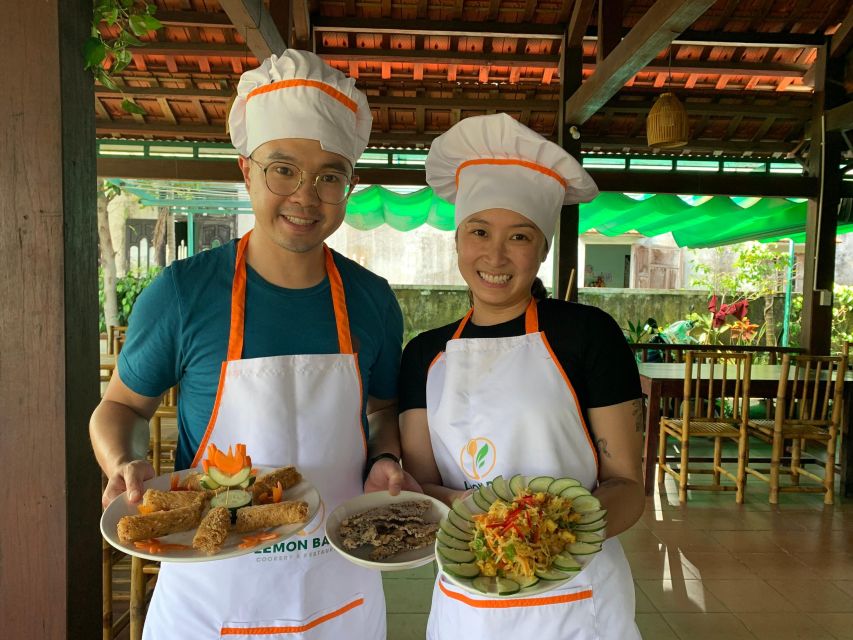
Yes, I’d book it if your ideal cooking experience includes three things: fresh organic ingredients, practical English-led teaching, and a meal that feels connected to what you made.
The only real reason to hesitate is transport. If you don’t want to handle getting to Tra Que on your own, then consider another option with pickup. Otherwise, at $27 for a small-group, four-dish, farm-to-table style class, this is strong value—and the light, family-run energy is part of the reason people leave smiling and ready to cook again.
FAQ
Where is the meeting point?
The meeting point is Lemon Basil Cookery & Restaurant, located in the heart of Tra Que vegetable village.
How long is the cooking class?
The class duration is about 3 hours (approximately 3 to 3.5 hours).
What does the class cost?
The price is $27 per person.
Is pickup included?
No. Pickup services are not included, so you’ll need to arrive independently.
What dishes will I cook?
You’ll cook four dishes: Tra Que Spring Rolls, Green Papaya Salad, Fish in Clay Pot, and Vietnamese Crispy Pancake (Bánh Xèo).
Is instruction available in English?
Yes. The instructor is English-speaking.
How big is the group?
The group is small, limited to 10 participants.
Are dietary restrictions accommodated?
You’re asked to inform them of any dietary restrictions in advance, and the class is designed to be flexible for all dietaries.
Do I get anything when the class ends?
You receive a certificate of completion.
Can I cancel for a refund?
Free cancellation is available up to 24 hours in advance for a full refund.