REVIEW · HOI AN
Cooking Class Hoi An – Organic Garden – Farming Tour-Handicrafts
Book on Viator →Operated by Caman Village Organic Garden · Bookable on Viator
Hoi An has a way of making you hungry fast. This one starts in an organic garden at Caman Village, where you cut herbs for your own meal and learn what makes each plant useful, not just tasty. One thing to plan around: it needs good weather, and if the day gets washed out, you’ll be offered another date or a refund.
I especially liked how the class turns food into a hands-on lesson. You’re not only cooking 3–4 local dishes with a chef’s guidance, you’re also making things like rice paper (it shows up as a standout station in this experience) and learning how herbal drinks are crafted from what you harvest.
In This Review
- Key things to know before you go
- Caman Village Organic Garden: why this starts in the soil
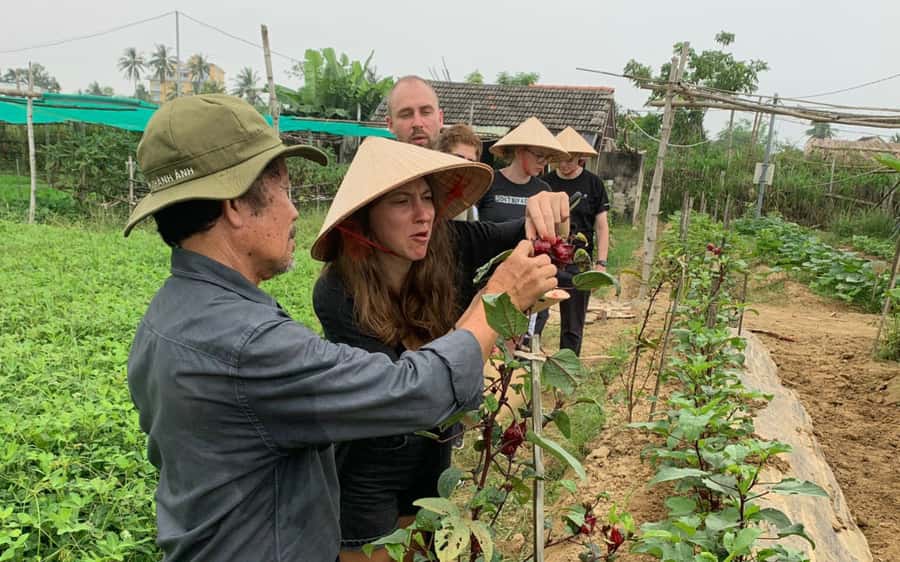
- Cutting, harvesting, and learning plants before you cook
- The cooking class itself: 3 to 4 dishes with real chef guidance
- Herbal drinks and folk games: the cultural side you won’t skip
- Timing, private group setup, and how long it really takes
- Price and value: what $33.63 really buys you in Hoi An
- After cooking: the river resort next door for a low-key break
- Who should book (and who might not love it)
- Should you book this Hoi An cooking class?
- FAQ
- How long is the cooking class at Caman Village?
- Where does the experience start and end?
- What’s included in the price?
- Do I cook meals or just watch?
- Is the tour private?
- What language support is available?
- Are there any extra costs?
- Does the class include herbal drinks and games?
- What if the weather is bad?
Key things to know before you go
- Caman Village feels like a real local garden: airy, fresh, and grown and tended by community members
- You cut vegetables and herbs for your cooking: learn the plant first, then use it in the pot
- Expect more than just cooking: folk games and herbal drink making are part of the flow
- Chef-led instruction with English and Vietnamese support: you get help understanding Vietnamese flavors and food culture
- You leave with proof and something useful: cooking book plus a participation certificate
Caman Village Organic Garden: why this starts in the soil
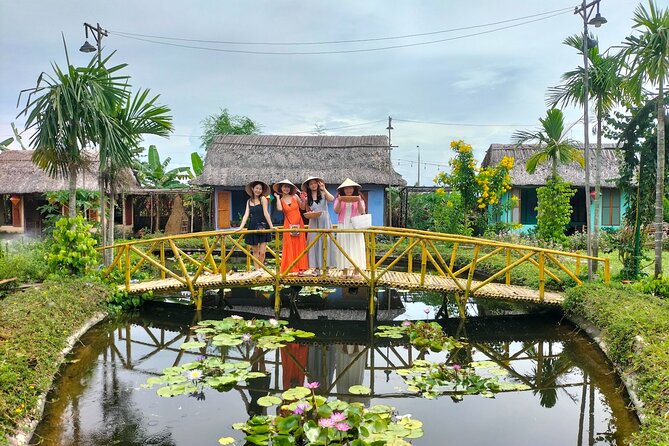
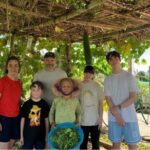
The best part of this cooking class is that it doesn’t begin with a stove and an apron. It begins with walking into a small, peaceful organic vegetable and herb village in Cẩm An, Hoi An. The setting is open and bright, the kind of place where you can actually hear yourself think after a day of traffic and scooters.
You’ll get time to roam the garden and focus on the plants themselves. That matters, because Vietnamese cooking is built on ingredients that do more than taste good. Even when you think you know herbs, you’ll often find there’s a difference between what you see in a market and what grows nearby with its own flavor character. The garden experience is designed to teach you that connection, including the benefits of local herbs and plants, not just how to chop them.
What I like about this approach is how it changes your dinner mindset. When you understand why a herb is used, you’re more likely to remember the flavor when you’re back home cooking. It also keeps the class from feeling like a cookie-cutter show. You’re in a working space, and it shows in the pace.
You can also read our reviews of more cooking classes in Hoi An
Cutting, harvesting, and learning plants before you cook
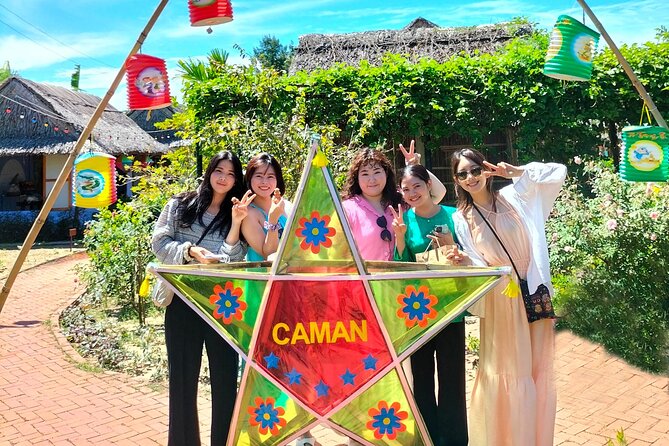
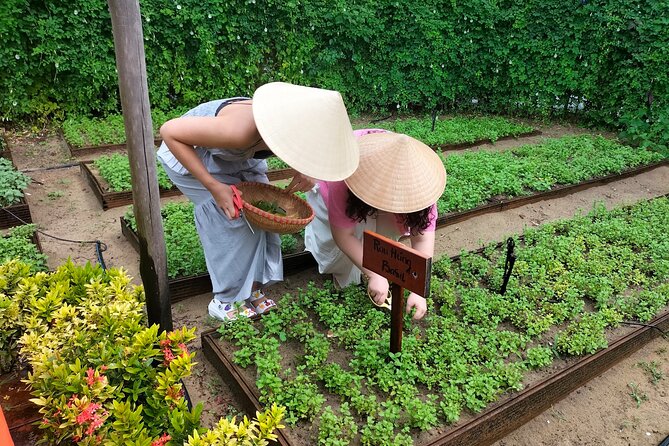
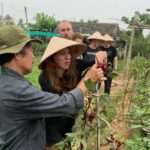
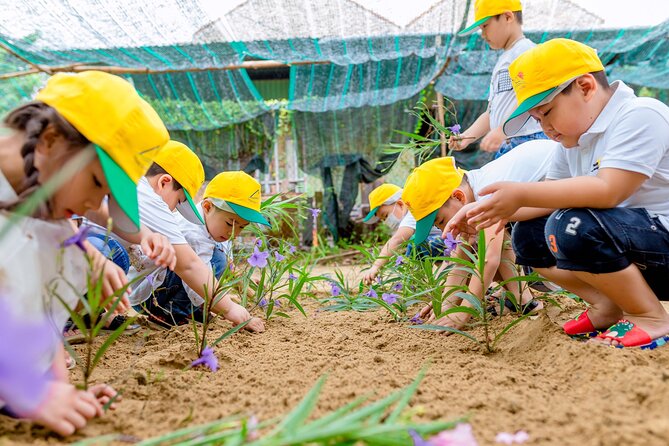
After you’ve taken in the garden, you’ll move into the hands-on stage: cutting vegetables and herbs for your meal. This isn’t just a photo op. You’re learning enough to make decisions while you cook, like which leaves belong together and which ingredients work best in certain dishes.
There’s also time for a gardening-style experience. Depending on how the day is running, you might get a proper gardening tour vibe, with instructions tied to what’s growing right then. You may even find yourself doing small tasks that make you feel, for a moment, like you’re part of the routine—collecting, preparing, and understanding the plants as food, not decoration.
One more detail that makes this section feel valuable: you’re guided by a team that communicates in English and Vietnamese, so you’re not stuck guessing at what you’re eating or why it matters. That language support is a big deal for a cooking class. It turns the experience from hands-on into meaningful.
Practical note: you’ll want comfortable shoes. Garden paths can be uneven, and you’ll be standing and moving for stretches of time.
The cooking class itself: 3 to 4 dishes with real chef guidance
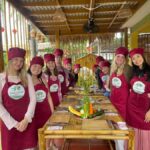
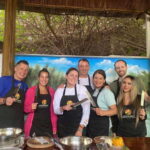
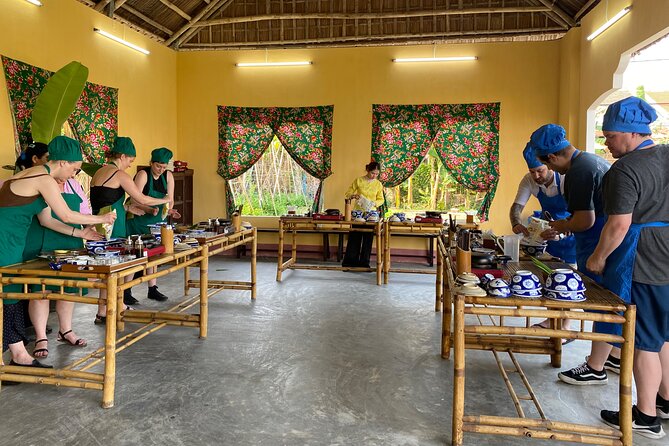
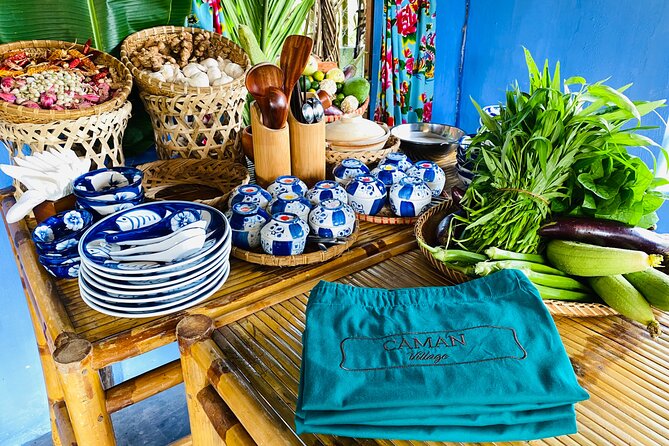
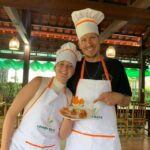
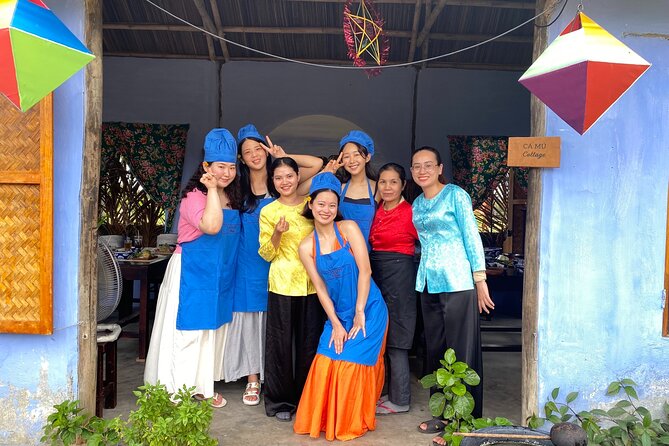
Once you’re past the garden phase, the class shifts into kitchen mode—chef’s instructions, plus the tools that make it feel official. You’ll be given a chef hat and apron, which sounds silly until you realize it helps everyone settle into the cooking workflow.
You’ll learn to cook 3–4 local dishes, step by step. The pace is meant to keep you involved, not just watching from the sidelines. You’ll also get a cooking book afterward, which is the difference between remembering flavors and actually being able to reproduce them later.
A major highlight from experience here is that the class can include hands-on making steps like rice paper. Even if you’ve eaten rice paper in Vietnam before, learning how it’s made (and why it behaves the way it does) adds a layer of understanding you don’t get from a simple tasting.
Menu flexibility is another plus. One of the clear themes from the experience is that the class can accommodate a vegetarian menu option. If you eat vegetarian, this is worth asking about at booking so you can match the dishes to your preferences.
If you’re wondering how many dishes you’ll realistically manage: the structure is built around 3–4, not six. That keeps the cooking fun instead of exhausting, especially since you’re also doing garden prep and extra activities.
Herbal drinks and folk games: the cultural side you won’t skip
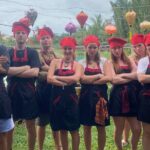
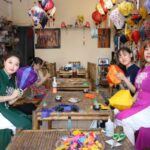
This class isn’t only about meals. It includes a break from cooking through two culturally themed activities: herbal drink making and playing traditional folk games.
The herbal drink part is smart. Instead of getting handed some bottled drink and calling it local, you collect organic ingredients from the garden, then use them to make a drink. That ties the flavors directly back to the plants you walked through earlier. You also start with a welcome drink, so you’re not waiting around for the first taste.
As for folk games, you’ll get time to play traditional games as part of the overall experience. It’s not hard-core competitive. It’s more about giving you a feel for playful local tradition in a relaxed setting, with your guide helping you understand what you’re doing and how it fits the culture.
This blend matters because it makes the class feel like an evening (or afternoon) with the community, not just a cooking demonstration. If you like travel experiences where you learn how people live, not only what they eat, these extras are a big part of the value.
Timing, private group setup, and how long it really takes
The cooking class runs about 3 to 4 hours total. One stop in the flow is planned for around 2 hours 30 minutes in the Caman Village segment, and the overall schedule depends on what you choose to do inside the village.
A useful detail: this is a private tour/activity, meaning only your group participates. That changes the vibe. Instead of being rushed through a fixed script with a large crowd, you get more flexibility and more time to ask questions—especially helpful when you’re learning plant names, ingredients, and cooking reasoning in English and Vietnamese.
Also, factor in that the experience can run a little longer when the team takes time to explain things. That’s not a downside if you like learning at a real pace. It can feel like you’re not just clocking in and out.
Logistics that affect your day: private transportation is not included. You’ll want to plan your own ride or use nearby public transport to get to 01 Nguyễn Thành Ý, Cẩm An, Hội An, Quảng Nam, Vietnam. The meeting point is straightforward, and the activity ends back there.
Bring a light layer if the day is hot. Gardens and outdoor activity areas can heat up fast, but the experience stays comfortable with short breaks built into the program.
A few more Hoi An tours and experiences worth a look

Price and value: what $33.63 really buys you in Hoi An
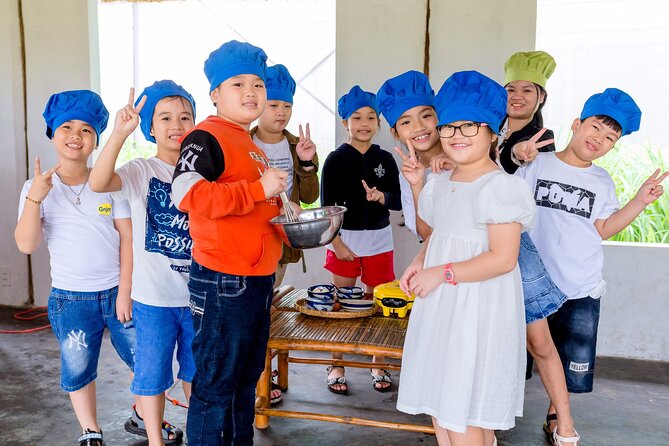
At about $33.63 per person, this is priced like a mid-range cooking class. The real question is what you’re paying for, and here the value is mostly in the included experience—not just the meal.
Your price includes:
- A welcome drink
- Time in the organic garden, with plant and herb benefits learning
- Folk game time
- Herbal drink making using organic ingredients you collected
- Chef hat and apron
- Learning 3–4 local dishes with instruction
- A cooking book and a participation certificate
If you’ve done cooking classes where you basically chop one ingredient and then watch, this one feels different. You’re doing actual prep, harvesting, and cooking multiple dishes, plus you’re tasting what you make in more than one way (herbal drink, plus the dishes you cook).
What’s not included is also clear, and that’s normal for this kind of activity: private transportation and any extra food or drinks beyond what’s included. If you already plan to get yourself there, the price makes sense. If you’re counting on the operator to handle transport, it’s worth budgeting for that.
I think this is a good value for people who want more than a cooking session. You’re paying for agriculture-focused context, cultural playtime, and take-home materials that help you remember the flavors.
After cooking: the river resort next door for a low-key break
There’s an easy add-on near the experience: a beautiful resort right next to Caman Village by the river. It’s a nice place to wander for a snack or a cold beer by the pool afterward.
This isn’t part of what’s included in the cooking class. But it’s a practical tip if you like to keep your day flowing. When you finish, you’ll likely still have energy to relax rather than rush back immediately.
If you do this, give yourself time to cool down first. After cooking and garden work, you’ll feel better with a quiet reset: water, shade, and no chopping board in sight.
Who should book (and who might not love it)
This cooking class is best for you if:
- You want a Hoi An cooking experience that teaches ingredients, not just recipes
- You enjoy garden-style activities and learning how herbs actually grow
- You like classes where the culture includes games and drinks, not only cooking
- You prefer a private group pace with support in English and Vietnamese
You might not love it as much if:
- You’re expecting a fully indoor, climate-controlled cooking workshop. It’s tied to the outdoor garden and requires good weather.
- You hate hands-on prep. There’s cutting, harvesting, and active participation built into the format.
It’s a strong pick for couples, small groups, and anyone who likes food and agriculture. It’s also a nice choice if you want a class that feels grounded in a real place rather than a generic studio.
Should you book this Hoi An cooking class?
I’d book it if you’re in Hoi An and you want the kind of cooking class that connects flavors to the plants behind them. The organic garden start, the herb-focused learning, and the mix of cooking plus herbal drinks and folk games are the reasons this feels worth your time.
If you’re short on time, you might consider another option, because this is a 3–4 hour activity and you’ll be outside part of the day. But if you can spare the afternoon, you’ll come away with skills (and ingredients you understand), plus a cooking book you can actually use later.
FAQ
How long is the cooking class at Caman Village?
It runs about 3 to 4 hours (approx.), with the Caman Village garden and activities segment planned for around 2 hours 30 minutes.
Where does the experience start and end?
It starts and ends back at the meeting point: 01 Nguyễn Thành Ý, Cẩm An, Hội An, Quảng Nam, Vietnam.
What’s included in the price?
Included items are a welcome drink, visit to the Caman organic garden, herbal drink making with organic ingredients collected from the garden, folk game play, chef hat and apron, learning 3–4 local dishes, plus a cooking book and certificate.
Do I cook meals or just watch?
You cook. The class includes chef instruction and you learn to cook 3–4 local dishes.
Is the tour private?
Yes. It’s listed as a private tour/activity, meaning only your group participates.
What language support is available?
The team speaks two main languages: English and Vietnamese.
Are there any extra costs?
Private transportation is not included, and additional food and drink or other optional products are not included.
Does the class include herbal drinks and games?
Yes. You’ll make herbal drinks using ingredients collected from the garden, and you’ll also play traditional folk games.
What if the weather is bad?
The experience requires good weather. If it’s canceled due to poor weather, you’ll be offered a different date or a full refund.