REVIEW · HUE VIETNAM
Hue Imperial city walking tour and optional royal tombs
Book on GetYourGuide →Operated by Huebymatthew · Bookable on GetYourGuide
Gates, palaces, and politics in one walk. This Hue Imperial City tour turns the UNESCO site into a real story as you trace the Forbidden City layouts and the Nguyen Dynasty’s choices behind them. I like that it’s a small-group pace with a historian guide walking you through what you’re actually seeing, not just pointing at walls.
My favorite part is the guidance itself. With English speaking historian Matthew, you get clear explanations and a calm, professional style that keeps the whole walk understandable, even when the history gets complicated. You also get practical help with questions and context, which makes the citadel feel less like a museum and more like a place that once ran an empire.
One watch-out: the entrance ticket isn’t included (it’s 200,000 VND per person), so plan on paying that on top of the tour price.
In This Review
- Key highlights worth planning around
- Why Hue’s Imperial City feels like more than sightseeing
- The guide setup that makes the walk actually work
- What you’ll learn about the Nguyen Dynasty (and why it changes how you look)
- A practical overview of the 2.5–4.5 hour route
- Stop-by-stop: the spaces you’ll walk through inside the citadel
- Cửa Ngọ Môn (Cua Ngo Mon)
- Thái Hòa Palace
- The next courtyard/pavilion photo visit
- The Mieu Temple (Temple area)
- Cung Diên Thọ
- Cung Trường Sanh
- Kiến Trung Palace
- Thai Binh Pavilion
- Thiệu Phương Garden
- Cửa Hiển Nhơn
- Optional royal tombs: when it makes sense to add them
- Price and value: what $26 really gets you
- Weather, timing, and what to bring so the heat doesn’t win
- Who this tour fits best
- Should you book this Hue Imperial City walking tour?
- FAQ
- Is the entrance ticket included in the tour price?
- How long is the Hue Imperial City walking tour?
- Do I need a guide, or can I just walk the site myself?
- Is the tour offered in English?
- Where do I meet the tour guide?
- Do I get hotel pickup?
- Is there a morning bonus tour option?
Key highlights worth planning around
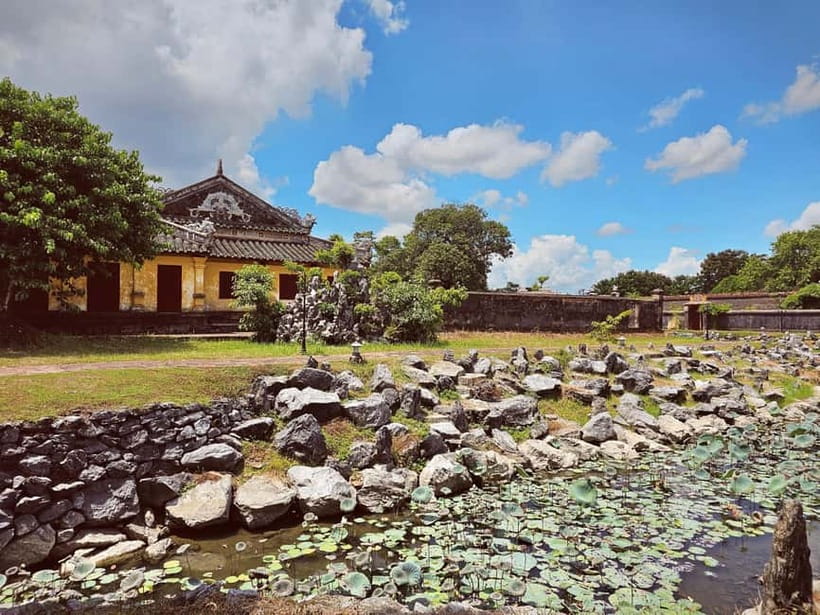
- Historian-led walking route that focuses on how Hue worked under the Nguyen Dynasty (1802–1945)
- Morning option bonus to watch the Changing Guard Ceremony at 8:00 am in front of the Ngo Mon Gate
- Stop-by-stop coverage of major court spaces like Thái Hòa Palace, the Mieu Temple, and the Forbidden City areas
- English guidance from Matthew with patient, professional explanations
- Small or private group size for better pacing inside a big, maze-like complex
Why Hue’s Imperial City feels like more than sightseeing
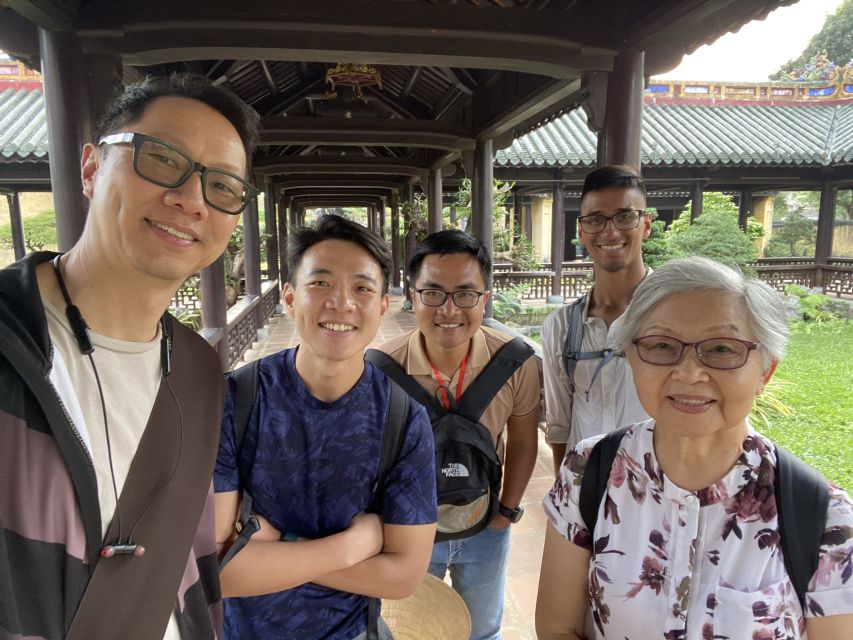
Hue doesn’t try to be fancy. It tries to be orderly. That’s the mood you’ll feel on this tour as you walk through imperial gates, court buildings, temples, and garden spaces that were designed to control movement, ceremonies, and status.
The Hue Imperial City is a UNESCO World Cultural Heritage site (recognized in 1993). But UNESCO dates don’t help you picture daily life. The tour does, by tying the layout to the Nguyen Dynasty’s decisions: why Hue became the capital, how power was displayed in architecture, and how that worldview eventually collapsed.
You’ll hear the big picture first—Nguyen rule from 1802 to 1945—and then you’ll watch it show up in the spaces you stand in. Once you start connecting names and functions, the citadel stops feeling like random landmarks and starts reading like a plan.
You can also read our reviews of more walking tours in Hue Vietnam



The guide setup that makes the walk actually work
Inside an imperial complex, timing and orientation matter. This tour helps you get there and get started with less friction.
You meet at the 4-cannon side of the Nine Holy Cannons—and the guide will text you via WhatsApp before you start, so you’re not wandering around guessing where the group is. On the opposite side is the 5-cannon, which is a helpful detail for anyone arriving a little unsure.
Pickup is optional if you’re staying in the city center: a driver plus tour guide can come get you. The tour also runs as private or small groups, so you’re not stuck in a loud knot of people moving at the pace of the slowest camera click.
This matters because the route is not just a straight line. It’s a sequence of gates, halls, temples, palaces, and garden areas. With a smaller group, you get the time to pause, ask questions, and understand what you’re seeing before you move on.
What you’ll learn about the Nguyen Dynasty (and why it changes how you look)
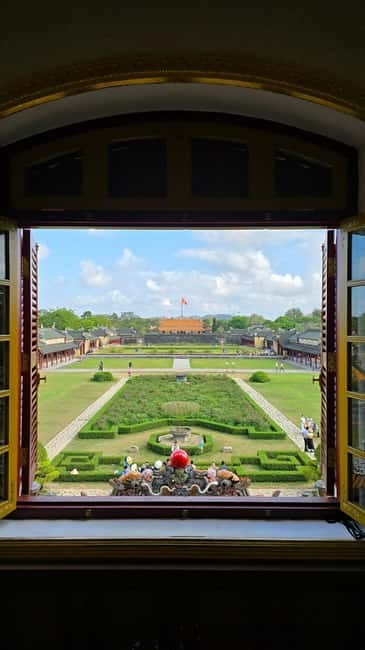
This isn’t a “look, photo, next” kind of tour. It’s built around explanations that help you interpret the architecture and the empire behind it.
Here are the themes you’ll get during the walk:
- Why Hue was chosen as the capital under the Nguyen Dynasty (1802–1945)
- Architectural choices of the royal court, tied to how authority wanted to be seen
- Design influences, including the kind of thinking people associated with Feng Shui and practical concerns like weather conditions
- The reasons behind the downfall of the Nguyen Dynasty and related stories that connect politics to what happened on the ground
One of the best parts is that the guide links the ceremonial spaces to real engineering and practical problems. In past bookings with Matthew, people have been impressed by how he connects the palaces to smart solutions for issues like flood water and wind currents—so the place feels planned, not ornamental.
That approach is the difference between reading about an empire and actually standing inside its operating system.
A practical overview of the 2.5–4.5 hour route
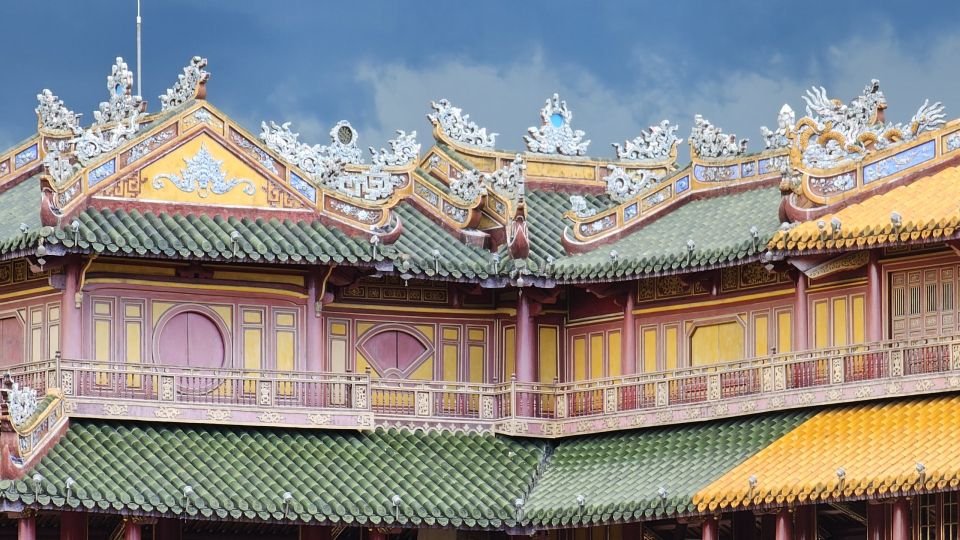
The total duration can run from about 2.5 to 4.5 hours, depending on the option you choose and the starting time available.
Your walk includes guided stops and short walks between key locations. You’ll also have photo breaks sprinkled in—especially around major ceremonial buildings—so you’re not stuck rushing for shots.
Also keep the weather in mind. Hue can be hot and humid in summer (May to August). That’s not a warning for show. Bring more water than you think you need.
Stop-by-stop: the spaces you’ll walk through inside the citadel
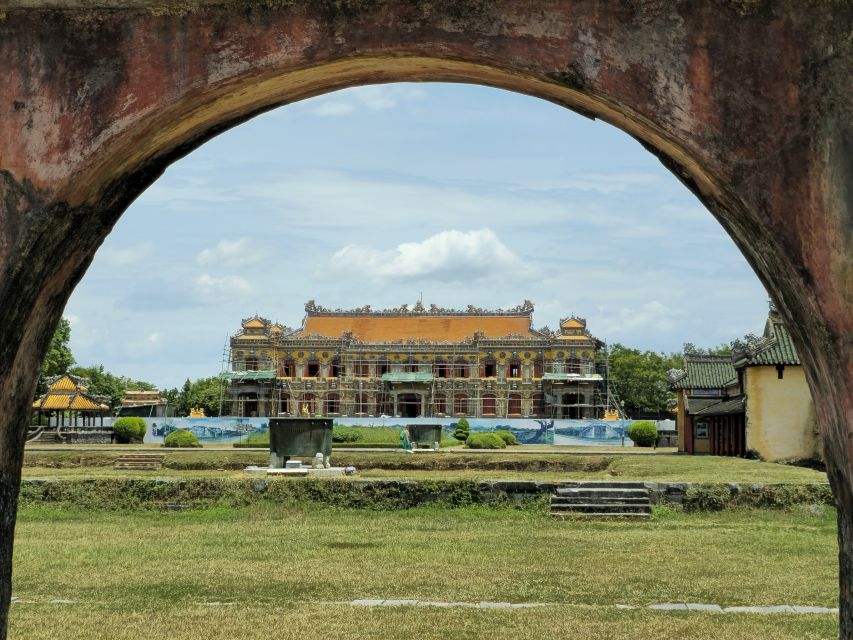
The route is designed to move through the imperial sequence in a logical way, starting at the main outer gate area and gradually moving inward to court buildings, ceremonial halls, and forbidden-zone spaces.
You can also read our reviews of more city tours in Hue Vietnam



Cửa Ngọ Môn (Cua Ngo Mon)
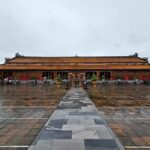
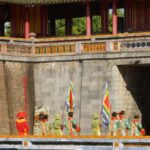
You start with a short guided visit here (about 15 minutes). This is the kind of place where the city’s hierarchy becomes visible fast. Even if you don’t know the rules of the empire yet, the gate structure and positioning give you a sense of process and control.
If you book a morning tour, there’s an added bonus: you can watch the Changing Guard Ceremony at 8:00 am in front of Ngo Mon Gate. That’s one of the easiest ways to feel the citadel as a functioning stage, not just a set of ruins.
Thái Hòa Palace
Next is Thái Hòa Palace, with a photo stop and a guided tour (around 20 minutes of walking time in this segment). This is the spotlight building. The guide’s job here is to explain why the hall matters and how it fits into the ceremonial rhythm of the court.
If you’re the kind of person who enjoys architecture details, this stop is a good place to slow down. The goal is to understand the building’s role, not just its look.
The next courtyard/pavilion photo visit
After Thái Hòa, there’s a quicker stop that includes a photo visit plus a guided look (about 9 minutes). The exact focus depends on the flow of the day, but the purpose is consistent: it helps you connect the ceremonial big hall to the surrounding spaces where court life moved.
Think of it as a bridge stop—short, but it keeps the storyline from jumping.
The Mieu Temple (Temple area)
Then you enter The Mieu Temple zone, with guided sightseeing and a longer walk time (about 30 minutes). Temples within the court spaces often feel different than the palaces. They carry a different tone—more ritual, more symbolism, more memory.
This stop is where a good historian guide earns their keep, because you need context to understand why it’s placed where it is and what kind of meaning the court wanted to hold close.
Cung Diên Thọ
Next comes Cung Diên Thọ, another guided stop with sightseeing and about 30 minutes of walking time. You’ll likely hear about its function and meaning in the overall court structure, including how different palace areas connected to ideas of longevity and power.
Cung Trường Sanh
After that, Cung Trường Sanh is a shorter guided visit (around 10 minutes). Even in a shorter time window, the guide typically uses this area to reinforce how palace names and spaces weren’t random. They were part of the language of the court.
Kiến Trung Palace
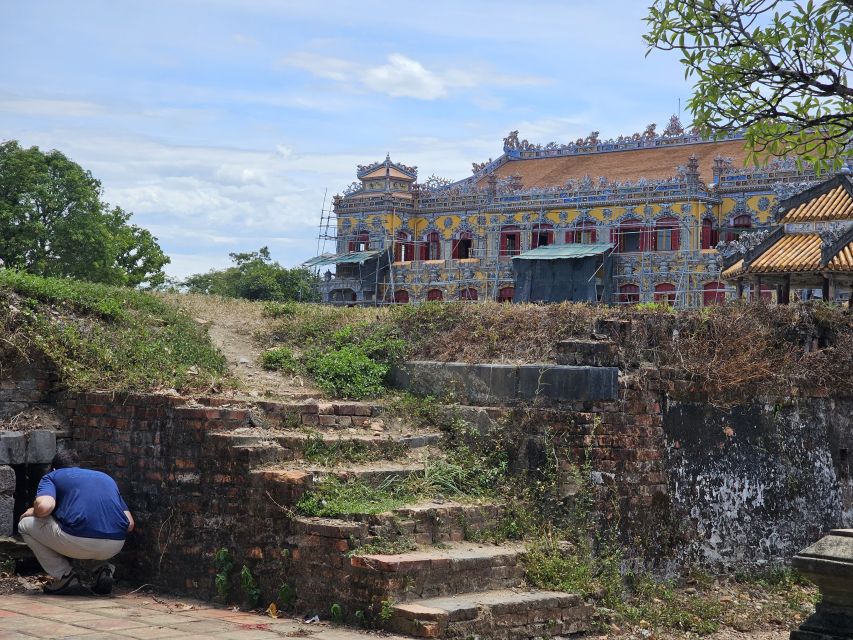
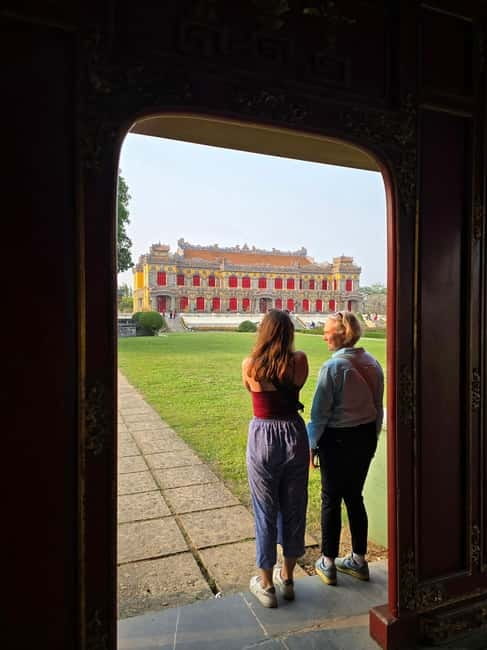
Kiến Trung Palace gets a guided tour with sightseeing and about 20 minutes of walking time. This is one of the Forbidden City areas where the tour really helps you understand the court logic: how access worked, how the royal world separated itself from everything outside, and how the architecture helped enforce that separation.
Thai Binh Pavilion
Then you reach Thai Binh Pavilion (about 10 minutes with guided sightseeing). Pavilions can look simple if you only notice the rooflines. With the guide’s explanations, you start seeing how these structures fit ceremonial patterns and the day-to-day flow of the court.
Thiệu Phương Garden
Next is Thiệu Phương Garden, another 10-minute guided sightseeing stop. Gardens inside a royal complex aren’t only for looks. They’re also for mood and movement—spaces that change how you breathe and how you read the grounds.
If you’re trying to understand the “why” behind the layout, this stop helps. You go from hard ceremonial architecture to a softer space shaped for the court’s way of living.
Cửa Hiển Nhơn
Finally, you finish at Cửa Hiển Nhơn (about 5 minutes of guided sightseeing). This closing stop matters because it helps you land the full route. You see how the inner world is bounded, how entrances mark transitions, and how the tour’s story comes back to the idea of controlled access.
The activity ends back at the meeting point, and there are also drop-off options back near Hue or at Cửa Hiển Nhơn, depending on how your option is set up.
Optional royal tombs: when it makes sense to add them
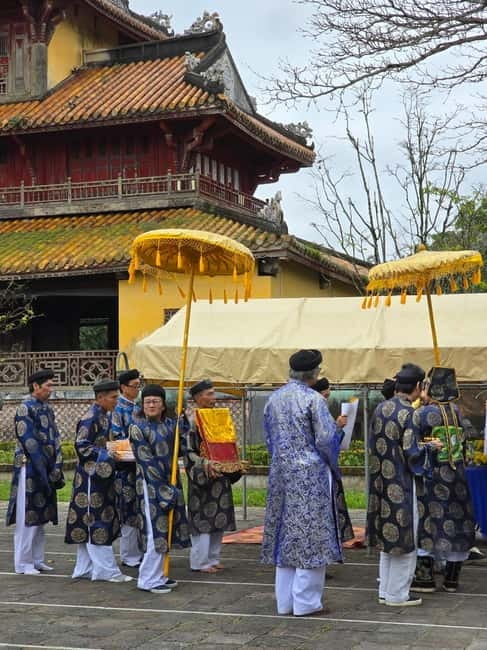
Your tour includes the Imperial City walk, with optional royal tombs as a natural follow-up choice.
This pairing works because you’ll already understand the Nguyen Dynasty’s power display inside the citadel. Royal tombs take that same story outward—showing how the dynasty wanted to be remembered in stone and landscape.
Even if you only have time for the city portion, knowing that the same guide has experience leading people to royal tombs can make your planning easier. The key is to match your time and energy. The Imperial City walk is mentally dense; the tombs are often more spread out, so it helps to plan a calmer second day if you can.
Price and value: what $26 really gets you
The tour price is listed at $26 per person, and the final cost can vary based on the option you choose.
Here’s the value logic:
- You’re paying for a historian guide’s time, not just general admission.
- You’re getting an English-language explanation track through a UNESCO complex, where guessing on your own usually leads to confusion.
- Small groups (or private options) usually mean more time at key stops and less stress moving between gates.
Now the part that affects your total budget: entrance tickets are not included and cost 200,000 VND per person. So your real out-of-pocket is tour price plus ticket.
If you like history with context—and you want architecture explained instead of photographed—you’ll feel like the guide’s cost is doing its job.
Weather, timing, and what to bring so the heat doesn’t win
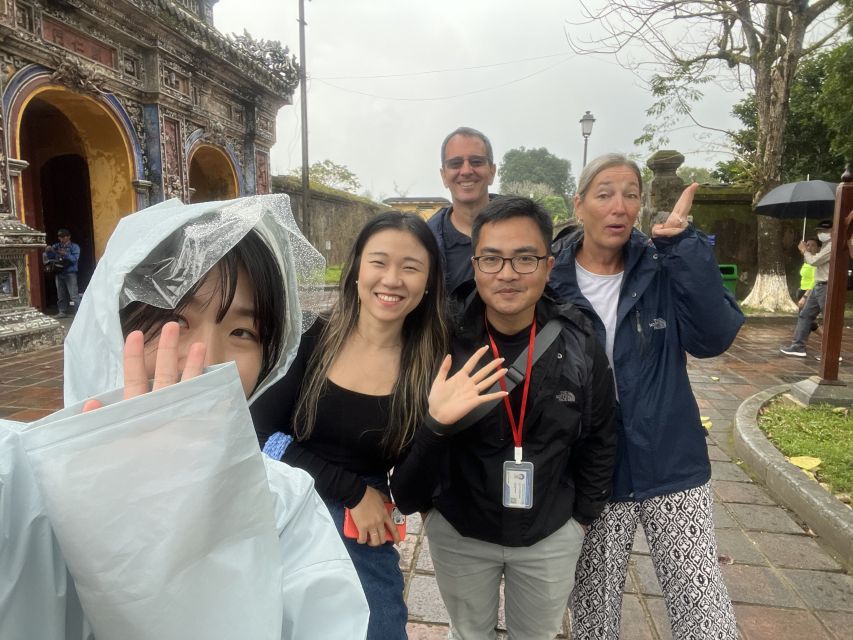
Hue can be hot and humid in summer (May to August). Even on a walking tour that isn’t all-day long, you’ll feel it if you don’t plan.
Bring:
- Extra water
- Sunscreen or a hat
- A bit of patience for humidity delays, especially if you’re slow on photos
If you’re booking the morning tour, you also want to be ready for an early start so you can catch the 8:00 am Changing Guard Ceremony in front of Ngo Mon Gate. It’s one of the most time-sensitive bonuses here.
Who this tour fits best
This is a strong match if:
- You want a clear explanation of the Nguyen Dynasty and why Hue became the capital
- You care about architecture, symbols, and how the court’s layout reflects power
- You prefer small-group pacing inside a large, easily confusing complex
- You want an English guide who can keep history understandable, not lecture-heavy
It may be less ideal if:
- You want a completely free-form explore-on-your-own day
- You’re only interested in the highlights and don’t care why the buildings are where they are
Should you book this Hue Imperial City walking tour?
Book it if you want Hue’s Imperial City to make sense. This tour is built to connect the names of palaces and temples to the logic of the Nguyen Dynasty. The combination of small-group pacing and a strong English historian guide (Matthew) is what makes it worth it, especially for first-time visitors.
The biggest reason to pause is the entrance ticket cost, since it adds to the total. But if you’re already planning to enter the UNESCO complex, that’s a normal part of the equation.
If your schedule allows, consider the morning option for the Changing Guard Ceremony. It’s a simple way to add real atmosphere to the walk.
FAQ
Is the entrance ticket included in the tour price?
No. The entrance fee is 200,000 VND per person and is not included in the tour price.
How long is the Hue Imperial City walking tour?
The duration ranges from about 2.5 to 4.5 hours, depending on the option and starting time available.
Do I need a guide, or can I just walk the site myself?
This tour is designed around a live English historian guide who explains the Nguyen Dynasty context and what you’re seeing at each stop. If you go alone, you might still enjoy the sights, but you’ll miss a lot of the explanation that gives the route meaning.
Is the tour offered in English?
Yes. The live tour guide speaks English.
Where do I meet the tour guide?
Meet at the 4-cannon side of the Nine Holy Cannons. The guide will also text you via WhatsApp before the meeting to confirm everything is going smoothly.
Do I get hotel pickup?
Pickup is optional. If your hotel is in the city center, a driver and tour guide can pick you up.
Is there a morning bonus tour option?
Yes. If you book the morning tour, you can watch the Changing Guard Ceremony at 8:00 am in front of Ngo Mon Gate.