REVIEW · HUE VIETNAM
Hue Imperial City and Forbidden City Walking Tour
Book on GetYourGuide →Operated by Samtour Vietnam Company · Bookable on GetYourGuide
Royal Hue reads like a storybook, on foot. This Hue Imperial Citadel walking tour turns architecture into real-life court drama, including harem stories and the long Nguyen Dynasty timeline.
What I really liked was the way the guide connects the places to how the court worked day to day. You’ll also get satisfying photo stops plus short guided walks, so the 2.5–3 hours doesn’t drag or blur together, even if you’re cramming Hue between other plans.
One consideration: the Imperial City entrance ticket isn’t included, so you’ll add that on arrival and plan for some paying-at-the-site logistics.
In This Review
- Key highlights that make this tour worth your time
- Hue Imperial Citadel on foot: why a 2.5–3 hour walk fits
- Price and tickets: what you pay beyond the $19 tour rate
- Starting at the Bronze Cannons: getting your bearings fast
- Flag Tower to Cửa Ngô Môn: the court’s front door and what to look for
- Thái Hòa Palace and the boundary of royal access
- Inside the Hue Imperial City highlights: symbols, courtyards, and meaning
- Duyệt Thị Đường Royal Theater: court entertainment you can actually picture
- Thiệu Phương Garden and Thái Bình Pavilion: royal calm with clear purpose
- Kiến Trung Palace restoration story: why rebuilding matters
- Cung Diên Thọ and the Mieu Temple: power, family, and worship
- Nine Dynastic Urns and Hien Lâm Pavilion: messages cast in bronze
- The guides: friendliness and sharp Q&A make the difference
- Where this tour fits in your Hue day
- Should you book this Hue Imperial City and Forbidden City walking tour?
- FAQ
- Is the Imperial City entrance ticket included in the tour price?
- How long is the Hue Imperial City and Forbidden City walking tour?
- What language is the tour guide?
- Where do we meet the guide?
- Is hotel pickup available?
- Is this tour private or a small group?
Key highlights that make this tour worth your time
- English-speaking guides who can explain court life and symbols at a human pace
- Bronze Cannons meeting point near Ngan Gate, so you start oriented instead of wandering blind
- Thiệu Phương Garden + Thái Bình Pavilion for the quieter side of royal life
- Duyet Thị Đường Royal Theater as an old working-style theater concept, not just a building
- Kiến Trung Palace’s 2024 restoration that helps the “what happened after collapse” story make sense
Hue Imperial Citadel on foot: why a 2.5–3 hour walk fits
Hue’s Imperial City can feel like a maze if you’re going solo. Even if you read a few signs, you’re still left asking the big question: who lived here, who ruled here, and why did they build it this way?
This tour does a smart thing: it keeps you moving through the key zones without trying to cover every corner of the citadel complex. The result is a clear arc—public ceremonial spaces, inner power zones, then gardens and court-era highlights that many visitors skip.
And yes, you’ll hear stories. The Nguyen Dynasty’s 143-year reign isn’t presented as a dry timeline. It’s framed around court customs, including stories tied to the harem—exactly the kind of detail that makes a palace visit feel alive instead of like a photo scavenger hunt.
You can also read our reviews of more walking tours in Hue Vietnam


Price and tickets: what you pay beyond the $19 tour rate
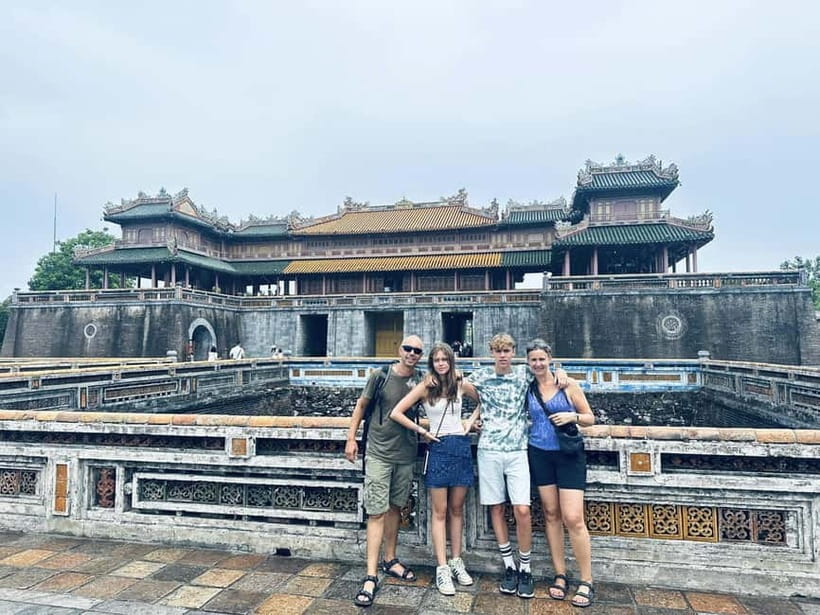
The tour price is listed at $19 per person, and what you’re buying is the guided experience: an English-speaking guide, bottled water, and about a 2.5-hour guided walk through the Imperial City area.
What’s not included is the Imperial City entrance ticket (200,000 VND per person). So, treat the $19 as the guide fee, and budget extra for the ticket when you arrive. If you’re traveling with a tight schedule, I’d also keep some time padding for ticket purchase since the guide assists you with getting in.
If you compare options, this tour tends to be good value for one simple reason: Hue can be expensive to enjoy incorrectly. A guide helps you avoid wandering into the wrong places or missing the stories tied to specific buildings.
Starting at the Bronze Cannons: getting your bearings fast
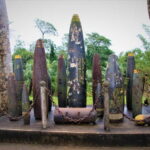
You start near the four bronze cannon area by Ngan Gate (Cửa Ngăn), and your guide will be holding an A4 paper with your name. Depending on your option, there’s also optional hotel pickup to the hotel reception lobby.
This matters more than it sounds. Hue’s citadel layout has a logic—gates, courtyards, ceremonial spaces, then the more private zones. Starting at the right edge means you can actually make sense of what you’re seeing as you move.
Also, this tour builds in practical help right away. After the meeting, the guide assists you with purchasing the necessary ticket(s) so you can continue through the Hue Imperial City walking route with fewer pauses.
Flag Tower to Cửa Ngô Môn: the court’s front door and what to look for
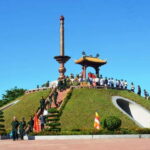
Your first major stop is the Flag Tower for a quick photo stop and guided context. The guide will tie it to how the court showed power to the public—this isn’t just a tall structure for photos.
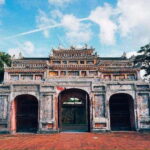
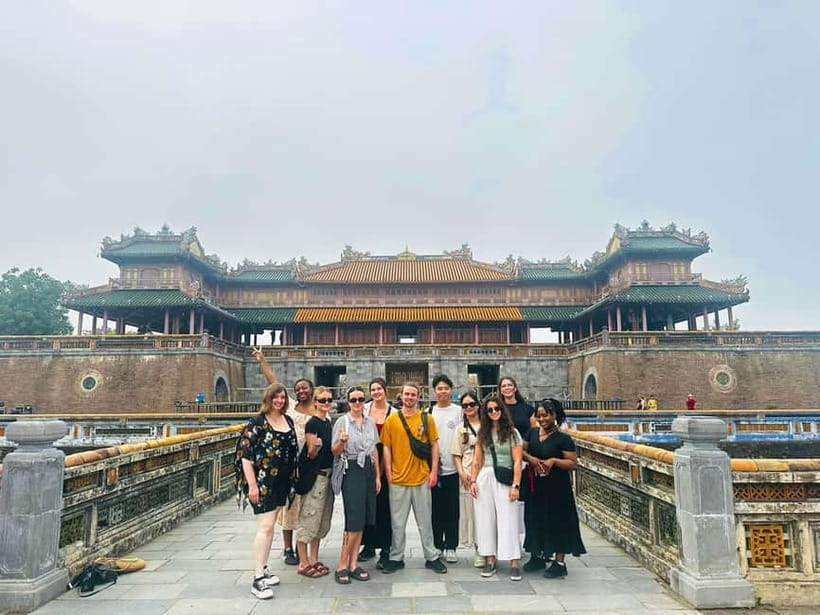
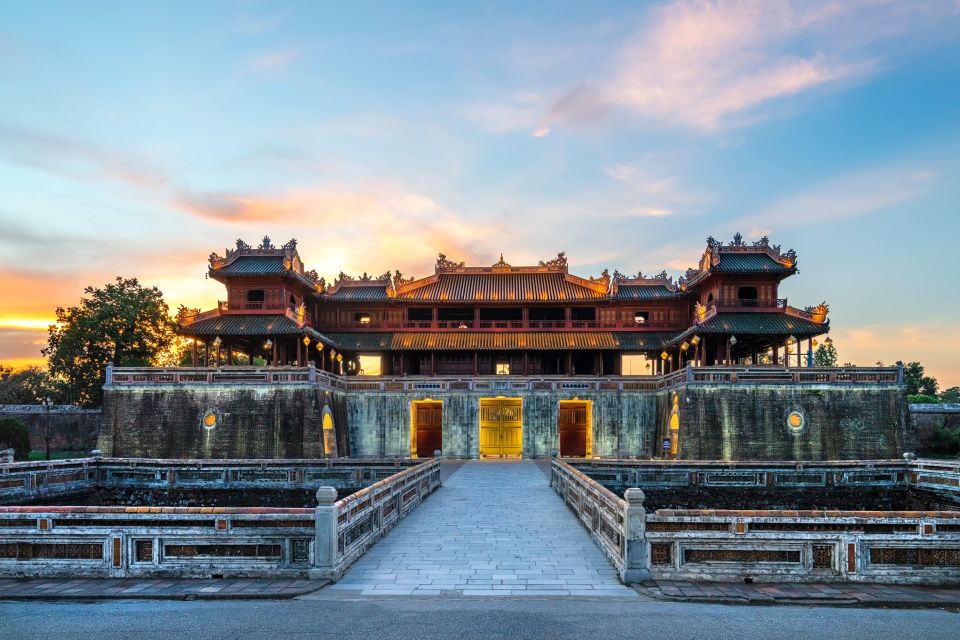
Next comes Cửa Ngô Môn (Ngo Mon Gate). Expect a short guided walk and a lot of “wait, that’s why it’s placed there” moments. The gate area is where ceremonial flow becomes visible: it’s designed so movement into the citadel feels controlled and meaningful.
One detail I’d watch for here is the Ngu Phung Pavilion (Lầu Ngũ Phụng), described as a frame structure made entirely of ironwood with 100 pillars, located above the Ngo Mon Gate. It’s the kind of element that’s hard to appreciate from a distance, but a guide can point out what it represents and why it would have mattered to the court.
Thái Hòa Palace and the boundary of royal access
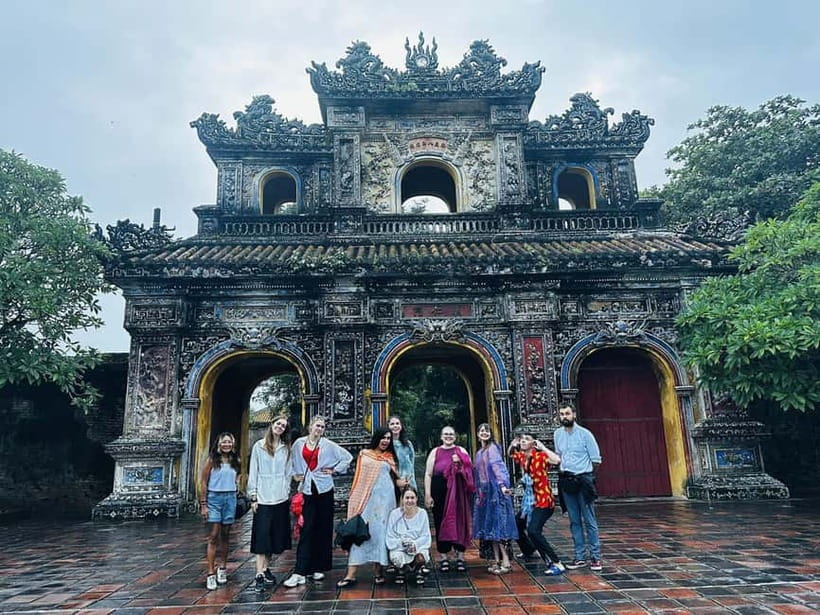
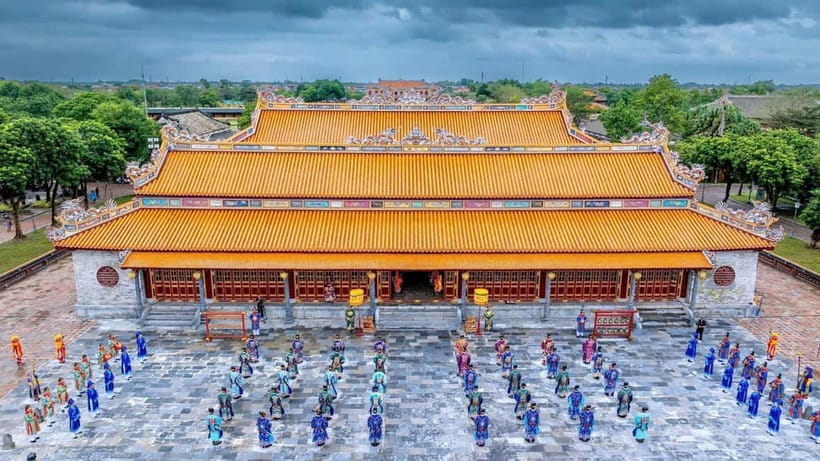
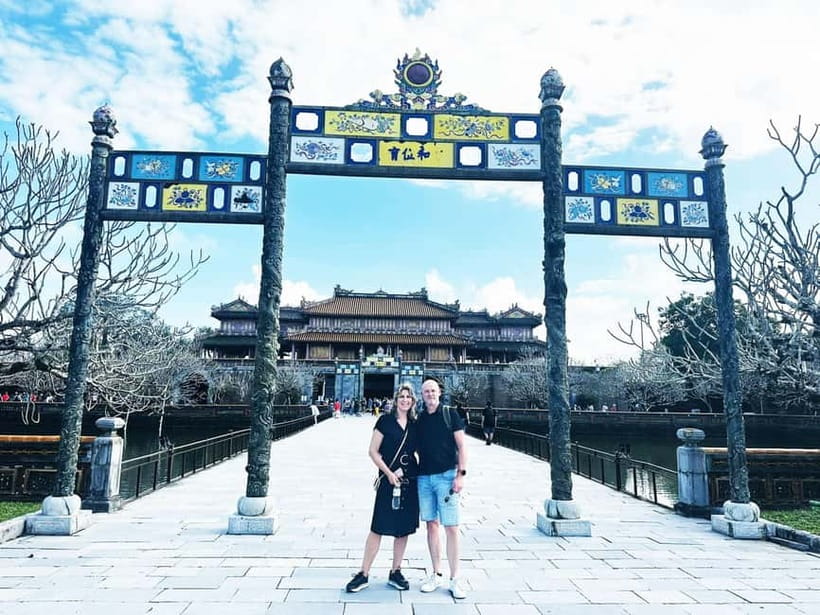
From Ngo Mon, you reach Thái Hòa Palace (Điện Thái Hòa), with time for photos and a guided visit. This is a major “this is where rulership becomes official” stop.
The palace is described as the coronation place of 13 Nguyen kings. So when you’re standing there, the guide can help you understand that the architecture is designed to make authority feel formal and untouchable.
This is also where the tour naturally leads into the idea of the Forbidden Purple City (Tử Cấm Thành). The key point is access: the royal family lived there, and mandarins and civilians weren’t allowed to come close. Even if you’re not going into restricted spaces, you’ll learn the meaning of the boundary and why it was kept strict.
If you want a quick takeaway: in royal complexes, gates and walls aren’t just barriers. They’re instructions about who belongs where.
You can also read our reviews of more city tours in Hue Vietnam
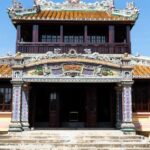

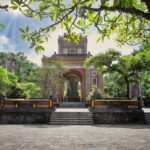
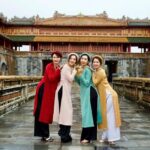
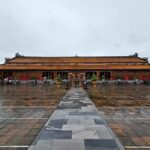
Inside the Hue Imperial City highlights: symbols, courtyards, and meaning
At the Hue Imperial City stop, you’ll get another guided section with a mix of photo time and sightseeing. This is where the tour can connect multiple dots at once—how the imperial layout controlled movement, how different areas signaled rank, and why ceremonies had to happen in specific spaces.
This portion is also a good chance to ask questions. The strongest guides tend to be the ones who adjust based on what you’re curious about—how palace life worked, what you’re seeing in terms of hierarchy, or why certain buildings were built.
If you’ve only got a short stay in Hue, this segment is the best use of time. It prevents the classic problem: seeing a bunch of buildings without understanding the rules that shaped them.
Duyệt Thị Đường Royal Theater: court entertainment you can actually picture
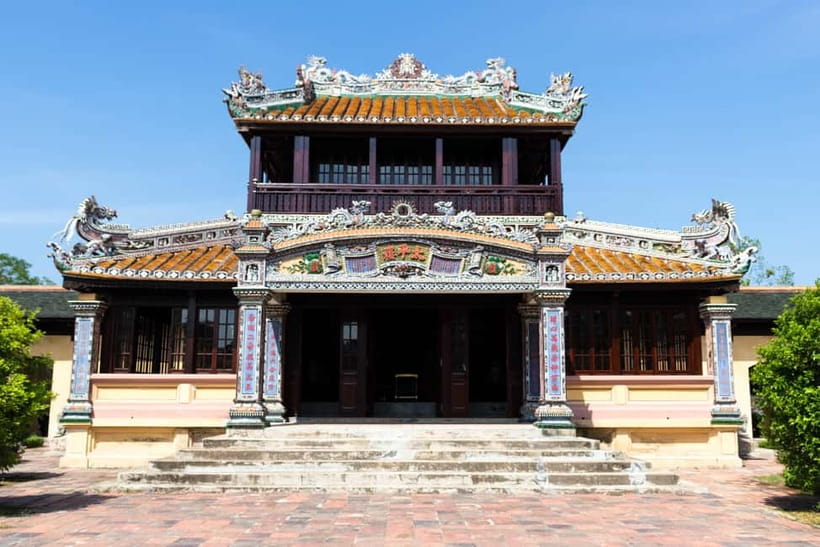
One of the most interesting stops is Duyệt Thị Đường (Royal Theater). You’ll have a photo stop plus guided time and a short sightseeing walk.
Why it’s special: it’s one of four theaters built during the Nguyen Dynasty and is also the oldest preserved theater. That makes a difference. It’s not a modern reconstruction designed for tourists—it’s treated as a historically preserved performance space.
If you’re the kind of visitor who likes to imagine how people spent their evenings, this stop helps you do that. Royal entertainment wasn’t random. It was part of court culture, built into the rhythm of the palace world.
Thiệu Phương Garden and Thái Bình Pavilion: royal calm with clear purpose
After palaces and formal spaces, you switch tone with nature and leisure.
First: Thiệu Phương Garden (Vườn Thiệu Phương). It’s built in 1828 and described as a typical Nguyen royal garden. Gardens here weren’t just decorative. They were made for strolling, reflecting, and creating controlled beauty inside the citadel walls.
Then: Thái Bình Pavilion (Thái Bình Lâu). Built from 1919 to 1921, it served as a place for the king to rest and relax. That detail changes how you see the building. Instead of thinking of it as just another palace structure, you start imagining quiet downtime—an intentional pause in a schedule built around authority.
Practical note: these garden and pavilion stops are great for photos in softer light, but you’ll still want comfortable shoes. Even “short” citadel walks add up on uneven ground.
Kiến Trung Palace restoration story: why rebuilding matters
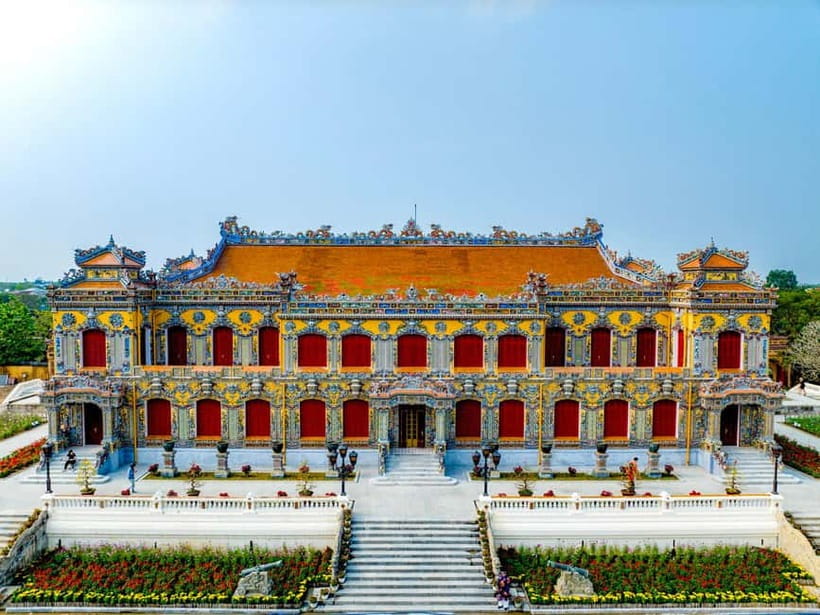
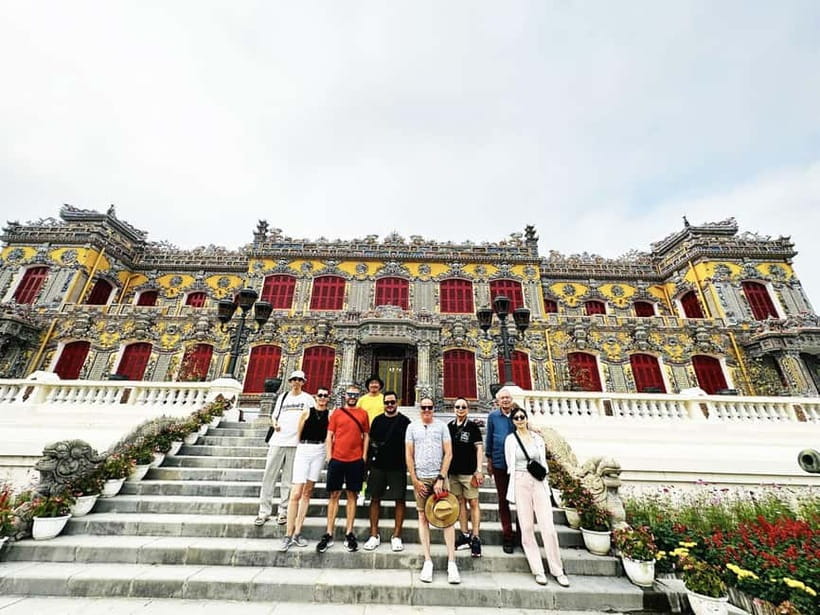
The tour includes Kiến Trung Palace (Điện Kiến Trung). Expect photos, guided context, and time to look around.
This one has a big, modern twist: it was built in 1923, completely collapsed, and then was restored in 2024. That restoration detail makes the past feel less sealed-off. It shows the citadel isn’t frozen in time—it’s something Vietnam has kept working to preserve.
And since this tour is set up with short stops (roughly 10–15 minutes each), the guide can usually explain what changed and why that matters without overwhelming you with a long lecture.
Cung Diên Thọ and the Mieu Temple: power, family, and worship
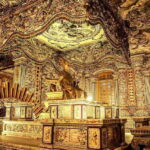
Next up is Cung Diên Thọ (Dien Tho Palace), the Queen Mother’s residence. The description emphasizes scale, exquisitely carved details, and an elegant style.
It’s a reminder that royal power wasn’t only about the king. If you pay attention here, you can feel how the court treated the queen mother’s role as central, not decorative. The residence size and the carving emphasis connect to status and influence.
Then you’ll visit the Mieu Temple (Thế Miếu Huế), dedicated to worshiping the 10 Kings of the Nguyen Dynasty. This stop gives you a different kind of meaning: it’s less about daily life and more about how rulers wanted memory and legitimacy handled after death.
If you like travel that makes you understand beliefs, this is a strong moment.
Nine Dynastic Urns and Hien Lâm Pavilion: messages cast in bronze
Two of the most memorable “look closer” stops are the Nine Dynastic Urns and Hien Lâm Pavilion.
The Nine Dynastic Urns (Cửu Đỉnh Huế) were commissioned by Emperor Minh Mang in 1835. The description says there are 162 images cast and carved on 9 bronze urns. That’s the kind of detail that makes a guide’s interpretation valuable—without that context, they look like statues. With context, they become an official message system.
Next is Hien Lâm Pavilion (Hiển Lâm Các), built in 1821–1822 and described as a place where emperors had their epiphanies. It’s the sort of explanation that gives palace architecture a human angle: not only ceremony, but decision-making, thinking, and insight.
The guides: friendliness and sharp Q&A make the difference
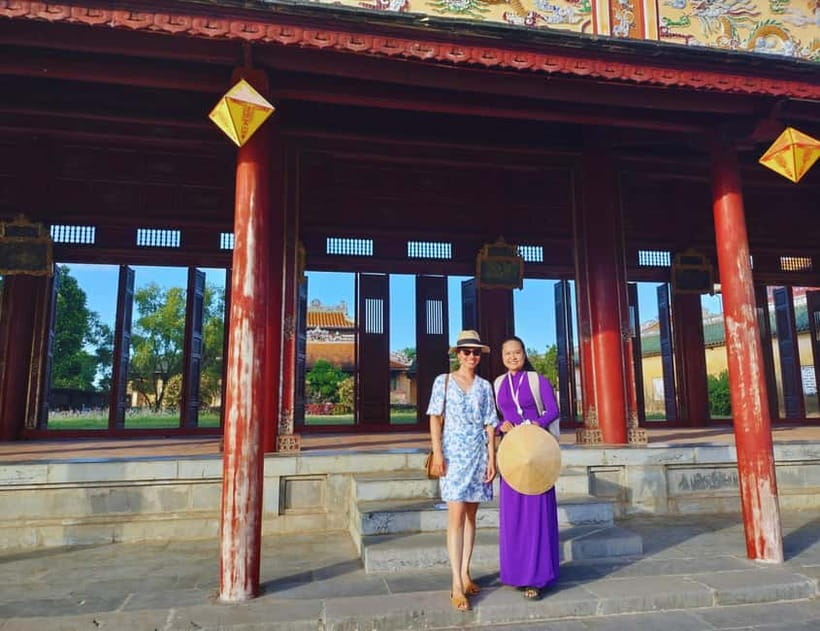
You’ll meet an English guide at the start. In practice, what elevates this tour is how the guide handles your questions and keeps explanations tied to what you’re standing in front of.
The tour is associated with guides like Long, Daniel, Duyen, Quan, and Law—and the common theme in their approach is clear, friendly explanation and making the short time in Hue feel worthwhile. If you’re the type who asks practical questions (How did this work? Why this gate? What does this symbolize?), you’re set up to get satisfying answers.
A small but real tip: bring a couple of specific curiosities before you meet your guide. Palaces create a hundred possible questions. A focused one gets you a focused answer.
Where this tour fits in your Hue day
This is built for a short visit and for travelers who want structure. If you’re doing Hue in a rush—say you’ve got one morning or afternoon dedicated to the citadel—this tour is a smart anchor.
It’s also a good pick if you don’t want to study every sign. The guide fills in the gaps: what each building did, who it served, and how it connects to the Nguyen Dynasty’s 143-year reign.
On the flip side, if you already know a lot about the Nguyen emperors and just want wandering time, you might prefer a self-guided ticket + map. But if you want the city to make sense without homework, I’d choose the guided walk.
Should you book this Hue Imperial City and Forbidden City walking tour?
Yes, I’d book it if your priority is understanding what you’re seeing in Hue’s imperial complex. The mix of ceremonial spaces and court-life details—plus gardens, a historic theater, and the restored palace story—gives you more meaning than a typical quick citadel photo loop.
I’d be a bit cautious if you hate paying separate admission fees, since the 200,000 VND Imperial City ticket isn’t included. And if your schedule is ultra tight, double-check starting times since they depend on your requirements and the tour length runs around 2.5–3 hours.
Overall, this is one of those Hue experiences that turns a short window into something genuinely useful: you leave with a mental map, not just a memory of buildings.
FAQ
Is the Imperial City entrance ticket included in the tour price?
No. The Imperial City entrance ticket is not included and costs 200,000 VND per person.
How long is the Hue Imperial City and Forbidden City walking tour?
The duration is listed as 2.5 to 3 hours, and starting times depend on availability and your chosen option.
What language is the tour guide?
The tour is English with a live guide.
Where do we meet the guide?
You meet your guide at the four bronze cannon area near Ngan Gate (Cửa Ngăn). The guide holds an A4 paper with your name.
Is hotel pickup available?
Pickup is optional. If you choose that option, a driver can pick you up and drop you off at the hotel reception lobby.
Is this tour private or a small group?
You can choose between private or small group options.