REVIEW · HUE VIETNAM
Hue: Hue Walking Tour to Imperial Citadel with Tour Guide
Book on GetYourGuide →Operated by Huế Tours and Transfers Company · Bookable on GetYourGuide
Hue’s Citadel becomes crystal-clear with a guide. I like how the English-speaking guide turns architecture into stories about the Nguyen Dynasty’s 13 kings, and I like the calm, question-friendly pace (private tours with guides like Austin are a good example). One catch: entrance tickets aren’t included, so you’ll want to plan for that before you start walking.
You pick a morning or afternoon slot, and the guide meets you at Cuu Than Cong in Cua Ngan (Nine Holy Cannons), holding a welcome sign with your name. Optional hotel pickup is available, and you’ll get bottled water while your guide helps you get sorted before you head into Hue Imperial City.
In This Review
- Key highlights worth knowing before you go
- A 150-minute walking loop through Hue’s royal center
- Meeting at Cuu Than Cong, then tickets and water handled
- Ngo Mon and the flag tower: how ceremonies shaped the skyline
- Thai Hòa Palace: the coronation stage for 13 kings
- The Forbidden Purple City and the rules of access
- Royal theater and gardens: entertainment and control in one compound
- A European-style palace: Điện Kiến Trung’s design shock
- The Mieu, Nine Dynastic Urns, and the long memory of rule
- Cung Diên Thọ: where the Queen Mother lived
- Price and value: $15 for a guided orientation you’ll feel
- Who this tour fits best (and where it might not)
- Should you book the Hue Walking Tour to Imperial Citadel?
- FAQ
- How long is the Hue Imperial Citadel walking tour?
- How much does it cost?
- Where do I meet the guide?
- Is the guide English-speaking?
- Are entrance tickets included?
- Is pickup from my hotel available?
Key highlights worth knowing before you go
- A 150-minute walk that actually explains what you’re seeing, not just points and photos
- Nguyen Dynasty power structure made simple, from major gates to inner royal spaces
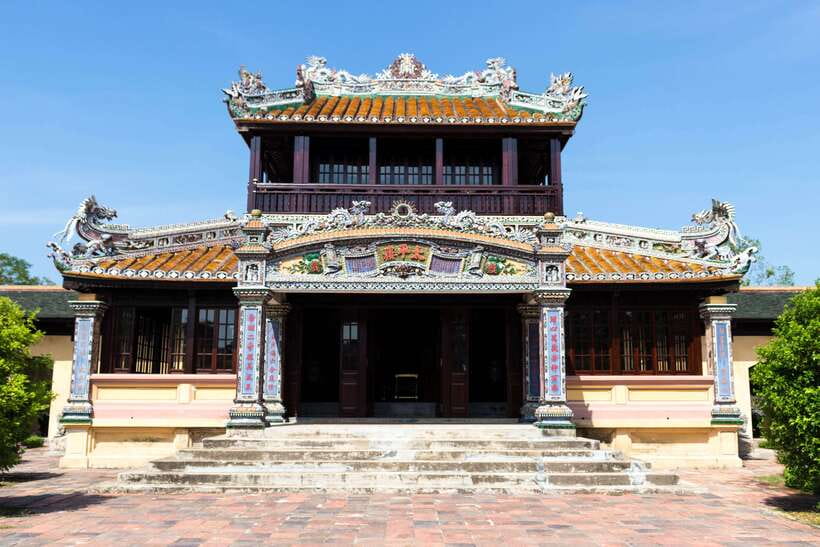
- Thai Hoa Palace as the coronation center for the Nguyen emperors’ key ceremonies
- A focus on court life, including the secrets behind the harem
- Guides who tailor the pace, with some groups moving slower for questions and photos (Austin, Anna, Tâm, and Nhi Tran are named in past experiences)
- Mixed architecture in one circuit, including a European-styled palace built later
A 150-minute walking loop through Hue’s royal center
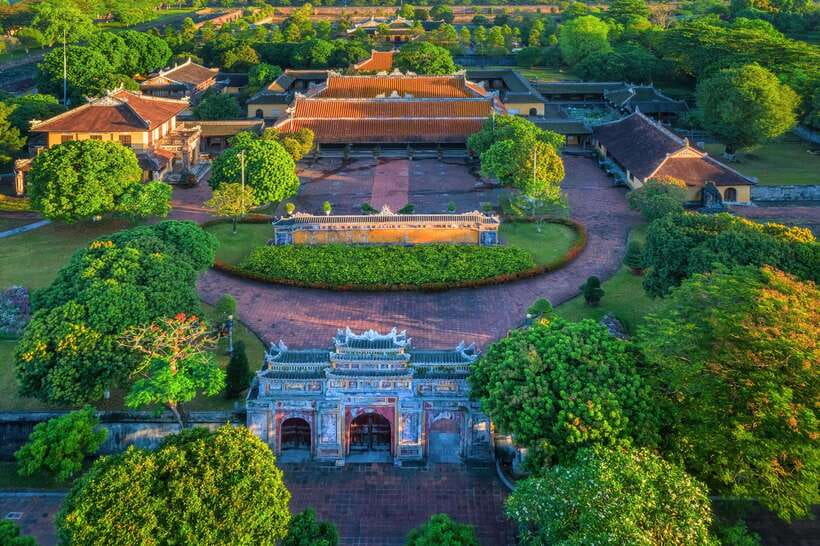
This tour is built for one simple goal: get you oriented fast in Hue Imperial City, then walk you through the spaces that mattered to the Nguyen emperors. At about 2 to 2.5 hours, it’s long enough to feel like you saw the “logic” of the compound, but not so long that you’re cooked by the end.
The walk is guided in English, and that matters here. Hue’s imperial layout can feel like a maze if you’re reading signs alone. With a guide, you start linking gates, courtyards, and halls to the rules of access—who could go where, when, and why. That’s the difference between seeing old stone and understanding how power worked.
Also, you’re not rushed off to the next photo spot. Private group options make it easier to ask follow-up questions, which some guides clearly do well—Austin, for instance, is specifically praised for answering questions promptly and keeping the tour at your pace. You’ll still be walking, so wear shoes you’re comfortable in for a couple hours.
You can also read our reviews of more walking tours in Hue Vietnam



Meeting at Cuu Than Cong, then tickets and water handled
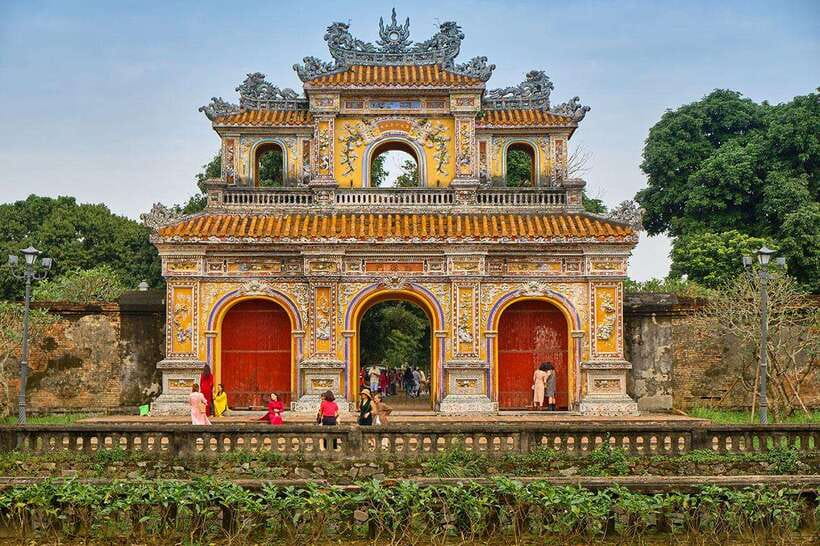
The start point is straightforward and low-stress: you meet the guide at Cuu Than Cong in Cua Ngan (Nine Holy Cannons). The guide holds a welcome sign with your name, which helps if you’re arriving early or you’re not sure what the area looks like.
Before you move into the imperial complex, the guide helps with the essentials—helping you purchase tickets and getting you ready to go. Bottled water is included, which is a small detail, but a useful one in Hue’s daytime heat. If you selected pickup, the driver can meet you at your hotel reception lobby, which cuts down on the “where exactly is the taxi drop-off?” hassle.
For the value-minded traveler, this is part of what you’re paying for. A guide isn’t only telling stories. They help you avoid friction so your time goes to the citadel itself.
Ngo Mon and the flag tower: how ceremonies shaped the skyline
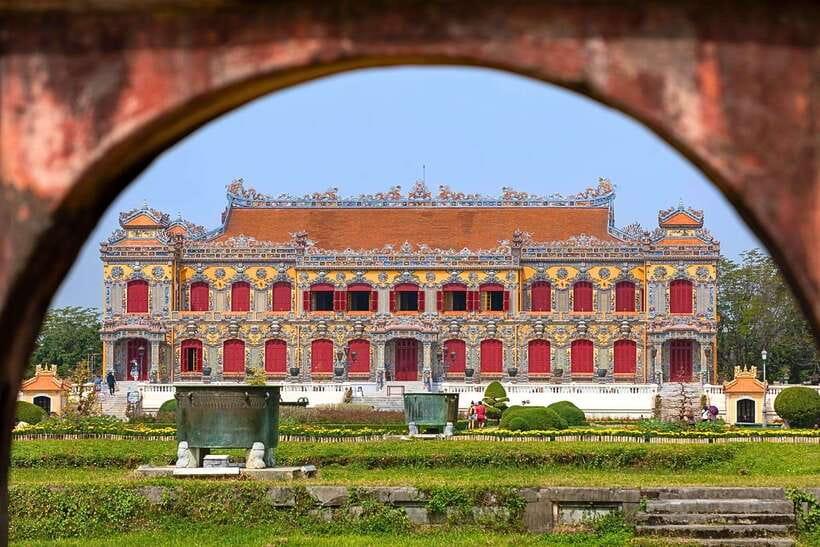
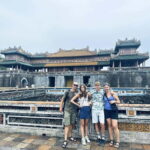
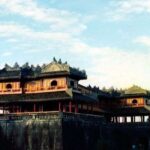
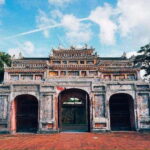
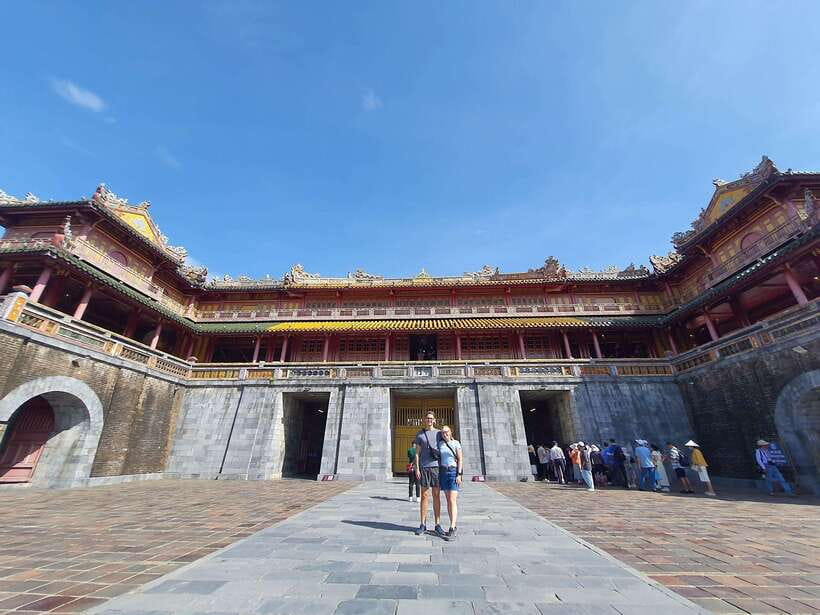
Your walk begins with the Flag Tower (Ky Dai Hue) and then moves through the major gate area, including Cửa Ngọ Môn and the Ngo Môn (main gate).
Here’s what makes these stops worth your attention:
- Flag Tower: it’s tied to the royal court’s ceremonial life—this is where the court would hang the flag for official presence. It helps you see the citadel as a place built for announcements and public ritual, not only private living.
- Ngo Môn and gate zones: built in 1833 under King Minh Mang, the main gate isn’t just decorative. It’s presented as a key platform for important events during the Nguyen Dynasty. When your guide connects the gate to ceremonies, you start noticing the scale and symmetry as tools of authority.
Even if you’re not a palace-architecture person, this is where the tour gives you quick wins. You get a mental map: ceremonies happened at visible points first, and only later would the story move inward.
Quick practical note: plan for photo stops, but don’t linger too long without listening. The best perspective usually comes right when the guide points out how the structure was used in court events.
Thai Hòa Palace: the coronation stage for 13 kings
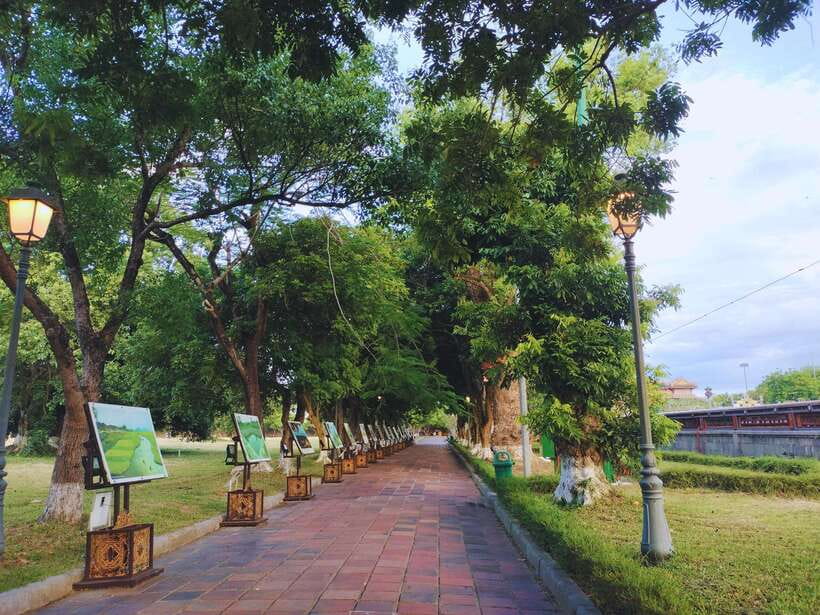
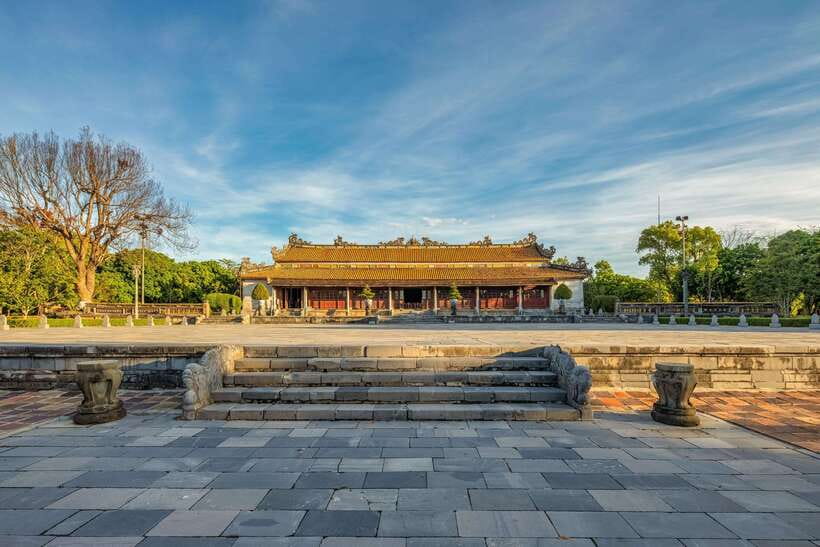
Next comes the most important “center of gravity” in Hue’s royal world: Thái Hòa Palace (Thai Hoa Palace). This is described as the coronation place for the kings of the Nguyen Dynasty, and it’s clearly treated as a must-see because of its role in feudal rule.
This stop is a big reason the tour feels more than a sightseeing loop. The palace isn’t just a building; it represents a political system. When your guide explains coronation significance, you understand why certain spaces are formal, raised, and built to be seen.
One detail I think you’ll appreciate: this area is where the tour’s historical timeline starts to click. A guide working through the “13 kings” theme helps you avoid the common confusion of Hue’s many dynastic sites. Instead, you start to think in reigns and rules—who came, what their court emphasized, and how the city’s design supported that.
If you like learning from someone who can also keep it light, pay attention to the tone. In past tours, guides have been praised for good humor alongside strong knowledge, which makes a long palace conversation easier to stomach.
The Forbidden Purple City and the rules of access
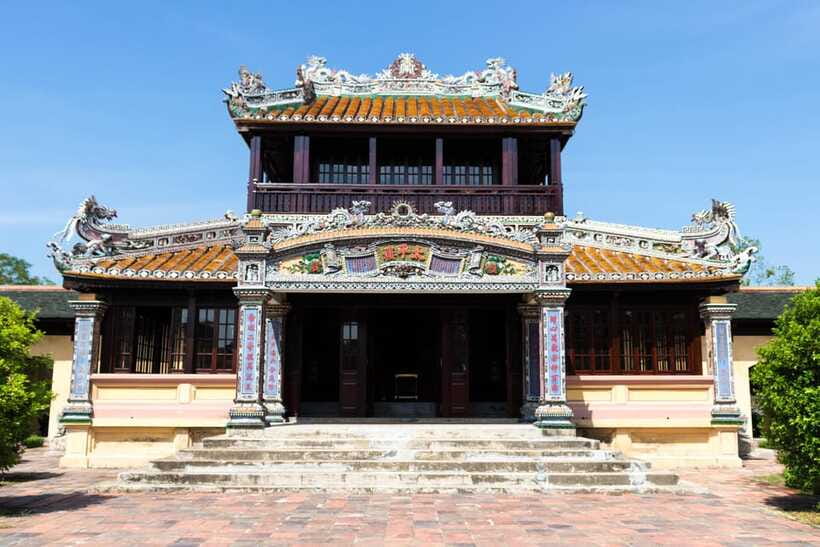
You also hear about the Forbidden Purple City (Tử Cấm Thành Huế), the most restricted area in the royal compound. The key point you’re given is simple: access was reserved exclusively for the king and royal family, while non-duty officials and civilians were not allowed.
This is where the tour becomes especially meaningful. Imperial sites often get framed as beauty first. Here, your guide points you toward the control system behind the beauty. Once you understand restricted movement as part of rule, you’ll look at courtyards and boundaries differently for the rest of the walk.
It’s also a great moment to listen closely to the tour’s court-life focus. The highlights explicitly mention secrets behind the harem, and that topic only lands when you understand why certain women and spaces were protected—and physically separated—from the public.
Even if you don’t love history lectures, this is one of the stops that makes you feel like you’re watching how daily life was regulated.
You can also read our reviews of more guided tours in Hue Vietnam



Royal theater and gardens: entertainment and control in one compound
The tour then shifts from ceremonial power to court culture, starting with the Duyet Thị Đường Royal Theater (Duyet Thi Duong). This is one of four theaters built during the Nguyen Dynasty, and it’s noted as the oldest preserved theater from that era. That preservation angle matters. When a site survives, you can trust that the “feel” of the space is closer to what people actually used.
From there, you move into softer spaces like Thịệu Phương Garden and pavilions such as Thái Bình Pavilion and Hien Lam Pavilion. In a palace complex, gardens and pavilions aren’t only for beauty. They’re for rhythm—pauses between ceremony, spaces for viewing, and places where the court could operate at a slower pace while still being within strict boundaries.
What I like here is balance. You’re not stuck only with big halls. These stops help you connect the imperial life system: formal meetings, ritual structures, and then the spaces designed for downtime, viewing, and movement.
A European-style palace: Điện Kiến Trung’s design shock

One of the most interesting contrasts on the route is Kien Trung Palace (Điện Kiến Trung), built in 1923 by Emperor Khải Định. Unlike the traditional Vietnamese buildings around it, this palace is designed in a European style, mixing elements of Italian Renaissance and French classicism.
That’s a big deal, and it’s exactly the kind of detail a guide can make feel obvious instead of random. Standing in the place, you’ll likely notice the shift in style right away, but a guide ties it back to historical change—how later rulers presented their authority and influenced the look of the court.
If you enjoy architecture more than dates, this is your “I didn’t expect that” moment.
The Mieu, Nine Dynastic Urns, and the long memory of rule
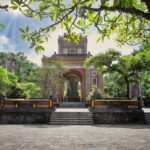
The tour also includes Nine Dynastic Urns (Cửu Đỉnh Huế). These were commissioned by Emperor Minh Mang in 1835 and placed at the front of The Mieu, adorned in front of the worship area.
You also learn about The Mieu Temple, dedicated to worshiping 10 kings of the Nguyen Dynasty. This pairing—urns and temple—creates a strong theme: imperial rule isn’t only about being powerful now. It’s about memory, legitimacy, and continuing reverence after reigns end.
So when you see the urns and learn the link to Minh Mang and the temple’s worship role, you start to understand why this part of Hue feels quieter and heavier. It’s less about public ceremony and more about the court’s relationship to ancestors.
Cung Diên Thọ: where the Queen Mother lived
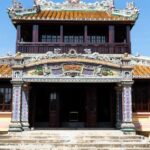
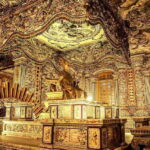
The final core stop is Dien Tho Palace (Cung Diên Thọ), described as a large-scale palace with intricately carved details in an elegant style, noted as particularly well-preserved in the main hall. It’s also explained as the residence of the Queen Mother.
Again, the tour makes this feel practical, not just decorative. The “Queen Mother residence” context matters because it changes what you imagine when you look at the halls. It’s not only a place for emperors in public. It’s a space tied to family hierarchy inside the court.
Then you circle back with more pavilions and viewing points—keeping the pacing steady and giving you the sense that you’ve followed the compound’s logic rather than sprinting through it.
Price and value: $15 for a guided orientation you’ll feel
At $15 per person for about 150 minutes, this tour sits in the “small money, big clarity” category. You’re paying for an English guide, bottled water, and local insurance. The entrance ticket is not included, so you’ll need to add that cost on your side.
The value question comes down to this: Hue Imperial City is massive, and the details matter. If you go without a guide, you can still see beautiful buildings, but you may miss the connective tissue—what the spaces were for and why access was restricted. This tour is priced low enough that it doesn’t feel like a luxury, but it’s structured enough to guide you through the most meaningful highlights.
If you’re on a tighter budget, compare it to the cost of doing the complex on your own with paper maps and guesswork. With a guide, you don’t waste your limited time figuring out where to stand to understand the story.
Also, the private group option is a smart feature if you want to ask questions at your speed. Past experiences with guides like Austin and Tâm point to that benefit: visitors describe a more personalized pace and a Q-and-A vibe that feels easier than a larger group setting.
Who this tour fits best (and where it might not)
This is a great fit if:
- You want an English explanation of the Nguyen Dynasty’s key royal sites
- You care about how access rules shaped court life (including the Forbidden Purple City and harem stories)
- You like having time to ask questions and get answers on the spot
- You want a short walking plan that still covers the big names: Ngo Mon, Thai Hoa Palace, major pavilions, and Queen Mother’s palace
It may not be your perfect pick if:
- You’re hoping for a super slow, all-day exploration. This is built for about 2 to 2.5 hours.
- You don’t want to handle entrance ticket costs separately.
If you do book it, show up ready to walk and ready to listen. The payoff is clarity. You leave with the compound’s hierarchy in your head, not only photos on your phone.
Should you book the Hue Walking Tour to Imperial Citadel?
If you want to understand Hue Imperial City instead of just touring it, yes, I’d book this. For the money, you get an English guide, water, and insurance, plus a route focused on the sites that explain the Nguyen Dynasty’s power system—ceremonies at the gates, coronation at Thai Hoa Palace, restrictions in the Forbidden Purple City, and the Queen Mother’s residence.
If you can, choose the time slot that best matches your energy. Then come with comfy shoes and a willingness to ask questions. Guides in this setting—people like Austin, Hà, Anna, Ryan, Tâm, Duyên, and Nhi Tran—are repeatedly praised for being helpful, friendly, and attentive, which is exactly what makes a walking tour feel worth it.
FAQ
How long is the Hue Imperial Citadel walking tour?
The tour runs about 150 minutes, with guided visits lasting roughly 2 to 2.5 hours depending on the slot.
How much does it cost?
It’s priced at $15 per person.
Where do I meet the guide?
You meet the guide at Cuu Than Cong in Cua Ngan (Nine Holy Cannons). The guide holds a welcome sign with your name.
Is the guide English-speaking?
Yes. The tour includes an English-speaking live guide.
Are entrance tickets included?
No. Entrance tickets are not included, though the guide can help you with ticket purchases at the start.
Is pickup from my hotel available?
Pickup is optional. The driver can pick up and drop off at your hotel reception lobby. The tour also has a fixed meeting point at Cuu Than Cong.