REVIEW · HUE VIETNAM
Hue Royal Tombs Tour to Visit Best Tombs of the Emperors
Book on GetYourGuide →Operated by Adventure Journey Vietnam · Bookable on GetYourGuide
Emperor tombs in Hue feel oddly human. This private car tour is built for slow, smart visits to the Nguyen emperor tombs with either a guide or just the ride you need. I like the clear choice of 1, 2, or 3 mausoleums (with an extra-visit option for 5). The one downside is you’ll want to budget separately for tomb entry fees, since they are not included.
Hue isn’t just stop-and-snap photos. You’re walking through royal planning on purpose: life, power, and court rituals translated into gates, courtyards, and burial zones. You can also ride comfortably between sites, so the day doesn’t turn into a sweaty logistics test.
The tomb grounds can be big, and the schedule depends on what you select. Still, the tour is designed with timed pickup and drop-off points around Hue, plus scenic drives between locations, and it includes practical comfort like fresh water and refreshing wipes.
In This Review
- Key points before you go
- Hue Royal Tombs in a Private Car: Why This Route Works
- Price and Tickets: How $16 Turns Into a Real-Day Budget
- Pickup, Timing, and the Real Comfort of Not Rushing
- Minh Mang Tomb: A 15-Hectare Court Built to Last
- Tu Duc Tomb: 12 Hectares of Work, Ritual, and Burial Space
- Khai Dinh Tomb: The European-Asian Blend You Don’t Want to Miss
- Bonus Stops: Gia Long and Dong Khanh for a 5-Tomb Day
- Gia Long Tomb (the founder’s complex)
- Dong Khanh Tomb (Tu Lang) in a rural setting
- The Guide Factor: Getting More From the Drive and the Stones
- Who This Hue Royal Tombs Tour Suits Best
- Should You Book This Hue Royal Tombs Tour?
- FAQ
- How many tombs can I visit on this Hue Royal Tombs Tour?
- Which tombs are included if I choose the standard best-tombs option?
- Are entry fees included in the tour price?
- What about food and drinks during the tour?
- Do I get pickup and drop-off in Hue?
- Is the tour guide available in English?
- How long is the tour?
- Is the tour wheelchair accessible?
- Do I get private transportation?
Key points before you go
- Flexible tomb count: choose 1, 2, or 3 of the best mausoleums, or go up to 5 with two additional emperors
- Private transportation: your own car/van so you’re not waiting around with a big group
- English guidance available: you can choose a live English guide for historical context
- Plan entry fees: tickets are separate, with combo options if you also visit the Imperial City
- Comfort built into the day: fresh water and refreshing towels/wipes during hot weather
Hue Royal Tombs in a Private Car: Why This Route Works
Hue’s royal tombs can feel like they’re scattered across a wider map than you’d expect. The value of this tour is simple: you don’t have to figure out timing, rides, and backtracking. Your transport is waiting, and you can take the time you need inside each complex.
I especially like that the tour is set up around the most important Nguyen mausoleums. That matters because Hue has more than one famous tomb, and it’s easy to spend a day bouncing between “nice-looking” sites that don’t really teach you anything. Here, you’re focused on the emperors people most often come to see.
This is also a good fit if your interests go beyond architecture. You’ll hear how court life worked: wives, concubines, and eunuchs are part of the story, not background clutter. That human angle helps the tombs stop feeling like just stone.
Possible consideration: the tour cost is low, but the day can cost more once you add entry tickets. For me, that’s the only real “gotcha,” and it’s manageable if you plan the ticket combo up front.
You can also read our reviews of more tours and experiences in Hue Vietnam.



Price and Tickets: How $16 Turns Into a Real-Day Budget

The tour price starts at $16 per person, which is a great deal for private car time plus an English guide option. But remember: entry fees to the royal tombs are not included.
From the info you’ll be working with, the tomb ticket is listed as 150k VND per tomb. On top of that, there are combo tickets that can save money if you also plan to visit the Imperial City. The combo options are:
- 420k VND per person for Imperial City + 2 tombs (valid 2 days)
- 530k VND per person for Imperial City + 3 tombs (valid 2 days)
So here’s the practical way to think about value: if you’re doing 2 or 3 tombs and you also want the Imperial City, you can often skip paying multiple separate tickets. If you’re only doing 1 tomb and not the Imperial City, separate tickets might still be fine.
Also note the tour doesn’t include food and drinks. That’s normal for this kind of site-hopping day. Luckily, fresh water is provided during the visits, which helps a lot when the weather is warm.
Pickup, Timing, and the Real Comfort of Not Rushing
This tour is built around easy pickup and drop-off in Hue city center, including options like Hue Railway Station and the Imperial City area. That reduces the awkward start where you’re trying to meet transport in a big, busy city.
What you can expect timing-wise is a day paced by site visits, plus scenic drives between locations. In the standard sequence, there are planned drives such as about 45 minutes on the way to key stops and a shorter drive (around 30 minutes) before the Khai Dinh area.
The comfort piece is not just “nice to have.” A private car means:
- you can spend extra time where you actually care (usually the bigger mausoleums)
- you can move through heat without losing time to finding transport
- you’re not stuck following someone else’s pace
In hot weather, that comfort becomes part of the experience. In one example, the driver Ha provided fresh water and refreshing towels after each visit, which is exactly when you want it.
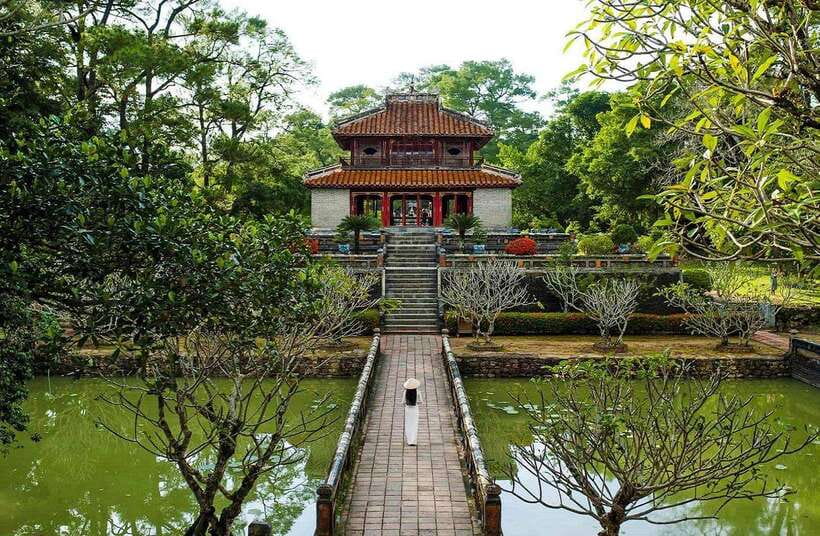
Minh Mang Tomb: A 15-Hectare Court Built to Last
If you pick one tomb to understand how Nguyen emperors planned their legacy, Minh Mang is a strong choice. The Minh Mang Tomb was started in April 1840, and he died during construction. It was later finished by his son, King Thieu Tri (1840–1847), which adds a real “history in progress” feeling to what you’re looking at.
The tomb complex spans about 15 hectares and includes 26 buildings for different functions. That building count matters. It signals you’re not just seeing a grave; you’re seeing an organized system of spaces that supported royal life even after the emperor was gone.
What I found most interesting in the way this tomb is described: it wasn’t only ceremonial. It also served as a living area for minor wives and concubines who had no children for him, and eunuchs after his death in 1840.
Practical tip: Minh Mang can be expansive, so wear shoes that work on large grounds. If you enjoy mapping a place in your head, this one gives you plenty to track—gates, courtyards, and separate zones.
Tu Duc Tomb: 12 Hectares of Work, Ritual, and Burial Space

Tu Duc Tomb is where Hue’s royal world starts to feel like a small city. Built for King Tu Duc between 1864 and 1867, the tomb was designed as the emperor’s own space, and it’s noted as a place where he sometimes lived and worked while he was alive.
The area is about 12 hectares, and it’s divided into two separated areas: a temple area and a burial area. That split is important. It helps you understand the tomb as a system with different purposes—honoring rituals up front, and the final resting space set apart.
Just like Minh Mang, Tu Duc’s tomb also included living quarters for people connected to the emperor. After Tu Duc’s death in 1883, minor wives, concubines, and eunuchs lived in the tomb complex.
If you’re the type of traveler who likes to look at architecture and ask what each zone was for, Tu Duc will keep you busy in a good way. If you want the shortest visit, it can still be long because the grounds are designed for walking and lingering.





Khai Dinh Tomb: The European-Asian Blend You Don’t Want to Miss

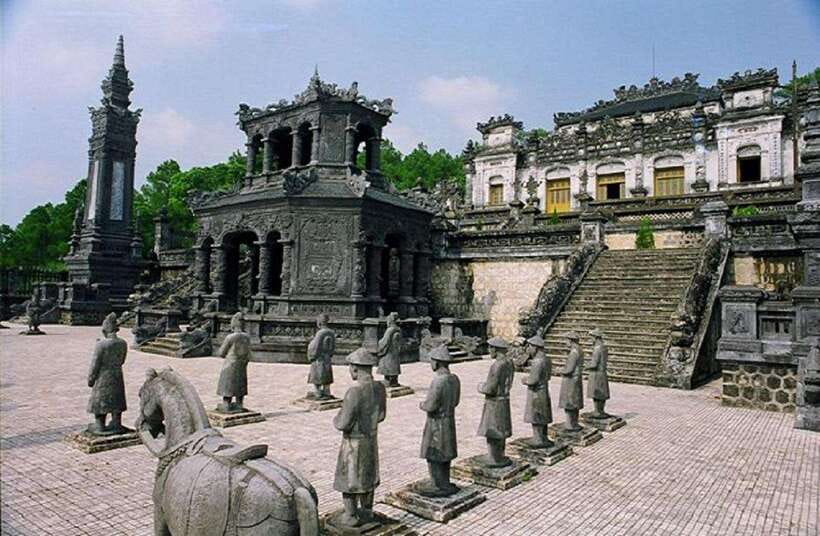
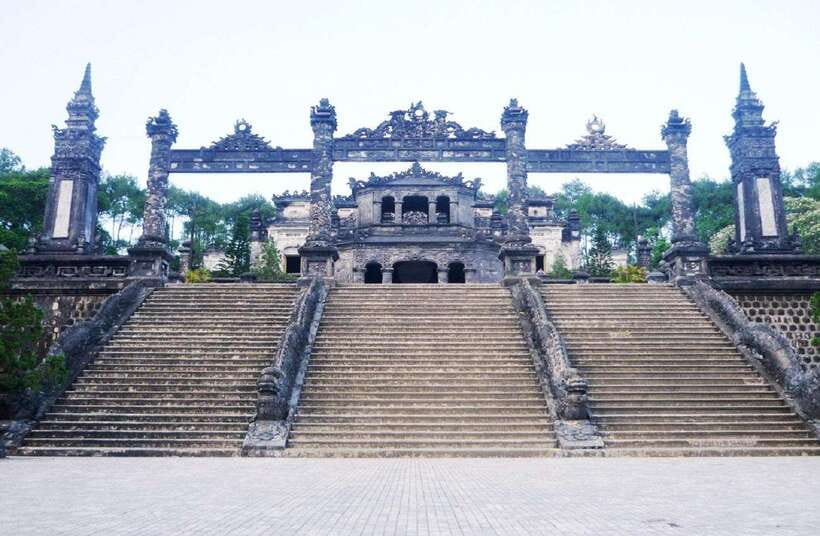
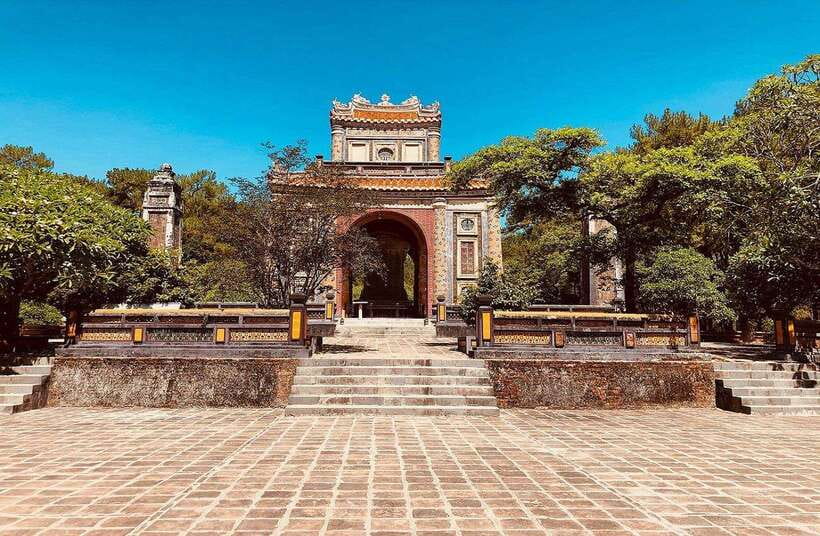
The Khai Dinh Tomb is the one that many people talk about for a reason: it’s described as the only Nguyen royal tomb with blended Oriental and European styles.
Construction started in 1920 and ran to 1931, but the work changed hands. Khai Dinh built it from 1920 to 1925. After his death, his child took over from 1925 to 1931.
The scale is striking. The tomb area is about 48.5 meters by 117 meters, which is big enough that you’ll feel the structure before you even read it. And there’s a special burial setup: the king was buried underneath his tomb. That detail makes the whole complex feel intentional rather than decorative.
Practical tip: This is a great tomb for photography, but don’t treat it like a photo factory. Give yourself a bit of time to look at how the style shift shows up in the details. Even without deep technical knowledge, the mixture becomes obvious as you move through.
Bonus Stops: Gia Long and Dong Khanh for a 5-Tomb Day

Not everyone wants the longest day. But if you like depth and you don’t mind extra walking, the option to visit five royal tombs is a meaningful upgrade. It adds two more emperors: Gia Long and Dong Khanh.
Gia Long Tomb (the founder’s complex)
The Gia Long mausoleum construction began in 1814 and was completed in 1820. This is the mausoleum of Emperor Gia Long, founder of the Nguyen Dynasty (1762–1820).
The description also notes it’s not one simple tomb. It’s a complex of many royal mausoleums, located in Long Ho Ward, Phu Xuan District, Hue City. That matters because you’ll experience it more like an organized royal area than a single footprint.
Dong Khanh Tomb (Tu Lang) in a rural setting
Dong Khanh’s tomb is also called Tu Lang. It’s described as part of the Hue ancient capital relic system and as the burial place of Emperor Dong Khanh.
You’ll find it in a more rural-feeling setting, located in the middle of Thuong Hai village, Thuy Xuan ward, Hue city. The architecture is described as having about 20 large and small architectural works with relatively high density.
The complex is divided into two areas: a palace area and a tomb area. So even if you’re tired by this point in the day, the structure helps you keep your bearings.
The Guide Factor: Getting More From the Drive and the Stones
Even if you’re not a “history nerd,” the guide makes this day click. One name that comes up is Hung, and the way he handles the tour is practical: explaining historical context about the tombs you’re going to visit while you’re on the way. That’s the best time to explain things, honestly. Your brain is waiting for the next place, and you can file facts in the right mental drawer.
Another guide name you may encounter is Ha, and the tone is more comfort-and-organization focused: reliable transport, attention to the day’s heat, and support during each stop. In that same spirit, the driver made sure there was water and refreshing towels after visits.
So how do you benefit, as a traveler? You’ll understand:
- why certain layouts are separated the way they are
- how court roles like wives/concubines/eunuchs fit into the tomb story
- what to notice first when you step into each complex
If you’re choosing the option that includes a guide, I’d pick it. The tombs are meaningful on their own, but the extra context helps you avoid turning the day into a series of “pretty gates and stairs.”
Who This Hue Royal Tombs Tour Suits Best
This tour is especially good for:
- first-timers to Hue who want the major Nguyen tombs without headaches
- travelers who prefer private pacing over group schedules
- people who like architecture but also want the story behind it
- anyone planning a short visit and wants to maximize key sites in 1 day
If your plan is very tight, choosing 3 tombs (Minh Mang, Tu Duc, Khai Dinh) is a strong sweet spot. You get variety: Minh Mang’s long build story and court-life design, Tu Duc’s split temple/burial layout, and Khai Dinh’s style blend.
If you’re older, have limited stamina, or just hate long walks, you might be happier with 1 or 2 tombs. It keeps the day enjoyable instead of just efficient.
Should You Book This Hue Royal Tombs Tour?
Yes, if you want a low-cost way to see the best Nguyen emperor mausoleums with private car comfort and the option of an English guide. It’s a smart use of a day in Hue because the stops are focused and the transport is handled.
I’d book it with one budget rule: don’t forget tomb entry tickets and optional Imperial City combos. If you plan to see more than one site, check whether the 2-tomb or 3-tomb combo with the Imperial City fits your itinerary.
If you hate walking large temple grounds, consider cutting your tomb count. The tour gives you the choice, and that flexibility is one of its best values.
FAQ
How many tombs can I visit on this Hue Royal Tombs Tour?
You can choose to visit 1, 2, or 3 best royal tombs (Minh Mang Tomb, Tu Duc Tomb, and Khai Dinh Tomb). There’s also an option to visit 5 royal tombs by adding Gia Long and Dong Khanh.
Which tombs are included if I choose the standard best-tombs option?
The standard set focuses on the three Nguyen emperor mausoleums: Minh Mang Tomb, Tu Duc Tomb, and Khai Dinh Tomb.
Are entry fees included in the tour price?
No. Entry fees to the royal tombs are not included. The information provided lists 150k VND per tomb.
What about food and drinks during the tour?
Food and drinks on tour are not included.
Do I get pickup and drop-off in Hue?
Yes. Pickup and drop-off are available in Hue city center, with listed options including the Imperial City area and Hue Railway Station. You can also request pickup at a city center hotel or anywhere in city center.
Is the tour guide available in English?
Yes. The tour includes a live tour guide in English for the option that includes a guide.
How long is the tour?
It’s valid for 1 day. Starting times depend on availability.
Is the tour wheelchair accessible?
Yes, it is listed as wheelchair accessible.
Do I get private transportation?
Yes. The tour includes private transportation by car or van, with a private group setup.