REVIEW · HO CHI MINH CITY
From Vung Tau: Nui Dat, Long Tan, Long Phuoc tunnel
Book on GetYourGuide →Operated by Duy Amma · Bookable on GetYourGuide
War sites that still feel human. This half-day tour from Vung Tau links Nui Dat, the Long Tan Cross, and the underground world of Long Phuoc with stories told clearly by your English-speaking guide.
I love that the day balances big-picture battle history with very specific places like old base bunkers and memorial details. I also like that you visit spots with meaning beyond combat, like the Nui Dat Kindergarten built for local children. One thing to consider: this is an emotional subject, and you’ll spend time on uneven ground, so comfortable shoes matter.
In This Review
- Key Things That Make This Tour Worth Your Time
- Entering Nui Dat: A Base Area With Named Places
- What you’ll actually notice on the ground
- Small downside to know early
- The Nui Dat Kindergarten Stop That Changes the Mood
- A practical tip
- Long Tan Cross: Memorial Details You Can Feel
- Why this stop is more than a landmark
- Horseshoe Hill / Fire Support Base: The Terrain Explains the Strategy
- What I find useful here
- Consideration
- Long Phuoc Tunnel: Underground Movement and Tight Spaces
- How to make the most of the tunnel time
- The Emotional Tone of the Day, and How to Handle It
- Guides and Pacing: What Private Really Means Here
- Price and Value: Is $98 per Person a Good Deal?
- Included Comfort Items (That You’ll Appreciate Mid-Drive)
- Who This Tour Suits Best
- Should You Book This Nui Dat, Long Tan, and Long Phuoc Tour?
- FAQ
- How long is the tour?
- What stops are included in the itinerary?
- Is the guide available in English?
- What’s included in the price?
- What should I bring?
- Is free cancellation available?
Key Things That Make This Tour Worth Your Time
- Lasting memory at Long Tan Cross: flowers, respectful silence, and a moment that’s more than a photo stop
- Childhood meets war history at Nui Dat Kindergarten: built by Australian veterans in 2002, it adds a human layer
- Real base-area points at Nui Dat: you’ll see old bunkers and named locations linked to the 1966 Australian presence
- Horseshoe Fire Support Base on the battle map: the terrain explains how soldiers protected positions
- Long Phuoc Tunnel network: underground passages that show how people lived and moved away from view
- Private guide support: the pacing can be adjusted for your group so you don’t feel rushed
Entering Nui Dat: A Base Area With Named Places

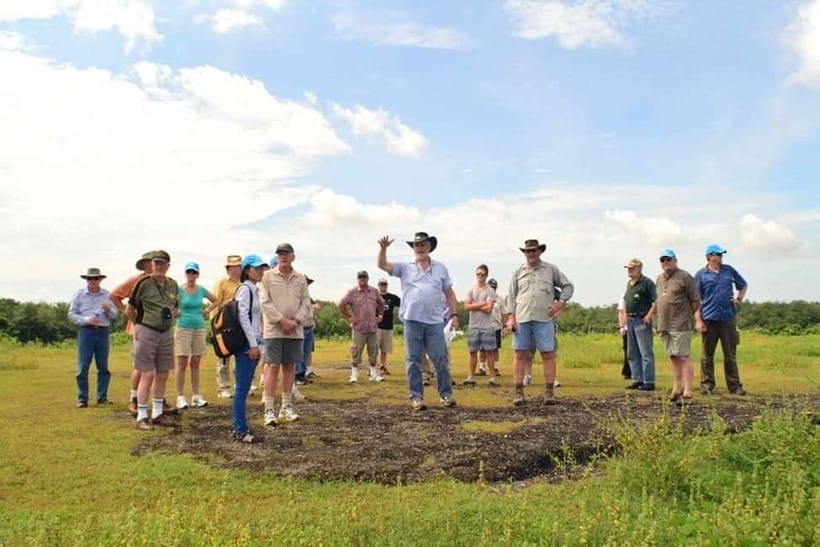
This tour starts in the Vung Tau / Ba Ria area and quickly shifts from today’s Vietnam into the geography of the Vietnam War. The Nui Dat portion is often the heart of the day, because it’s where you connect the dots: who was where, why the area mattered, and how ground conditions shaped choices.
A key detail here is that you’re not only visiting one viewpoint. You move through the base area tied to the Australian presence in 1966, including the sections described around Hoa Long village (also known as VC Home). From there, you’ll see older remnants and named stops such as old bunkers, the Kangaroo pad, SAS hill, and the Luscombe airfield area. You also visit the battalion’s flagpole.
What I like about this approach is that it gives you structure. Instead of hearing a list of events, you can picture the route and the logic. Even if the stories feel heavy, the sites help your brain organize them.
You can also read our reviews of more tours and experiences in Ho Chi Minh City.



What you’ll actually notice on the ground
Expect to read the terrain. Many parts of Nui Dat make more sense once you understand that visibility, cover, and movement were everything. When your guide points out where operations connected, suddenly the countryside stops being just scenery and becomes part of the story.
Small downside to know early
Nui Dat involves walking on uneven, outdoor surfaces. If you’re used to sandals only, switch to supportive footwear.
The Nui Dat Kindergarten Stop That Changes the Mood
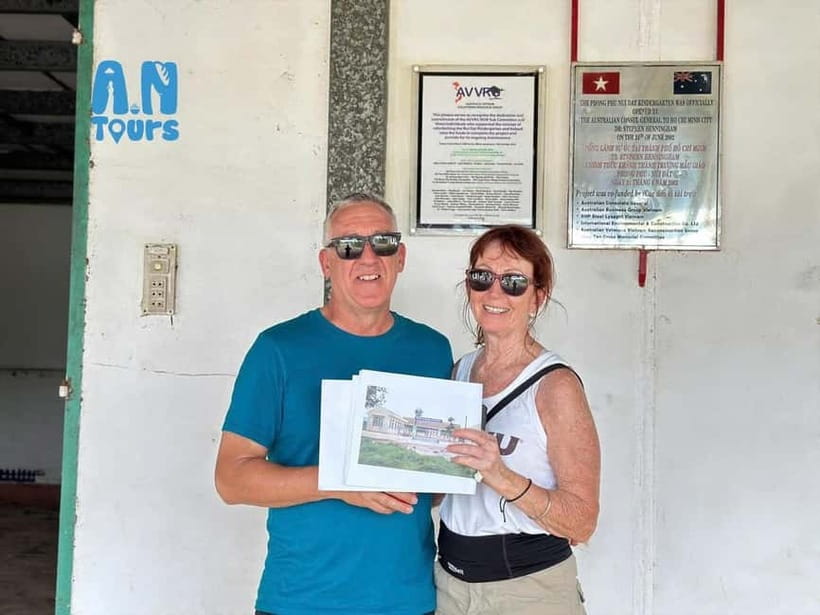
Next comes a stop that surprises people who expect only battle sites. The Nui Dat Kindergarten was built by Australian veterans for local children in 2002. It’s a different kind of marker in the landscape: not a memorial to loss, but a place built for continuity and care.
For me, this is one of the most valuable parts of the itinerary because it reminds you that the story doesn’t end when fighting does. War history lives alongside ordinary life, and in this case, it’s literally in a classroom building.
You don’t need to force emotion here. Even a short pause can help you recalibrate your focus: what remains after violence, and how communities reshape the same land.
A practical tip
Spend a minute looking around the area. This isn’t just a checklist stop; it’s a contrast that makes the rest of the day hit differently.





Long Tan Cross: Memorial Details You Can Feel
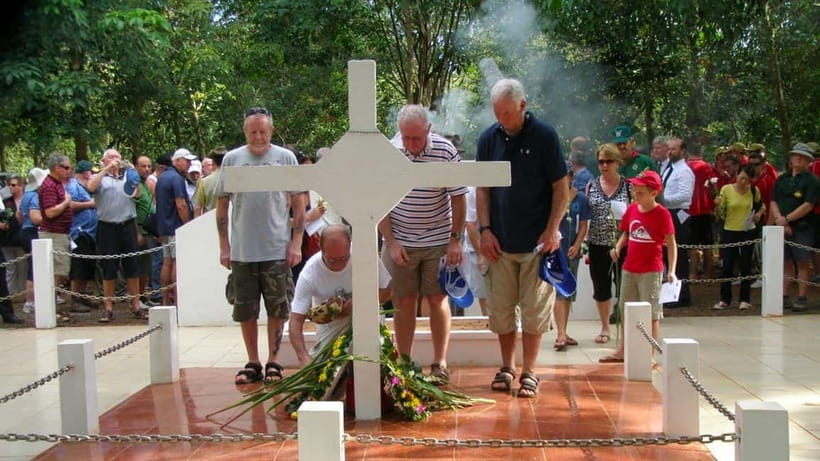
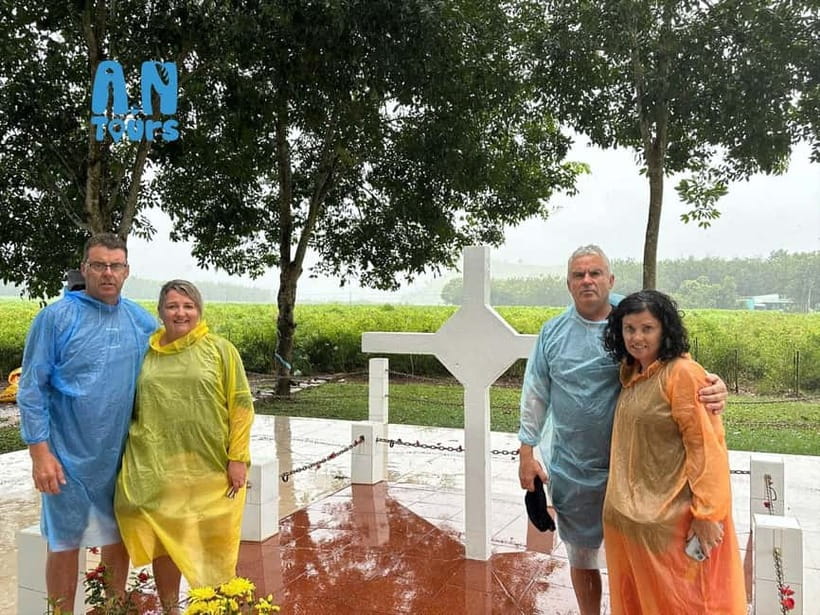
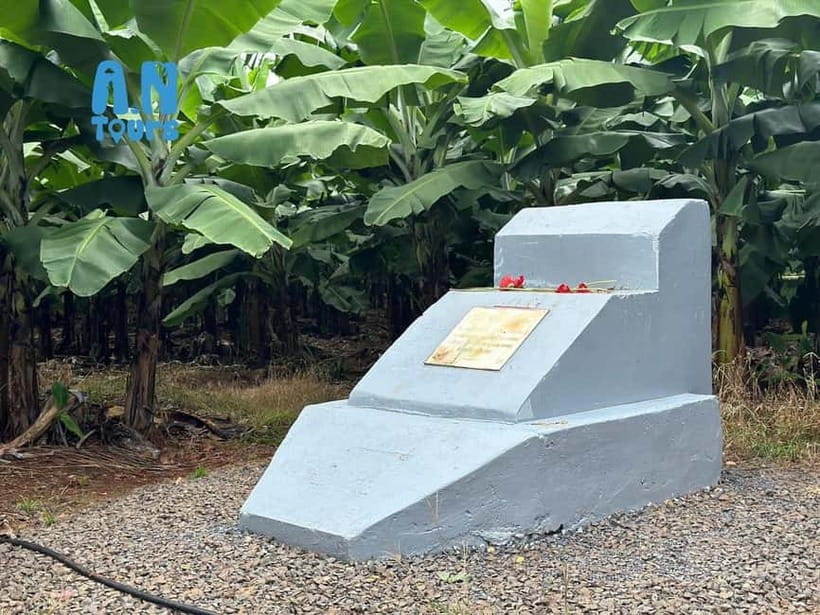
Long Tan is where the day becomes sharply personal. The tour takes you to the Long Tan Cross, which commemorates 18 Australian soldiers who died in the Battle of Long Tan in 1966. This cross was rebuilt by Australian veterans, and that fact matters because it links remembrance across time, not just across decades.
At the memorial, you’ll place a flower at the site. The tour also includes a respectful moment tied to the fallen, including the Last Post and time for a minutes silence.
This is the kind of stop where your guide’s tone and pacing change the whole experience. More than anything, it helps you understand that this isn’t a casual photo moment—it’s a place of grief and respect.
Why this stop is more than a landmark
The cross isn’t only about numbers. It represents how a battle can echo into identity, family memories, and national history. When you pair that with what you saw earlier at Nui Dat, you start to understand why Long Tan is one of the most recognizable points on the map for Australian war remembrance.
Horseshoe Hill / Fire Support Base: The Terrain Explains the Strategy
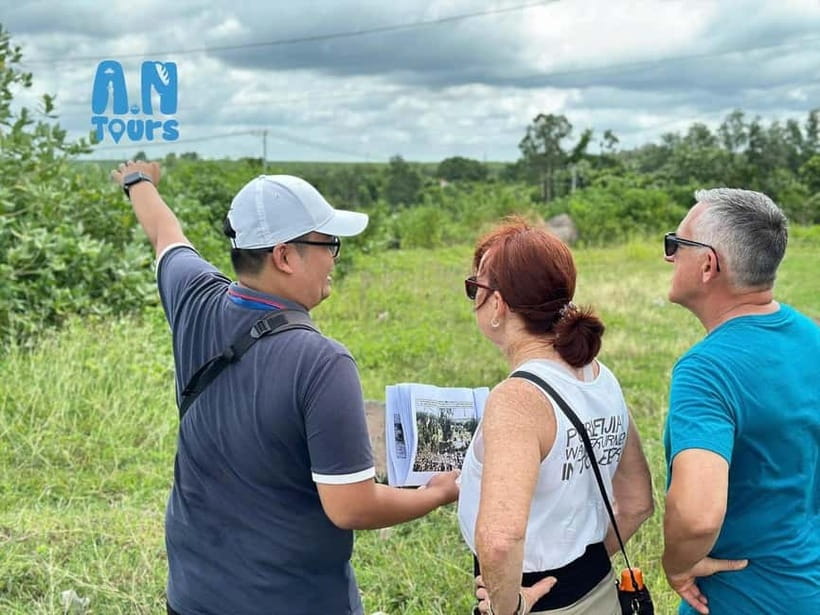
Before heading into the underground area, the tour moves to the Horseshoe Fire Support Base (often connected to Horseshoe Hill). This stop helps explain the “how” behind the “where.” It’s not just a scenic hill; it’s tied to how fire support functioned during the war.
Even if you don’t know military terms, your guide can translate the logic into plain language—why certain positions provided advantage, how cover shaped movement, and how the base’s role connected to the wider operations in the area.
What I find useful here
It makes the story more physical. After seeing bunkers, airfield-related locations, and the memorial at Long Tan, the fire support base adds a tactical layer. You can feel how the ground guided decisions.
Consideration
This is still an outdoor visit. Bring water and pace yourself if the weather is hot and humid.
Long Phuoc Tunnel: Underground Movement and Tight Spaces
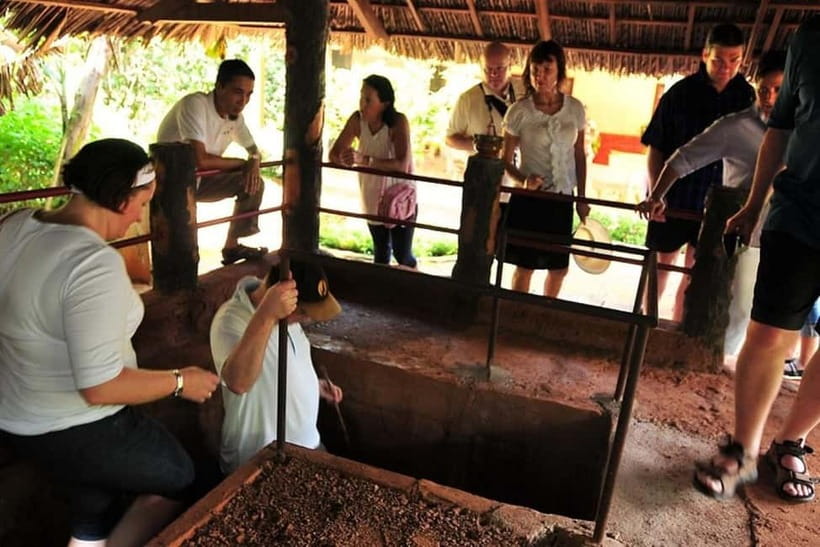
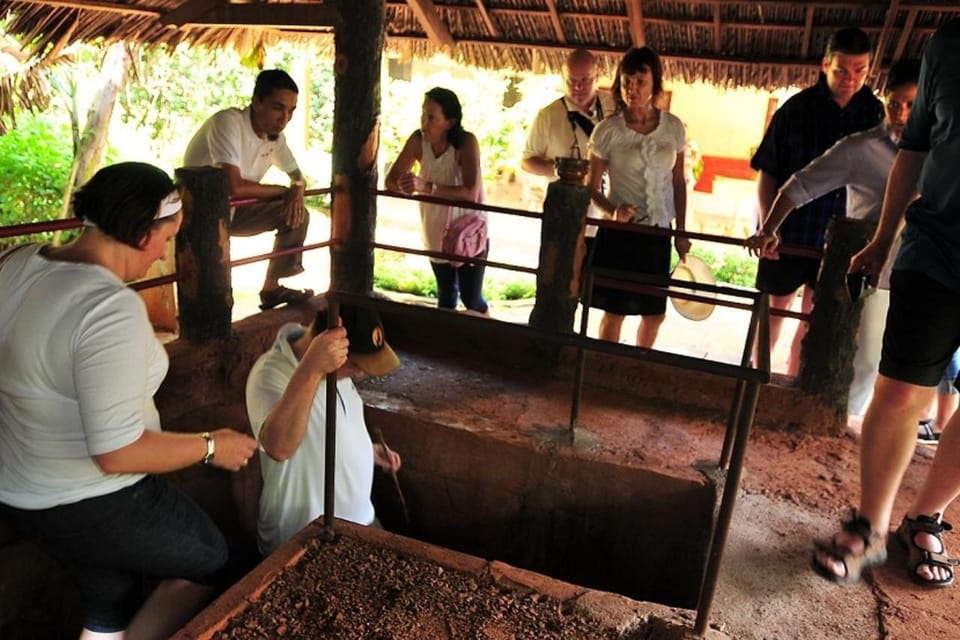
Then comes Long Phuoc Tunnel, a complex underground network that helps explain survival and strategy. Tunnels were about protecting people from view, moving with less exposure, and creating spaces that could be defended or used without drawing immediate attention.
What you’ll get here is context, not sensationalism. Your guide points you toward the purpose of different sections and helps you understand how the tunnel system fit into the broader war environment.
How to make the most of the tunnel time
Wear shoes with grip. You’ll likely want to keep your phone away unless your guide says it’s okay, because tunnels are often not the best place for fumbling gear.
If you’re prone to claustrophobic feelings, go slowly at your own pace. The tour gives structure, but you’re still physically moving through tight areas.
The Emotional Tone of the Day, and How to Handle It
This is not a war-themed “fun day out.” Even when the guide is friendly and light with humor, the subject matter carries weight—especially at Long Tan Cross.
I recommend coming in with a respectful mindset. If you get quiet during the silence or feel more reflective than you expected, that’s normal. The tour is designed to guide you through that transition between history, place, and remembrance.
In the same spirit, it’s also okay to ask questions during the stops. The guides I’ve come across on tours like this tend to be careful with language and timing, and they’ll answer in a way that helps you connect facts without turning the sites into a spectacle.
Guides and Pacing: What Private Really Means Here

This tour runs as a private group with a live English-speaking guide. That matters because the experience is intense, and pacing changes everything.
In practice, guides like Tony, Binh, and Joe have a way of making the places feel organized and understandable—without turning them into a lecture. You’ll also notice drivers are part of the comfort equation; it’s a long drive day, and you want to feel safe and settled before you step into the heavier stops.
One standout detail from the experience: the tour can be adjusted to fit your group’s time and movement needs, so you’re less likely to feel rushed from one site to the next.
Price and Value: Is $98 per Person a Good Deal?
At about $98 per person for roughly 5 hours, the value mostly comes from three things:
- You’re getting multiple major sites in one half-day, including the memorial stop and the tunnel network.
- The tour includes local English-speaking guidance, travel permits + entrance fees, a flower for Long Tan, and drinking water.
- You’re not doing this self-guided. You’re traveling with interpretation, so you’re not just reading signs.
That said, there’s a logistics note worth taking seriously. Some groups have run into an additional 900,000 VND transportation charge when transfer was expected to be included. I can’t predict your exact situation, but you should confirm pickup and transfer details clearly before you go. It’s the easiest way to avoid a last-minute surprise.
Included Comfort Items (That You’ll Appreciate Mid-Drive)
The included items help smooth the day:
- Local English-speaking guide
- Travel permits + entrance fees
- Flower for the Long Tan Cross memorial
- Drinking water
- Transfer (but double-check pickup details)
If you’re deciding based on convenience, those inclusions reduce friction. You won’t need to chase tickets, and you’ll have what you need for the memorial moment.
Who This Tour Suits Best
You’ll probably love this if:
- You want a focused war-history route that hits Nui Dat, Long Tan, and Long Phuoc
- You prefer guided context over reading alone
- You’re comfortable with emotional memorial stops
- You like a structured day with enough time at each site to actually absorb it
You might skip it (or choose a different format) if:
- You dislike memorial ceremonies and quiet reflection
- You have limited tolerance for uneven outdoor walking or enclosed spaces
Should You Book This Nui Dat, Long Tan, and Long Phuoc Tour?
Yes, I think it’s a strong pick—especially if you want one half-day that meaningfully connects the story across locations. The Nui Dat Kindergarten stop adds a human counterweight to the war sites, and the Long Tan Cross memorial portion gives the day real purpose.
Just do one thing before you commit: confirm the transfer / pickup plan so your day runs smoothly from the moment you leave Ba Ria or Vung Tau. If that’s handled, this tour offers a lot of emotional and historical value for the time you spend.
FAQ
How long is the tour?
The tour duration is listed as 5 hours.
What stops are included in the itinerary?
You’ll visit Nui Dat (including areas around old base locations), Nui Dat Kindergarten, the Long Tan Cross, the Horseshoe Fire Support Base, and the Long Phuoc Tunnel.
Is the guide available in English?
Yes. The tour includes a live English-speaking guide.
What’s included in the price?
Inclusions listed are a local English speaking guide, travel permits + entrance fees, a flower for the Long Tan Cross memorial, drinking water, and transfer.
What should I bring?
Bring comfortable shoes.
Is free cancellation available?
Yes, there’s free cancellation up to 24 hours in advance for a full refund.