REVIEW · HUE VIETNAM
Hue: Imperial and Forbidden City Guided Tour
Book on GetYourGuide →Operated by Hue Vietnam Tours · Bookable on GetYourGuide
Hue’s Imperial City is all about power made visible. This guided tour helps you connect the dots of the Nguyen Dynasty with the gates, palaces, temples, and gardens you walk past in Hue Imperial City—so the place feels bigger than its photos. I also like that the tour slows down for key moments like the view from Ngo Mon Gate and the meaning behind the Mieu Temple rules, not just fast sightseeing. And I like that guides such as Huong, Hoa, and Ngọc tend to answer questions clearly and keep the pace comfortable for a site this spread out.
One heads-up: this is a walking route and it is not suitable for wheelchair users. Also, entry tickets and food are not included, so your $19 price is for the guide and the walk—not admission or meals.
In This Review
- Key highlights at a glance
- Why the Hue Imperial City still matters
- Meeting at the House of Cannons: quick logistics that save time
- Getting oriented at Ngo Mon Gate and the main entrance
- Thái Hòa Palace: where the architecture does the talking
- The mid-route gate and courtyard pauses
- Mieu Temple: rules of worship and who was allowed inside
- Dien Tho Palace: the king’s mother and the royal household story
- Cửa Chuông Đức and the Forbidden City transition
- Kiến Trung Palace and the royal family residence idea
- Thai Binh Pavilion and Thiệu Phương Garden for a slower rhythm
- Duyet Thi Duong Royal Theater and the finishing stretch
- Price and what $19 actually buys
- Who should book this tour, and who might not
- Should you book the Hue Imperial and Forbidden City Guided Tour?
- FAQ
- How long is the Hue Imperial and Forbidden City guided tour?
- What is included in the price?
- Are entry tickets included?
- Does the tour provide food or drinks?
- What languages are the guides?
- Is hotel pickup available?
- Where do I meet the guide?
- Is the tour wheelchair accessible?
Key highlights at a glance
- Ngo Mon Gate photo stop with a real sense of scale before you head deeper in
- Mieu Temple visit and the idea that some rulers were allowed worship, others were not
- Dien Tho Palace stop to understand the royal household, including the king’s mother
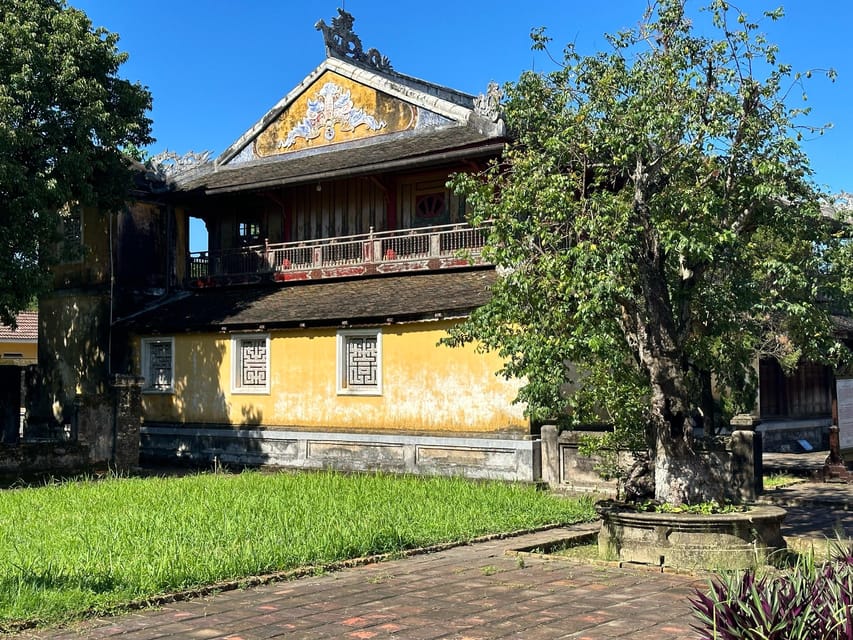
- Kiến Trung Palace and royal family spaces inside the Forbidden City area
- End at the Royal Library and Royal Garden so the tour finishes with calmer scenery
Why the Hue Imperial City still matters
If you only visit monuments without context, Hue’s citadel can feel like a set of pretty buildings. With a guide, you start seeing the logic: who lived where, who was honored, and how the court used architecture to reinforce authority.
The tour focuses on the Nguyen Dynasty era and how its architecture and court culture shaped Hue’s identity. That matters because the Imperial City is not just one palace or one courtyard. It’s a layout—an inner-versus-outer world—where symbols show up again and again in gates, halls, and gardens.
You’ll also learn how the Forbidden City concept works in practice. Instead of treating it like a standalone attraction, you’ll connect the “family” spaces (like where the king’s household lived) to the more ceremonial and ceremonial-adjacent areas you pass earlier.
You can also read our reviews of more guided tours in Hue Vietnam


Meeting at the House of Cannons: quick logistics that save time
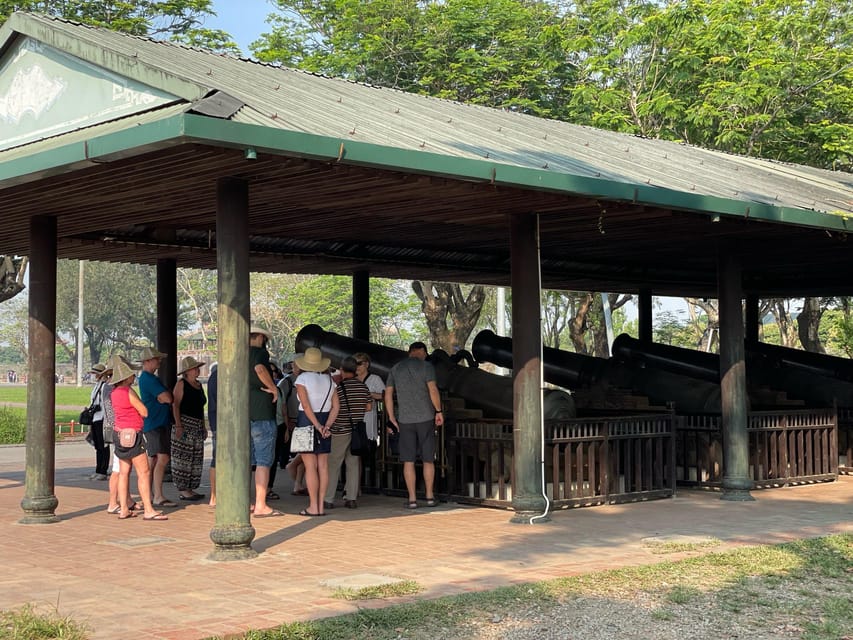
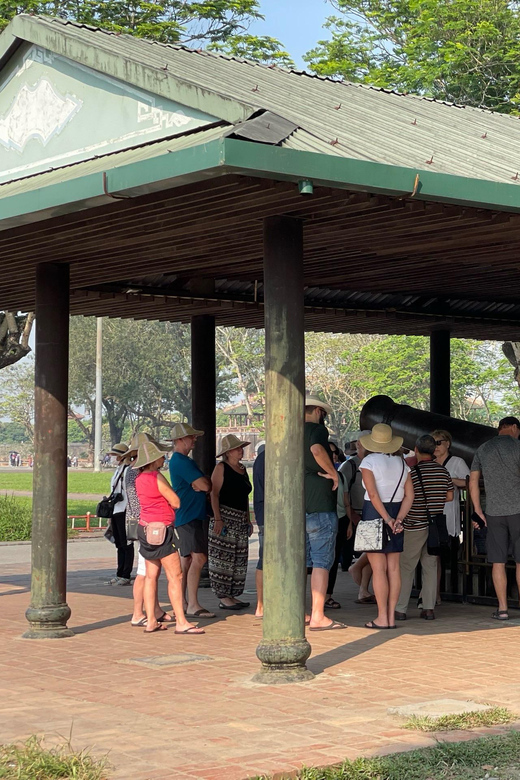
You’ll start at the house of cannons, and the guide waits there. If you arrive by Grab, the driver drops you at a parking lot about 100 meters away, then you walk over to meet your guide.
Two practical notes that make the day run smoother:
First, send your WhatsApp number when you reserve. The guide may contact you for help finding the meeting point. Second, you can choose optional hotel pickup if you share your hotel name and WhatsApp number.
You’ll finish back at the meeting point area, and your drop-off may also be at Cửa Hiển Nhơn, Hue. That’s useful if you’re planning an afternoon stroll or an evening plan afterward.
Getting oriented at Ngo Mon Gate and the main entrance
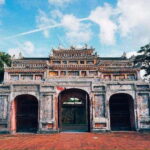
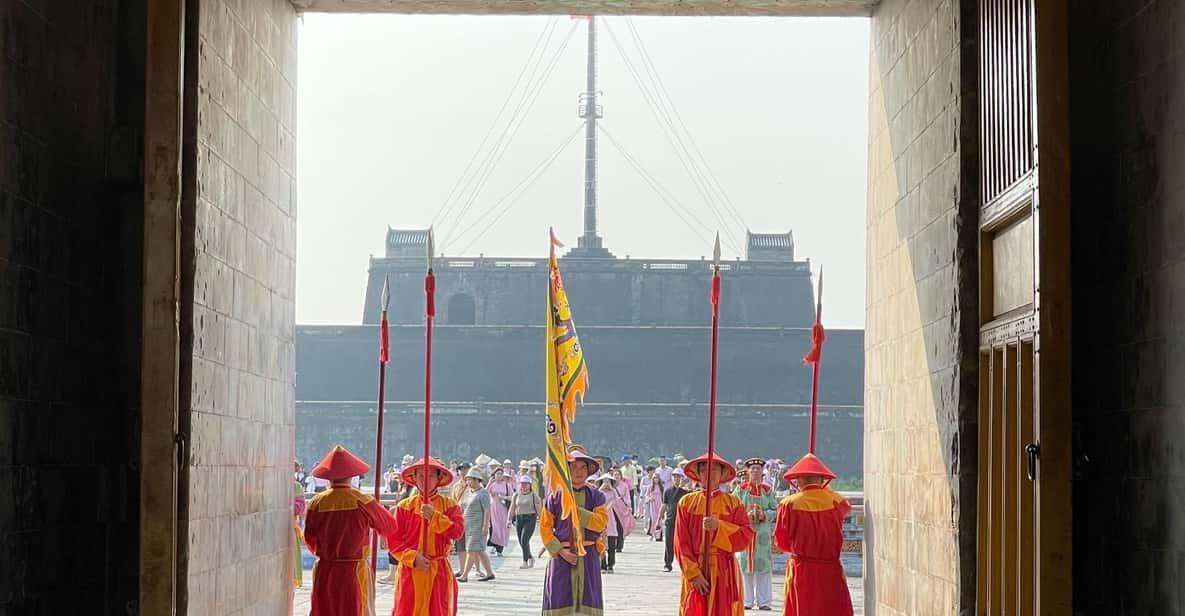
Early on, you’ll reach Cửa Ngọ Môn (Ngo Mon Gate) for photos and a guided introduction. This is one of those stops where you want to slow down. A good guide will help you understand what you’re looking at—why this gate isn’t just decorative, but a visual threshold between roles and spaces.
The tour also includes going up to the second floor of the main gate for the introduction. Even if you’re not a “views person,” this is a smart move because it helps your brain map the site quickly. Once you’ve got that basic layout in your head, everything that follows—palaces, gates, gardens—connects more clearly.
The best way to use this part: bring your photo game, but also listen for the meaning. Guides like Huong and Ha are often praised for explaining things patiently, and here that patience really pays off. The tour is designed so you don’t just walk in circles. You learn what direction means.
Thái Hòa Palace: where the architecture does the talking
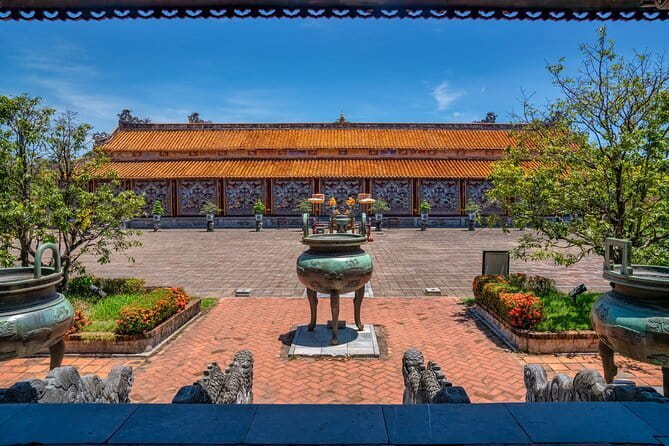
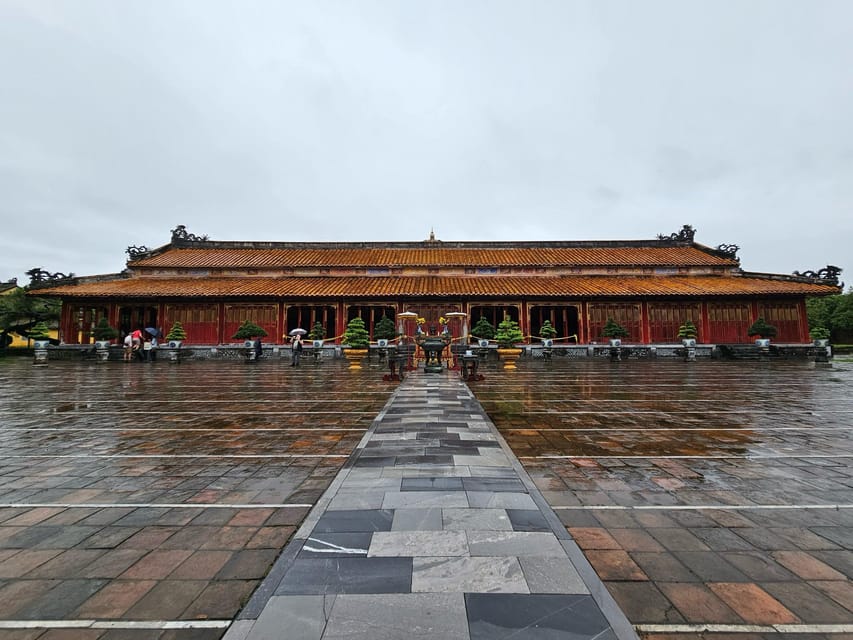
Next up is Thái Hòa Palace for photos, a visit, and guided time (about 30 minutes). This is a key moment for understanding how formal court spaces were built. Even if you don’t know a single Vietnamese term, you’ll pick up the pattern: the court’s rooms and halls weren’t random—they were structured for ceremony and status.
A good guide will point out how different parts feel distinct even when they’re all within the imperial complex. You’ll likely hear about how restorations affect what you see today. One guest mentioned restoration efforts as part of the experience, and it’s the kind of thing that helps you appreciate why parts may look newly refreshed while others show age.
A potential drawback here is time. The citadel is enormous, so early pauses can feel fast if you’re not used to walking. The good news: guides often adjust pace based on your questions and comfort level.
The mid-route gate and courtyard pauses
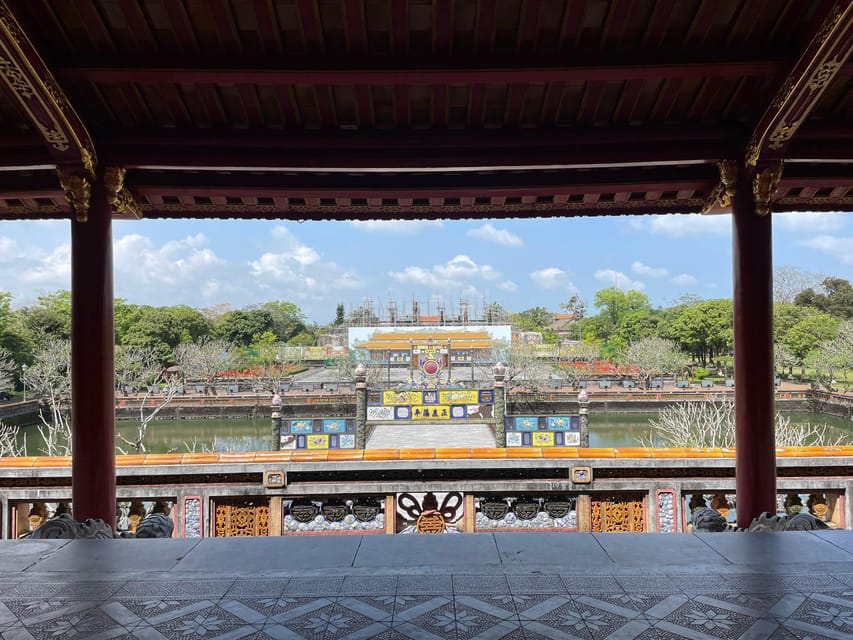
You’ll have another short photo-and-walk segment after Thái Hòa Palace (about 10 minutes). Even though it’s brief, it helps connect the dots between the larger ceremonial spaces and the more specific spiritual and family-related areas that come next.
Think of this as the tour’s “keep moving, but regroup” moment. If you’re the type who likes to ask questions, this is often a good time. You’ll be standing in the right area for context, not in the middle of a long stretch where nobody can hear you over your own steps.
You can also read our reviews of more city tours in Hue Vietnam

Mieu Temple: rules of worship and who was allowed inside
The Mieu Temple is one of the most meaningful stops. You’ll visit, get guided context, and have time for the walk through the area (about 20 minutes).
Here’s the standout idea the guide focuses on: the temple was used to worship the emperors, and some kings weren’t allowed to be worshiped inside. That single detail changes how you look at the architecture. Instead of seeing a temple as a generic religious building, you start seeing it as a system of status—even in death and memory.
This stop is also a reminder that court life wasn’t only about public ceremony. It was about controlled honor, controlled ritual, and controlled access. When your guide explains that, the Imperial City becomes less abstract.
Dien Tho Palace: the king’s mother and the royal household story
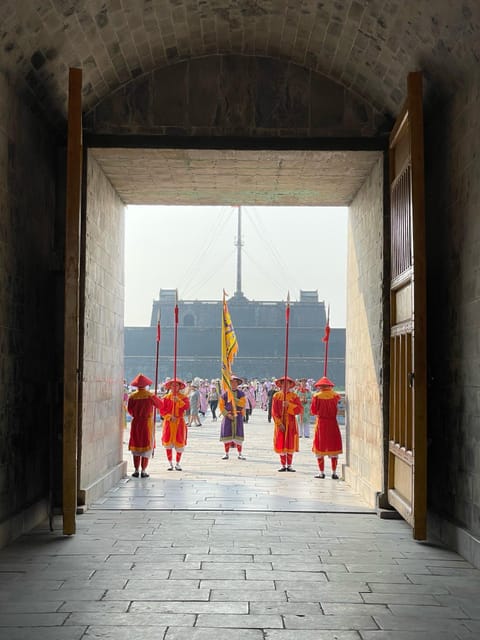
After Mieu Temple, the route continues to Dien Tho Palace, where the king’s mother lived. This is a powerful contrast to the worship-focused stop. You’re shifting from religious authority to domestic power—how influence could exist inside the family structure itself.
Even without going into personal biographies, you can learn a lot by noticing the change in spaces. Family residence areas tend to feel more lived-in and less purely ceremonial. Your guide should help you understand why that matters within the court structure.
If you like “human scale” details, this is often where the tour starts feeling less like a history lecture and more like a picture of how the palace world worked day to day.
Cửa Chuông Đức and the Forbidden City transition
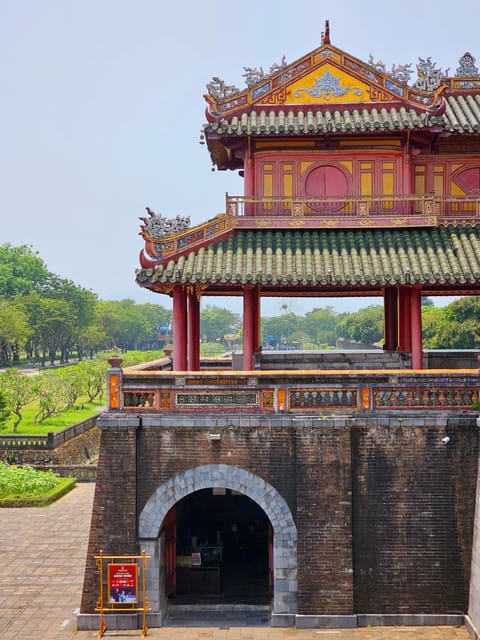
You’ll pass through Cửa Chương Đức (Cửa Chuong Duc) with a photo stop and guided time (about 10 minutes). This gate-and-transition moment helps explain how movement in the citadel wasn’t random. Gates create boundaries. Boundaries create roles.
This is where the Forbidden City part starts feeling real, not just theoretical. You’ll go on to the spaces that tie more directly to the royal family, including Kiến Trung Palace and nearby areas.
A practical tip: wear comfortable shoes here. The tour is paced to include photos, short walks, and guided pauses, but the ground you cover still adds up.
Kiến Trung Palace and the royal family residence idea
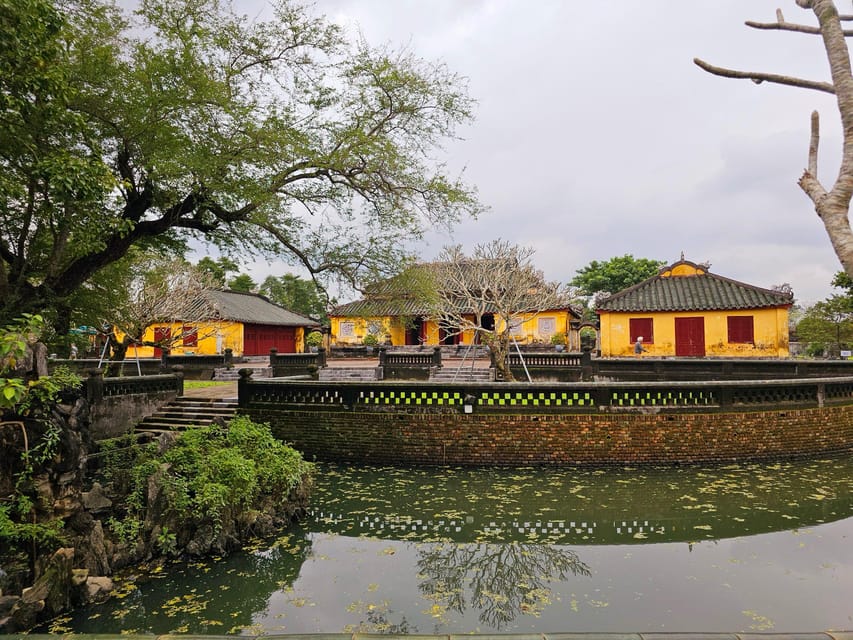
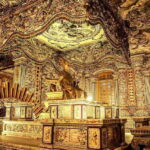
Kiến Trung Palace is a highlight for the Forbidden City experience. You’ll stop for photos and guided time, plus walking (about 20 minutes).
The core point is simple and effective: this palace was used as a residence for the king’s family. That detail matters because it reframes the whole complex. The Forbidden City isn’t only about power from the outside; it also contains private court life.
Guides such as Hoa and Xi are frequently praised for making the palaces feel like places with real routines, not just stones. When the guide tells you how family spaces fit into court control, you walk through the area more thoughtfully.
Thai Binh Pavilion and Thiệu Phương Garden for a slower rhythm
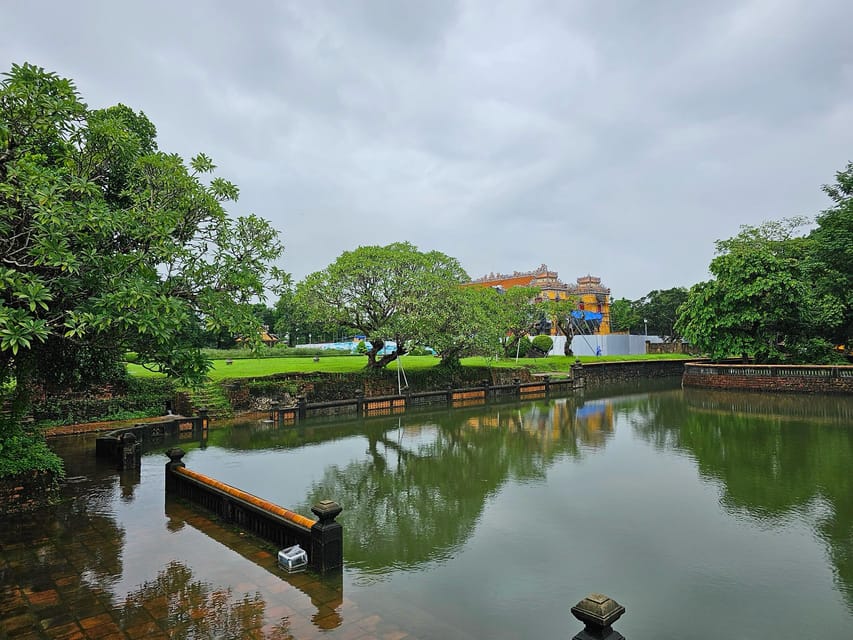
After Kiến Trung Palace, you’ll reach Thai Bình Pavilion (about 10 minutes) and then Thiệu Phương Garden (about 20 minutes). These stops help balance the day. Palaces and gates can feel heavy. Gardens and pavilions give you air.
In these areas, you’ll likely spend time sightseeing and taking in structure and layout cues—how water, paths, and openings help a space feel both planned and pleasant. One reason visitors love these parts: they slow the day down so you can absorb what you just learned.
If it’s hot or rainy, this is where the value of a good guide shows up. A patient guide helps you keep moving without rushing your attention to the next building.
Duyet Thi Duong Royal Theater and the finishing stretch
The tour includes Duyệt Thị Đường Royal Theater for photos, a visit, and guided time (about 10 minutes). A theater stop is useful because it hints at how the court used performance and controlled cultural life.
From there, the tour finishes with the Royal Library and Royal Garden. Even though those are end-of-tour spaces, they’re not filler. Ending here gives you a more reflective close: a chance to look at the complex as a whole, not just a checklist of stops.
Your final minutes matter. If you’ve been asking questions, this is a good time to wrap up with any last clarifications. Many guides are also happy to suggest what to do next for the rest of your Hue day.
Price and what $19 actually buys
At $19 per person, the value is strong—mostly because you’re paying for a local guide and a walking route through the core Imperial City storyline. The tour includes: a local guide and the walking tour.
What is not included: entry tickets and food and drinks. So budget for separate admission and plan your meals around the fact that the tour is focused on monuments, not dining.
Duration is another factor for value. The tour runs from 2.5 to 6 hours depending on starting times and how you move through the grounds. Since the citadel is huge, the longer end usually makes more sense if you want photos, time to ask questions, and a steady pace.
A final money-saving angle: if you’re traveling solo or as a couple, a private or small-group option can make the guide timing feel less rushed. A few guests noted the experience can be paced well, and that’s exactly where smaller groups often shine.
Who should book this tour, and who might not
This tour is ideal if you want history with structure. If you like understanding why a temple or palace is where it is—rather than just taking pictures—this will click.
It also works well for first-timers in Hue. It helps you get your bearings fast, because you get an orientation early and then revisit the meaning throughout the day. One guest specifically said they needed the tour for important context, and that’s the right mindset.
Who should consider a different plan? If you hate walking, this may feel like too much. Also, it’s not suitable for wheelchair users.
Should you book the Hue Imperial and Forbidden City Guided Tour?
Yes, if you’re the type who wants the site to make sense. The best part of this tour is how it turns spaces into stories—Nguyen Dynasty court life, worship rules at Mieu Temple, royal family life at Kiến Trung Palace, and the calm counterweight of gardens at the end.
If you’re price sensitive, the $19 rate is a plus, especially with a strong guide and English or French support. Just remember to budget separately for entry tickets and food, and wear shoes that can handle uneven temple grounds.
If you want to learn without stress, this is one of the easier ways to experience Hue’s Imperial City in a way that actually sticks.
FAQ
How long is the Hue Imperial and Forbidden City guided tour?
The tour lasts between 2.5 and 6 hours. Starting times vary based on availability.
What is included in the price?
The tour includes a local guide and a walking tour.
Are entry tickets included?
No. Entry tickets are not included, so you’ll need to plan for them separately.
Does the tour provide food or drinks?
No. Food and drinks are not included.
What languages are the guides?
The live tour guide offers English and French.
Is hotel pickup available?
Pickup is optional. The guide and driver can pick you up at your hotel if you provide your WhatsApp number and hotel name.
Where do I meet the guide?
You meet at the house of cannons. If you arrive by Grab, the driver drops you at a parking lot about 100 meters away.
Is the tour wheelchair accessible?
No. It is not suitable for wheelchair users.