REVIEW · HOI AN
Cooking Class Lunch/ Dinner with Local Chef in Coconut Village
Book on Viator →Operated by Happy Tour · Bookable on Viator
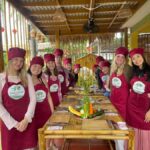
Three hours, and dinner feels homemade. This Hoi An cooking class teaches you to make popular Vietnamese dishes fast, then you eat what you cook. You’ll work with a local chef who prepares the ingredient base, but also shows you how to pick quality items and what they’re called in Vietnamese.
I particularly like the hands-on format and the variety. You’re not just tasting; you’re making a full set of dishes such as banh xeo (rice pancake), cha gio (spring rolls), and goi du du (papaya salad). The other big win is value: at $23 per person for a 3-hour experience that ends with lunch or dinner, it’s one of the easier ways to add a real food skill to your trip.
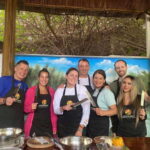
One thing to consider: this is a small group activity (max 10) and it runs as a combo group tour. That’s great for meeting people, but the class pace is still designed to fit everyone in, so it won’t be a slow, one-on-one lesson for every step.
In This Review
- Key Things I’d Book It For
- Price and What $23 Actually Buys You
- Your Start in Hoi An: Easy to Find, Easy to Join
- The 3-Hour Flow: Short, Focused, and Built for Results
- Inside the Cooking Class Menu: What You’ll Learn to Make
- Sua Gạo (Rice Milk)
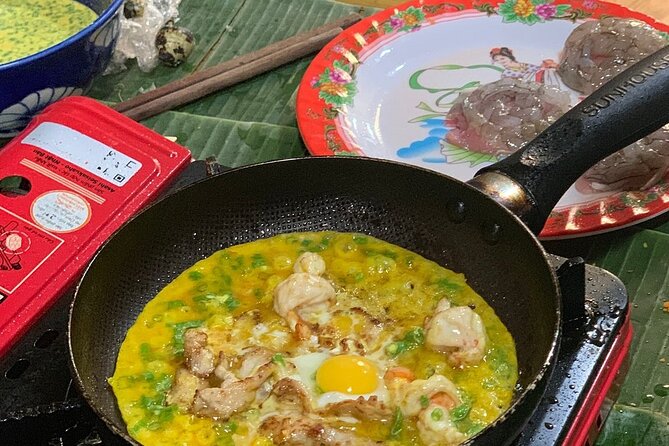
- Bánh Xèo (Rice Pancake)
- Cha Gio (Spring Rolls)
- Goi Du Đu (Papaya Salad)
- Ga Chiên (Chicken with Lemongrass)
- Cơm Trắng (Steamed Rice)
- Seasonal Fruit
- How the Chef Teaching Style Makes This Work
- Vegetarian-Friendly, With Real Ingredient Swaps
- Group Tour Reality: Small, But Not Private
- Coconut Village Context: Why This Location Adds Flavor
- What to Bring (and What to Skip)
- Who This Cooking Class Is Best For
- A Quick Practical Note on Booking and Changes
- Should You Book This Cooking Class in Coconut Village?
- FAQ
- How long is the cooking class?
- Does the tour include lunch or dinner?
- Is pickup available in Hoi An?
- Is this a private class?
- What dishes are included in the menu?
- Can vegetarians join?
- What is the cancellation policy?
Key Things I’d Book It For
- A chef-led, practical lesson: You cook, not watch, and you learn what to look for in ingredients.
- A full menu, not a sampler: Banh xeo, cha gio, papaya salad, lemongrass chicken, rice milk, and more.
- Lunch or dinner included: Your meal is part of the experience, not an add-on.
- Vegetarian-friendly by design: Ingredients can shift to veggies like mushrooms, tofu, and eggplant.
- Small group size: Max 10 travelers helps keep the experience interactive.
- Pick-up offered: Less hassle getting to and from the Coconut Village area.
Price and What $23 Actually Buys You
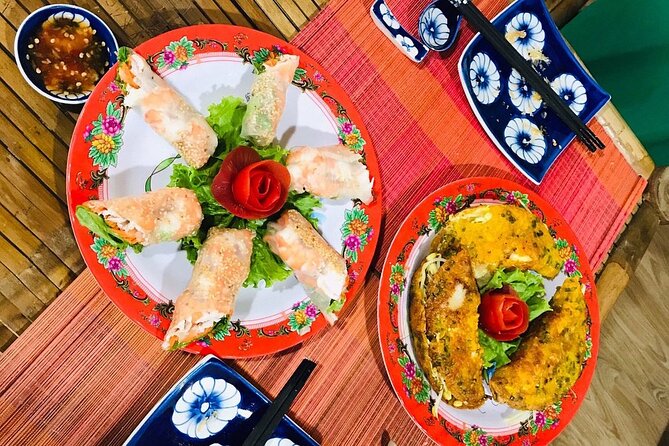
At $23 per person, this class is priced like a straightforward, no-nonsense food activity. The part that makes it feel like a deal is that you get three things in one block of time: instruction, cooking, and a full meal to eat afterward.
A lot of cooking experiences charge extra for one or two dishes, or you leave hungry. Here, the menu is built for a real Vietnamese lunch or dinner experience. You’re learning multiple classic items—think crispy spring rolls, a bright papaya salad, and a savory rice pancake—then you sit down to the fruits of that work, plus rice and seasonal fruit.
Also, you don’t need to worry about bringing ingredients or cooking gear. The chef prepares the base ingredients, and you’re guided through the process. That makes it beginner-friendly, but still satisfying if you already like food and want to understand the “why” behind the flavors.
You can also read our reviews of more cooking classes in Hoi An
Your Start in Hoi An: Easy to Find, Easy to Join
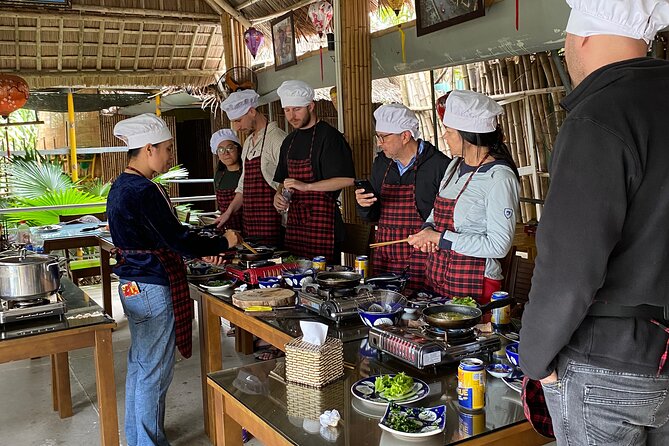
The experience meets at Hoi An Village Experience by Mr Cẩm Thanh in Hội An. It runs as a round-trip format, ending back at the meeting point, so you’re not stuck figuring out a second transportation plan later.
What I like about the setup is how “plug-and-play” it feels once you’re in Hoi An. Pickup is offered, and it’s noted as being near public transportation, so you have options depending on where you’re staying. You also get confirmation at booking time, which reduces that last-minute uncertainty that can sour an otherwise good day.
Because it’s capped at 10 travelers, you should expect a class that still feels coordinated and personal, even though it’s a group tour combined with other participants. In other words: you’ll likely get attention when you need it, but the schedule stays efficient.
The 3-Hour Flow: Short, Focused, and Built for Results
This experience runs about 3 hours total, with two hours of cooking instruction. That timing is a big part of the appeal. You get enough time to learn the key techniques for several dishes, but you’re not trapped for half a day in one kitchen step.
The general flow is:
- You start with guidance on ingredients and Vietnamese names.
- You cook multiple dishes during the class block.
- You eat the meal you made—typically lunch or dinner depending on the session.
If you like fast, structured experiences (and most food lessons in Asia work best when they’re tight and practical), this one fits the bill. The drawback is also predictable: you won’t have time to obsess over one recipe for hours. Instead, you’ll leave with a clear foundation and techniques you can repeat later.
Inside the Cooking Class Menu: What You’ll Learn to Make
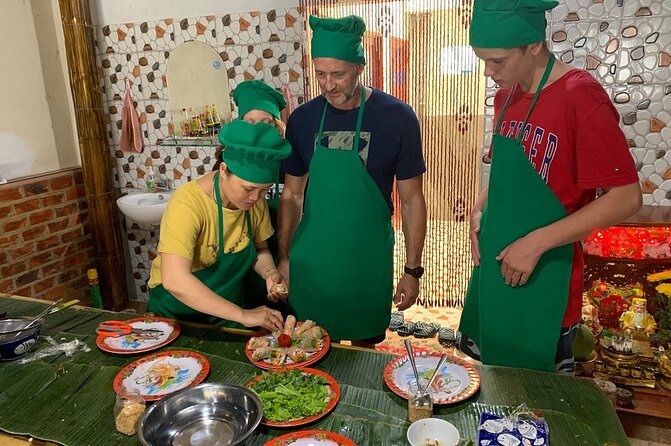
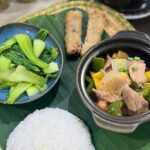
This is the kind of menu that gives you a full spread: crispy, fresh, savory, and satisfying. Here’s what’s included on the cooking class list.
Sua Gạo (Rice Milk)
You start with sua gao, a rice milk drink. It’s a gentle introduction to the meal and a reminder that Vietnamese cuisine isn’t only about spice and smoke. Even if you’re not sure about trying it, it tends to work well as part of the overall balance.
A few more Hoi An tours and experiences worth a look



Bánh Xèo (Rice Pancake)
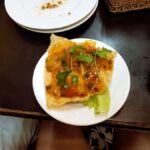
Bánh xèo is one of the most satisfying dishes to learn because the look and sound of cooking matter. You’re making a rice pancake with savory filling and typically lots of fresh herbs served alongside. The chef’s guidance on ingredients and timing is what helps keep it from turning into a sad, chewy pancake disaster.
Cha Gio (Spring Rolls)
You’ll make cha gio, the classic fried spring rolls. This dish is all about assembly and frying technique. The payoff is huge: crisp outside, flavorful inside, and a dipping rhythm that makes the meal feel complete.
Goi Du Đu (Papaya Salad)
Gỏi đu đủ (papaya salad) is a great contrast to the fried items. It brings crunch, brightness, and a mix of sweet, salty, and tangy flavors. Since this dish relies on seasoning balance, it’s also a good lesson in how Vietnamese cooking builds flavor.
Ga Chiên (Chicken with Lemongrass)
Gà chiên with lemongrass adds an aromatic backbone. Lemongrass is one of those ingredients that can smell incredible even before it’s cooked properly. Learning how it’s used helps you understand why Vietnamese dishes taste so layered without always being complicated.
Cơm Trắng (Steamed Rice)
Steamed rice is simple, but it matters. It anchors the meal and helps you understand how the richer dishes are meant to be eaten. In practice, this is what makes the spread feel like a real Vietnamese table instead of just a collection of snacks.
Seasonal Fruit
You also get seasonal fruit, which rounds out the meal. It’s a small detail, but it’s the kind of finish that makes you feel like you ate a complete lunch or dinner instead of leaving only with fried food in your memory.
How the Chef Teaching Style Makes This Work
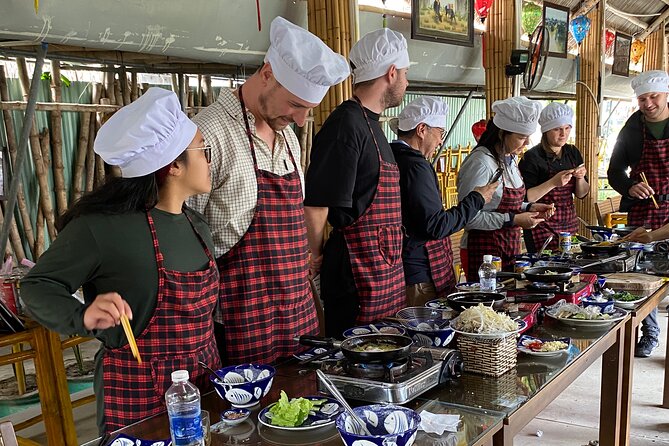
The chef is described as friendly and enthusiastic, and that matters more than people expect. Vietnamese cooking can feel overwhelming if someone dumps a recipe list on you. Here, you’re taught with an emphasis on what to look for in ingredients and what their interesting Vietnamese names are.
That naming part is underrated. Knowing the Vietnamese names makes it easier to shop later and easier to ask for the right thing when you’re eating out. Even if you never become a home cook, you’ll likely find it helps you order more confidently and recognize dishes in menus.
Also, the class says the chef prepares all ingredients, but you still learn how to choose quality items and understand what you’re working with. This keeps it realistic: you get education without needing to hunt down specialty produce first.
Vegetarian-Friendly, With Real Ingredient Swaps
If you’re vegetarian, the class doesn’t treat you like an afterthought. It states that ingredients can be changed into veggies such as mushrooms, tofu, and eggplant.
That’s important for two reasons. First, it means you’ll still be cooking and eating the same menu framework, not just an alternate snack. Second, it keeps the experience honest: you’ll learn technique, not just substitute random ingredients.
The menu can also change based on ingredient availability. In practice, that means you should expect slight variations. If you have strict dietary needs beyond vegetarian (like dairy-free or gluten-free), the data doesn’t spell out those specifics, so you’ll want to confirm with the operator when you book.
Group Tour Reality: Small, But Not Private
This is a group tour, combined with other participants. The maximum is 10 travelers, which is genuinely helpful. It keeps the vibe social without making the class feel like a conveyor belt.
Still, you should know how it feels: you won’t get every burner to yourself, and the chef’s attention must be spread. The advantage is that you’ll move through the steps efficiently, and the group size makes it easier to ask questions when you need clarification.
If you want a totally private cooking session, this likely won’t be your best match. If you’re happy to cook with a small crew and trade tips with strangers, it’s a strong fit.
Coconut Village Context: Why This Location Adds Flavor
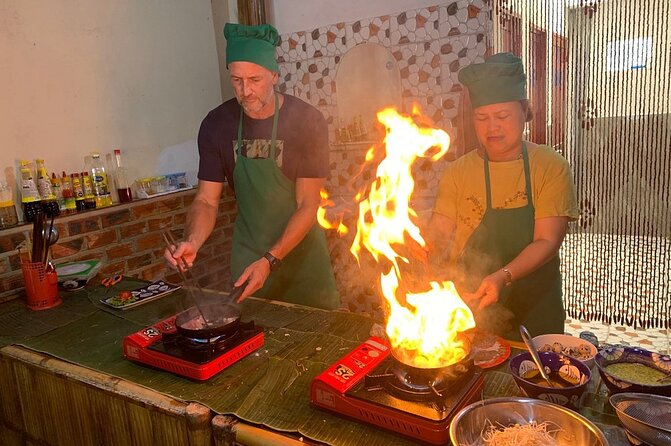
The experience is tied to a Coconut Village setting in Hoi An. Even without going heavy on scenic promises, the location matters because it puts the cooking into a local rhythm—Vietnamese food is tightly connected to how ingredients are grown, processed, and used.
Some of the experience descriptions mention a coconut boats element as an extra. Since the exact add-on isn’t spelled out in the core flow, treat that as session-dependent: you might find it included as part of the day, but you shouldn’t assume it for every booking.
Either way, pairing the food lesson with a local activity in the same area is a smart way to spend time beyond just walking streets and snapping photos.
What to Bring (and What to Skip)
You don’t need much, but a few practical choices can make the day smoother.
- Wear something you’re comfortable getting food-stained. This is a cooking class, not a museum.
- Plan to stay engaged for the full two hours of cooking.
- If you’re sensitive to fried foods, you’ll still be making them, so pace yourself when you eat.
You likely won’t need special gear because the chef prepares ingredients and leads the process. If you have a medical or dietary requirement, keep it simple when you speak up so the team can adjust correctly.
Who This Cooking Class Is Best For
This is ideal if you want:
- A hands-on Vietnamese cooking lesson with multiple dishes
- A meal you can actually eat as part of the experience
- A short, efficient activity that fits into a busy Hoi An itinerary
- A chance to learn Vietnamese dish names and ingredient cues
- Vegetarian-friendly accommodation via ingredient swaps
It’s also a good choice if you’re traveling with a family or a friend who’s not a huge foodie. The class structure is straightforward, and the results are tangible: you end up with a full dinner plate.
A Quick Practical Note on Booking and Changes
Cancellation is described as free up to a set window: you can cancel at least 24 hours before the start time for a full refund. If you’re booking last minute, just make sure you understand the cut-off based on local time.
Also, confirmation happens at booking, and you get a mobile ticket. That’s useful when you’re bouncing between activities in Hoi An and don’t want paper tickets to manage.
Should You Book This Cooking Class in Coconut Village?
I’d book it if you want the kind of experience that turns “I tried Vietnamese food” into “I can cook part of Vietnamese food.” The biggest reasons are the menu depth, the two-hour hands-on instruction, and the fact that you finish with a full meal instead of just a few bites.
I’d think twice if you’re looking for a private class or a very slow paced lesson with lots of solo time. And if your dietary needs are strict beyond vegetarian, you’ll want to confirm what swaps are possible for your specific situation.
For most people visiting Hoi An, this hits a sweet spot: practical skills, real dishes, and strong value, all in about three hours.
FAQ
How long is the cooking class?
The experience lasts about 3 hours total, with around 2 hours dedicated to cooking instruction.
Does the tour include lunch or dinner?
Yes. You cook and then enjoy the fruits of your labor for lunch or dinner as part of the experience.
Is pickup available in Hoi An?
Pickup is offered, and the meeting point is in Hoi An at Hoi An Village Experience by Mr Cẩm Thanh.
Is this a private class?
No. It’s a group tour combined with other participants, and the maximum group size is stated as 10 travelers.
What dishes are included in the menu?
The menu includes: Sua gao (rice milk), Banh xeo (rice pancake), Cha gio (spring roll), Goi du du (papaya salad), Ga chien (chicken with lemongrass), Com trang (steamed rice), and seasonal fruit.
Can vegetarians join?
Yes. Ingredients can be changed into vegetables such as mushrooms, tofu, and eggplant, and the menu may change due to ingredient availability.
What is the cancellation policy?
Free cancellation is available up to 24 hours before the experience start time for a full refund. If you cancel less than 24 hours before, the amount paid is not refunded.