REVIEW · HUE VIETNAM
Hue Imperial City and Forbidden City Walking Private Tour
Book on GetYourGuide →Operated by Samtour Vietnam Company · Bookable on GetYourGuide
A walk inside Hue can feel like time travel. This private tour lines up the key power points of the Nguyen Dynasty—from gates and palaces to the court theater—so the city makes sense fast, especially with guides like Nhi and Austin guiding the story with calm clarity. You’ll also get help with practical timing so you’re not stuck guessing where to go first.
What I like most is the way the tour turns buildings into meaning. When I see the Duyet Thị Đường Royal Theater explained in plain language, I get why it mattered to the court, not just what it looks like today. You’re walking, but you’re also learning how the Nguyen rulers organized authority, ceremony, and even leisure.
One thing to consider: the entrance ticket is not included, and you’ll need cash (VND) at the counter. It’s still good value, but add the ticket cost to the $23 price so you can budget without surprises.
In This Review
- Key highlights to look for
- Where Hue’s power story becomes easy to follow
- Meeting at the bronze cannons near Cửa Ngăn
- Flag Tower, Cửa Ngọ Môn, and Ngo Môn: seeing how authority was staged
- Thai Hòa Palace: the coronation space for 13 kings
- Hue Imperial City and the Forbidden Purple City concept
- Duyet Thị Đường Royal Theater: the oldest preserved Nguyen performance space
- Thiệu Phương Garden: a royal garden built in 1828
- Thái Bình Pavilion: where kings rested and relaxed
- Kiến Trung Palace: Asian-European style with a 2024 restoration
- Cung Diên Thọ and the Temple of Ten Kings
- Nine Dynastic Urns and Hiển Lâm Các: symbols you can actually picture
- Price and what $23 really covers (plus the ticket you’ll pay)
- Guides set the tone: why people love the narration
- Who should book this walking tour
- Should you book it or not?
- FAQ
- How long is the Hue Imperial City and Forbidden City walking tour?
- Is the entrance ticket included?
- Where do I meet the guide?
- Does the tour include hotel pickup and drop-off?
- What does the tour cost?
- What language is the guide?
- What’s included in the tour price?
- What key places are visited?
- Is free cancellation available?
Key highlights to look for
- A guided walk with dynastic context that helps you connect gates, palaces, and symbols instead of just taking photos
- Bronze cannon meeting point by Cửa Ngăn, plus background on the Nine Holy Cannons cast in 1803
- Cultural stops that go beyond the main palace areas, including royal gardens and the oldest preserved Nguyen theater
- Architectural variety, from Thai Hòa’s coronation setting to the mixed Asian-European feel of Kiến Trung Palace (restored in 2024)
- Clever photo timing and pacing, often relaxed enough that you can take your time at each stop
Where Hue’s power story becomes easy to follow
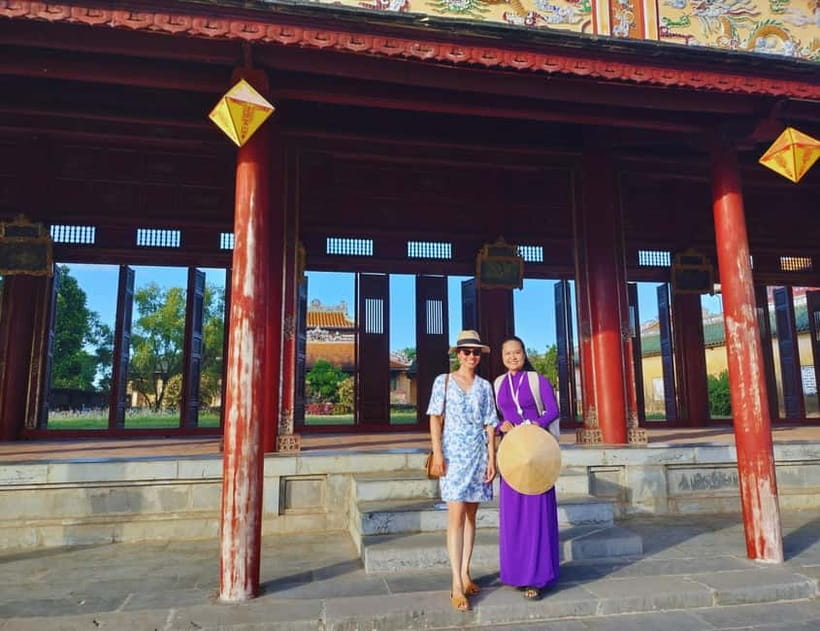
Hue Imperial City can look like a maze of walls and courtyards at first. The big win here is that you’re not left to interpret it alone. Your English-speaking guide keeps the narrative tight: how the Nguyen court functioned, who belonged where, and why certain spaces were restricted.
You’ll be walking for about 150 minutes, and the pace is designed for a private group. That matters because Hue’s details reward slow attention—columns, gate names, and the meaning behind where each building sits.
If you’re the type who likes turning sightseeing into a story you can repeat later, this tour fits you well. And if you’re traveling with someone who finds long history tours exhausting, the stopping points help break things up.
You can also read our reviews of more walking tours in Hue Vietnam


Meeting at the bronze cannons near Cửa Ngăn
Your guide meets you near the bronze cannons area close to Cửa Ngăn (Cửa Ngăn / Ngan Gate), holding an A4 paper with your name. This is a smart start: it gives you a clear landmark before you step into the more complex imperial zones.
One detail your guide may share is that the Nine Holy Cannons (Cửu vị thần công) were cast in 1803. You’ll also get the quick orientation you need—how the city’s layout relates to royal movement, ceremony, and display.
Practical tip: wear comfortable shoes. Even though each stop is brief, you’re doing repeated short walks between gates and courtyards.
Flag Tower, Cửa Ngọ Môn, and Ngo Môn: seeing how authority was staged
From the cannon area, the tour moves to the Flag Tower (Kỳ Đài Huế) as a photo stop and short guided look. The setting is very specific: it’s an architecture of the Nguyen Dynasty on the south face of the Hue Citadel, and it served as the flag-bearing site for the royal court.
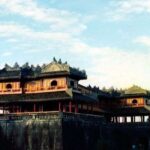
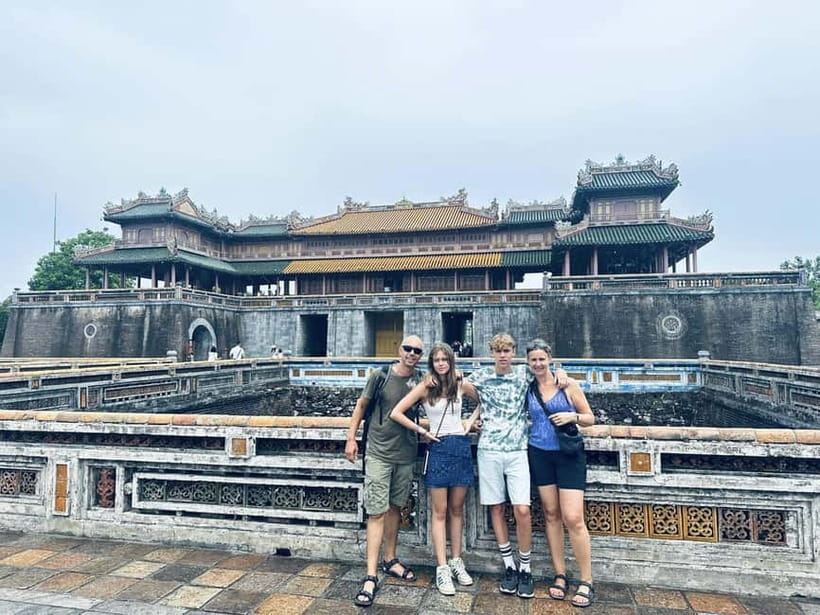
Then you’ll head toward Cửa Ngo Môn (Cua Ngo Mon) for a walk and guided explanation. This is where the tour starts doing something useful: connecting gate design to court rules. You’re not just passing through—you’re learning how access worked.
A key moment is understanding Noon Gate (Ngọ Môn Huế), built in 1833, reserved for the king or used to welcome envoys. It’s the kind of detail that makes the architecture click: gates weren’t random. They were a public version of hierarchy.
Thai Hòa Palace: the coronation space for 13 kings
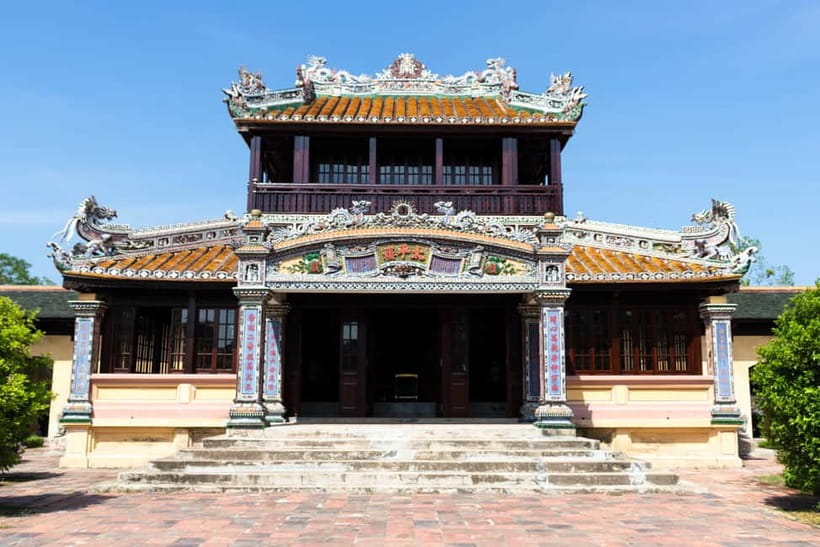
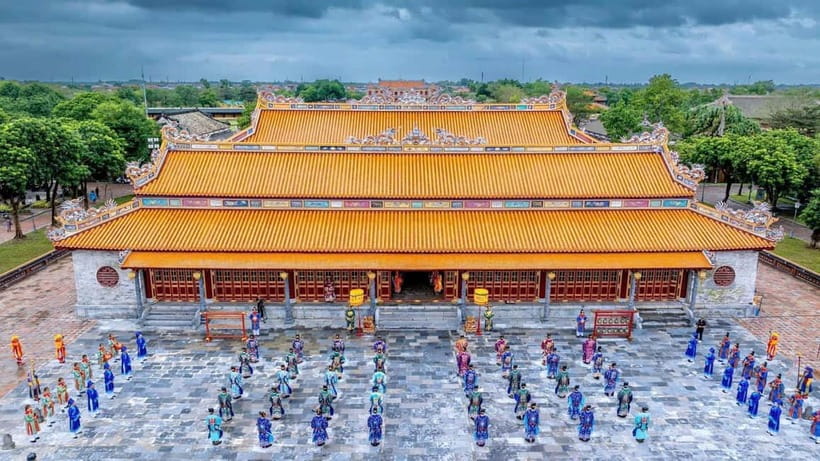
At Thái Hòa Palace (Điện Thái Hòa) you’ll get time for photos and guided touring. This is one of the places where Hue’s royal life becomes concrete instead of abstract.
Your guide explains that Thai Hòa was the coronation place of 13 Nguyen kings. That’s a big number, and it changes how you see the space. Instead of asking what building you’re in, you start asking what ritual happened here and why this room mattered more than the ones around it.
You’ll also be in the Imperial Citadel area, so it’s easier to see how court and ceremonial zones relate.
Hue Imperial City and the Forbidden Purple City concept
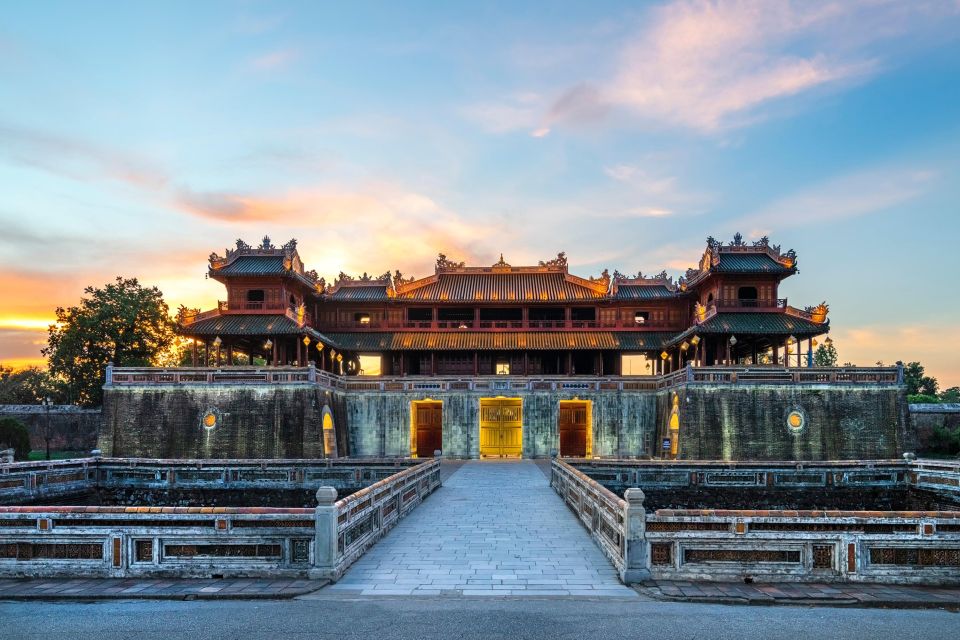
You’ll spend time in the Hue Imperial City area with guided sightseeing. This is where the tour connects access rules to real geography.
Part of what makes Hue special is the concept of the Forbidden Purple City (Tử Cấm Thành). It’s reserved for the king and royal family, while mandarins and civilians aren’t allowed to come close. Your guide’s explanation helps you “read” the space even if you’re only seeing it from allowed areas.
If you’ve ever walked into a former palace and thought, Okay, but who was allowed where?—this tour answers that question. It turns restricted boundaries into something meaningful rather than a barrier.
You can also read our reviews of more city tours in Hue Vietnam

Duyet Thị Đường Royal Theater: the oldest preserved Nguyen performance space
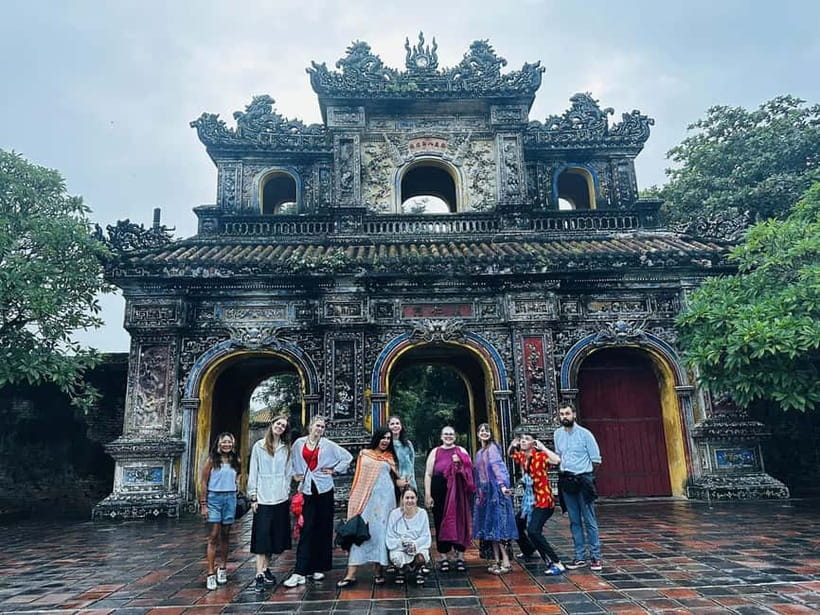
Next up is Duyet Thị Đường Royal Theater (Duyệt Thị Đường), with a short stop, photos, and guided context. This theater matters because it was one of four Nguyen-dynasty theaters—and it’s also the oldest preserved one.
This is one of the most praised parts of the experience. Guides like Anna and Ly Ly are often singled out for making this stop interesting, not dry. The way it’s explained helps you understand theater as court culture, not just a building.
If your travel style includes arts and performance, you’ll appreciate the shift here. It’s still history, but it’s history you can picture.
Thiệu Phương Garden: a royal garden built in 1828
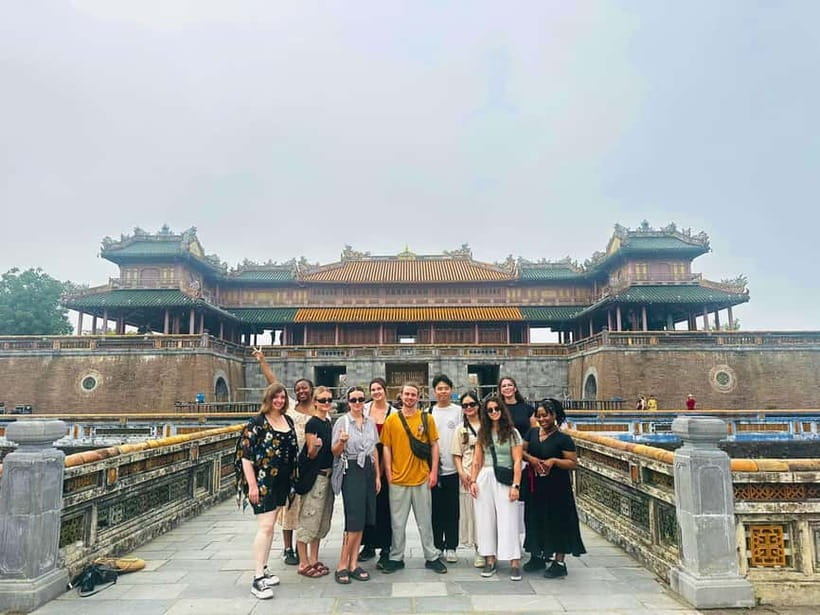
After the theater, you’ll visit Thiệu Phương Garden (Vườn Thiệu Phương), created in 1828. This is a calm contrast to gates and ceremonial halls.
Your guide frames the garden as one of the typical royal gardens of the Nguyen Dynasty. That’s useful because it prevents the garden from feeling like an optional add-on. You learn how nature and space design supported the court’s lifestyle and taste.
This stop is usually short, so don’t treat it like you’ll have time for a long wander. Use it for photos, shade breaks, and quick questions.
Thái Bình Pavilion: where kings rested and relaxed
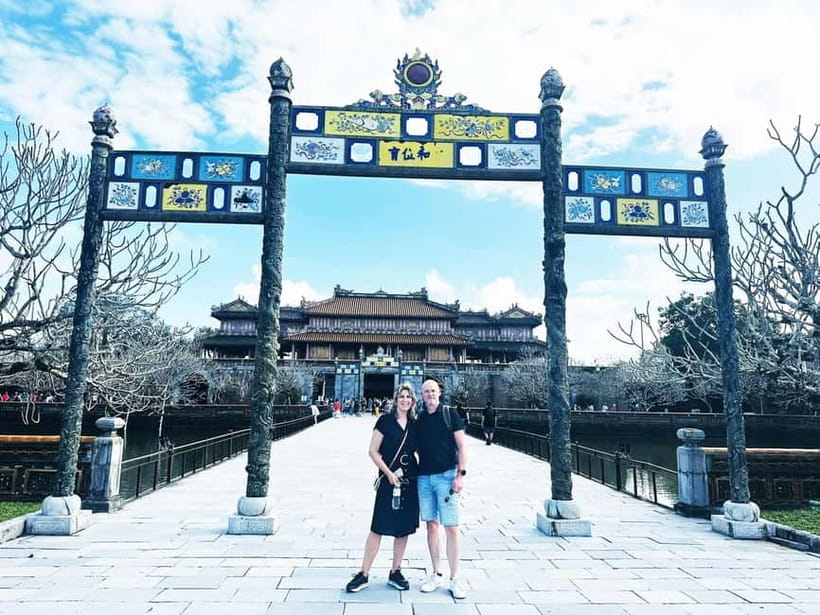
Then comes Thai Binh Pavilion (Thái Bình Lâu), built from 1919 to 1921. The purpose is clear: a place for the king to rest and relax.
This timing detail matters. It shows the Nguyen court didn’t just preserve older patterns; it also adapted later needs and comfort spaces. The pavilion is a reminder that palaces weren’t only about power displays—they also held downtime.
If you like architectural variety, you’ll likely enjoy seeing how this pavilion feels different from earlier ceremonial structures.
Kiến Trung Palace: Asian-European style with a 2024 restoration
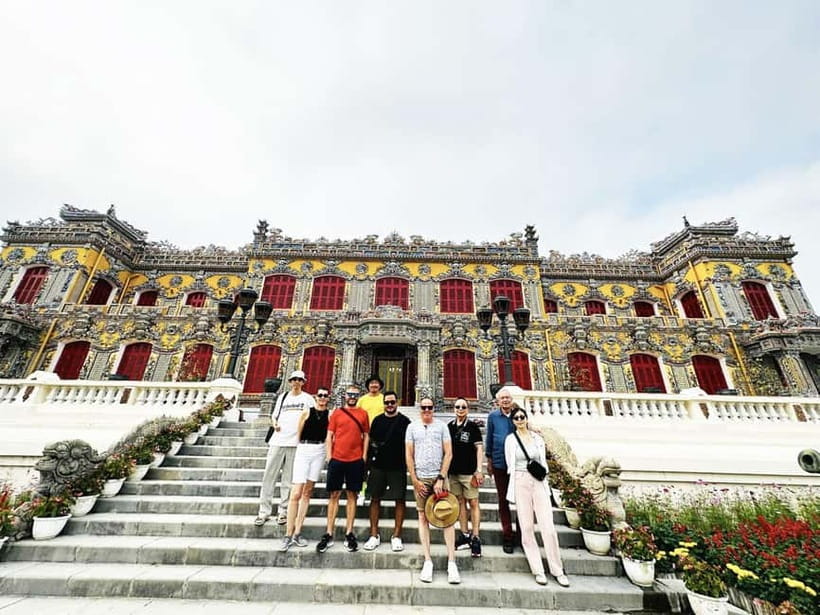
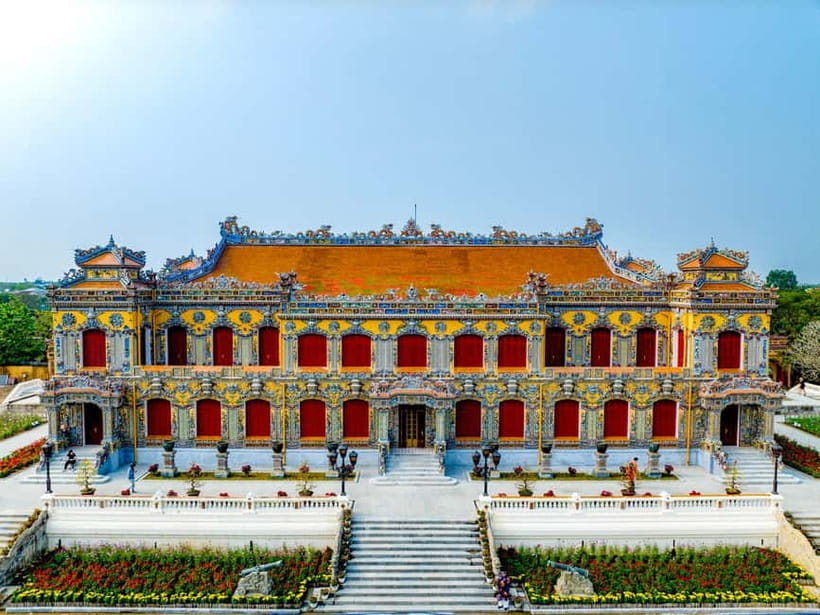
At Kiến Trung Palace (Điện Kiến Trung), you get another guided stop with photos and time to look around. The palace was built in 1923 and is highlighted by a mix of Asian and European architecture.
Here’s a major reason this visit feels current: the palace completely collapsed and was restored in 2024. Even if you don’t know architecture terminology, you’ll see a place that’s being brought back to life. Your guide’s explanation helps you understand what that restoration means for seeing Nguyen history through a modern lens.
Short caution: restoration areas can still be busy or limited in certain spots. Follow your guide’s lead so you don’t waste time guessing where you’re allowed to stand.
Cung Diên Thọ and the Temple of Ten Kings
The tour also includes Cung Diên Thọ (Dien Tho Palace / Cung Diên Thọ), the Queen Mother’s residence. You’ll be guided through what makes it special: large scale and exquisitely carved details, with an elegant style.
Then you move to Hưng Tổ Miếu (Thế Miếu Huế), which is dedicated to worshipping the 10 Kings of the Nguyen Dynasty. This is where the spiritual side of the court becomes visible, and your guide’s explanations help you see it as part of state life, not something separate.
These stops are often where history turns personal. If you enjoy stories about rulers beyond the battlefield—family, legacy, ceremony—you’ll likely find these sections satisfying.
Nine Dynastic Urns and Hiển Lâm Các: symbols you can actually picture
One of the best “wait, that’s amazing” stops is the Nine Dynastic Urns (Cửu Đỉnh Huế). These bronze urns were commissioned by Emperor Minh Mang in 1835, and they carry 162 images cast and carved across nine urns.
Your guide’s explanation helps you look at the urns like a set, not nine random objects. When symbols have a count and a purpose, you start paying attention instead of just moving along.
Finally, you’ll visit Hiển Lâm Các (Hien Lam Pavilion), built in 1821–1822. It’s considered the place where emperors had epiphanies. That phrase can sound poetic, but in this setting it works. You start to understand the pavilion as a designed space for reflection, not just decoration.
When you finish at Cửa Hiển Nhơn, the walk feels like a loop of meaning: power, ceremony, culture, leisure, legacy, and symbols.
Price and what $23 really covers (plus the ticket you’ll pay)
At $23 per person for a 150-minute private tour, you’re paying mostly for the guide and the time saved. This price includes an English-speaking guide, bottled water, and a 2.5-hour guided walk of the Hue Imperial City.
What’s not included is the entrance ticket to the Imperial City: 200,000 VND per person. There are also combo options that can be cheaper depending on what you add—like a ticket with 2 tombs, or with 3 tombs valid for 2 days.
The practical advantage: your guide helps you buy tickets to reduce queue time. To make that easy, prepare cash in VND.
If you’re deciding whether this is worth it, look at it this way: you’re not just visiting sites; you’re buying interpretation. Hue becomes far more rewarding when gates and halls get explained in the right order.
Guides set the tone: why people love the narration
The strongest repeated theme is how well guides communicate the Nguyen story. People specifically praise guides including Austin, Ha, Anna, Nhi, and Ly Ly for explanations that are clear and engaging, with lots of room for questions.
Pacing gets mentioned a lot too. Some guides keep it relaxed, so you can absorb details instead of rushing. Others focus on smart timing—like trying to get earlier entry moments—so you’re less crowded and can linger at key spots.
One very practical bonus from the guide approach: they’re ready for weather. For example, Anna brought a poncho and helmet when it was pouring rain for one guest. You might not get identical gear, but it’s a good sign that the people running these tours think ahead.
Who should book this walking tour
Book this tour if:
- You want a private Hue experience with an English guide who connects sites into one story
- You care about how court life worked—ceremony, access rules, and symbolism
- You want to cover major points in about 2.5 hours without feeling dragged into a half-day maze
Skip it (or consider a different format) if:
- You only want a self-paced photo walk
- You dislike paying separate ticket costs on top of the tour price
Should you book it or not?
Yes, I’d book this tour if you’re serious about understanding Hue Imperial City instead of just checking boxes. The $23 price is only part of the equation, but the guide time is where the value lives, especially for the theater, palaces, and the urns where context makes the difference.
If you can handle a ticket purchase at the counter and you’ll bring some cash VND, this is a smart, efficient way to get the story of the Nguyen Dynasty across major sites in one organized walk.
FAQ
How long is the Hue Imperial City and Forbidden City walking tour?
The duration is 150 minutes, roughly 2 to 2.5 hours depending on the selected option.
Is the entrance ticket included?
No. The Imperial City entrance ticket is not included (200,000 VND per person). Your guide can assist you with purchasing tickets.
Where do I meet the guide?
Meet at the bronze cannons area near Ngan Gate (Cửa Ngăn). Your guide will be holding an A4 paper with your name.
Does the tour include hotel pickup and drop-off?
Hotel pickup and drop-off are included if you select that option.
What does the tour cost?
The price is $23 per person.
What language is the guide?
The guide provides live English.
What’s included in the tour price?
You get an English-speaking guide, bottled water, and a 2.5-hour guided tour of Hue Imperial City.
What key places are visited?
Expect stops including the Flag Tower, Cua Ngo Mon, Thái Hòa Palace, Duyet Thị Đường Royal Theater, Thiệu Phương Garden, Thái Bình Pavilion, Kiến Trung Palace, Cung Diên Thọ, Hưng Tổ Miếu, Nine Dynastic Urns, and Hiển Lâm Các, ending at Cửa Hiển Nhơn.
Is free cancellation available?
Yes, you can cancel up to 24 hours in advance for a full refund.