REVIEW · HOI AN
Cycling, Water Buffalo Riding, Traditional Farming Life
Book on GetYourGuide →Operated by Hoi An Village Experience by Mr Cu · Bookable on GetYourGuide
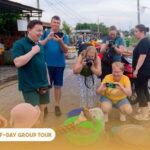
Coconut boats, rice fields, and buffalo close-up. This Cam Thanh village day pairs a calm bike ride with hands-on farming, and I really like how close you get to the water buffalo without turning it into a stunt. Another standout is the chance to paddle bamboo basket boats and try net fishing with local fishermen in the water-palm maze.
What makes the tour feel more meaningful than a checklist is the way it connects everyday village life to the American–Vietnam war stories tied to this coastline. You’ll also finish with a real home-style meal, including time to learn how fresh rice milk is made and how Hoi An pancake (Banh Xeo) gets cooked.
One thing to consider: it’s fairly active. You’ll bike, walk on uneven farm paths, and get involved with paddling and feeding—so it’s not a good match if you want something fully relaxed. And it’s listed as not suitable for pregnant women.
In This Review
- Key things that make this tour worth your time
- Cam Thanh: War-Shelter Waterways to Coconut-Palm Village Life
- Cycling to Cam Thanh: Narrow Roads, Quick Perspective Shifts
- Rice Paddy Work with Farmers: Ploughing to Planting Baby Rice
- A Fisherman Home Stop: Coconut Jam, Tea, and War Stories Told Clearly
- Water-Palm Paradise by Basket Boat: Purple Crabs and Traditional Net Fishing
- Lunch at a Local Home: Rice Milk and Hoi An Banh Xeo You Can Recreate
- Price and Duration: Does $30 Buy Real Value?
- Tour Timing: Morning Calm vs Afternoon Storytelling
- Who Should Book This (and Who Should Skip It)
- Practical Tips: Make It Comfortable and Actually Fun
- Final Call: Should You Book Hoi An Village Experience by Mr Cu?
- FAQ
- What time does the tour run?
- How long is the experience?
- What’s included in the price?
- Is pickup from my hotel included?
- Is it suitable for pregnant women?
- What languages will the guide speak?
Key things that make this tour worth your time
- Cam Thanh’s war-shelter story tied to the same waterways you’ll paddle today
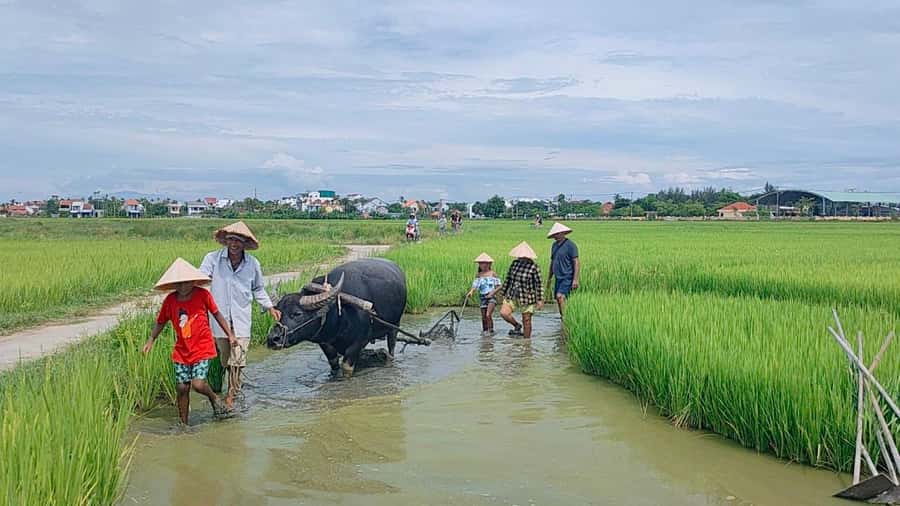
- Hands-on rice farming like ploughing and planting baby rice
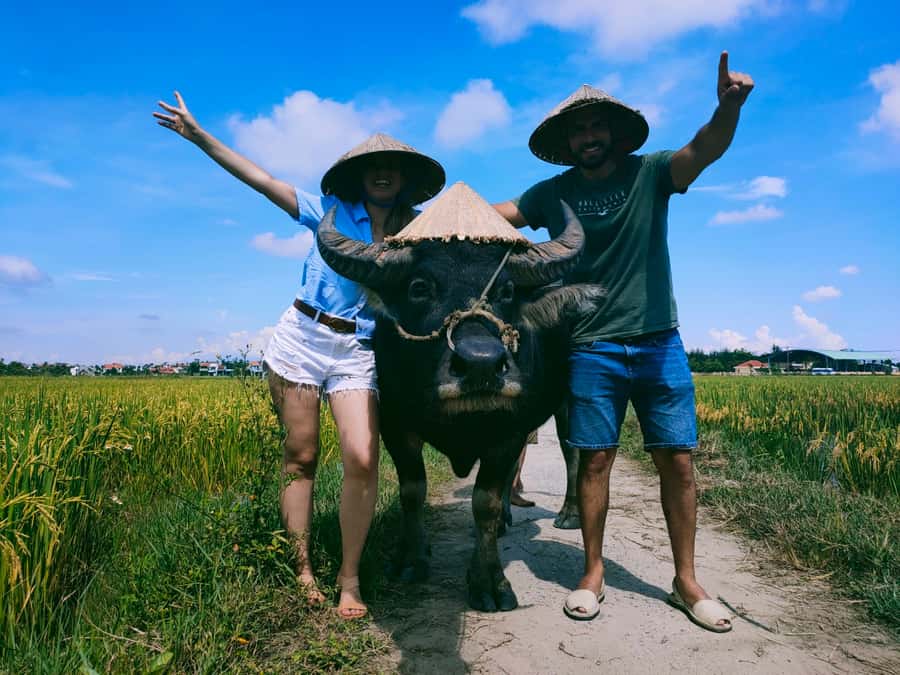
- Water buffalo riding and feeding with a respectful, farm-based focus
- Net fishing and purple crab catching using traditional methods
- Lunch at a local home plus cooking practice for rice milk and Banh Xeo
Cam Thanh: War-Shelter Waterways to Coconut-Palm Village Life
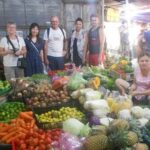
Cam Thanh is about 5 km from Hoi An’s old town, but it feels like a different world once you head out from the tourist core. This is a water-and-rice landscape: vegetable plots, rice fields, and fish and shrimp farms all support the village. It’s also tightly linked to the American–Vietnam war era—this area served as shelter for local people and soldiers, and it’s the backdrop for the stories your guide shares while you’re exploring.
That war context matters because it changes how you read the scenery. You’re not just looking at pretty coconut-lined channels. You’re hearing how these waterways shaped survival and daily routines in a difficult period, and how the same geography later became a livelihood hub. Even if you’re not a history buff, you’ll likely find the stories make the place feel more real and less staged.
You can also read our reviews of more cycling tours in Hoi An

Cycling to Cam Thanh: Narrow Roads, Quick Perspective Shifts
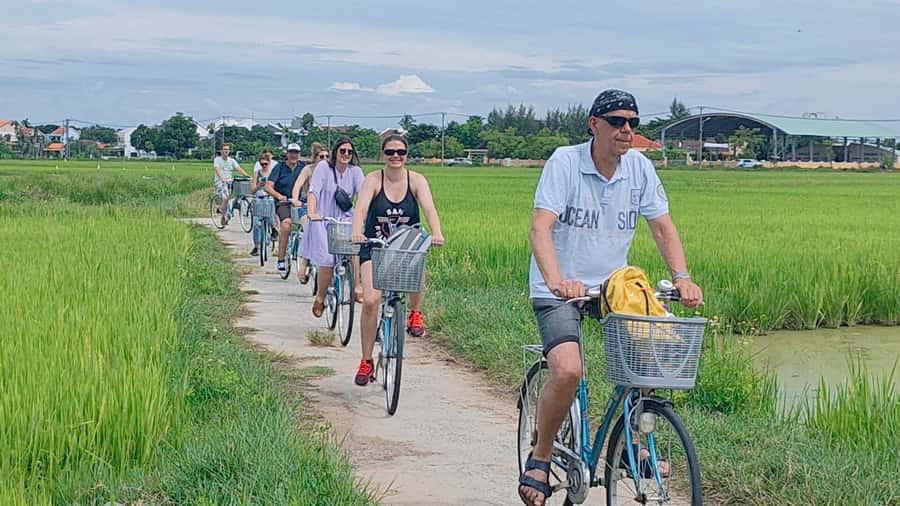
Your day starts with pickup in the Hoi An area, then you meet your English-speaking guide (often known as Mr. Cu) and head out by bicycle. The route uses narrow roads—close enough to see everyday village life, but calm enough that it doesn’t feel like you’re racing through traffic.
Along the way, you build momentum for the rest of the tour. You go from town energy to paddies and working farms, which helps the later hands-on parts feel logical instead of random. If you’re the type who likes understanding how people actually move around their world, you’ll appreciate that the tour includes cycling as the connector between stops.
Practical note: because it’s a bike-based start, wear shoes that you can walk in comfortably. Also, if it’s humid (it often is in central Vietnam), you’ll be glad to have a hat and sunscreen ready before you head out.
Rice Paddy Work with Farmers: Ploughing to Planting Baby Rice
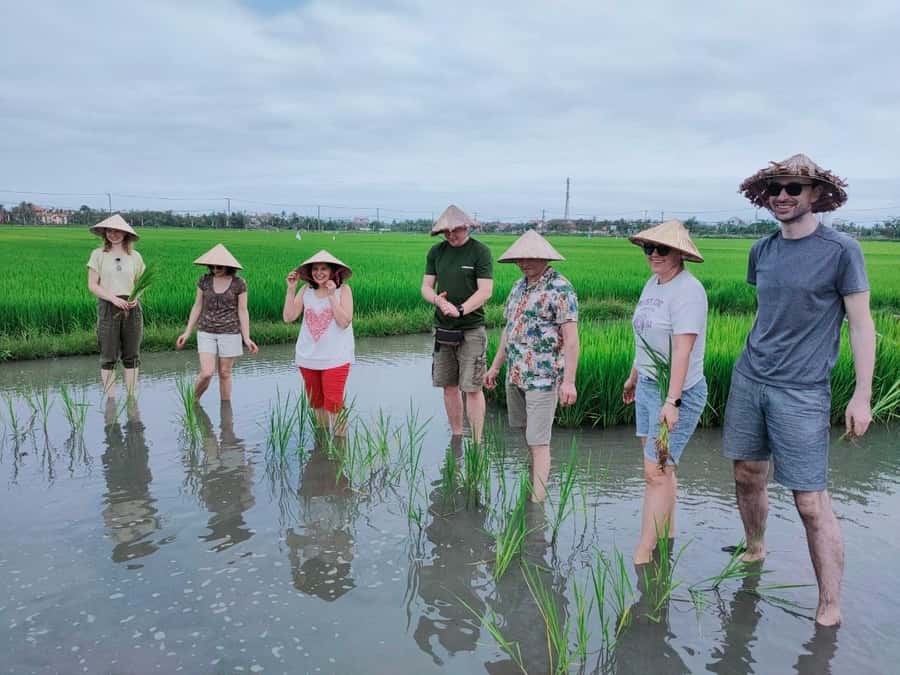
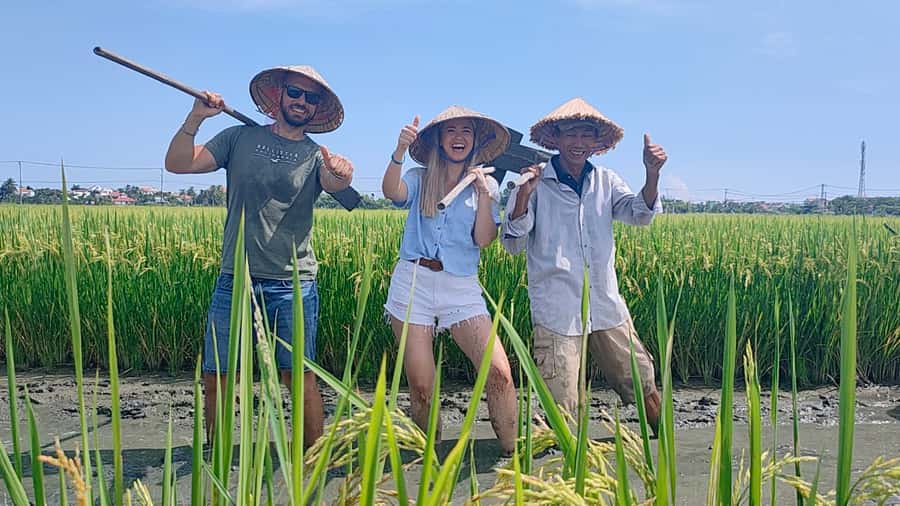
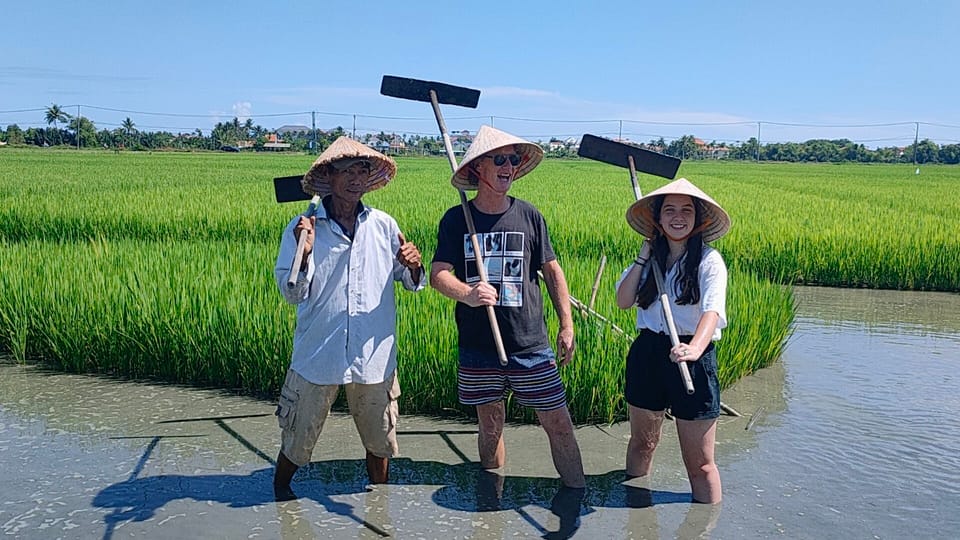
One of the most praised parts of this experience is the rice farming portion. You’ll meet local farmers working their fields, and you join in with activities like ploughing, preparing the plot, and planting baby rice in the area you helped prepare.
This isn’t just watching from the edge. The point is participation—short, doable tasks that help you understand why rice farming runs on timing and teamwork. You’ll likely notice how specific movements are. Rice isn’t a one-day activity; it’s a cycle, and the work you see here fits into that larger rhythm.
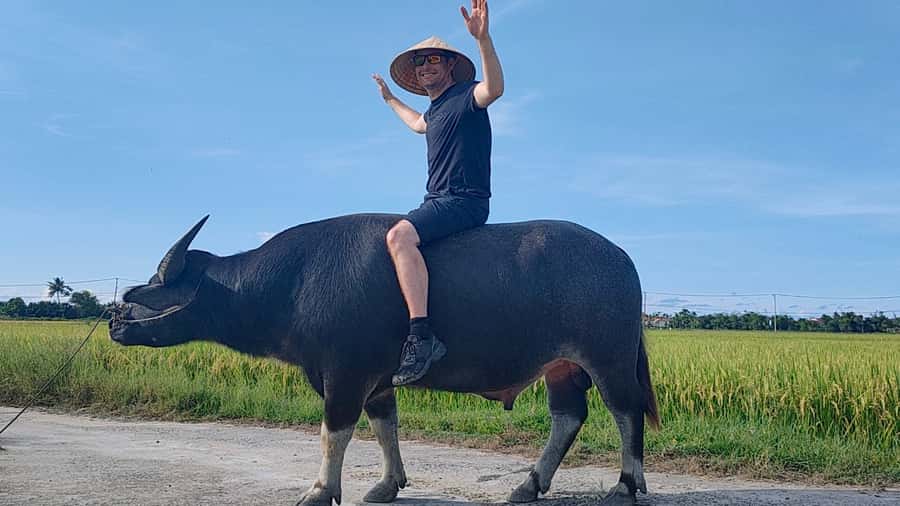
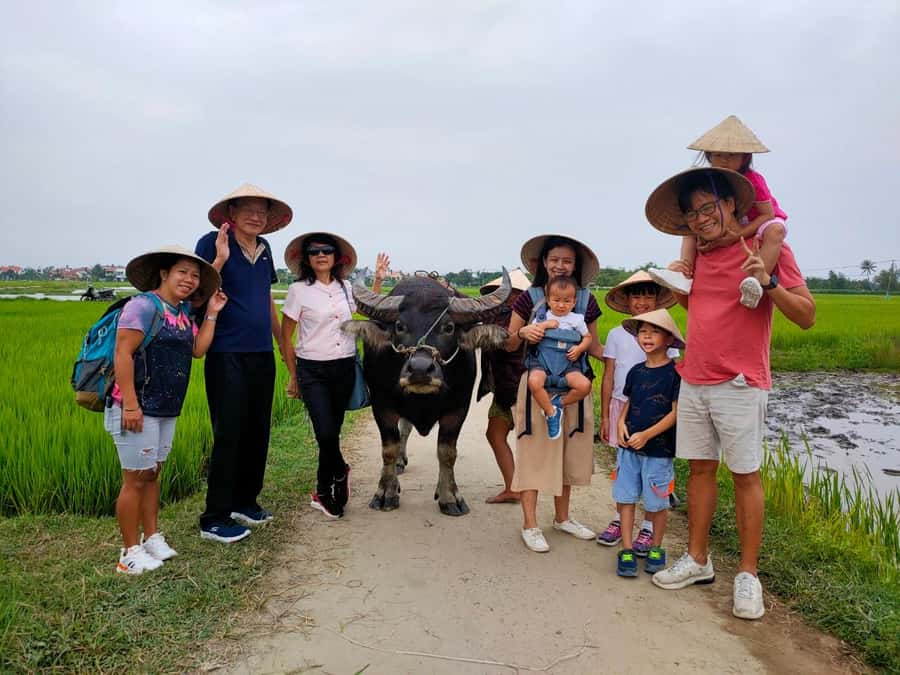
Then comes the water buffalo moment, which is a huge highlight for many people. You can ride the buffalo and also feed them. The key here is that the interaction feels farm-based rather than showy. If you care about animal ethics, this is where the tour’s approach stands out: it’s presented as part of agricultural life, not a thrill ride.
If you’re worried about discomfort—mud, slippery patches, and farm-floor unevenness—this is the part where those worries make sense. Go slowly, hold onto what you need, and listen carefully to your guide’s cues.
A Fisherman Home Stop: Coconut Jam, Tea, and War Stories Told Clearly
After the farming activities, the itinerary shifts to a local fisherman home. This stop is built for conversation, not just snacks. You’ll taste coconut jam and tea, and you’ll have the chance to meet family members in a casual, home setting.
The reason I like this part is simple: it adds a human scale. You stop seeing the village as a location and start seeing it as people living their daily routines. And because your guide is sharing stories about the war while you’re sitting in a real home environment, the history lands differently than it would in a museum or a scripted performance.
You may also notice how the guide explains the relationship between the village economy and the seasons—how seafood, vegetables, and rice connect to daily work. Those details help you understand why the later fishing activities don’t feel like tourist entertainment. They’re extensions of the same living system.
Water-Palm Paradise by Basket Boat: Purple Crabs and Traditional Net Fishing
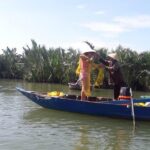
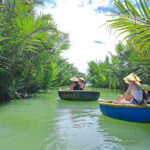
This is the part many people picture when they think about Cam Thanh: calm channels bordered by water palms, with fishermen working in the waterways. You’ll explore the coconut-palm lined waterways and learn and share fishing experience with local fishermen.
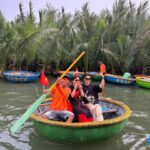
The tour includes time using unique fishing nets where you can catch fish and purple crabs. You’ll also paddle the traditional bamboo basket boat. This is hands-on, and it’s also where your guide’s coaching becomes important—paddling takes rhythm, not brute strength.
What you’ll probably enjoy most is the contrast between still scenery and real action. The channels look serene, but you’re learning techniques: how nets are used, how crabs respond to different approaches, and how fishermen interpret the water. Even if you don’t catch much, you’re getting taught how it works, and that makes it feel worthwhile.
Tip for your comfort: expect to be around water. Bring a small plan for what you’ll keep dry (phone, camera), and consider wearing clothes you don’t mind getting splashed.
A few more Hoi An tours and experiences worth a look




Lunch at a Local Home: Rice Milk and Hoi An Banh Xeo You Can Recreate
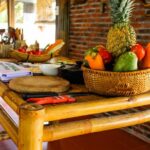
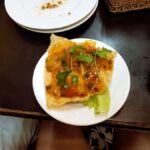
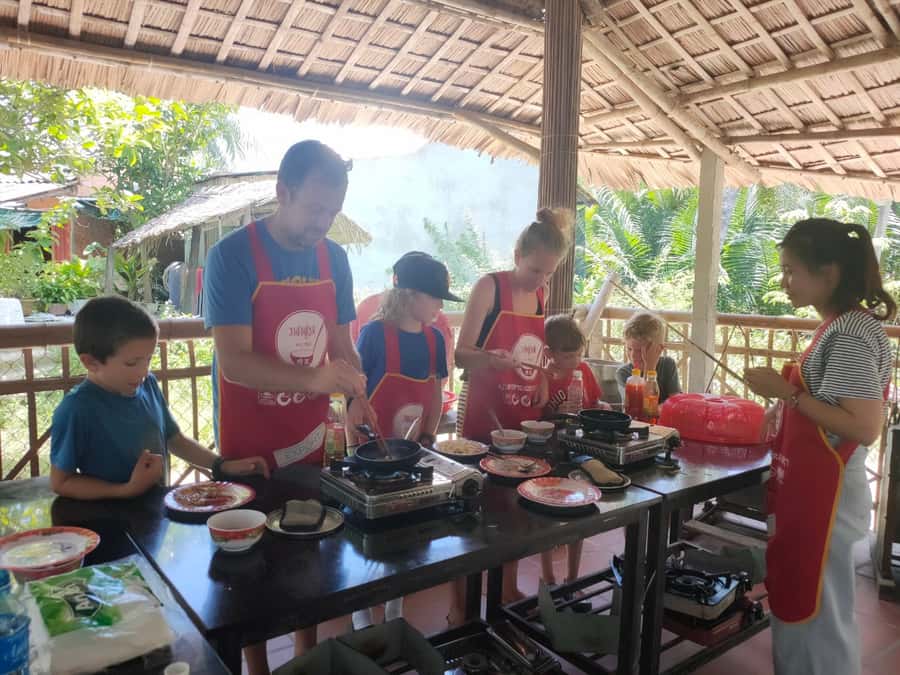
You finish with lunch at a local home, which is exactly the kind of meal I like on trips: not rushed, not overly polished, and connected to what you’ve been doing all morning (or all afternoon). You’ll learn how to make fresh rice milk and then cook traditional Hoi An pancake—Banh Xeo.
The learning element is what raises this above a simple included meal. You’re not just eating food; you’re hearing what goes into it and what steps matter. Rice milk also fits the bigger theme of the tour—rice isn’t just a field activity here. It’s a food story, too.
If you take the afternoon tour, the meal is listed as traditional lunch or dinner depending on timing, so you’ll want to pick the schedule that fits your energy and appetite. Either way, plan to treat the meal as part of the experience, not something to skip if you’re tired.
Price and Duration: Does $30 Buy Real Value?
At about $30 per person and roughly 270 minutes (4.5 hours), this tour costs more than a quick city excursion, but it also includes a lot of value you’d normally pay for separately.
Here’s what you get built into the package:
- Pickup and drop-off in the Hoi An area
- An English-speaking tour guide
- Bicycle and basket boat transportation
- Entrance fee tickets
- Cold water
- A home-style meal (traditional lunch or dinner based on the tour timing)
When a tour includes transportation, an English guide, and both food and activities, the price starts to make sense—especially because the activities are hands-on. This isn’t just a photo loop. You’re joining farming tasks and fishing practice, then sitting down for cooking.
The real question for you is matching your expectations. If you want a gentle walk-and-views day, this may feel like more work than you bargained for. If you want to trade passively sightseeing for doing something with locals, then the value is strong.
Tour Timing: Morning Calm vs Afternoon Storytelling
You can choose between two time blocks:
- 8:30 am to 1:00 pm
- 2:00 pm to 6:30 pm
Pick the morning if you like starting early and getting the main farm and fishing actions done before the heat peaks. Pick the afternoon if you want a later start and prefer a slower pace before dinner.
Either schedule still stacks similar experiences: cycling to Cam Thanh, farming activities, fisherman home, water-palm boating and net fishing, war stories, and the home-cooked rice milk and Banh Xeo.
Who Should Book This (and Who Should Skip It)
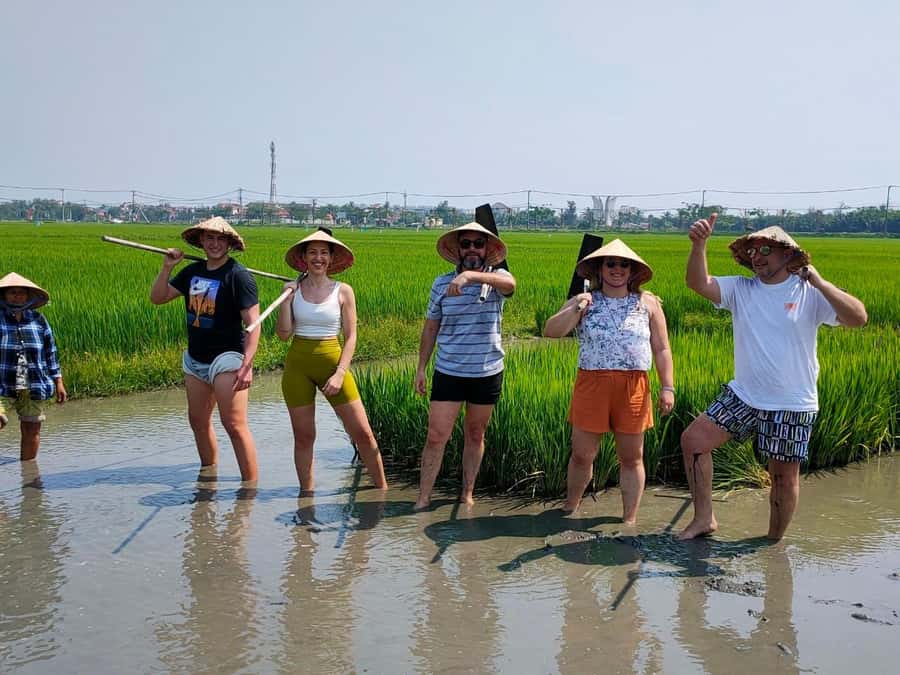
This tour is best if you like practical, real-life travel: farm work you can try, food you can learn, and local stories that connect place to events. I also think it’s a strong option for families, because the day is structured around multiple short activities rather than one long lecture. One review specifically mentioned a guide adapting the vibe for a child, including when someone traveled with a 5-year-old.
You should skip it if:
- You want a totally relaxing, low-movement day
- You’re pregnant (it’s listed as not suitable)
- You don’t feel comfortable with active steps like biking and being on farm paths
Practical Tips: Make It Comfortable and Actually Fun
Here’s how to set yourself up for a smoother day without overthinking it:
- Dress for heat and water. You may be around wet surfaces during paddling and fishing, and farm areas can be muddy.
- Wear shoes you can walk in. Sandals can be risky on uneven paths, and you’ll likely want grip.
- Bring sun protection. The day includes outdoor time—rice fields, waterways, and village paths.
- Keep small electronics protected. You’ll want a simple way to store phone and camera out of splashes.
Also, pay attention to your guide’s instructions during paddling and farming tasks. The activities are designed to be safe, but good guidance makes the difference between stressful and enjoyable.
Final Call: Should You Book Hoi An Village Experience by Mr Cu?
If you’re the kind of traveler who likes doing more than just seeing, this is an easy yes. The pairing is smart: bike ride into Cam Thanh, rice farming participation, buffalo riding and feeding, fisherman home tastings, traditional bamboo boat paddling with net fishing, and then a home-cooked meal where you learn rice milk and cook Banh Xeo.
The tour’s biggest strength is how it connects livelihood, food, and history in the same place. You leave with practical memories—how rice farming works, what fishermen do in the waterways, and how a local kitchen turns rice into something you can taste and understand.
If you want a gentle stroll and minimal physical involvement, you might choose something else. But for many people, including families and first-time visitors to rural Vietnam, this kind of hands-on cultural day is exactly the right level of effort.
FAQ
What time does the tour run?
The tour runs from 8:30 am to 1:00 pm, and again from 2:00 pm to 6:30 pm.
How long is the experience?
The duration is 270 minutes.
What’s included in the price?
It includes an English-speaking tour guide, pickup and drop-off in the Hoi An area, bicycle and basket boat transportation, entrance tickets, cold water, and a traditional lunch or dinner depending on the tour time.
Is pickup from my hotel included?
Yes. Pickup is included from hotels in the Hoi An area, with pickup from the hotel lobby.
Is it suitable for pregnant women?
No. It is listed as not suitable for pregnant women.
What languages will the guide speak?
The tour guide speaks English and Vietnamese.