REVIEW · CAN THO
Can Tho: Floating Market, Cacao & Canals with French Guide
Book on GetYourGuide →Operated by Local Mint Travel · Bookable on GetYourGuide
Sampan mornings in the Mekong feel like another world. This French-guided trip in Can Tho strings together sunrise on the water, the Cai Rang Floating Market, and village life into one smooth half-day. It’s a practical way to see a lot without turning the day into a sprint of buses and checklists.
I especially like two things: a real French-speaking guide who can answer questions as you go, and the finish at an organic cacao farm with tastings of cacao milk and cacao wine. You don’t just watch food being made here; you get to understand how people live, eat, and trade across the river.
One thing to consider: the group start time is 5:30 AM, so you’ll want to be ready for an early wake-up and bright morning sun right after pickup.
In This Review
- Key Highlights Worth Waking Up For
- A Can Tho Morning That Actually Feels Local
- Meeting at Kim Long Hotel and the 5:30 AM Start
- Cai Rang Floating Market: What Sunrise Gives You
- Sampan Time: Breakfast on the Boat and Fresh Fruit
- Going Beyond the Market: Rice Noodle Workshop
- Peaceful Canals and a Village Walk With Shade and Time
- Organic Cacao Farm: Milk, Wine, and the Story Behind Chocolate
- Pace, Comfort, and What to Pack for a 5:30 AM Departure
- French Guide Quality: What You Gain With Names Like Bao and Dao
- Price and Value: Why $37 Can Make Sense Here
- Who Should Book This (and Who Might Want Another Option)
- Should You Book This Can Tho Floating Market, Noodle, and Cacao Tour?
- FAQ
- What time does the tour start and when does it end?
- Is the guide available in French?
- What is included in the tour price?
- What happens at Cai Rang Floating Market?
- Is breakfast vegetarian-friendly?
- Is this tour suitable for wheelchair users?
Key Highlights Worth Waking Up For
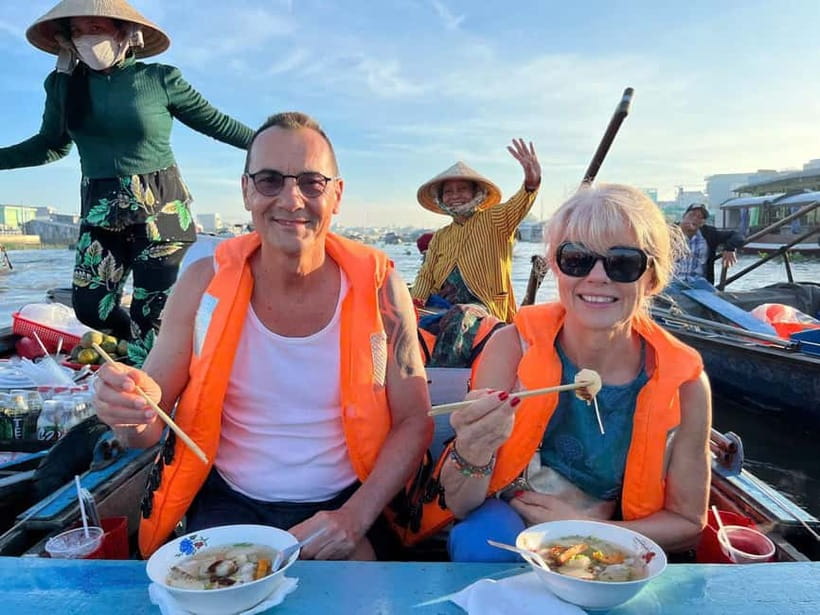
- Cai Rang Floating Market at sunrise: the Mekong at its most alive, before the heat and crowds pick up
- French-speaking guidance: clearer explanations for what you’re seeing, plus time for questions
- Rice noodle workshop: how locals turn rice into noodles, using traditional methods
- Sampan cruising through narrow canals: water coconut and mangrove-lined routes with calmer scenery
- Family-style food moments: breakfast on board plus fresh seasonal fruit while you travel
- Organic cacao farm tastings: cacao milk and cacao wine, explained with a local story
A Can Tho Morning That Actually Feels Local
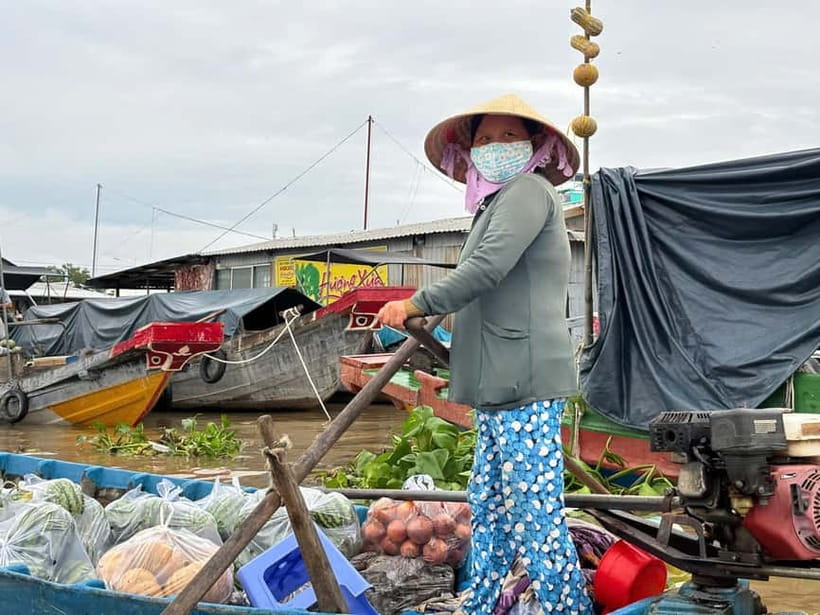
Can Tho sits in the Mekong Delta, where boats aren’t a novelty—they’re part of daily logistics. This tour leans into that reality: you start early, move by small boat, and keep your day focused on river life instead of trying to “collect” sights.
What makes it work is the flow. You begin with the big visual moment—Cai Rang Floating Market—then move outward into quieter canals, a countryside walk, and hands-on food making. By late morning, you’ve gone from lively trade to the slower rhythm of rural Vietnam.
And because the guide speaks French, you get more than translations. You get context: why the market looks the way it does, how noodle-making works from rice, and how cacao becomes the products people use every day.
You can also read our reviews of more guided tours in Can Tho
Meeting at Kim Long Hotel and the 5:30 AM Start
Pickup and drop-off are straightforward: the tour starts and ends at the same location, Kim Long Hotel at 9 Châu Văn Liêm, P. Tân An, Q. Ninh Kiều, Cần Thơ City. The group departs at 5:30 AM, which is exactly what you want for the Mekong Delta. Early light helps the floating market feel special, and the day stays comfortable enough to finish around 11:30 AM (timing can shift with the river tide).
Even if you’re used to early starts, you’ll feel it in your body. Bring what you’d bring for dawn in the tropics: comfortable shoes, sun protection, and water. A short nap later is a good plan—this isn’t a tour that drags into the afternoon.
Cai Rang Floating Market: What Sunrise Gives You
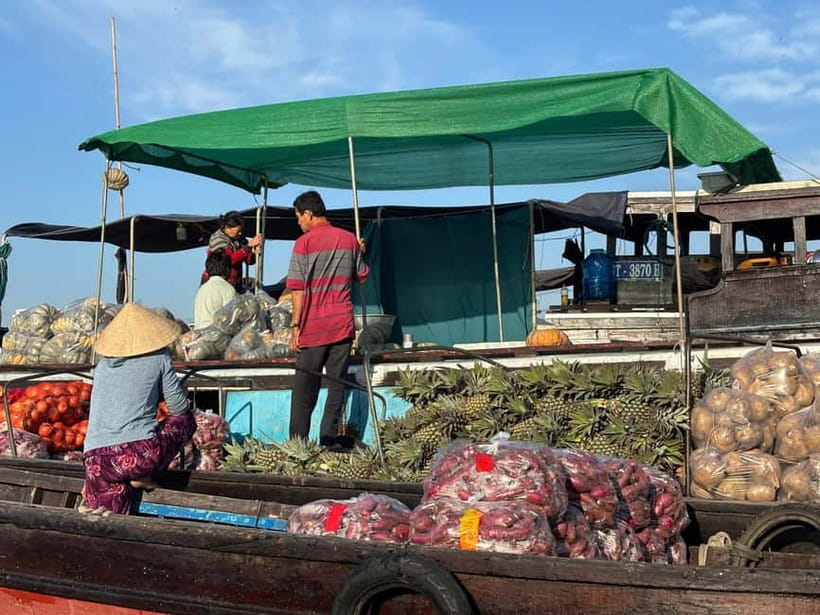
Cai Rang is the biggest floating market in the Mekong Delta, and sunrise is when the river is at its best. As you arrive, you’re not just seeing boats—you’re watching trade patterns unfold: sellers positioned for visibility, goods loaded and moved, and the general hum of morning commerce.
The guide explains the history and importance of the floating market to local life, which changes how you look at it. Instead of treating it like a photo stop, you start noticing the practical details: how products are displayed, why certain boats cluster where they do, and how the river itself becomes a marketplace.
If your expectation is a perfectly staged tourist scene, you might be disappointed. The market is real, and your view depends on where your sampan can line up. The upside: you’ll see the energy up close, with less glare and better morning timing than later in the day.
Sampan Time: Breakfast on the Boat and Fresh Fruit
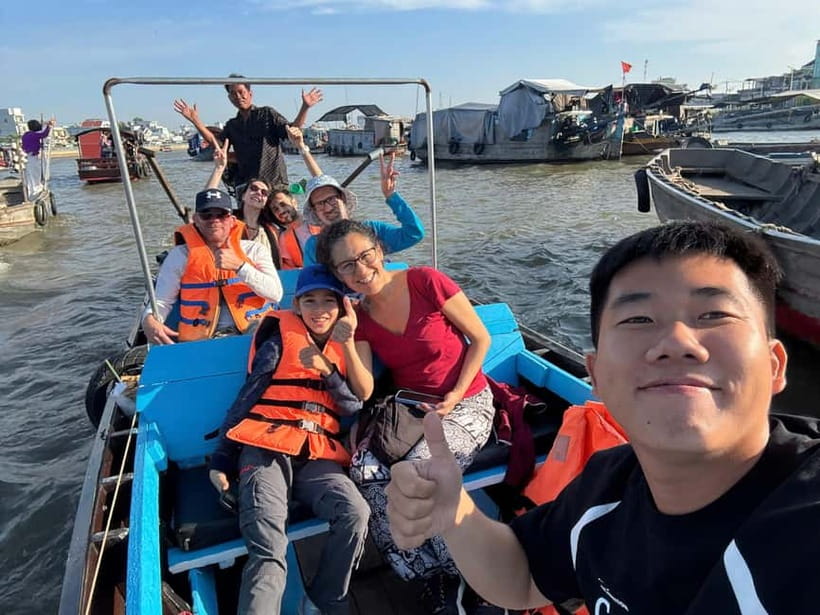
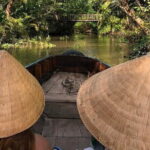
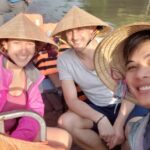
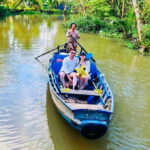
After you meet your guide and board, the early cruise is part of the experience. You’ll take a traditional wooden sampan, steered by a local boat driver. This matters because it keeps the ride intimate: you feel the motion, you get closer to the water, and you don’t spend half the morning waiting on large boats.
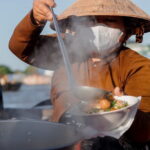
Breakfast is served on board, and you can choose your style: noodle soup, Bánh Mì, or Bánh Bao. There’s also a vegetarian option, which is a welcome detail. Tea and coffee are included too, so you don’t need to hunt down a café before the market.
Then comes the small, very Mekong Delta touch: freshly cut fruit like pineapple (and at least some mornings include watermelon as well). It’s simple, but it’s also a reminder that you’re eating the flavors of the delta while you move through it.
Going Beyond the Market: Rice Noodle Workshop
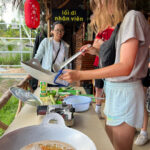
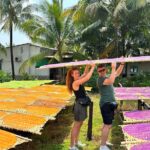
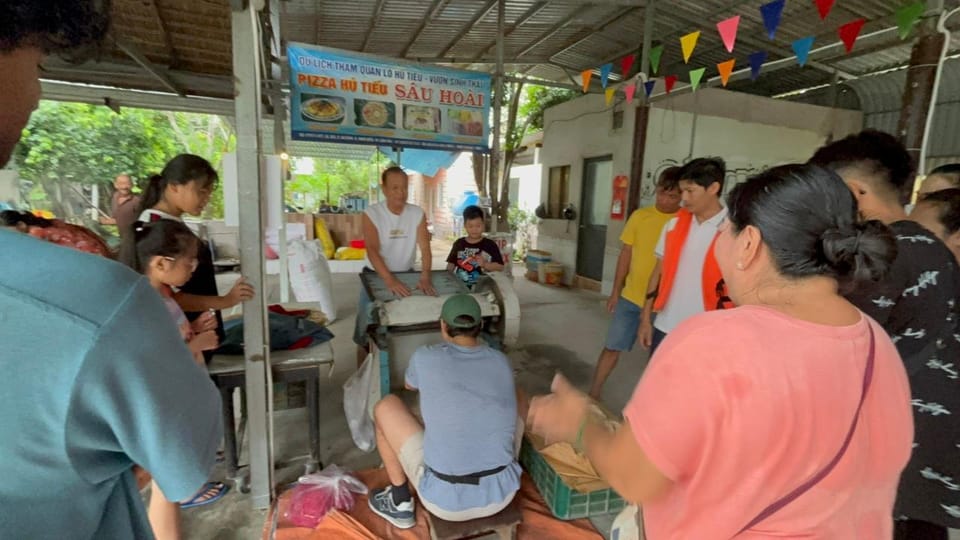
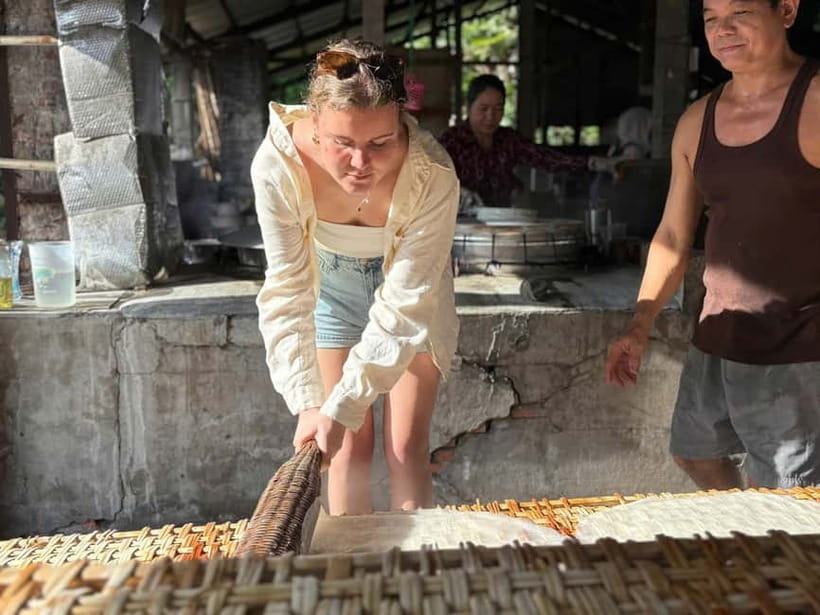
One of the best parts is the stop that’s not just about watching—it’s about making. You’ll visit a family-run rice noodle workshop where you learn how locals turn rice into noodle form.
The process goes in steps: first transforming rice into a type of base material, then using traditional methods to shape it into noodles. The big takeaway is the handwork and know-how. Even if you don’t speak Vietnamese, you can follow the stages with your guide’s explanations.
This is where the tour feels more meaningful than a quick “look and go” stop. Noodle-making connects to daily life: rice is the foundation, and noodles are a staple food that shows up in countless bowls. You end up leaving with a better mental picture of why this region’s food tastes the way it does.
You can also read our reviews of more shopping tours in Can Tho

Peaceful Canals and a Village Walk With Shade and Time
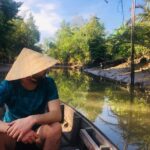
After the more active parts of the morning, you’ll head deeper into the delta on boat routes that feel calmer. The canals here are narrower, lined with water coconut and mangrove trees, and the scenery shifts from market energy to quiet working water.
This is also when you get a mental reset. The pace slows just enough for you to notice details: how the riverbank looks when it’s not built for visitors, how homes sit relative to water access, and how daily movement happens without any need for spectacle.
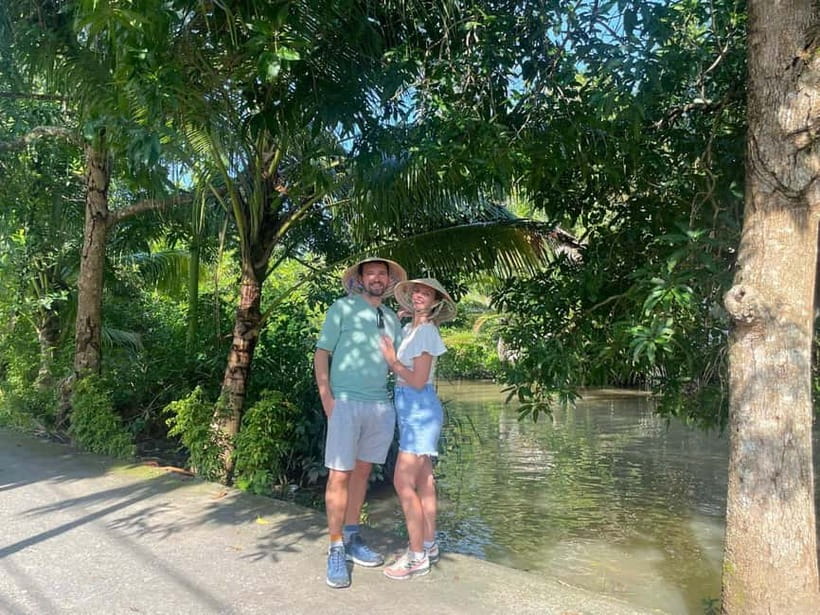
Then you step ashore for a countryside village walk. You’ll see traditional homes and shaded paths under tropical trees, and you can encounter everyday life up close. It’s not a theme park walk, so you may have a few moments where things feel informal or unpolished—but that’s often the point. You’re seeing lived-in Vietnam.
Organic Cacao Farm: Milk, Wine, and the Story Behind Chocolate
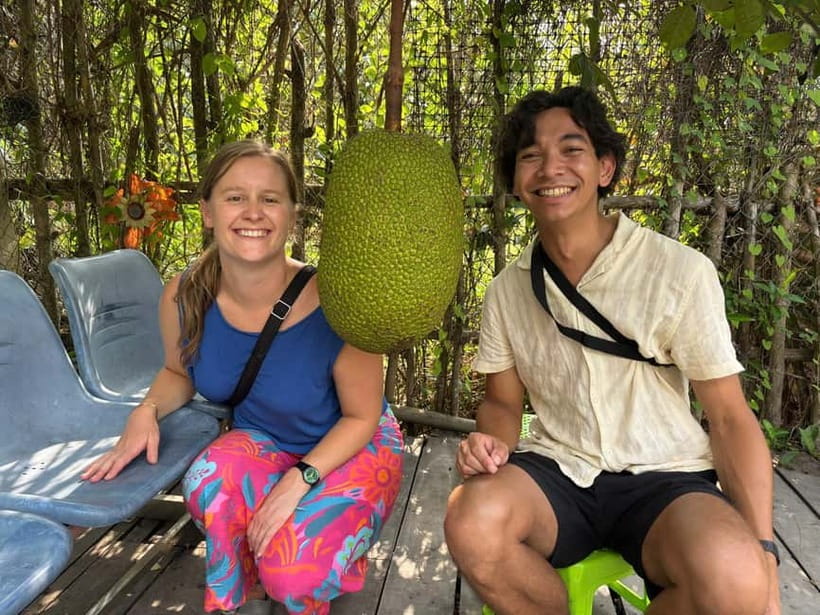
The tour ends on a sweeter note—literally. You visit an organic cacao farm and learn the story of the farm and its work, including how cacao becomes products like chocolate, wine, and even cosmetics.
The tastings are included: you’ll try cacao milk and homemade cacao wine, and you’ll likely get chocolate as part of the experience as well. The guide explains how the cacao fruit is used, so it doesn’t feel like you’re just sampling from a plate.
Why this ending works: you finish with flavors that match what you saw on the river. The Mekong isn’t only about fish and fruit—it’s also agriculture, processing, and value chains. Cacao brings that “other side” of the delta into your morning, and the tastings make it memorable without feeling heavy or staged.
Pace, Comfort, and What to Pack for a 5:30 AM Departure
This is a half-day outing, roughly 5:30 AM to 11:30 AM, depending on tide. That short window is part of the value: you get major highlights without spending your whole day traveling. But it also means you should dress for motion and sun.
Bring:
- Comfortable shoes for the village walk
- Sunglasses, sun hat, and sunscreen for dawn-to-morning light
- Water (included refreshment is great, but keep your own bottle too)
- Insect repellent since you’ll be outdoors
- Comfortable clothes that dry easily
If you’re sensitive to early starts, set yourself up the night before. A quick breakfast at your hotel before pickup can help you sleep better, even though the tour includes food on the boat.
French Guide Quality: What You Gain With Names Like Bao and Dao
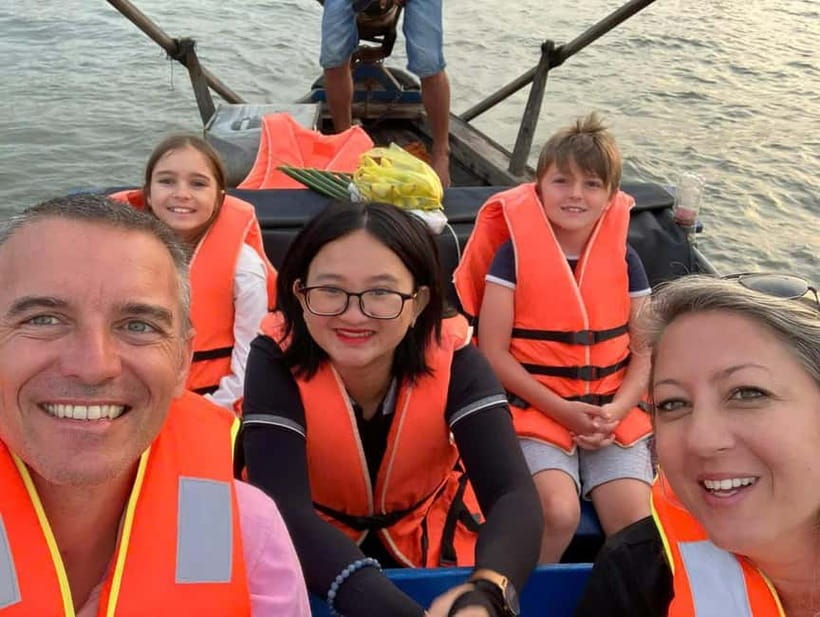
A major reason this trip keeps earning top marks is the guide experience. The tour is in French, and names like Bao, Dao, and Doan show up in the guide lineup. That matters because French explanations make the tour feel like learning, not following instructions.
When your guide can speak fluently, you get more than facts. You get clarification in real time—what you’re seeing on the water, how noodle-making stages work, and what’s behind cacao processing. If you’ve ever felt lost on a tour where you only catch half the meaning, this is the fix.
Price and Value: Why $37 Can Make Sense Here
At $37 per person, this tour hits a nice sweet spot for the Mekong Delta. You’re paying for more than transportation: you get the sampan, entrance fees, a guided experience, breakfast, tea and coffee, and fruit. That’s usually where group tours become “fair” rather than “cheap”—and here, the included basics reduce extra spending.
It also includes the core cultural stops: floating market, rice noodle workshop, village walk, and cacao farm tastings. Most half-day tours either focus on one big attraction or compress everything into rushed stops. This one strings activities together so the morning feels connected.
Who Should Book This (and Who Might Want Another Option)
This tour is a strong fit if you want:
- French-language guidance in Can Tho
- A sunrise floating market experience
- Cultural stops tied to food, not just photos
- A calm-but-full morning before the heat peaks
Not ideal if:
- You use a wheelchair (not suitable)
- You’re above the listed weight limits (not suitable for people over 280 lbs / 127 kg; the listing also notes over 300 lbs / 136 kg)
- You prefer later starts and sleep-heavy mornings (the 5:30 AM departure is non-negotiable for group tours)
If you’re traveling with older relatives, the pace and early hours may be a bigger factor than the walking itself.
Should You Book This Can Tho Floating Market, Noodle, and Cacao Tour?
I’d book it if you want a half-day that mixes river action with real food culture. The floating market at sunrise is the hook, but the value comes from the sequence: breakfast on board, noodle-making craftsmanship, quiet canal cruising, and cacao tastings that explain the why behind chocolate and wine.
Skip it only if sunrise mornings are a hard no, or if you’re expecting the floating market to be an easy, perfectly viewable spectacle at every angle. For most people, a guide-led morning where you understand what you’re seeing beats a free-form “maybe I’ll get lucky” approach.
Bottom line: for French-speaking visitors—or anyone who wants clear explanations—this is a sensible, well-paced Mekong Delta morning with food you can taste and stories you can actually follow.
FAQ
What time does the tour start and when does it end?
The group tour departs at 5:30 AM. It ends around 11:30 AM, though exact timing may vary slightly with the river tide.
Is the guide available in French?
Yes. The guide speaks French.
What is included in the tour price?
The tour includes the meeting point pickup/drop-off at Kim Long Hotel, a friendly guide, a sampan with a local boat driver, breakfast (with a vegetarian option), fresh seasonal fruits, tea and coffee on board, and all entrance fees.
What happens at Cai Rang Floating Market?
You visit Cai Rang Floating Market early in the morning and your guide explains its history and why it’s important for local life.
Is breakfast vegetarian-friendly?
Yes. There is a vegetarian option for breakfast served on board.
Is this tour suitable for wheelchair users?
No. The tour is not suitable for wheelchair users.