REVIEW · HOI AN
WAR TRAILS TOUR to KY ANH TUNNELS & CHAM RUINED SANCTUARY
Book on Viator →Operated by Hoi An Cham Cham Travel · Bookable on Viator
Some places feel quiet but hit hard.
This half-day trip takes you from Hoi An into rural Quang Nam province for Ky Anh Tunnels, a hand-dug wartime network built in the 1960s. You’ll walk where people hid, moved, and watched for danger—then end with the Chien Dan Cham Tower ruins, part of a Champa sanctuary complex.
What I like most is the human scale of it. If you get a veteran guide such as Mr. Thom (a man who helped build the tunnels), the stories land differently than museum facts. I also like the pacing: you get a serious war-history stop plus an ancient site, with time for a simple noodle meal before heading back.
The main thing to consider is the tunnel environment. You should expect dim, tight passages and shallow water pools, so comfortable shoes and a steady head matter—and the tour depends on good weather.
In This Review
- Key things to know before you go
- Ky Anh Tunnels: the 32 km network under rice fields
- Walking the dim passages with veteran stories
- Practical tips (so the tunnel doesn’t become the problem)
- The second stop: Chien Dan Cham Tower and the King Harivarmadeva clue
- Why you’ll probably like the pairing
- Noodles at 12:30: simple fuel for a long day
- Timing and transport from Hoi An: what the schedule actually feels like
- Price and value: is $64 worth a tunnel walk plus Cham towers?
- Weather note you should take seriously
- Who should book this War Trails tour from Hoi An?
- Should you book it? My decision guide
- FAQ
- FAQ
- How long is the tour from Hoi An to Ky Anh Tunnels and Chien Dan Cham Tower?
- Is hotel pickup included?
- What’s included in the price?
- What time does the tour start?
- How big is the group?
- What should I expect at the Ky Anh Tunnels?
- What happens if the weather is bad?
Key things to know before you go
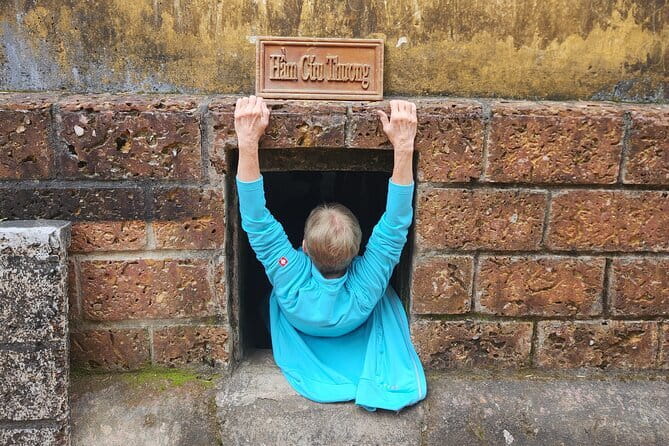
- Ky Anh is a wartime tunnel system: dug during 1965 to 1967, about 32 km in total.
- It runs under villages: the tunnels were routed beneath houses, straw piles, bamboo areas, and canals.
- Veteran-led guidance: you may meet someone like Mr. Thom who helped build parts of the system.
- Chien Dan Cham Tower is two time-periods in one: late 10th to early 11th century sanctuaries facing east.
- You get included tickets and lunch: tunnel admission and tower admission are included, plus local noodles.
- Small group day: capped at 15 travelers, which usually makes questions easier.
Ky Anh Tunnels: the 32 km network under rice fields
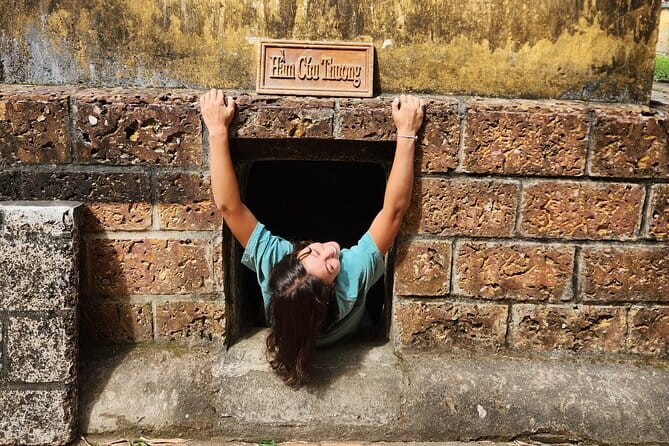
Hoi An is famous for pretty streets and lantern light. This tour swaps that mood for something more serious, in a quieter corner of Quang Nam province. The drive out is part of the point: you see farmland and village life, then you arrive at a wartime site that sits under everyday normality.
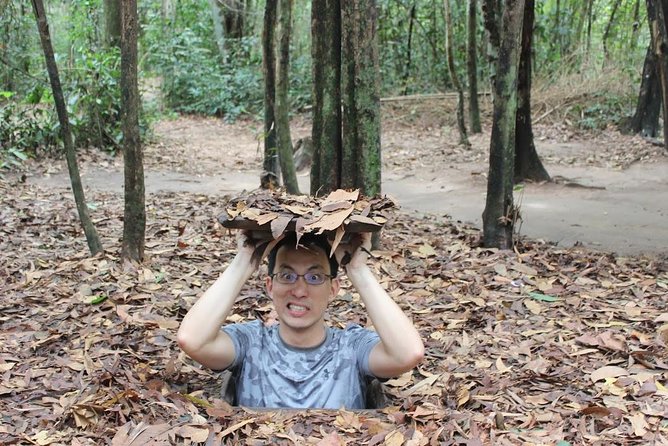
Ky Anh Tunnels were established and built during the intense fighting period of the resistance war against America. The resistance side dug the system from 1965 to 1967. The total length is about 32 km, and the route was planned to be hard to spot—going under villages and weaving through spaces like houses, straw piles, bamboo bushes, and canals. In other words, the plan wasn’t just hiding underground; it was hiding within the geography people already lived on.
This is why the visit feels less like a box-checking stop and more like a story you can walk through. You’re not looking at a single bunker. You’re following a system—one built with tools like hammers and chisels, and shaped by what would help people survive.
You can also read our reviews of more tours and experiences in Hoi An.



Walking the dim passages with veteran stories
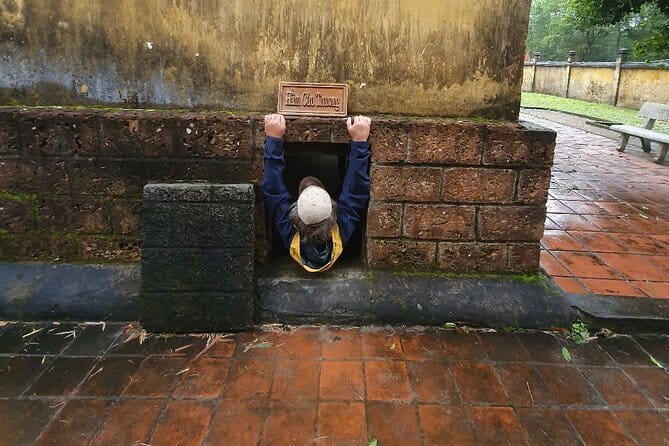
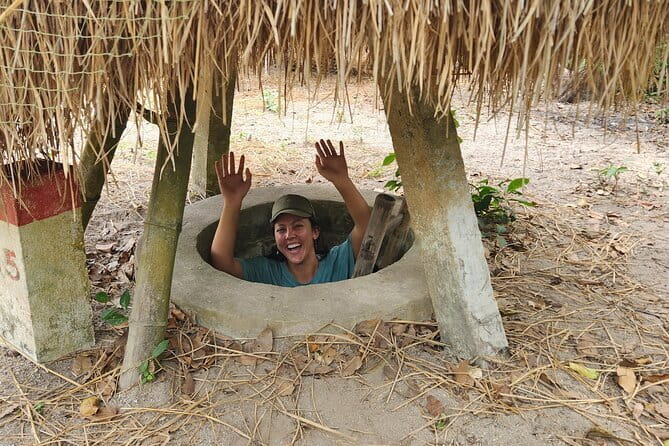
The experience is guided, and the goal is understanding how the tunnels worked in real life, not just seeing them. You’ll spend about 1 hour 30 minutes at Ky Anh Tunnel, and the description is clear about what to expect visually: dimly lit passages and shallow water pools.
That matters, because conditions were part of the engineering. Tunnels had to function when the world above was dangerous. They had to move people while staying concealed. When you’re down there, you get a stronger sense of why people built warnings and response systems. The tour also highlights village warning ideas—how people could detect danger and react quickly before the U.S. army could locate them.
One detail that stood out in the experience accounts is meeting a veteran who actually helped build the tunnels. Mr. Thom is named as an example of the type of guide you might encounter. When a guide can connect their own hands to what you’re looking at, it changes the tone. The visit becomes less about facts on a plaque and more about lived memory.
Practical tips (so the tunnel doesn’t become the problem)
You’ll feel the environment more than you’d expect from the photos. For a smoother visit:
- Wear closed shoes you don’t mind getting damp or dirty.
- Keep your phone away until you’re ready, since the lighting can be low and the ground can be uneven.
- Go slowly in tight areas. The goal is to understand, not to rush.
And mentally: if you don’t usually do dark, confined spaces, this is still manageable for most people, but you should treat it as a real physical setting, not a casual stroll.
The second stop: Chien Dan Cham Tower and the King Harivarmadeva clue
After the tunnels, the tour shifts gears to history above ground—Chien Dan Cham Tower, part of the Champa heritage in Quang Nam. Timing is set for around 12:00, after the tunnel time finishes.
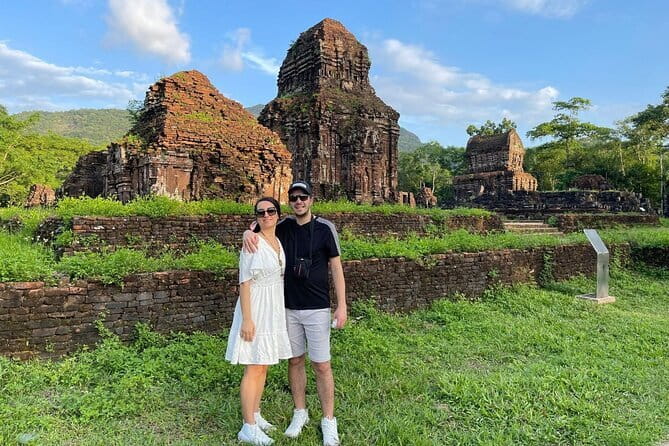
You’ll explore three sanctuaries that face east and were constructed in the late 10th to early 11th centuries by the Champa kingdom. That east-facing orientation is an important architectural choice in many temple traditions, and it gives the ruins a certain sense of purpose even when the structures are partially worn down.
On the site, there’s a major inscribed stone known as the Chien Dan inscription. The inscription provides evidence that the towers were built during the reign of King Harivarmadeva. The interpretation of who specifically sponsored what can vary, but the key point for you is that this isn’t guessing from style alone—the stone text anchors the timeline.
Why you’ll probably like the pairing
War history can feel heavy and one-note. The Cham tower stop adds another kind of context: how different eras shaped the same region. It’s a reminder that Quang Nam wasn’t only a conflict zone. Long before the tunnel system, people were building sacred spaces—and leaving written clues behind.
It also helps the day stay balanced. You can’t undo what happened during the war, but the second stop gives your brain a different lane: architecture, inscriptions, and centuries of cultural continuity.





Noodles at 12:30: simple fuel for a long day
At 12:30, you’ll have local noodles. This is one of those small details that makes the tour work in real life. A tunnel visit can take it out of you—physically and emotionally—and then you still have ruins to explore.
The noodle break is your reset moment. It’s not trying to be a full food tour. It’s there to keep the schedule sane and to keep you comfortable on the ride back.
Timing and transport from Hoi An: what the schedule actually feels like

The day starts with pickup at 8:30 am in Hội An, Quảng Nam. The plan then lands you at the Ky Anh Tunnel around 10:00, where you’ll spend about 1 hour 30 minutes.
Next comes the Chien Dan Cham Tower stop around 12:00, then noodles at 12:30, and back to your hotel at 13:00. That’s the core timing in a nutshell.
In practice, a half-day tour like this works best when you:
- don’t plan to fit in anything tight right after,
- keep your travel time from Hoi An in mind,
- and accept that it’s a structured route, not a wandering free-for-all.
Also, the tour lasts roughly 5 to 6 hours total. If you like a packed day with clear stops, this is the right shape. If you prefer slow travel and lots of unscripted time, you might find it a bit fast.
Price and value: is $64 worth a tunnel walk plus Cham towers?
The price is $64.00 per person. For Vietnam, that’s not the cheapest outing. But you’re not just paying for a ride and a look-see.
What you’re getting for your money:
- Hotel pickup from Hội An
- Entry to Ky Anh Tunnel (ticket included)
- Entry to Chien Dan Cham Tower (ticket included)
- About 1 hour 30 minutes at the tunnel
- A noodle meal
- The whole day runs with a small group size, with a maximum of 15 travelers
That combination matters for value. If you had to piece together transport, admissions, and meals yourself, you’d likely spend similar money. The small group cap is also a real quality-of-life factor. It’s easier to hear explanations and ask questions without feeling like you’re stuck in a crowd funnel.
Weather note you should take seriously
The experience requires good weather. Since the tunnels include shallow water pools, poor weather could make the visit less comfortable or lead to changes. If the day’s forecast looks rough, don’t assume you’ll be able to force the outing. You can be offered a different date or a full refund if it’s canceled due to poor weather.
Who should book this War Trails tour from Hoi An?
This is a strong fit if you:
- care about Vietnam War history and want a place that feels less commercial than the better-known tunnel sites,
- like tours led by people connected to the history (for example, veteran Mr. Thom),
- want a half-day that blends 20th-century conflict with ancient Champa culture,
- and prefer a small-group format.
It may be less ideal if:
- you hate confined, dim spaces,
- you want a purely relaxing day,
- or you’re not up for uneven, damp-feeling ground.
Still, the tour notes say most travelers can participate, so this isn’t an extreme adventure tour. It’s more about respect for the setting and being prepared for what you’ll actually encounter underground.
Should you book it? My decision guide

Book this tour if you want something real and structured: war history you can walk, plus a real-world context shift to Chien Dan Cham Tower. At $64, with admissions and noodles included, it’s a fair deal—especially with a group limited to 15.
Skip it if your ideal Vietnam day is mostly light, open-air, and easy walking. Ky Anh tunnels are a serious visit with dim areas and shallow water pools. You can still enjoy it, but you should go with the right mindset.
If your schedule is flexible, it’s also worth booking with confidence because you can cancel up to 24 hours in advance for a full refund, and changes come down to the local conditions.
FAQ
FAQ
How long is the tour from Hoi An to Ky Anh Tunnels and Chien Dan Cham Tower?
It runs about 5 to 6 hours total. You spend about 1 hour 30 minutes at Ky Anh Tunnel, then you visit Chien Dan Cham Tower and have noodles before returning to your hotel.
Is hotel pickup included?
Yes. Pickup from your hotel in Hội An is offered, and the tour returns you back to the meeting point.
What’s included in the price?
The price includes admission tickets for Ky Anh Tunnel and Chien Dan Cham Tower, and it also includes a local noodle meal.
What time does the tour start?
The start time is 8:30 am, with pickup at that time.
How big is the group?
The tour has a maximum of 15 travelers, so it stays relatively small.
What should I expect at the Ky Anh Tunnels?
You’ll walk through dimly lit, hand-dug passages that may include shallow water pools, and the visit focuses on how the tunnels were used and protected during the Vietnam War era.
What happens if the weather is bad?
The tour requires good weather. If it’s canceled due to poor weather, you’ll be offered a different date or a full refund.