REVIEW · HOI AN
Village Adventure Private Tour by Electric Car
Book on Viator →Operated by HoiAnGO · Bookable on Viator
Hoi An villages, by quiet electric car. I like how this short trip strings together Cam Kim Bridge views and real craft work, from Kim Bong carpentry to coracle-style basket boats. My other favorite part is the hands-on cooking moment at the rice noodle stop, where you see My Quang take shape. One catch: each village stop is brief (and some entrance tickets aren’t included), so it’s best if you want quick, photo-friendly insights more than long workshops.
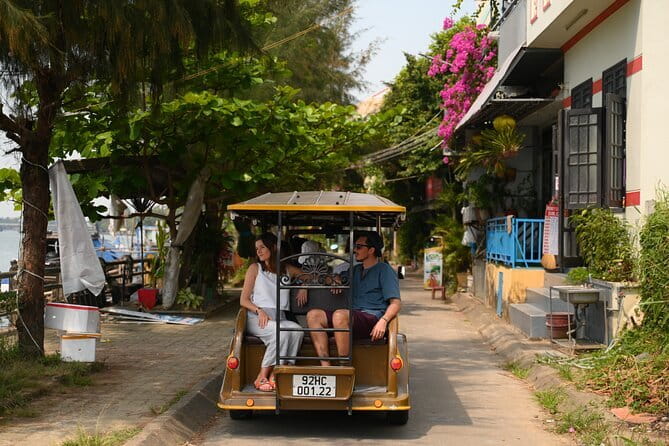
This is a private outing, so your electric car runs only for your group, with a smooth ride that keeps you from spending your whole time on foot. If you book with an optional licensed guide, you’ll likely get extra context as you go. I’d also plan your expectations around the 1 hour 30 total time, because the drive and photo stops eat up a few minutes.
In This Review
- Quick hits
- Cam Kim Bridge views you’ll actually remember
- Electric car village hopping: smooth, quick, and low-drama
- What to expect at each craft stop
- Kim Bong carpentry village: precision work in a small footprint
- Ong Sau basket boats (coracle style): old design, practical engineering
- Khu Dệt Chiếu Kim Bồng mat weaving: natural dyes and careful hands
- Lò Mì Quảng Bà Tiễn: seeing My Quang noodles being made
- The value question: $31.67 for 1.5 hours, private
- A note on optional add-ons
- Who this tour fits best (and who should skip it)
- Tips I’d use to make it better
- Should you book Village Adventure Private Tour by Electric Car?
- FAQ
- How long is the Village Adventure Private Tour by Electric Car?
- What’s included in the tour price?
- Are entrance fees included?
- Do I need an optional guide?
- What if the weather is bad?
- Where do we meet, and does it return us to the same place?
Quick hits
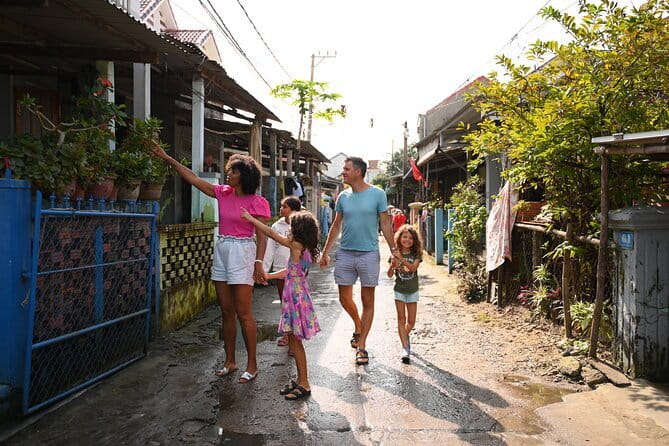
- Cam Kim Bridge views of the Thu Bon River before and after the village craft stops
- Kim Bong carpentry village: traditional woodworking seen up close (ticket not included)
- Ong Sau coracle/basket boat making: watch craftsmen work with a time-honored design
- Kim Bồng mat weaving using natural dyes and hand techniques
- Lò Mì Quảng Bà Tiễn My Quang noodle making: steamed rice flour turned into noodles (ticket free)
Cam Kim Bridge views you’ll actually remember
The tour starts with a scenic electric-car drive across Cam Kim Bridge. Even if you’ve seen river views in photos, this one lands differently because you’re up high and moving slowly enough to notice details on both banks of the Thu Bon River.
You’ll also get the best kind of “travel pause”: you’re not just stopping for a picture and rushing off. You’re driving into the countryside feel of Cam Kim, which helps you understand why these crafts grew up here. The whole point is to show you Hoi An beyond the Old Town streets.
One small but practical plus: the electric car makes the photo stops easier. You can ask your driver to pull over when you want better light or a clearer angle. In past trips on this service, drivers like Dung and Tien Tai were specifically praised for being helpful with photos, not just getting you from A to B.
You can also read our reviews of more private tours in Hoi An



Electric car village hopping: smooth, quick, and low-drama
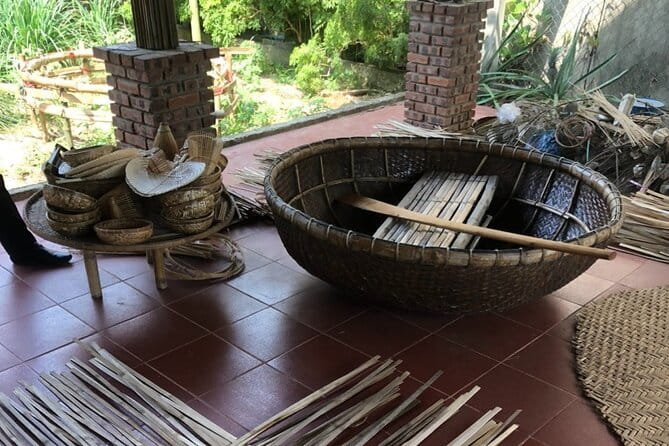
Hoi An traffic can get messy fast. Using a private electric car keeps this tour in the “easy mode” category. You meet at the Xe Điện Phố Cổ – HoiAnGO Parking Station at 1B Hoàng Diệu, Cẩm Châu, Hội An, and the activity ends back at the same meeting point.
The duration is about 1 hour 30 minutes including travel time, so you’re not signing up for a half-day adventure. That’s good value if your schedule is tight. It also means you’ll spend most of the time watching and learning, not walking long distances.
Because this is private transportation, the timing is flexible for your group’s pace. Most people can participate, and the ride stays comfortable since it’s mostly seated driving between short stops.
What to expect at each craft stop
Each village stop is short—think around 5 minutes at the craft locations—so treat it like a guided “overview sprint.” You’ll see what’s being made, watch the process briefly, and get a feel for how skilled the artisans are. If you want deep, step-by-step instruction and lots of hands-on practice, you might find this runs quick. But if you want a taste of several traditions in one go, it works.
Kim Bong carpentry village: precision work in a small footprint

The first craft stop is the Kim Bong carpentry village, where local artisans practice traditional woodworking techniques. This is one of those places where you see real skill even if you don’t speak the language.
A key practical note: admission for this stop is not included, so if you’re budgeting, assume there may be an entrance fee. Also, because the visit is brief, be ready to focus on the details: joinery, tools, how pieces are shaped, and how craftsmen move through tasks efficiently.
If your group likes photography, this is a good stop to prep your camera settings. Bright daylight can flatten detail, especially on wood. In reviews tied to this experience, drivers like Doān and Thân Trong Nghĩa were praised for being friendly and helping with photos—use that. Ask where the best angles are before the artisans start moving tools.
Ong Sau basket boats (coracle style): old design, practical engineering
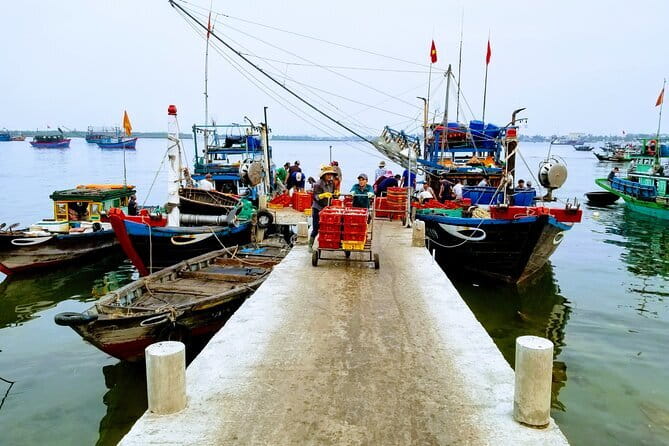
Next you’ll head to coracle boat making, also known as basket boats. This is listed around Ong Sau, and the craft is presented as an ancient art—so what you’re watching is not “demo theater.” Craftsmen work the structure, showing how the design comes together.
Again, admission isn’t included for this stop, so plan a little extra cash just in case. Also, because it’s a short visit, you may not see every step. Still, it’s genuinely interesting to notice how the materials hold their shape and how the craft matches the river environment.
This is the kind of stop that rewards curiosity. If you ask a couple of basic questions—what the materials are, how long it lasts, what it’s used for—you’ll often get a better experience than just watching quietly. If you do opt for an optional licensed guide, this is a smart place to use them, because the background makes the craft click.






Khu Dệt Chiếu Kim Bồng mat weaving: natural dyes and careful hands
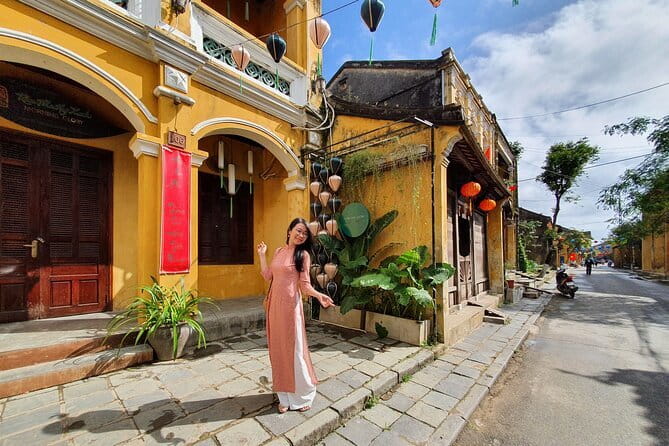
Then it’s on to Kim Bồng traditional mat weaving, at Khu Dệt Chiếu Kim Bồng. Here you see colorful mats made with natural dyes and traditional hand-weaving methods.
This stop has a different feel than the carpentry and boats. Woodwork and boat craft show structure and tools. Mat weaving shows patience—tiny movements, repeated patterns, and lots of attention to consistency. Even for a short visit, you can tell when something is hand-made just by how the process looks.
Because entrance fees aren’t included here either, you’ll want to think of this as a “watch and learn” stop that might cost a little on-site. But it’s also where you can get the most visual payoff. The colors are the kind you won’t always see in mass-produced souvenirs.
Lò Mì Quảng Bà Tiễn: seeing My Quang noodles being made
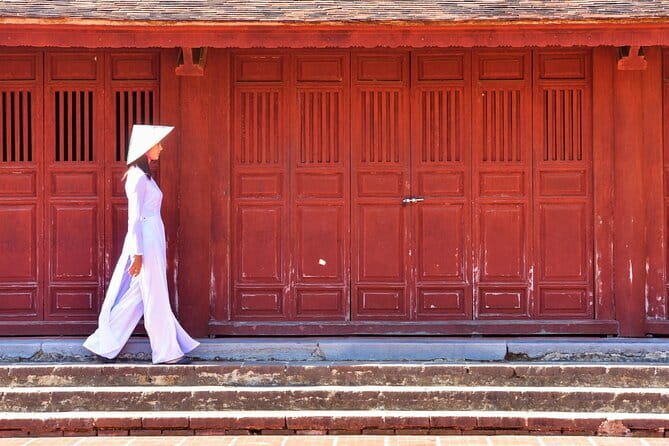
The tour ends with a food moment: traditional rice noodle making for My Quang at Lò Mì Quảng Bà Tiễn. This one is a big deal for value because the entrance ticket is free for this stop.
Here’s what you can expect: steamed rice flour gets turned into My Quang right before you. Watching the transformation is half the fun. The other half is realizing that “noodles” are a whole craft, not just a dish.
Food stops are usually where tours either feel authentic or feel staged. This one tends to feel practical because it centers on process—how dough-like material changes into noodle forms.
If you’re wondering if you should book, this is a strong reason to say yes. It gives the tour a sensory anchor, not only visuals of tools and crafts.
The value question: $31.67 for 1.5 hours, private

At $31.67 per person, this tour can be a good deal—mainly because you’re paying for private electric transportation plus a guided sequence of multiple craft stops in a short time.
Here’s the tradeoff: it’s short. You’re not spending hours inside one workshop, so the price makes sense if you want variety and you’re time-limited. It’s less ideal if you crave long-form instruction.
You also get practical extras: mobile ticket use is included, and your booking is typically confirmed at the time you reserve. There’s also mention of group discounts, which matters if you’re traveling with friends or family and can fill up your car.
A note on optional add-ons
Some tours in the region can include optional side stops like extra shopping stops or add-on experiences. Your safest move is simple: ask upfront what the planned route includes and whether any extra stops are optional. If you’re offered something, decide on the spot but keep your expectations tied to the original plan and total time.
Who this tour fits best (and who should skip it)
This is best for you if:
- you want a quick hit of rural craft life outside Hoi An Old Town
- you like photo-friendly stops and short explanations
- you’re short on time but still want something more meaningful than a ride-by sightseeing loop
- you appreciate a comfortable, easy ride in an electric car
You might want to choose something else if:
- you want long hands-on workshops and lots of instruction
- you’re hoping for museum-level storytelling at each stop
- you’re picky about entrance fees and timing at multiple locations
Tips I’d use to make it better
- Wear light layers. You’ll be moving between outdoor village spaces and workshop areas.
- Bring water. Even with short stops, the sun adds up.
- Bring a small fan or towel. Handcraft areas can be warm.
- Photo strategy: ask your driver where to stand before each stop. That helps you avoid blocking or crowding.
- If you care about understanding what you’re seeing, consider the optional licensed guide option since the stops are brief.
And yes, car comfort matters here. Multiple people highlighted that the electric car is clean and smooth, and drivers can be both punctual and helpful with questions. Names that came up include Dung, Lê Văn NGO, Doān, Tien Tai, Thân Trong Nghĩa, and Long An—and the common thread is good service and assistance with photos.
Should you book Village Adventure Private Tour by Electric Car?
I’d book this if you want a tidy, low-stress way to see Hoi An’s craft villages in about 1 hour 30 minutes. The combination of Cam Kim Bridge river views, woodworking and boat crafting, mat weaving, and a My Quang noodle-making stop gives you variety without burning your day.
Skip it if your top priority is deep hands-on work or long workshop time, because this tour is designed as a short overview route. Still, for the price and the pace, it’s a solid way to get out of town and come back with more than just photos of streets.
FAQ
How long is the Village Adventure Private Tour by Electric Car?
The tour lasts about 1 hour 30 minutes in total, including travel time between stops.
What’s included in the tour price?
Private transportation is included, along with a mobile ticket. Admission fees for some craft stops are not included.
Are entrance fees included?
Entrance fees aren’t included in general. The rice noodle making stop at Lò Mì Quảng Bà Tiễn is listed as free, but the other craft stops show admission ticket not included.
Do I need an optional guide?
An optional guide with a license is not included, so you can decide whether to add one. The core tour still runs with your transportation.
What if the weather is bad?
The experience requires good weather. If it’s canceled due to poor weather, you’ll be offered a different date or a full refund.
Where do we meet, and does it return us to the same place?
You start at Xe Điện Phố Cổ – HoiAnGO Parking Station at 1B Hoàng Diệu, Cẩm Châu, Hội An. The tour ends back at the meeting point.