REVIEW · HANOI
Trekking Sapa – Bac Ha Market: Sleep on Train & Homestay
Book on Viator →Operated by Go Asia Travel · Bookable on Viator
Sleep comes with a view in Sapa. This 3-day run mixes overnight travel, ethnic culture treks, and Sunday Bac Ha Market without a big price tag. You’ll leave Hanoi at night, wake up early in the mountains, and spend your days walking between villages with an English-speaking guide.
What I like most is the way it organizes real time in the valleys—Ta Van homestay and village treks are built in, not tacked on. I also like the money value: you’re getting transport, meals, guides, and key entrance stops wrapped together for about $56. The only thing to consider is comfort level: homestay sleeping is basic (shared setup and public bathroom), and the trek days expect moderate physical fitness.
In This Review
- Key highlights that make this trip worth your time
- Price and logistics: what you’re actually paying for
- Day 1: Hanoi train, Sapa arrival, and a first taste of H’Mong village life
- Cat Cat village: terraces, water, and the French-era power story
- Lao Chai trail: the valley look that makes the effort worth it
- Ta Van village and homestay night: the cultural hinge of the trip
- Day 2: bamboo forest and terraces, then a full day in Ta Van
- Back to Ta Van: the big win is the long free block
- Day 3: Bac Ha Market on Sunday morning and Hoang A Tuong’s palace
- Hoang A Tuong’s castle: a quick stop with big cultural context
- Pho village: a peaceful walk near the market
- Getting from Sapa to Ha Giang without backtracking to Hanoi
- Who this tour fits best (and who should rethink it)
- Service style and group size: why it feels more manageable
- What to pack for this route (practical, not fancy)
- So, should you book this Sapa to Bac Ha experience?
- FAQ
- How much does the tour cost?
- How long is the experience?
- Do I stay overnight during the trip?
- What kind of accommodation is in Ta Van?
- Who provides guides?
- What day is Bac Ha Market?
- Is this tour good for beginners, or does it require fitness?
- Where does the tour start and end?
Key highlights that make this trip worth your time

- Night-train start: depart Hanoi around 21:30 and reach the Sapa area in the early morning
- Ta Van homestay in the mix: stay with a local family in Ta Van (shared room or single mattress)
- Village-to-village walking: Cat Cat, Lao Chai, and Ta Van area treks with an H’Mong/Zay guide focus
- Sunday Bac Ha Market: see the traditional goods exchange that only happens Sunday morning
- Hoang A Tuong’s castle stop: include a focused cultural landmark in Bac Ha
- Small group size: capped at 15 travelers, so the day-to-day feels more controlled
Price and logistics: what you’re actually paying for

At $56 per person for roughly 3 days, this tour is best understood as a “transport + food + guides + homestay” deal. The price isn’t just for walking. It covers moving you from Hanoi to Sapa and back (via overnight train or limousine sleeper bus options), plus meals across the trip.
That matters because Sapa isn’t a place you can casually bounce between on your own. By bundling transport, guides, and the homestay, you remove most of the coordination headaches—especially the overnight piece. You’ll also get entrance fees handled for the stops that matter, including Ta Van and Hoang A Tuong palace in Bac Ha.
Now the trade-off: you give up some comfort. The Ta Van homestay setup is shared (shared room or single mattress), and the bathroom is public. If you’re expecting a hotel-style bed and a private shower, adjust your expectations before you go.
You can also read our reviews of more shopping tours in Hanoi



Day 1: Hanoi train, Sapa arrival, and a first taste of H’Mong village life

Day 1 begins at Ga Hà Nội (120 Lê Duẩn, Cua Nam). You meet up and board an overnight train heading toward Sapa, departing around 21:30 (SP1/SP2/SP3). If you pick the schedule that includes the night train, you’re effectively traveling while you sleep.
You arrive in the Sapa area very early. A vehicle picks you up at Lao Cai Train Station at about 5:00, then it’s roughly 40 km to Sapa town. The point of this timing is simple: it gives you enough daylight on Day 1 for a short trek without turning the whole trip into a full-day grind.
Once you’re in Sapa, you’ll have breakfast at the hotel and pack a light bag for a short trek with a local H’Mong guide. This first walking day is designed to be manageable. You’re not doing an all-day hardcore trek on Day 1—just enough to get your legs going and to see how village life sits around the valley.
Cat Cat village: terraces, water, and the French-era power story
Cat Cat village is your first major stop, and it’s a strong intro. You’ll move through the area tied to Muong Hoa stream and terrace fields, plus the visuals around waterfalls.
You also get something a lot of short trips skip: a look at a hydroelectric power plan from French time and related sites like schools. Even if you don’t speak Vietnamese, it gives context. You start to see how this region’s people and infrastructure developed alongside the mountains.
One practical tip: this is a day with walking plus photos, so wear shoes you trust. The trip notes suggest bringing sporty gear and having water ready, which is exactly what you’ll want once the trail starts.
Lao Chai trail: the valley look that makes the effort worth it
After Cat Cat, you shift to the Lao Chai area for a longer trek segment, about 3 hours. Lao Chai is home to Black H’Mong communities, and the route runs alongside the Muong Hoa valley and stream with views toward Fansipan.
This stretch is where the trip’s “mountain aerial views” claim starts to make sense. Even from the ground, you get a strong sense of scale: ridgelines, fields, and the way the valleys funnel movement. The village sections also help you understand that these trails aren’t random tourist paths—they connect real places people live.
Ta Van village and homestay night: the cultural hinge of the trip
Your Day 1 walking ends at Ta Van Village, where you stay overnight at a homestay. Ta Van is home to the Zday (Zao/Zay) people and sits by the Muong Hoa stream, which helps explain why the views feel “right there,” not far away.
You’ll spend about 2 hours on the route into Ta Van and settle in for the night. This is also the part of the trip that feels most unique for international travelers: you’re sleeping in a local house rather than just visiting from a bus window.
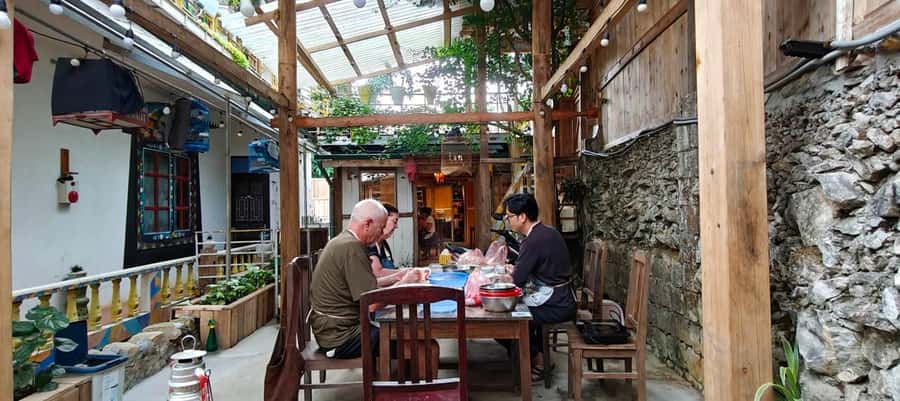
Homestay basics (so you can plan properly): shared room or single mattress, plus a public bathroom. If you go in thinking of it as part of the cultural exchange—not a hotel alternative—you’ll have a better time.
A few more Hanoi tours and experiences worth a look





Day 2: bamboo forest and terraces, then a full day in Ta Van
Day 2 starts with another village visit: Giang Ta Chai. It’s home to Red Zdao, Zday, and Black H’Mong communities living together. The route here is about the scenery as much as it is about the culture—bamboo forest and rice terrace fields are a big part of what you’ll see.
The walking time is around 2 hours, so it stays realistic if you’re not a mountain athlete. This is a “morning trek, then live the place” kind of day.
Back to Ta Van: the big win is the long free block
After Giang Ta Chai, you return to Ta Van for the rest of the day. You’ll have around 10 hours in Ta Van, and that time is intentionally not packed into one constant activity.
This is where you slow down. You can use the time for an easy walk, photos, asking questions, or just taking in the rhythm of the valley. Even with a guide on earlier segments, the long Ta Van stretch lets you interact more casually—less like a schedule, more like a stay.
If you like tours where the scenery is paired with actual human contact, this day does it. If you hate waiting around, you might want to mentally prepare for “free time” as part of the experience.
Day 3: Bac Ha Market on Sunday morning and Hoang A Tuong’s palace

Day 3 shifts from village treks to a market day in Bac Ha. The timing is important: Bac Ha Market only happens on Sunday morning. That’s one reason this trip feels different from random markets you might see on any day.
You’ll have around 4 hours at the market area. It’s not just shopping stalls. You’ll see the old-style logic of exchanging goods—people trading items like pig, hens, and even souvenirs for other products. It’s a market built for trading, not just browsing.
Hoang A Tuong’s castle: a quick stop with big cultural context
Next, you visit Hoang A Tuong’s Castle, the former home of the H’Mong king and family. The stop is about 30 minutes, so it’s not a museum crawl.
But it provides context for what you’ve already been seeing in villages: community structures, leadership, and the historical significance of ethnic groups in the region. It’s also a break from walking-heavy hours.
Pho village: a peaceful walk near the market
After the palace, you go to Pho village, close to Bac Ha Market. You’ll have a short 30-minute walk on a peaceful road to see daily life of ethnic people.
This section works well as a palate cleanser. Markets can get intense fast—noise, crowds, bargaining. Pho village keeps the day calmer, so you leave with a broader picture rather than only peak market energy.
Getting from Sapa to Ha Giang without backtracking to Hanoi

One smart perk is what happens after the Sapa portion ends. You can start to Ha Giang directly from Sapa, with buses departing at 14:30 and 19:00.
There’s a limousine bus (18 seats) at 14:30 that picks up at May hotel and takes about 6 hours. The value here is simple: you don’t have to waste time going back toward Hanoi just to connect to another region.
Who this tour fits best (and who should rethink it)

This trip suits you if you want a budget-friendly way to combine overnight transit, a real homestay experience, and a focused cultural market day in Bac Ha. It also fits if you’re happy doing short-to-moderate treks and you like guided context while you walk.
It’s less ideal if you need hotel-level comfort or you hate basic accommodations. The homestay sleeping arrangement and public bathroom are not “maybe.” They’re part of the structure.
The other factor is timing and energy. Overnight travel means your first day starts early and the pace is active across three days. If you like a relaxed schedule with no early mornings, this may feel too structured.
Service style and group size: why it feels more manageable

This tour caps at 15 travelers, which helps in two ways. First, you can keep track of everyone during treks and transfers. Second, guides and the on-the-ground travel consultant can solve small problems without turning everything into a long delay.
The trip also includes an attentive setup: you’ll have customer support through a travel consultant who stays with you to handle issues. Add in an English-speaking guide in Sapa and a private car/guide for Bac Ha, and you get a smoother mix of “walk with someone” and “see the market with local direction.”
One detail from experience notes: the guide in Sapa can be Suà—and in the feedback, Suà is singled out for teaching lots about culture and the places you visit. That’s a good sign for anyone who cares about understanding what you’re seeing, not just taking photos.
What to pack for this route (practical, not fancy)

Based on the walk-and-trail structure, pack for comfort and hydration. Bring sport shoes or sturdy footwear and plan to carry water. Your bag will need to be light for the short trek segments on Day 1.
Also bring a small layer for early morning in Sapa. Even if the day warms up, the first hours can feel cooler once you’re up and moving.
So, should you book this Sapa to Bac Ha experience?
If you want a value-heavy trip that mixes night travel, Ta Van homestay, and a Sunday market day, this is easy to recommend. The $56 price becomes fair when you look at the full package: transport, meals, guides, entrance fees, and the key overnight experience all included.
Book it if:
- you’re okay with basic homestay sleeping and a public bathroom
- you like guided treks that still leave room to experience village life
- you specifically want Bac Ha Market on Sunday morning
Hold off if:
- you want a private room and hotel comfort
- you’re very sensitive to early schedules and overnight transit
If plans change, you can cancel up to 6 days in advance for a full refund, which gives you some safety.
FAQ
How much does the tour cost?
The tour price is listed at $56 per person.
How long is the experience?
It’s listed as 3 days (approx.).
Do I stay overnight during the trip?
Yes. You’ll have an overnight stay in Ta Van homestay, and you may also have an overnight train from Hanoi to Sapa depending on the transfer option.
What kind of accommodation is in Ta Van?
You stay in a homestay with either a shared room or a single mattress, and the bathroom is public.
Who provides guides?
You get a local English speaking guide in Sapa, and Bac Ha is handled with a private car and guide.
What day is Bac Ha Market?
Bac Ha Market takes place on Sunday morning.
Is this tour good for beginners, or does it require fitness?
The tour says travelers should have moderate physical fitness level.
Where does the tour start and end?
It starts at Ga Hà Nội (120 Lê Duẩn, Cua Nam, Đống Đa, Hanoi) and ends back at the same meeting point.