REVIEW · PHAN THIET
Sailing lessons
Book on Viator →Operated by MANTA Sail Training Centre · Bookable on Viator
Mui Ne makes sailing look easy. That’s the magic of taking sailing lessons at MANTA Sail Training Centre, a beachfront school in Phan Thiết run by coaches trained to an Olympic level, with World Sailing-based safety habits from day one.
What I like most is the way they focus on competence and calm instruction, with names like Julia and instructors such as Phùng/Phung showing up repeatedly in the feedback.
You’ll also like the practical setup: you’re on a boat with equipment provided, not stuck waiting around. The one thing to plan for is weather and timing; best sessions are mornings (9:30–11:30), and you may need a couple mornings to reach that confident, independent feeling they aim for within about 5–6 hours.
In This Review
- Key points to know before you sign up
- MANTA Sailing Lessons: a Mui Ne base you can feel in your bones
- Where you meet and how the session starts
- The core goal: confidence in about 5–6 hours of sailing
- Morning lessons (9:30–11:30) and why the wind schedule matters
- What you actually do on the boat (and what they’re training)
- Safety culture: how MANTA keeps you learning without panic
- The staff and the teaching style: patient, focused, and real
- The beachfront location near local fishermen (real Mui Né energy)
- Beyond sailing: supporting local families and ocean problems
- Price and value: is $199 “fair” for 2 hours?
- How to plan your time in Phan Thiết (so this fits)
- Who should book MANTA and who should skip it
- Should you book MANTA sailing lessons?
- FAQ
- How long is the sailing lesson?
- Where does the sailing lesson meet?
- Do I need to bring my own sailing equipment?
- What time of day is best for the lesson?
- Is this a private lesson or shared with others?
- How soon can I feel confident sailing?
- Do they take walk-ins?
Key points to know before you sign up

- Olympic-standard coaching aimed at getting you sailing safely and smoothly
- World Sailing–aligned instruction and safety practices, including learning how to sail alone
- Gear and boats included, so you show up and sail
- Beachfront Mui Ne location right by local fishing activity (real Vietnam vibes)
- Local and environmental projects supported through your participation
- Morning wind timing matters, so schedule 2–4 mornings if you can
MANTA Sailing Lessons: a Mui Ne base you can feel in your bones
Sailing lessons in Vietnam can be hit-or-miss, mostly because “teaching” sometimes turns into a short boat ride with a few pointers. At MANTA, the whole setup leans toward training: structured coaching, quality gear, and a safety culture that doesn’t feel like a checkbox.
The setting helps too. You’re learning on the coast around Bai Biển Mui Ne (Mui Né area), where the sea is close and the breeze is real. That matters because sailing is physical. You don’t just learn rules; you learn how your body and the boat react when wind changes.
And from the way the staff is described, it’s not a stiff, classroom-only vibe. The instructors are friendly and patient, and you can feel the pride in running a real training centre. Names like Phùng (Phung), Bau, and Julia come up again and again in positive accounts, which usually says a lot about consistency.
You can also read our reviews of more tours and experiences in Phan Thiet.


Where you meet and how the session starts

Your lesson starts at MANTA Sail Training Centre, 108 Huỳnh Thúc Kháng, Mũi Né, Thành phố Phan Thiết, Bình Thuận, Vietnam. From there, you’ll head out to sail from the beach area nearby, and the activity ends back at the same meeting point.
A small but important practical note: this is listed as a private activity. That’s good if you want more attention and less waiting, because only your group participates.
Also, the ticketing is handled digitally (a mobile ticket), and you’ll receive confirmation within 48 hours depending on availability. The centre also notes that bookings aren’t always immediate for safety and equipment readiness, so plan ahead when you can.
The core goal: confidence in about 5–6 hours of sailing
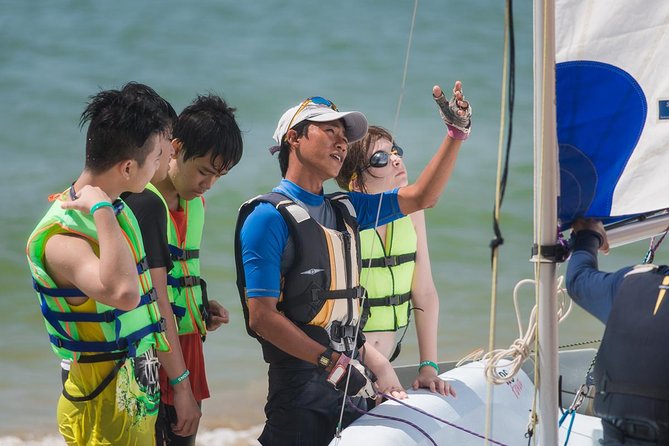
MANTA’s teaching philosophy is simple: your progress should feel fast without being reckless. They aim to help you feel confident on the water within about 5–6 hours, but your lesson itself is about 2 hours.
So what does that mean in real life for you?
- If you take one 2-hour session, you should expect to get your bearings and learn the basics that make the boat controllable.
- If you can return for additional lessons across 2–4 mornings, you’ll build on each session faster because you’ll repeat maneuvers and refine technique before the next windy day shifts the conditions.
This is one reason their coaching is described as “high quality” and “excellent teaching.” It isn’t just one lesson; it’s a pathway.
Morning lessons (9:30–11:30) and why the wind schedule matters
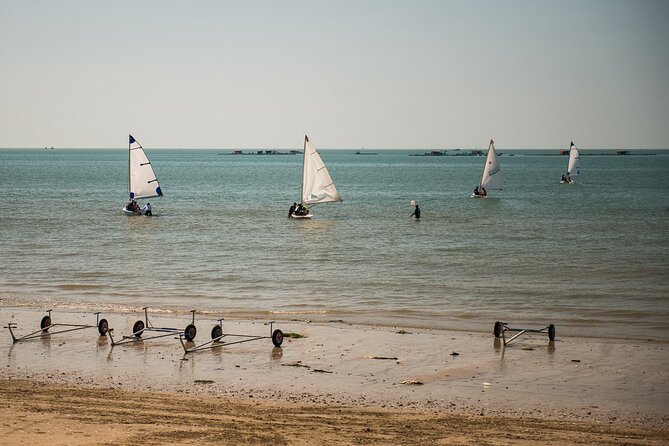
Here’s the practical sailing truth: timing changes everything. MANTA’s best time window is 9:30–11:30am, before winds get too strong. That timing gives you a better chance to learn in conditions that are active but not overwhelming.
If you’re serious about learning quickly, build your plan around that morning window. They even suggest allowing 2–4 mornings to get from first steps to real confidence. If you only have one morning, you can still have fun and learn, but you might not reach the more advanced “I can sail this” feeling.
And if you try to show up last-minute, don’t assume instant availability. They explain that to ensure safety and equipment readiness, bookings may not be immediate. If you do walk in and they have space, you should allow 10–15 minutes for equipment setup.
What you actually do on the boat (and what they’re training)
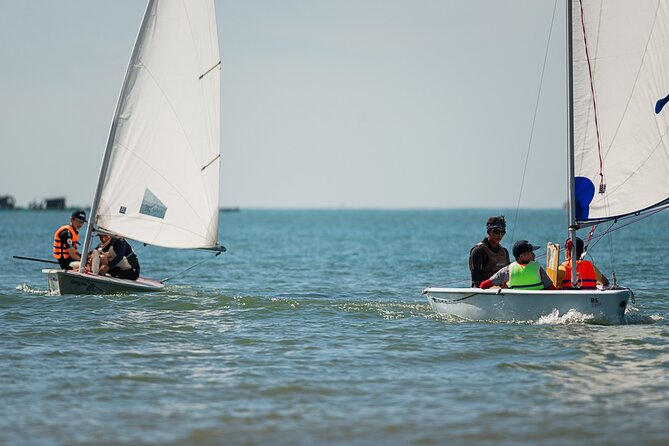
The lesson is built around safe sailing skills, including the idea that you can sail alone once you’re ready. That phrasing is important: it suggests they teach more than just how to hold a rope. You’re learning control—how to manage sail shape, balance, and the boat’s response to wind.
Because the centre follows World Sailing guidelines, you can expect their coaching to be structured around safety checks and clear steps. You’re also not expected to bring anything complex. Boats and all equipment are provided, which removes one of the biggest beginner stressors.
Based on the consistent tone of the feedback, instructors tend to focus on:
- Getting you comfortable with sail handling rather than just letting you steer
- Building skills in short, manageable chunks so you feel progress during the lesson
- Keeping things fun, which matters because confidence grows faster when you aren’t tense
If you like learning skills you can repeat, you’ll appreciate this. Sailing isn’t a one-and-done sport; technique improves when you practice under coaching.






Safety culture: how MANTA keeps you learning without panic
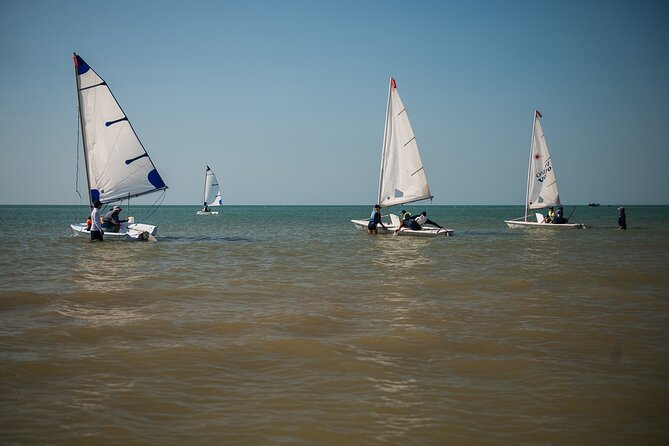
Safety at a sailing school is hard to judge from marketing. Here, you have several clues that the centre means it.
First, they explicitly follow World Sailing guidelines to sail safely alone. Second, they mention teaching in shorter time with greater safety for Vietnam, which reads like an operational decision: less random wandering, more controlled practice.
Third, they emphasize that bookings aren’t immediate because equipment must be ready. That might sound boring on paper, but in practice it usually means fewer rushed sessions and more consistent conditions for training.
For you, that translates into a better learning experience. You spend more time doing and less time guessing. And when wind or conditions shift, you’re more likely to get coaching that helps you adjust, not just react.
The staff and the teaching style: patient, focused, and real
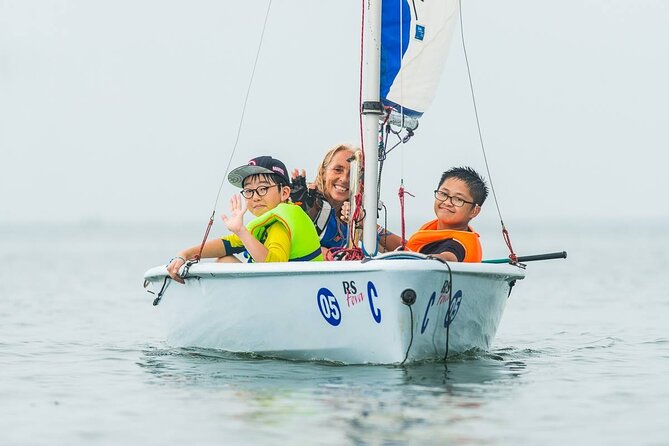
This is where MANTA gets especially high praise. The reviews repeatedly mention:
- Phùng/Phung as a captain and teacher who guides you effectively
- Bau and other instructors who are described as awesome and supportive
- Julia as responsive, involved, and passionate about both teaching and wider community goals
What stands out in the feedback isn’t just skill. It’s temperament: patience, friendliness, and a clear sense that the instructors want you to succeed fast.
If you’re nervous about water sports, that tone matters. Beginners often need two things: clear steps and emotional safety (the feeling that you won’t be judged for being new). MANTA seems built for exactly that.
The beachfront location near local fishermen (real Mui Né energy)
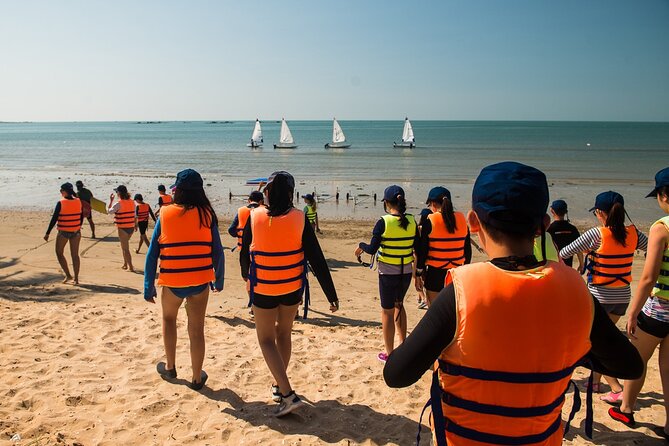
MANTA is on a beautiful beach in Mui Ne, but what makes it feel different is proximity to local life. It’s described as being in the heart of the area near fishermen, while still feeling away from the main tourist strip.
That combination is rare. You get the practical sailing space, plus the sense that you’re not completely cut off from the daily rhythm of coastal Vietnam. It’s a great backdrop for a sport that’s naturally tied to the ocean and weather.
If you want a lesson that feels like part of the place—not just an activity layered onto it—this setting helps.
Beyond sailing: supporting local families and ocean problems
You aren’t just buying a lesson. The centre says participation supports local fishing families and environmental ocean issues, with social and environmental initiatives built into the mission.
There’s also mention of educational outreach for Vietnamese children and involvement around environmental causes. One review notes that Julia is passionate about the environment and locals fishermen and also introduces on-water sports to children.
You don’t need to turn this into a lecture. For most people, the value is that your money is connected to something broader than an hour on a boat. It also tends to change the atmosphere of the place. When a centre has a mission, it usually improves how staff show up day-to-day.
Price and value: is $199 “fair” for 2 hours?
At $199 for an approx. 2-hour lesson, you’re paying for more than a sightseeing ride. You’re paying for trained coaching, quality equipment, and a learning environment that aims to get you confident in multiple sessions.
Here’s how I think about the value:
- If you were to rent gear and sail on your own, you’d be missing the part that makes you progress safely—coached technique.
- Many water sports elsewhere charge similarly for short try-outs, but you might not get a real skill pathway.
- MANTA’s promise is a pathway toward confidence within 5–6 hours, and the repeated mentions of Olympic-level training and World Sailing guidelines suggest you’re not just getting casual instruction.
So yes, $199 is a real cost. But it’s more like paying for instruction quality and equipment access, which is what matters if your goal is actually learning.
How to plan your time in Phan Thiết (so this fits)
A 2-hour session is easy to place, but sailing learning works best when you can repeat.
If you can, choose 2 or more mornings. That lines up with the recommended wind-safe window and lets you build skill instead of starting from scratch.
Also, schedule buffer time. Even when the session is planned, the sea has its own timing. You might spend a little extra time on setup or waiting depending on conditions and availability, and that’s normal for coastal training.
If your schedule is tight and you can only do one lesson, go for it anyway. You’ll still likely leave with a better grasp of how sail control works and what you need to improve next time.
Who should book MANTA and who should skip it
You’ll like this most if:
- You want real instruction, not just a fun boat experience
- You’re willing to take one or more morning sessions to build confidence
- You care about safe learning and clear coaching
- You like the idea of supporting local initiatives while you do a sport
You might want to think twice if:
- You can only sail outside the morning window and can’t adapt
- You’re expecting a guaranteed instant “expert level” result from a single 2-hour try
- You’re the type who hates waiting for availability (the centre notes equipment readiness and bookings aren’t always immediate)
Should you book MANTA sailing lessons?
If you want to learn sailing in Mui Ne with serious coaching, book it. The best reason is the combination of safety structure, equipment included, and coaches who are described as patient and effective (with names like Julia, Phùng, and Bau showing up for a reason). And if you can give it 2–4 morning sessions, the odds of feeling genuinely confident go way up.
If you’re on the fence, do this simple test: are you traveling to learn something real, even if it takes a few repeats? If yes, MANTA is a strong match.
FAQ
How long is the sailing lesson?
The sailing lesson is listed as approximately 2 hours.
Where does the sailing lesson meet?
You meet at MANTA Sail Training Centre, 108 Huỳnh Thúc Kháng, Mũi Né, Thành phố Phan Thiết, Bình Thuận, Vietnam.
Do I need to bring my own sailing equipment?
No. Sailing boats and all equipment are provided.
What time of day is best for the lesson?
The best time is in the mornings, 9:30–11:30am, before the wind gets too strong.
Is this a private lesson or shared with others?
It’s private. Only your group will participate.
How soon can I feel confident sailing?
The centre aims to help you feel confident on the water within about 5–6 hours, and they suggest you may need 2–4 mornings to reach that.
Do they take walk-ins?
They accept walk-in clients if available. If you walk in, allow 10–15 minutes for equipment setup.