REVIEW · PHAN THIET
Surf in Vietnam with a local!
Book on Viator →Operated by Mui Ne Local Surf School · Bookable on Viator
If you want surfing skills fast, start here in Phan Thiet. This private lesson with Mui Ne Local Surf School gets you learning on soft tops with a local instructor, then shifts into real wave practice at Bai Da Ong Dia. I especially like the on-land training plus in-water coaching approach, which helps you build confidence before you chase waves.
I also like that the school handles the details: surf gear is included, and you get a long-sleeve lycra plus zinc for face so your skin isn’t the limiting factor. The main drawback to consider is logistics—transport can be pickup-motorbike style, so you’ll want to plan for a short ride and meet on time.
In This Review
- Key points if you’re choosing this surf lesson
- Why Phan Thiet is such a smart place to learn surf
- Private longboard coaching with Mui Ne Local Surf School
- Getting from the surf office to Bai Da Ong Dia
- The on-land lesson: where beginners build confidence
- In the water: longboard waves and your first real attempts
- Soft tops, lycra, and sunscreen-friendly protection
- What the timing really feels like (and why it matters)
- Price and value: what you get for $55
- What to budget and what to bring
- Who this lesson is best for (and who might rethink)
- Making your rest-of-day time count
- Should you book this private surf lesson in Phan Thiet?
- FAQ
- How long is the surf lesson?
- Is this lesson private?
- Do I need to bring surf gear?
- Will there be coaching on land as well as in the water?
- Where does the lesson start and end?
- What should I pay for that’s not included?
- What’s the cancellation and weather backup plan?
Key points if you’re choosing this surf lesson

- Private instruction means you’re not stuck watching from the sidelines while others take waves
- Land drills first so you practice the pop-up, paddling, and safety before the surf part
- Soft-top boards make it easier to fall without fear and focus on technique
- Protection included with long-sleeve lycra and zinc for face, which is huge in Vietnam sun
- Equipment is handled so you don’t spend your morning hunting for a board, leash, or wax
Why Phan Thiet is such a smart place to learn surf
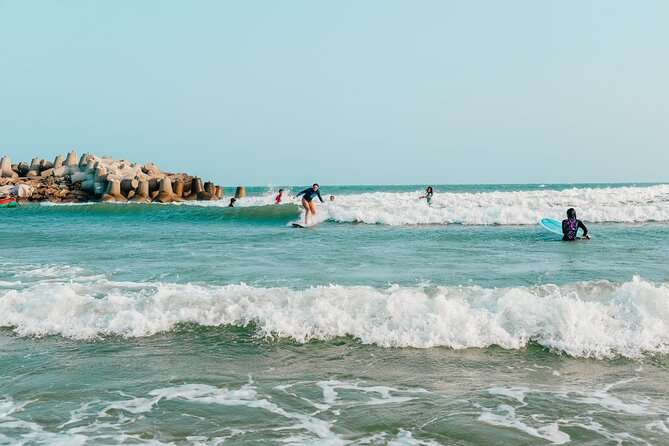
Phan Thiet is a friendly starting point because it’s set up for lessons. The area has surf spots that instructors can read day-to-day, and that matters when you’re learning. You’re not just buying a ticket for a board—you’re paying for someone to help you match your level to the conditions.
What I like here is how the lesson is built for beginners. You get coached on the basics of getting out, paddling, and standing, then you’re put into the water once you’ve practiced enough on land. That sequence keeps the day from turning into a frustrating swim-and-wait session.
You can also read our reviews of more tours and experiences in Phan Thiet.


Private longboard coaching with Mui Ne Local Surf School
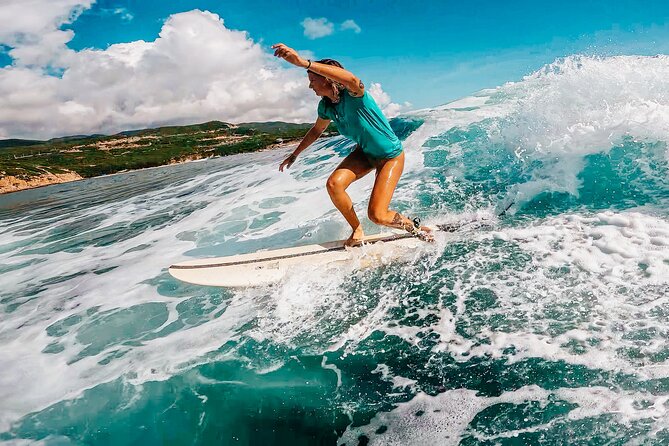
This is a private surf lesson, which changes everything compared with group classes. In a group, you often spend time in line. In a private lesson, your coach can correct your hands, feet, and timing while you’re actually trying. That kind of feedback is what speeds up learning.
The school also teaches with a local surfer mindset. You’ll meet at the surf office, talk through your surf level, and then head out together to the spot. In past lessons, instructors such as Bay, Tu, Phi, and Sara have been highlighted for being supportive and practical, with a style that focuses on correcting habits instead of judging beginners.
If you’re a true first-timer, this matters. Surf is learnable, but it’s easy to develop bad muscle memory early. A good coach helps you build the right pattern from the start, especially for the pop-up and paddling rhythm.
Getting from the surf office to Bai Da Ong Dia
You’ll start at Mui Ne Local Surf School, 223A Nguyễn Đình Chiểu, Phường Hàm Tiến, Thành phố Phan Thiết, Bình Thuận, Vietnam. It’s designed so you can meet up without a scavenger hunt. From there, you’ll discuss your level and travel to the surf spot.
Transport is flexible. The day may involve a pickup, or you may follow with a motorbike. Either way, the goal is the same: get you to the best waves they can find that day. The only real consideration is timing—show up on time at the office so you don’t shorten the teaching time.
Once you arrive, you’ll check conditions before you hit the beach. That wave-reading moment is part of why learning here can feel smoother—you’re not guessing what to do when the surf is different than you expected.
The on-land lesson: where beginners build confidence
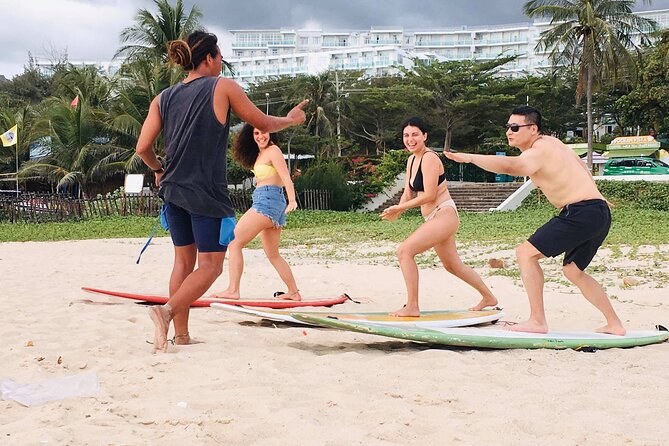
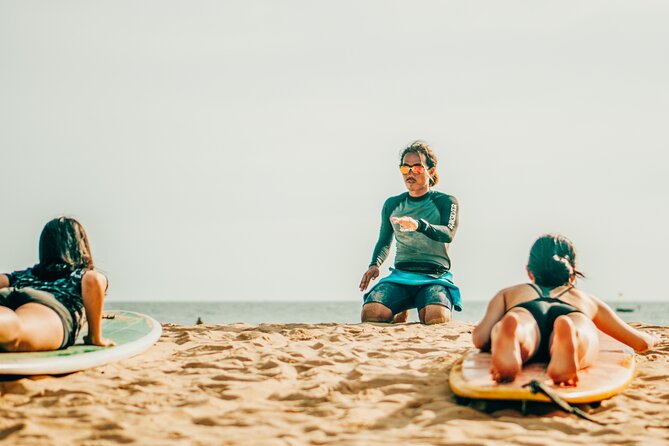
The lesson starts on the beach with take-off exercises on land. This is not just warm-up stretching. You’ll go over how to stand on the board, how to paddle, and the safety tips you’ll need once you’re in the water.
For most beginners, the hardest part is getting your body to do the right things in the right order. Land practice gives you the chance to rehearse the pop-up without the added challenge of waves pushing you around. When you finally go in, you’re not starting from zero—you’re repeating the steps you practiced.
I also like that the lesson isn’t rushed. You practice, then you’re coached again as you transition. That pacing is especially useful if you’re nervous. You can earn confidence before your first attempt at catching waves.
In the water: longboard waves and your first real attempts
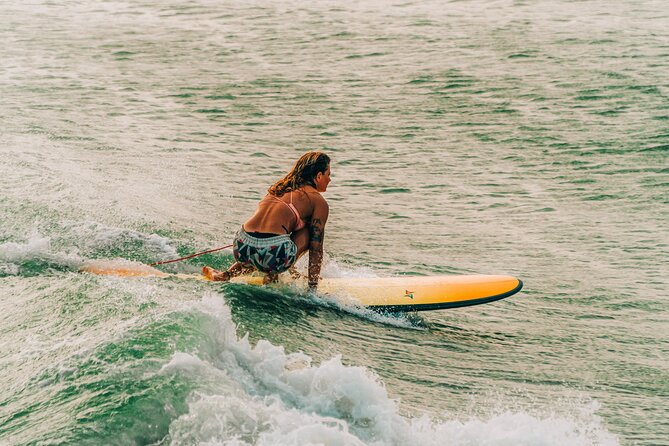
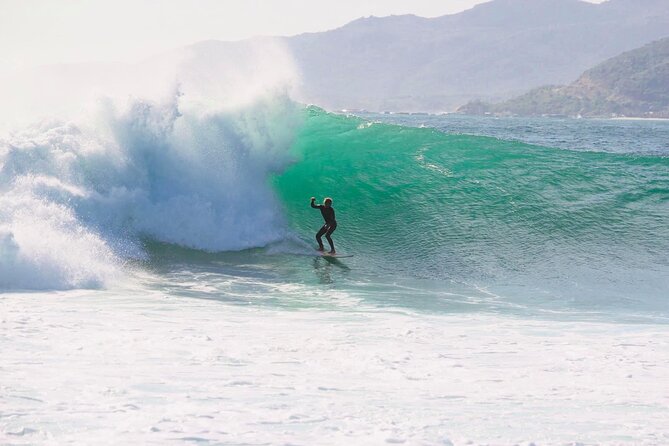
After the land drills, your coach checks the conditions and brings you to the water with a longboard setup. Longboards make sense for beginners. They typically offer more stability than shorter boards, which helps you focus on balance and wave positioning.
You’ll be learning how to catch waves, not just how to hold a board. The goal is to get you up and riding early enough that surfing feels like progress rather than punishment. With a private coach, your corrections can happen right when you need them—during your attempts.
And yes, the instructor is actively teaching in the moment. In the feedback from past learners, coaches were praised for spotting what to adjust and helping with first-wave success, even when conditions weren’t ideal for the season. That’s a good sign of an instructor who can adapt.






Soft tops, lycra, and sunscreen-friendly protection
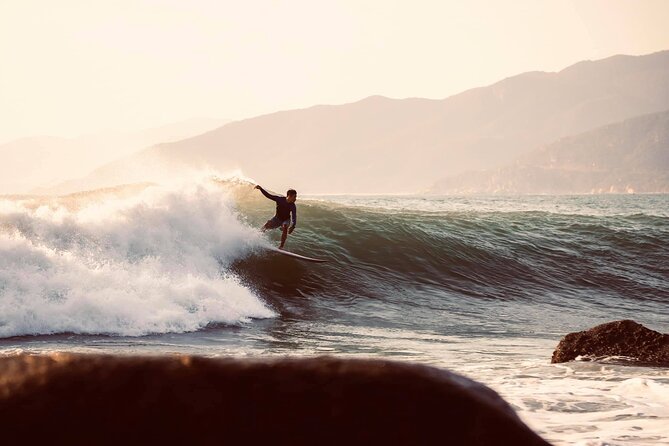
This school uses soft tops, which is a beginner-friendly choice. Soft boards reduce the fear factor when you’re learning to fall, pivot, and get back into position. That means more energy stays on learning rather than bracing for impact.
On top of that, you get protective gear:
- a long sleeve lycra to protect from burning
- special zinc for face
Sun can be the hidden enemy of surf lessons in Vietnam. When you’re focused on balancing and paddling, you don’t want to be worrying about how badly you’re getting cooked. This included protection is one of those “small” details that makes the day more comfortable and more repeatable.
What the timing really feels like (and why it matters)
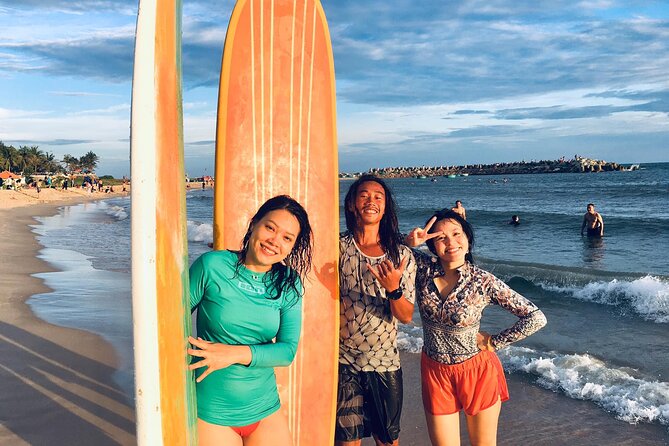
The listed duration is about 1 hour 30 minutes, but the teaching block is described as learning for around 2 hours, followed by free time. In practice, plan for a couple hours of instruction plus travel time back to the meeting point.
This timing matters because it affects how much you can do the rest of your day. The lesson is short enough that you can still enjoy the rest of your time in the area without feeling locked into a full-day schedule.
Also, the day is weather-dependent. Surf lessons need decent conditions to teach safely and effectively. If the surf spot doesn’t cooperate, the operator can offer another date or a full refund.
Price and value: what you get for $55
At $55 per person, you’re paying for a private lesson, surf equipment, and hands-on instruction. Gear inclusion is a big piece of the value math. When boards, leashes, and basic surf setup are handled for you, you don’t spend time and money preparing—or wait until the last second.
You’re also not just getting water time. The on-land coaching (standing, paddling, safety) makes the lesson feel more complete. A lot of beginner frustration comes from skipping fundamentals. Here, you build those fundamentals first.
A note on what’s not included: breakfast, bottled water, lunch, dinner, and snacks. So you’ll want to eat before you go (or plan for a break afterward) and bring water if you tend to get thirsty in the sun. Private transportation isn’t included either, even though pickup is offered—so treat transport as “may be arranged,” not automatically guaranteed for everyone.
What to budget and what to bring
The lesson includes:
- all surf equipment
- all fees and taxes
- protective lycra and face zinc
You’ll want to plan for:
- meals and snacks
- bottled water
- any extra transport costs if pickup doesn’t line up with your exact location
What I’d bring for comfort (not listed, but smart in this region):
- your own reef-safe sunscreen if you like backup protection
- a towel and a dry shirt for after
- a simple way to keep cash/phone dry while you change
Also, you’ll get the most out of the lesson if you have at least moderate physical fitness. You’ll be paddling and practicing your pop-up, so it’s not a couch-to-standing transformation—it’s active learning.
Who this lesson is best for (and who might rethink)
This is ideal for:
- true beginners who want a structured start
- anyone who prefers personal coaching over group instruction
- people who want a local surfer to teach them wave basics with clear safety guidance
It may be less ideal if:
- you dislike being physically active for about a couple of hours
- you strongly need a fully hands-off plan for transport (since pickup or motorbike following may be used)
The private format helps beginners a lot, but it still requires you to participate. Your coach can fix technique, but you still have to do the work: paddle, practice, try again.
Making your rest-of-day time count
The best part of a shorter surf lesson is what comes after. Once you’re done, you have the rest of the day free. That’s perfect for keeping the surf experience from swallowing your whole vacation.
If you want to keep improving beyond one session, it helps that this school is set up for follow-up. In past experiences, learners have returned to rent surfboards and asked for help finding good conditions afterward. That kind of continuity can turn a single lesson into real progress.
Should you book this private surf lesson in Phan Thiet?
Book it if you want a beginner-friendly start with private coaching, included gear, and a lesson plan that teaches fundamentals on land before you chase waves. The soft-top boards plus the sun protection (lycra and zinc) reduce the two biggest beginner problems: fear of falling and getting burned before you learn anything.
Skip it only if you don’t want any chance of transport-by-motorbike logistics, or if you’re looking for a full-day tour with meals included. For a focused, practical surfing introduction in Phan Thiet, this is strong value.
FAQ
How long is the surf lesson?
The experience is listed at about 1 hour 30 minutes. The teaching includes land practice and then time in the water, with learning described as around 2 hours before you have free time.
Is this lesson private?
Yes. It’s a private tour/activity, so only your group participates.
Do I need to bring surf gear?
No. All surf equipment is included, including the board setup for the lesson.
Will there be coaching on land as well as in the water?
Yes. You’ll do take-off exercises on land first, covering how to stand on the board, paddling, and safety, and then you’ll go into the water to catch waves.
Where does the lesson start and end?
You’ll meet at Mui Ne Local Surf School at 223A Nguyễn Đình Chiểu, Phường Hàm Tiến, Thành phố Phan Thiết, Bình Thuận, Vietnam. The activity ends back at the meeting point.
What should I pay for that’s not included?
Breakfast, bottled water, lunch, dinner, and snacks are not included. Private transportation is also not included.
What’s the cancellation and weather backup plan?
You can cancel for a full refund up to 24 hours in advance. The experience requires good weather; if it’s canceled due to poor weather, you’ll be offered another date or a full refund.