REVIEW · PHAN THIET
Mui Ne: Spiritual Tour in Ta Cu Moutain With Cable and Guide
Book on GetYourGuide →Operated by Ping Ping Mui Ne Travel · Bookable on GetYourGuide
If you like spirituality with scenery, this works. The day mixes Cham heritage at Po Sah Inư Tower with the big view-and-cable-car payoff at Ta Cu Mountain. You also get hotel pickup and an English-speaking guide, so the stops actually make sense as you move through central Vietnam.
I especially like two parts: the Linh Son Truong Tho Pagoda setting on the mountain slope (including the famous reclining Buddha statue), and the way the itinerary connects local faith with everyday coastal life at the Whale Temple and fishing harbor. One thing to plan for: there’s 100 steps after the cable car ride, so comfortable walking shoes and a steady pace matter.
In This Review
- Key points to know before you go
- Hotel Pickup + Private Car: The Day Feels More Like Yours
- Po Sah Inư Tower: Cham Heritage and a View Over Phan Thiết
- Phan Thiết Fishing Harbor: Boats, Bones, and Real Coastal Life
- Whale Temple (Built 1972): Why Whales Matter to Fishermen
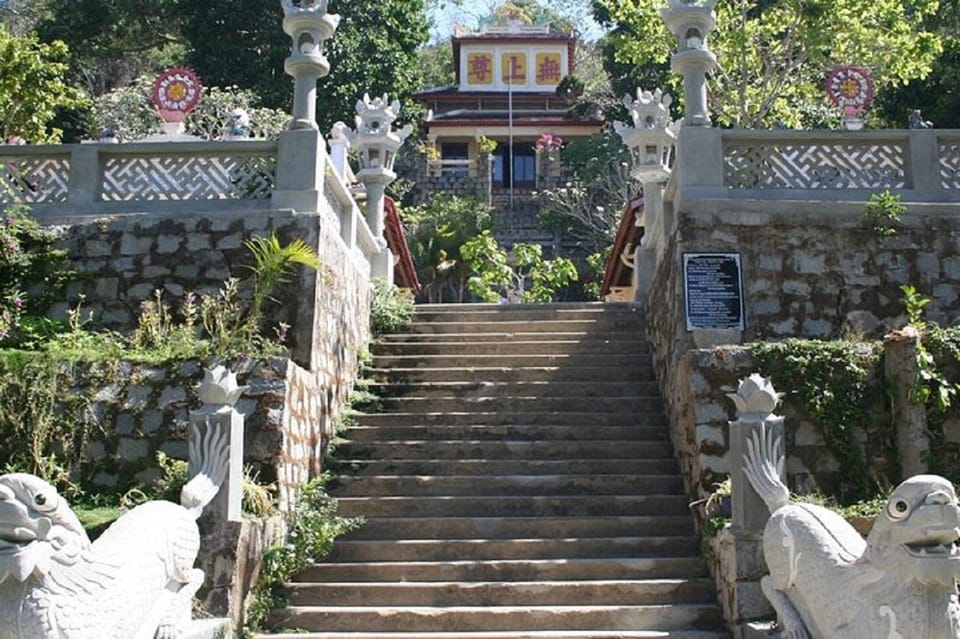
- Ta Cu Mountain: Cable Car, 100 Steps, and Linh Son Truong Tho Pagoda
- Linh Son Truong Tho Pagoda and the 49-meter reclining Buddha
- What makes the pagoda visit feel special
- Dragon Fruit Farm Stop: A Sweet, Practical Way to End
- Morning vs Afternoon Order: Same Stops, Different Feel
- Price and Value: Why $70 Can Make Sense Here
- What to Pack and Who This Tour Fits
- Who should book
- Who should skip it
- Should You Book the Mui Ne Ta Cu Spiritual Tour?
- FAQ
- How long is the tour?
- Is this tour private?
- Where do you pick up from?
- What’s included in the price?
- Is lunch or a meal included?
- How much walking is involved at Ta Cu Mountain?
- What should I bring (and what’s not allowed)?
Key points to know before you go
- Hotel pickup and drop-off from Mui Ne, Ham Tien, or Phan Thiết city center keeps your day simple.
- Po Sah Inư Tower gives you a rare look at 11th-century Cham spiritual architecture tied to Shiva.
- Whale Temple is a major cultural stop for fishermen, with a huge whale skeleton display.
- Ta Cu Mountain cable car plus mountain pagoda views is the main wow factor of the tour.
- Dragon fruit farm time adds a local, practical look at how the fruit is grown.
Hotel Pickup + Private Car: The Day Feels More Like Yours
This is set up as a private tour with a private, air-conditioned car. That matters in Mui Ne and Phan Thiết area, where the distances can eat time if you’re sorting transport on your own. With pickup and drop-off from your hotel area, you lose less daylight to logistics and more daylight to the actual sights.
The tour is built around an English-speaking guide, which is a big deal at religious sites. You’ll get the “what you’re looking at” context at Po Sah Inư Tower, and the cultural meaning behind the Whale Temple. If you’ve ever stood in front of a temple without knowing why it matters, you’ll understand why this is worth paying for.
The route also avoids long transfers by keeping the tour focused on a tight cluster of stops, including Ta Cu Mountain in Ham Thuan Nam District. For many people, that’s the best use of a half-day trip: fewer moves, stronger payoff.
You can also read our reviews of more guided tours in Phan Thiet

Po Sah Inư Tower: Cham Heritage and a View Over Phan Thiết
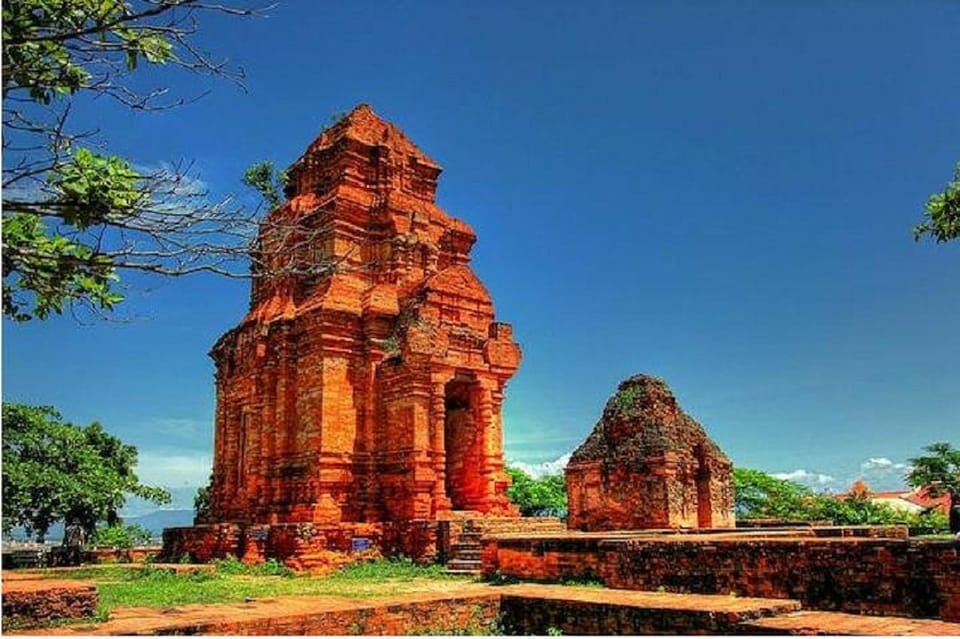
Your first stop is usually Po Sah Inư Tower, a sacred area linked to the God Shiva, honored by the Cham people. This site traces back to the 11th century, and you’ll admire three ancient Cham towers that are very much about religious form and place.
What I like about this stop is how it isn’t just “old towers.” It’s presented as a living spiritual tradition and a historical expression of Cham culture. If you’re the type who likes architecture and story, you’ll enjoy spending time here rather than rushing through.
You also get a nice bonus: the towers offer a full view of Phan Thiết city. It’s one of those moments where your brain clicks from tourism mode into “oh, this is why people built things in the landscape they did.”
A practical note: this is a cultural stop, and it’s easy to get sun-hammered in central Vietnam. Bring sunscreen and a hat, and consider a long-sleeved layer so you’re not constantly wiping sweat off your camera.
Phan Thiết Fishing Harbor: Boats, Bones, and Real Coastal Life
After Po Sah Inư Tower, the itinerary includes a stop at the Phan Thiết fishing harbor. You can pause for photos and take in the scale of the fishing boats. Even if you only spend a short time here, it gives you a grounded contrast to the temples on the same day.
This harbor stop is valuable because it connects to what comes next. When you visit the Whale Temple, you understand it better if you’ve already seen the fishing world that surrounds it. You’ll feel how religion here is not separate from daily work—it’s tied to identity and livelihood.
Keep your camera handy, but also keep your eyes open. Harbors are busy, and the best moments are often small: a conversation, the movement of boats, or people working around their routines.
Whale Temple (Built 1972): Why Whales Matter to Fishermen
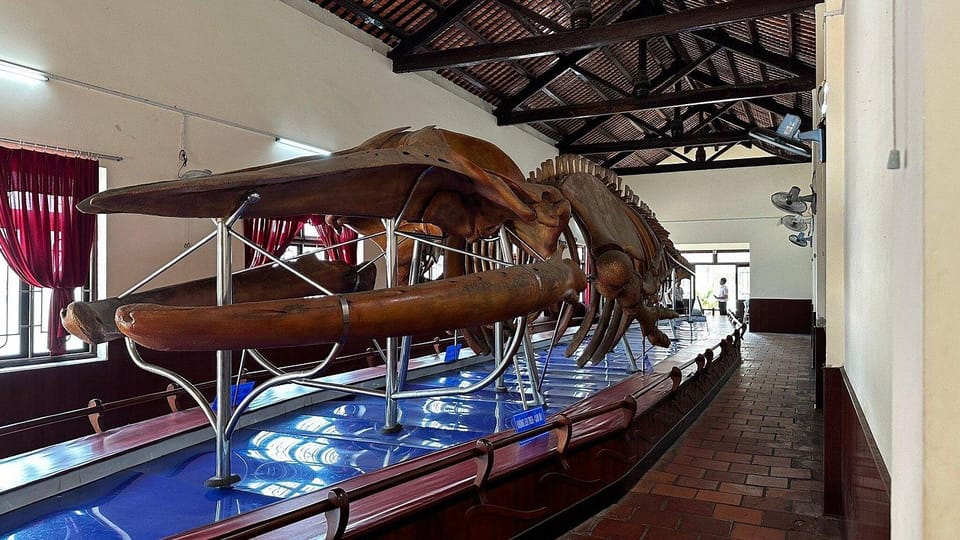
The Whale Temple is a defining stop. Built in 1972, it’s dedicated to worship of the whale and features an amazing skeleton display—one whale skeleton measuring about 22 meters, plus nearly 100 whale skeletons stored for roughly 100 to 150 years.
This is one of those places where the details make the experience. You’re not just seeing a big structure. You’re seeing how a community interprets nature through spirit and practice. The whale is treated as something with long-term cultural and religious importance to local fishermen, and the temple is where that meaning takes physical form.
If you like learning how faith expresses itself in practical ways, this stop will land. It’s also quiet in tone compared to the bustle of a harbor, so it gives you a mental reset before the climb to Ta Cu.
Ta Cu Mountain: Cable Car, 100 Steps, and Linh Son Truong Tho Pagoda
Ta Cu Mountain is the main event. It takes around 40 minutes to reach from the main area (depending on the route timing). Once there, you take a modern cable car to explore the slopes and get spectacular views.
After the cable car, you’ll climb about 100 steps to reach the top area of Ta Cu Mountain (specifically to reach the pagoda area with the lying Buddha statue). This is the tour’s biggest physical challenge, so pace yourself. The views are better when you don’t rush.




Linh Son Truong Tho Pagoda and the 49-meter reclining Buddha
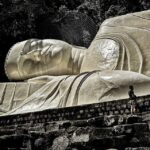
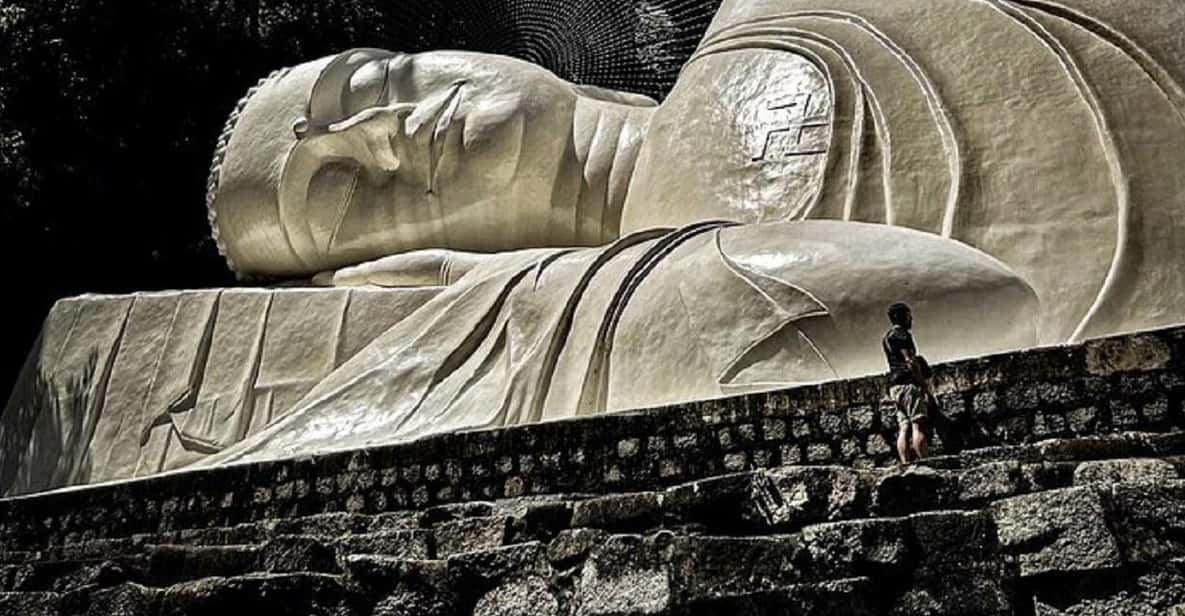
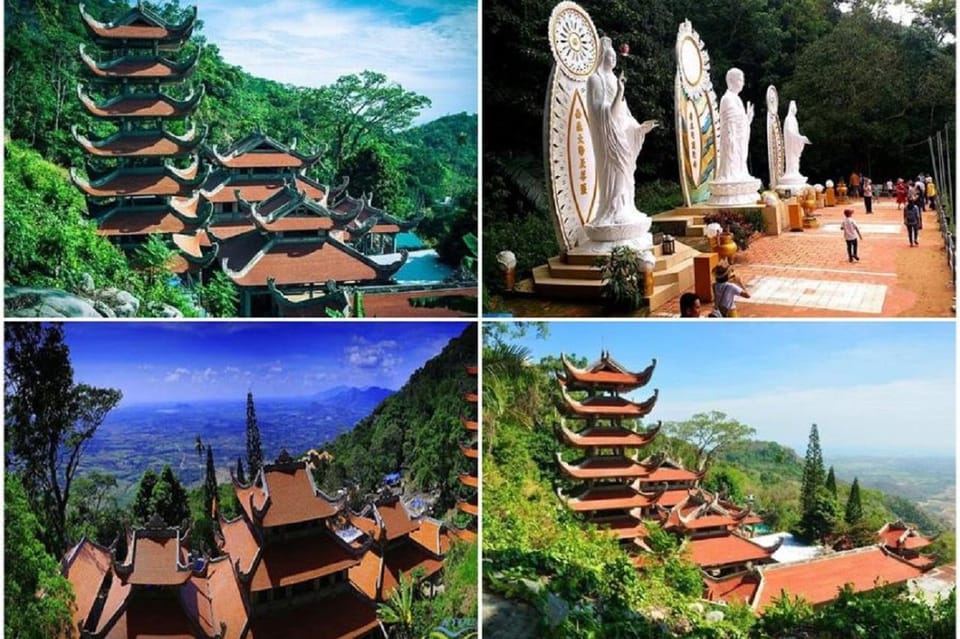
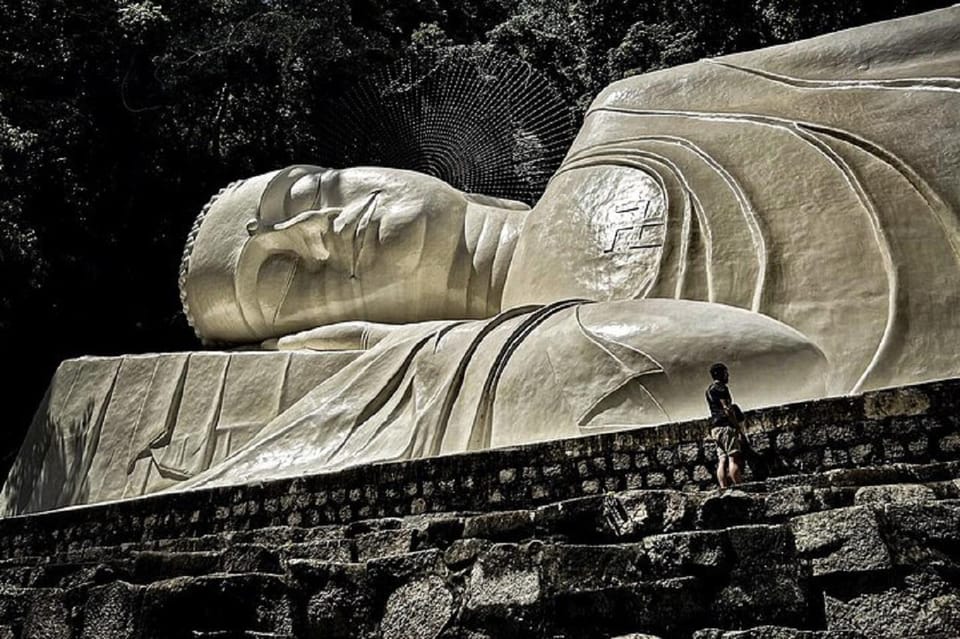
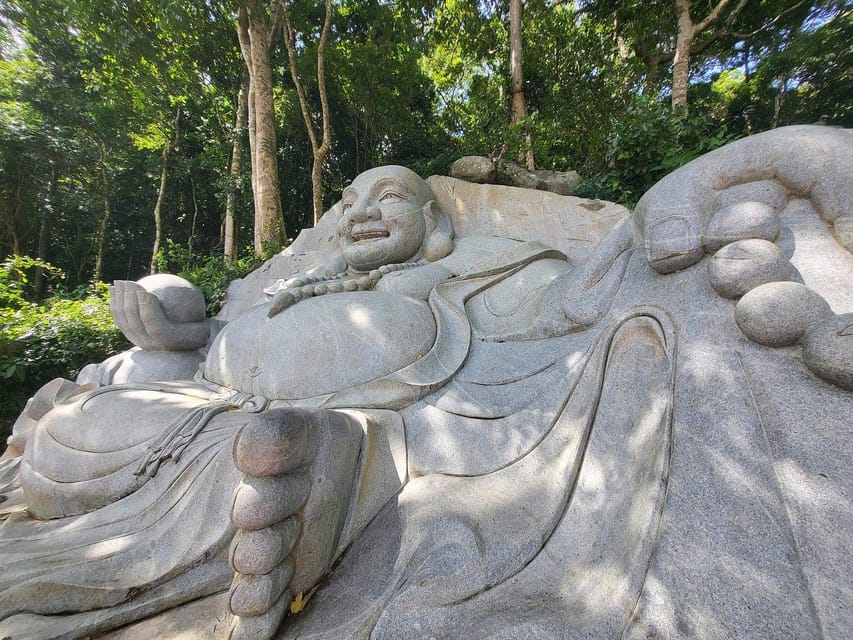
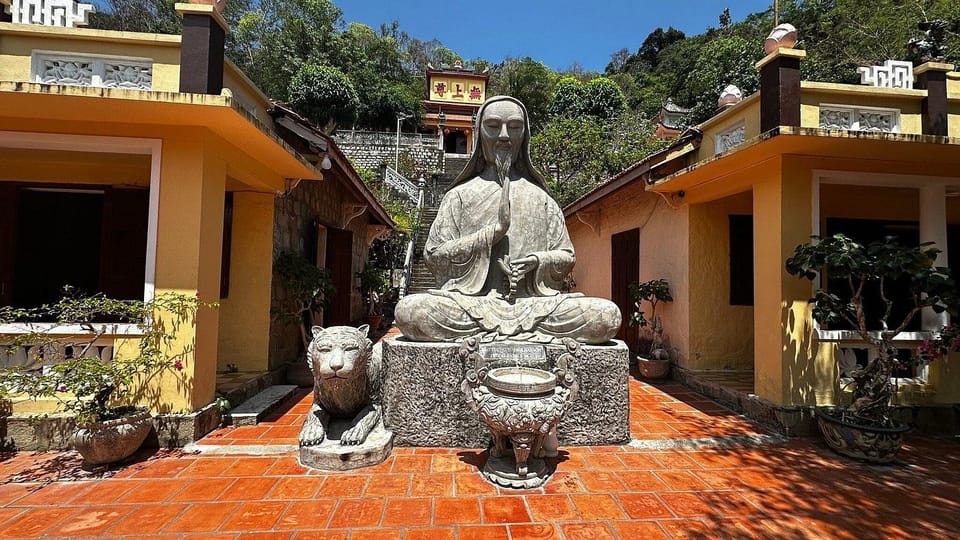
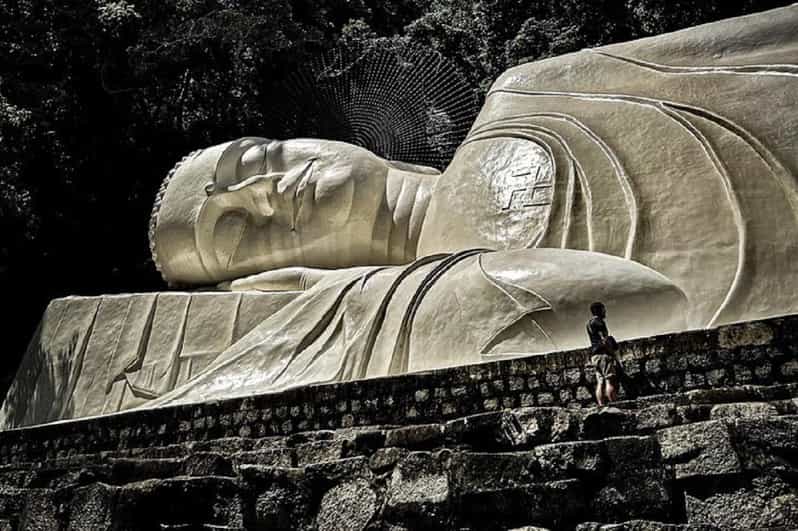
The pagoda—Linh Son Truong Tho Pagoda—sits at about 475 meters on the mountain slope. It’s known for its large concrete statue of the reclining Buddha, measuring 49 meters long and seven meters high.
The statue has a strong human story behind it. It was built in 1963 by sculptor Truong Dinh Y, who reportedly cut his hair and did not leave the mountain until the statue was completed, with work finishing around 1966. You’ll also hear about the scale of labor: thousands of tons of cement hauled to the monument position via a roughly 2-kilometer trail with rocky, winding sections.
In 2013, the statue set a record as Asia’s longest reclining Buddha statue. Whether you care about records or not, that fact helps you understand why the monument is so widely talked about. It’s not just a statue. It’s a project that took real effort to place in this terrain.
What makes the pagoda visit feel special
The mountain itself shapes the experience. The pagoda’s setting combines forest-and-mountain feel, and you’ll likely notice how the site changes your perspective compared to the coastal stops earlier. You go from boats and towers to a higher, quieter view point—exactly the kind of contrast that makes a half-day feel like more than a checklist.
If you’re traveling with someone who prefers less walking, note that this tour is not recommended for wheelchair users and it isn’t a fit for everyone. For most active travelers, though, the combination of cable car and steps strikes a good balance: you get the effort without needing hours of hiking.
Dragon Fruit Farm Stop: A Sweet, Practical Way to End
On the way back to your hotel, you stop at a local farmer’s Dragon Fruit Farm. You’ll see how dragon fruit is grown, which gives your day an everyday local touch beyond temples and seafood areas.
This part is especially nice because it slows things down. After looking at historical towers, whale skeletons, and giant religious monuments, it feels refreshing to watch something agricultural and hands-on. You can also use it as a photo break, since the farm setting typically offers bright, colorful scenes.
Just plan for sun. Farms are open spaces. Bring the same basics you brought for the pagoda—sunscreen, hat, long sleeves if you get sunburn easily.
Morning vs Afternoon Order: Same Stops, Different Feel
The tour can run in different orders depending on the start time:
- Morning option typically goes: Po Sah Inư Tower → Fishing Harbor → Whale Temple → Dragon fruit farm → Ta Cu Mountain
- Afternoon option typically goes: Ta Cu Mountain → Dragon fruit farm → Whale Temple → Fishing Harbor → Po Sah Inư Tower
If you prefer cooler light for photos, many people like starting earlier. If you want the mountain big moment while you still have energy, the afternoon version can also work because Ta Cu is placed first.
Either way, the key is that Ta Cu Mountain and the pagoda are the centerpiece. The rest of the itinerary supports it by giving context on local faith, coastal life, and regional history.
Price and Value: Why $70 Can Make Sense Here
The price is $70 per person for a 6-hour private tour. On paper, it’s not the cheapest option. But this isn’t just a driver and a loose plan.
You’re getting:
- Hotel pickup and drop-off
- Private car with A/C
- English-speaking tour guide
- Entrance tickets
- Cable car round trip at Ta Cu Mountain
- Each person gets one bottle of water
For value, what matters is that the cable car and site entries are part of the package. If you had to price those separately plus transportation and a guide, the total usually climbs fast. Here, you’re paying for time-saving convenience and for the guide’s ability to explain what you’re seeing—especially important at Po Sah Inư Tower and the Whale Temple.
The only major gap is food. Meals aren’t included, so you’ll either eat on your own schedule before/after. That flexibility can be good, but you’ll want to budget time for it.
What to Pack and Who This Tour Fits
You’ll do best with practical, sun-ready packing:
- Sunglasses and a sun hat
- Sunscreen
- Long-sleeved shirt plus a t-shirt (layers help)
- Long pants
- Camera
- Cash
The “bring long pants” tip is real. You’ll be walking on steps and paths, and you may want extra protection on hotter days.
Who should book
This is a strong choice if you:
- Want a cultural and spiritual day with a clear route
- Like a guide who can explain the meaning of temples and local traditions
- Are comfortable with walking and climbing steps
Who should skip it
This tour isn’t suitable for:
- Wheelchair users
- Pregnant women
- People over 95 years
Also, it’s not a place for pets. Alcohol and drugs aren’t allowed either, so keep it respectful and straightforward.
Should You Book the Mui Ne Ta Cu Spiritual Tour?
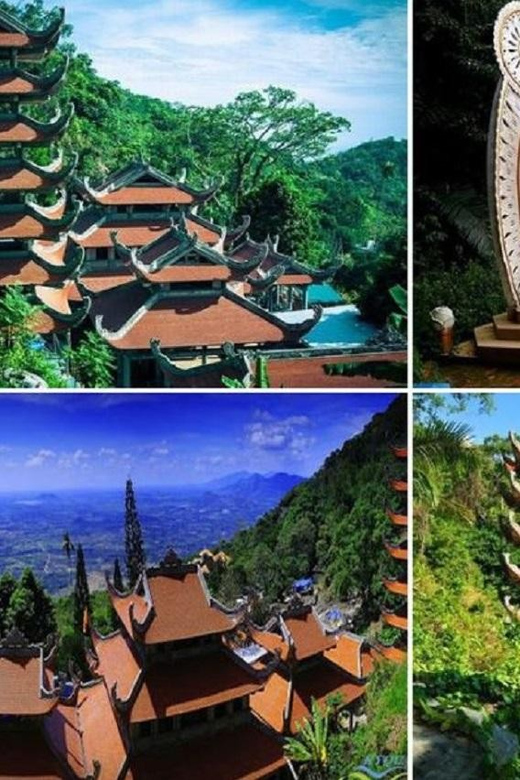
I think you should book this tour if you want a half-day plan that actually connects the dots: Cham heritage at Po Sah Inư Tower, whale worship tied to fishermen, then the big visual payoff of Ta Cu Mountain with the cable car and Linh Son Truong Tho Pagoda.
If you’re the type who loves quiet, peaceful temple atmosphere (not chaotic temple-hopping), this itinerary is paced well. And if you want a local stop that isn’t just another souvenir stop, the dragon fruit farm gives you something tangible and different.
I’d hesitate only if you know you struggle with stairs. The 100 steps after the cable car are a hard requirement, and the tour isn’t designed for limited mobility. If steps are no problem for you, this is a great way to spend a day in central Vietnam—structured, meaningful, and not overly complicated.
FAQ
How long is the tour?
The tour duration is 6 hours. Exact starting times depend on availability.
Is this tour private?
Yes. It’s a private tour with a private group setup and a private car with A/C.
Where do you pick up from?
Pickup is included from Mui Ne, Ham Tien Ward, and Phan Thiet City Center.
What’s included in the price?
Included are hotel pickup/drop-off, an English-speaking tour guide, a private A/C car, entrance tickets, Ta Cu Mountain cable car round trip, and one bottle of water per person.
Is lunch or a meal included?
No. Meals are not included, so you’ll need to arrange food yourself.
How much walking is involved at Ta Cu Mountain?
After the cable car ride, you’ll climb about 100 steps to reach the top area of Ta Cu Mountain (including the lying Buddha statue).
What should I bring (and what’s not allowed)?
Bring sunglasses, a sun hat, sunscreen, a camera, a long-sleeved shirt, a t-shirt, long pants, and cash. Pets aren’t allowed, and alcohol and drugs aren’t allowed either.