REVIEW · HOI AN
Luxury Half-Day Tour of Hoi An Ancient Town
Book on GetYourGuide →Operated by Vietnam Travel Group VNTG · Bookable on GetYourGuide
Hoi An packs serious history into four hours. I love how the tour focuses on key landmarks like Temple Kwan / Phuc Kien and also slows down enough for you to see the texture of the Old Town lanes. I also love the stop at Tan Ky Ancient House plus the Japanese Covered Bridge area, because it helps you connect architecture to everyday life. One possible drawback: you’ll be moving on narrow streets, and the tour doesn’t allow luggage or large bags, so it’s not ideal if you’re traveling heavy.
This is a classic “first taste” tour: you start with hotel pickup around 08:00, head straight into the Ancient Town, and then you’re back at your meeting point by 11:00. The good part is you don’t spend your morning figuring things out—entrance tickets get handled, and your English-speaking guide keeps the story moving.
There’s also a practical mix of guided time and personal time. After the walking tour, you get time to shop around the Old Town, and the guide can help you with what to look for so you don’t end up paying for the first thing you see.
In This Review
- Key points I’d mark on your map
- Hoi An Old Town in Four Hours: what you’ll actually see
- Walking lanes and mixed influences: Chinese, Japanese, French, European
- Temple Kwan and Phuc Kien Assembly Halls: where community shows up
- Tan Ky Ancient House: reading a home like a document
- The Japanese Covered Bridge area: a 400-year anchor
- The Old Town fish market stop: everyday Hoi An
- Old Town shopping time: how to shop without getting lost
- Price and logistics: is $55 worth a half-day?
- Who should book this Hoi An half-day tour?
- The guide experience: why names like Huy, Tea, and Minh matter
- Should you book this luxury half-day Hoi An tour?
- FAQ
- How long is the Luxury Half-Day Tour of Hoi An Ancient Town?
- What time does the tour start?
- Where does the tour start and end?
- How much does the tour cost?
- What’s included in the tour price?
- Are meals or drinks included?
- Do I need to pay for entrance tickets?
- Is luggage allowed?
- Is the tour wheelchair accessible?
- Can I cancel for a refund?
- Are there any rules for small children?
Key points I’d mark on your map
- Temple Kwan + Phuc Kien Temple/Assembly halls: religious sites that explain how communities worked in Hoi An
- Tan Ky Ancient House: one of the best ways to understand domestic architecture here
- Japanese Covered Bridge (about 400 years old): a landmark you’ll recognize even if you’ve seen it in photos
- Old Town fish market: a real-life stop that feels far less staged than souvenir streets
- Japanese Bridge area + cultural show rooms: quick cultural context without turning the day into a lecture
- Short, guided pacing + shopping time: useful if you only have a morning and want value
Hoi An Old Town in Four Hours: what you’ll actually see
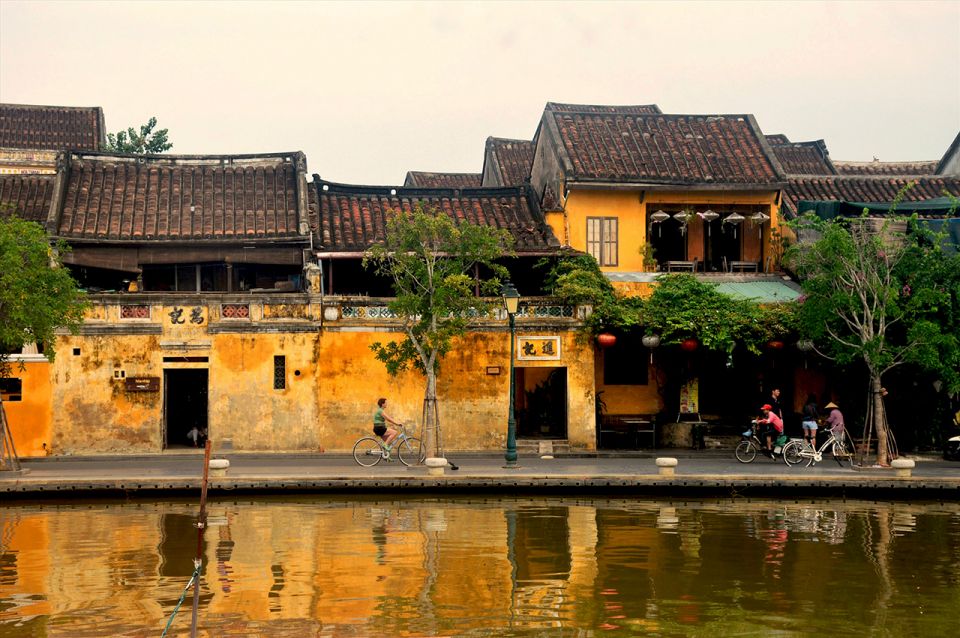
Hoi An sits down along the Thu Bon River, and the Ancient Town area is famous for streets lined with centuries-old houses. What makes this tour work is the time window: about 4 hours, so you get a focused hit of highlights without burning your whole day.
You’ll begin with hotel pickup and then a walk into the Ancient Town. The tour includes buying entrance tickets, which sounds small, but it saves you the hassle of sorting it out while you’re already trying to enjoy the place.
Once inside, the guide keeps you moving through narrow lanes that show multiple influences over time—Chinese, Japanese, French, and European styles. You’ll start noticing patterns fast: roof shapes, doorways, and how houses face the street.
Practical tip: wear shoes you can walk in for the full morning. The streets are not the kind you want to test new footwear on.
A few more Hoi An tours and experiences worth a look



Walking lanes and mixed influences: Chinese, Japanese, French, European

Hoi An’s old houses don’t look like one single “theme.” Instead, they read like a set of chapters—each one reflecting trade links and arrivals that shaped the town over time.
On this tour, you’ll see that blend through the way the guide routes you between major stops. Even when the landmarks are the headline, the lanes between them matter. Those narrow lanes help you understand how people moved through town day-to-day, not just how it looks in a postcard.
You’ll also get a sense of why the town was historically known by multiple names—like Lam Ap, Faifo, and Hoi An—because your guide’s stops connect “place identity” to the architecture. It’s easier to remember the town when you can point to something concrete: an assembly hall, a covered bridge, or a historic house.
Temple Kwan and Phuc Kien Assembly Halls: where community shows up

Religious and community buildings are where Hoi An’s story becomes human scale. This tour includes Temple Kwan and the Phuc Kien Temple/Assembly halls, and the payoff is that these aren’t random photo spots. They’re places where groups gathered, organized, and expressed shared values.
What you’ll get here is a clearer idea of how different communities coexisted and how that showed up in the built environment. The guide’s job is to connect symbols and design choices to meaning, so you’re not just looking at ornament.
If you like tours where you can ask questions, this part is often the most rewarding because there’s plenty to talk about: why a hall looks the way it does, how it functions, and why it matters that it’s still standing.
Reality check: temples can be visually intense and busy inside. Keep your expectations simple: go for understanding first, photos second, and you’ll enjoy it more.
Tan Ky Ancient House: reading a home like a document
Tan Ky Ancient House is one of those stops that changes how you “see” the Old Town. Instead of treating the area like a list of monuments, the house helps you understand how wealth, work, and family life connected.
A historic house like this also gives you clues about the larger mixed-influence theme. You start spotting design ideas that feel local, and others that look imported or shaped by outside contact. That’s why this is a highlight even on a half-day tour: it condenses a big chunk of understanding into one place.
What I like for you as a time-pressed traveler: Tan Ky doesn’t require you to bounce between too many separate attractions. One focused stop can do a lot of educational work, especially when your guide ties it back to what you saw in the surrounding lanes.
Practical tip: take a slower walk here. Spend time looking at the details rather than rushing to the next stop.
The Japanese Covered Bridge area: a 400-year anchor

The tour includes the Japanese Covered Bridge, commonly described as about 400 years old, plus the Japanese Bridge area and cultural show rooms. This is the part of Hoi An most people recognize instantly, but the value on a guided walk is context.
A covered bridge isn’t just a landmark—it signals how the town managed movement and community connections. The fact it’s still a major stop today makes it a useful anchor point for everything else you learn.
The cultural show rooms around this area can be a quick way to connect the bridge to how the town presents its heritage now. Don’t expect a full museum experience. Think of it as a structured taste that helps you place what you’re seeing in the larger Hoi An story.
Photo note: this is where you’ll want your camera ready, but also where you might slow down for others. Keep your timing flexible and don’t treat it like a race.
A few more Hoi An tours and experiences worth a look






The Old Town fish market stop: everyday Hoi An
One of the smartest inclusions on the route is the local fish market. It changes the tone of the morning. Instead of only looking at historic buildings, you see a living, working side of the town.
Markets can also be helpful for your guide’s storytelling. When you’re surrounded by everyday activity, it’s easier to understand why the Old Town’s architecture exists the way it does. Trade and daily routines shaped where people lived and how they built.
This stop also adds variety. If your brain gets overloaded by temples and houses, a market gives it something practical to focus on—movement, people, and the rhythm of daily life.
What to watch for: be respectful about space and photography. If a stall owner or crowd looks like they don’t want a camera close-up, back off slightly and keep moving.
Old Town shopping time: how to shop without getting lost
After the walking tour, you’ll have free time to shop around the Old Town, and the guide will take you back to your hotel at 11:00. Shopping time on a guided tour is genuinely useful when you know what to shop for and when to walk away.
A good guide matters here. In the strongest reviews for this experience, guides like Tea and Huy are praised for being helpful with shopping and for getting people to see the right spots instead of wandering randomly. Another guide, Minh, is noted for answering questions and treating local culture with respect, which makes the shopping portion feel less like a sales pitch and more like you’re learning what things are.
Since the tour doesn’t list specific stores, the smart move is to use the shopping time strategically:
- Ask what items are locally made versus imported.
- Decide what you want before you start bargaining.
- Set a budget in your head so you don’t feel pressured late in the morning.
Also, remember the luggage rule: if you don’t want items dragging your day down, keep purchases small until later.
Price and logistics: is $55 worth a half-day?
At $55 per person for a 4-hour tour, you’re paying for more than “someone walking with you.” The value comes from the mix of inclusions:
- Hotel pick-up and drop-off
- All entrance fees
- English-speaking guide
- Bicycle and helmet
- Travel insurance
- Tax and services charge
When a tour includes entrance fees and pickup, it reduces the hidden costs and decision fatigue you usually face on your own. You also save time because someone already planned the sequence of stops and the pacing across the Old Town.
The not-included list is also pretty normal and helps you plan realistically. Beverages and meals aren’t included (so budget for a drink or snack before you head out after the tour). Visa fees are not included, and personal spending like shopping is naturally on you.
Two logistics notes to consider:
- Not allowed: luggage or large bags. If you’re carrying big items, plan to leave them somewhere secure before the tour.
- Mobility details: the activity lists wheelchair accessible, but it also says it’s not suitable for people with mobility impairments. If you’re in that category, check carefully with the provider before booking, especially because the Old Town lanes can be tight.
My quick value take: if you want a structured morning with major landmarks and a guide who can explain what you’re seeing, this price is reasonable for Hoi An.
Who should book this Hoi An half-day tour?
This is a strong fit if:
- You’re in Hoi An for a limited time and want a high-impact morning
- You enjoy architecture and cultural landmarks more than long museum hours
- You want help with shopping—so you know what to look for and how to approach it
- You like guides who tell stories and answer questions (this comes up repeatedly in the best feedback)
It may not be the best fit if:
- You need a lot of mobility support or have difficulty with walking on narrow streets
- You’re traveling with large luggage
- You want a full-day itinerary with deeper museum time and long breaks
If you’re the type who likes to get your bearings fast, this tour gives you that. You’ll leave with a mental map of the Old Town that makes any return visit easier.
The guide experience: why names like Huy, Tea, and Minh matter
The tour’s quality often comes down to the guide, and this one has a track record of standout service. In the feedback, Huy is praised as an excellent guide who clearly cares about Hoi An and Vietnam, and who brings pride to the explanations. Tea is called out for being very informative and for helping with shopping while also taking people’s photos. Minh is highlighted for being knowledgeable and respectful, and for answering questions with stories about family, country life, and the town.
You can’t control which guide you’ll get, but these names are a useful signal: the experience tends to emphasize explanation over just moving you from stop to stop.
Should you book this luxury half-day Hoi An tour?
Book it if you want a well-paced, high-value morning covering the Ancient Town’s biggest cultural anchors—Temple Kwan, Phuc Kien, Tan Ky Ancient House, and the Japanese Covered Bridge area—plus a real-life stop at the fish market and time to shop.
Skip it (or at least check details first) if you’re carrying large bags, hate walking on uneven or narrow streets, or have significant mobility needs. Also, if you’re the kind of traveler who only enjoys totally free wandering, you might find a guided route a bit too structured.
If you like practical guidance and want to understand what you’re looking at, this is the kind of half-day tour that sets up the rest of your Hoi An visit.
FAQ
How long is the Luxury Half-Day Tour of Hoi An Ancient Town?
The tour lasts about 4 hours.
What time does the tour start?
The schedule provided lists an 08:00 start time. You should check availability for exact starting times.
Where does the tour start and end?
It starts with pick-up at your hotel. It ends back at the meeting point (your hotel or the arranged pick-up spot).
How much does the tour cost?
The price is $55 per person.
What’s included in the tour price?
Included items are hotel pick-up and drop-off, bicycle and helmet, all entrance fees, an English-speaking guide, tax and services charge, and travel insurance.
Are meals or drinks included?
No. Beverages and other meals not mentioned in the program are not included.
Do I need to pay for entrance tickets?
Entrance fees are included as part of the tour.
Is luggage allowed?
No. Luggage or large bags are not allowed.
Is the tour wheelchair accessible?
It lists wheelchair accessible, but it also says it’s not suitable for people with mobility impairments. If you need special support, confirm before booking.
Can I cancel for a refund?
Yes. You can cancel up to 24 hours in advance for a full refund.
Are there any rules for small children?
Children aged 1 and younger are complimentary when accompanied by a paying adult.
If you tell me your travel dates and whether you’ll have carry-on only or bigger luggage, I can help you decide if the logistics match your situation.