REVIEW · HUE VIETNAM
Hue: City Sightseeing Hop-On Hop-Off Bus Tour
Book on GetYourGuide →Operated by City Sightseeing Worldwide · Bookable on GetYourGuide
Hue is easier when you ride. This hop-on hop-off loop lets you build your own day, with 9-language audio and major sights within reach like Dong Ba Market and the Imperial Citadel.
The best part is the flexibility: you can hop off, take your time, and later catch the next bus back without feeling locked into a strict schedule. The route also links key landmarks such as Tu Duc Tomb, Thien Mu Pagoda, and stops near major historic sites.
The trade-off is timing: the circuit takes about 90 minutes and buses run about every 40 minutes, so you’ll want a little buffer at each stop—especially if you’re trying to cover a lot in one day.
In This Review
- Key Highlights You’ll Actually Use
- Hue on a Bus: Why This Works for 1 or 2 Days
- Price and What $19 Really Buys You
- The Route Rhythm: First/Last Times and the 40-Minute Wait
- Getting Started: Best First Stops for Orientation
- Dong Ba Market: Spices, Souvenirs, and a Real Snack Break
- Hue Imperial Citadel: UNESCO Sights and the Guard Ceremony Timing
- Tu Duc Tomb: Royal Luxury, Calm Grounds, and a Story You’ll Remember
- Tu Hieu Pagoda and Pilgrimage Village: Where Hue Feels More Local
- Thien Mu Pagoda, Khai Dinh Tomb, and Nam Giao Explanade
- Hue Museum of Royal Antiquities: For the History Lovers
- Onboard Experience: Audio Guide, Wi‑Fi, and Seating Reality
- Vouchers, Tickets, and What to Bring
- When Things Go Sideways: Weather and Bus Reliability
- Who This Bus Tour Suits Best
- Should You Book the Hue City Sightseeing Hop-On Hop-Off Bus Tour?
- FAQ
- How long is the Hue hop-on hop-off bus tour?
- How often does the bus run?
- Where is Stop 1 and what are the first and last departures?
- Which stops can I hop on and off at?
- Can I use a mobile voucher or do I need a printed one?
- How many languages is the audio guide in?
- What’s included in the ticket price, and what’s not?
- Is the bus wheelchair accessible?
- Is the tour operating during Lunar New Year in February?
Key Highlights You’ll Actually Use
- 9-language audio guide (English plus major European and Asian languages) so you can follow along without guessing
- Mobile or printed vouchers accepted at any stop along the route, which makes last-minute changes easier
- Imperial Citadel access plus the chance to time your visit around the changing of the guard ceremony
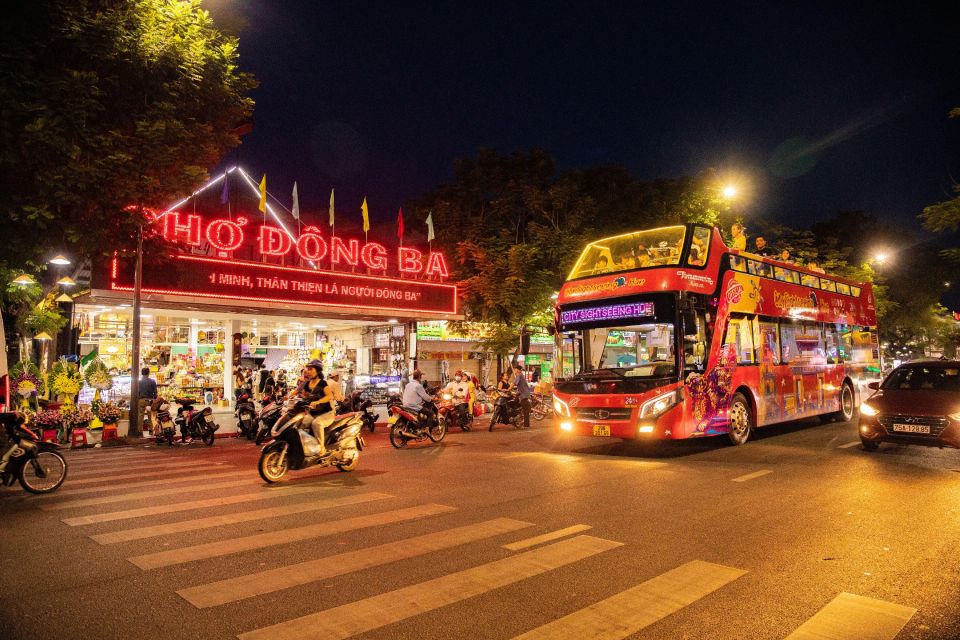
- Dong Ba Market stop for shopping, spices, and a snack break with banh khoai
- Family-friendly “preview first, decide later” format for figuring out what you want to return to
Hue on a Bus: Why This Works for 1 or 2 Days
Hue is one of Vietnam’s best “slow-down” cities. You’ve got tombs, temples, and royal sites spread out enough that walking can feel like a punishment. This hop-on hop-off setup is the practical answer: you ride the loop, then choose where to spend your time.
If you like history but also enjoy getting your bearings fast, the bus gives you a ready-made route. You’ll see the big hitters—then you can decide what deserves a longer, ticketed visit. It’s also a good fit if your group has different interests, because you can split your time between markets, pagodas, and royal architecture.
The tour runs as a 1-day or 2-day ticket, and each loop takes about 90 minutes. With buses running every 40 minutes, you can usually manage a “hop off for 60–90 minutes, then re-board” rhythm without turning your day into a sprint.
You can also read our reviews of more city tours in Hue Vietnam



Price and What $19 Really Buys You
At $19 per person, the value comes from what’s included rather than what you’re paying for. Your ticket covers the hop-on hop-off bus ride, audio guide in 9 languages, stops near major sights, and free Wi‑Fi on board.
What’s not included is also important. You’ll still pay for entries to attractions and you’ll handle food and drink on your own (unless a specific stop indicates an exception, which isn’t promised here). So treat this as a transport + orientation ticket. Then use your time saved to buy only the entries you truly want.
In practical terms, you’re paying for convenience. If you’re short on time in Hue, the bus can help you avoid wasting half a day figuring out routes and timing. If you have plenty of days and you love independently planning each site, you might still skip the bus. But for most people, $19 is an easy “let’s reduce friction” kind of spend.
The Route Rhythm: First/Last Times and the 40-Minute Wait
Here’s how to plan so it feels smooth instead of stressful.
- First departure from Stop 1 is at 8:00am
- Last departure from Stop 1 is at 4:00pm
- Frequency is every 40 minutes
- Tour circuit duration is about 90 minutes
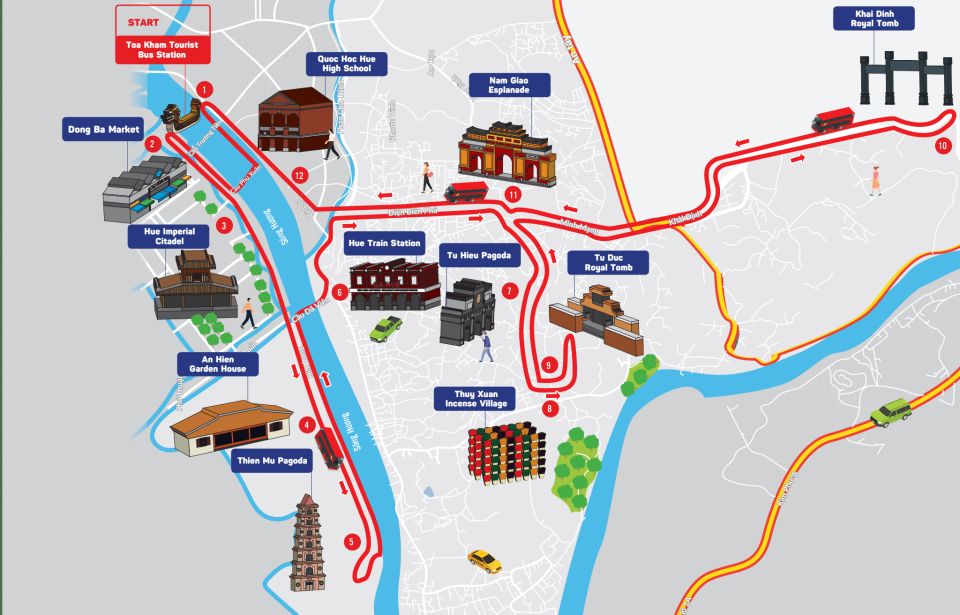
Stop 1 is listed as Toa Kham Boat Wharf. Meeting point can vary depending on which option you pick, but if you’re trying to start early, use the 8:00am departure from Stop 1 as your anchor.
My advice: don’t schedule “must-see” stops back-to-back with zero breathing room. If you hop off right at the start of a loop, you’re often returning somewhere near the next loop window. If you want to linger for photos or a snack, plan to catch the next bus rather than the one you just missed by a few minutes.
Also, weather matters. Hue can be rainy, and rain changes how comfortable it is to sit upstairs. One rider noted they had to sit downstairs on a wet day, which can affect sightlines. So if the forecast looks rough, plan on photos and viewing from wherever you’re most comfortable.
Getting Started: Best First Stops for Orientation

Your route includes stops like Dong Ba Market, Hue Imperial Citadel, Thien Mu Pagoda, Tu Duc Tomb, Khai Dinh Tomb, and Nam Giao Explanade, plus others such as Pilgrimage Village and Tu Hieu Pagoda. There are also stops near Hue Train Station and Quoc Hoc Hue.
If you’re trying to choose a smart order, think in terms of energy. Dong Ba Market is great early or late because it’s busy and good for a snack reset. Then you can swing into the royal sites when your brain is ready for more structured history.
For photography and “first impressions,” the Imperial Citadel stop is usually the big centerpiece. It’s also where you can time the day for the changing of the guard ceremony, which is specifically called out as worth sticking around for.
Dong Ba Market: Spices, Souvenirs, and a Real Snack Break
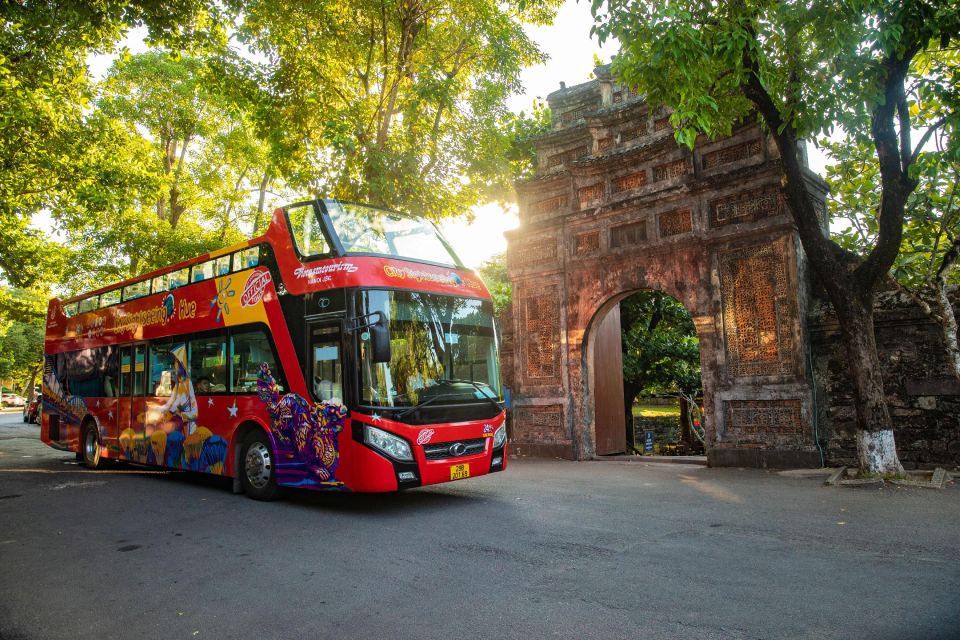
Dong Ba Market is the stop you’ll feel in your nose before you even get off the bus. It’s a maze of stalls where spices, produce, handicrafts, and souvenirs crowd together. If you like browsing without a strict plan, this is your payoff.
One of the best ways to use this stop is to treat it like two phases:
1) quick wander to see what’s sold and where the vibe is
2) then a focused purchase or snack
A food note that’s easy to miss if you’re rushing: banh khoai (sweet, crispy pancakes) are mentioned as a must while you’re here. Even if you’re not a big street-food person, grabbing one item is a low-risk way to make the market stop feel worth it.
Timing tip: markets can eat time. If you’re also planning an Imperial Citadel visit the same loop, keep your shopping list short. Buy your souvenirs after you’ve decided what you truly want, not while you’re still figuring out the prices and sizes.





Hue Imperial Citadel: UNESCO Sights and the Guard Ceremony Timing

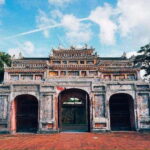
This is the headliner. Hue Imperial Citadel is a UNESCO World Heritage Site, and it’s described as like a mini-city within the city. You’re looking at intricate temples, ancient gates, and palace spaces built for royal life.
What makes this stop especially valuable is that you can do more than “see big stones.” You get context through the audio guide, which helps you understand what you’re standing in front of. Then, if a section really hooks you, you can come back later on your 2-day ticket.
The changing of the guard ceremony is specifically highlighted as worth staying for. So if you’re choosing just one “hang around longer” moment, make it this. It’s the kind of event that turns a history visit into something with movement and atmosphere.
One practical drawback: some riders reported audio playback issues during rainy weather. That doesn’t mean you’ll have problems, but it does mean you should be ready to rely on your own observation. If the audio cuts out, you can still read signage and follow the flow of the site; just don’t treat the bus commentary as the only source of meaning.
Tu Duc Tomb: Royal Luxury, Calm Grounds, and a Story You’ll Remember

If the Imperial Citadel is the political center, Tu Duc Tomb is the personal one. This is where Vietnamese Emperor Tu Duc and his Empress are laid to rest.
The description emphasizes the story: you learn about Tu Duc’s life of extravagance and luxury, plus you’ll pick up interesting facts along the way. That matters because tombs can turn into “walk, look, move on” unless there’s a narrative to hold it together. Tu Duc’s story gives you a reason to linger.
If you’re trying to map your day, Tu Duc Tomb is a great “slow down stop.” It fits well when you want fewer crowds and more time for photos and shade breaks. It’s also a stop where your curiosity can lead the schedule, which is exactly what hop-on hop-off tours do well: you don’t need to justify extra time, you just take it.
Tu Hieu Pagoda and Pilgrimage Village: Where Hue Feels More Local
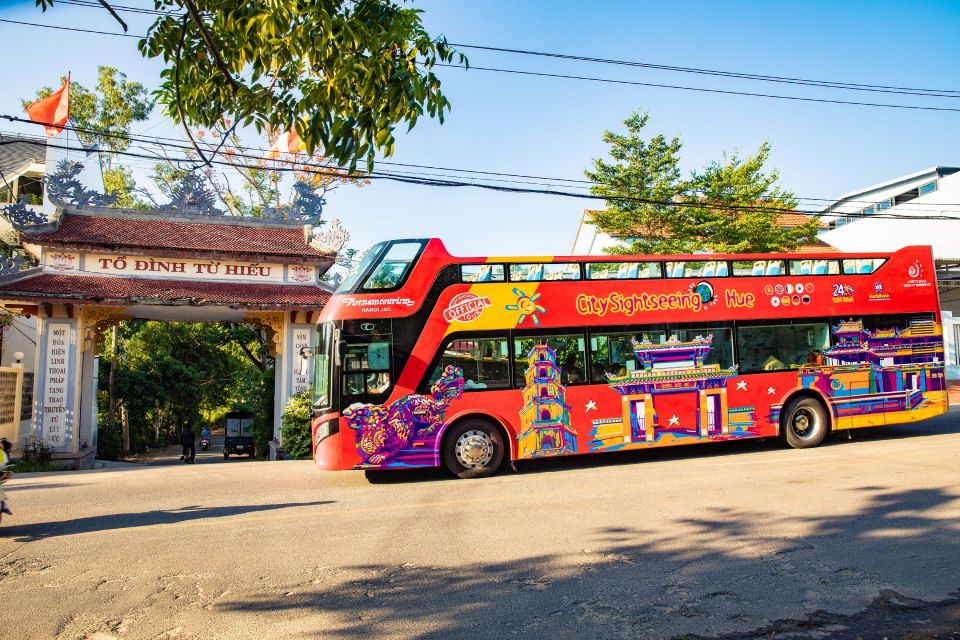
The route includes Tu Hieu Pagoda and Pilgrimage Village. These stops tend to offer a different feeling than the big-ticket royal sites. Instead of palace power and ceremony, you get more of the living cultural and spiritual rhythm that surrounds Hue’s history.
The goal here isn’t to “collect stamps.” It’s to let your day breathe. Even if you spend only a short time at each stop, it helps balance your itinerary so the history doesn’t become repetitive.
With these stops, I’d plan for flexibility. If you’re in a photo mood, you can spend a few extra minutes. If you’re tired, you can keep it brief and move on to the next major landmark without guilt.
Thien Mu Pagoda, Khai Dinh Tomb, and Nam Giao Explanade
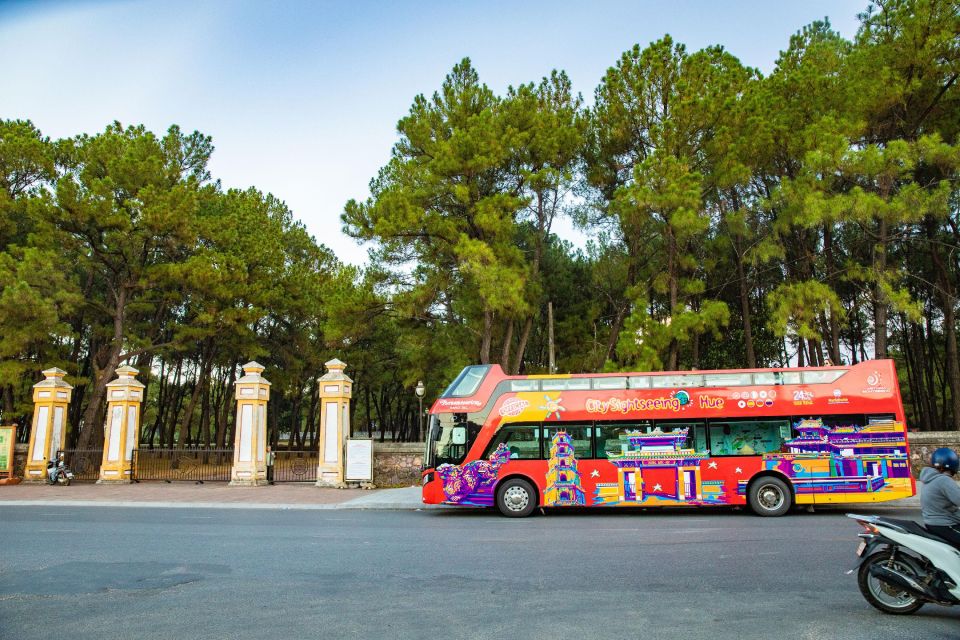
Three more route highlights deserve attention because they each show Hue’s range.
Thien Mu Pagoda is a key cultural stop on the circuit. Pagodas bring a calmer pace, and they’re a good contrast to the structured geometry of the citadel.
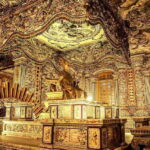
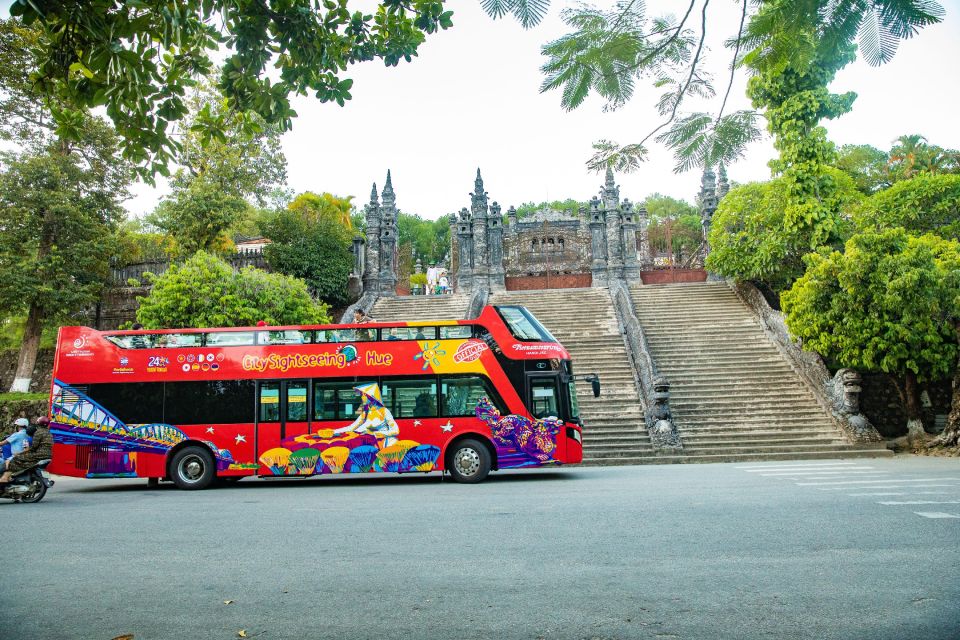
Khai Dinh Tomb is another major royal resting place on the route. If you’re into architecture and symbolism, comparing it with Tu Duc can help you understand how royal power and aesthetics evolved.
Then you’ve got Nam Giao Explanade, which adds a ceremonial dimension to the day. Even if you don’t know the details in advance, the audio guide can help you connect the dots.
If you’re doing a 1-day ticket, you’ll likely prioritize two of these plus Dong Ba Market or the Imperial Citadel. If you’re doing 2 days, you can split them so you don’t feel rushed.
Hue Museum of Royal Antiquities: For the History Lovers
The highlights call out the Hue Museum of Royal Antiquities as a must for history lovers. That fits the logic of a bus tour: you use the loop to decide where your attention goes, and a museum visit can be the place you slow down and get the full context.
Since museum entry isn’t included, plan on using your hop-on schedule to get there at a time when you have energy for indoor viewing. If you’re tired from walking outdoors, museums can feel like a helpful reset.
Onboard Experience: Audio Guide, Wi‑Fi, and Seating Reality
The tour includes a multilingual audio guide in English, Vietnamese, French, Chinese, Korean, Japanese, Spanish, Russian, and German, plus free Wi‑Fi. That’s a lot of coverage, and it matters when you’re trying to follow the story through a city where street signs and place names can be hard to match.
One rider described the commentary as easy to follow, and they liked using it as a preview to decide what to revisit. That’s a smart approach. Use the audio to understand what each stop represents, then choose which sites deserve extra time and paid entry.
Rain can change comfort. Upper-deck views can be harder when weather turns. If you prefer the best sightlines, plan around the conditions rather than assuming you’ll always sit upstairs.
Also, check the audio early. On at least one rainy day, audio reportedly cut out at times until an attendant helped. If your audio isn’t working cleanly, notify the onboard staff right away rather than waiting and losing the first half of the narration.
Vouchers, Tickets, and What to Bring
Both mobile and printed vouchers are accepted. Even better: you can redeem vouchers at any stop along the route, so you’re not stuck at one exact kiosk.
For your ID requirement, bring your passport or ID card. That’s the kind of thing you don’t want to discover at the curb.
And yes, there are limits: no pets and no smoking. Keep those in mind so your ride stays smooth for everyone.
When Things Go Sideways: Weather and Bus Reliability
Most days should feel straightforward. But the bus tour format is still a bus tour, meaning real-world delays can happen.
A couple of lower ratings focused on problems like incorrect departures, buses not showing up, and time feeling tight at certain stops. Those are the kinds of issues that can spoil a day if you’re relying on the bus as your only transport plan.
Here’s how you protect yourself:
- Keep your expectations flexible. Don’t book a tight lunch reservation right after your last stop.
- Build a time buffer for the biggest sites, especially the ones you’d hate to miss.
- If a bus doesn’t arrive as expected, look for a staff member or follow guidance from the stop staff before you abandon the plan.
If Hue is a short stop for you, I’d treat the hop-on route as your backbone, not your single point of failure.
Who This Bus Tour Suits Best
This tour is a strong match if you:
- want easy access to major Hue landmarks without figuring out transport between them
- like using commentary to prioritize what you’ll return to
- enjoy a mix of market time and historic sites
- prefer a simple itinerary that’s easy to adjust day-to-day
It’s less ideal if you want total independence with zero waiting time, or if you’re the type who needs exact minute-by-minute schedules. In those cases, you might feel that the bus loop pacing is too loose or too slow.
Should You Book the Hue City Sightseeing Hop-On Hop-Off Bus Tour?
If you’re visiting Hue for 1–2 days and you want an efficient way to see the main sights, this tour is a good buy. The biggest reasons are practical: multilingual audio, key stops like Dong Ba Market and Hue Imperial Citadel, and the value of not having to plan every leg of your day.
I’d book it if you also like having options. The hop-on format lets you decide on the spot whether a pagoda stop is “quick look” or “stay a while.” And the fact that vouchers work on mobile or paper makes it easier to keep plans flexible.
I’d hesitate only if your schedule is extremely tight or if you can’t handle the possibility of delays. For most people, adding a buffer turns this into an easy, smart way to experience Hue.
FAQ
How long is the Hue hop-on hop-off bus tour?
The tour duration is listed as 90 minutes.
How often does the bus run?
The bus frequency is every 40 minutes.
Where is Stop 1 and what are the first and last departures?
Stop 1 is Toa Kham Boat Wharf. The first tour departs at 8am, and the last tour departs at 4pm.
Which stops can I hop on and off at?
Stops include Toa Kham Boat Wharf, Dong Ba Market, Hue Imperial Citadel, An Hien Garden House, Thien Mu Pagoda, Hue Train Station, Tu Hieu Pagoda, Pilgrimage Village, Tu Duc Tomb, Khai Dinh Tomb, Nam Giao Explanade, and Quoc Hoc Hue.
Can I use a mobile voucher or do I need a printed one?
Both mobile and printed paper vouchers are accepted, and you can redeem them at any stop along the route.
How many languages is the audio guide in?
The audio guide is available in English, Vietnamese, French, Chinese, Korean, Japanese, Spanish, Russian, and German.
What’s included in the ticket price, and what’s not?
Included: the hop-on hop-off bus tour (1-day or 2-day), stops near major sights, the audio guide in multiple languages, and free Wi‑Fi. Not included: entry to attractions, and food and drink unless specified.
Is the bus wheelchair accessible?
Yes, the service is wheelchair accessible.
Is the tour operating during Lunar New Year in February?
On February 16, the tour is not operating due to Lunar New Year. On February 17, the tour will run from 10:15am until 9pm.