REVIEW · HANOI
Explore Hanoi Old Quarter ’s Rich History and Culture By Walking
Book on Viator →Operated by Hanoi Free Local Tours · Bookable on Viator
Old Quarter walks turn Hanoi into a story. I like the private student-guide setup for real context and the hotel pickup plus included entrances that keep costs predictable. One watch-out: the walking route can feel a bit rushed, and some crossings near traffic may make you extra alert.
This half-day runs about 3 to 4 hours, usually starting at 8:00 AM or 1:30 PM. You also get a mineral water per person, which matters in Hanoi’s heat when you’re out on foot.
The value here is the guide: no hidden fees and no expected tipping. Still, language can be a factor if your guide’s English is hard to follow, and you might end up with a shorter visit than planned.
In This Review
- Key points before you go
- Where this Old Quarter walk really shines
- Pickup, meeting point, and timing that affect your comfort
- Old Quarter Information Center: your orientation in 30 minutes
- Ancient House and the tube house style
- Kim Ngan Temple: one of the Old Quarter’s older anchors
- St. Joseph’s Cathedral: French-era contrast on a Hanoi street
- Railway Alley at Train Street: what to expect when trains pass
- Dong Xuan Market: local shopping at wholesale prices
- Ô Quan Chưởng gate: a final historical marker to close the loop
- Student guide value and the language reality check
- Price and what’s included: when $19.99 feels like a win
- Pacing, safety, and what to bring for a comfortable walk
- Should you book this Hanoi Old Quarter walking tour?
- FAQ
- How much does the tour cost?
- How long is the walking tour?
- Is pickup included?
- Where do I meet the guide?
- What time does the tour start?
- Is this a private tour?
- Are entrance fees included?
- Is food or drink included?
- Is there a guide, and what languages are available?
- What if the weather is bad?
Key points before you go

- Private walking guide with no hidden charges for a lower-stress experience
- Pickup in the Old Quarter (and a clear meeting point if you’re staying elsewhere)
- Included entrance fees and a mix of religious, colonial, and street-life stops
- Train Street and Dong Xuan Market show Hanoi in contrast, not just photos
- A quick, efficient route that favors seeing a lot over lingering
Where this Old Quarter walk really shines

Hanoi’s Old Quarter can be a lot on your own: lanes that twist, stalls that change from morning to afternoon, and landmarks that feel both famous and oddly close together. This tour’s main strength is that you get someone to stitch it all into a story without you needing to guess what you’re looking at.
I also like how the tour keeps the money simple. The price is $19.99 per person, and you’re told what’s covered: hotel pickup in the Old Quarter, an English-speaking guide (plus other languages for an extra charge), entrance fees, and a mineral water. That makes it easier to plan a day that won’t turn into a string of add-ons.
The walking style is efficient. That’s great if you want momentum and clear pacing. It’s less great if you love to slow down, take breaks, and read every sign. Add in Hanoi traffic at intersections, and you’ll want to stay sharp.
You can also read our reviews of more walking tours in Hanoi



Pickup, meeting point, and timing that affect your comfort

This is built around a half-day schedule with two start times: 8:00 AM and 1:30 PM. If you’re staying inside the Hanoi Old Quarter, you get free pickup from your hotel. If you’re outside that area, you’ll meet at the designated starting point.
That starting point is the Hanoi Opera House area: Hanoi Opera House, 1 Tràng Tiền, Phan Chu Trinh, Hoàn Kiếm, Hà Nội. The tour also ends back at the meeting point, and your guide will give directions so you can continue on your own afterward.
A practical tip: if you’re sensitive to crowds or traffic, the morning start can feel easier. Also, keep your expectations flexible. The tour is timed per stop, but if your guide’s language flow is challenging or the pace feels too fast, the visit can shorten.
Old Quarter Information Center: your orientation in 30 minutes
The tour kicks off at the Hanoi Old Quarter Information Center for about 30 minutes. This is a smart first move. Before you wander into temples, markets, and street landmarks, you get a foundation: historical documents and artifacts that show how Hanoi evolved over time.
Why this helps: it turns random sights into recognizable chapters. Instead of just saying, I saw a gate, you start to understand how and why Old Quarter structures and crafts clustered the way they did.
The only downside is that 30 minutes is still short. If you’re the type who loves reading exhibit labels, you may wish you had more time. But as a warm-up before busy streets, it works.
Ancient House and the tube house style

Next comes the Ancient House for about 45 minutes. Here you learn about the “tube house” style—an architectural pattern closely tied to the Old Quarter’s long, narrow plots and dense street frontage.
This is where the walk starts to feel more than sightseeing. You’re not just hopping from landmark to landmark. You’re being shown how the city’s buildings were shaped by real constraints: space, commerce, and street life.
One practical note: tube-house interiors can vary in layout and crowding. If you’re with a camera-heavy group, plan to move carefully and don’t expect long pauses inside.
Kim Ngan Temple: one of the Old Quarter’s older anchors
The Kim Ngan Temple is next, about 30 minutes. This temple dates back to the 15th century and has a long connection to Vietnam’s silver-making industry.
It’s a good stop for a specific reason: it connects place to work. Hanoi isn’t only a museum city. It’s also a city where trades and neighborhoods shaped each other over generations.
Since it’s a temple, you’ll want to keep your voice down and dress appropriately. Even if you’re not religious, this is the kind of stop where calm observation is part of the experience.
You can also read our reviews of more historical tours in Hanoi



St. Joseph’s Cathedral: French-era contrast on a Hanoi street

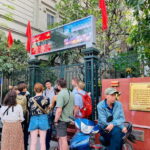
After the temple, you’ll head to Saint Joseph’s Cathedral for about 15 minutes. This is a French-built structure from the colonial era, and it’s now one of Hanoi’s well-known landmarks.
I like having this contrast in the middle of the walk. Hanoi can feel all one era if you only focus on traditional sites. The cathedral adds a second visual story line—how outside influences left visible marks in the city fabric.
Fifteen minutes is short, though. If you want photos from multiple angles or want to slow down and read the details, it may feel like a quick pass.
Railway Alley at Train Street: what to expect when trains pass

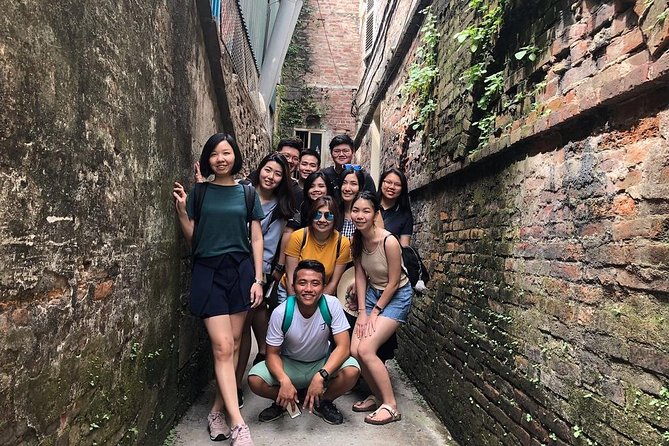
Then comes the signature stop: Railway Alley at Train Street for about 30 minutes. You’ll see the tracks threading through a narrow alley, with trains passing through while you’re nearby. The tour also mentions enjoying a refreshing drink during the visit.
This is the kind of place where you’ll want to treat safety and situational awareness as part of the experience. Traffic and tight space around the tracks mean you should follow your guide’s lead on where to stand and when to move.
Also, pace matters here. If your tour feels rushed, this stop can be short on your ability to soak in the moment. If you’re arriving with high expectations for slow, cinematic train moments, keep your timing flexible.
Dong Xuan Market: local shopping at wholesale prices

Next is Đồng Xuân Wholesale Market, about 30 minutes. This is where the tour shifts from landmarks to everyday life. You’ll see locals shopping for things like fresh produce and herbal medicines, and it tends to feel more affordable than many tourist-focused spots.
What makes this valuable is that markets are messy by nature. A guide helps you read what you’re seeing—why certain stalls exist, how shoppers move, and what locals actually buy rather than what’s just packaged for photos.
A drawback: if you’re only planning to glance and keep moving, markets can feel chaotic fast. Wear comfortable shoes and keep your phone secure. If you’re shopping, be ready for quick price conversations—but know that food and drinks aren’t included, so your budget is on you.
Ô Quan Chưởng gate: a final historical marker to close the loop
The tour ends at Phố Ô Quan Chưởng (Ô Quan Chưởng) for about 15 minutes. This is the last remaining gate of the old Thang Long Citadel, and it’s significant because it’s a physical trace of Hanoi’s deeper past.
I like closing the tour here. It gives you a clean finish line: you’ve walked through temples, colonial architecture, trades, and street life, and now you land on a surviving boundary marker.
You’ll also get directions from your guide for what to do next and how to return to your hotel area on your own. That guidance is genuinely useful when your walking route has already done the “orientation” part.
Student guide value and the language reality check
The guide setup is a big part of why this tour can feel like good value. Student guides are often cost-effective, and this one is positioned as having no hidden charges and no expected tips.
That said, English clarity can make or break the experience. One common issue is a language barrier where the guide speaks English but it’s hard to follow. If you know you’ll struggle with fast speech or heavy accents, consider booking with a language option that better fits your comfort level.
Also, because the tour is timed, if communication becomes difficult, the guide may shorten stops to keep the route moving. If you want deeper explanations, that’s when better language match matters most.
Price and what’s included: when $19.99 feels like a win
At $19.99 per person, this tour looks modest for what you get. You’re not just paying for walking companionship. You’re paying for:
- Hotel pickup within the Old Quarter area
- A private guide for your group
- A mineral water per person
- Entrance fees tied to the stops
- Service charges and government tax included
Food and drinks are not included, so you’ll still want some cash or a card ready for your own choices. But compared to tours where entrance fees pile up later, this pricing is easier to trust.
If you’re short on time in Hanoi and want a structured route that covers major Old Quarter landmarks plus street culture, the value makes sense. If you already know the city well and you prefer roaming freely, you might find it too planned.
Pacing, safety, and what to bring for a comfortable walk
This tour is built for walking in real traffic conditions. That’s part of the authenticity, but it’s also why you should keep a few comfort basics in mind.
- Wear closed, supportive shoes. Train Street and market sidewalks can be uneven and crowded.
- Stay close to the guide at crossings near lanes of bikes and cars.
- Bring a light layer. Weather can shift quickly, and you’ll be outdoors for the full half-day.
- Plan for a short visit inside stops. Many locations are 15 to 30 minutes, even if they deserve longer reading time.
One more tip: if you’re sensitive to rushing, ask for slower pacing at the start when you meet your guide. A good guide will adjust what they can without breaking the scheduled order.
Should you book this Hanoi Old Quarter walking tour?
Book it if you want a low-cost, structured Old Quarter walk with pickup, included entrances, and a guide who can explain what you’re seeing. It’s especially worth it when it’s your first time in Hanoi and you’d rather get your bearings fast than wander blind.
Skip it or rethink timing if you strongly prefer unhurried sightseeing. This route is designed to cover a lot in about 3 to 4 hours, and some people find it moves faster than they’d like. Also take extra care if English clarity is a must for you, since language can affect how satisfying the explanations feel.
If you go in with the right expectations—good shoes, patience around traffic, and a willingness to let the guide set the pace—you’ll come away with a practical, connected picture of Hanoi’s streets, crafts, and landmark mix.
FAQ
How much does the tour cost?
The price is $19.99 per person.
How long is the walking tour?
It runs about 3 to 4 hours.
Is pickup included?
Yes. Pickup is included for hotels inside the Hanoi Old Quarter. If you’re staying outside the area, you’ll meet at the designated starting point.
Where do I meet the guide?
The start point is Hanoi Opera House, 1 Tràng Tiền, Phan Chu Trinh, Hoàn Kiếm, Hà Nội, Vietnam.
What time does the tour start?
Pickup is listed for 8:00 AM or 1:30 PM.
Is this a private tour?
Yes. It’s private, and only your group participates.
Are entrance fees included?
Yes. Entrance fees as per the mentioned itinerary are included, and several stops note free admission.
Is food or drink included?
No. Foods and drinks are not included (a mineral water per person is included).
Is there a guide, and what languages are available?
There’s an experienced English-speaking guide. Other languages are available with a surcharge.
What if the weather is bad?
The tour requires good weather. If it’s canceled due to poor weather, you’ll be offered a different date or a full refund.