REVIEW · DA NANG
Da Nang Cooking: Market tour, farming, and cooking class
Book on GetYourGuide →Operated by HOI AN FOOD TOUR · Bookable on GetYourGuide
A market plus a field makes cooking make sense. I love the small group size (about 14) and how you start with hands-on farming prep before you ever touch a stove. The only drawback: there’s no hotel pickup, so you’ll want to plan your own way to the start point.
You’ll learn four dishes from a day-specific menu, with options like Quang noodle or Pho, fresh spring rolls, crispy stuffed pancakes (bánh xèo), and regional salads. Guides like Jane and Nhi teach in English, and the class stays practical even if it’s hot or rainy. If you’re short on time, you can choose a cooking-only option, but the full experience is where the story of the food really clicks.
In This Review
- Key highlights worth your attention
- Why this class feels different from a typical cooking lesson
- Picking the right menu in Da Nang (Quang noodle, Pho, or vegetarian)
- Organic farm start: planting and watering before you cook
- Market tour: learning Vietnamese ingredients, not just buying them
- In the kitchen: cooking four dishes the hands-on way
- What you may cook (based on your menu)
- Herbal tea tasting and dessert: the part that makes it feel complete
- Short cooking class vs full 4-hour experience (plus optional coffee)
- Group size, English instruction, and recipe handouts that actually help
- Price and value: how $25 stacks up for market + farm + 4 dishes
- Who should book (and who should think twice)
- Should you book this cooking class?
- FAQ
- How much does Da Nang Cooking: Market tour, farming, and cooking class cost?
- How long is the experience?
- What’s included in the class?
- Is hotel pickup or drop-off included?
- How many dishes will I cook?
- Is there a vegetarian menu?
- Do I choose the dishes in advance, or is it based on the day?
- What dishes are included on Menu 1?
- What dishes are included on Menu 2?
- Can I add a coffee making workshop?
Key highlights worth your attention
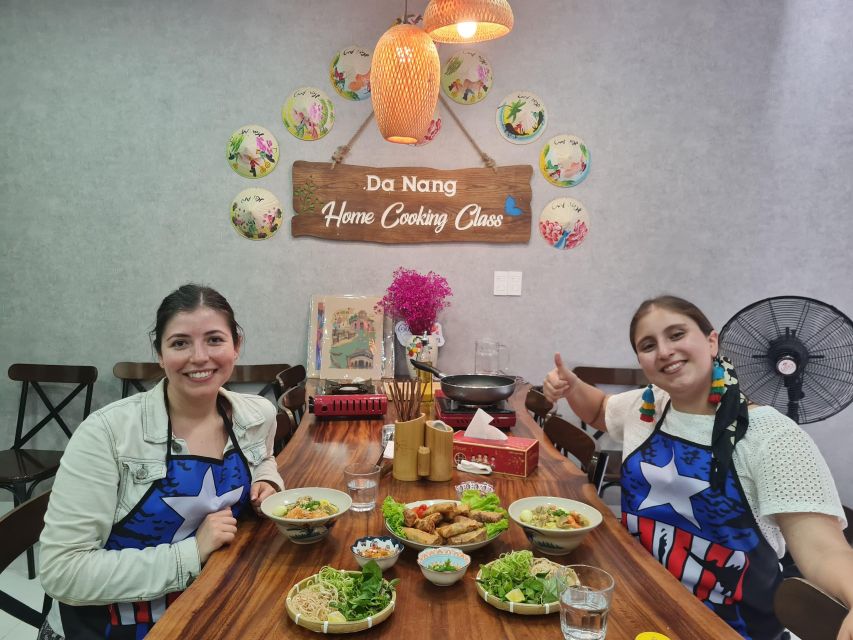
- Pick a menu by the day so you get Quang noodle, Pho, or a vegetarian set that still feels complete
- Start at an organic farm and practice simple planting and watering tasks like a local farmer
- Shop a fresh local market and learn what ingredients do in Vietnamese cooking
- Cook four dishes hands-on with enough one-on-one attention for real progress
- Taste herbal tea and dessert made with organic ingredients included in the class
- English instruction for every step, plus recipe copies in English to take home
Why this class feels different from a typical cooking lesson
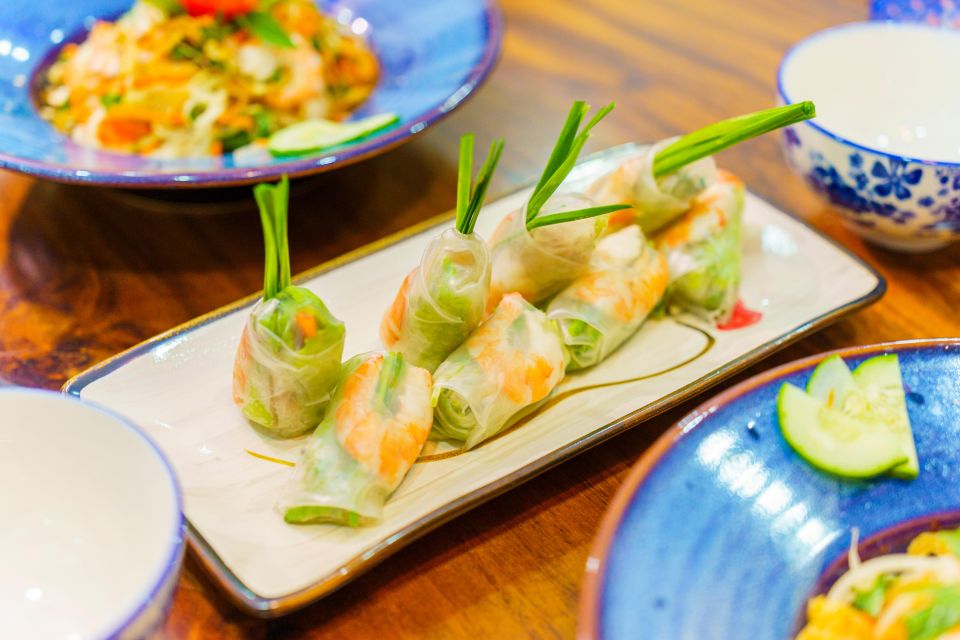
This isn’t only about learning a recipe. You’re learning the logic behind Vietnamese flavors: what’s in season, what a market seller knows by sight, and why certain herbs and proteins need specific timing.
That makes your end result more reliable at home. When you understand ingredients first, cooking steps make sense instead of turning into a memorization game.
And with a class size of around 14, you’re not stuck watching from the sidelines. You get to handle the dough, wrap the rolls, and assemble the plates while an English-speaking guide keeps you moving.
You can also read our reviews of more shopping tours in Da Nang

Picking the right menu in Da Nang (Quang noodle, Pho, or vegetarian)
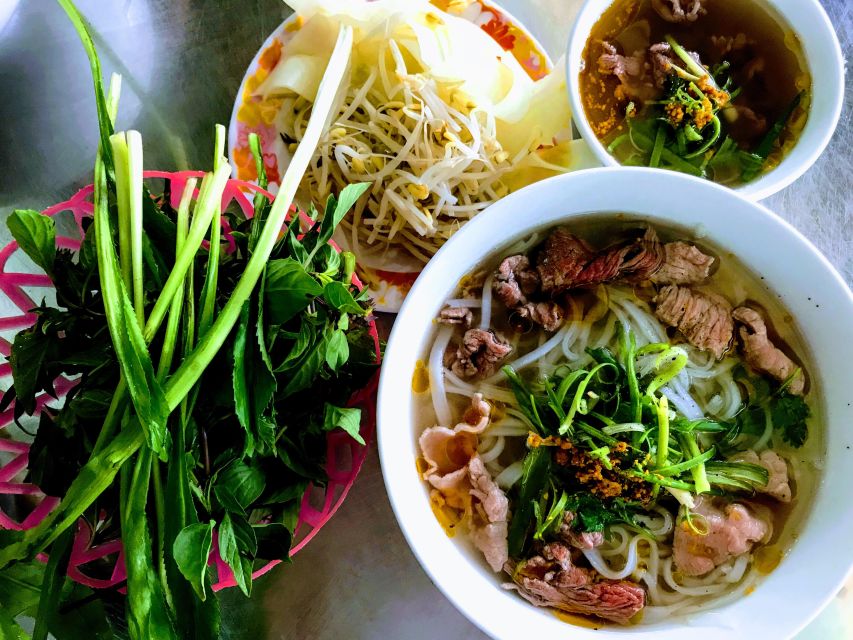
Your menu depends on what day you go. This matters more than people expect, because the class aims to teach four specific dishes as a set.
Here are the menu options:
Menu 1 (Mon, Wed, Fri)
- Quang noodle
- Fish sauce chicken wing
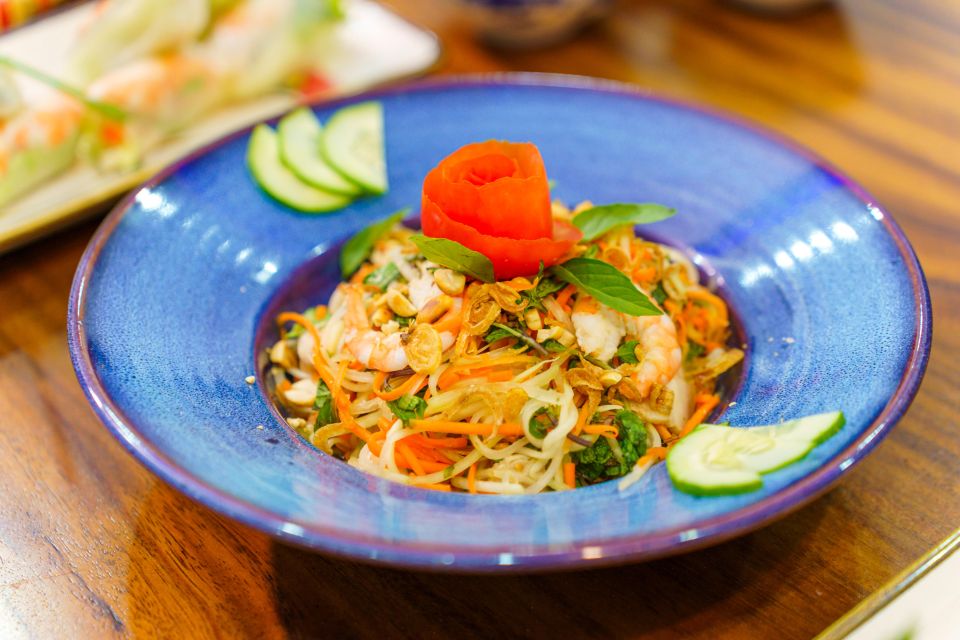
- Green papaya salad with shrimp
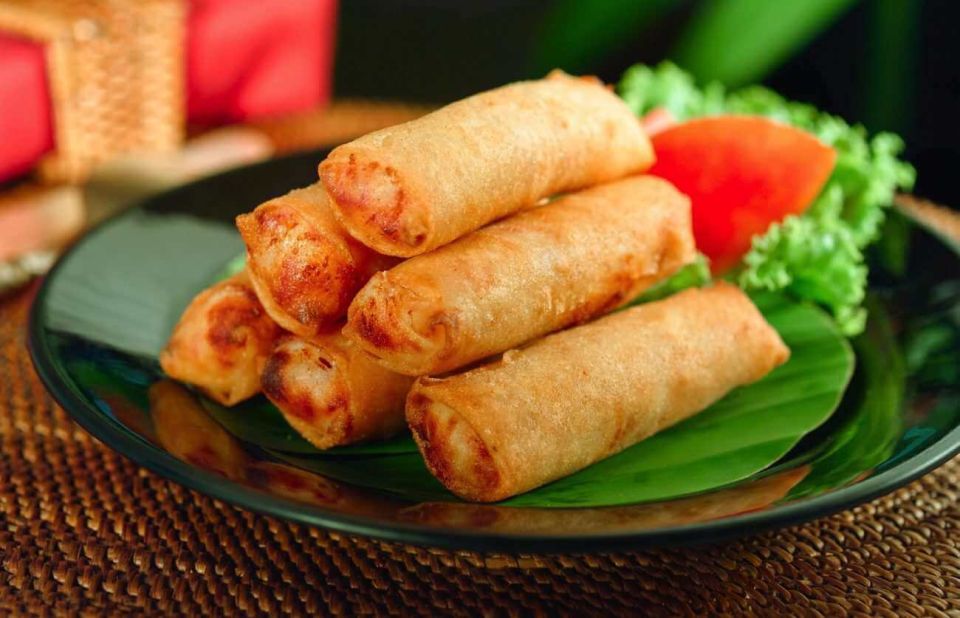
- Deep-fried spring rolls
Menu 2 (Tue, Thu, Sat, Sun)
- Beef noodle soup (Pho)
- Crispy Vietnamese Pancakes (Bánh Xèo)
- Green mango salad with shrimp
- Fresh spring roll
Vegetarian option (Menu 3)
- Quang noodle or Pho
- Eggplant stir fry
- Mango salad or papaya salad
- Fried spring roll or fresh spring roll
If you’re deciding between days, choose based on what you actually want to cook twice at home. For example, if Pho is your goal, go for Menu 2 days. If you want that distinctive Central Vietnam noodle vibe, Menu 1 with Quang noodle is the ticket.
Organic farm start: planting and watering before you cook
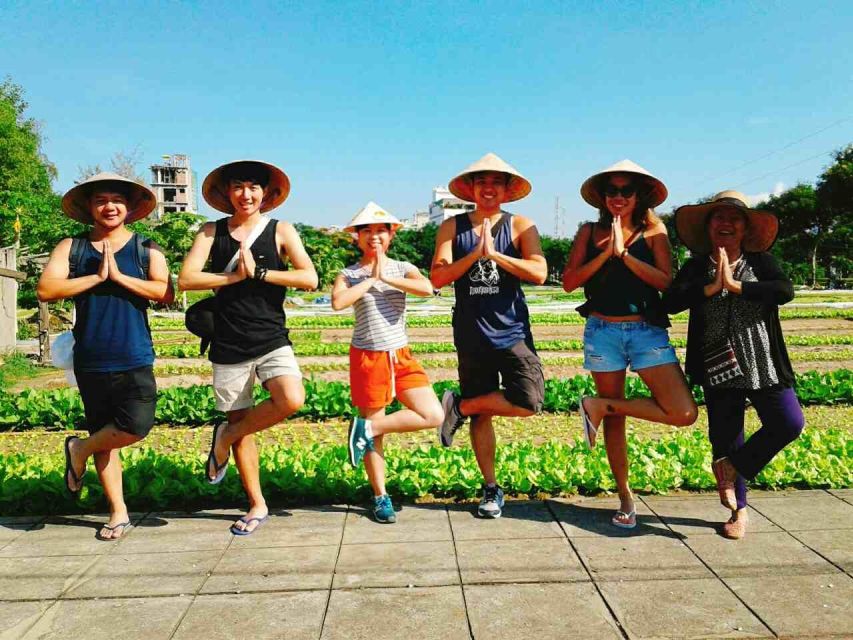
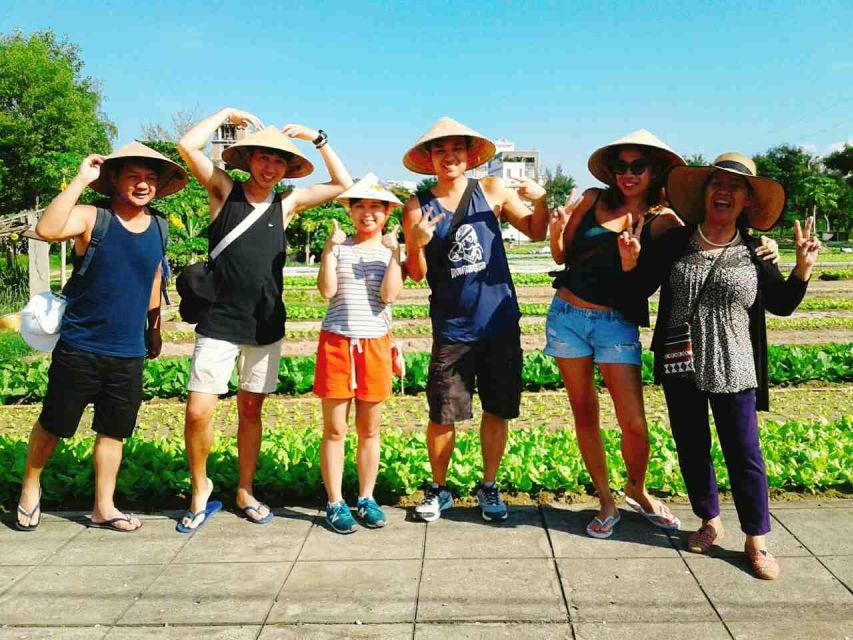
The class begins at an organic farm. You’ll learn the basics of growing—how planting works and how watering changes the outcome—before you head to the market.
This start is more than scenery. It’s a quick lesson in ingredient thinking. You’re seeing the crop life cycle first, so when you later spot herbs, greens, or vegetables at the market, you already understand what they bring to flavor and texture.
You also get to practice simple farm tasks. Think planting and watering in a hands-on way that feels closer to what local farmers do than a staged demonstration.
One practical note: the experience is built to keep going even in harsh sun or rainy weather. You’ll still do the activities without the day turning into a washout.
Market tour: learning Vietnamese ingredients, not just buying them
Next comes a local fresh market. This is where your guide turns ingredient names into working knowledge.
You’ll pick up what you need for your menu, and you’ll learn the tricks of the trade—what to look for, what to smell, and why certain items show up in Vietnamese kitchens all the time.
A big plus is timing. If you prefer a calmer market, going earlier in the day can help. The tour can be pleasantly less crowded than you might expect during peak hours, which makes it easier to ask questions and actually see what’s going on.
When you’re done, you won’t just think, I saw that at a market. You’ll know how each ingredient earns its place in dishes like spring rolls, mango or papaya salad, and noodle soups.
In the kitchen: cooking four dishes the hands-on way
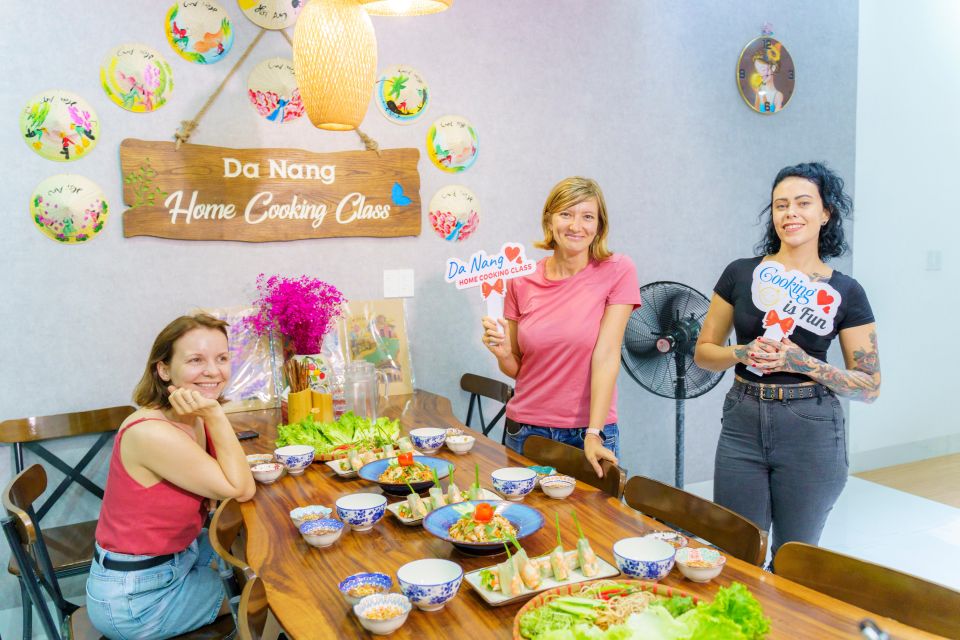
Now the lesson turns into real cooking.
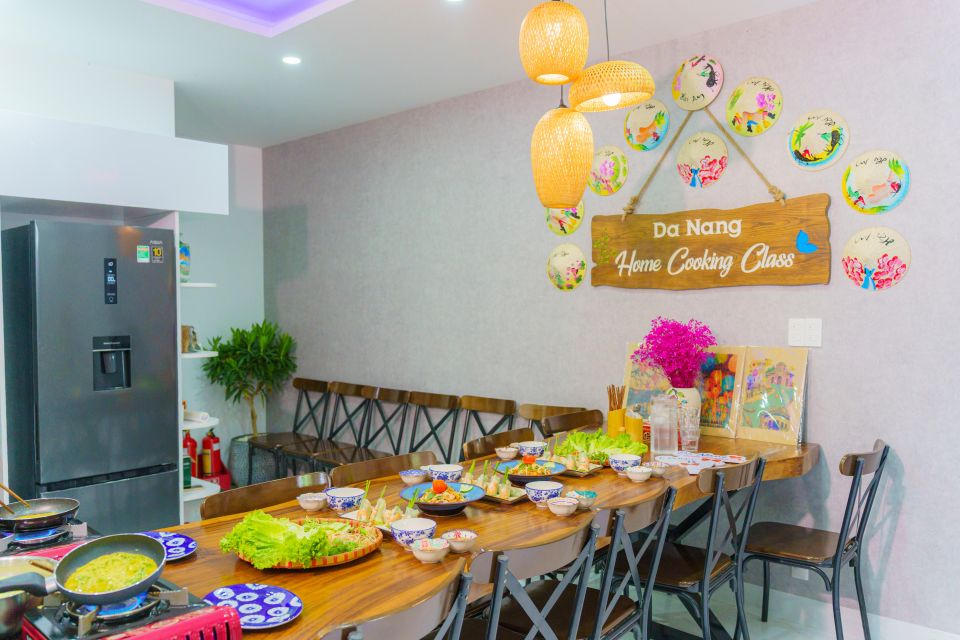
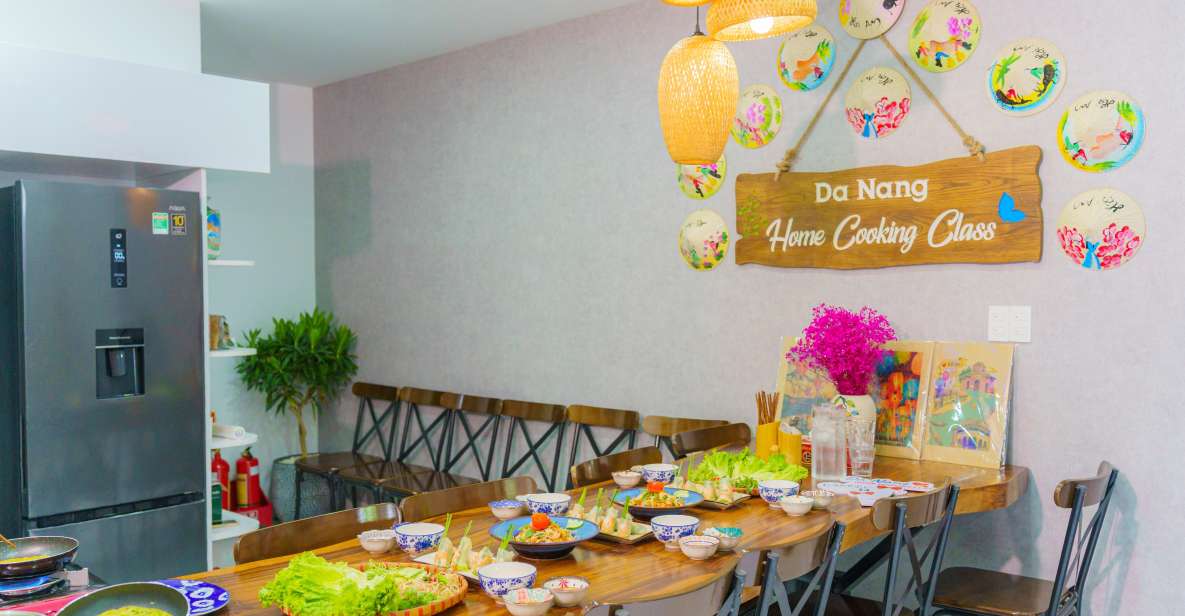
The class is designed around four dishes, and you’ll work through the steps with an English-speaking instructor nearby. Because the group stays around 14 people, you can get help when something is sticky, too thick, too loose, or not sizzling the way it should.
You’ll also get copies of the recipes in English, which helps a lot when you’re back home and trying to repeat what you just learned.
A few more Da Nang tours and experiences worth a look

What you may cook (based on your menu)
Here’s how the different dishes tend to show up, so you can choose what sounds most like you:
- Pho (beef noodle soup): You’ll learn the practical approach to making beef noodle soup, with guidance on how to balance flavor for a bowl you’d actually want to eat again.
- Quang noodle: A Central Vietnam-style noodle dish that gives you a different texture and seasoning story than Northern-style soup.
- Bánh Xèo (crispy Vietnamese pancakes): Expect a hands-on session that teaches how to get that crispy shell and fill it correctly. This one’s popular because you get instant feedback.
- Spring rolls: You might make fresh spring rolls (lighter, herb-forward) or deep-fried spring rolls (more structure and crunch). Either way, you’ll learn assembly techniques you can reuse.
- Salads (mango or papaya with shrimp): These are where herb + sour + sweet come together. You’ll practice the balance that makes them taste bright instead of flat.
- Chicken wing with fish sauce: A compact dish, but it teaches you how fish sauce-based flavor works when you season and cook with intention.
- Eggplant stir fry (vegetarian menu): A useful vegetarian lesson on texture and flavor depth, not just “substitute this ingredient.”
If you’re the type who learns by doing, this kitchen portion is the main event. It’s structured, but not robotic.
Herbal tea tasting and dessert: the part that makes it feel complete
You won’t leave with only savory food in your head.
The class includes herbal tea and dessert. The tea uses organic ingredients, which makes it a nice contrast to the richer dishes you’ll cook. It also gives your brain a reset after the hot kitchen work.
Dessert is included as well, rounding out the meal so you’re not finishing with just one strong taste and a stomach that’s still searching for closure.
Short cooking class vs full 4-hour experience (plus optional coffee)
You have two main timing choices:
- Cooking-only option: about 2.5 hours (150–270 minutes range is listed, depending on schedule).
- Full experience: about 4 hours, adding the farming + market tour before the cooking begins.
If you only do the cooking portion, you’ll still learn the recipes and cook four dishes, but you’ll miss the ingredient-to-market and ingredient-to-farm context that helps everything click.
There’s also an optional coffee making workshop that runs about 1.5 hours. If you want a broader Vietnamese food-and-drink day, adding coffee pairs well with the herbs and noodles you’ll learn here.
For many people, the best “time-value” choice is the full 4-hour version, because it includes the story of the ingredients, not just the final plate.
Group size, English instruction, and recipe handouts that actually help
This class is built for learning, not just eating.
You’ll be working with a guide who speaks English, and with around 14 people you’re less likely to get ignored or to feel lost at key moments. That matters for beginners who want help with technique, not vague advice.
The recipes being provided in English is another practical detail. Vietnamese cooking can look deceptively simple, but small ratios and timing choices make a huge difference. Having a written reference helps you reproduce what you cooked rather than guess later.
Price and value: how $25 stacks up for market + farm + 4 dishes
At $25 per person, this isn’t the cheapest food activity in Central Vietnam. But it also isn’t trying to be a quick demo.
You’re paying for:
- an English-speaking guide
- a market tour
- optional or full farming activity
- hands-on instruction while cooking four dishes
- all ingredients included
- herbal tea, dessert, and water
- recipe copies in English
That combination is where the value comes from. If you price out even one guided market visit plus a multi-dish cooking class, the $25 starts to look reasonable, especially because the class size stays small.
If you’re hoping for a long lecture or a slow, sightseeing-heavy tour, this may feel short. But if you want a productive, tasty skill-building morning or afternoon, it’s priced like a hands-on workshop—not a long bus tour with a quick snack.
Who should book (and who should think twice)
This works especially well for:
- Solo travelers who want structured social time without awkward group energy
- Couples and small groups who like doing the same activity together and sharing the finished meal
- Families with kids, since the class is designed to be interactive and is suitable for that kind of group
- Anyone who wants Central Vietnamese flavors, not only the most famous tourist dishes
You might consider a different option if:
- you want hotel pickup and don’t want to organize transport to the start point
- you only want one dish and would rather spend your time elsewhere
- you’re sensitive to warm kitchen conditions, since cooking and frying can get hot
Should you book this cooking class?
Yes, if you want a practical Vietnamese cooking lesson with real ingredient context.
Book it when you:
- want to cook four dishes hands-on
- like the idea of starting at an organic farm and learning simple farming tasks
- care about learning ingredient logic through a market tour
- want English recipes you can use later
Skip it or choose the shorter option if you:
- don’t want to travel to the meeting point on your own
- have limited time and only need the kitchen part
For most people, the full version is the best payoff: you go from plant and ingredient to bowl and plate, and you’ll understand what you’re making when you recreate it at home.
FAQ
How much does Da Nang Cooking: Market tour, farming, and cooking class cost?
It costs $25 per person.
How long is the experience?
The listed duration is 150 to 270 minutes. A full experience option is about 4 hours, and there is also a shorter cooking-only option of around 2.5 hours.
What’s included in the class?
Included items are herbal tea, water, dessert, an English-speaking guide, all ingredients, English recipe copies, plus the market tour. For the full 4-hour option, farming activity is also included.
Is hotel pickup or drop-off included?
No. Pick up and drop off at your hotel are not included.
How many dishes will I cook?
You’ll learn how to cook 4 traditional dishes, with a hands-on cooking class.
Is there a vegetarian menu?
Yes. A vegetarian option is available.
Do I choose the dishes in advance, or is it based on the day?
Your menu depends on the day. Menu 1 runs Mon, Wed, Fri; Menu 2 runs Tue, Thu, Sat, Sun; and vegetarian is available as an option.
What dishes are included on Menu 1?
Menu 1 includes Quang noodle, fish sauce chicken wing, green papaya salad with shrimp, and deep-fried spring rolls.
What dishes are included on Menu 2?
Menu 2 includes beef noodle soup (Pho), crispy Vietnamese pancakes (Bánh Xèo), green mango salad with shrimp, and fresh spring roll.
Can I add a coffee making workshop?
Yes. You can add a coffee making workshop for about 1.5 hours.
If you tell me what day you’re in Da Nang and whether you prefer Pho/Quang noodle or spring rolls fried vs fresh, I can help you pick the best menu option for your taste.