REVIEW · DA NANG
Da Nang: 5 famous dishes cooking class with market trip
Book on GetYourGuide →Operated by Apron Up Cooking Class · Bookable on GetYourGuide
Fresh noodles, loud flavors, and a market walk.
This Da Nang cooking class pairs a Bac My An market shopping stop with a hands-on lesson that leads straight into cooking a full set of five famous dishes.
I especially like the English-speaking guidance that helps you understand what you’re buying and why, not just what you’re mixing. I also love the end result: you eat what you make, then leave with a printed cook book and certificate to remind you of the recipes later.
One thing to think about: homemade rice vodka is included with the meal, so if you avoid alcohol, plan to ask what’s possible for you before you go.
In This Review
- Key highlights to know before you book
- Why this Da Nang class is more than a cooking show
- Bac My An market: what you’re learning while you shop
- The kitchen part: five dishes and the skills behind them
- Bun Bo Hue: soup technique and flavor balance
- Banh xeo: pancake timing and texture
- Fresh roll: assembly and freshness
- Young jackfruit salad: crunch, tang, and herbs
- Avocado ice-cream: a sweet surprise that makes sense
- What happens after you cook: fruit, rice vodka, and real talk
- Your guide and what English support looks like in practice
- Timing, meeting point, and how to plan your day
- Price and value: five recipes, shopping, and a full meal
- Who should book this class, and who should skip it
- Should you book Apron Up Cooking Class in Da Nang?
- FAQ
- How long is the cooking class?
- Where do I meet for the class, and where does it end?
- What dishes will I cook?
- Is there a vegetarian option?
- Is there an English-speaking guide?
- What’s included in the $40 price?
- Do I get anything at the end?
- Is the class wheelchair accessible, and is there an age limit?
Key highlights to know before you book
- Market + cooking in one smooth flow, with ingredient shopping led by your instructor
- Five-dish menu that covers savory, fresh, and sweet (including avocado ice-cream)
- English-speaking guide who explains produces and cooking steps clearly
- Hands-on meal with fruit and homemade rice vodka after class cooking
- You leave with a printed cook book and certificate
Why this Da Nang class is more than a cooking show
Da Nang has plenty of places to eat well, but this class is built for people who want to understand the food, not just consume it. The experience starts with a market visit, then quickly moves into the kitchen where you cook what you shopped for. That order matters. When you learn how ingredients are chosen at Bac My An, you taste the difference later when you cook Bun Bo Hue or Banh xeo.
I also like how the menu spans different styles of Vietnamese cooking. You’ll do a pancake, a noodle soup, a fresh roll, a bright salad, and a dessert. By the end, you’re not guessing what Vietnamese cuisine is “about.” You’ve cooked from multiple angles: heat control, texture, balance of herbs, and the way flavors pop when you use the right produce.
Finally, it’s a compact 4-hour format, so it fits into a normal day in Da Nang without swallowing your whole schedule. For $40 per person, you’re paying for guidance, ingredient shopping, cooking instruction, and the meal you eat at the end, plus the printed materials.
You can also read our reviews of more shopping tours in Da Nang

Bac My An market: what you’re learning while you shop
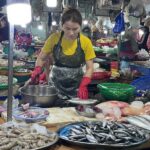
The market stop is where the trip becomes useful, because it trains your eye. You meet and head out with your instructor to shop for the ingredients you’ll use in class. This isn’t just wandering with a guide. You’re learning how different produces are selected, and how that choice shows up in the final dish.
Practically, expect a guided hunt for the building blocks of your five recipes. You’ll be buying items used for:
- Bun Bo Hue (a hearty noodle soup)
- Banh xeo (a savory Vietnamese pancake)
- Fresh roll (wrapped and served fresh)
- Young jackfruit salad (crunchy, tangy, herb-forward)
- Avocado ice-cream (creamy, sweet)
The value here is mental. After you see ingredients side-by-side in the market, you get a sense of what “fresh” actually means in Vietnamese cooking. That makes your later grocery shopping more confident, even if you’re back home.
Also pay attention to herbs and produce textures while you’re there. Even without fancy cooking terms, you’ll start noticing how Vietnamese dishes rely on contrast: soft vs. crisp, fresh vs. cooked, and light flavors vs. deep broth.
The kitchen part: five dishes and the skills behind them
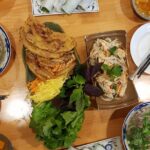
After the market, you head back to the kitchen and start cooking. The class focuses on five dishes: Bun Bo Hue, Banh xeo, fresh roll, young jackfruit salad, and avocado ice-cream. If you’re vegetarian, you’ll get a vegetarian version for the dishes that can be adapted.
Here’s what each dish teaches you, beyond the recipe name:
Bun Bo Hue: soup technique and flavor balance
Bun Bo Hue is a noodle soup that’s known for strong, layered flavor. The class format gives you a chance to understand how soup bases work and how noodles and toppings fit into the bowl. Even if you’ve eaten it before, cooking it helps you see how the broth’s personality comes together.
Banh xeo: pancake timing and texture
Banh xeo is all about thin batter, heat control, and getting the right crispness without making it rubbery. You’ll also understand how fillings and folding work, because a pancake like this doesn’t forgive sloppy timing. It’s one of the most “do it with your hands” dishes in the menu.
A few more Da Nang tours and experiences worth a look


Fresh roll: assembly and freshness
Fresh rolls are deceptively simple. Your main challenge is keeping everything fresh and balanced, so the wrap holds together and tastes right. This part of the class is where you’ll benefit from the instructor’s step-by-step guidance, especially if you’re new to Vietnamese kitchen technique.
Young jackfruit salad: crunch, tang, and herbs
This salad is bright and textured. Young jackfruit brings a firm bite, and the flavor comes from dressing and herbs working together. The lesson here isn’t just ingredients—it’s how to adjust the salad so it tastes balanced, not flat.
Avocado ice-cream: a sweet surprise that makes sense
Avocado ice-cream can sound unusual if you only associate avocado with savory dishes. But once you make it, it clicks. You learn how avocado’s creamy texture turns into a dessert base, and you get a recipe you can repeat later without needing a complicated pastry background.
Across all five dishes, the through-line is practical learning: you’re not memorizing. You’re cooking, tasting, and getting corrections in real time.
What happens after you cook: fruit, rice vodka, and real talk
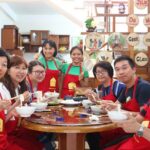
At the end, you eat together—what you made, plus fresh fruit and homemade rice vodka. This is a big part of why I’d pick this class over a quick demo. It gives you a relaxed moment to compare flavors, ask questions, and see what changes worked best for your own version of the food.
The rice vodka inclusion also explains the social tone. The guide isn’t only teaching technique; they’re also letting you experience a meal as a Vietnamese-style moment, where food and conversation go together.
If you don’t drink, you still get the rest of the meal components, but you’ll want to ask about how vodka is handled for your needs. The class data lists rice vodka as included, and it doesn’t mention replacements.
Your guide and what English support looks like in practice
The class is designed for English speakers, and the guide’s job is to keep you moving while making the food understandable. In past classes with instructors like Chi, Blue, Bora, and Daisy, people highlighted how clearly steps were explained and how attentive the teaching felt.
I take that seriously, because in a cooking class, misunderstanding one step can throw off an entire dish. Clear English instruction makes you faster, calmer, and more confident with the textures and timing—especially for the pancake and the salad where feel matters.
One more detail I like: the market portion teaches you how to pick quality produce, not just how to use ingredients. When the guide explains what to choose, you start to cook like you shop—better choices lead to better results.
Timing, meeting point, and how to plan your day
This experience runs 4 hours and is based around a specific meet-up location. You should arrive about 10 minutes early at 07 Nguyen Ba Lan street, Ngu Hanh Son, Da Nang (near the My Khe beach area). The activity ends back at the meeting point.
Because start times vary, check availability before you lock in plans for the day. Four hours goes fast when you’re cooking and eating, but it’s also long enough to actually learn five recipes instead of doing a rushed sampler.
What to wear: keep it practical. You’ll be standing, handling ingredients, and moving between market and kitchen, so comfortable shoes are the smart call. If you know you’ll be cooking, bring a mindset that you might get a little messy—this isn’t a seated lecture.
Price and value: five recipes, shopping, and a full meal
At $40 per person for a 4-hour class, the value comes from how much is packaged together. You’re getting:
- a market trip
- an English-speaking guide
- five-dish cooking instruction
- all ingredients
- cooking tools
- welcome tea
- fruit and the rice vodka included with the meal
- a printed cook book
- a certificate
If you price out ingredients and someone teaching you five dishes, it’s easy to see why this isn’t just paying for a meal. You’re buying structured time plus the materials to repeat what you learned later.
Also, the menu is big enough to be satisfying. Many budget classes focus on two or three dishes. Here, you’re leaving with a lineup that covers soup, pancake, rolls, salad, and dessert—so your “Vietnam at home” meal options are actually real.
Who should book this class, and who should skip it
This is a great match if you want hands-on food learning and you like the idea of shopping with an instructor before cooking. It also suits you if you’re traveling solo or as a couple and want an organized activity that ends with a shared meal.
It’s also a good choice for vegetarians, since the class can offer a vegetarian version for the dishes that need adaptation.
Skip or reconsider if you’re traveling with very young kids (the class is not suitable for children under 4) or if you’re dealing with mobility constraints outside of wheelchair accessibility. The experience is wheelchair accessible, but you still should think about comfort with market walking and kitchen work.
Also, if alcohol is a hard no for you, ask ahead about how the included rice vodka is handled.
Should you book Apron Up Cooking Class in Da Nang?
Book it if you want a cooking class that teaches you how Vietnamese ingredients work in real dishes. The market stop is the difference-maker, and the five-dish menu is a big payoff for your time.
Don’t book it if you only want a light snack or if you’re uncomfortable with a full, active 4-hour cooking-and-eating experience that includes rice vodka with the meal. For everyone else, this is a practical way to learn Da Nang cooking beyond restaurant bookmarks.
If your schedule allows, I’d treat it like one of your anchor activities in Da Nang. You’ll leave fed, with new recipes in hand, and with a better sense of what to look for when you shop for Vietnamese food later.
FAQ
How long is the cooking class?
The class runs for 4 hours.
Where do I meet for the class, and where does it end?
Meet at 07 Nguyen Ba Lan street, Ngu Hanh Son, Da Nang about 10 minutes before the start time. The experience ends back at the same meeting point.
What dishes will I cook?
You’ll cook Bun Bo Hue, Banh xeo, fresh roll, young jackfruit salad, and avocado ice-cream.
Is there a vegetarian option?
Yes. A vegetarian version is available if you are vegetarian.
Is there an English-speaking guide?
Yes. The instructor and guidance are provided in English.
What’s included in the $40 price?
The price includes the market trip, English-speaking guide, the 5-dish course, all ingredients, cooking tools, welcome tea, fruit, homemade rice vodka, plus a printed cook book and a certificate.
Do I get anything at the end?
Yes. You receive a printed cook book and a certificate.
Is the class wheelchair accessible, and is there an age limit?
It is wheelchair accessible. It’s not suitable for children under 4 or people over 95.