REVIEW · HUE
Hue Specialty Food Cooking Class
Book on Viator →Operated by ANH Adventures · Bookable on Viator
Hue market cooking beats a typical food tour. This small-group Hue class sends you to Dong Ba Market first, then back to the kitchen for hands-on cooking with an English-speaking chef and a shared meal. You get to shop with purpose, cook step-by-step, and sit down to what you made (plus a local beer).
Two things I especially liked: the market time feels practical, not just sightseeing, and the chef’s guidance is clear and friendly. The main consideration is logistics around pickup and drop-off: the schedule points to accommodation pickup/drop-off, but the end location can be listed differently, so I’d confirm where you’ll be dropped.
In This Review
- Key Things That Make This Hue Cooking Class Worth Your Time
- Dong Ba Market Sets the Tone for Hue Flavors
- What You Learn at the Market (Beyond Just Buying Ingredients)
- From Prep to Plate: The Hands-On Cooking Portion
- What “Hue cooking class” means in practice
- A quick readiness checklist
- Lunch (and Local Beer) Right After Cooking
- Price and Value: What $29 Gets You in Hue
- Who benefits most from this pricing model
- Group Size and Language: Why the Chef’s Explanations Matter
- Logistics That Can Trip You Up: Pickup and Drop-Off
- Who Should Book This Hue Cooking Class
- Should You Book Hue Specialty Food Cooking Class?
- FAQ
- Is pickup and drop-off included?
- How long is the Hue specialty food cooking class?
- Where does the tour start?
- What’s included in the price?
- Is vegetarian food available?
- How many people are in the group?
- Is the cooking class appropriate for beginners?
- What are the booking rules if plans change?
Key Things That Make This Hue Cooking Class Worth Your Time
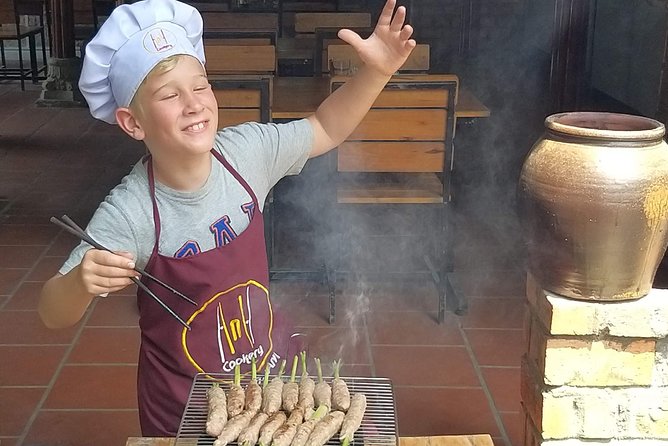
- Dong Ba Market shopping first: You pick ingredients before you cook, so everything tastes connected to the local supply.
- Very small group size: It’s capped at six travelers, which means more chances to ask questions while you cook.
- Hands-on from prep to cooking: You’re not just watching a demonstration—you work with the chef’s instructions.
- English-speaking guided chef: Explanations land better when you can follow the why, not just the how.
- Lunch and local beer included: You’ll actually eat what you made, and there’s a beer at the end.
- Not vegetarian-friendly: If you don’t eat meat or fish, this one may not work for your needs.
Dong Ba Market Sets the Tone for Hue Flavors
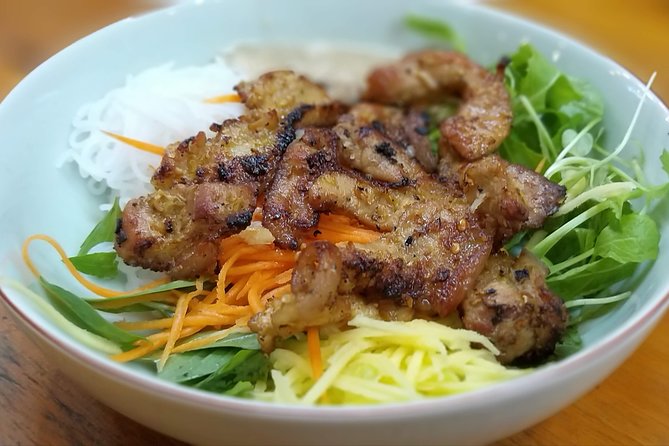
The best part of this experience is how it starts. You meet at Dong Ba Market in Hue and head in with a simple mission: find fresh ingredients you’ll cook later. It turns the class into something more grounded, because you’re shopping like a local would—not just collecting photos.
Dong Ba Market is also where you’ll pick up context for Vietnamese cooking beyond recipes. You get a chance to learn about daily life in Hue through what’s sold, how ingredients look, and what the chef points out as important. Bring your camera—there’s plenty of opportunity to take pictures while you’re there, and you’re also learning what you’re photographing.
One practical note: you’re near public transportation, but the day still runs like a guided activity. Wear shoes you can stand in for a while, and keep your phone handy because it’s the easiest way to remember what you bought and how the chef talked about it.
You can also read our reviews of more food & drink experiences in Hue
What You Learn at the Market (Beyond Just Buying Ingredients)
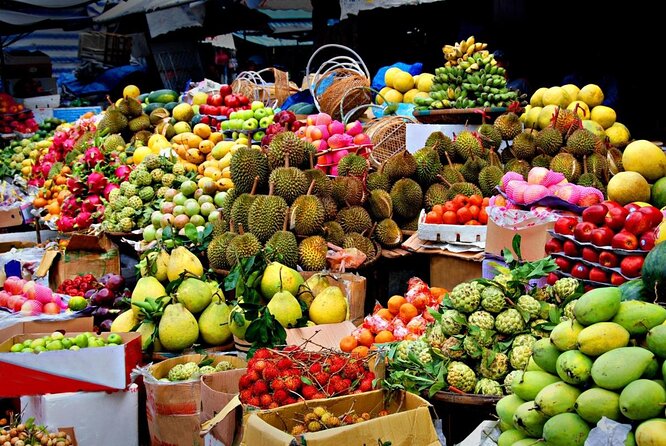
At Dong Ba Market, you’re not just shopping for the sake of shopping. You’re sourcing what the chef will use to teach you Hue-style dishes, and that makes the cooking part easier to understand. When you see ingredients in person—color, texture, and how vendors handle them—you cook with fewer surprises.
You’ll also get a little crash course in Vietnamese cuisine through the chef’s explanations while you browse. The focus stays on traditional ingredients and how they fit into the flavors you’ll make in the kitchen. If you like learning why food tastes the way it does, this market stop does a good job of turning ingredients into knowledge.
If you’re the type who likes to taste while you travel, keep expectations realistic. This tour’s included meal comes later, and the market portion is mostly about selecting ingredients and learning. Still, the “camera + questions + buying” rhythm is satisfying, especially if you’ve done food tours where you don’t get to touch or choose anything.
From Prep to Plate: The Hands-On Cooking Portion
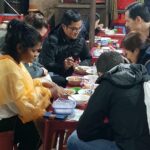
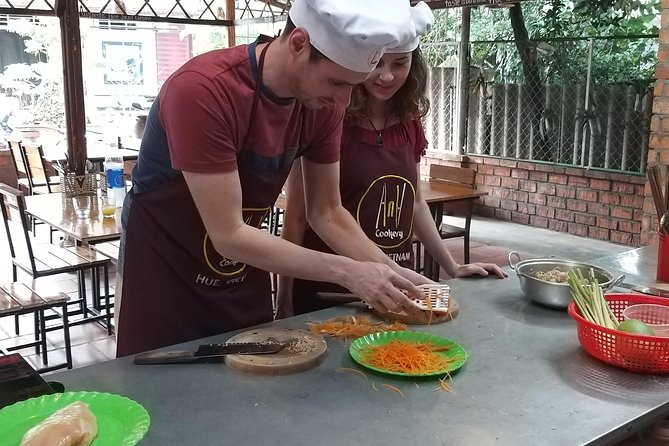
After the market stop, you return to the kitchen and get to cook. This is where the class shifts from information to action, and it’s the part most people remember because you’re doing the work. The structure is simple: you help with preparation, you cook under local chef instruction, and you learn how to build Hue local food step by step.
The chef’s English-speaking guidance matters here. Clear explanations help you avoid the common cooking-class problem where everyone rushes through and you leave with a vague sense of what happened. In this class, you’re guided through what to do next, and that friendly, well-explained style shows up as a consistent theme in the experience feedback.
What “Hue cooking class” means in practice
You’ll make several different dishes during the session. While the exact menu can vary, the format stays the same: buy ingredients, prepare them together, cook, and then eat as a group. That variety is a big plus for value because you’re not stuck learning only one recipe.
Also, because the class is small—up to six travelers—you’re less likely to be stuck watching from the sidelines. You can ask questions during the cooking process, and you’ll often get more direct corrections about timing or technique.
A quick readiness checklist
- Bring a camera, but keep your hands free during prep.
- Be ready to stand and work at a kitchen station.
- Expect a guided pace, not a do-it-yourself workshop.
A few more Hue tours and experiences worth a look
Lunch (and Local Beer) Right After Cooking
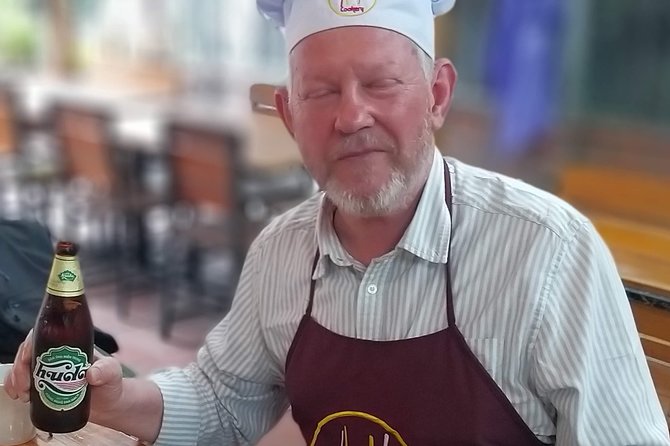
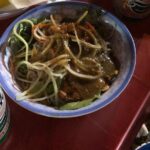
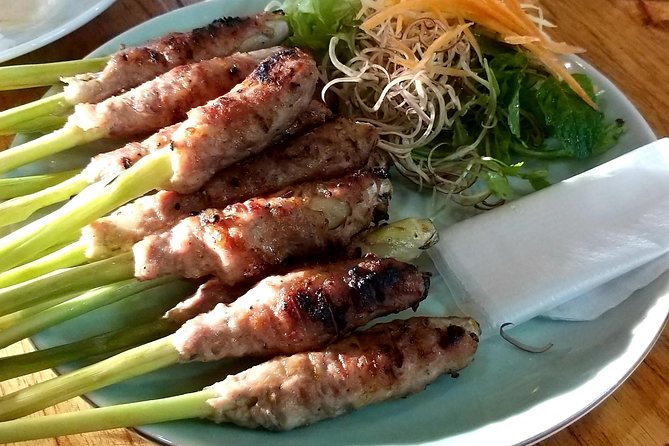
Once cooking wraps up, you sit down and enjoy everything you made. This is one of those “simple but important” parts of the format: the meal isn’t a separate restaurant stop. It’s your labor, served back to you, so you get that immediate satisfaction of tasting the result.
You’ll also drink a local beer with the meal. If you enjoy trying local drinks, this is a nice end to the cooking process and adds to the “Hue day” feeling. If you don’t drink beer, it’s still worth going for the food and the hands-on learning, but you’ll want to plan around your own preferences.
The included lunch makes the $29 price easier to justify, because you’re getting more than a lesson. You’re paying for a full experience: market time, cooking instruction, a shared meal, and bottled water. It’s a practical way to spend an afternoon without stacking extra costs.
Price and Value: What $29 Gets You in Hue
At $29 per person for about 3 hours 30 minutes, this is priced like a true activity class, not a long, multi-course tour. The value comes from three places.
First: you’re getting market ingredient sourcing. That part usually costs time and coordination, and it turns the experience into something you can’t fully recreate later without the ingredient context. Second: you’re cooking with an English-speaking guided chef, with small-group attention. Third: you’re eating what you cooked, plus bottled water and a local beer.
If you usually compare cooking classes by “how much food you get,” this one scores well because lunch is included and you’re seated together to eat. It’s also a more active way to learn than a passive cooking demo, especially if you’re traveling solo or with someone and want something that feels hands-on.
Who benefits most from this pricing model
- People who like practical learning over show-and-tell
- Travelers who prefer smaller groups
- Anyone who wants lunch included, not an add-on meal plan
Group Size and Language: Why the Chef’s Explanations Matter
Small groups change the tone of a cooking class. With a cap around six travelers, you’re more likely to get individual attention while you cook. You’re also less rushed, which helps if you’re still learning how Vietnamese ingredients behave in real time.
The chef is English-speaking, and that matters more than you might think. In a market environment, then a kitchen environment, small language gaps can turn learning into guessing. Clear explanations help you follow steps without turning the experience into stress.
From the positive feedback, the chef’s warmth shows up often: people liked the friendly, patient teaching style and how well the steps were explained. Even if you don’t consider yourself a “cook,” that kind of support helps you leave with confidence instead of just memories.
Logistics That Can Trip You Up: Pickup and Drop-Off
This tour includes pickup and drop-off at your accommodation in Hue, but the end point information can also reference returning to the meeting area. That sounds minor, yet it can affect your day if your hotel is a bit off route.
Here’s the practical fix: message or confirm ahead of time where you’ll be dropped off. If pickup happens at your hotel, ask the driver or guide to confirm the return location before the cooking begins. One past experience noted collection at the hotel without a return exactly as expected, which is the sort of thing you can avoid with one quick question.
Also, note that the class isn’t vegetarian. If your diet excludes meat or fish, you’ll want to clarify what they can accommodate before booking. Don’t assume swaps will be available.
Who Should Book This Hue Cooking Class
This experience is a great fit if you want a day that’s active, food-focused, and not overly long.
You’ll probably enjoy it if:
- you like hands-on experiences more than watching
- you want a market visit that connects directly to cooking
- you’re comfortable cooking while following instructions in English
- you want lunch included in the price
It may not be a good match if:
- you need a vegetarian option
- you hate any chance of schedule confusion around where you start or end
Should You Book Hue Specialty Food Cooking Class?
I’d book it if you’re looking for a straightforward, small-group Hue food experience that gives you real skills and a real meal. The mix of Dong Ba Market ingredient sourcing, guided prep-to-cook instruction, and lunch with local beer is strong value at $29 for roughly 3.5 hours.
I wouldn’t book it blindly if vegetarian needs are involved. And I’d definitely confirm the exact return location, since pickup/drop-off details can be interpreted differently. Do those two things, and this is the kind of class that leaves you with both new tastes and a better understanding of how Hue cooking builds flavor.
FAQ
Is pickup and drop-off included?
Yes. The experience description says it includes pickup and drop-off at your accommodation in Hue. Because the end location can also be listed differently, it’s smart to confirm exactly where you’ll be dropped after the class.
How long is the Hue specialty food cooking class?
It runs for about 3 hours 30 minutes.
Where does the tour start?
The meeting point is Dong Ba Market, at 02 Trần Hưng Đạo, Phú Hoà, Huế, Thành phố Huế, Vietnam.
What’s included in the price?
Lunch, bottled water, and an English-speaking guided chef are included.
Is vegetarian food available?
No. This activity is not available for vegetarian.
How many people are in the group?
It’s a small-group experience with a maximum of six travelers based on the provided information.
Is the cooking class appropriate for beginners?
Yes. It’s designed as a hands-on class with instruction from a local chef, starting from ingredient prep to cooking.
What are the booking rules if plans change?
The experience is non-refundable and cannot be changed for any reason. It also requires good weather, and it may be offered on a different date or refunded if canceled due to poor weather.
More Food Experiences in Hue
More Food & Drink Experiences in Hue
More Tour Reviews in Hue
- Easy Rider private tour via Hai Van pass from Hue – Da Nang – Hoi An (1Way|Loop)
★ 5.0 · 1,542 reviews