REVIEW · HUE
Hue: Imperial City Walk, Motorbike Tour & Private Car Options
Book on Viator →Operated by Adventure Journey · Bookable on Viator
Hue’s citadel makes more sense with a guide. You get step-by-step guidance through the UNESCO Hue Citadel area, plus options like a Perfume River boat ride if you want to stretch the day.
I love that the guide handles the hard parts: steering you through a big, confusing site and explaining what you’re seeing in plain language. I also like the practical pacing in hot weather, with time for shade and the chance to ask questions—guides like Duy and Ha are known for adjusting to the group.
One thing to plan for: you’ll still do real walking, and entry fees for the Citadel and many royal tombs are not included, so your final cost depends on the combo tickets you choose.
In This Review
- Quick hits before you go
- Why Hue’s Imperial City is easier with a real guide
- Tour length: 2.5 hours or a whole day with motorbike/private car options
- Price and entry fees: what the $7 really covers
- Getting started smoothly: check-in, mobile ticket, and queue help
- Hue Royal Palace: 13 emperors, living quarters, and why the details matter
- The UNESCO Citadel and Forbidden City: walking with the rules of the kingdom
- Thien Mu Pagoda: a spiritual pause that changes the mood
- Minh Mang Mausoleum, Tu Duc Tomb, and Khai Dinh Tomb: what to look for
- Mausoleum of Emperor Minh Mang
- Tomb of Tu Duc
- Tomb of Khai Dinh
- Quick, free stops that add texture: Thanh Toan Bridge, Vong Canh Hill, Tu Hieu Pagoda
- If you go longer: Lap An Lagoon, Lang Co Beach, and Tiger Arena
- Hai Van Pass: the famous coastal road segment, with a quick stop
- Marble Mountains: a different kind of site if you’ve got the time
- Perfume River boat ride upgrade: what it adds (and what to expect)
- The guide experience: pace, English clarity, and handling the heat
- Should you book this Hue Imperial City walk with add-ons?
- FAQ
- Is pickup offered for this Hue tour?
- How much does the tour cost?
- Does the tour include entrance fees?
- What are the admission costs mentioned for the sites?
- Is the combo ticket worth it?
- Which sites are included on the route?
- Is Thien Mu Pagoda free to enter on this tour?
- Can I upgrade to a boat ride on the Perfume River?
- Are there different start times?
- What is the cancellation policy?
Quick hits before you go

- UNESCO Hue Citadel made readable: you won’t just see walls. You learn how the Nguyen Dynasty used the space.
- Guide-led ticket support: you’re told to bring money, and the guide helps with ticket purchase to avoid long queues.
- Optional Perfume River boat ride: a relaxing add-on when you want a break from foot-heavy sightseeing.
- Flexible start times and route length: 2.5 hours up to a full day, depending on which option you pick.
- Private by design: only your group participates, so you can move at your pace and ask questions without rushing.
Why Hue’s Imperial City is easier with a real guide
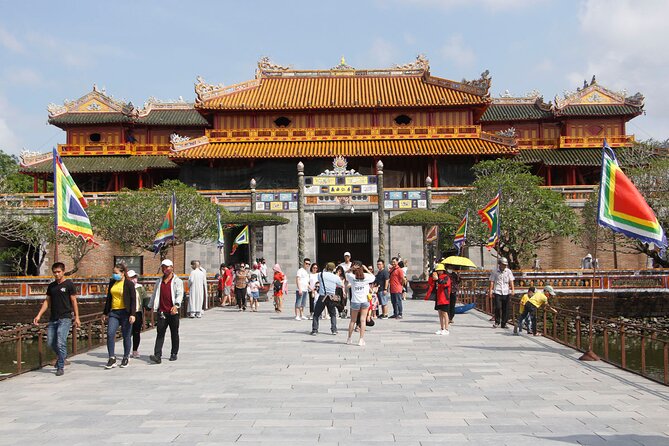
Hue’s imperial grounds look calm from the outside. Inside, they’re a maze of gates, corridors, courtyards, and details that don’t come with much signage. With a guide out front, you stop guessing. You start connecting the symbolism to daily life and political power.
The best part is the way your guide turns architecture into a story you can follow. You hear how emperors used the palace spaces, how the citadel controlled movement, and why certain shapes and motifs show up again and again. Guides like Duy, Ha, Minh, and Hung are repeatedly praised for clear explanations and for making sure everyone stays oriented.
You can also read our reviews of more walking tours in Hue



Tour length: 2.5 hours or a whole day with motorbike/private car options
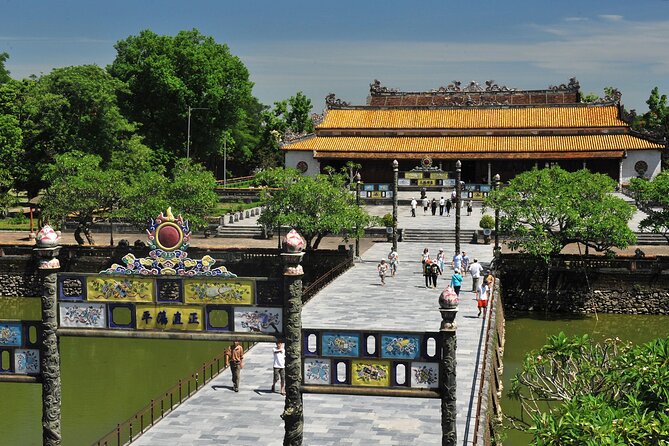
This experience can run from about 2 hours 30 minutes to 12 hours. That range matters because Hue isn’t just one attraction. It’s an entire network: the citadel, multiple royal tombs, and then farther stops along the coast and nearby sites.
If you want the core UNESCO focus, stick to the shorter schedule and concentrate on the Imperial City and Forbidden City areas. If you’d rather see more of Hue’s “outside the citadel” sights, choose the longer version—this is where the motorbike tour or private car options typically make the day work better, since the additional places (like Hai Van Pass or Marble Mountains) are farther out.
Price and entry fees: what the $7 really covers
At $7 per person, the headline price is a strong deal. But it’s important to know what’s included versus what you’ll pay on-site.
This tour does not include admission for the Citadel and many tombs. You’ll see pricing like 200k for the Imperial City and 150k for Royal Tombs, and there’s also a combo ticket valid for 2 days that can be better value if you plan to visit the Citadel plus two or three royal tombs.
Here’s the practical way to think about value:
- The $7 mostly buys you the guiding time, route planning, and help with ticket logistics.
- Your day’s real cost will be driven by which ticket type you buy and how many paid tombs you include.
Also note: the itinerary can include stops listed as free, but the paid ones are still paid. Plan your budget so you’re not surprised when you reach the Citadel gates.
Getting started smoothly: check-in, mobile ticket, and queue help

The meeting point is listed at FH9J+5FH, Huế, Hue City, Vietnam, and the tour ends back near that location. Pickup is offered, but which pickups happen depends on the option you select—so check what you chose before you arrive.
You get a mobile ticket, and confirmation happens within 48 hours of booking (subject to availability). If you haven’t bought tickets yet, the tour notes encourage you to prepare money so your guide can help you purchase entry and reduce waiting at the ticket office. That’s a small detail, but it matters in real life when the midday heat is building.
Hue Royal Palace: 13 emperors, living quarters, and why the details matter
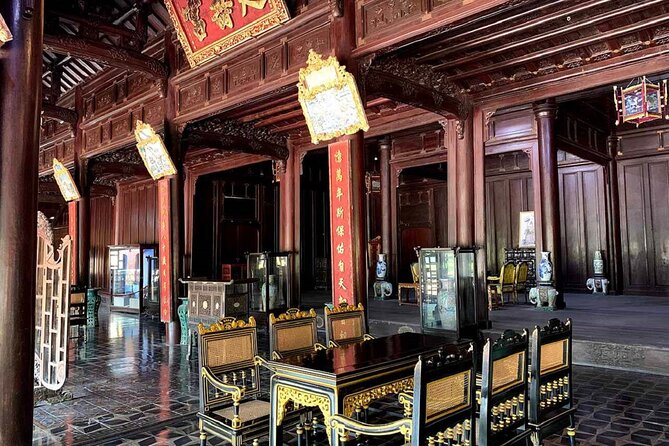
Your tour often begins with the Hue Royal Palace area. This is described as the living space for 13 emperors of the Nguyen Dynasty from 1804 to 1945, when Hue served as Vietnam’s capital.
What I like about starting here is the context it gives you before you wander deeper. You learn to see the palaces not as random buildings, but as functional zones: areas that helped the court run, spaces meant for hierarchy, and layouts that supported daily life and ceremony.
A guide also helps you handle one common problem at big palace sites: your brain gets tired. Without guidance, you may spend time reading scraps of signs and miss the structure. With a guide, you get the “why” while you’re still fresh.
You can also read our reviews of more city tours in Hue





The UNESCO Citadel and Forbidden City: walking with the rules of the kingdom

Next comes the Hue Imperial City (the Citadel). This complex is tied to Vietnam’s last royal dynasty and is part of the UNESCO-recognized Hue heritage area.
The phrase Forbidden City sounds dramatic, and it is. But the value of a guided walk is that you learn what “forbidden” meant in practice: who belonged where, how controlled movement shaped court life, and how the citadel’s design supported authority.
This is where a good guide can feel like a translator. The grounds are extensive, and markings can be limited. People who go in on their own often end up walking a lot without fully understanding the pattern. A guide helps you hit the right highlights and explains what the architecture is telling you.
Thien Mu Pagoda: a spiritual pause that changes the mood
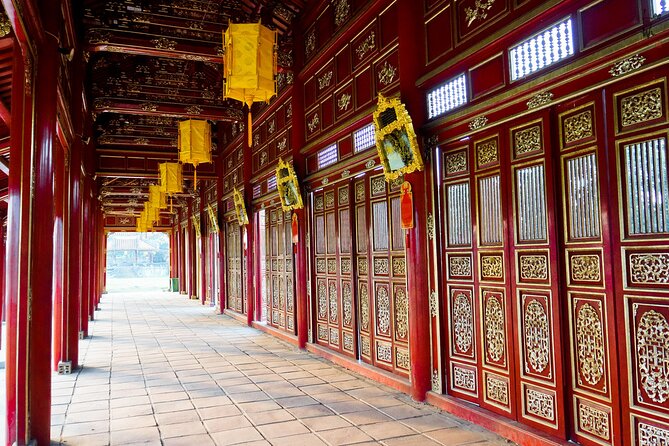
After royal walls, you’ll likely visit Thien Mu Pagoda (also known as Linh Mu Pagoda). It’s described as built in 1601 by the founder of the Nguyen family in central Vietnam, and it’s tied to long-running Buddhist tradition.
One practical reason this stop works: it breaks the “royalty-only” focus. Your eyes reset from stone rules to spiritual atmosphere. Also, it’s listed as free admission, which makes it an easy win if you’re watching your budget.
Even if you’re not a hardcore temple person, the pagoda works well because you’re moving through a different kind of history—one rooted in faith as well as power.
Minh Mang Mausoleum, Tu Duc Tomb, and Khai Dinh Tomb: what to look for
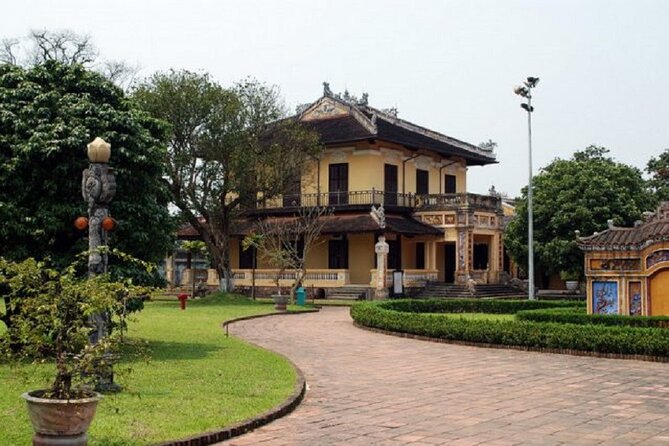
Royal tombs can be tricky. On the surface, they look like a series of monuments. With guidance, they become a lesson in how rulers wanted to be remembered.
Mausoleum of Emperor Minh Mang
You’ll see the Mausoleum of Emperor Minh Mang, built from 1840 to 1843. The notes describe it as having a direct naming connection (Hieu Lang) and also tie it to the Thieu Tri era as part of the broader family story.
Tomb of Tu Duc
Then comes the Tomb of Tu Duc. It’s described as beginning long before his death in 1883, with major areas built between 1864 and 1867, plus later temple buildings that served as a royal palace for Tu Duc and his wives.
This stop is where pacing matters. Tomb areas often require you to keep your attention on details. A guide helps by pointing out what’s important and explaining how the space worked as a statement.
Tomb of Khai Dinh
Finally, you may include the Tomb of Khai Dinh, built 1920 to 1931. The description calls out blended architecture using Vietnamese, Indian, and Western influences.
If you like seeing how cultures overlap over time, Khai Dinh is often the one that makes the bigger Hue story feel more modern and more complex.
Quick, free stops that add texture: Thanh Toan Bridge, Vong Canh Hill, Tu Hieu Pagoda
Not every stop needs to be a ticketed major site. The route can include several smaller, often free stops that make the day feel less like a checklist.
- Thanh Toan Covered Bridge (built in 1776) is one of only four covered bridges in Vietnam, and it’s described as a wooden arch bridge built by Mrs Tran Thi Dao.
- Vong Canh Hill connects to the Nguyen kings’ tradition of resting and sightseeing, and it’s surrounded by tombs tied to Nguyen rulers.
- Tu Hieu Pagoda is associated with Zen Master Thich Nhat Hanh, described as where he returned after long years of teaching Buddhism and focusing on mindfulness.
These shorter stops are also handy for the real-life Hue factor: heat. You get small breaks without losing momentum.
If you go longer: Lap An Lagoon, Lang Co Beach, and Tiger Arena
When you choose the longer option, the route can stretch toward nature and coastline scenery.
You may stop at:
- Lap An Lagoon, described as framed by Bach Ma Mountain and Lang Co Bay, often called a standout view in Hue.
- Lang Co Beach, connected to Lang Co Bay, where the mix of mountains, rivers, seas, and lagoons is the point.
- Tiger Arena (Tiger Elephant Arena), described as a relic tied to tiger breeding.
These aren’t the same vibe as the Citadel. That’s the trade. But if your goal is a fuller Hue day—royal + coastal—these stops can make your trip feel less repetitive.
Hai Van Pass: the famous coastal road segment, with a quick stop
Hai Van Pass is listed as a stop, described as one of the world’s top coastal roads and tied to historical events. It’s also listed as free.
Even a short stop here can work well if your timing is right. You get a view cue that tells you Hue isn’t trapped indoors. It’s connected to the coast and travel routes that shaped trade and history.
Just don’t overpack the rest of the day with tight timing. Coastal viewpoints can be slow if the traffic and crowds build.
Marble Mountains: a different kind of site if you’ve got the time
Another possible add-on on longer options is Marble Mountains, described as a group of limestone mountains and a Buddha worship site. It’s listed as about 1 hour, with admission fees not included.
This is worth considering if you’ve already been around enough royal tombs and palaces. Marble Mountains feels like a change of texture: geology and spiritual caves, not court ceremony.
If your focus is only UNESCO and Nguyen dynasty sites, you might skip it. If you want variety in one trip, it’s a logical add-on.
Perfume River boat ride upgrade: what it adds (and what to expect)
There’s an upgrade option for a boat ride on the Perfume River. The appeal is simple: it gives you a breather after walking heavy sections of the citadel and tomb grounds.
Boat time also helps when you’re visiting during hotter hours. You cool down while still feeling like you’re seeing something “special” instead of just moving from one site to the next.
The guide experience: pace, English clarity, and handling the heat
This is the part that comes up again and again: the difference between a good guide and a forgettable one.
In the feedback you’ll see praise for guides such as Duy, Ha, Minh, Hung, Xi, and Nhi, with recurring themes:
- clear explanations that make the Citadel structures make sense fast
- lots of room for questions
- a pace that matches your group
- attention to heat and humidity, including shade and refreshments
One practical tip: bring water and plan for slow moments. Even with a guide, Hue is warm and the walking adds up. The best tours are the ones where your guide understands that and builds in short pauses instead of rushing you.
Also, you may come across audio options at sites. If you do, use it as a supplement—not a replacement. The real advantage is the back-and-forth, especially when you want to know why something was built the way it was.
Should you book this Hue Imperial City walk with add-ons?
Book it if:
- you want a guided UNESCO Hue Citadel experience that helps you understand what you’re seeing
- you like asking questions and getting answers in real time
- you want the option to extend into royal tombs and even coastal viewpoints when you have a full day
Skip it or shorten your plan if:
- you’re the type who prefers totally unguided wandering (because the value here is the guidance)
- you don’t want to budget for on-site entry fees for the Citadel and royal tombs
Final thought: the $7 entry price is attractive, but the real win is the guide’s role in making the big sites legible. If you want Hue’s royal spaces to feel connected instead of random, this is a smart way to go.
FAQ
Is pickup offered for this Hue tour?
Pickup is offered, but it depends on which option you choose. Check the details for your selected option before the tour starts.
How much does the tour cost?
The starting price is $7 per person.
Does the tour include entrance fees?
No. Entry fees for the Imperial City and Royal Tombs are not included. The notes also mention using a combo ticket for better value.
What are the admission costs mentioned for the sites?
The notes list 200k for the Imperial City and 150k for Royal Tombs, with a combo ticket option valid for 2 days.
Is the combo ticket worth it?
The tour notes suggest a combo ticket is better value if you plan to visit the Citadel plus 2 or 3 royal tombs.
Which sites are included on the route?
The route can include Hue Royal Palace, the Hue Imperial City (Citadel), Thien Mu Pagoda, Mausoleum of Emperor Minh Mang, Tomb of Tu Duc, Tomb of Khai Dinh, Thanh Toan Bridge, Vong Canh Hill, Tu Hieu Pagoda, and optional farther stops like Lap An Lagoon, Lang Co Beach, Tiger Arena, Hai Van Pass, and Marble Mountains.
Is Thien Mu Pagoda free to enter on this tour?
Thien Mu Pagoda is listed as free admission.
Can I upgrade to a boat ride on the Perfume River?
Yes. A Perfume River boat ride is offered as an optional upgrade.
Are there different start times?
Yes. You can select from several start times to fit your schedule.
What is the cancellation policy?
Free cancellation is available. You can cancel up to 24 hours in advance for a full refund. Changes inside 24 hours of the start time are not accepted, and cancellations within 24 hours are not refunded.



More Walking Tours in Hue



More Tours in Hue
- Easy Rider private tour via Hai Van pass from Hue – Da Nang – Hoi An (1Way|Loop)
★ 5.0 · 1,542 reviews



More Tour Reviews in Hue
- Easy Rider private tour via Hai Van pass from Hue – Da Nang – Hoi An (1Way|Loop)
★ 5.0 · 1,542 reviews