REVIEW · HUE
Hue Royal Tombs Tour: Visit Best Pagoda & King’s Mausoleums
Book on Viator →Operated by Adventure Journey · Bookable on Viator
Hue has a way of turning history into something you can walk through, and these royal tombs do it fast. This Hue Royal Tombs Tour focuses on the emperors’ lives—plus their wives, concubines, and even eunuchs—so you’re not just sightseeing marble and stone. I especially like the balanced pace (half-day length) and the way the route mixes major tombs with iconic pagodas for variety.
Two standouts for me: the architecture explanations (the guides really connect design choices to the culture of the time), and the value of covering several must-sees without committing to a full day. One thing to plan around: entrance fees are not included, so your final cost will depend on which mausoleums you choose to visit.
In This Review
- Key things to know before you go
- Why the Hue Royal Tombs Tour feels better than a rushed “checklist”
- The route in plain terms: what you see and why it matters
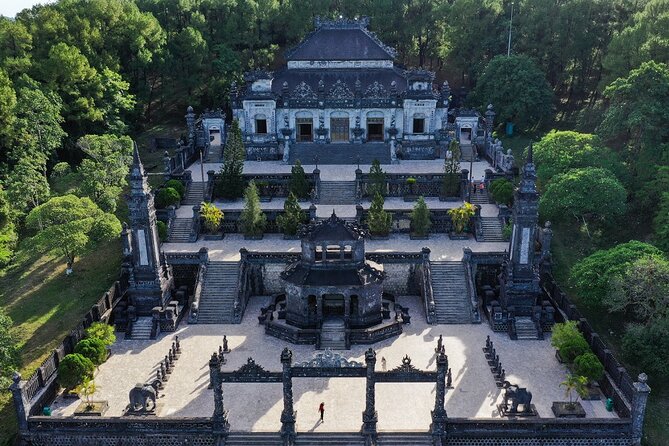
- Stop 1: Tomb of Khai Dinh (often the most visually dramatic)
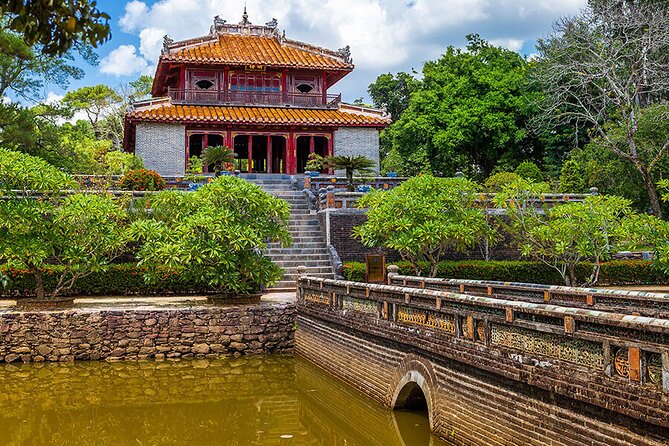
- Stop 2: Mausoleum of Emperor Minh Mang (detail-heavy and historically anchored)
- Stop 3: Tomb of Tu Duc (a palace-in-tomb concept)
- Stop 4: Thien Mu Pagoda (iconic views with a calmer tone)
- Stop 5: Imperial Tomb of Dong Khanh (Asian-European style + UNESCO recognition)
- Stop 6: Tu Hieu Pagoda (ancient, with small ceremony experiences)
- Optional finish: Hue Imperial City (Citadel)
- Guides make the difference: design, symbolism, and story
- Price and value: what $17 includes, and what you should budget next
- How long is enough time at each stop?
- Who this tour suits best (and who might want something else)
- Practical tips for enjoying the tomb-and-pagoda rhythm
- Should you book the Hue Royal Tombs Tour?
- FAQ
- FAQ
- What is the duration of the Hue Royal Tombs Tour?
- Is pickup included?
- Are entrance fees included in the price?
- Which sites are included?
- Is this a private tour?
- Are food and drinks included?
- How far in advance can I cancel for a full refund?
Key things to know before you go
- Half-day friendly timing: plan on about 3 to 5 hours
- Private group setup: only your group participates
- Pickup offered: easier logistics if you’re staying in central Hue
- Pay entries separately: mausoleum fees apply; some pagodas are free
- Optional flexibility: you can often choose which tombs fit your pace
Why the Hue Royal Tombs Tour feels better than a rushed “checklist”
Hue’s royal sites are gorgeous, but if you do them like a conveyor belt, you miss the point. This tour is built for understanding. You’re walking through tombs designed as political and spiritual statements—then pairing them with pagodas that show another side of Hue’s religious life.
I also like that it doesn’t force a full-day marathon. The tour runs about 3 to 5 hours, which is a sweet spot when Hue heat can drain your energy and when you still want time for the rest of the city.
And because it’s a private tour, you’re less likely to get stuck in the “everyone moves at once” rhythm. That matters with tombs, where a few minutes standing in the right spot can make the architecture click.
You can also read our reviews of more tours and experiences in Hue.
- Easy Rider private tour via Hai Van pass from Hue – Da Nang – Hoi An (1Way|Loop)
★ 5.0 · 1,542 reviews



The route in plain terms: what you see and why it matters
You’ll move through a mix of royal tombs and famous religious stops, with a few options built in. The core tomb sequence is designed around seeing different styles and periods of Nguyen Dynasty rule—so you can compare how emperors wanted to be remembered.
Here’s the logic: start with a tomb that shows mixed influences, continue to a major imperial mausoleum tied to the dynasty’s later reign, then hit Tu Duc, whose tomb complex functions like a lived-in royal space. After that, you shift to pagodas (calm, scenic, and historically significant), before optionally finishing with other UNESCO-listed architecture or the Imperial City.
Stop 1: Tomb of Khai Dinh (often the most visually dramatic)
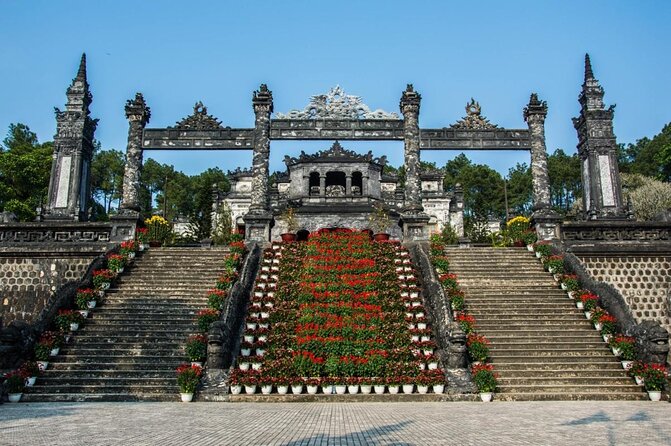
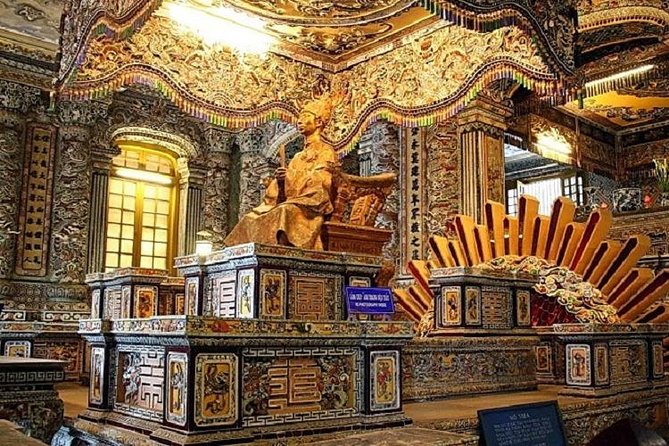
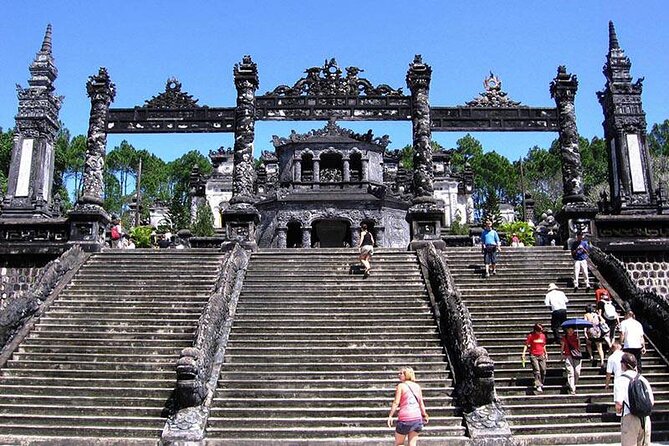
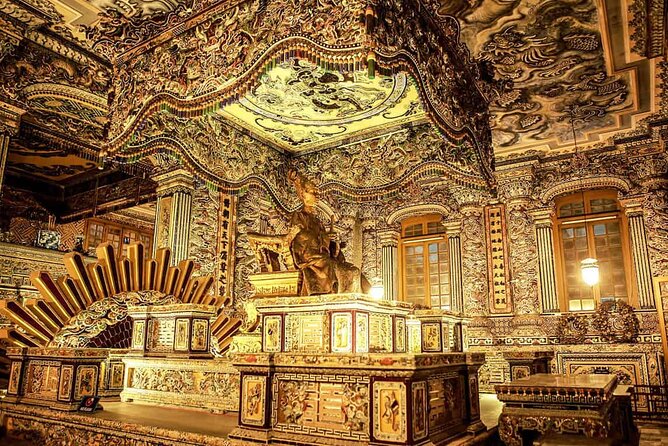
Khai Dinh’s tomb is the one that catches people’s eyes immediately. It’s known for being the only Nguyen emperor tomb built with a blend of architectural influences—described as Vietnamese, Indian, and Western styles. That fusion changes how the tomb looks and how you read the symbolism.
Plan to spend about 30 minutes here. That’s enough time to appreciate the main features without losing the flow of the day. If you already visited Khai Dinh earlier, the tour is set up so you can swap it out for another emperor tomb option rather than forcing repeats.
Practical note: because Khai Dinh is visually complex, you’ll get more out of it if you slow down and let your guide point out the design ideas.
Stop 2: Mausoleum of Emperor Minh Mang (detail-heavy and historically anchored)
Next up is Minh Mang’s mausoleum, built over 1840 to 1843. What makes it especially interesting is the family and authorship angle: it’s described as being built by Thieu Tri—Minh Mang’s son—while Minh Mang’s tomb is also linked to the name Hieu Lang.
You’re looking at about 45 minutes. That extra time compared with some other stops makes sense. Minh Mang’s site is more about imperial order and layout, and those take a bit longer to make sense of.
If you like architecture with strong context—who built what, and why—this is the stop that tends to reward patience.
Stop 3: Tomb of Tu Duc (a palace-in-tomb concept)
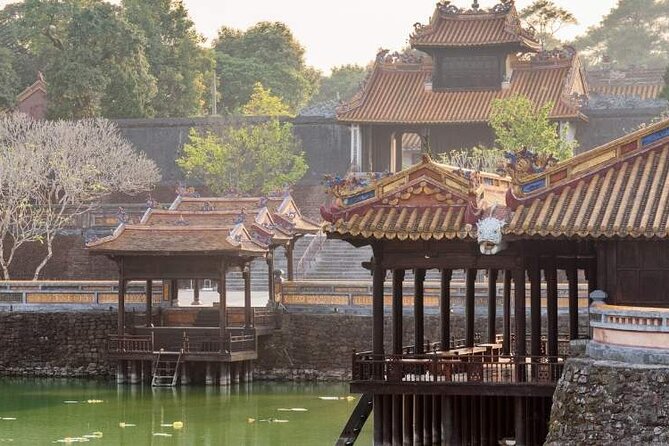
Tu Duc’s tomb has a built-in timeline: the project started before he died in 1883, with the major areas constructed from 1864 to 1867. Then, later temple buildings were added, and the complex functioned like a royal palace for Tu Duc and his wives.
You’ll get about 45 minutes here. This stop tends to feel less like a museum and more like a whole royal world. You can walk through and imagine how space was used—not just where a ruler was buried.
One reason this tomb is a favorite on half-day routes: it gives you variety. You’re not stuck staring at a single facade. You’re moving through different sections that hint at how life and ceremony were organized.




Stop 4: Thien Mu Pagoda (iconic views with a calmer tone)
After the tombs, you shift to Thien Mu Pagoda, a peaceful, well-known monument on Ha Khe Hill. It’s famous for its religious importance and for the way it sits above the area, giving you a break from the denser tomb architecture.
Expect about 30 minutes. This isn’t a long stop, but it works well as a reset. If you’ve been standing under strong light at the tombs, the pagoda pause is a relief.
Admission here is listed as free, which makes it a great value moment in the itinerary.
Stop 5: Imperial Tomb of Dong Khanh (Asian-European style + UNESCO recognition)
Dong Khanh’s tomb is described as having a unique Asian–European architectural style, and it’s recognized by UNESCO as a world cultural heritage site.
This is typically a shorter visit at about 30 minutes. For me, that works because it lets you see the distinctive style without letting the day become an architectural endurance contest.
If you’re someone who likes “big title” heritage sites but still wants the guide’s explanation—not just a quick photo—this stop is worth keeping on your plan.
Stop 6: Tu Hieu Pagoda (ancient, with small ceremony experiences)
Tu Hieu Pagoda is an older Vietnamese pagoda and is listed as a highlight for visitors to Thua Thien Hue province. The tour notes that you may be able to participate in ceremonies like chanting sutras or offering incense.
You’ll usually spend around 30 minutes here, and admission is listed as free. This is the stop that often changes the mood of the day from imperial grandeur to everyday spiritual practice.
Even if you’re not deeply religious, the chance to see how ceremony works can make the whole Hue trip feel more human.
Optional finish: Hue Imperial City (Citadel)
You might be dropped off for the Hue Imperial City, where you can buy entry tickets for your own exploration. The tour notes this as an optional finishing point, with 5 minutes for the handoff.
This option is great if you love stretching the afternoon and don’t mind handling another ticket.
If you’d rather keep moving, you can simply head back after the main tomb-and-pagoda sequence.
Guides make the difference: design, symbolism, and story

The biggest theme I see is that the guide isn’t just moving you between stops. In strong tours like this, the guide gives you handles—small explanations that turn a pile of stone into a readable message.
Some guides highlight architectural choices tied to the culture of the time. In at least one case, the guide shared insight into how cultural forces and design decisions shaped the tombs. That approach changes how you look: instead of asking what something looks like, you start noticing what it’s trying to communicate.
One review also mentions a guide named Lam being especially good with children, including kids aged 5 and 9. That’s a useful clue. If your group includes younger travelers, you’ll likely appreciate a guide who can keep explanations engaging without making them feel like a lecture.
Another review calls out Hung for detailed explanations and strong pacing in the heat. That matters in Hue. When you’re tired, you need guidance that keeps momentum and helps you choose where to focus.
Price and value: what $17 includes, and what you should budget next
The tour price is listed as $17.00 per person. For that, you’re paying for the experience package: a local expert guide, pickup offered, and a private group setup. You also get group discounts and a mobile ticket.
The key catch is entrance fees. The tour explicitly says entrance fees are not included, with a mausoleum fee listed as ₫150,000 per person for each mausoleum. Pagodas (like Thien Mu and Tu Hieu) are listed as free in the tour details, which helps keep costs manageable.
So how do you judge value? I think you measure it like this:
- If you want a guided explanation for multiple royal sites in one half day, the base price is fair.
- If you were already planning to visit only one tomb on your own, the paid guide may feel less necessary.
- Your final total will rise if you do more paid mausoleums, but the pagoda stops help offset that.
Also, because your group is private, you’re not paying extra time wasted waiting for strangers to catch up. You spend your minutes where it matters: the parts you can actually see and understand.
How long is enough time at each stop?
The tour timing is built around short, focused visits:
- Most tombs run 30 to 45 minutes
- Pagodas are typically around 30 minutes
- The Imperial City stop (if chosen) is basically a drop-off
This is exactly what I like about this format. Tombs need time to look carefully, but they also can drain you if you overstay. The tour’s structure tries to keep you moving before fatigue hits hard.
If you’re the type who wants to read every plaque slowly, you might feel a little rushed at the shorter tomb stops. But the upside is you’ll still cover major highlights without spending your whole day in lines and heat.
Who this tour suits best (and who might want something else)
I’d point you toward this tour if you:
- want a half-day plan that covers the most famous Hue royal tombs
- like guided explanations tied to architecture and symbolism
- want a mix of royal sites and pagodas in one outing
- travel in a small group or with kids and appreciate a guide who can keep attention
You might consider a different style of tour if you:
- only want one site and don’t care about comparisons across time periods
- prefer long, slow wandering with no schedule
- dislike the idea of paying multiple separate entrance fees (since mausoleum entries are extra)
Practical tips for enjoying the tomb-and-pagoda rhythm
Tombs and pagodas can feel very different in pace, and you’ll feel that contrast in the heat.
- Wear breathable clothing and shoes that handle outdoor walking.
- Bring water and protect your head from the sun if you’re visiting during warmer hours.
- Use the guide’s explanations to decide where to stand—especially at sites with complex designs like Khai Dinh.
Also, consider your personal interests:
- If you love architectural fusion, prioritize Khai Dinh.
- If you want imperial planning and layout, put Minh Mang high on your list.
- If you like a ruler’s world that feels lived-in, Tu Duc is the one that turns into a whole environment.
Should you book the Hue Royal Tombs Tour?
If you’re trying to make the most of Hue in a short time, I think this tour is a strong choice. The combination of major tombs, UNESCO recognition at Dong Khanh, and free pagoda stops gives you a lot of ground without feeling like you’re trapped all day.
Book it if you want story + architecture, and if you’re okay with the fact that mausoleum entrance fees are separate. Skip it if you’re strictly budget-focused and only plan to see one tomb—because the entrance charges add up with each mausoleum stop.
FAQ
FAQ
What is the duration of the Hue Royal Tombs Tour?
The tour lasts about 3 to 5 hours.
Is pickup included?
Pickup is offered, so you can arrange pickup through the tour options.
Are entrance fees included in the price?
No. Entrance fees are not included. Mausoleums have a listed fee of ₫150,000 per person, while some pagodas in the route are listed as free.
Which sites are included?
The tour covers several royal tombs and pagodas, including Khai Dinh Tomb, Minh Mang Mausoleum, Tu Duc Tomb, Thien Mu Pagoda, Dong Khanh Tomb, and Tu Hieu Pagoda. Hue Imperial City is an optional finishing point.
Is this a private tour?
Yes. It is a private tour/activity, and only your group participates.
Are food and drinks included?
No. Food and drinks are not included, and tips/gratuities for the guide and driver are not included either.
How far in advance can I cancel for a full refund?
You can cancel for a full refund if you cancel at least 24 hours in advance of the experience’s start time.




More Tours in Hue
- Easy Rider private tour via Hai Van pass from Hue – Da Nang – Hoi An (1Way|Loop)
★ 5.0 · 1,542 reviews




More Tour Reviews in Hue
- Easy Rider private tour via Hai Van pass from Hue – Da Nang – Hoi An (1Way|Loop)
★ 5.0 · 1,542 reviews