REVIEW · HUE
Ho Chi Minh Trail Loop – Explore rural Central Vietnam
Book on Viator →Operated by Hue Motorbike Tour · Bookable on Viator
This ride is part history, part countryside escape. The Ho Chi Minh Trail Loop takes you from Hue into rural Central Vietnam, then brings you back to the coast with stops that mix real local life and big war-era places. I love how the route keeps moving, so you feel like you’re going through the region rather than ticking boxes. I also love the way guides such as Quynh, Tuan (also called Monkey), Yet, and Nhet build in photo breaks and coffee stops so the day feels human, not rushed. One consideration: this is a motorbike experience with several long travel blocks, and some days are emotionally heavy because of the war sites.
What makes it especially interesting is the variety packed into three days: pagodas in Hue, caves and tunnels from wartime, peaceful coast time, and then the quiet roads along the Ho Chi Minh Trail. You’ll also cross the Hai Van Pass with ocean-and-cloud views, then end with the Marble Mountains near Hoi An. I like that the tour includes a lot of the practical stuff (helmet, rain gear, luggage transfer, petrol) while still letting you choose your pace at stops. The only real drawback I see is that not every entrance fee is included, and Hue Imperial City is one of the places where you should expect to pay extra.
If you want a motorbike trip that feels like countryside, coast, and memory all in one loop, this fits. Just keep in mind you’ll spend real time riding, and the war memorial sites deserve your attention and a slower mindset.
In This Review
- Key highlights to know before you ride
- Entering Hue first: Thien Mu Pagoda to the Quang Tri war trail
- Vinh Moc Tunnel and Cua Tung Beach: history underground, then sunlight
- Day 2 begins at the border: Hien Luong Bridge and Vinh Linh
- Truong Son Martyrs’ Cemetery and Khe Sanh: respect plus wide views
- The best part of the day: riding the Ho Chi Minh Trail for 4 hours
- Overnight in Prao: what to expect after a big riding day
- Day 3: cable bridge bungalows, tea farm views, then Hai Van Pass
- Dragon Bridge and Marble Mountains: ending with iconic, walkable stops
- Motorbike comfort and the rider-vs-passenger setup
- Price and value at $179.49: what’s included versus what costs extra
- Who should book the Ho Chi Minh Trail Loop, and who should pause
- Should you book this Hue to Hoi An loop?
- FAQ
- What is the duration of the Ho Chi Minh Trail Loop?
- What time does the tour start?
- Is pickup offered?
- Is this a private tour?
- What does the tour include?
- Are all entrance tickets included?
- Can I ride as a passenger or drive the motorbike myself?
- Is food included?
- Is this tour weather-dependent?
- Where does the tour end?
Key highlights to know before you ride
- War landmarks with context, from Vinh Moc Tunnel to Truong Son Martyrs’ Cemetery
- Bamboo-built Vinh Moc Tunnel and a guided explanation of how it worked
- Quiet Ho Chi Minh Trail roads with stops in minority villages and time at a natural waterfall
- Cua Tung Beach downtime where the itinerary actually gives you time to relax
- Hai Van Pass viewpoint time plus Dragon Bridge and Marble Mountains on the return to Hoi An
- Guides who manage pacing, including photo and coffee breaks with strong English support (seen with Quynh, Tuan/Monkey, Yet, and Nhet)
Entering Hue first: Thien Mu Pagoda to the Quang Tri war trail
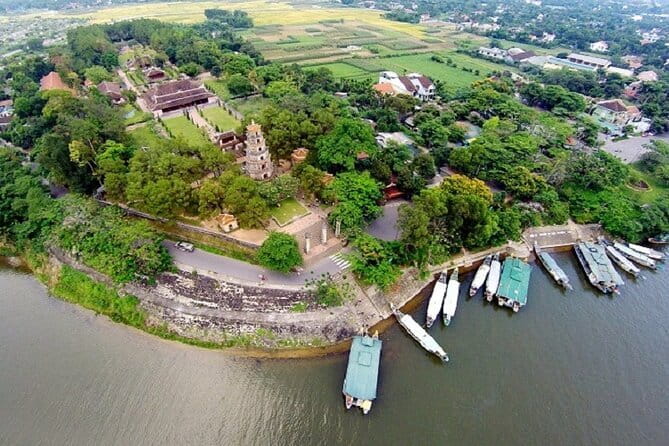
The tour starts in Hue at 8:00 am, with pickup offered and a mobile ticket provided. Hue is a good place to begin because Thien Mu Pagoda gives you a calm, grounded start before the route moves into wartime sites.
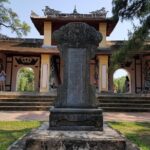
Thien Mu Pagoda is scheduled for about 20 minutes with an admission ticket included. It’s not a long stop, so you should treat it like a focused visit: arrive, look around, and take a few photos without trying to “finish” the whole complex. If you haven’t seen it before, this quick window is enough to understand why it’s a standout temple in the area.
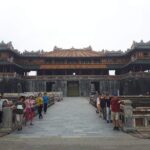
From there, you head to Hue Imperial City (the Citadel) for about 1 hour, but this admission ticket is not included. That means you’ll want a little extra budget ready, and you may want to decide how much of the Citadel you actually want to cover with that time. If you prefer less self-guided museum time, you can keep your pace brisk here and save your energy for the riding days.
You can also read our reviews of more tours and experiences in Hue.
- Easy Rider private tour via Hai Van pass from Hue – Da Nang – Hoi An (1Way|Loop)
★ 5.0 · 1,542 reviews


Vinh Moc Tunnel and Cua Tung Beach: history underground, then sunlight

After Hue, the itinerary pushes you into Quang Tri Province, where you ride through villages and make short photo stops. There’s also a cemetery stop for soldiers from the war period, listed as about 15 minutes with admission free. This is one of those moments where the time window is short, so try not to rush your respect.
Then comes Vinh Moc Tunnel, about 1 hour with admission included. This stop is famous for the scale of what was built: villagers dug over 200 tunnels to hide and survive during heavy bombing, including B52 drops. What makes it real (and not just a wall of text) is the engineering detail: they used bamboo and labor on a massive scale, and you’ll learn more through a documentary-style video plus a local guide explanation for part of the pass.
A practical note: tunnels can feel cool and close, and your clothes may pick up humidity. If you’re the type who gets uncomfortable in enclosed spaces, go slow and give yourself a second to adjust your breathing before entering deeper sections.
After the tunnel, the route tracks along the coastline through villages, and that ride is listed as amazing. I like that the itinerary doesn’t just transport you—it gives you a stretch where you can take in daily life along the water.
Cua Tung Beach finishes Day 1 around an hour, with admission included. The tour notes that it’s associated with Tu Duc King relaxing there, and you’ll get time to linger, relax, or swim. This part matters because it balances the emotional weight of war stops with a simpler rhythm: salty air, shoreline views, and downtime that feels deserved after a long day.
Day 2 begins at the border: Hien Luong Bridge and Vinh Linh
Day 2 is built around the Ben Hai River border theme. You visit Hien Luong first (15 minutes, admission free), where the bridge served as a border line between North and South Vietnam during the war. A peace flag pole remains as a history marker, so you’re not just looking at a structure—you’re seeing a place where memory was preserved.
Right after, you head to Vinh Linh for a quick visit to the war museum near the bridge, about 15 minutes and free admission. This is another “short stop, strong message” moment. The museum doesn’t replace the emotional impact of the border location itself, but it gives you a clearer frame for what you’re seeing as you continue on.
As you ride through Cam Lo, the itinerary frames it as another historic wartime area. Even though there’s no major scheduled stop here, these pass-through sections help the route feel like a journey through real space, not a straight line from attraction to attraction.
Truong Son Martyrs’ Cemetery and Khe Sanh: respect plus wide views
Truong Son Martyrs’ Cemetery is one of the key stops on Day 2: about 15 minutes, admission included. It’s described as the biggest cemetery of soldiers in Vietnam, and the tone is respectful. This stop works best when you keep your expectations simple: it’s a place to slow down, look around, and let the meaning land without trying to “optimize” photos.
After that, you reach Khe Sanh. You’ll ride the highway 9, highlighted as the most important road in wartime time, and stop for about 15 minutes in Khe Sanh with admission free. Before arrival, there’s also a short stop at a minority village along the way.
That minority village time is valuable because it interrupts the wartime concentration. You get a glimpse of everyday culture, and it can also help your mind reset before the next heavier stop.
The day culminates with Khe Sanh Combat Base for about 20 minutes, admission included. It includes a historic museum and war relics related to the Ta Con Airport. This is where the previous stops start to connect: border, road, then the combat site itself. If you’re sensitive to war imagery, consider moving through at your own pace and keeping your phone put away for the first few minutes.
The best part of the day: riding the Ho Chi Minh Trail for 4 hours
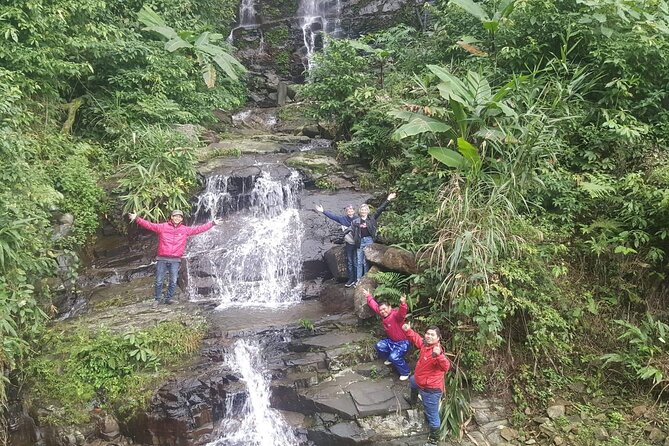
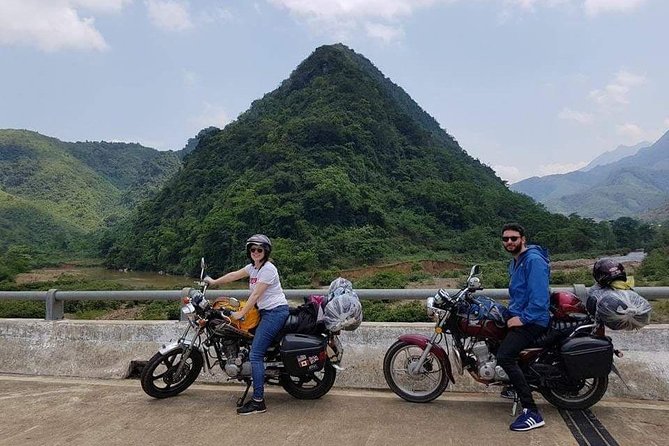
After Khe Sanh, you transition into the Ho Chi Minh Trail segment, listed as about 4 hours with admission included. The description is the quiet road through mountains and forest, and the itinerary also notes you’ll stop at minority villages and swim in a natural waterfall.
This is the heart of the loop. The “quiet road” matters because it changes your experience from “touring sites” to “traveling through the country.” You’re still stopping, but you’re also moving through the terrain the trail is known for, with fewer urban distractions.
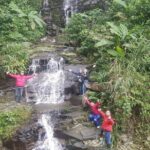
The natural waterfall stop is listed as part of this segment, so pack accordingly: if you plan to swim, you’ll want something quick-dry and shoes you can handle on uneven ground. Even if you skip swimming, expect a chance to cool off and take a break from riding.
Guides often make this segment feel smoother. Based on past experiences with the team, the most common pattern is that the driver and guide keep an eye on comfort and stop often enough for photos and short breaks, not only at fixed landmarks. It’s also where English support helps, because you’ll get explanations at the minority village stops instead of just being dropped off.




Overnight in Prao: what to expect after a big riding day
You arrive in Prao and stay overnight for about 12 hours. The itinerary lists this time as free admission, which just means your hotel stay is the focus here.
I like that this overnight is not a token stop. It gives you a full break between the longest riding day and the return to the coast. If you’re tired, don’t fight it—rest here makes Day 3 more enjoyable rather than exhausting.
Day 3: cable bridge bungalows, tea farm views, then Hai Van Pass
Day 3 starts with a ride along villages to see local life, which is a gentle shift after the long Day 2. This kind of morning time is helpful because it lets you reconnect with the living countryside before the route gets dramatic again.
Next is Bho Hoong Bungalows, about 30 minutes, admission included. The highlight here is the walking cable bridge. Even if you only do it once, it’s the kind of simple experience you remember because it’s active and outdoors.
Then you head into Dong Giang District for a tea farm rest stop with a nice view to take pictures, about 15 minutes and free admission. This is another quick reset. It’s short, but it gives you a fresh scene before the big road highlight.
After that, you pass by without stopping, then you tackle Hai Van Pass for about 45 minutes with admission included. The tour describes the ride as spectacular with panoramic views from the top: ocean and clouds. This is the moment when the motorbike experience feels like a movie scene, because the road itself becomes part of the viewpoint.
Dragon Bridge and Marble Mountains: ending with iconic, walkable stops
You ride through Da Nang after Hai Van Pass, then stop at Dragon Bridge for about 15 minutes, admission included. It’s a quick photo stop, but it also gives you a familiar coastal-city anchor before the tour finishes.
Next comes The Marble Mountains for about 1 hour with admission included. You’ll visit caves and temples by yourself while your rider waits at the parking area. That self-walk time is a real benefit because you don’t have to follow someone every step; you can move at your comfort level and decide which caves to spend extra time in.
Finally, the tour drops you at your hotel in Hoi An and ends there. If you’re continuing your trip, this is a practical finish because Hoi An is easy to base in.
Motorbike comfort and the rider-vs-passenger setup
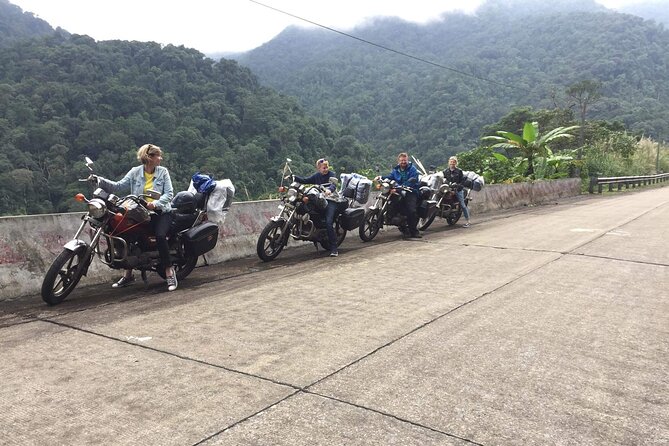
The tour is a private motorbike experience, meaning only your group participates. You can join as a passenger or ride directly, based on the way participants describe the format, and that choice matters for comfort and confidence.
Good gear is included: helmet, rain gear, and luggage transfer. That combination is practical in Central Vietnam where conditions can change fast. The tour also includes water and break coffee along the trip, plus petrol for the motorbike.
One of the most praised parts from the team’s guides is how safe and attentive the riding feels, especially when someone is less confident. Past experiences highlight that guides like Quynh and others maintain a relaxed pace, stop when you want photos or coffee, and communicate well in English. That matters because motorbike riding can be intimidating when you don’t know the plan.
Still, be realistic: you’re spending multiple days on a motorbike. This tour is best if you can handle that, enjoy the ride itself, and don’t need everything to be indoors.
Price and value at $179.49: what’s included versus what costs extra
At $179.49 per person, the value is mostly about what the tour covers for you. You get two night stays in a “nice standard hotel,” plus breakfast for 2 days. You also get the motorbike essentials (helmet, rain gear, luggage transfer), petrol, and an English-speaking driver.
Entrance fees are included for many key stops: Thien Mu Pagoda, Vinh Moc Tunnel, Cua Tung Beach, Truong Son Martyrs’ Cemetery, Khe Sanh Combat Base, the Ho Chi Minh Trail segment, Bho Hoong Bungalows, Hai Van Pass, Dragon Bridge, and Marble Mountains are listed as included. You’ll also have water and coffee breaks during the ride.
Where extra money may come up is Hue Imperial City, since admission there is not included. So budget a bit for that, and keep small cash ready for any optional purchases while you’re out.
Food is not included during the trip, and the notes say you’ll share food rather than the tour buying meals for you. That’s common in motorbike loops, but it does mean you’ll want to plan how you want to handle meals during the longer riding windows.
Also note what’s not covered: insurance for yourself. If you don’t already have travel insurance, this is worth adding before you come.
Who should book the Ho Chi Minh Trail Loop, and who should pause
This tour is ideal if you want real rural Vietnam rather than a checklist of big-name monuments. The mix of minority villages, coastal riding, and the Ho Chi Minh Trail roads creates a route that feels like a journey across environments, not just a sequence of stops.
I also think it suits couples, solo riders, and small groups because it’s private and the guide can shape the pace around your comfort level. If you care about history, you’ll have a lot to process: Hien Luong, the museums, Vinh Moc Tunnel, Truong Son Martyrs’ Cemetery, and Khe Sanh Combat Base.
Consider pausing if you’re expecting a mostly relaxing beach holiday. There are beaches and waterfall time, yes, but a big part of the itinerary is war remembrance. Also, if you get motion-sick or hate long motorbike days, the 4-hour Ho Chi Minh Trail stretch and the multiple road segments could be too much.
Finally, this experience requires good weather. If conditions are poor, it may be rescheduled or refunded, so don’t lock your whole Vietnam plan down too tightly.
Should you book this Hue to Hoi An loop?
I’d book it if you want a motorbike trip that connects war history with rural life and ends with a coastal payoff in Hoi An. The included gear, the two-night hotel setup, and the multiple included entrance fees make it feel like a smooth deal rather than a nickel-and-dime experience.
I’d also pick it if you value guides who keep things flexible. When the riding team is strong, photo stops and coffee breaks don’t feel like interruptions; they feel like part of the day.
I would not book it if you want purely light-and-fun sightseeing, or if you’re not comfortable with several hours of riding across varied terrain. In that case, you’d likely enjoy a slower route with fewer long road blocks.
If you land in the middle—ready for adventure, respect for history, and some time to soak in the views—this Ho Chi Minh Trail Loop is a smart choice.
FAQ
What is the duration of the Ho Chi Minh Trail Loop?
It runs for about 3 days (approx.) with 2 nights included in the hotel stay.
What time does the tour start?
The start time is 8:00 am.
Is pickup offered?
Yes, pickup is offered.
Is this a private tour?
Yes. Only your group will participate.
What does the tour include?
It includes water and break coffee, helmet and rain gear, luggage transfer, an English-speaking driver, petrol for the motorbike, 2 night hotel stays (nice standard), entrance ticket fees (for items listed as included), and breakfast for 2 days.
Are all entrance tickets included?
No. Hue Imperial City (the Citadel) is listed as admission ticket not included. Other stops have admission included.
Can I ride as a passenger or drive the motorbike myself?
You can participate as a passenger or ride directly, depending on your preference.
Is food included?
Food during the trip is not included. The notes say food is shared rather than covered.
Is this tour weather-dependent?
Yes. It requires good weather, and if canceled due to poor weather, you’ll be offered a different date or a full refund.
Where does the tour end?
The tour ends with drop-off at your hotel in Hoi An.



More Tour Reviews in Hue
- Easy Rider private tour via Hai Van pass from Hue – Da Nang – Hoi An (1Way|Loop)
★ 5.0 · 1,542 reviews