REVIEW · HUE
Hue Imperial City Walking Tour: Citadel & Forbidden City
Book on Viator →Operated by Vietnam Legacy Tours · Bookable on Viator
Hue’s Imperial City is huge. This walk makes it make sense fast. You’ll move with a small-group guide and see the Forbidden Purple City through royal rules and symbolism, not just photos. The only real catch: the Imperial City entrance fee isn’t always included, so budget a little extra.
It also helps that the tour runs about 2 hours 30 minutes, with a maximum of 8 people. You get enough attention to ask questions, and you won’t be sprinting across courtyards to keep up with the pack. Just know the day can be hot—this is still a walking tour inside a big walled complex.
In This Review
- Key things I’d circle on your Hue map
- Why Hue’s Imperial City reads like a story with a guide
- What 2 hours 30 minutes feels like in the Citadel (and why the small group matters)
- Noon Gate to Thai Hoa Palace: the royal choreography begins
- Pavilion stops that explain power without needing big battle stories
- The gates you’d never guess: Chuong Duc and Hien Nhơn
- Inside the Forbidden Purple City: who had access, and what that means
- Kien Trung Palace, Thai Binh Pavilion, and Thieu Phương Garden: restoration and daily life
- Price and tickets: the $9 rate isn’t the whole budget story
- Logistics that actually help: meeting point, pace, and photos
- Who should book this (and who might want to self-tour)
- Should you book Hue Imperial City Walking Tour: Citadel & Forbidden City?
- FAQ
- What is the duration of the Hue Imperial City walking tour?
- How much does the tour cost?
- Is the Imperial City entrance fee included?
- How much is the Imperial City entrance fee?
- How many people are in the group?
- What key places do we visit during the walk?
- Is there an admission ticket included at the start?
- Is a mobile ticket used for this experience?
- Do I need good weather for the tour?
- What is the cancellation rule?
Key things I’d circle on your Hue map
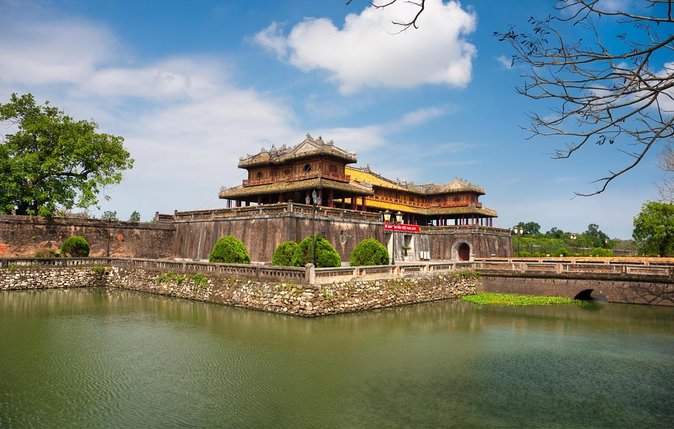
- Noon Gate first: learn why ceremonies focused on this gateway
- Thai Hoa Palace: the main hall for court sessions and coronations
- Forbidden Purple City: where the king’s family lived behind layered enclosures
- Women’s access at Chuong Duc Gate: a detail that changes how you read the architecture
- Newly restored Kien Trung Palace: the tour spotlights rebuilding, not just ruins
- Royal gardens and reading pavilion: peaceful stops that explain daily life, not only power
Why Hue’s Imperial City reads like a story with a guide
Hue’s Imperial City isn’t just a bunch of pretty buildings inside walls. It’s a system—gates, halls, pavilions, and gardens arranged to control access, show rank, and stage ceremonies. Without context, it’s easy to enjoy the scenery and still miss the rules that shaped everyday life.
That’s where this tour earns its keep. You walk in a sensible order and get clear explanations of what each space was for. Two things I really like about the way the tour is structured:
First, it’s paced so you can actually hear the guide. With a maximum of 8 travelers, you’re not dealing with the usual tour-bus chaos. Second, the stories connect architecture to behavior. You stop at places and learn the “why” behind the design, like why a certain gate was reserved for specific people.
One consideration: the Imperial City entrance fee is not included for the group option. The tour price is $9, but you may still need to pay the site fee separately (200,000 VND per person for the group option). It’s common at UNESCO sites, but it’s still something you should plan for so the day doesn’t feel like a surprise math problem.
You can also read our reviews of more walking tours in Hue

What 2 hours 30 minutes feels like in the Citadel (and why the small group matters)
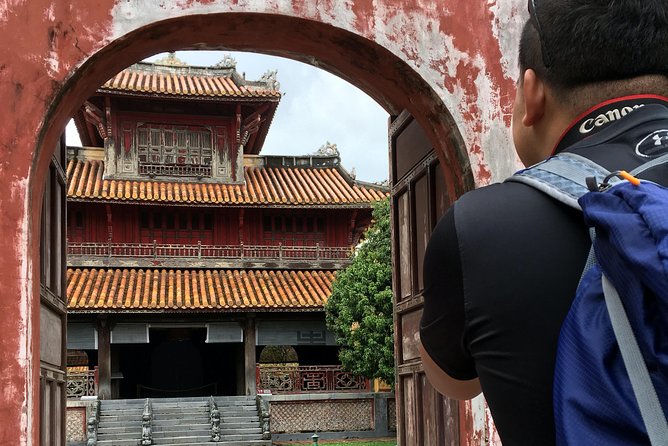
This is a walking tour of the Hue Imperial City focused on the Citadel and the Forbidden City area. Expect roughly 2 hours 30 minutes on your feet, moving between major stops rather than wandering aimlessly.
The small-group size (up to 8) changes the experience in practical ways:
- Your guide can keep the pace comfortable.
- You can ask questions without getting told there’s no time.
- You’re more likely to understand what you’re looking at after you turn the corner.
And because you’re moving through a huge walled compound, navigation matters. The guide helps you avoid the common “I’m here… but where exactly?” feeling. Even if you’re a confident map person, the Imperial City’s layout can be confusing—especially in peak visiting hours.
Noon Gate to Thai Hoa Palace: the royal choreography begins
You start at the Noon Gate (Cua Ngo Mon), which is a fitting opening because it sets the tone for everything that follows. The Noon Gate wasn’t a random entrance. It was used for royal ceremonies and major events during the Nguyen Dynasty. Once you understand that, you start reading the whole complex differently: less like sightseeing and more like a carefully staged hierarchy.
Next comes Thai Hoa Palace, the most important hall inside the Imperial City. This is where emperors held grand court sessions and coronations. You’ll look at the hall’s structure and details, but the guide’s real job is to explain the rituals—how power was displayed and performed. It turns the building from “old and impressive” into “old and purposeful.”
If you like architecture, these two stops hit a sweet spot. They’re big, central, and symbolic. If you’re more into history, they give you a framework: gate → ceremony → authority.
Pavilion stops that explain power without needing big battle stories
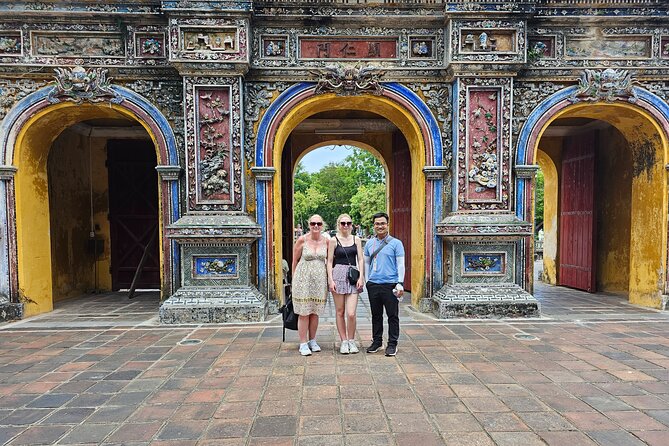
From there, the tour shifts into spaces that feel quieter but are loaded with meaning.
At Hien Lam Pavilion, you’ll hear about its long life and original design. Built over 200 years ago to honor the Nguyen emperors, it’s one of those stops that makes the Imperial City feel lived-in by its own history. This isn’t a “look and move on” pavilion. It’s a “look, then understand the function” pavilion.
Then you’ll see the Nine Dynastic Urns. These bronze urns symbolize the power and legacy of the Nguyen Dynasty’s nine emperors. It’s a specific detail you might miss if you’re walking solo, because it isn’t obvious at a glance why urns would be so central to dynastic memory. With a guide, you learn how symbolism worked—how the state preserved lineage in physical objects.
After that, you visit Mieu Temple, an ancestral temple dedicated to past Nguyen kings. This stop balances the court scenes with memory and tradition. Instead of focusing only on rulers making decisions, you see the role of ancestors and ritual in keeping the monarchy’s identity intact.
The gates you’d never guess: Chuong Duc and Hien Nhơn
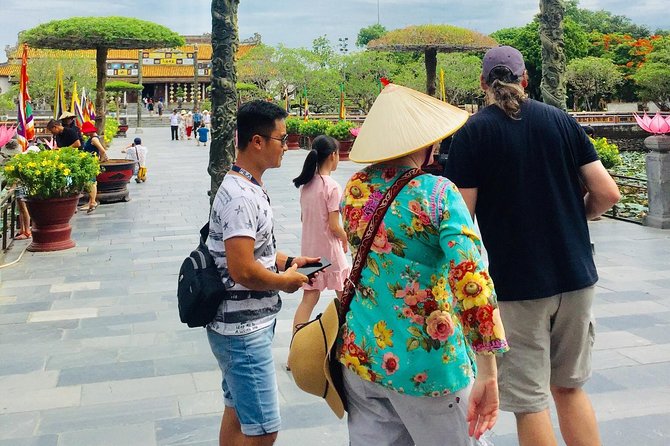
A tour that only covers palaces is fine. A tour that includes the gates and access rules is better.
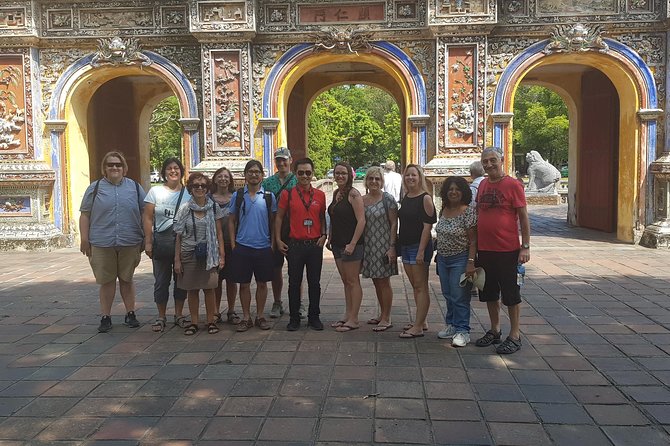
Chuong Duc Gate (Cửa Chương Đức) is one of the four gates of the Imperial City, and it’s known as a women’s gate—reserved exclusively for women. When you hear that, you realize gates weren’t just “ways in and out.” They were filters. They helped control who could pass where, and when.
You wrap up the walk at Cửa Hiển Nhơn (Hien Nhơn Gate), used by mandarins (officials). Again, it reinforces the same theme: the Imperial City organized people by function, rank, and permission.
These access details are small, but they’re the kind that change how you experience the whole place. You stop thinking in generalities and start noticing what’s restricted, what’s ceremonial, and what’s administrative.
You can also read our reviews of more city tours in Hue



Inside the Forbidden Purple City: who had access, and what that means
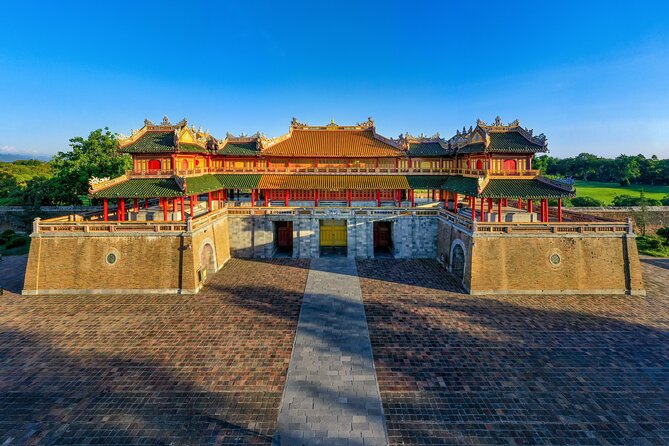
The most absorbing part of the tour for many people is Hue Royal Palace, also called the Forbidden Purple City. It’s the third enclosure within the Hue Imperial City and was reserved for the king’s family—his wives and children.
This is where you learn that “forbidden” doesn’t mean dark and scary. It means controlled and layered. The architecture around this area makes more sense when you understand the enclosure system. You’re not just touring buildings; you’re learning about boundaries and privacy in a royal context.
The Forbidden Purple City also helps you connect the earlier stops. The Noon Gate and Thai Hoa Palace show the public-facing power. The Forbidden Purple City shows the inner world—where the monarchy lived beyond ceremonies.
Kien Trung Palace, Thai Binh Pavilion, and Thieu Phương Garden: restoration and daily life
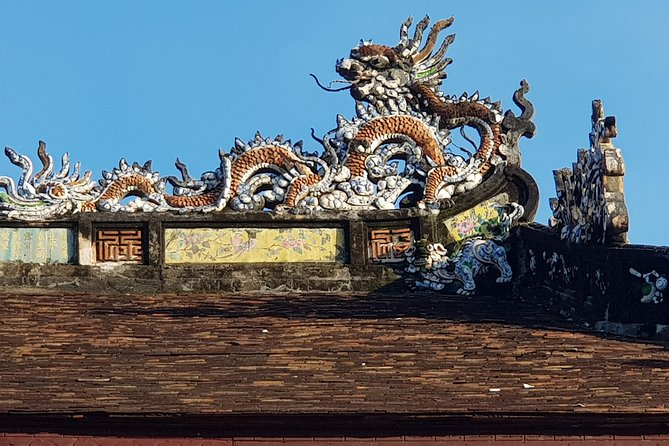
A big reason this tour feels worth it is that it doesn’t stop at “what is old.” It also highlights what’s been repaired and what those repairs mean.
At Kiến Trung Palace (Kien Trung Palace), you’ll visit a newly restored palace that has recently reopened after years of careful reconstruction. That matters because the Imperial City isn’t static. Some structures survive, some are altered, and some are brought back through restoration efforts. Seeing a reopened palace gives you a fresh look at how heritage is handled—and lets you understand the grandeur without only imagining it.
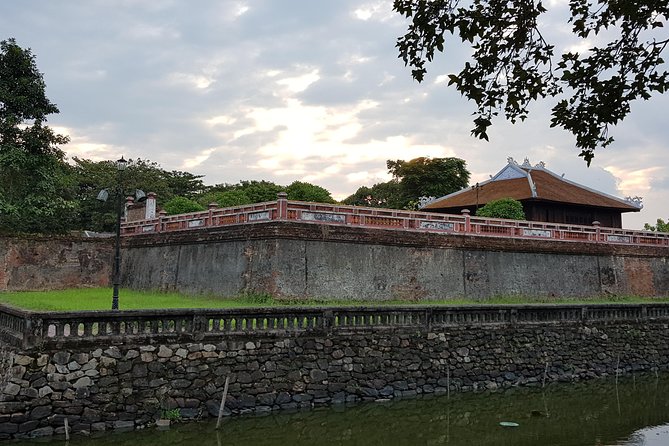
Then you’ll visit Thai Binh Pavilion (Thai Binh Lau), described as where the king would read books and enjoy the scenery. This stop adds a human scale to royal life. It’s easy to picture emperors only in ceremonial moments. This pavilion reminds you that rulership included quiet routines too—reading, thought, and enjoying views.
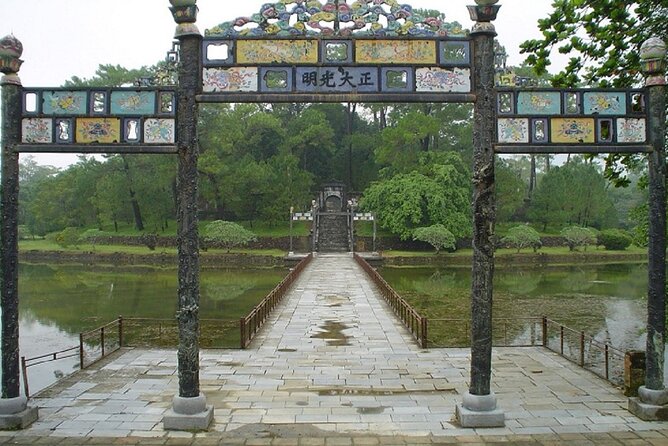
Finally, there’s Thiệu Phương Garden, also known as the Royal Garden. It’s been restored and is known for eye-catching scenery. The garden was a place for the king and his family to stroll and enjoy the outdoors. When you reach the garden portion, the tour shifts from formal power to personal space, and it’s a nice pacing break.
Price and tickets: the $9 rate isn’t the whole budget story
The headline price is $9.00 per person, which is already a strong value for a guided, small-group walk. But you should treat it as the tour fee, not the full day cost.
For the group option, the Imperial City entrance fee is 200,000 VND per person and isn’t included. In other words, the day’s value depends on whether you’re planning to buy site tickets anyway.
Why this matters: the provider notes that you might prefer a combo ticket that gives better value for Citadel and Tombs. So if your Hue itinerary includes royal tombs soon after, it can be smarter to coordinate your ticket strategy rather than buying only what this tour needs.
If you choose a private tour option, the Imperial City entrance ticket is listed as applied for that option. That can simplify your budgeting—especially if you don’t want to juggle separate tickets while traveling.
Bottom line: the guided portion is inexpensive, but do your math on the 200,000 VND site fee for group tours. If you’re already going to visit other royal areas, the combo-tickets approach can make the whole plan feel more efficient.
Logistics that actually help: meeting point, pace, and photos
You meet near Hai Mươi Ba Tháng Tám, Thuận Hòa, Huế (and the tour ends at 46 Đinh Công Tráng). It’s close to public transportation, which is useful in Hue, where you’ll likely hop between stops rather than stay planted in one neighborhood all day.
The tour runs as a walking route inside a large compound, so good footwear helps. You won’t be doing extreme hiking, but the grounds still cover plenty of distance once you factor in the stops.
Also, this is one of those tours where having a guide who pays attention to what you want matters. Multiple guides are described as taking good photos for participants, which is a real bonus if you don’t want to ask strangers to shoot you at every gate and pavilion.
Who should book this (and who might want to self-tour)
Book this if you want:
- A guided overview that helps you understand what you’re looking at, especially the gate system and access rules.
- A realistic pacing plan that covers the major highlight areas without feeling rushed.
- A smaller group day (max 8) where you can ask questions.
It’s also a good fit for first-timers in Hue who feel overwhelmed by the size of the Imperial City. With the guide’s route and explanations, you’re less likely to get lost in the grounds.
You might reconsider if:
- You hate paying separate ticket fees and prefer everything bundled.
- You want total freedom to linger at your own pace without stops being timed.
- You’re sensitive to heat and want only short indoor experiences (this is still a walking tour).
Should you book Hue Imperial City Walking Tour: Citadel & Forbidden City?
I’d book it if this is the one Hue day you want to feel purposeful. The Imperial City is famous, but it can also be confusing without context. This tour gives you a framework—ceremonial gates, major courts, restricted family enclosures, symbolic urns, ancestral temples, and restored spaces that show heritage in motion.
If you do book, plan one extra step: price out the Imperial City entrance fee (200,000 VND) for the group option, and think about whether you’ll visit the tombs soon. If yes, a combo ticket might save money and time.
Also, pack for comfort. Wear shoes you can stand in, bring water, and don’t wait until you’re tired to ask questions. The whole point is that the guide helps you read the place, not just pass through it.
If your goal is to leave Hue’s Imperial City understanding what you saw—and not just knowing you saw it—this is a strong choice.
FAQ
What is the duration of the Hue Imperial City walking tour?
The tour runs for about 2 hours 30 minutes.
How much does the tour cost?
The tour price is $9.00 per person.
Is the Imperial City entrance fee included?
It’s not included for the group option. For the private tour option, the Imperial City entrance ticket is applied.
How much is the Imperial City entrance fee?
The Imperial City entrance fee is listed as 200,000 VND per person for the group option.
How many people are in the group?
This tour has a maximum of 8 travelers.
What key places do we visit during the walk?
You’ll visit major stops including the Noon Gate, Thai Hoa Palace, Hien Lam Pavilion, Nine Dynastic Urns, Mieu Temple, Chuong Duc Gate, the Forbidden Purple City area within Hue Royal Palace, Kiến Trung Palace, Thai Binh Pavilion, Thiệu Phương Garden, and end at Hien Nhon Gate.
Is there an admission ticket included at the start?
For the group option, admission ticket costs are not included in the tour, and entry fees are described as extra. The provider also notes you may prefer a combo ticket for better value.
Is a mobile ticket used for this experience?
Yes, mobile ticket is listed as a feature.
Do I need good weather for the tour?
Yes. The experience requires good weather. If it’s canceled due to poor weather, you’ll be offered a different date or a full refund.
What is the cancellation rule?
You can cancel for a full refund up to 24 hours in advance of the start time. If you cancel less than 24 hours before, the amount paid is not refunded.


More Walking Tours in Hue



More Tours in Hue
- Easy Rider private tour via Hai Van pass from Hue – Da Nang – Hoi An (1Way|Loop)
★ 5.0 · 1,542 reviews



More Tour Reviews in Hue
- Easy Rider private tour via Hai Van pass from Hue – Da Nang – Hoi An (1Way|Loop)
★ 5.0 · 1,542 reviews