REVIEW · HOI AN
Hoi An: Bay Mau Cooking Class Only and Making Pho
Book on GetYourGuide →Operated by Sky Travel · Bookable on GetYourGuide
Pho in Hoi An takes real work. This 3-hour Bay Mau class pairs stone-mortar rice tools with a small-group format, so you cook and eat four local dishes without rushing. It’s one of the fastest ways to understand Central Vietnamese flavors while also learning the hands-on technique behind them.
I love the under-10 person class size and the fact you get multiple rice-based skills, from pounding and separating to grinding. You’ll also make rice milk and turn that work into practical items like rice paper—then you eat what you cooked.
One thing to think about: if you’re hoping for extra add-ons like a local market trip or a basket boat ride, this tour focuses on the cooking class itself.
In This Review
- Key highlights worth knowing before you go
- Finding Bay Mau Cooking Class from the Big Dragon Bridge area
- Inside the coconut village: why the rice-tool part matters
- The core lesson: cooking four Vietnamese classics in 3 hours
- Bun Bo Nam Bo: learning the balance behind a fast noodle dish
- Pho Bo Ha Noi: making an iconic soup after learning rice prep
- Banh Xeo: the quick heat-and-texture lesson
- Goi Cuon: rolling and assembling something lighter
- Lunch or dinner right after: turning lessons into an actual meal
- Recipes, souvenirs, and what you can carry home
- Vegetarian options: how flexible is this class?
- Price and value: why $26 can make sense here
- Who this cooking class suits best
- Should you book Bay Mau Cooking Class only and Making Pho?
- FAQ
- How long is the cooking class in Bay Mau?
- How much does the tour cost?
- What dishes will I cook during the class?
- Is the class vegetarian-friendly?
- Is hotel pickup included?
- Where do I meet the chef?
- Does the tour include drinks?
- Is this a small group?
- What language is the guide?
- Is the activity wheelchair accessible?
- Are pets allowed?
Key highlights worth knowing before you go
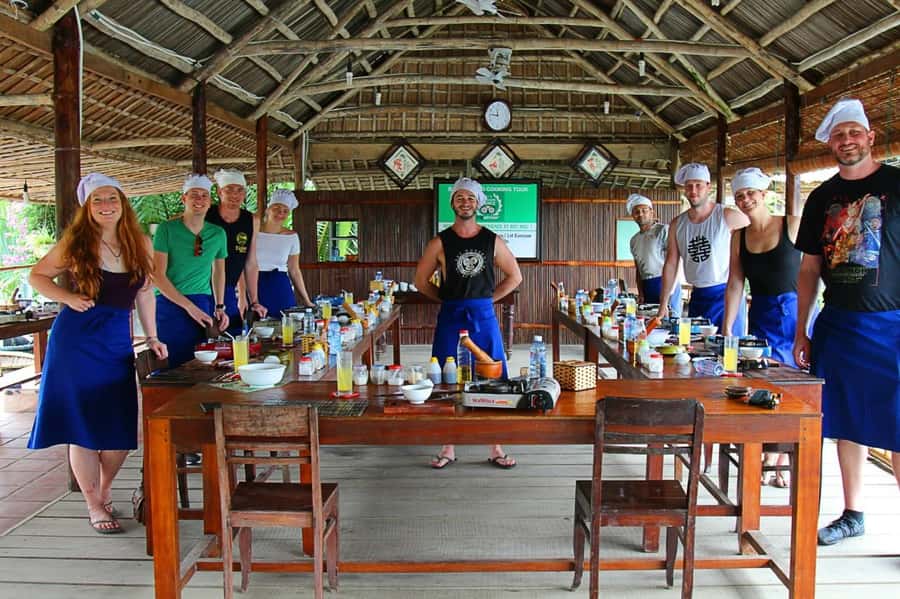
- Under 10 participants: a calmer pace, more chances to ask questions in English.
- Traditional rice tools you actually use: stone mortar and grinder, wooden pestle, and related steps.
- Rice paper and rice milk from scratch: not just watching, but doing the work.
- Four dishes in one session: bun bo nam bo, pho bo ha noi, banh xeo, and goi cuon.
- You eat the meal you make: traditional lunch or dinner right after cooking.
- Recipes provided to take home: plus included souvenirs to keep the food memory going.
Finding Bay Mau Cooking Class from the Big Dragon Bridge area
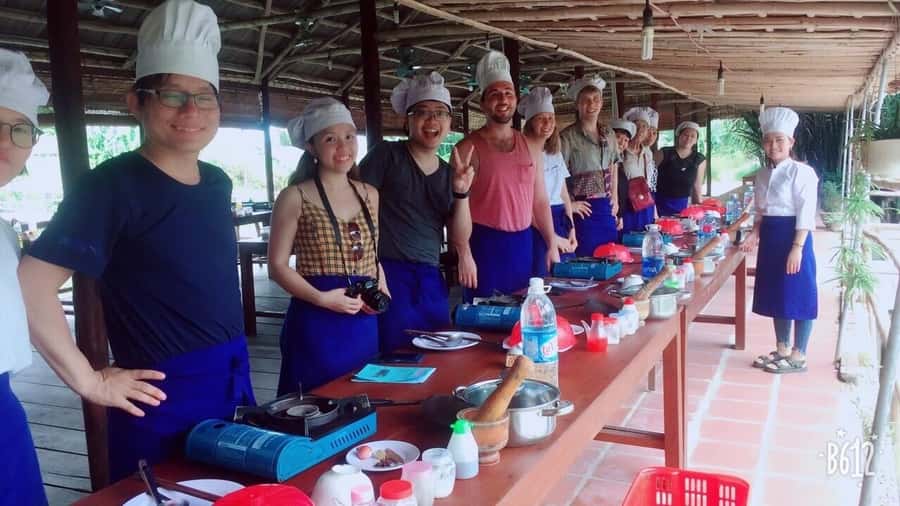
Your day starts with a meeting point that’s easy to spot: in front of Ba Tran Cooking Class, near the Big Dragon Bridge. From there, the chef meets you and brings you into the Bay Mau Cooking Class area inside the coconut village.
A quick practical note: pickup and drop-off from hotels in the Hoi An area is not included. So you’ll want to be ready to get to the meeting point on your own. If direction help would make your life easier, the operator asks you to provide a WhatsApp number so they can send instructions.
This setup is actually part of the value. You spend your 3 hours doing food work, not waiting around for transport.
You can also read our reviews of more cooking classes in Hoi An
Inside the coconut village: why the rice-tool part matters
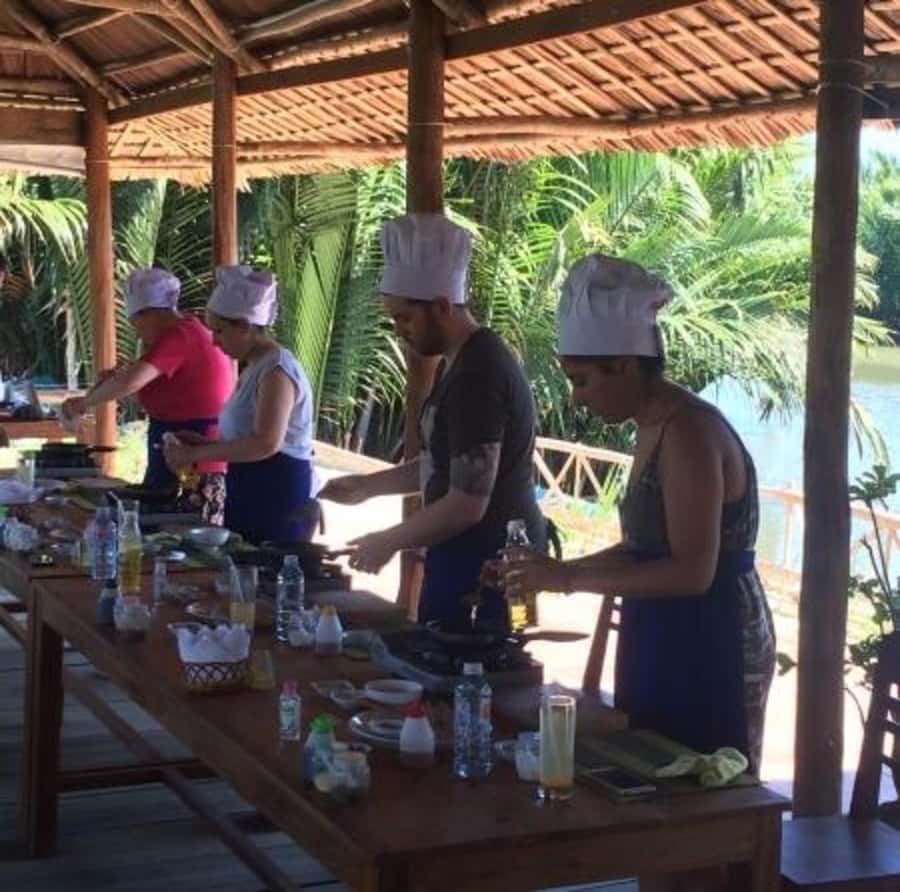
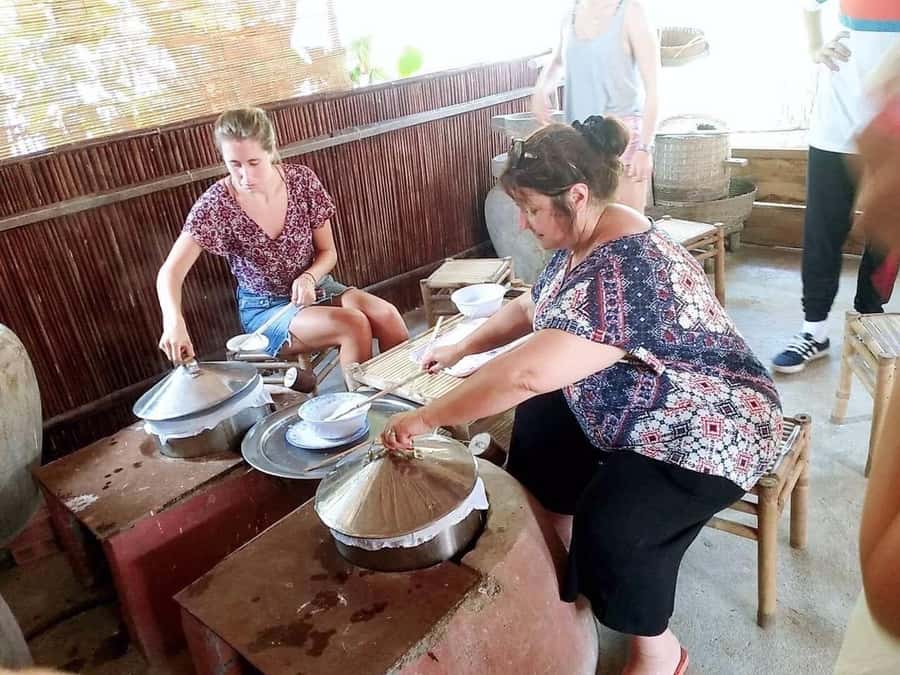
Once you’re in the coconut village space, the chef leads you through the cultural foundation of Vietnamese cooking: working with rice using traditional tools.
You’ll practice several steps:
- pounding and separating rice
- grinding rice to make rice milk
- making rice paper
It’s not a demo where you watch someone else do the hard part. You’ll get hands-on with tools like a stone mortar and grinder and a wooden pestle. That’s the biggest reason this class feels more meaningful than many short cooking tours.
Why this is worth your time: rice is the backbone of a lot of Vietnamese foods, and technique affects texture. When you’ve pounded, separated, and ground rice yourself, the later cooking steps make more sense. You’re not just following a recipe—you’re learning what changes when you apply pressure, timing, and effort.
The core lesson: cooking four Vietnamese classics in 3 hours
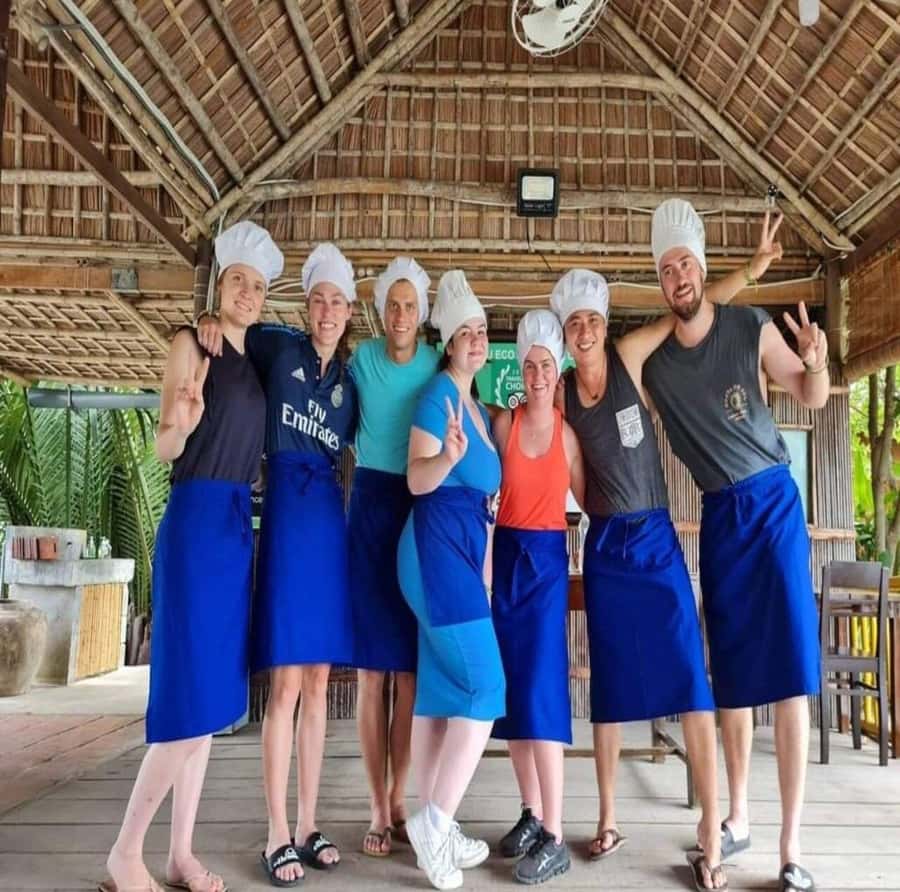
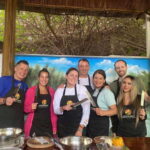
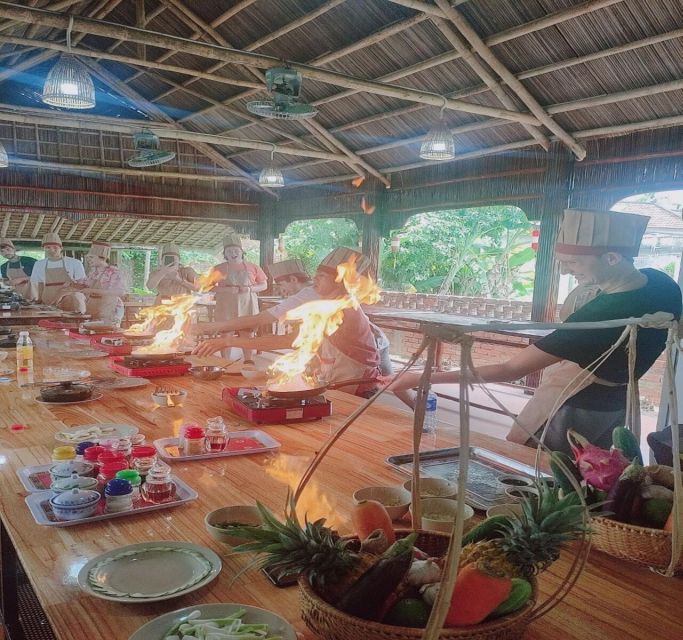
After the rice-tool practice, you shift into the main event: cooking four dishes with a local chef. The class is designed so you can learn a sequence, not just a list of recipes. You’ll also have time to eat everything you cook at the end.
Here’s what’s on the menu for the class:
- Southern-style Beef Vermicelli (Bun Bo Nam Bo)
- Hanoi-style Rice Noodle Soup with Beef (Pho Bo Ha Noi)
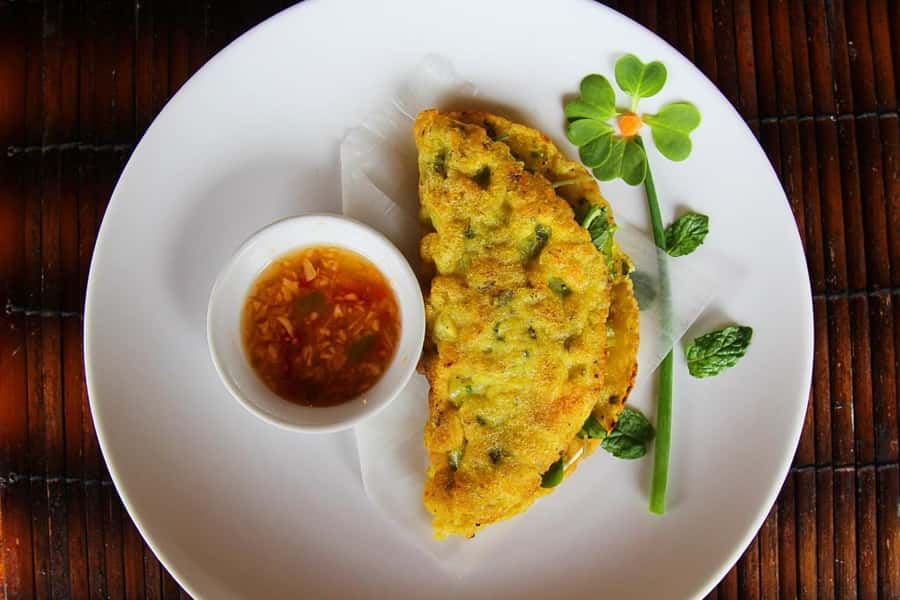
- Sizzling Vietnamese Crepes (Banh Xeo)
- Vietnamese Salad Rolls (Goi Cuon)
Bun Bo Nam Bo: learning the balance behind a fast noodle dish
For the bun bo nam bo portion, you’ll work on a Southern-style beef vermicelli dish. Even if you already know the basics of vermicelli, the teaching here focuses on the process—how ingredients come together into a complete bowl or plate.
In a class like this, the real win is that you see how the chef treats seasoning, build, and timing as a system. You’ll leave knowing what to do when you cook again at home, because you’ll remember the steps you followed rather than only the finished flavor.
Pho Bo Ha Noi: making an iconic soup after learning rice prep
Pho is the headline dish for many people, but what makes this experience special is that pho comes after you’ve already worked with rice. Once you’ve made rice milk and rice paper earlier, the pho lesson feels connected instead of random.
You’ll cook Hanoi-style rice noodle soup with beef (Pho Bo Ha Noi), and you’ll gain a clearer sense of how pho fits into Vietnamese food patterns: rice-based noodles, beef, and soup form—built with care and not just shortcut steps.
A few more Hoi An tours and experiences worth a look
Banh Xeo: the quick heat-and-texture lesson
Banh xeo is listed as sizzling Vietnamese crepes. That name is honest: the crepe stage is about getting the right cooking behavior and texture. This is where watching and learning won’t be enough—you’ll benefit from doing it yourself, since cooking success depends on technique and timing.
Goi Cuon: rolling and assembling something lighter
For the Vietnamese salad rolls (Goi Cuon), the class moves into an assembly style of cooking. Salad rolls are a good counterbalance to soup and crepes. They’re also a practical dish to take home later, because the rolling process is very repeatable.
Lunch or dinner right after: turning lessons into an actual meal
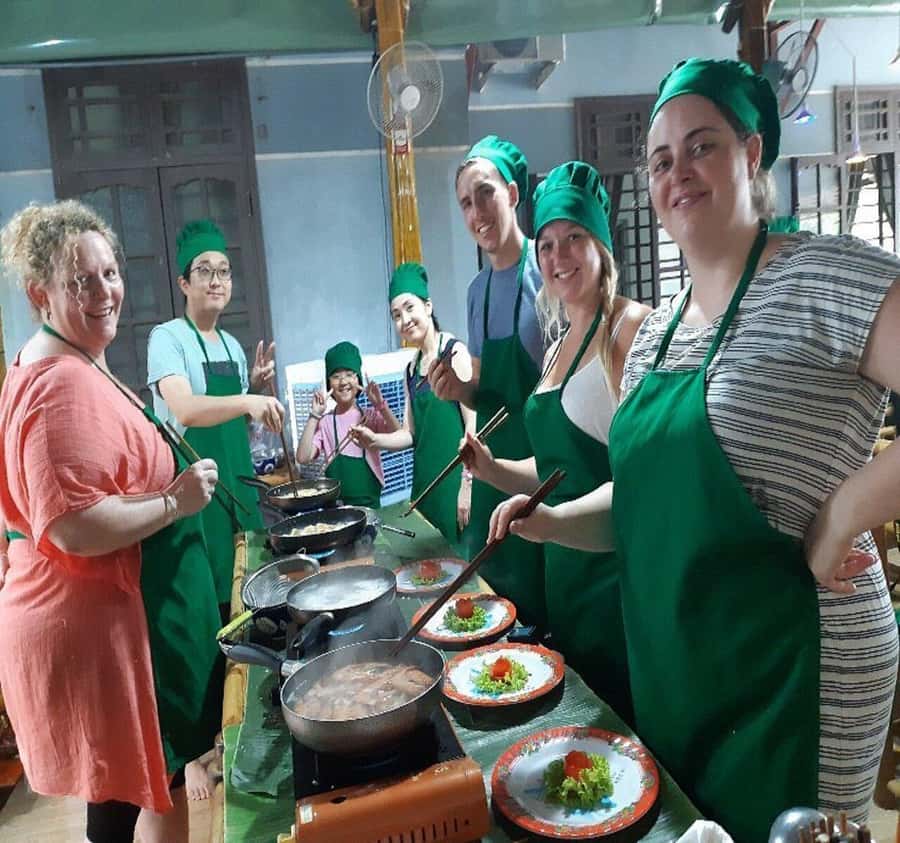
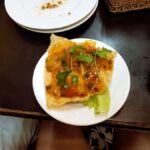
You don’t leave hungry. After cooking, you’ll enjoy a traditional lunch or dinner using the dishes you prepared.
Included with the meal:
- unlimited mineral water and juices
- the chance to eat in the same setting where you cooked
This is one of those “small” inclusions that actually changes the experience. You don’t have to figure out where to eat afterward or pay extra for a second plan. In a 3-hour tour, that efficiency matters, especially if you’re juggling other Hoi An sights.
Recipes, souvenirs, and what you can carry home
At the end of the class, you’ll receive recipes you can take home. That matters more than people think. A lot of short cooking classes give you a memorable time but not the tools to recreate the food. Here, the recipe handout helps you cook again without starting from scratch.
You’ll also get local souvenirs included.
One detail from a recent class experience stuck with me: the chef shared very long chopsticks that you can use for frying, and you can take them with you back to your hotel. It’s a small souvenir, but it turns the class into something you’ll use again.
Vegetarian options: how flexible is this class?
If you don’t eat meat, ask about vegetarian options. The class includes this possibility upon request. Since the menu includes beef dishes (bun bo nam bo and pho), this is worth planning early so the chef can adjust your meal smoothly.
You’ll still get the core rice-tool learning and the structure of the cooking session. That part doesn’t have to change much, even if the fillings and final dishes do.
Price and value: why $26 can make sense here
At $26 per person for a 3-hour class, this is priced for people who want a real food experience without a huge time commitment.
What you’re getting for that price:
- English-speaking local chef guidance
- cooking ingredients
- ticket into the coconut village area
- unlimited mineral water and juices
- traditional lunch or dinner
- local souvenirs
- recipes to take home
- small group size (limited to 10 participants)
Compare that to what you’d pay if you tried to recreate the same kind of experience on your own: you’d spend time sourcing ingredients, learning processes, and paying for a proper place to work with traditional tools. Even if you don’t replicate everything at home, you’re paying for guided instruction plus the meal and materials.
The real value is the mix: rice-tool technique plus four dishes, all in one tight block.
Who this cooking class suits best
This is a great fit if:
- you’re in Hoi An for a short stay and want a high-impact food lesson
- you like practical, hands-on learning rather than watching only
- you want an English-speaking guide and a calmer small-group experience
- you’re curious about traditional rice pounding, rice grinding, and rice paper-making
It’s less ideal if:
- you want hotel pickup and you don’t want to manage meeting-point logistics
- you need wheelchair accessibility (this activity is not suitable for wheelchair users)
- you want a market tour or basket boat trip (those are not included)
Also, pets are not allowed. If you’re traveling with one, you’ll need a different plan.
Should you book Bay Mau Cooking Class only and Making Pho?
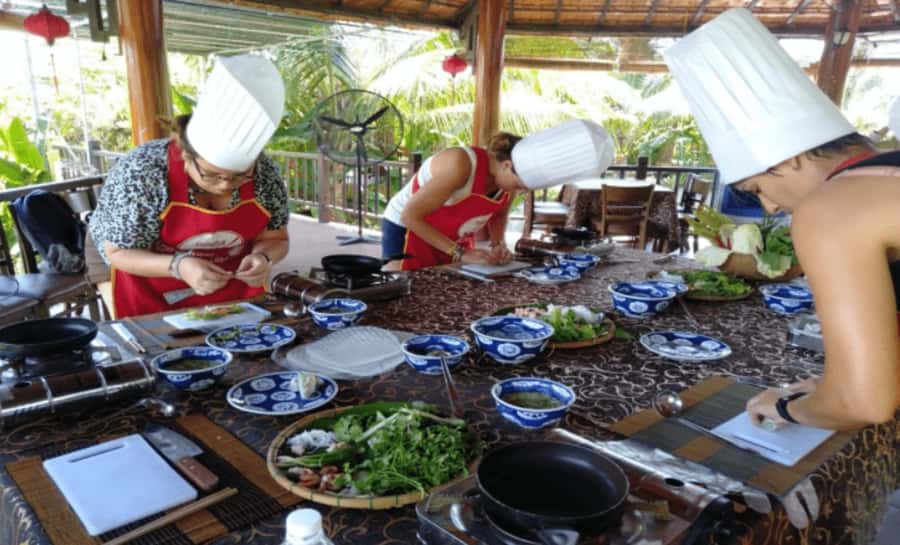
If you want a compact, hands-on Vietnam food lesson, I’d book this. The strongest reasons are the traditional rice-tool practice and the fact you cook four familiar Vietnamese dishes and then eat them as a full meal. For the price, the “ingredients + lunch + recipes + small group” package is the kind that keeps expectations realistic.
I’d hold off only if you’re specifically seeking the extra experiences that aren’t part of this format, like a market walk or a basket boat trip. Otherwise, this class is a smart use of 3 hours—equal parts culture tool practice and comfort-food results.
FAQ
How long is the cooking class in Bay Mau?
It lasts about 3 hours.
How much does the tour cost?
The price is $26 per person.
What dishes will I cook during the class?
You’ll cook four dishes: Southern-style Beef Vermicelli (Bun Bo Nam Bo), Hanoi-style Rice Noodle Soup with Beef (Pho Bo Ha Noi), Sizzling Vietnamese Crepes (Banh Xeo), and Vietnamese Salad Rolls (Goi Cuon).
Is the class vegetarian-friendly?
Vegetarian options are available upon request.
Is hotel pickup included?
No. Pickup and drop-off from hotels in the Hoi An area are not included.
Where do I meet the chef?
Meet in front of Ba Tran Cooking Class, near the Big Dragon Bridge. The chef will meet you there and take you into the coconut village for the class.
Does the tour include drinks?
It includes unlimited mineral water and juices. Drinks are listed as not included otherwise.
Is this a small group?
Yes. The group is limited to 10 participants.
What language is the guide?
The guide and chef instruction are in English.
Is the activity wheelchair accessible?
No. It is not suitable for wheelchair users.
Are pets allowed?
No, pets are not allowed.