REVIEW · HOI AN
Hoi An Ancient Town Walking Tour with a Local
Book on Viator →Operated by Momo Travel · Bookable on Viator
Hoi An gets personal on foot. This 3-hour walk ties UNESCO-era buildings to the everyday stories that made the town what it is today, with a local guide doing the talking. You’ll hit the Japanese and Cantonese landmarks, then finish with time at the Hoi An Central Market.
I love the smart pacing: a small group, several major heritage stops, and enough market time to actually shop and snack. I also like that you get a planned break with included herbal tea (or coffee), which matters when you’re walking in warm weather.
One thing to consider: the tour price is low, but the Hoi An UNESCO entrance ticket isn’t included (120,000 VND per person), and several stops note admission isn’t included either.
In This Review
- Key things I’d watch for before you go
- Why this Hoi An walking route fits your afternoon
- Price and what you actually pay (besides the ticket)
- Stop 1: Japanese Culture Gallery and the town’s Japan connection
- Stop 2: Japanese Covered Bridge for architecture and symbolism
- Stop 3: Cantonese Assembly Hall and the community behind the colors
- Stop 4: Quan Thang Ancient House and what merchant life looked like
- Stop 5: Traditional Art Performance Theatre for culture you can hear
- Stop 6: Hoi An Central Market finish for tasting and shopping with a plan
- The guides: what you’ll feel right away on this walk
- Timing, weather, and comfort tips that matter in Hoi An
- Who should book this tour (and who might skip it)
- Should you book? My quick take on value
- FAQ
- FAQ
- How long is the Hoi An Ancient Town Walking Tour?
- How much does the tour cost?
- Is the UNESCO entrance ticket included?
- What’s included in the tour price?
- Where does the tour start and end?
- What is the maximum group size?
- Do I need good weather for this experience?
- What’s the cancellation policy?
- Are service animals allowed and is it suitable for most people?
Key things I’d watch for before you go

- Small group size (max 10) makes it easier to ask questions and keep a good pace
- Japanese + Cantonese thread runs through multiple stops, not just one photo stop
- Admission isn’t included, so budget for the 120,000 VND UNESCO ticket per person
- Coffee or herbal tea is included to reset during the walk
- Central Market time includes shopping plus chances to taste local delicacies
- Guide quality shows up repeatedly in comments, with many names mentioned (Kun, Trang, Nguyen, Anh, June, Sanh, Minh)
Why this Hoi An walking route fits your afternoon
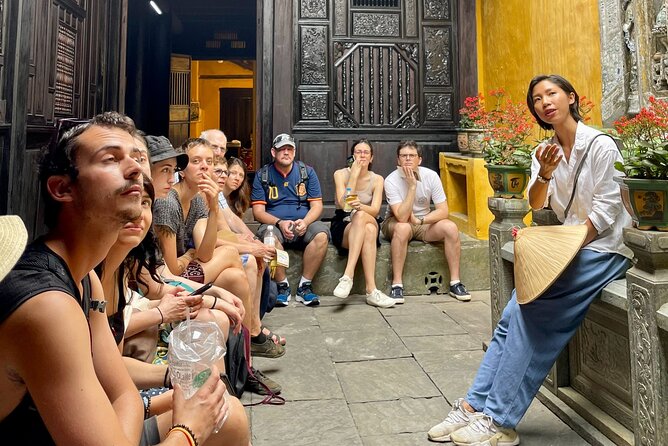
Hoi An rewards slow wandering, but not everyone wants to plan a self-guided route through crowded streets. This tour gives you a clean structure: you walk between key UNESCO-area stops, then you end where the town’s life keeps going—at the market. For first-timers, that’s a big deal. You get context before you start making your own choices about what to see next.
The other smart part is the group size. With a maximum of 10 people, you’re less likely to get stuck at entrances or lose the guide in the crowd. It also helps with timing at the indoor/outdoor mix of buildings on the route. You’re moving, but you’re not sprinting.
Finally, the guide’s job here isn’t just naming buildings. The story arc is about multicultural influence in Hoi An—Japanese presence, Cantonese connections, and the way old merchant houses and community halls reflect that blend. If you like understanding why things look the way they do (and not just taking photos), this tour style works.
You can also read our reviews of more walking tours in Hoi An



Price and what you actually pay (besides the ticket)
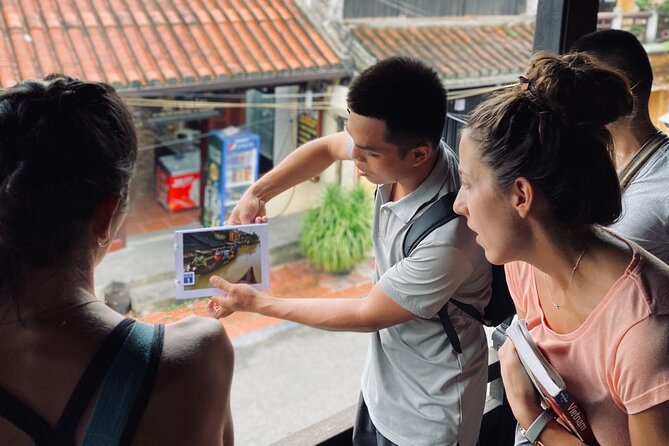
The listed price is $9.89 per person for the 3-hour experience. That’s a low base price for a walking tour that takes you through multiple major heritage buildings and then into the central market.
But plan for the fact that the Hoi An UNESCO entrance ticket is not included and costs 120,000 VND per person. Also, the tour notes admission tickets aren’t included for stops along the way. Translation: this is still a good value, but it’s not a fully “all-inclusive” museum pass. You’ll want to arrive ready to pay that UNESCO entrance fee.
What’s included is straightforward:
- Coffee and/or tea, plus a special herbal tea
That tea stop isn’t just a perk. It’s a practical reset when you’ve got multiple entrances, some sitting/standing in indoor areas, and then a market finish.
Stop 1: Japanese Culture Gallery and the town’s Japan connection
You start at Nhà trưng bày Văn hóa Nhật Bản (Japanese Culture Gallery). The value of this first stop is that it frames what you’ll see next. Instead of treating Hoi An’s Japanese Covered Bridge as a standalone curiosity, the guide gives you a quick timeline of Hoi An and explains why Japanese people were here.
This is where you’ll start picking up patterns you’ll notice later: trade, settlement, and the way cultures leave visible marks on architecture and community life. If you’re the kind of person who likes reading the “backstory” before you walk into buildings, starting here pays off.
A practical note: the stop is about 25 minutes, and admission isn’t included. So don’t plan to linger if the group is moving on schedule.
Stop 2: Japanese Covered Bridge for architecture and symbolism
Next comes the Japanese Covered Bridge. This is one of those places where you can take a quick photo and move on—but the guide’s time here is meant to help you look closer.
You’ll spend about 20 minutes learning what makes the bridge special as a piece of Japanese-influenced architecture and as a symbol of Hoi An’s historical cross-currents. This stop is a good checkpoint. Once you’ve got the context from the gallery, you’ll understand more than you’d guess just from looking.
If you’re hoping for a slow, long viewing session, keep expectations realistic: this is a walking tour, so you’re doing short, focused chunks at each heritage site.
Stop 3: Cantonese Assembly Hall and the community behind the colors
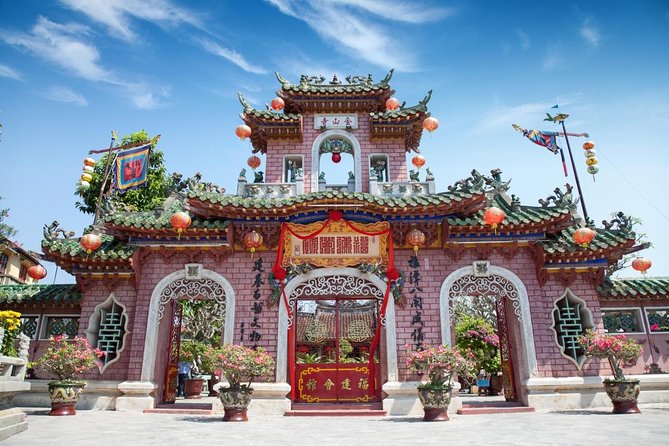
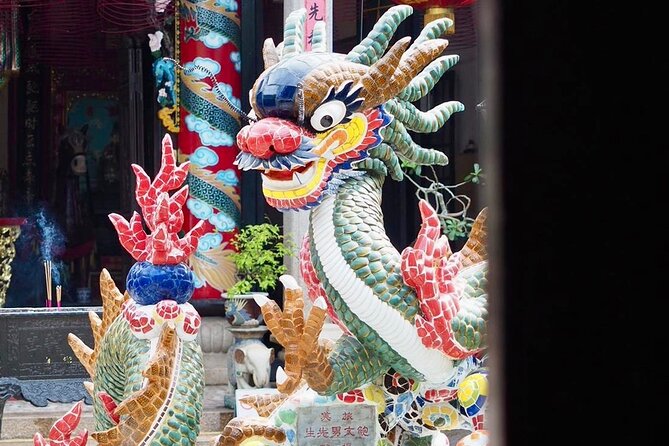
The Cantonese Assembly Hall is where Hoi An’s social history gets louder. You spend about 25 minutes here, and the focus is the hall’s decoration and design—plus what it represents for the Cantonese community in Hoi An.
This is often a turning point for people who thought the town was mainly about merchant houses and streets. Assembly halls weren’t only buildings; they were places tied to community identity, organization, and shared responsibilities.
Admission isn’t included for this stop, so again: you’ll want to factor that into your budget and timing. The good news is that the tour format prevents you from getting lost in the details. The guide’s job is to connect the appearance to the meaning.






Stop 4: Quan Thang Ancient House and what merchant life looked like
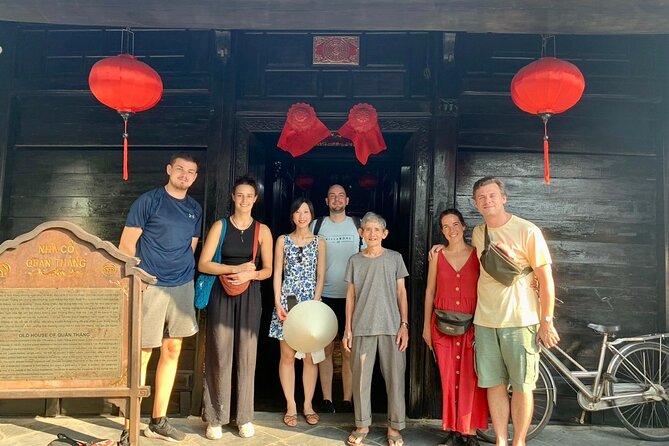
Quan Thang Ancient House is a well-preserved place that helps you picture how a prosperous merchant family lived. You get about 25 minutes inside, and the point isn’t just architecture—it’s daily life.
What I like about including a house on this route is that it turns history into something you can visualize. You’re no longer only looking at public buildings like bridges and assembly halls. You’re seeing how wealth, family structure, and practical survival shaped what stood in Hoi An.
Some guides (based on repeated feedback from real bookings) share very specific stories, including details about working areas in the house and how the structure endured major challenges over many generations. You’ll likely hear flood-related preservation stories—exact details may vary by guide, but the emphasis on endurance shows up often.
Admission isn’t included here either, so it’s another reason to keep the UNESCO ticket in mind.
Stop 5: Traditional Art Performance Theatre for culture you can hear
After the house, the tour moves to the Hoi An Traditional Art Performance Theatre. This stop is longer at 35 minutes. Instead of visual-only history, you get a chance to experience traditional music, dance, and theatrical performance elements using traditional instruments.
Even if you’re not sure what you’ll enjoy, this stop is valuable because it broadens the idea of heritage. Hoi An isn’t just carved wood and old walls. It’s also performance culture—how traditions are taught, remembered, and performed in a living town.
Admission isn’t included for this stop, and it’s scheduled for a set length, so don’t plan to treat it like a casual break you can extend. You’ll get what the tour aims to deliver: a cultural stop that makes the rest of the walk click.
Stop 6: Hoi An Central Market finish for tasting and shopping with a plan
The tour ends at Hoi An Market (about 35 minutes). This is where your “understanding” turns into your “doing.”
The market time is useful because you’re not just walking through stalls with no context. You’ve already learned about the town’s cultural mix, and you can now shop with more confidence—plus you may get small tastings or guided suggestions while you browse.
A couple practical things to keep in mind:
- The market can be crowded. Wear shoes you’re comfortable standing in.
- Souvenirs and snacks are easiest to handle when you’re not rushing, and the tour gives you dedicated time here.
Also, the tour explicitly connects the market to local storytelling, including the idea of why Hoi An people are known for longevity. That kind of talk can make the food-shopping feel less random and more meaningful.
The guides: what you’ll feel right away on this walk
The tour’s reputation is strongly tied to the guide experience. Many bookings mention guides by name, including Kun, Trang, Nguyen, Karla, Anh, June, Sanh, and Minh. Common threads in those comments are:
- very clear English (so the history lands)
- a friendly, energetic approach
- good pacing so you’re not stuck waiting
- humor and small local details that make buildings feel lived-in
- practical lists of what to eat and where to shop after the tour
One of my favorite benefits of a guided history walk is the “what next” layer. Several comments mention that guides finish with recommendations you can use immediately—restaurant ideas, shop suggestions, and even tips like planning a lantern boat ride. That’s not part of the heritage stops themselves, but it’s the stuff that helps your trip keep moving after the tour ends.
Timing, weather, and comfort tips that matter in Hoi An
This experience requires good weather. If the weather is poor, you’ll be offered a different date or a full refund. That matters in Hoi An, where you can go from clear skies to sudden rain.
For your own comfort, plan for:
- walking on uneven surfaces around old town areas
- standing in sun near outdoor heritage stops
- a market finish with plenty of time on your feet
Bring what helps you enjoy the pace:
- comfortable, grippy shoes
- light layers (it can feel warm even when you’re not drenched)
- a small way to carry bottled water and your UNESCO ticket payment
And since the tour includes tea/coffee, don’t overload on caffeine beforehand if you tend to feel jittery while walking.
Who should book this tour (and who might skip it)
This is a good fit if:
- you’re doing Hoi An for the first time and want structure
- you like history that connects to architecture and daily life
- you want a short route with multiple key UNESCO-area stops
- you enjoy ending with a practical market experience (not just photos)
You might not love it if:
- you hate paying separate admissions (because the UNESCO ticket is not included)
- you prefer to wander completely on your own without group pacing
- you want a longer time at just one stop (this tour is intentionally balanced across six stops)
Should you book? My quick take on value
If you can handle one separate entrance payment, this tour is a smart start to Hoi An. The base price is low for what you get: a guided walk through major UNESCO-connected sites, a cultural performance stop, and a market finish that helps you turn ideas into choices. The tea/coffee inclusion is a small cost saver and a real comfort boost.
I’d book it especially if you want the context. Hoi An can look like a collection of pretty streets, but a good guide helps you connect Japanese and Cantonese influences to the buildings you’re seeing—and to the stories locals still pass along.
FAQ
FAQ
How long is the Hoi An Ancient Town Walking Tour?
The tour lasts about 3 hours.
How much does the tour cost?
The price is $9.89 per person.
Is the UNESCO entrance ticket included?
No. The Hoi An UNESCO Entrance Ticket is listed as 120,000 VND per person and is not included.
What’s included in the tour price?
Coffee and/or tea is included, including a special herbal tea.
Where does the tour start and end?
It starts at 125 Đ. Phan Chu Trinh, Phường Minh An, Hội An, Quảng Nam, Vietnam, and it ends at Hoi An Market (19 Trần Phú, Cẩm Châu, Hội An, Quảng Nam, Vietnam).
What is the maximum group size?
The tour has a maximum of 10 people.
Do I need good weather for this experience?
Yes. It requires good weather. If it’s canceled due to poor weather, you’ll be offered a different date or a full refund.
What’s the cancellation policy?
Free cancellation is offered. You can cancel up to 24 hours in advance for a full refund.
Are service animals allowed and is it suitable for most people?
Service animals are allowed, and most people can participate.