REVIEW · DA NANG
Da Nang: Making 5 Vietnamese dishes with Local Market Trip
Book on GetYourGuide →Operated by Danang Summer Cooking Class · Bookable on GetYourGuide
A market stroll, five dishes, and salted coffee. This Da Nang class is interesting because it ties a local market trip to hands-on cooking, not just recipes you copy at home. I like the mix of technique and personality: a friendly chef teaches you while the market gives you real context. You also end up making Cà Phê Muối, the salty-sweet coffee Da Nang is known for, with guidance that makes it feel doable.
What I like most is that you’re not stuck with one “standard tourist” meal. You cook five famous Vietnamese dishes pulled from three regions, then you’re shown the stories behind them and the small choices that make flavors land right. A second big plus: the class feels personal, since it runs as a small group limited to 10, and you interact with the instructor while you cook.
One consideration: it’s not suitable for children under 12, and people with food allergies should avoid it. Also, you’ll want comfortable shoes because the market time involves walking and standing.
In This Review
- Key highlights worth your time
- A Market-First Cooking Class in Da Nang
- Where You Start: 85 Pham Quang Anh and a Quick Prep
- The Local Market Trip: Picking Ingredients Like a Regular
- Back in the Kitchen: Stories, Techniques, and Useful Tips
- Cooking Five Famous Dishes from Three Regions
- Cà Phê Muối: Making Da Nang’s Salted Coffee
- The Feast, the Certificate, and What You Bring Home
- Price and Value: Paying for Chef Time and Ingredients
- Language Options and What to Expect from the Instructor
- Who Should Book This Cooking Class (and Who Should Skip It)
- Should You Book It? My Practical Take
- FAQ
- FAQ
- What is the duration of the cooking class?
- How much does the experience cost?
- How many people are in the group?
- Is Cà Phê Muối salted coffee included?
- Do you visit a local market?
- What languages are available for the chef or instructor?
- What’s included in the price?
- What is not included?
- What should I bring?
- Who shouldn’t take this class?
Key highlights worth your time
- Local market ingredient hunting before you cook
- Cà Phê Muối salted coffee as part of the class menu
- Five dishes from three Vietnamese regions with technique focus
- Small group (max 10) for more hands-on attention
- Chef-led cooking from scratch with tips and a little Vietnamese language
- You leave with a certificate and cookbook/recipe booklet
A Market-First Cooking Class in Da Nang
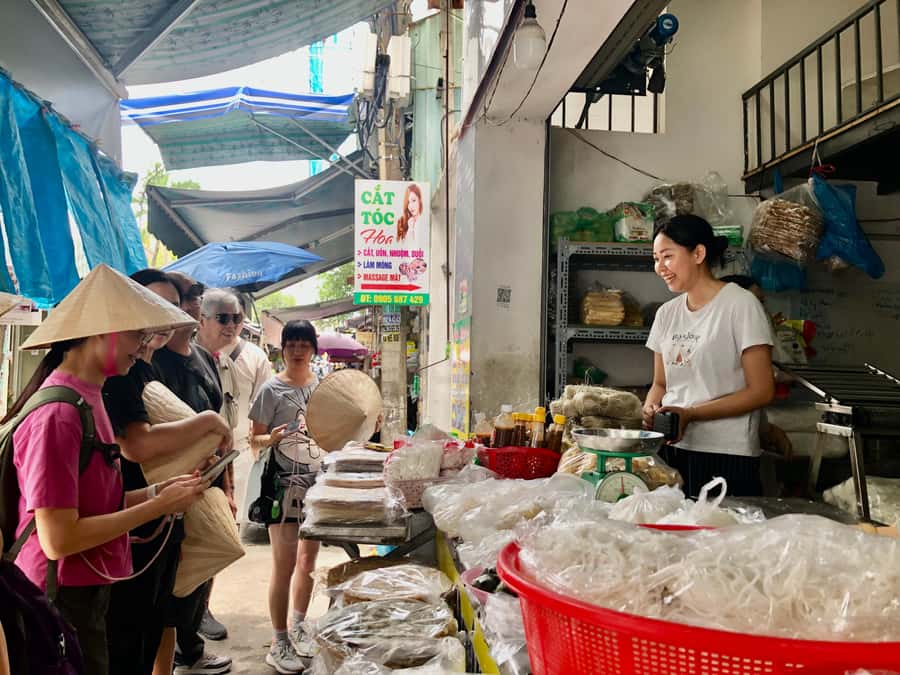
If you like your food experiences to feel grounded, this is the right kind of activity. It starts with the market, where you can see ingredients at their freshest and learn what makes them worth buying. Then the kitchen part isn’t a distant lecture; you’re back with your ingredients and cooking right away.
The class runs 210 minutes, and it’s built around a simple idea: Vietnamese cooking is not just about a finished plate. It’s about choosing the right herbs, picking produce that smells right, and understanding how each region’s flavors show up in the dishes. You also get a welcome tea before you dig in, plus a sip of happy water along the way.
You can also read our reviews of more shopping tours in Da Nang

Where You Start: 85 Pham Quang Anh and a Quick Prep
You’ll meet at 85 Pham Quang Anh, An Hai, Son Tra, Da Nang. The guidance is to arrive about 10 minutes before your booking time so you can pay and get settled before the market portion begins.
That short buffer matters more than you’d think. You get your bearings fast, you’re not rushing your way through the first steps, and you’re ready to jump into ingredient selection without feeling flustered. Bring comfortable shoes, because you’ll be on your feet and moving during the market visit.
The Local Market Trip: Picking Ingredients Like a Regular
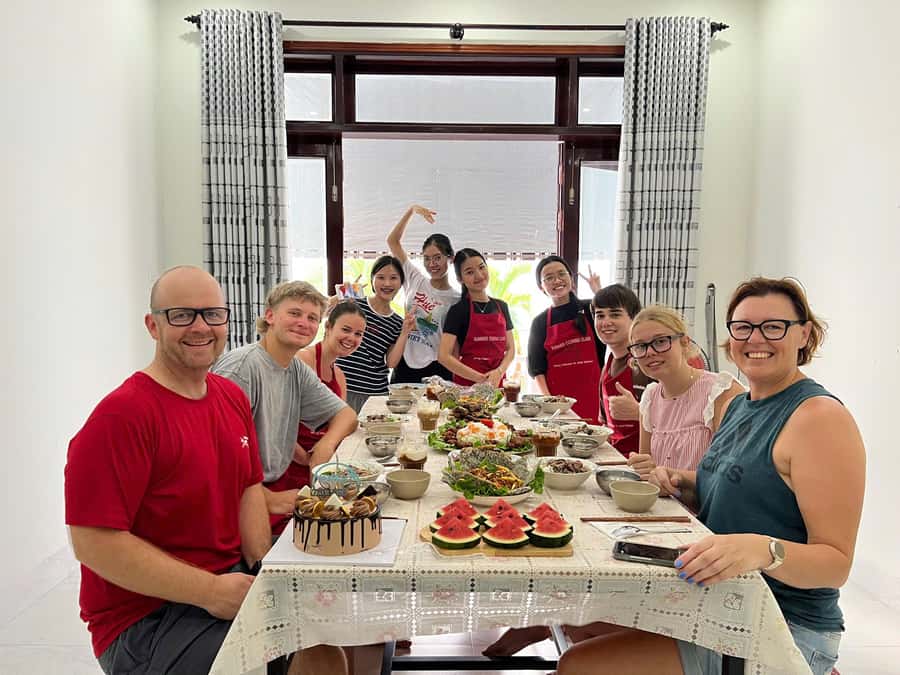
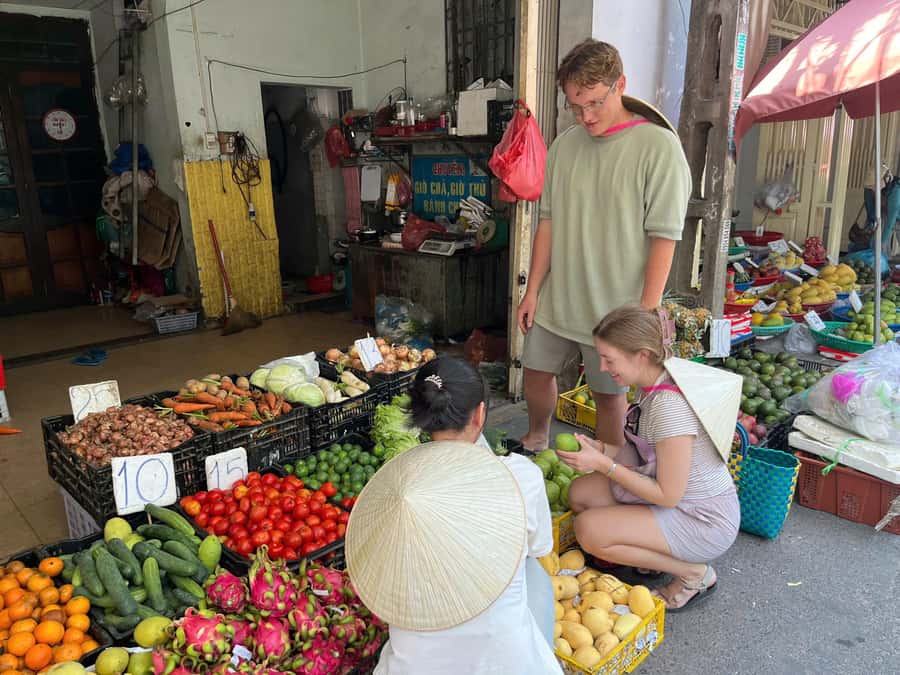
The market visit is a big part of the value here. Instead of showing up and immediately chopping, you go out with your cooking instructor and hand-pick ingredients for the dishes you’ll cook.
This is the moment where the class becomes more than cooking. You’ll learn how vendors think and what to look for in real ingredients. Fresh herbs, spices, and produce all have visual cues, scent cues, and texture cues—and the instructor points those out so you know what “good” looks like, not just what the recipe says.
Also, the market time is where the class atmosphere usually becomes friendly and relaxed. Some sessions are hosted by instructors with warm personalities like Lily, Blue, Daisy, or Jasmin (names that appear in past experiences), and that matters when you’re trying to understand a new set of ingredients quickly.
Back in the Kitchen: Stories, Techniques, and Useful Tips
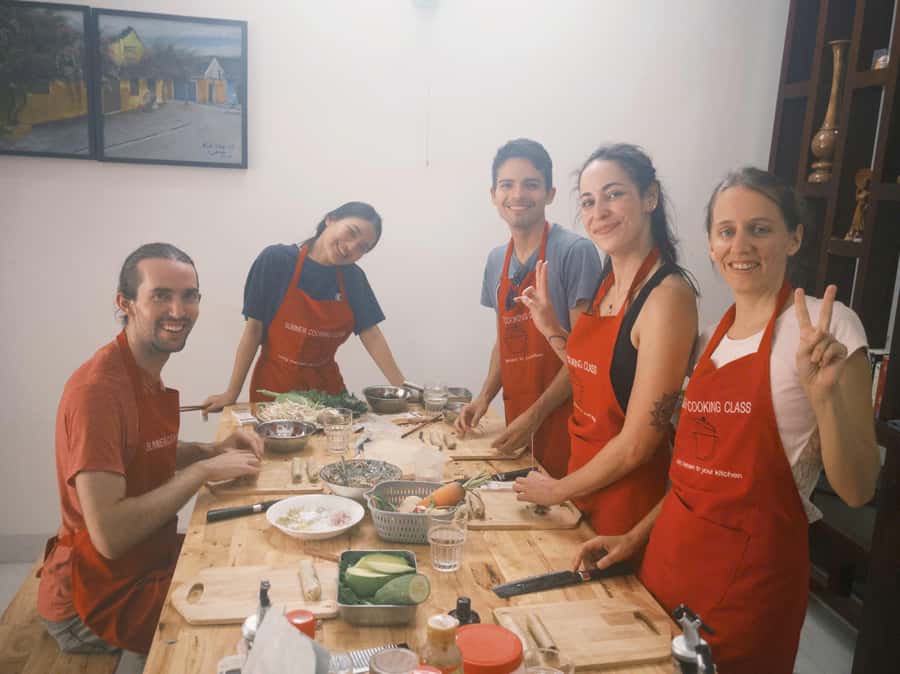
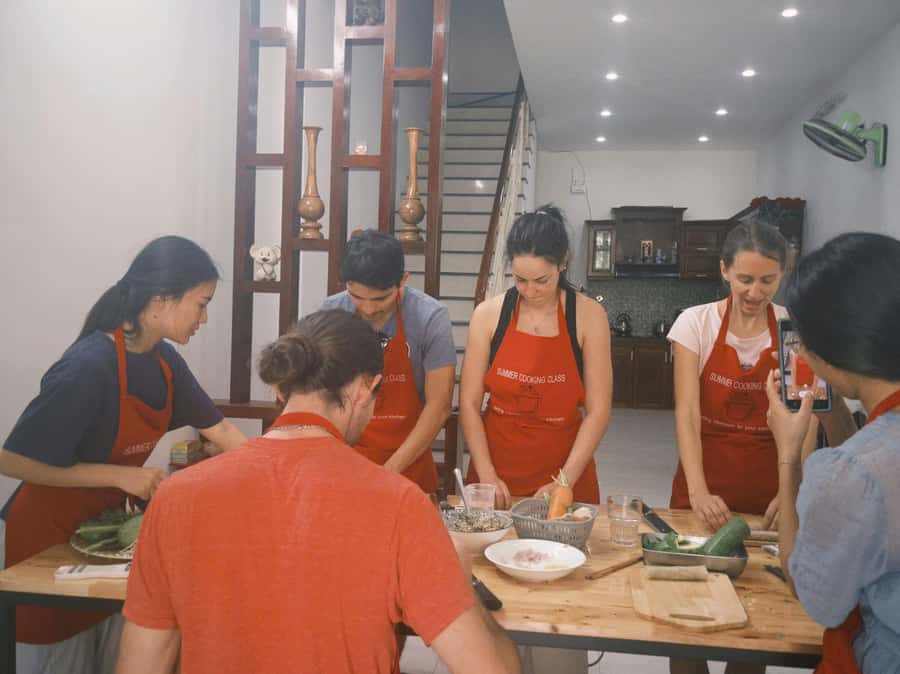
After the market, you return for the classroom-kitchen portion. You’ll learn the histories and stories behind the dishes, which gives you something to remember beyond taste. Even if you can’t recite the backstory later, it helps your brain connect flavors to reasons.
Then comes the practical part: making everything your own from scratch under the chef’s instruction. The cooking style is hands-on, not passive. You’ll use techniques and tips as you cook, including guidance on spices and flavor balance.
One detail I appreciate: there’s also a bit of language along the way. It’s not a full lesson, but it can help you feel more comfortable ordering or chatting about food later in Vietnam. Tiny wins like that make a cooking class more useful after you leave.
Cooking Five Famous Dishes from Three Regions
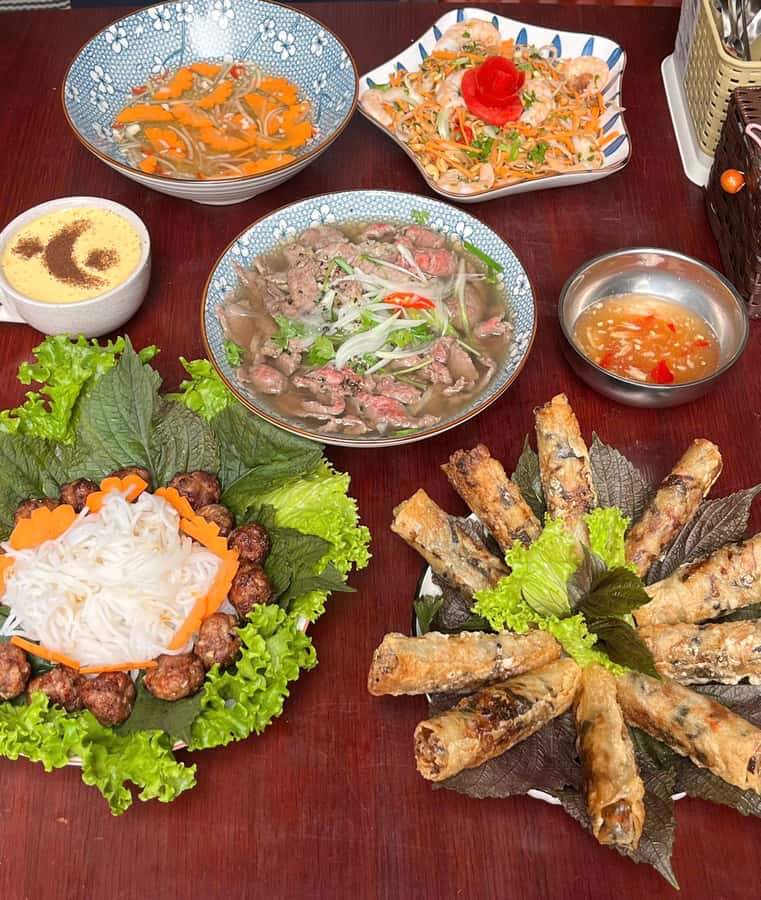
The core promise is clear: you’ll cook five famous Vietnamese dishes from three regions. That regional mix is the smartest way to experience Vietnamese cuisine in one go, because you get exposed to different flavor styles instead of repeating the same profile five times.
In a typical structure, you’ll:
- Work with the ingredients you picked at the market
- Cook each dish step-by-step with the chef’s guidance
- Build flavor through practical choices (spices, aromatics, and cooking methods)
What makes this valuable is that you’re learning technique, not just memorizing steps. Once you understand what the chef is looking for—how something should smell, how it should look as it cooks—you’re more likely to recreate it at home with confidence.
And since the group is limited to 10 participants, you’re not lost in a crowd. You can ask questions while you cook, and you’re more likely to get correction when needed.
A few more Da Nang tours and experiences worth a look


Cà Phê Muối: Making Da Nang’s Salted Coffee
Then you hit one of the most memorable parts: Cà Phê Muối, salted coffee. This isn’t treated like a gimmick. You learn how to make it, and the class frames it as part of the regional food identity.
Salted coffee has a satisfying logic: a little salt boosts the perceived richness and balances the sweetness. When you make it yourself, the flavor makes more sense, and you stop thinking of it as an unusual trend. Instead, it becomes a method you understand.
You also get to enjoy your welcome tea as part of the overall experience, so you’re not just chugging coffee and calling it a day. It’s a nice rhythm: tea early, coffee later, and a full feast in between.
The Feast, the Certificate, and What You Bring Home
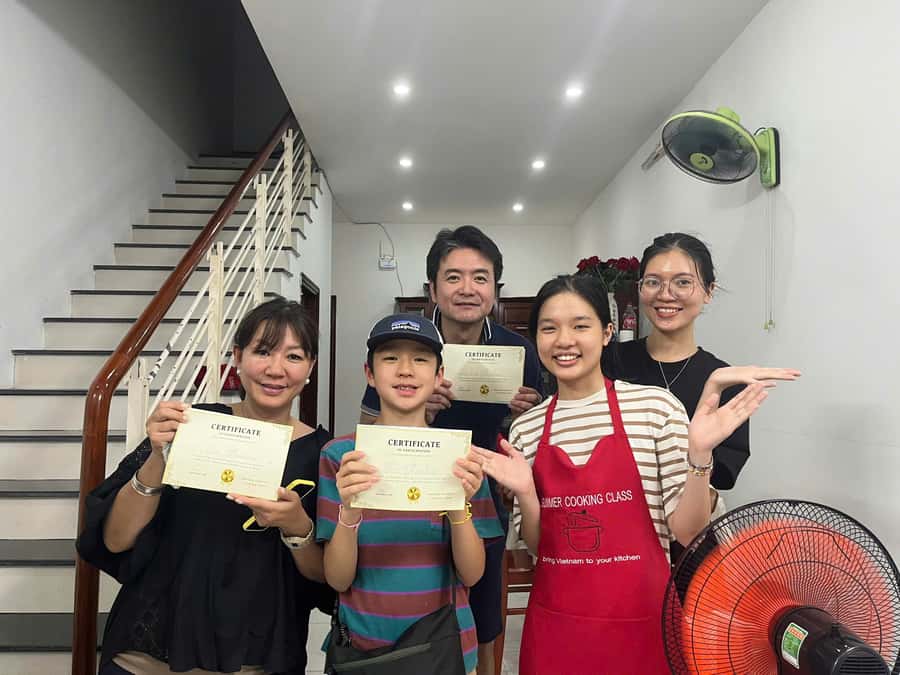
By the end, you sit down for the meal you made. This is a full, satisfying payoff. None of it feels like you’re cooking for show; you end up eating what you made, and you don’t leave hungry.
You also receive a certificate of completion. It’s a small paper credential, but it reinforces that you finished the process, not just the tour.
Most importantly, you leave with a free recipe booklet/cookbook and the instructions you need to cook again at home. For me, a cooking class is only worth it if it gives you the tools to repeat the results. Here you get that, plus the market ingredient logic that helps you shop smarter later.
Price and Value: Paying for Chef Time and Ingredients
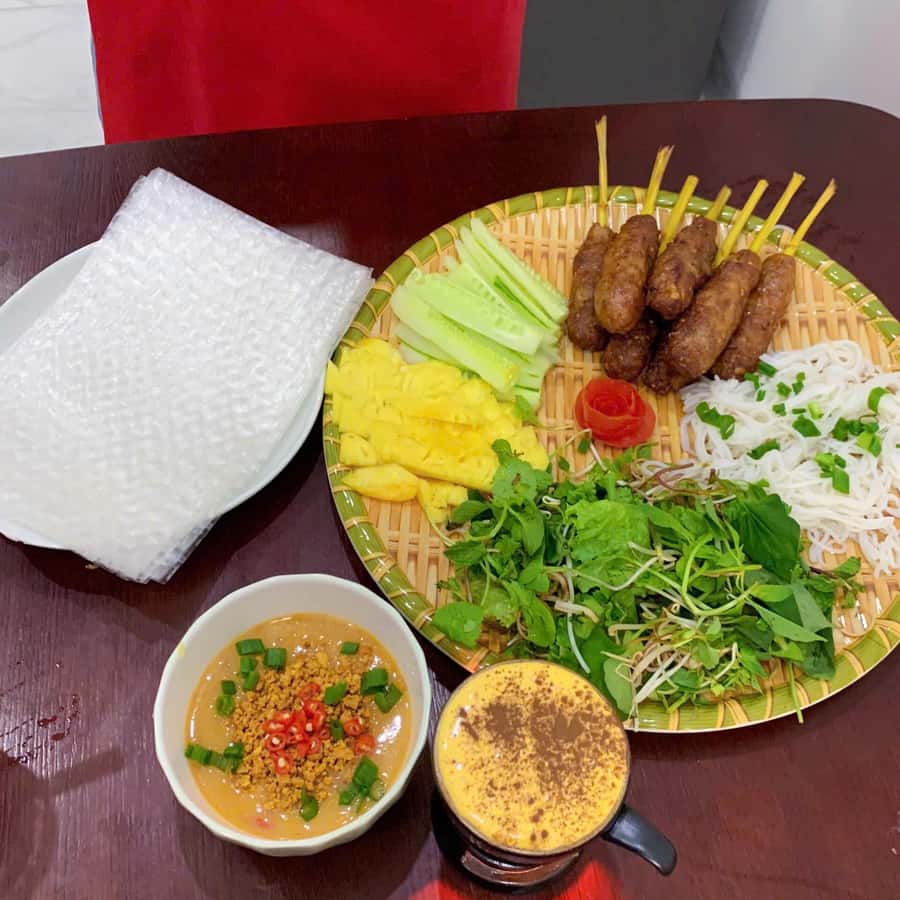
At $35 per person, this class is priced like a “you pay for an experience, not just a plate” activity. You’re getting:
- A market trip to source ingredients
- Cooking instruction for five dishes
- Salted coffee (Cà Phê Muối)
- Welcome tea, plus a sip of happy water
- English or Chinese-speaking chef support
- A recipe booklet/cookbook and a certificate
If you’ve ever tried to recreate Vietnamese cooking at home without guidance, you know the hidden cost isn’t just ingredients. It’s knowing which ingredients matter, how to handle them, and how to avoid common flavor mistakes. This class compresses that learning into one 210-minute session.
Also, small group size matters for value. With up to 10 participants, the chef can actually check what you’re doing while you cook.
Language Options and What to Expect from the Instructor
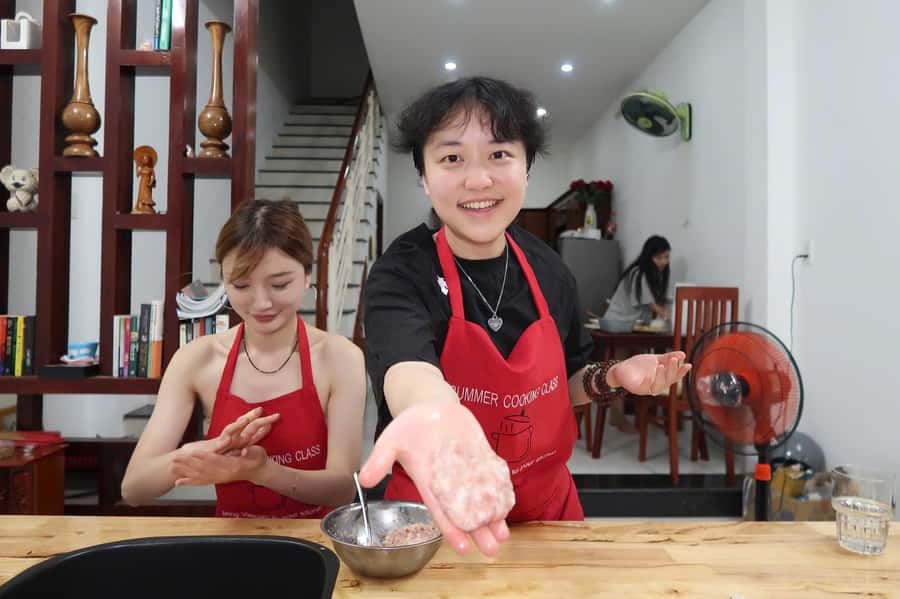
The class offers English or Chinese-speaking instruction, and the instructor team can include Vietnamese as well. That flexibility helps if you’re not confident in Vietnamese but still want to learn food terms you’ll hear in local life.
In the experiences that people describe, the hosts and chefs tend to be friendly and engaging. Names like Lily, Blue, Hai (an instructor/guide name that shows up), Daisy, and Jasmin appear in past sessions, and the pattern is consistent: the teaching style is interactive, and you’re involved in the cooking processes.
That interaction is the difference between “watching someone cook” and “learning to cook.”
Who Should Book This Cooking Class (and Who Should Skip It)
This is a great fit if you:
- Want a hands-on food day in Da Nang, not just restaurant hopping
- Like the idea of learning five dishes and not getting stuck on one cuisine style
- Enjoy markets and want to practice smart ingredient choices
- Prefer small group attention
Skip it if you:
- Have food allergies (the activity is not suitable for people with allergies)
- Are traveling with kids under 12
If you’re a solo traveler, this also works well because the class format is social and guided—you’ll be eating and cooking with a small set of people.
Should You Book It? My Practical Take
Book this class if you want your Da Nang food day to be more than tasting. The market trip plus five regional dishes plus salted coffee is a strong combo, and the chef-led, from-scratch cooking is what turns it from entertainment into skills.
Think twice if allergies are involved, or if you hate walking and standing during market time. If you’re comfortable in those basics, you’re likely to get a memorable morning and a meal that tastes like you made it—because you did.
FAQ
FAQ
What is the duration of the cooking class?
The class lasts 210 minutes.
How much does the experience cost?
It costs $35 per person.
How many people are in the group?
It is a small group limited to 10 participants.
Is Cà Phê Muối salted coffee included?
Yes. You’ll make Cà Phê Muối as part of the class.
Do you visit a local market?
Yes. You go on a local market trip to hand-pick ingredients for your dishes.
What languages are available for the chef or instructor?
The experience offers English, Chinese, and Vietnamese.
What’s included in the price?
Included: English or Chinese-speaking chef, welcome tea, local market trip for all ingredients, cook 5 famous Vietnamese dishes, sip of happy water, free recipe booklet/cookbook, and a certificate of completion.
What is not included?
Not included: transportation to/from the venue and extra beverages beyond the welcome tea, plus any additional requests not mentioned in the standard package.
What should I bring?
Wear comfortable shoes.
Who shouldn’t take this class?
It is not suitable for children under 12 or for people with food allergies.