REVIEW · HOI AN
Da Nang/Hoian: Marble Mountain, Am Phu Cave, Monkey Mountain
Book on GetYourGuide →Operated by VM Travel · Bookable on GetYourGuide
Caves and temples, with ocean views on top. This compact Marble Mountain + Monkey Mountain day pulls together limestone drama, Buddhist meaning, and big-photo scenery around Da Nang.
I especially love the way Marble Mountain feels like a whole mini-world: pagodas, tunnels, and viewpoints all built into the rock. I also like that you get a proper guide plus enough structure to move fast through major spots, including Am Phu Cave and Linh Ung Pagoda with Vietnam’s 67-meter Lady Buddha.
One thing to keep in mind: the schedule is busy. If you want long solo time to roam or linger, the day can feel tight depending on how the pacing lands.
In This Review
- Key Highlights You’ll Actually Care About
- Marble Mountain: limestone hills, pagodas, and cave-light drama
- Am Phu Cave: Hell Cave symbolism and why the sculptures matter
- Non Nuoc stone carving village: 400 years of making with stone
- Monkey Mountain and Linh Ung Pagoda: Lady Buddha views and temple peace
- Timing that works: morning vs afternoon tour flow
- Guides, group size, and the value of structure
- What to bring and how to prepare for a 6-hour cave-and-temple day
- So, should you book this Marble and Monkey Mountain combo?
- FAQ
- How long is the tour?
- Where can I be picked up and dropped off?
- What’s included in the price?
- Is lunch included?
- Are elevator fees included?
- Is the tour wheelchair or mobility-friendly?
Key Highlights You’ll Actually Care About
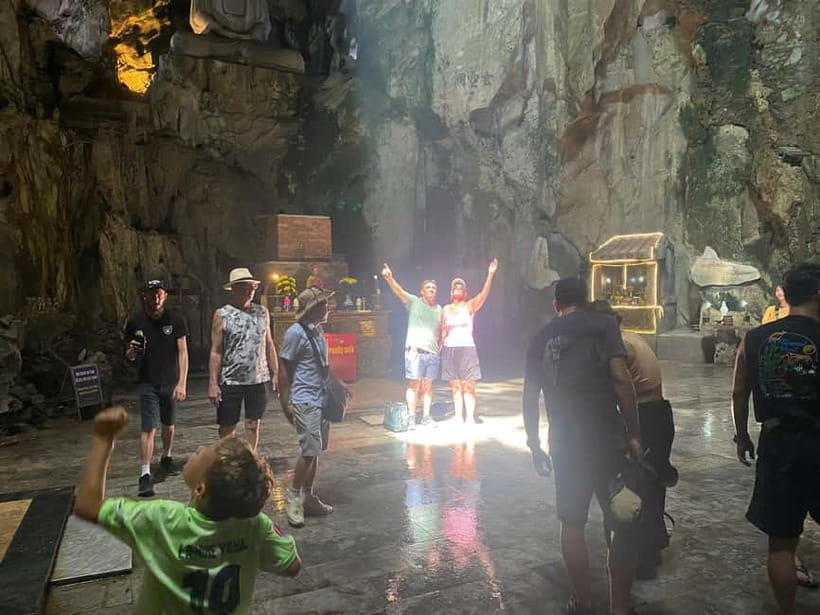
- Am Phu Cave (also called Hell Cave) pairs cave darkness with Buddhist sculpture themes of karma and rebirth.
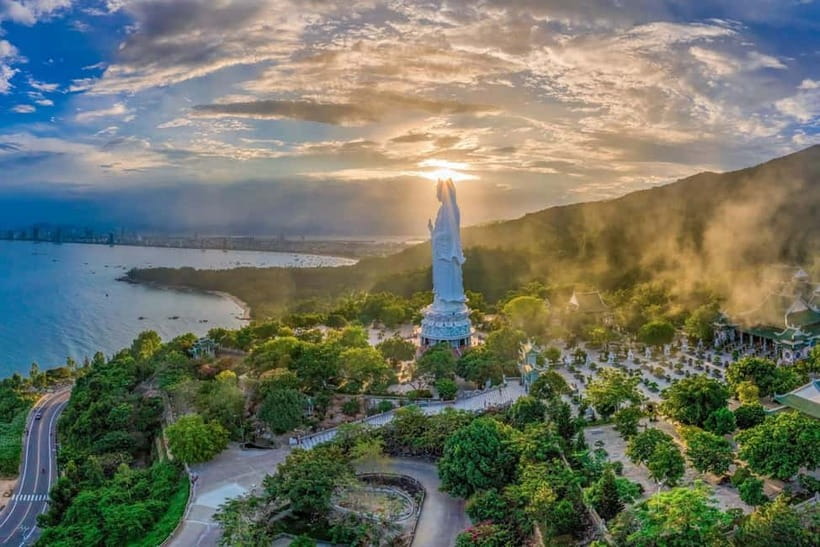
- Linh Ung Pagoda includes the towering Lady Buddha statue and photo-worthy temple grounds on Son Tra Peninsula.
- Marble Mountain isn’t just views; it’s pagodas, caverns, and dramatic light from rock openings.
- A stop at the 400-year-old Non Nuoc stone carving village lets you see traditional craft at the mountain’s base.
- Small group size, limited to 12, keeps the day from feeling chaotic.
- Morning tour includes lunch; the afternoon option does not include a meal.
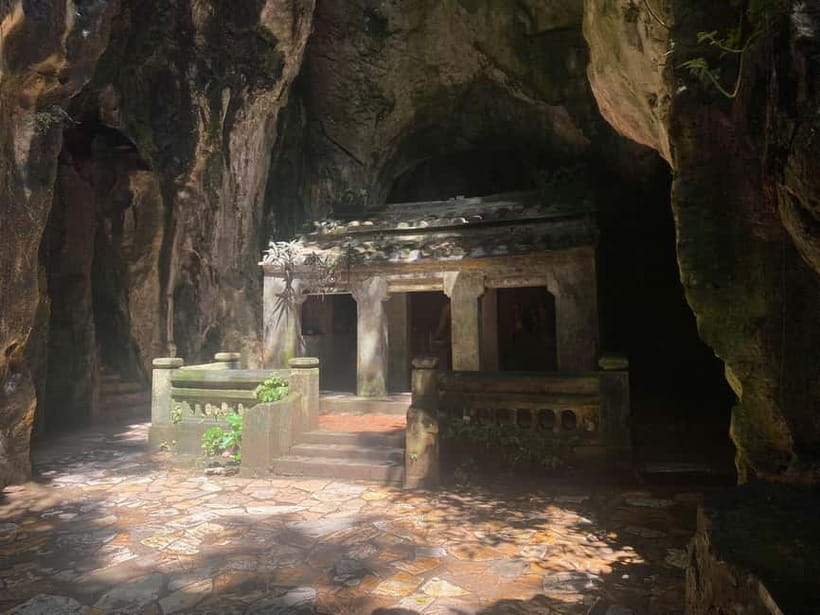
Marble Mountain: limestone hills, pagodas, and cave-light drama
Marble Mountain (Ngu Hanh Son) is one of those places where it helps to have a plan. The hills are made of limestone and marble rock, and the whole site is threaded with caves, shrines, and staircases. Even before you start going underground, you’re already climbing into viewpoints and temple corners that feel built for photos.
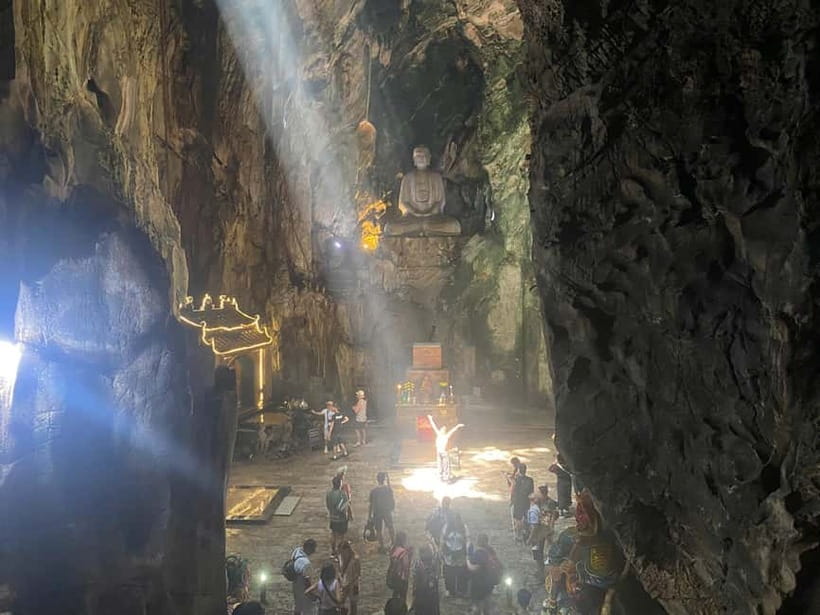
What makes Marble Mountain click for me is the mix of sacred and scenic. You’re not just looking at old stone. You’re walking through spaces where people come to pray, where the air changes near entrances, and where the rock shapes the light. That means you’ll see different vibes at different hours—cool shadow inside, brighter spiritual scenes outside, and always that sense of walking through something that feels longer than a typical attraction.
The tour also smartly combines Marble Mountain with a local craft stop at the foot of the mountain. That matters because it grounds you. You’re seeing the religious rock-world overhead and the human labor that’s long been linked to stonework nearby.
Practical note: wear shoes with real grip. Marble Mountain involves stairs and uneven surfaces, and you’ll thank yourself for comfy footing when you’re moving between viewpoints and cave areas.
You can also read our reviews of more tours and experiences in Hoi An.


Am Phu Cave: Hell Cave symbolism and why the sculptures matter
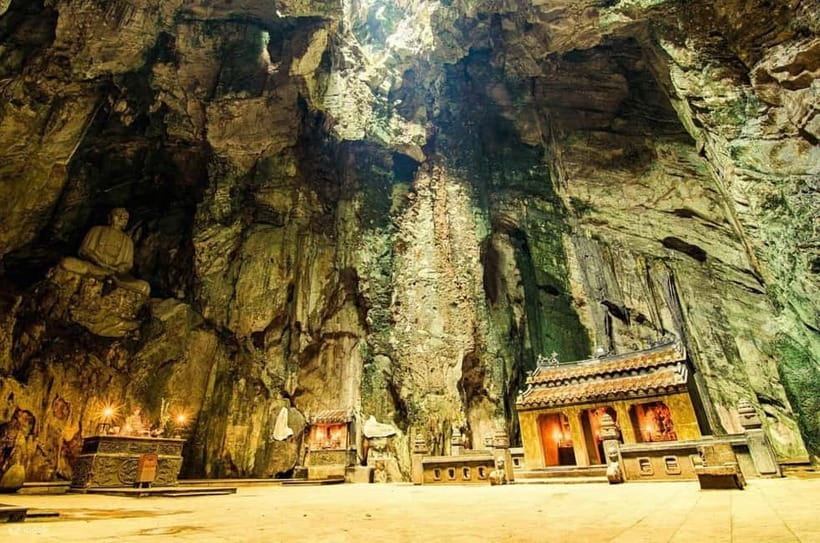
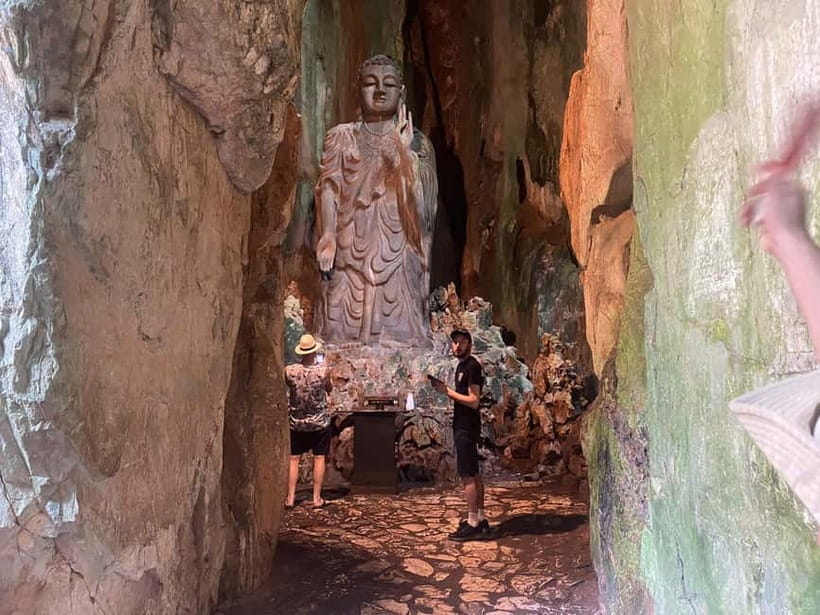
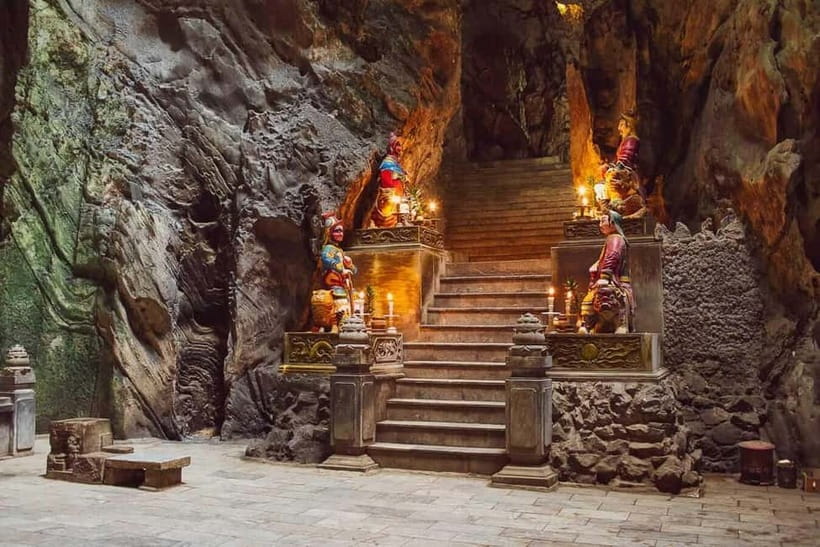
Am Phu Cave is the main underground stop, and it goes beyond a quick walk-through. It’s also known as Hell Cave, and the experience is built around Buddhist symbolism. As you move through the chambers, you’ll see symbolic Buddhist sculptures that connect the setting to ideas like karma and rebirth.
Here’s why that’s worth your time: caves can be “just dark rocks” if you don’t know what you’re looking at. With a guide, the sculptures become more than decoration. They turn the route into a story with a mood—each chamber feels like a chapter. Even if you’re not into doctrine, you’ll probably find yourself paying attention to placement, expressions, and the way the tour route directs your eye.
The cave experience also includes deeper areas such as Huyen Khong Cave and other spiritual spaces where natural light streams through rock openings. That contrast—dark passages and sudden patches of brightness—is what makes these caves photograph well. It also gives you a natural rhythm: slow steps inside, then a clearer moment where the scene makes sense.
Tip for photos: move when the guide indicates it’s a good time, not when you personally feel “ready.” The light windows and viewpoints change with timing, and being on the right part of the route at the right moment can make a huge difference in your results.
Non Nuoc stone carving village: 400 years of making with stone
Right by Marble Mountain, you’ll visit the Non Nuoc Stone Carving Village. This isn’t a random add-on. The idea here is to show you the human side of what Marble Mountain represents.
The village has a tradition of stone carving that’s been passed down for over four centuries. You’re guided through the area, and the focus is on the craft—how stone is worked and what that art has meant locally. If you’ve ever wondered why certain regions become famous for a specific kind of product, this stop gives you a clean answer: skills are inherited, practiced, and tied to local materials.
For most people, this part becomes a nice mental break from climbing and cave darkness. You get more open walking and more time to slow down. It’s also useful for understanding the “stone culture” that connects the mountain, the temples, and the everyday life around it.
If you like souvenirs, consider using this moment to browse with intention, not impulse. Even if you only buy one small piece, you’ll appreciate it more because you saw the craft behind it.
Monkey Mountain and Linh Ung Pagoda: Lady Buddha views and temple peace
After Marble Mountain and its underground sections, the day shifts to Son Tra Peninsula for Monkey Mountain. This area is known for lush forest around the mountain and (as the tour description notes) endangered monkeys. Even if you don’t see monkeys on the route you take, the overall feeling here is greener and airier than the city.
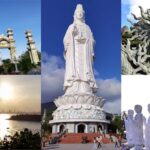
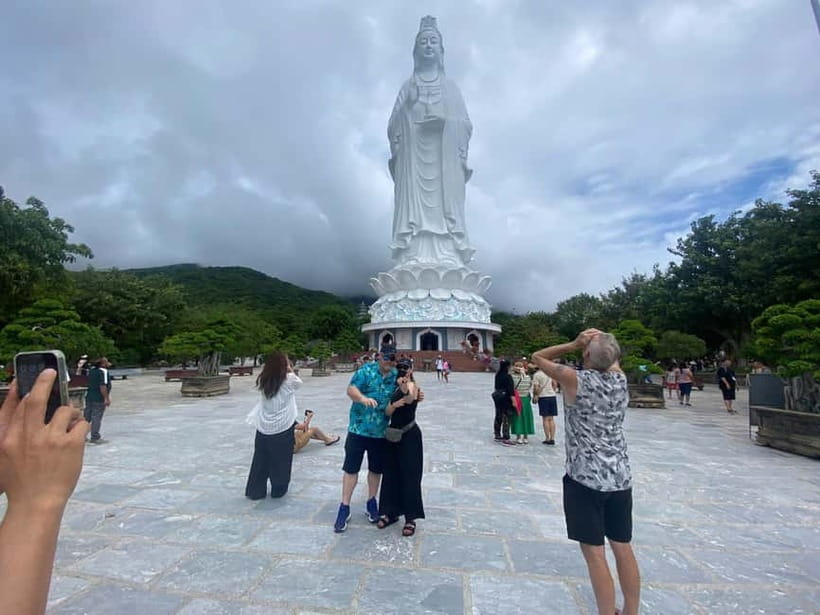
The anchor stop is Linh Ung Pagoda, one of the most important Buddhist sites in central Vietnam. You’ll have a photo stop and then a visit with guided time plus a walk around the temple grounds. The big visual is the Lady Buddha statue, which is listed as Vietnam’s tallest Buddhist statue at 67 meters.
What you’ll remember most is scale. Up close, it feels more monumental than it looks in photos. And from the approaches and viewpoints, you can frame the statue against the surrounding area in a way that makes your pictures feel more “you were really there.”
What I like about Linh Ung Pagoda as a stop is the balance. You’re looking at a famous landmark, but you’re also walking temple paths and symbols at a human pace. It’s not just sightseeing. It’s calmer, more ceremonial-feeling, and it gives your legs a break from the tighter stair routes you did earlier.
Photo tip: aim for both wide shots (for that statue scale) and closer temple details. Temple grounds are built for framing—gates, incense areas, and icon details make great backgrounds even when you don’t catch perfect light.
Timing that works: morning vs afternoon tour flow
This tour comes in two main versions, and your choice changes how the day feels.
Morning tour starts with pickup around 7:15–7:45, with an option to be picked up in Hội An and another in Da Nang. It includes visits to Linh Ung Pagoda and the Lady Buddha first, then moves to Marble Mountain for guided exploring and the stone carving village stop. You’ll also visit Am Phu Cave, and then you’ll get a local lunch before heading back.
Afternoon tour starts later, with pickup around 1:15–1:45 and a different routing order. It includes Marble Mountain exploration, the stone carving village, then Am Phu Cave, and then you continue to Monkey Mountain and finish with Linh Ung Pagoda and the Lady Buddha. The important difference: the afternoon tour does not cover a meal.
So which should you choose? If you like a smoother start and don’t want to worry about lunch, the morning tour is the safer bet. If you prefer to sleep in or you’re already doing other things in the morning, go afternoon—just bring snacks or plan a meal after you’re dropped back.
One honest caution: multiple schedules can feel crowded when you’re bouncing between cave, village, and a big pagoda complex. The best strategy is to decide ahead of time what you want to prioritize—like Am Phu Cave and Lady Buddha for photos—then let the rest be “good bonus moments,” not make-or-break ones.
Guides, group size, and the value of structure
The tour runs as a small group, limited to 12 people, using a high-quality AC vehicle. That small size matters on sites like Marble Mountain where movement and timing affect the experience. You’re not stuck waiting behind large tour batches.
What also tends to make or break a day like this is the guide. This operator uses English-speaking local guides, and the names that show up in past bookings include Mr Vinh, Thanh, Hai, Juni, and Quyen. The common thread in the praise is communication—being clear about what you’re seeing and adding context so the caves and temples feel meaningful, not random.
I also like that you get mineral water included. On a 6-hour day in Central Vietnam, that small perk keeps you from feeling like you need to stop for every need.
Price-wise, $19 per person can be a good deal when you look at what’s included: hotel pickup and drop-off in Da Nang or Hội An, the AC vehicle, a local guide, entrance fees for Marble Mountains and Am Phu Cave, mineral water, and insurance. The tour isn’t trying to be “everything” in the region, but it packs in major sights with guided context. That’s where value comes from.
Not included: elevator fees and personal expenses. So if you’re planning to use elevators anywhere on-site, budget for it. Personal expenses are personal—snacks, water beyond what’s provided, and any shopping.
Also, this tour takes place rain or shine. That’s helpful to know up front. You can bring the right shoes and accept that plans won’t be canceled just because clouds show up.
What to bring and how to prepare for a 6-hour cave-and-temple day
This isn’t a light “walk and photo” outing. It’s a mixed day of stairs, caves, temple walks, and viewpoints.
Bring:
- Comfortable shoes (the non-negotiable item here)
- Sunglasses and sun protection (hat + sunscreen)
- Comfortable clothes you can move in
Keep your expectations realistic. A cave route can be cooler and dimmer, which can feel great after outdoor climbing, but it also means you’ll want to keep your phone ready and your bag secure. Also, plan to move steadily. The tour runs on a clock, and you’ll enjoy it more if you don’t treat every stop like an all-day hangout.
For photography, the day offers a nice variety:
- Cave interior scenes and cave sculptures
- Temple exteriors and shrine details
- Big views from Monkey Mountain and the Linh Ung Pagoda area
If you’re sensitive to crowds, the small group helps, but major sites still get busy. Going in with a calm mindset usually beats trying to fight the flow.
So, should you book this Marble and Monkey Mountain combo?
If you want one day that hits three major pillars—limestone caves, Buddhist temple culture, and panoramic viewpoints—this is an efficient way to do it. I think it’s a smart choice for first-timers who don’t want to stitch together transport and tickets on your own, especially if you’re staying in Hội An or Da Nang and want pickup solved for you.
Book it if:
- You’re excited by Am Phu Cave’s symbolism and want guided context
- You care about iconic temple photos, including Lady Buddha
- You’d rather spend your energy enjoying the sites than planning routes
Skip it or reconsider if:
- You know you hate tight schedules. Some days can feel packed, and solo roaming time may not be as generous as you’d like.
- You need mobility-friendly routes. This tour is noted as not suitable for people with mobility impairments.
If you do book, pick the morning option if lunch matters, and pack comfortable shoes like it’s your top priority. Your best “success plan” is simple: prioritize the two anchors—Marble Mountain/Am Phu Cave and Monkey Mountain/Linh Ung Pagoda—then let the stone village and extra viewpoints be the pleasant extras.
FAQ
How long is the tour?
The tour runs for about 6 hours.
Where can I be picked up and dropped off?
Pickup and drop-off are available in Da Nang and Hội An, depending on which option you choose.
What’s included in the price?
Hotel pickup and drop-off, an AC vehicle, a local English-speaking guide, entrance fees for Marble Mountains and Am Phu Cave, mineral water, and insurance.
Is lunch included?
Lunch is included on the morning tour. The afternoon tour does not include a meal.
Are elevator fees included?
No. Elevator fees are not included.
Is the tour wheelchair or mobility-friendly?
No. The tour is not suitable for people with mobility impairments.