REVIEW · DA NANG
Da Nang Epic History Tour by Cham Museum & Tasty Cuisine/Cafe
Book on Viator →Operated by Hung Le Travel-The Local Signature · Bookable on Viator
Da Nang history fits neatly into one walk. You get Cham Museum sculpture context (including Cham Pa and the My Son thread), then a practical stroll that links temples, the Dragon Bridge (666m), and food stops inside the city center. The route is built for people who want meaning, not just selfies.
What I like most is the way the tour connects art to everyday Vietnam—especially at the Cham Museum, where the stone pieces are explained with dates and religion in mind. My second favorite part is the food finish: pho (chicken or beef) plus a coffee tasting endcap with coconut or salt coffee, so you leave with actual local flavors, not just facts.
One thing to consider: it’s a walking-focused experience with multiple stops, and it runs best when weather is good. If you prefer slow, sit-down sightseeing, you might want to pace your day around this one.
In This Review
- Key Highlights You’ll Notice Fast
- A 3-Hour Da Nang Walk That Trades Facts for Feel
- Cham Museum of Cham Sculpture: Why Those Stone Gods Matter
- Long An Pagoda and APEC Park: Buddhism as Daily Life
- Dragon Bridge (666m) and the Han River Walk: War-Era Context You Can See
- Pho at Ha Noi Corner and the Chicken Church Cathedral Stop
- Han Market and French-Colonial Trade Stories: China, Commerce, and Continuity
- Coffee Finale: Coconut or Salt Coffee with Wartime Story Weight
- Is $29 Worth It? Value Check for a Private Da Nang History Tour
- Should You Book This Da Nang Epic History Tour?
- FAQ
- How long is the Da Nang Epic History Tour?
- What’s included in the tour price?
- Is the tour private?
- Do I need pick-up or drop-off?
- Where does the tour start and end?
- What meal is included during the tour?
- Is a mobile ticket provided?
- What’s the cancellation policy?
- Is the tour weather-dependent?
Key Highlights You’ll Notice Fast
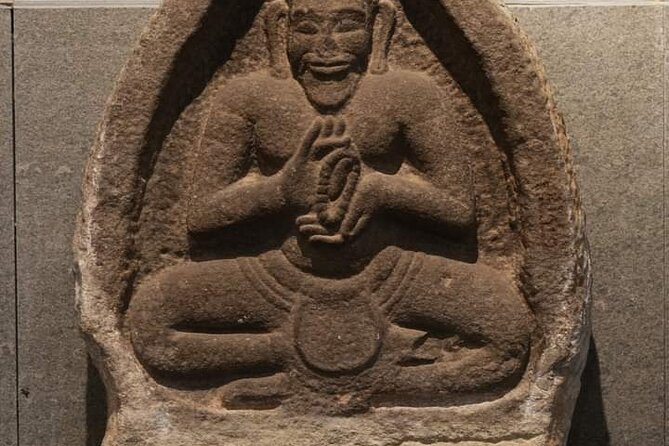
- Cham Museum stones from the 7th–14th centuries tied to the Cham Pa Kingdom and My Son context
- Long An Pagoda with Mahayana Buddhism explained through local life, not only temple views
- Dragon Bridge (666m) plus a Han River walk that frames Da Nang’s Vietnam War-era role
- Chicken Church cathedral stop plus pho at Ha Noi Corner and herbal green tea
- Han Market route with stories about the Chinese community in Vietnam
- Coconut or salt coffee tasting as the final “history you can taste” moment
A 3-Hour Da Nang Walk That Trades Facts for Feel
This tour is priced at $29 per person, which is a fair deal for a private, guided history-and-food route that lasts about 3 hours. You also don’t have to hunt around for the right places yourself, since the meet-up is clear and the guide keeps the flow tight.
A big plus is the guide setup. Hung Le Travel provides an English-speaking guide with background as a historian, and that matters here because the stops are all tied together by theme: religion, trade, war, and how the city lived through it. In the feedback I saw, the guide named Hung stood out for being friendly and engaging—exactly what you want when the sites cover heavy topics like religious art and wartime history.
Logistics-wise, you should know what you’re signing up for: there’s no pick-up or drop-off included. You meet at the Da Nang Museum of Cham Sculpture, and the tour ends back at the same spot. If you’re staying outside the center, plan your transit early so you’re not stressed before the first stop.
You can also read our reviews of more historical tours in Da Nang
Cham Museum of Cham Sculpture: Why Those Stone Gods Matter
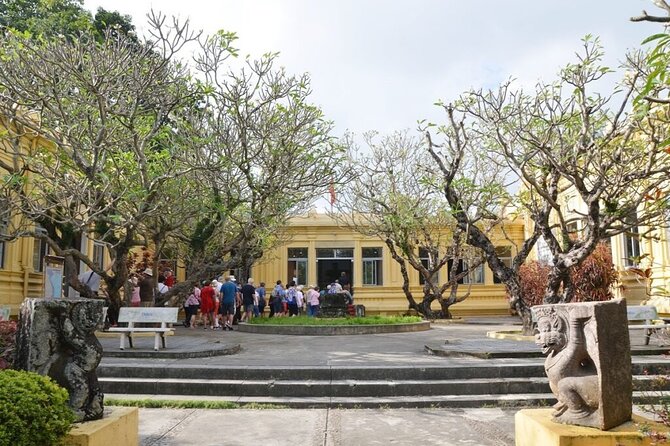
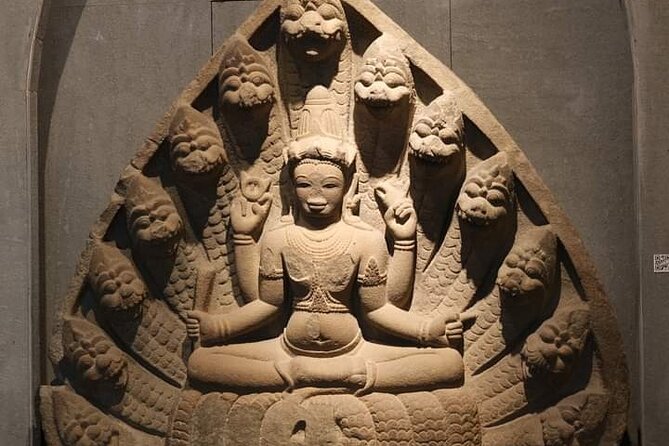
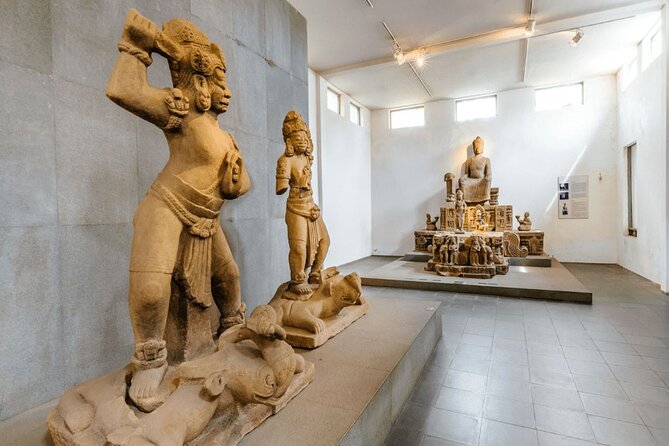
The first stop is the Da Nang Museum of Cham Sculpture, and it’s the kind of place where a guide really earns their pay. The museum is described as the world’s largest Hinduism sculpture collection, with hundreds of antique stone statues dating from the 7th–14th centuries tied to the Cham Pa Kingdom—a major early nation in central Vietnam.
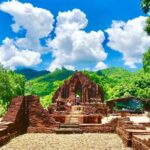
Here’s what you’ll enjoy if you care about more than surface aesthetics: you’re not just looking at statues. You’re learning how the Cham Pa religion shaped their art, and how that connects to the broader story behind My Son. Even if you’re not spending extra time at My Son itself, this museum gives you the religious and historical framing that makes later sights make more sense.
Practical note: bring a little patience for reading and explanations. Sculptures like these work best when you understand the why behind the images. With Hung’s historian background, the tour pacing is built around understanding—so you’re less likely to feel like you wandered through a gallery without context.
Potential drawback: this start can feel “indoors and detailed” compared to the rest of the trip. If you want a tour that’s mostly outdoor viewpoints, you’ll still get them later, but the Cham Museum is clearly the intellectual anchor.
Long An Pagoda and APEC Park: Buddhism as Daily Life
After the museum, the route shifts to spirituality and city landmarks. You’ll visit Long An Temple (often written as Long An Pagoda), where the guide focuses on Mahayana Buddhism and local beliefs—plus how those beliefs affect local life.
This is one of the more valuable stops on the whole tour because it’s not just about architecture. You’re meant to hear the stories behind what people practice and why it matters here. In practical terms, it helps you read what you see afterward: a temple visit becomes a lens for understanding daily routines, not just an optional photo stop.
Then there’s a stop at APEC Park. The tour data doesn’t go into special details about what you’ll do there, but it does mean you’re not stuck only in “old Vietnam” settings. You get a quick city-side pause that helps the walk feel like a whole-day Da Nang experience rather than a string of museums.
What to watch for: temple visits often involve walking and outdoor time, even if the most meaningful parts are explanations. Wear comfortable shoes and keep your water handy for the later river and market legs.
Dragon Bridge (666m) and the Han River Walk: War-Era Context You Can See
One of Da Nang’s most photographed landmarks is Dragon Bridge, listed at 666 meters long. The tour frames it as the city’s iconic bridge, and once you’re there you’ll understand why: it’s a modern city symbol with a story that sits inside a much older region.
Then you walk along the Han River, and this is where the tour turns from sightseeing into historical geography. The idea is to witness what was built for the Vietnam War era, since Da Nang served as a strong military base before 1975. You get this context while moving through the riverfront area, so it’s less abstract than reading a book later.
This is also where the guide’s historian background helps most. Without context, a river walk can feel like scenery. With the context, the same stretch of city starts to feel like layers of time—war era planning, rebuilding, and the way the city keeps functioning today.
A consideration: if you’re the type who prefers purely light sightseeing, this section might feel heavier than you expected. The tour doesn’t shy away from Vietnam’s wartime impact on families and generations, so go in with the right headspace.
Pho at Ha Noi Corner and the Chicken Church Cathedral Stop

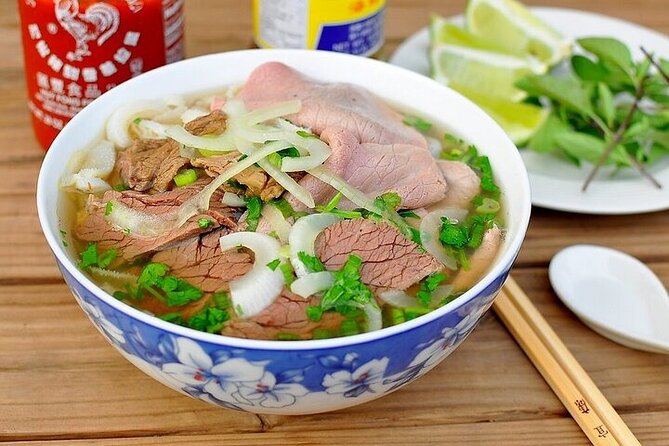
Some tours cram in a meal somewhere random. This one treats food like part of the story, starting with a stop at the Ha Noi Quarter inside Da Nang, where you taste the best pho.
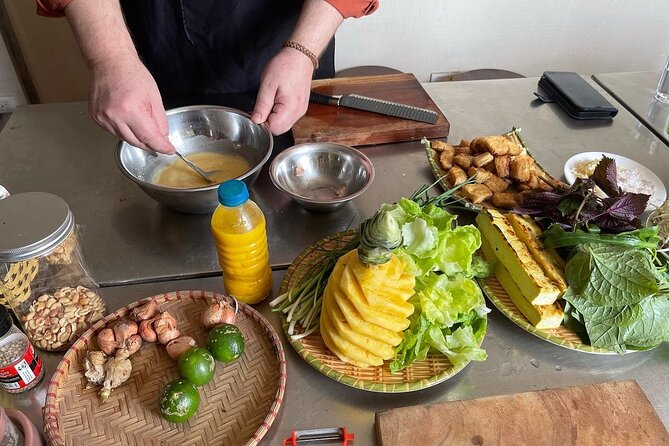
You’ll get chicken or beef pho, and it’s paired with Ha Noi herbal green tea at Ha Noi Corner. It’s a smart combo: warm soup keeps you grounded while the guide’s explanations keep the day moving. Even if you’re not a big pho person, it’s the kind of included meal that helps you reset your energy without breaking the budget.
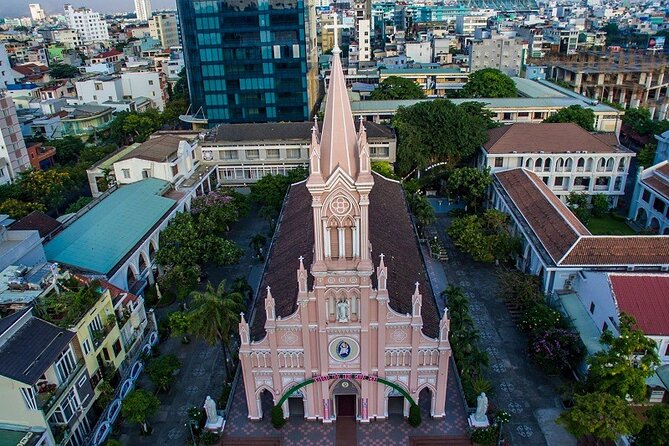
Nearby, you’ll also see Da Nang Cathedral Church, which locals call it Chicken Church. That nickname alone is worth paying attention to, because it signals how locals relate to the building. You’re not just looking at a colonial-era-looking structure; you’re learning how people describe it in everyday language.
Small practical tip: if you’re sensitive to crowds during meal times, aim for slightly earlier slots where possible. The tour duration is tight, so you may not control the exact moment you sit down—but having the awareness helps you manage expectations.



Han Market and French-Colonial Trade Stories: China, Commerce, and Continuity
Next you head to Han Market, described as the biggest market in central Vietnam. The tour route connects this market to the French colonial period, and you’ll hear stories about the Chinese community living in Vietnam.
This stop works because markets are social spaces. You get to watch how people actually move through the area—shopping, chatting, buying essentials—while the guide adds a historical layer about trade and community presence. That’s the “real life history” angle you want if you’re tired of tours that only point at monuments.
One thing I appreciate about doing the market mid-tour (instead of last) is that your brain is still fresh enough to take in stories. By the time coffee comes, you’ll be ready to process everything you’ve heard.
A consideration: markets can mean more walking and more sensory noise. Keep your phone secure, and don’t expect quiet museum pacing here. If you want a slower experience, you can still enjoy it—just accept that the market is meant for action, not reverence.
Coffee Finale: Coconut or Salt Coffee with Wartime Story Weight
The tour finishes with coffee tasting: either coconut coffee or salt coffee. The descriptions frame these coffees as some of the best in Vietnam, but the practical value is bigger than the hype. This final stop turns everything you learned into something you can savor.
Coconut coffee and salt coffee are a nice contrast to the day’s topics. The museum and bridge segments carry strong historical weight, and the market brings busy daily life. Coffee is the decompression moment, where the guide ties in the idea of Vietnam’s past—including war—and how it has affected families’ sleep and memories across generations.
If you’re worried about the coffee being too sweet or too strong, don’t overthink it. You’ll taste, not just stand around listening. Even a small sample can be enough to decide what you’d want later on your own.
Also, because the coffee is included in the tour, you avoid the classic “where do we eat next?” scramble. For a $29, 3-hour private experience, that kind of endcap matters more than it sounds.
Is $29 Worth It? Value Check for a Private Da Nang History Tour
For $29 per person, you’re paying for a private, English-speaking guide with historian background, entrance to the Cham Museum, and included stops that cover multiple central Da Nang landmarks. You also get a meal (pho plus herbal green tea) and a coffee tasting.
Compared with piecing this together yourself—museum tickets, figuring out route, and finding an English guide for context—this price can feel efficient, especially since it’s about 3 hours. You don’t need a full half-day of planning, and you still cover major themes: Cham Pa religion, Buddhism in local life, Dragon Bridge and Han River context, cathedral culture, and market trade stories.
Two practical “worth it” notes:
- You’re not paying extra for the included core experiences.
- The tour is private, so your group pace stays yours (within the tour’s structure).
One more detail that affects value: the tour data notes that it’s booked about 60 days in advance on average. That’s a hint to book early if your dates are fixed, especially if you want specific timing.
Should You Book This Da Nang Epic History Tour?
Book it if you want a guided story-walk through central Da Nang where the guide connects religion, city identity, trade, and wartime context. It’s a good fit for first-timers who don’t want to stitch together museum time, a market visit, and food stops on their own.
Skip it (or consider a gentler day) if you want mostly relaxed sightseeing with minimal walking, or if wartime history content feels too intense for your trip style. Also, if you hate guided talking, this may not be your best match—this tour’s value is the explanations at each stop.
If you’re curious, bring comfortable shoes, expect a mix of indoor and outdoor time, and go hungry for pho. You’ll finish with coffee and a clearer sense of why Da Nang looks the way it does today.
FAQ
How long is the Da Nang Epic History Tour?
The tour runs for about 3 hours.
What’s included in the tour price?
You get a private English-speaking guide with historian background, Cham Museum entrance tickets, pho (chicken or beef), and a coconut coffee or salt coffee tasting. You also get Ha Noi herbal green tea at Ha Noi Corner. If you choose the walking tour with rice wine distillery option, rice wine distillery and tasting are included.
Is the tour private?
Yes. It’s a private tour/activity, and only your group participates.
Do I need pick-up or drop-off?
No. Pick-up and drop-off are not included, so you’ll go to the meeting point on your own.
Where does the tour start and end?
It starts at the Da Nang Museum of Cham Sculpture (Số 02 Đ. 2 Tháng 9, Bình Hiên, Hải Châu, Đà Nẵng 550000, Vietnam) and ends back at the same meeting point.
What meal is included during the tour?
You’ll taste pho at Ha Noi Quarter, with a choice of chicken or beef, plus Ha Noi herbal green tea.
Is a mobile ticket provided?
Yes, the tour includes a mobile ticket.
What’s the cancellation policy?
You can cancel for free up to 24 hours in advance for a full refund. If you cancel less than 24 hours before the start time, the amount paid is not refunded.
Is the tour weather-dependent?
Yes. The tour requires good weather, and if it’s canceled due to poor weather, you’ll be offered a different date or a full refund.