One day, two cities, and plenty to taste. This small-group tour ties together Da Nang beaches and pagodas with Hoi An’s UNESCO old town—plus snacks, coffee, and a night-market stroll. I like that it keeps the pace sensible, using a private vehicle to cut out the public-transport hassle while still letting you wander on foot.
What I really like: you get entry tickets included, so you’re not doing mental math at every gate. And you’re traveling with a small group (up to 10) plus an English-speaking guide, which makes the day feel personal instead of like a checklist.
One possible drawback: it’s a full morning-to-evening sprint (about 5 to 6 hours), so if you want a slow, beachy day with zero schedule pressure, this may feel too busy.
In This Review
- Key Things That Make This Tour Worth Your Time
- Da Nang and Hoi An, Wired Into One Practical Day
- Price and Value: Why $72 Can Make Sense Here
- Getting Picked Up and Getting Around Without the Day Melting
- Dragon Bridge and My Khe Beach: Your Fast Start in Da Nang
- Marble Mountains: Caves, Tunnels, and Temple Corners
- Son Tra (Monkey Mountain) and Lady Buddha: Big Views With a Clear Payoff
- Egg-Yolk Coffee Stop: A Small Taste With a Real Local Twist
- Hoi An Ancient Town: UNESCO Walking That Actually Makes Sense
- Assembly Halls and Old Houses: The Social Side of Hoi An
- The Night Market: Eat First, Shop Smart, Then Ask Questions
- How the Day Feels: Pacing, Heat, and When You’ll Want Rest
- Who This Tour Fits Best (and Who Might Prefer Something Else)
- Should You Book This Da Nang and Hoi An Tour?
- FAQ
- What’s the duration of the Da Nang and Hoi An tour?
- How much does the tour cost?
- Is pickup available?
- What’s included in the price?
- Are entry tickets included?
- What sights does the tour cover?
- Is there time for food and shopping?
- Is there a limit on group size?
- What if I have dietary requirements?
- What’s the cancellation policy?
Key Things That Make This Tour Worth Your Time
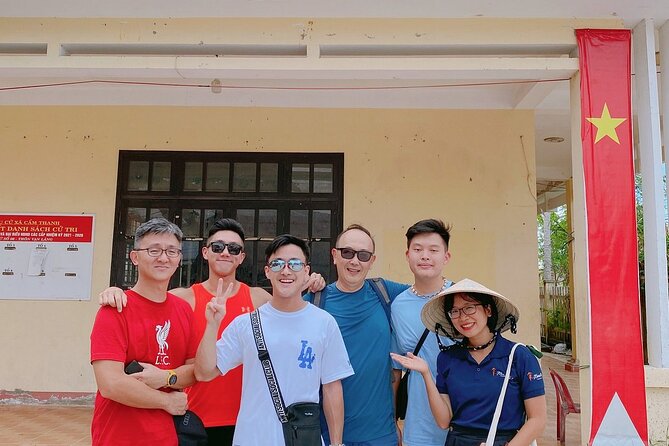
- Small-group size (max 10) keeps questions and pacing realistic
- Private modern vehicle means less stress between Da Nang and Hoi An
- Included entry fees reduce friction at temples and heritage sites
- Son Tra + Lady Buddha gives you big views without needing a long hike plan
- Hoi An Ancient Town UNESCO walk covers the main landmarks in limited time
- Night market time helps you eat first, shop second, and still be back in Da Nang
Da Nang and Hoi An, Wired Into One Practical Day
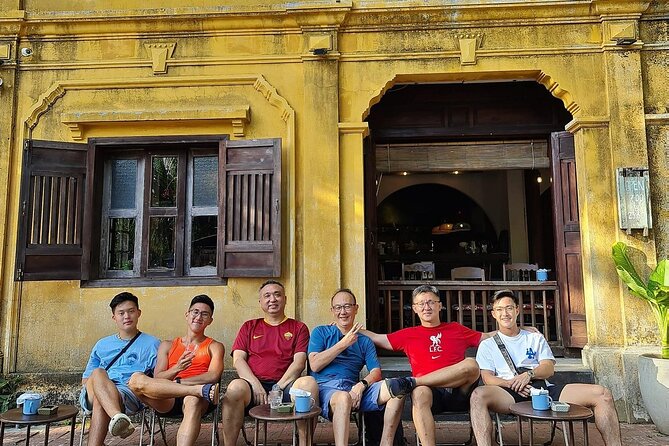
Da Nang and Hoi An are close enough that you can connect them in one day, but only if the plan is tight. This tour is built for exactly that: morning sightseeing around Da Nang, then a heritage-focused walk through Hoi An, finished with the night-market food scene and a return drop-off back at your starting point.
What you get is variety with context. You’ll move from modern city landmarks like Dragon Bridge to mountain-and-temple time on Son Tra. Then it’s straight into old-town heritage—assembly halls, merchant houses, and the famous covered bridge—followed by snacks and lantern shopping at night.
If you’re visiting central Vietnam for the first time, or you only have a short window, I like that you don’t have to choose between nature, culture, and food. The day is basically designed to help you sort what you like most so you can plan a second visit later.
You can also read our reviews of more food & drink experiences in Da Nang



Price and Value: Why $72 Can Make Sense Here
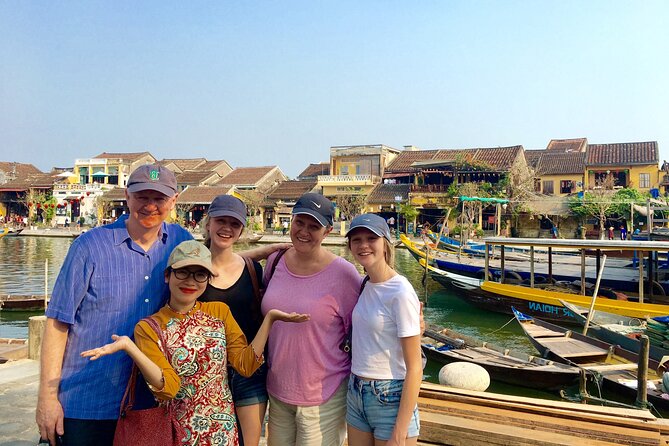
At around $72 for 5 to 6 hours, the math works out best because multiple costs are bundled. You’re not just paying for a guide and a ride—you’re also getting all entrance fees included, bottled water, and local food and drinks.
That matters in Vietnam, where the real price creep often comes from small add-ons: tickets, paid museum stops, drinks, and extra snacks you didn’t plan for. When those are handled, you can focus on what you actually care about—eating, photos, and listening to local explanations.
You also avoid one of the biggest time sinks: figuring out intercity transport and then trying to make your own timing work across Da Nang and Hoi An. With a private vehicle and a guide who knows the flow, you get more site coverage without feeling like you’re racing the clock.
Getting Picked Up and Getting Around Without the Day Melting
The tour starts in central Da Nang at The Cups Coffee Roastery, 192 Nguyễn Văn Thoại, Bắc Mỹ Phú, Ngũ Hành Sơn, Đà Nẵng 550000. Pickup is offered, and the meeting spot is near public transportation, which is handy if you’re not staying right next door.
You’ll travel with a professional driver in a modern vehicle, which keeps the day comfortable—especially when heat and humidity can turn walking into a chore. Guides on this kind of format are often praised for being flexible with timing, and you’ll likely feel that in the way the day breathes: you get time at key stops, but the guide still keeps you moving so you hit the main highlights.
Group size matters here. With a maximum of 10 travelers, the guide can answer questions and adjust pacing without turning it into a factory line.
Dragon Bridge and My Khe Beach: Your Fast Start in Da Nang

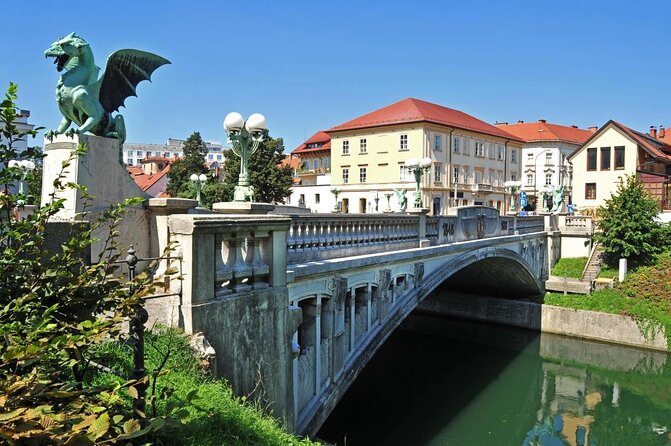
You begin with a look at Da Nang’s signature city landmark: Dragon Bridge, located near the Le Dinh Duong/Bach Dang traffic circle. It’s known for its design and architectural presence, and it’s a good first stop because it gives you a quick sense of the city’s modern identity before you shift to temples and hills.
Then it’s on to My Khe Beach, a 10-kilometer stretch from the Son Tra Peninsula to the Marble Mountains. It’s recognized as one of the world’s most beautiful beaches by Forbes magazine, and even if you’re not chasing awards, it’s an easy way to understand why Da Nang became a beach magnet.
Practical take: My Khe is open-air. Bring sunglasses, and plan to hydrate early. If you’re sensitive to sun, a light layer helps, too.
Marble Mountains: Caves, Tunnels, and Temple Corners
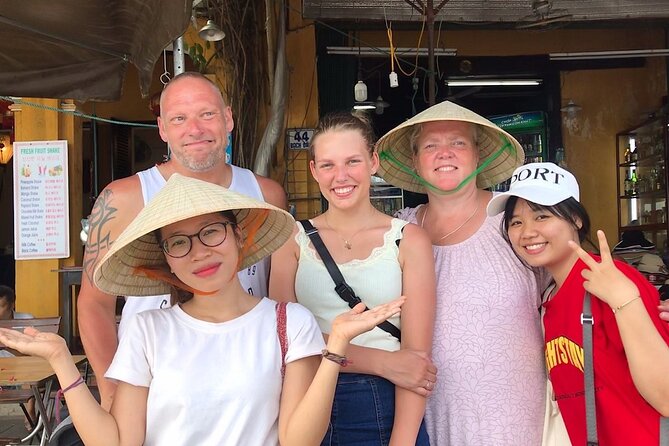
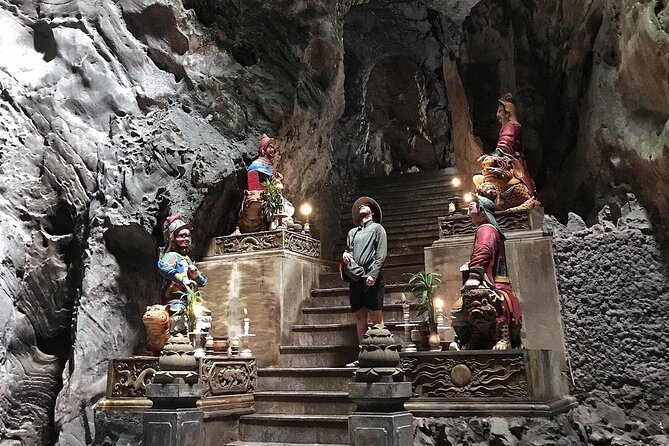
Next comes the Marble Mountains, where you’ll see caves, tunnels, and temple spaces scattered through the limestone and marble hills. This stop is one of the best “see it, walk it, feel it” transitions in the day—because you’re not just looking at buildings. You’re moving through natural structure and built-in religious spaces.
What to expect: steps and uneven ground. If you’re wearing slippery shoes, you’ll regret it fast. If you like photos, this is a strong stop because the mountain terrain creates angles and shadow lines that flat city streets don’t.
A small consideration: it can get warm and busy depending on the time of day. If the crowd thickens, let your guide steer you to the calmer routes first, then save the busiest viewpoints for when you’ve had a moment to cool down.
A few more Da Nang tours and experiences worth a look






Son Tra (Monkey Mountain) and Lady Buddha: Big Views With a Clear Payoff
Then you head to Son Tra (Monkey) Mountain, a national park area. It sits about 693 meters above sea level, and you’ll reach it on a roughly 35-minute drive from Da Nang.
This stop is your “mountain break” from city walking. You’re higher up, the air can feel different, and you get that sense of Da Nang pushing out toward the sea and coastline. If you like scenery that isn’t just beach photos, this is where you’ll start to feel the region’s variety.
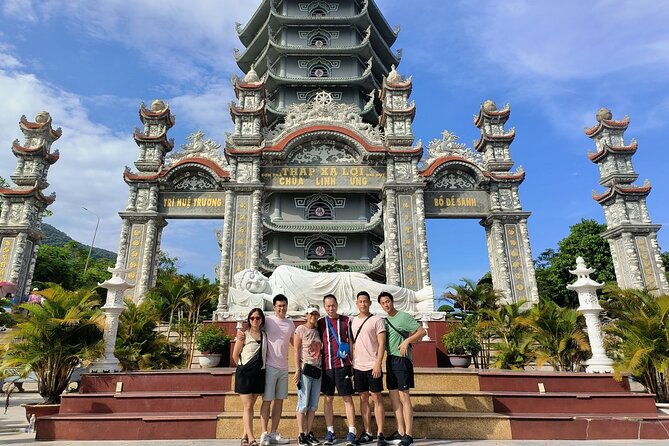
From there, the tour goes to Lady Buddha Pagoda (Linh Ung Pagoda), on the Son Tra Peninsula. The Lady Buddha statue is 67 meters tall and is known as the tallest Buddha statue in Vietnam. You’ll have about 45 minutes here, which is enough to take photos, walk around the grounds, and still keep the day moving.
Practical take: this is another outdoor stop, so bring water and something to protect you from sun. Also, temples usually have some dress expectations; if you’re in shorts or a light dress, you might want to pack a light cover-up.
Egg-Yolk Coffee Stop: A Small Taste With a Real Local Twist
Back in Da Nang, you’ll stop at a traditional coffee shop for about 30 minutes. This is where you try Vietnamese coffee that’s often made with egg yolks and condensed milk.
Even if you’re not a coffee obsessive, this tasting works because it’s quick and specific. It also gives you a baseline for why Vietnam’s coffee culture is different from the espresso-and-quick-caffeine routine you might be used to.
Don’t overthink it. Order what the menu recommends for your comfort level, take your time sipping, then use the rest of the day for the sites and the food.
Hoi An Ancient Town: UNESCO Walking That Actually Makes Sense

Once you arrive in Hoi An, you get a serious chunk of time in the UNESCO-listed Ancient Town—about 2 hours. This is the heart of the experience. You’re looking at a well-preserved trading-port story that stretches back to the 16th century, and the town layout makes it possible to connect landmarks without needing a car or constant taxi trips.
The guide will point out key sights like:
- the Cantonese Assembly Hall
- the old Duc An House
- and the Japanese Covered Bridge area
This is where a guide pays off. Hoi An can look like a pretty town first—then a few explanations turn it into a place with meaning. You’ll understand why particular communities built assembly halls, and why merchant houses and bridges matter so much in a port town.
Practical take: plan for walking through old streets. It’s not a long-distance hike, but it is steady. If you’re prone to blisters, bring the band-aids.
Assembly Halls and Old Houses: The Social Side of Hoi An
Inside Hoi An, you also visit the Fujian (Phuc Kien) Assembly Hall, built around 1690. It originally served the Chinese ethnic group from Fujian, China. Assembly halls aren’t just pretty buildings—they reflect how trade communities organized support, identity, and local leadership.
After that, you’ll spend time at the Japanese Covered Bridge (Chùa Cầu), completed in 1593. This bridge is one of Hoi An’s most iconic symbols, and it works as a short stop with a big photo payoff. The covered design gives it a character that feels different from standard bridges you’ve seen in other cities.
Then there’s a visit to the Old House of Tan Ky. This one is useful if you want the story behind daily life rather than only trading power. Expect a guided look that helps explain how different cultural influences shaped the town’s architecture and household layout.
Time-wise, these stops are short enough to keep the day from dragging, but not so short that you feel rushed out of everything.
The Night Market: Eat First, Shop Smart, Then Ask Questions
Your day wraps with a walk through Hoi An’s night market. This is one of the best parts of the tour for simple reasons: you’re not stuck trying to find food on your own at the end of a long day.
You’ll see lots of local products for sale, including Hoi An’s famous lanterns. If you’ve never bought lanterns before, here’s my approach: decide what size you actually want to take home, then compare prices only after you’ve seen a few stalls. You’ll learn quickly what’s a reasonable price and what’s a marketing premium.
This is also where the guide’s personal recommendations can help. One of the big strengths of this tour style is that your guide tends to suggest what’s worth eating and where to browse for items you care about—especially if you want to explore the cloth-tailoring world that Hoi An is known for.
How the Day Feels: Pacing, Heat, and When You’ll Want Rest
The whole experience runs about 5 to 6 hours and is structured for a morning-to-evening flow. In practical terms, that means you’ll keep moving, but you shouldn’t feel like you’re trapped on a bus the entire time.
Good tour guides on this route are often praised for keeping things relaxed and flexible—so if you need a short photo break or want to linger 10 minutes at a viewpoint, it usually doesn’t derail the schedule.
Still, the day is compact. If you’re arriving already tired, take the morning seriously: hydrate early, wear comfortable shoes, and plan to eat during the stops rather than saving everything for the night market.
For photography, your best light will likely be around the morning city sights and the late afternoon into evening transition. The night market is great for color, but you may want to bring your phone power bank or a spare battery.
Who This Tour Fits Best (and Who Might Prefer Something Else)
This tour is a great match if:
- you want both Da Nang and Hoi An in one day
- you like culture plus food, not just one or the other
- you’re traveling with limited time and want a plan that doesn’t fall apart
- you appreciate small-group pacing and an English-speaking guide
It may not be ideal if:
- you hate schedules and prefer slow travel
- you’re looking for a long beach day with lots of free time
- you want deep museum-style time in one city rather than a cross-city overview
One more note on guides: in the real world, you might meet people like Dat, Thinh, Mee, Kelly, Anh, Tracee, Lam, or Long. Different guides bring different storytelling, but the consistent theme is clear communication, patience, and a willingness to help with practical choices like where to eat at night.
Should You Book This Da Nang and Hoi An Tour?
I think you should book it if you want a high-signal overview day—the kind where you leave with a mental map of what each place is about, and enough snacks and street life that you feel you truly experienced the area.
Book it now if:
- you value included entry tickets and food
- you want easy intercity transport with a professional driver
- you like heritage sites but also want a food-driven evening payoff
Skip it (or look for a slower alternative) if:
- you’re the type who needs many hours in one place to feel satisfied
- you’re sensitive to heat and would rather spend your time doing one city only
If you do book, go in with one simple game plan: wear comfortable shoes, keep your phone charged, and ask your guide one practical question early—where to eat after the tour and what to buy at the night market for best value. That one question can turn a good day into a memorable one.
FAQ
What’s the duration of the Da Nang and Hoi An tour?
The tour lasts about 5 to 6 hours.
How much does the tour cost?
The price is $72.
Is pickup available?
Pickup is offered, and the tour starts at The Cups Coffee Roastery, 192 Nguyễn Văn Thoại, Bắc Mỹ Phú, Ngũ Hành Sơn, Đà Nẵng 550000.
What’s included in the price?
The tour includes all entrance fees, use of a modern vehicle with a professional driver, bottled water, local food and drinks, and an English speaking guide.
Are entry tickets included?
Yes. Entry tickets are included for your convenience, including stops where admissions apply.
What sights does the tour cover?
You’ll visit highlights including My Khe Beach, Dragon Bridge, Marble Mountains, Son Tra (Monkey) Mountain, Lady Buddha Pagoda, and Hoi An Ancient Town. In Hoi An you’ll also see Fukian (Phuc Kien) Assembly Hall, Japanese Covered Bridge, and Old House of Tan Ky.
Is there time for food and shopping?
Yes. You’ll have a walk through Hoi An’s night market, where you can find food and local products such as lanterns.
Is there a limit on group size?
Yes. The tour has a maximum of 10 travelers.
What if I have dietary requirements?
You should advise any specific dietary requirements at time of booking.
What’s the cancellation policy?
You can cancel for free up to 24 hours in advance of the start time for a full refund. Changes made less than 24 hours before the start time aren’t accepted.