REVIEW · HO CHI MINH CITY
Private Multi-Day Adventure Tour in Vietnam – 12 Days
Book on Viator →Operated by Realistic Asia · Bookable on Viator
Vietnam hits different when the plan is private.
This 12-day tour strings together Mekong Delta canal life and a proper Halong Bay cruise with sunrise Tai Chi, with stops designed around real people, local food, and hands-on moments like coconut candy and cooking with a family. I also like that it mixes classic sights with countryside days, not just long museum hours. The one thing to think about: it is a packed route with several long drives and internal flights, so you’ll want your energy level up for each day.
The big value for me is the logistics: door-to-door transfers, English-speaking guides, and most tickets handled for you. In my experience reading about the tour team, guests highlighted attentive support from staff such as Kathie, Hien, and Shadow—names that pop up in different trip notes. Still, there’s a tradeoff: your Halong Bay cabin is listed as a shared double/twin/triple setup, so it’s not a fully private room on the water.
In This Review
- Key highlights worth planning around
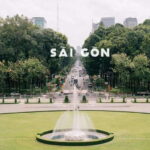
- Meeting Your Guide in Ho Chi Minh City and Getting Rolling Fast
- Ben Tre to My Tho: Turtle Island fruit, coconut candy, and honey tea songs
- Flying to Hue, then riding into the Imperial Citadel and Thien Mu Pagoda
- Hoi An Ancient Town by foot: merchant lanes, the Covered Bridge, and market time
- Driftwood Village (Lang Cui Lu): hands-on craft with artisan storytelling
- Hanoi arrival day, then Ba Vi for cycling, cooking, and a tea plantation visit
- Trang An, Hoa Lu, Tam Coc, and Mua Mountain’s 500 steps
- Halong Bay cruise: sundeck Tai Chi, limestone caves, and kayaking
- Your final Hanoi morning: markets, souvenirs, and departure from Noi Bai
- Price and value: what $2,185 buys you in real time
- Should you book this 12-day private Vietnam adventure?
- FAQ
- Is this tour private or part of a larger group?
- What’s included in the tour price?
- Which internal flights are included, and how much luggage is allowed?
- Do I need to arrange an e-visa?
- Are there extra costs around major holidays or peak periods?
- What happens if Halong Bay weather is bad?
- Where does the tour start and where do you end on the last day?
Key highlights worth planning around
- Mekong Delta rivers by motorboat and sampan: stilt-house and fish-farm scenes, plus fruit and coconut milk at Turtle Island
- Ben Tre coconut culture, not just photos: coconut candy workshop where you learn how local coconuts become sweets
- Hue on foot and by cyclo: Imperial Citadel and Thien Mu Pagoda, with royal-city context that helps the site click
- Hoi An beyond the postcard lanes: ancient town walking tour with merchant-house influences and key landmarks like the Japanese Covered Bridge
- Driftwood Village craft time: make your own driftwood artwork with local artisans, then paint and take it home
- Ninh Binh karst days plus a serious climb: Trang An boat scenery, Tam Coc caves, and about 500 steps at Mua Mountain
Meeting Your Guide in Ho Chi Minh City and Getting Rolling Fast
Your trip starts at Tan Son Nhat International Airport. After you clear customs, you meet your guide in the lobby with a signboard that has your name. If you can’t find them, the confirmation voucher includes emergency contact numbers.
From there, you go straight to your hotel in Ho Chi Minh City. Day 1 is light by design since travel days can already feel like a sprint. The tour includes an overnight in Ho Chi Minh City, plus it lists admission tickets as free on the day—so there’s less pressure to squeeze in extra sightseeing immediately.
What I like here is the simplicity. You don’t spend your first half day figuring out transport or re-checking tickets. And since the itinerary is built around door-to-door pick-up and drop-off, your guide is the one doing the handoffs instead of you.
You can also read our reviews of more private tours in Ho Chi Minh City


Ben Tre to My Tho: Turtle Island fruit, coconut candy, and honey tea songs
Day 2 is the start of the “country Vietnam” feeling, with a drive from Ho Chi Minh City out to Ben Tre in the Mekong Delta area. Expect about 1.5 hours driving time, and you’ll notice the change quickly—rice paddies and fruit farms replace city scenes.
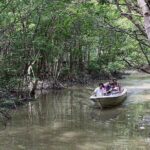
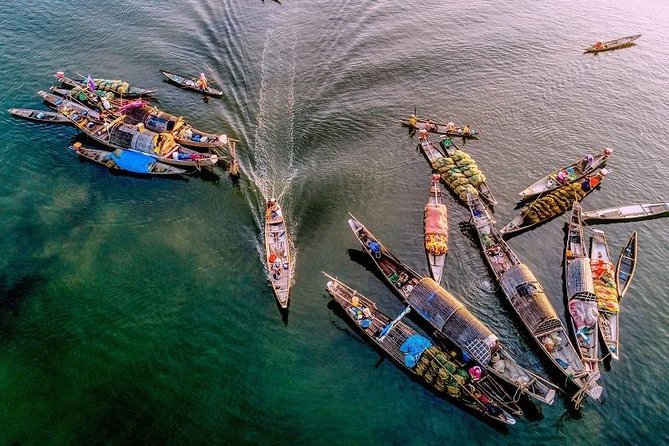
In Ben Tre, you start with a motorboat ride along rivers and canals. This is where you see stilt houses, fish farms, and the lived-in rhythm of the Delta. Then you hit Turtle Island for freshly picked fruit and coconut milk, plus time to chat with a local farming family. It’s one of those stops that’s small enough to feel human, not staged.
Next comes the family-run coconut candy workshop. You’re not just tasting at the end; you learn how Ben Tre’s coconuts become coconut sweets, and you see the process tied to local agriculture. After that, you go deeper into the canals on a rowing sampan, then finish with honey tea and a traditional folk song performance. If you like cultural moments that don’t feel like a show put on for tourists, this part usually lands well.
Day 2 ends with a local lunch in My Tho, then a 2-hour drive back toward your Ho Chi Minh base. It’s a long day, but the variety keeps it from feeling repetitive.
Flying to Hue, then riding into the Imperial Citadel and Thien Mu Pagoda
Day 3 shifts gears. You get driven to the airport for the flight to Hue. Once you land, another driver meets you and transfers you to your accommodation. This is a useful break from road time, and it also keeps the itinerary from dragging.
Hue is where the tour leans into heritage sites. Day 4 includes the Hue Imperial City (the Citadel), described as the royal city tied to the Nguyen Lords. You’ll walk through the citadel area featuring ancient tombs, pagodas, and the Citadel itself. A cyclo ride then takes you to the UNESCO-inscribed Imperial Citadel for a closer look at architecture and gardens.
From there, the tour continues to Thien Mu Pagoda, with its seven-storied tower overlooking the Perfume River. This stop matters because it gives you a visual anchor for Hue. Without it, Hue can feel like just one more UNESCO complex. With it, you remember the skyline and the river context.
Practical note: you’ll be out and about for hours, so wear comfortable shoes and expect some walking even when the route feels “guided.”
Hoi An Ancient Town by foot: merchant lanes, the Covered Bridge, and market time

After Hue, Day 4 includes a scenic trip toward Hoi An via Hai Van Pass and Lang Co Beach. The itinerary highlights the views, and that drive is one of those rare transfers that feels like sightseeing.
In Hoi An, Day 5 starts with the Ancient Town experience. This is a pedestrian-only area with well-preserved architecture. You get a guided walking tour through narrow lanes that blend Chinese, Japanese, and Vietnamese influences in old merchant houses.
The highlights are the landmarks you’ve likely seen in photos—but here you learn how they fit into the town’s story. Make time for the 400-year-old Japanese Covered Bridge. Also look for the Assembly Hall of the Chaozhou Chinese Congregation, known for intricate woodcarvings. The itinerary also includes market time for specialties, silk, and clothes.
One small detail I appreciate: there’s a stop for candies and green tea with friendly locals. It’s not a huge activity, but it slows the pace and gives you a breather before the afternoon energy.
Driftwood Village (Lang Cui Lu): hands-on craft with artisan storytelling
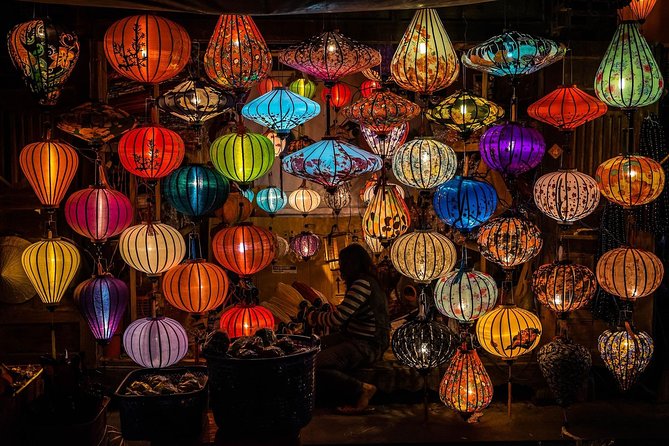
Day 6 takes you out of the busiest streets and into rice paddies country around Lang Cui Lu. The main focus is the Driftwood Village, where artisans create artwork from driftwood gathered from nearby beaches.
You’ll visit the studio to see an extensive collection, then learn about driftwood carpentry traditions. The tour specifically notes that each piece can include meaningful messages tied to intricate details—so the craft isn’t explained only as decoration.
Then you try it yourself. You get guidance to create and paint your own driftwood masterpiece, and you can finish by shopping for sustainable handmade souvenirs.
This is the kind of stop that turns a trip into a personal memory. You leave with something you made, and it’s easier to understand the place because you’ve worked with your hands, not just looked through a camera screen.






Hanoi arrival day, then Ba Vi for cycling, cooking, and a tea plantation visit
Day 7 is a transition day. You get driven from Hoi An to the airport for the flight to Hanoi, then transferred to your city-center hotel. The rest of the day is free, which is a smart cushion after earlier travel days.
Day 8 is your rural reset in Ba Vi, described as a chance to experience authentic lifestyle tied to Muong ethnic villages, with support for the local community. You meet your guide at the hotel lobby and head out.
You’ll start with a drink in Moc village, then go cycling through rice paddies and village scenes. There’s also market time to interact with locals and see how products are sold. This section is practical: markets teach you more than museums do because you see everyday choices and everyday faces.
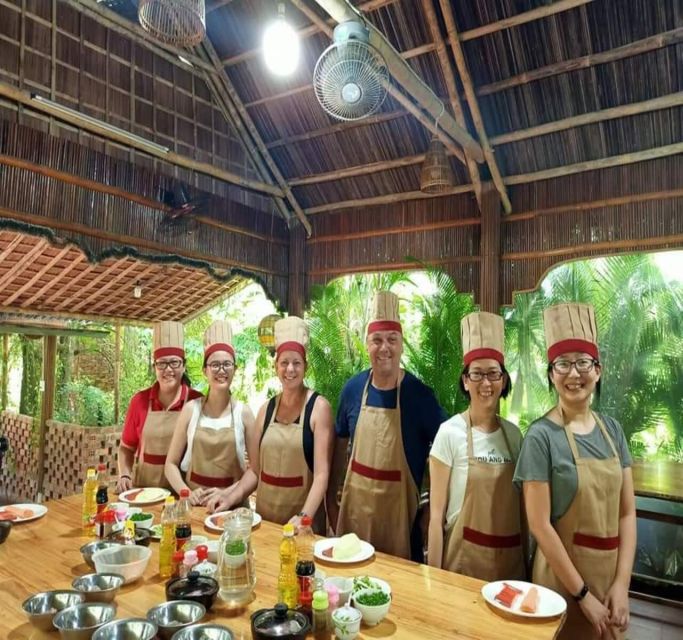
The cooking part is a standout. You learn to cook local meals at Mrs. Chin’s house, using fresh ingredients from the market and from Mrs. Chinh’s garden. You eat the lunch you made, then you say farewell to the host family.
After lunch, the tour continues to Ri Village’s tea plantation. The itinerary notes tea leaf harvest activity, though it doesn’t spell out full details. Either way, it’s a good counterweight to the earlier urban heritage days: you’re tasting and learning from agriculture, not just culture buildings.
Trang An, Hoa Lu, Tam Coc, and Mua Mountain’s 500 steps
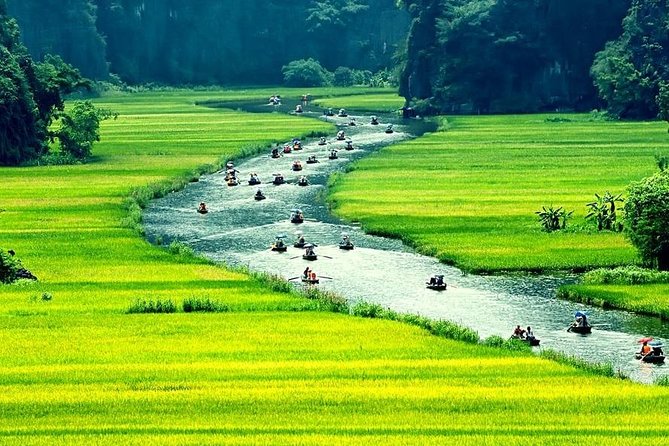
Day 9 is another big day, and it’s built around UNESCO-style karst scenery. You drive from Hanoi to the Trang An Landscape Complex in Ninh Binh Province. This area is listed as a UNESCO World Heritage Site in 2014 and is known for limestone karst peaks rising abruptly about 200 meters above land and water, with rainforest clinging to the cliffs and rice paddies patching the scene.
Inside the complex, you also visit Hoa Lu, which served as the first capital of Vietnam’s centralized feudal state in the 10th century. While the citadel has mostly disappeared, the temples of the Dinh and Le dynasties still stand around rice paddies—so you’re seeing remnants placed in an agricultural setting.
Then comes Tam Coc, also known as Halong Bay on Land. After lunch, you take a boat journey through winding rivers and canals, entering natural caves under the hills. The point isn’t just the rocks—it’s that you’re moving through the geology slowly, at water level, with caves and cliffs opening around you.
Finally, you climb toward Mua Caves on Mua Mountain. The itinerary mentions a stairway of nearly 500 steps zigzagging to a simple altar to Quan Am (Goddess of Mercy), plus carvings of dragon or phoenix near the stairs. This is the day’s physical challenge. If stairs are an issue for you, plan on slowing down and taking breaks.
At the end of Day 9, you’re transferred to your hotel in Ninh Binh and sleep there overnight.
Halong Bay cruise: sundeck Tai Chi, limestone caves, and kayaking
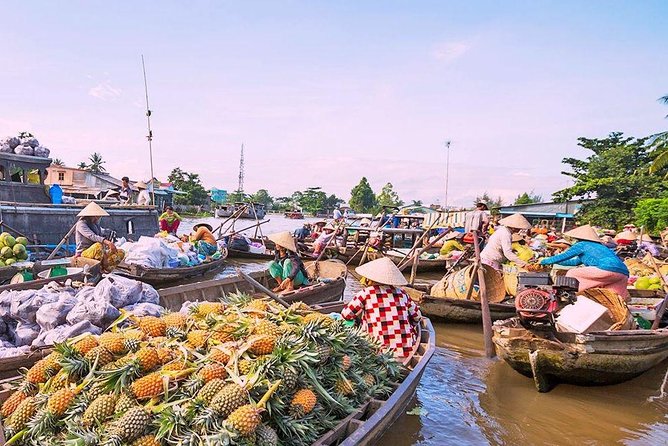
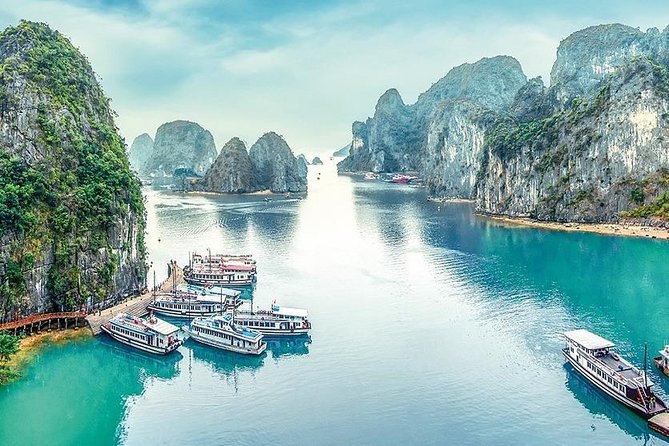
Day 10 is labeled as exploring Halong Bay and then boarding the cruise. Before the boat, you travel via the Red River Delta, passing green rice paddies. Then you arrive at the pier and cruise through limestone rocks and karst grottoes.
You get a seafood lunch and time on the sundeck. The tour also includes a stop at a hidden location for kayaking or swimming to get up close to the karst grottoes. Optional onboard activities are available, but the core plan is relaxation plus scenery.
Overnight is on the cruise ship in a shared cabin setup listed as double/twin/triple. That means you trade privacy for convenience—everyone stays in the same cruising context instead of commuting back and forth.
Day 11 starts early: breakfast is served on board, then you do Tai Chi class on the sun deck. After that, you visit a limestone cave with stalagmites and stalactites. Later you return for brunch while the cruise sails back to the harbor, then you’re transferred to your Hanoi accommodation.
One key planning reality: the itinerary notes that if weather turns bad, the Halong Bay tour may be canceled without notice, and you’ll get alternative tours or a refund depending on the situation. That’s not rare in the region, so consider it part of the “nature does what it does” deal.
Your final Hanoi morning: markets, souvenirs, and departure from Noi Bai
Day 12 finishes with a healthy breakfast, then you check out and have time to visit local markets for souvenirs. It’s built for practical shopping—things you can carry easily and gifts you can actually find without stress.
Then you’re transferred to Noi Bai International Airport for your flight home. The itinerary notes you should plan your inbound flights accordingly, because the tour takes you to Noi Bai at the end.
If you’ve been walking and riding a lot for nearly two weeks, this last day is the easy button. You get a calmer pace, plus you end in Hanoi, where the travel infrastructure is easier for most onward plans.
Price and value: what $2,185 buys you in real time
At $2,185 per person, this tour is not a budget trip. But the price is partly about reducing friction. Inclusions cover door-to-door transfers, experienced English-speaking guides, all listed sightseeing tickets, most meals (dinner listed plus multiple breakfasts and lunches), and key internal flights.
You also get important flight baggage allowances listed as 20 kg for the flights from Ho Chi Minh City to Hue and from Da Nang (Hoi An) to Hanoi. For many travelers, that’s money you’d otherwise pay separately.
The best value moments are the ones that can’t be easily replicated in DIY travel without extra planning: the coconut candy workshop in Ben Tre, the hands-on driftwood craft, the homestay cooking at Mrs. Chin’s house, and the full day logistics around karst sites in Ninh Binh plus an overnight Halong Bay cruise.
Main tradeoff: you’re on a set schedule with private guiding, but you still share the cruise cabin. Also, the route moves fast. If you want a slow, no-rush Vietnam, this might feel like too many different environments in too few days.
Should you book this 12-day private Vietnam adventure?
If you want a private, guided route that connects the best of Vietnam’s south and north with hands-on cultural stops, I think this is a strong match. It’s especially good if you care about variety: boat rides in the Mekong Delta, Hue heritage, Hoi An walking lanes, a craft workshop where you make something, countryside cycling and cooking, then caves and karst geology, ending with a Halong Bay cruise.
Book it if:
- you like planned structure but still want real local moments (not just photo stops)
- you’re comfortable with long days and some stairs
- you want domestic flights handled and luggage accounted for
Skip it (or reconsider dates) if:
- you dislike early mornings and tight daily schedules
- you need a fully private cabin on Halong Bay
- you’re traveling when weather may disrupt outdoor portions and you can’t be flexible
If your goal is a complete Vietnam sampler that still feels personal, this itinerary is built for that.
FAQ
Is this tour private or part of a larger group?
This is a private tour/activity, meaning only your group participates.
What’s included in the tour price?
The tour includes door-to-door pick-up and drop-off services, all transportation mentioned, accommodation with daily breakfast, Halong Bay cruise with shared double/twin/triple cabin, experienced English-speaking guides, sightseeing tickets according to the itinerary, and tissues and water during transfers. It also lists dinners and multiple lunches and breakfasts as included.
Which internal flights are included, and how much luggage is allowed?
Flights included are from Ho Chi Minh City to Hue and from Da Nang (Hoi An) to Hanoi. The tour lists a 20 kg luggage allowance for each of these flights.
Do I need to arrange an e-visa?
Yes. The itinerary says e-visa to Vietnam is not included, and you can apply online.
Are there extra costs around major holidays or peak periods?
The tour lists a peak season surcharge during Christmas, New Year, and Lunar New Year of about 30–45 USD per person. It also notes a compulsory gala dinner on December 24 and 31.
What happens if Halong Bay weather is bad?
The itinerary states that if unfavorable weather causes cancellation, you’ll be offered an alternative tour or a full refund based on the circumstances.
Where does the tour start and where do you end on the last day?
It starts at Tan Son Nhat International Airport with a start time of 8:00 am, and it ends with a transfer to Noi Bai International Airport for your flight back home on the last day.