REVIEW · HOI AN
My Son Sanctuary and Hoi An Ancient Town
Book on Viator →Operated by Bravo Indochina Tours · Bookable on Viator
My Son and Hoi An in one day. This is the kind of trip that strings together two UNESCO World Heritage sights in Vietnam—My Son Sanctuary’s Champa ruins in the morning and Hoi An Ancient Town on foot in the afternoon—so you see big cultural ideas in real places. What I like most is the way a guide keeps the story straight, then gives you enough time to look closely instead of racing through.
One thing to plan for: you’ll start early (8:00am) and spend a good chunk of the day on the road and on sidewalks. If you’re the type who hates early starts or long walking, adjust your expectations, and reconfirm your pickup time after booking.
In This Review
- Key highlights to know before you go
- My Son Sanctuary: Champa Temples With Hindu Clues
- Spotting the Details: How the Guide Reads the Stones
- After My Son: The Drive and the Energy Shift
- Entering Hoi An Ancient Town on Foot: Chinese, Hindu, and Arab Signals
- What you’ll see: the major stops
- The Japanese Covered Bridge: More Than a Photo Pose
- Small-Group Size: Why Seven (and Fewer) People Changes the Day
- Included Extras That Add Value (and What They Don’t Cover)
- Price and Value: Is $73 a Fair Deal?
- Timing and Touring Comfort: The Pace You’ll Feel
- Cultural Stops Beyond the Main Sights
- Pickup and Drop-Off: Where the Day Starts and Ends
- Who This Tour Fits Best
- Should You Book This Tour?
- FAQ
- FAQ
- What is the duration of the My Son Sanctuary and Hoi An Ancient Town tour?
- What time does the tour start?
- How much does the tour cost?
- Is hotel pickup and drop-off included?
- Are entrance fees included?
- Does the tour include lunch?
- Is bottled water provided?
- What group size should I expect?
- Do I need a mobile ticket?
- What should I bring?
- What’s the cancellation policy?
Key highlights to know before you go
- UNESCO pairing without a second booking: My Son Sanctuary plus Hoi An Ancient Town in one full day
- Champa temple details you can actually understand: Hindu deities and Indian influence explained on-site
- Hoi An highlights in a walkable circuit: Kwan Temple, Phuc Kien Chinese Assembly Hall, Tan Ky Old House, Japanese Covered Bridge
- Small-group feel: described as max seven people, with a maximum overall size listed as up to 12
- Time for cultural stops beyond sightseeing: traditional music performance and a handicraft workshop
- Pickup and drop-off included: hotel transport from both Hoi An and Danang, plus bottled water and a mobile ticket
My Son Sanctuary: Champa Temples With Hindu Clues
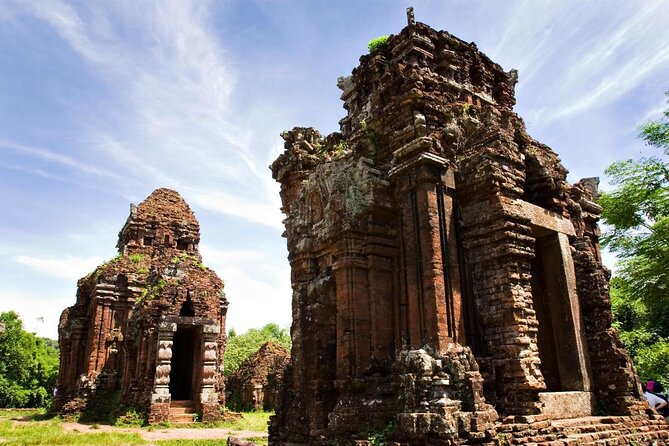
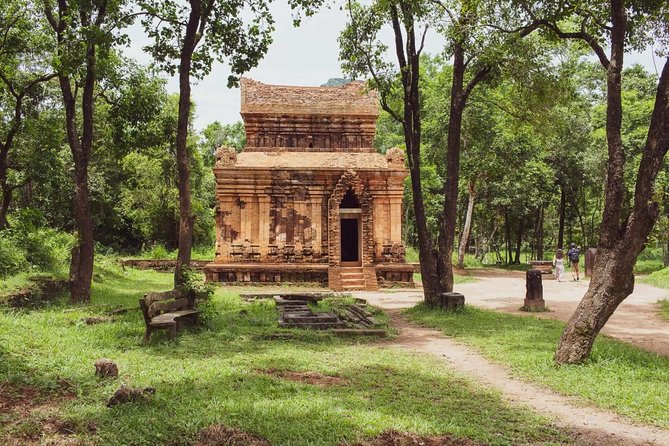
My Son Sanctuary is Vietnam’s loudest reminder that the country’s story isn’t just one chapter. These monuments are tied to the Champa Kingdom, which flourished along the coast from about the 4th to the 13th centuries, when this area was a religious and intellectual center.
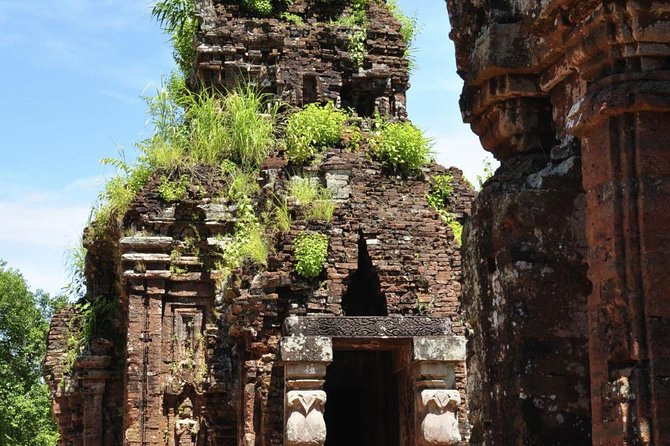
What makes My Son special is that it’s not a neat, complete museum complex. Out of the roughly 70 structures that were once here, only about 20 still remain, and some are well-preserved while others are partially crumbled. That damage, including impacts from the Vietnam War, shapes the look and mood of the site. It can feel more human and real than “perfectly restored” ruins.
You can also read our reviews of more tours and experiences in Hoi An.



Spotting the Details: How the Guide Reads the Stones
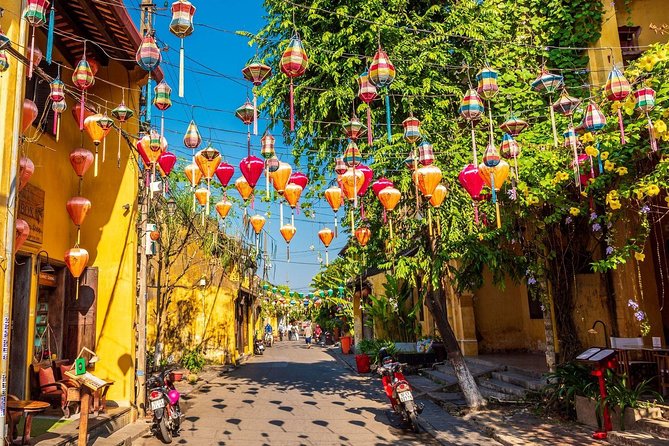
At My Son, your guide walks with you at a leisurely pace and points out architecture and cultural meaning that you’d otherwise miss. You’ll see statues of Hindu deities and hear how Hinduism (and broader Indian influence) shows up in the temple design.
This matters because Champa religious life wasn’t isolated. The temples are a visual conversation between local building traditions and incoming religious ideas. The result is architecture that feels familiar in theme—ritual spaces, symbolic figures—while still being unmistakably Champa in style.
Photo stops are part of the rhythm here. Since you’re moving slower through a ruin complex, you get time to frame scenes the way photographers do: doorways, carved surfaces, and long sightlines toward temple groupings. Bring sun protection because these ruins don’t offer much shade.
After My Son: The Drive and the Energy Shift
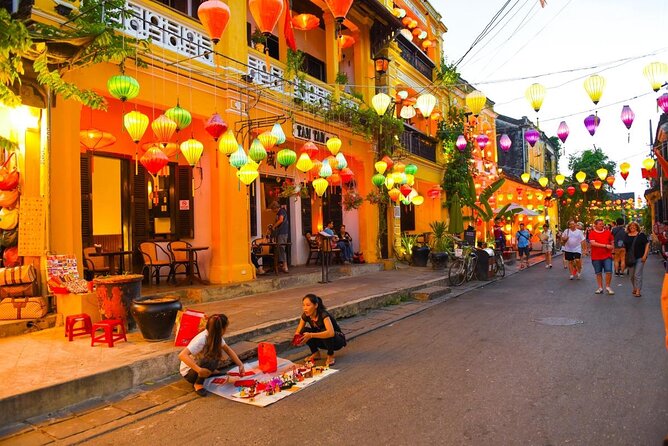
You’ll head from My Son back toward Hoi An after about two hours at the sanctuary. The day is structured so you don’t just “see ruins” and then sprint to another attraction. Instead, you get a chance to reset, eat, and then switch from temple stone to lantern street.
There’s time for lunch at a local restaurant in Hoi An. The tour includes the scheduled stop, but food itself isn’t listed as included across the board—so treat lunch as your flexible budget item. If you have dietary requirements, mention them when you book.
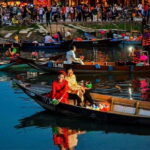
Then it’s off on foot in Hoi An Ancient Town, where the pace is slower and the atmosphere is more interactive. This is where you stop thinking like a passenger and start acting like a walker with a mission: notice materials, signage, and the mix of cultures.
Entering Hoi An Ancient Town on Foot: Chinese, Hindu, and Arab Signals
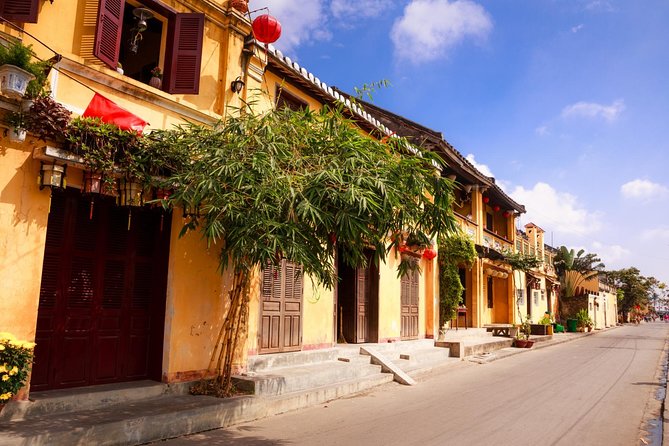
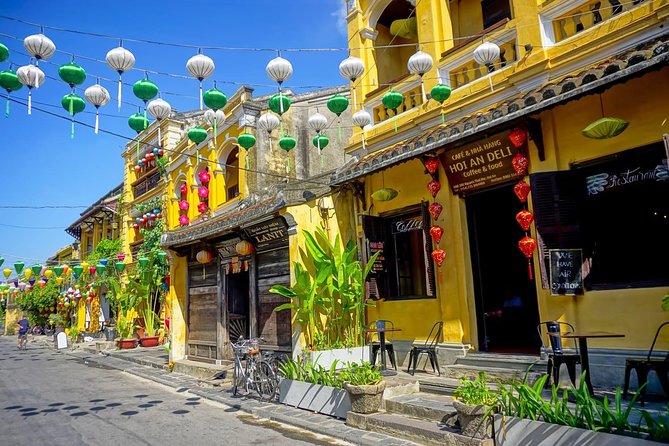
Hoi An’s Ancient Town started as a port over 2,000 years ago, and it shows. The architecture, food culture, and local traditions carry Chinese, Hindu, and Arab influences. Walking is the right way to experience it, because most of the best moments are at street level—doorways, carved wood, shopfront layouts, and the way people move through narrow pedestrian lanes.
This is also one of those places where the guide’s job is to keep you from getting lost in random photo stops. You’ll visit key stops and then connect them into a bigger picture: how merchant wealth, religious buildings, and community halls shaped the town.
What you’ll see: the major stops
You’ll cover several landmark sites during the walking portion, including:
- Kwan Temple
- Phuc Kien Chinese Assembly Hall
- Tan Ky Old House
- Japanese Covered Bridge
- A Historic & Cultural museum stop
Each one is a different lens. The assembly hall and bridge remind you how trade routes and cultural communities overlapped in Hoi An. The old house gives you a sense of how wealthy merchants lived and organized their space, while the temple scene returns the focus to belief and ceremony.


The Japanese Covered Bridge: More Than a Photo Pose
The Japanese Covered Bridge is a highlight for a reason, but it’s easy to reduce it to a postcard. In practice, it’s a snapshot of how foreign connections became local identity.
Since it’s included in the walk and paired with other cultural buildings, you’re more likely to understand it in context instead of treating it as a standalone stop. The guide’s commentary helps you connect the bridge to the town’s long history as a trading port where different communities left physical fingerprints.
Small-Group Size: Why Seven (and Fewer) People Changes the Day
A big part of the value here is the small-group setup. The tour is described as limited to a maximum of seven people for a more customized experience. Separately, the maximum travelers is listed as up to 12, but the key point for you is that it’s not a huge bus tour.
What that means on the ground: you’re more likely to get real attention from your guide. It also tends to make the walk through Hoi An smoother since you’re not trying to squeeze through narrow lanes with a crowd the size of a school reunion.
The guides named in past customer experiences—like Mr Andy, Lee, and Tan—are repeatedly praised for being personable and for keeping the explanations clear. If your guide matches that style, you’ll spend more time understanding what you’re looking at and less time guessing.
Included Extras That Add Value (and What They Don’t Cover)
This tour includes a lot that reduces friction. You get hotel pickup and drop-off from Hoi An and Danang, bottled water, and transport in an air-conditioned minivan. Entrance tickets are included at the main stops, which matters because it keeps the day’s cost from creeping upward in the middle of it.
It also includes a professional English-speaking guide and a mobile ticket. Those details sound small, but they often make or break a day when you’re juggling transit, timing, and multiple locations.
What isn’t included: food and drinks, unless specified. Translation: you’ll likely pay for lunch and any drinks you want, so keep a little cash or card ready.
Price and Value: Is $73 a Fair Deal?
At $73 per person, this is not a budget-only bargain, but it’s also not priced like a luxury experience. For the value, focus on what’s covered: two UNESCO sites, guided walking, entrance tickets, and hotel pickup/drop-off with air-conditioned transport.
You’re paying for three practical things:
- Time saved: you don’t have to figure out transport across two areas on your own.
- Access and entry: tickets are handled.
- Interpretation: the guide connects the dots between Champa culture and Hoi An’s port-era mix.
If you’d otherwise do My Son and Hoi An separately, a single organized day often makes financial sense once you count entry fees, local transport costs, and the mental load of coordinating it all.
Timing and Touring Comfort: The Pace You’ll Feel
The tour runs about eight hours, starting at 8:00am. Expect a morning focused on the My Son sanctuary complex, then a lunch break, then a guided walk through Hoi An’s Ancient Town with cultural stops.
The physical side is moderate. You’ll be walking and spending time outdoors, including in sun-exposed ruins areas. Bring comfortable walking shoes and basic sun protection, because you’ll want your feet ready and your skin covered.
The minivan helps with comfort between locations, and bottled water is included. But the “you can stay comfortable all day” myth doesn’t apply here—this is still a day with walking and heat, not a sitting-and-watching tour.
Cultural Stops Beyond the Main Sights
Hoi An doesn’t end at the famous buildings. After the main walking highlights, the tour includes a traditional music performance and a visit to a handicraft workshop.
This is a smart add-on if you want more than architecture screenshots. Music is a quick way to hear local culture without needing to research what to listen for. A handicraft workshop adds a practical layer too—you get to see how people make things, not just admire them.
If you’re the type who usually skips performances because you don’t know what you’re getting, don’t. Even if you can’t translate every word, the structure and instruments usually carry enough meaning to make it worthwhile.
Pickup and Drop-Off: Where the Day Starts and Ends
Pickup is offered from hotels in Hoi An and Danang, and drop-off returns you to your hotel at the end of the day. The whole design is meant to reduce logistics, so you can focus on seeing the two UNESCO sites without hunting for local transport.
Because pickup time is early, I recommend you do two things:
- confirm your pickup details as soon as you receive your confirmation
- keep an eye on messages the day before, so you aren’t scrambling if communication happens late
One past booking experience flagged frustration with meeting-time information not arriving right away. You can avoid that hassle with a quick reconfirmation.
Who This Tour Fits Best
This is a good fit if:
- you want UNESCO sites without planning two separate days
- you like guided context, not just wandering
- you’re comfortable walking through pedestrian streets and ruin areas
- you appreciate cultural extras like music and a handicraft workshop
It’s less ideal if you:
- hate early starts
- want long free time with no guiding at all
- get uncomfortable walking for extended stretches in heat
Should You Book This Tour?
Yes, I think you should book it if your goal is a well-paced, guided day that connects My Son’s Champa temple story to Hoi An’s port-era layers. The $73 price works when you value the package: transport, entrances, and a guide who helps you understand what you’re looking at.
If you’re sensitive to early mornings or you prefer self-guided travel, consider other options or be ready to adjust your expectations. Either way, do yourself a favor: wear comfy shoes, bring sun protection, and reconfirm pickup time so the day starts smooth.
FAQ
FAQ
What is the duration of the My Son Sanctuary and Hoi An Ancient Town tour?
It runs for about 8 hours.
What time does the tour start?
The start time is 8:00am.
How much does the tour cost?
The price is $73.00 per person.
Is hotel pickup and drop-off included?
Yes. Hotel pickup and drop-off are included in Hoi An and Danang.
Are entrance fees included?
Yes. Admission tickets are included for the main stops.
Does the tour include lunch?
There is a stop for Vietnamese lunch at a local restaurant, but food and drinks are not listed as included unless specified.
Is bottled water provided?
Yes, bottled water is included.
What group size should I expect?
It’s described as a small-group tour with a maximum of seven people, and the maximum travelers is also listed as up to 12—either way, it’s not a large crowd.
Do I need a mobile ticket?
Yes. The tour includes a mobile ticket.
What should I bring?
Wear comfortable walking shoes and bring sun protection.
What’s the cancellation policy?
Free cancellation is available up to 24 hours in advance for a full refund.