REVIEW · HO CHI MINH CITY
Immersive Cooking Class & Wet Market Tour by Local Chef +Cookbook
Book on Viator →Operated by The Provincial Table Cooking Class · Bookable on Viator
Cooking in a Saigon kitchen feels hands-on. You start at Ben Thanh Market and pick ingredients like local cooks, not like a sightseeing bus stop. Then you move into a kitchen where a chef guides you from chopping and mixing to plating and tasting.
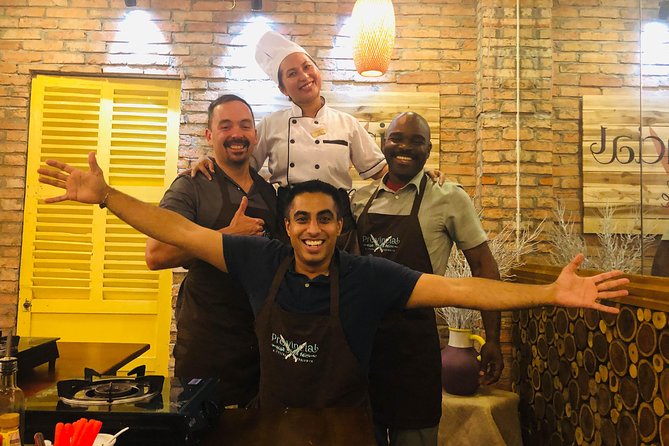
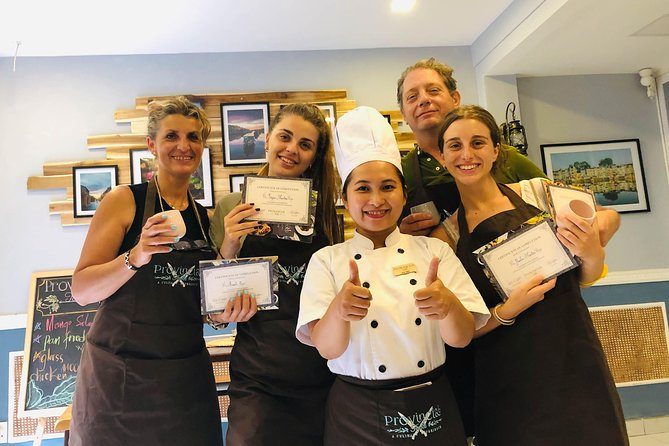
I love the way this class gives you your own station. You’re not stuck watching one person cook while everyone else waits; chefs like An and Dung (and others on the team) make the steps feel doable, even if your Vietnamese cooking skills are brand-new.
One consideration: the market portion and the cooking room can feel hot. If you’re sensitive to heat, plan to bring light clothing and expect that your comfort level will depend on the day’s airflow and schedule.
In This Review
- Key things you’ll notice right away
- Ben Thanh Market Wet Tour: Picking Ingredients You’ll Actually Cook
- Your Own Station in the Kitchen: What Makes This Class Feel Personal
- What You’ll Cook: Spring Rolls, Pho-Style Soup, Pancakes, and Fire-Style Beef
- The Tasting Part: Eating Your Own Work (and Why It Matters)
- The Cookbook Take-Home: 25+ Recipes You Can Use Instead of Stuffing in a Bag
- Price and Logistics for a 4-Hour Saigon Food Plan
- Who Should Book This, and Who Might Want a Different Option
- Should You Book the Ben Thanh Market + Local Chef Cooking Class?
- FAQ
- How long is the tour and cooking class?
- What is the price per person?
- Where does the experience start and end?
- How many people are in the group?
- What will I learn to cook?
- Is it okay to bring a service animal?
Key things you’ll notice right away
- Ben Thanh wet market ingredient scouting with a focus on everyday meats and vegetables
- Your own cooking station, so you’re actually doing the work, not just learning by watching
- Chef-led, step-by-step instruction with good humor and patience across experience levels
- Classic dishes with real technique practice (spring rolls, pho-style soup, and more)
- A takeaway cookbook with 25+ recipes you’ll realistically use later
Ben Thanh Market Wet Tour: Picking Ingredients You’ll Actually Cook
The experience starts at Ben Thanh Market, where the food scene is practical, not performative. You’re not just browsing stalls. You’re learning how ingredients are chosen for texture, freshness, and flavor—especially meats and vegetables that show up again and again in Vietnamese kitchens.
A wet market is also a sensory crash course. Expect close-up sights and smells, narrow lanes, and people working like they’ve done it for years. If you like food that tastes like the place it comes from, this part matters. It’s the difference between cooking Vietnamese food from a textbook and cooking it like you understand what’s in the bowl.
The other thing to know: if your class starts later in the day, you might miss some of the butcher-facing action. That’s normal. Many markets change noticeably by time, and this one is no different.
Bring: comfortable shoes and something light for the heat. You’ll appreciate it when you’re walking through tight aisles and deciding what to buy (or at least what to recognize).
You can also read our reviews of more shopping tours in Ho Chi Minh City

Your Own Station in the Kitchen: What Makes This Class Feel Personal
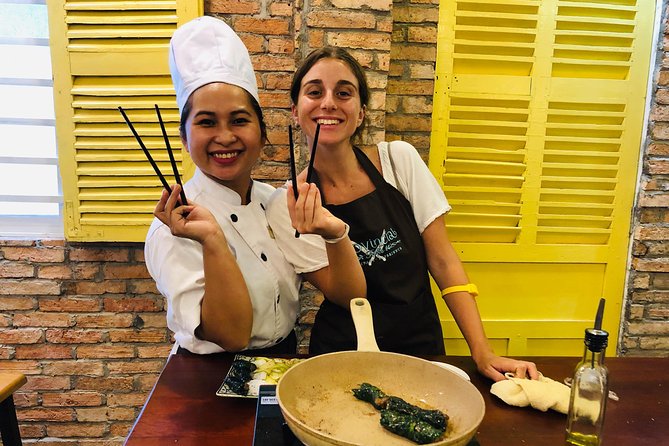
After the market, you head to the cooking school at 131/3 Nguyễn Thị Minh Khai in District 1. This is where the value really shows, because you get space to cook, not just space to sit.
Each guest has a private cook station with ingredients and tools laid out. That setup reduces stress. You’re not scrambling for utensils mid-recipe, and you can follow the process at your own pace while the chef checks in and keeps things moving.
Chefs in this program are known for clear instruction and good energy. People specifically call out how step-by-step explanations help, and how the teaching style works whether you’re confident in the kitchen or brand-new. You’ll also see the benefit of having chefs like An or Dung on the floor: they manage timing, they troubleshoot, and they translate the why behind the technique.
One more practical point: the kitchen can run warm. Even when there’s water on the tables, you may want to ask for ice if you’re heat-sensitive. If you arrive easily overheated, wear breathable clothes and take small breaks when you can.
What You’ll Cook: Spring Rolls, Pho-Style Soup, Pancakes, and Fire-Style Beef
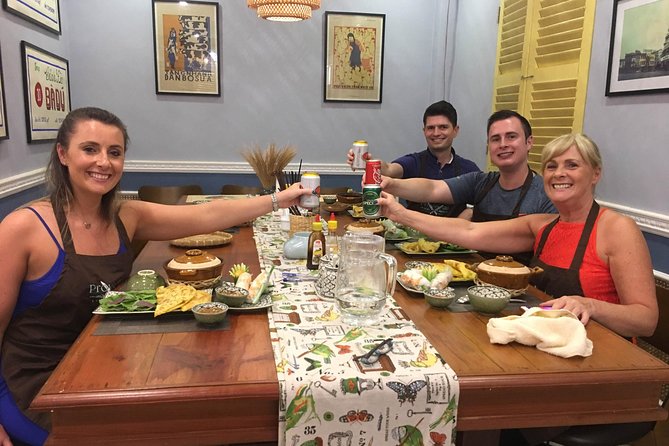
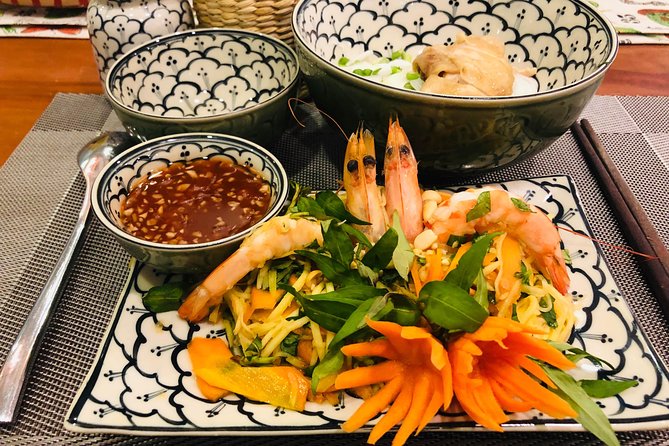
The class is built around classic Vietnamese dishes, with the description highlighting four iconic dishes and goi cuon (spring rolls) as a key example. In practice, the exact mix can vary, but you can expect hands-on work that touches multiple techniques: rolling, sautéing, assembling, and soup-building.
Here are some dishes you can reasonably expect to see taught during the session:
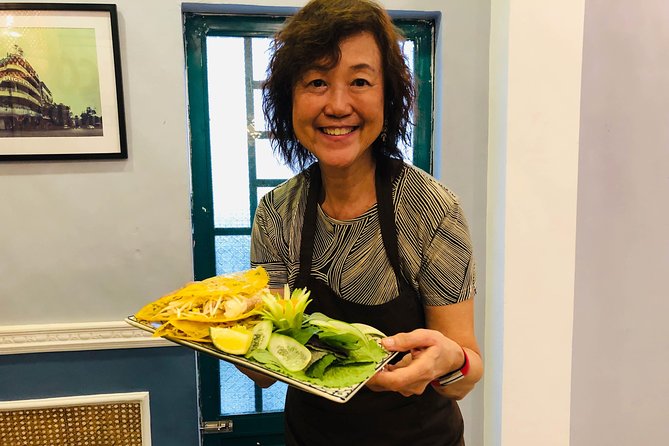
- Fresh spring rolls (goi cuon): assembly and rolling technique so the wrapper stays intact and the filling proportions make sense
- Pho-style chicken soup (pho ga): learning how to build a bowl that tastes layered, even when you’re cooking in a class kitchen
- Vietnamese pancakes: useful if you want something less noodle-heavy and more straightforward for weeknight cooking
- Beef dishes with dramatic cooking method names, like beef rolled in betel leaves and cooked for flavor in fire-style presentation (the showmanship is part of the lesson)
Some menus also include items like mango salad or pork belly and meatball combinations. Either way, the key theme is that you aren’t only learning recipes—you’re practicing common flavor building blocks and textures.
Timing is usually tight enough that you learn to work efficiently. But it should still feel guided. When things get crowded, you might find prep already done for you and you’ll focus on the hands-on steps. That’s not a bad thing. It keeps the class on track and helps you finish with food you’ll actually want to eat.
The Tasting Part: Eating Your Own Work (and Why It Matters)
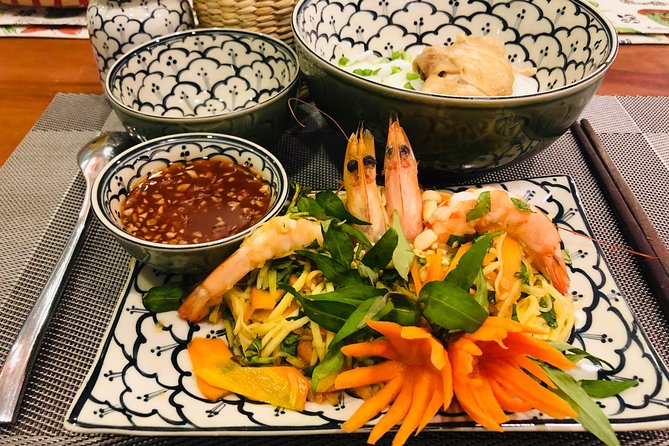
At the end, you sit down and eat what you made. It’s not a token bite. You’re tasting dishes that are still fresh, plated, and paired with the course flow of the meal.
People often mention getting dessert and ice water too. That’s more important than it sounds. After rolling, chopping, and cooking, a cool drink and a sweet finish make the whole session feel like a complete experience rather than a class you rush through.
This tasting element is also where you learn the most. You can compare what you expected versus what you actually made, then use the chef’s explanation to understand what to adjust next time—salt balance, sauce thickness, herb freshness, or wrapper tension.
If you tend to get hungry quickly, eat lightly before you go. You’ll usually leave with full plates, not just a snack.
The Cookbook Take-Home: 25+ Recipes You Can Use Instead of Stuffing in a Bag
The takeaway cookbook is a real part of the value here. You’re leaving with a Vietnamese cooking reference rather than a few photocopied cards.
The book is described as having 25+ recipes, and people specifically note that it looks well made and designed—meaning it’s something you’ll likely pull out at home. That matters if your goal is to bring Vietnam home beyond photos and fridge magnets.
My tip: don’t wait for inspiration. Pick one dish you made in class and make it within a week or two while your memory of texture and timing is still fresh. The cookbook will help, but your real advantage will be knowing what the finished dish is supposed to feel like.
If you’re cooking for friends later, this book also works as a conversation starter. You can talk through your choices—especially if you remember what you selected at Ben Thanh and why.
A few more Ho Chi Minh City tours and experiences worth a look



Price and Logistics for a 4-Hour Saigon Food Plan
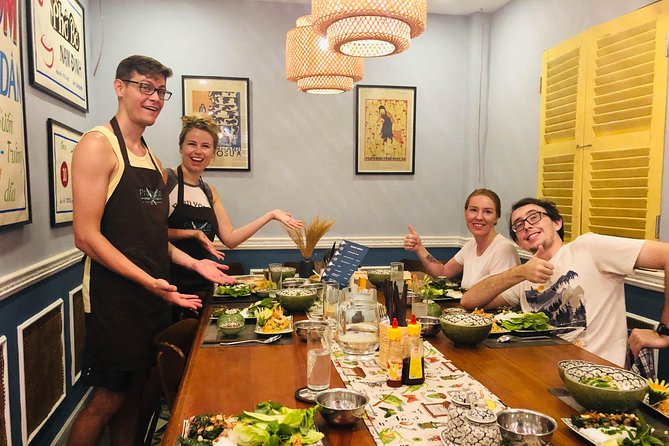
At $49 per person for roughly four hours, this sits in the mid-range for Ho Chi Minh City cooking classes. The pricing makes sense when you look at what’s included: a market wet tour, a chef-led cooking class with your own station, the meal you eat, dessert, and a cookbook with 25+ recipes.
Here’s where the cost can feel worth it—or not:
- Worth it if you want hands-on cooking plus real ingredients context
- Less worth it if you only want a food show or you’re expecting full free-form menu flexibility
Logistically, pay attention to the fact that the start and end locations are different. You meet near Cửa Tây Chợ Bến Thành, and the experience ends at the kitchen in Nguyễn Thị Minh Khai. That’s normal for a setup like this, but it affects your taxi plan and timing.
If you’re coming from far outside District 1—like a cruise port scenario—give yourself extra transfer time. Short, stressful arrivals are the fastest way to ruin the vibe before class even starts.
Group size stays capped at 20, which usually helps keep instruction practical. Still, if you want a very quiet, slow-paced experience, this may feel a bit active, since the class is designed to move efficiently through multiple steps.
Who Should Book This, and Who Might Want a Different Option
This is a great fit if you:
- want a Ben Thanh Market walkthrough that connects directly to cooking
- like learning by doing at your own station
- enjoy Vietnamese dishes like spring rolls, pho-style soups, and pancakes
- want a cookbook you’ll actually keep using
It may feel less ideal if you:
- dislike heat and tight market walkways
- want a super-structured classroom where everything is always perfectly paced
- prefer to watch chefs rather than cook yourself
If you’re traveling with a group or family, this kind of format often works well because everyone has an assigned station and the chef can adjust guidance as needed.
Also, service animals are allowed, and most people can participate, which helps make this feel accessible.
Should You Book the Ben Thanh Market + Local Chef Cooking Class?
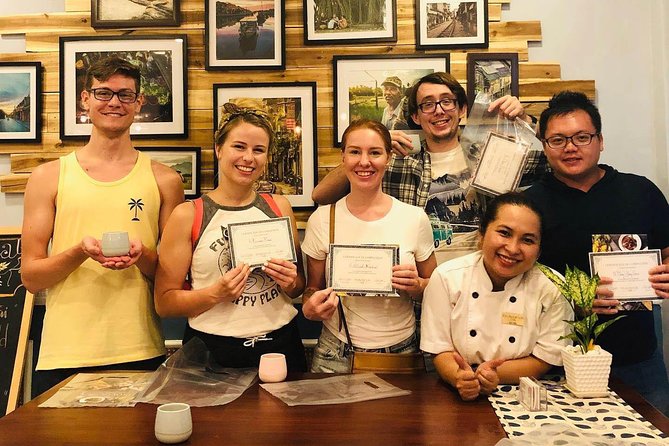
I’d book it if you want the best kind of souvenir: a skill. The combination of market ingredient selection, hands-on cooking at your station, and a real takeaway cookbook makes it more than a one-time meal.
Skip it only if you already know you hate hot rooms and narrow market lanes, or if you’re looking for a laid-back food tour where you mostly observe. For most people who like Vietnamese food and want to cook it confidently at home, this is a strong value at $49.
If you can, check what time your class runs and dress for the heat. Bring comfortable shoes. Then focus on one goal: cook one dish the way you’ll want to make it again later.
FAQ
How long is the tour and cooking class?
It runs for about 4 hours total, with around 45 minutes at Ben Thanh Market and about 2.5 hours for the cooking class and related activities.
What is the price per person?
The cost is $49.00 per person.
Where does the experience start and end?
You start at the meeting point near Cửa Tây Chợ Bến Thành, 21, 23 Phan Chu Trinh, Phường Bến Thành, Quận 1. The experience ends at 131/3 Nguyễn Thị Minh Khai, Phường Phạm Ngũ Lão, Quận 1.
How many people are in the group?
The maximum group size is 20 travelers.
What will I learn to cook?
You’ll learn Vietnamese dishes such as fresh spring rolls (goi cuon). The experience is described as creating four iconic Vietnamese dishes, and it also includes a 3-course chef-led cooking class plus dessert.
Is it okay to bring a service animal?
Yes, service animals are allowed.