REVIEW · HUE
3-Hours Hue Imperial Walking Tour with Guide with Lunch/ Dinner
Book on Viator →Operated by Hue Local Tour · Bookable on Viator
The Hue Imperial City can feel like a maze. With a guide, you’ll connect the buildings and courtyards to the emperors who used them, plus you’ll move through the complex at a sane pace. The tour is built for first-timers: main sights, clear wayfinding, and emperor-focused storytelling.
What I like most is how the route hits signature spots fast, starting with cast bronze masterpieces and gates that still look built for ceremonies. I also like that the experience is small, with a maximum of 8 people, so questions don’t disappear into the crowd. One practical note: entrance fees aren’t included, so you should budget a little extra on top of the tour price.
If you’re after very academic, lecture-style history, you should know the delivery can vary by guide and group pace. You’ll still see the key places and hear stories, but if you want deep detail, go with a few questions ready.
In This Review
- Key things that make this Hue Imperial tour work
- Starting at the Nine Holy Cannons: bronze art with a purpose
- The Noon Gate and Flag Tower: how power moves and announces itself
- Thai Hoa Palace: coronations, then everything else
- The Mieu Temple and imperial worship spaces
- Hue Royal Palace area: the emperor’s world, not just the emperor
- The Forbidden Purple City complex: why the guide matters most
- Lunch or dinner included: the value of a half-day plan
- Price and logistics: what $30 really buys
- What to expect from the guide (names you might hear)
- Morning vs. private upgrade: choosing the right version
- Who this is for (and who might want a different plan)
- Should you book this Hue Imperial Walking Tour?
- FAQ
- Are entrance fees included in the tour price?
- How long does the tour take?
- Is lunch or dinner included?
- Is it a small group tour?
- Can I choose a morning time slot?
- Is there an option for a private tour?
- What if weather is poor?
- Can I cancel for a full refund?
Key things that make this Hue Imperial tour work
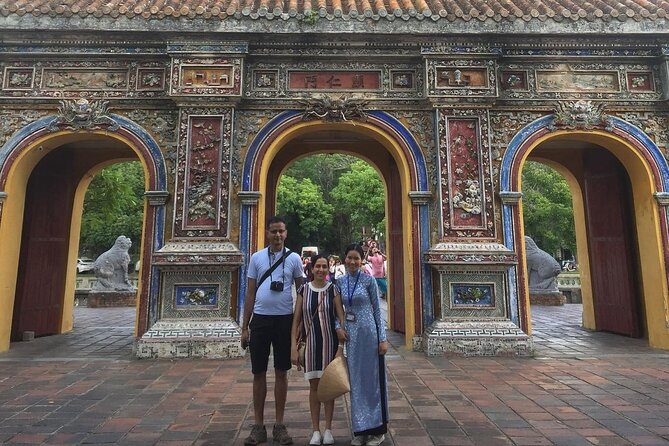
- Small group (max 8), which keeps the walk moving and makes it easier to ask questions
- Photo stops built into the route, so you’re not rushing for pictures at the wrong moments
- Emperor-centered stories, which help you understand why each gate or hall mattered
- Lunch or dinner included, making the half-day plan feel complete instead of rushed
- Morning option for fewer crowds, plus an upgrade path to a private tour
Starting at the Nine Holy Cannons: bronze art with a purpose
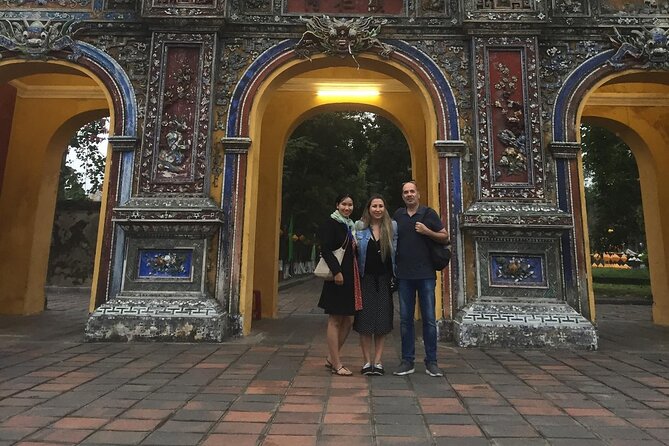
The walk begins with the Nine Holy Cannons, a set of nine bronze cannons cast by Hue artisans in Gia Long’s second year, 1803. Even if bronze weapons aren’t your first instinct, this stop works because it gives you a tangible link to power, metallurgy skill, and statecraft—before you even reach the gates.
These cannons are considered some of the most valuable bronze works of art in Hue, and the tour frames them as part of a bigger system: fortification, ceremony, and imperial symbolism. Quick tip: look closely at placement and surroundings. You’ll often get more out of the guide’s explanation when you can connect it to where the object sits in space.
Entrance for this first stop is not included, so plan to pay on site. Also, the stop is short—around 10 minutes—so if you want extra time with the details, ask your guide right away.
You can also read our reviews of more walking tours in Hue
The Noon Gate and Flag Tower: how power moves and announces itself
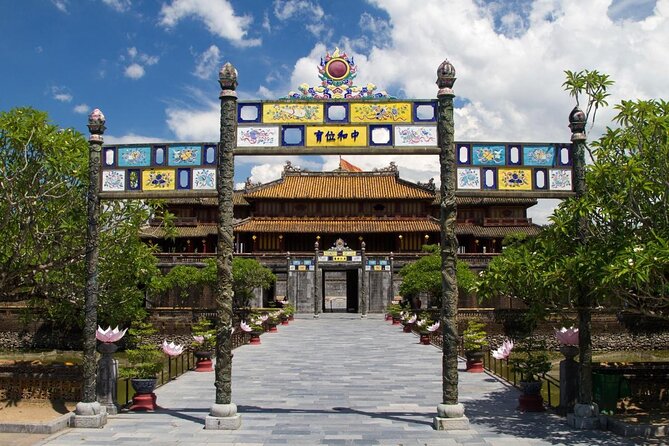
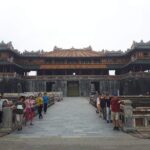
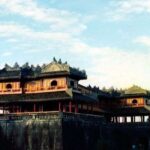
Next you’ll move to the Noon Gate (Cua Ngo Mon), built in 1833 in a traditional Vietnamese style under King Minh Mang. This isn’t just a pretty entrance—it’s tied to how the kings used the space for troop movements and ceremonies, which makes it easier to imagine the Imperial City as a living machine rather than a photo backdrop.
A few minutes later comes the Flag Tower, an architectural monument of the Nguyen Dynasty located in the Nam Chanh fortress area. The tour’s framing here is useful: it helps you understand this tower as a place where the royal court’s flag would be hung—so the structure isn’t random, it’s part of communication and order.
One thing to keep in mind is that the walk between stops can feel quick. That’s a good thing for a first visit, but if you’re the type who likes to linger, you’ll need to steer that with your guide. A quick question at each stop can pull the story back into focus for you.
Thai Hoa Palace: coronations, then everything else
Thai Hoa Palace is one of the big names in the complex. The guide points out that it sits in the Imperial City area of Hue citadel and served as a coronation place for 13 Nguyen kings—from Gia Long through Bao Dai. That fact changes the way you look at the room and courtyard. It’s not just a hall; it’s a political and spiritual theater where succession mattered.
The stop is brief (about 10 minutes), but the value is in the context. Coronation buildings tend to confuse people because they look ceremonial, yet they’re deeply tied to governance. With the guide’s framing, you’ll usually leave with a simpler mental map: halls for rituals, gates for movement, towers for signals.
If you’re short on time in Hue, this is exactly the kind of stop that earns its slot. It’s an anchor point you can build the rest of the citadel story around.
The Mieu Temple and imperial worship spaces
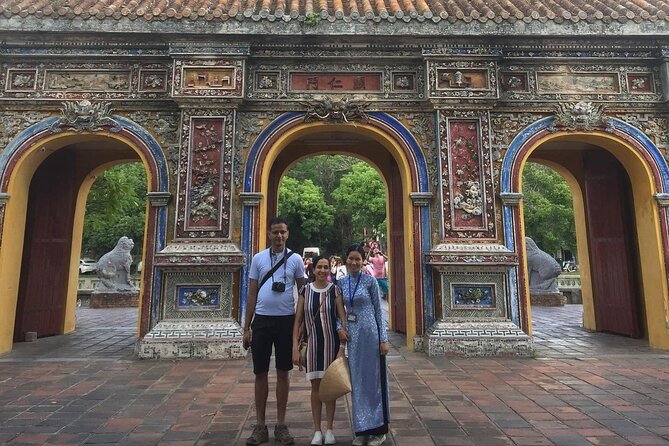
After Thai Hoa Palace, you’ll head to the Mieu Temple (also called The To Mieu). Here you’re in the realm of worship—specifically a temple built to honor 10 Kings of the Nguyen Dynasty. The tour emphasizes the Nguyen dynasty’s system of reverence and continuity, so you’re not just seeing architecture. You’re seeing how the state remembered itself.
This stop is around 20 minutes, which is a bit longer than some of the gates and palaces. That extra time matters because temples reward slowing down. You’ll likely notice smaller patterns and placement details more easily here than at the faster stops.
If you care about meaning over just seeing big buildings, spend your attention on how the guide connects the temple to imperial family structures and succession. That’s where these stops start to feel like a coherent story.
Hue Royal Palace area: the emperor’s world, not just the emperor
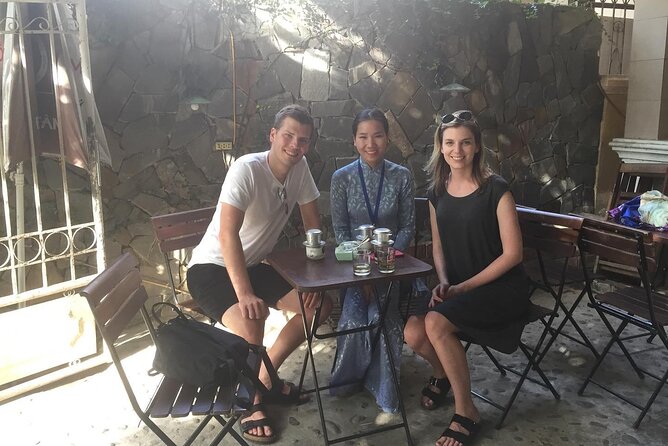
Then comes the Hue Royal Palace area, where the tour shifts from temples and coronations into daily power and household life. You’ll get a look at the residence of the emperor’s mother, plus the royal library, royal lake, royal garden, and royal theater.
This is one of my favorite parts because it helps you see the Imperial City as more than ceremonies. The presence of a royal library and theater suggests that court life involved learning, performance, and a curated social environment. And the emperor’s mother’s residence adds a layer that many first-time visitors miss: influence didn’t only sit at the throne.
The time at this section is about 20 minutes. That’s enough to orient you, but not enough to fully absorb every detail if you’re a slow reader of stone. If you’re the type who likes to take notes, take quick photos first, then ask the guide to point out the most meaningful symbols or functions.
You can also read our reviews of more guided tours in Hue



The Forbidden Purple City complex: why the guide matters most
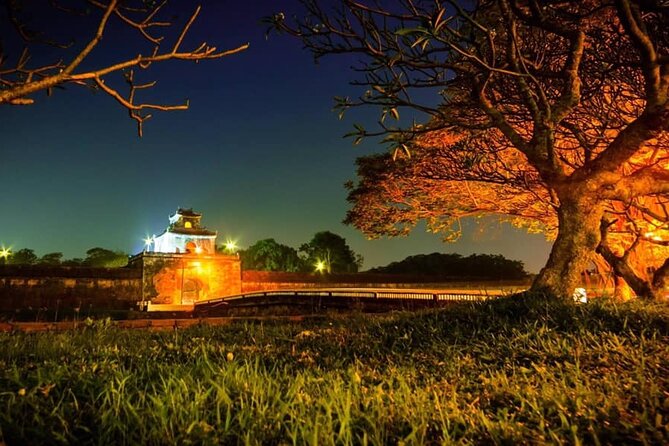
The tour’s longest stretch is the Hue Historic Citadel, including what’s often referred to as the Forbidden Purple City. Expect around 50 minutes here, and expect it to feel more complex than the earlier stops. This is where the guide’s job becomes more than translation of facts. They’re helping you connect the layout to how the court lived.
The tour framing is clear: the Forbidden Purple City belongs to a complex that was the daily life center for kings, queens, minor wives, and concubines during the Nguyen emperors’ era. That household detail matters because it turns the space from one grand monument into a set of roles, rhythms, and boundaries.
This is also the area where you’ll learn the most by asking follow-ups. For example, you can ask what was public versus restricted, and how the design supported court life. You’ll get more out of the time if you treat it like a guided walk through a social system, not just a list of structures.
Lunch or dinner included: the value of a half-day plan

One of the underrated benefits is the built-in meal: lunch or dinner is included. Hue’s Imperial City can take more out of you than expected—sun, walking, and mental effort. Having food covered keeps your visit from turning into a stressful scramble.
The tour keeps moving, so don’t plan a late-night nightcap right after. If you choose lunch, you’ll likely be eating before the most intense crowds or after the morning heat cools a bit. If you choose dinner, it can work well if you’re doing Hue sightseeing in the afternoon and want a structured anchor.
The big practical point: entrance tickets are separate, so your day budget should include both the tour cost and that on-site fee. Meal included is what makes the tour feel like a package rather than just a walking lecture.
Price and logistics: what $30 really buys
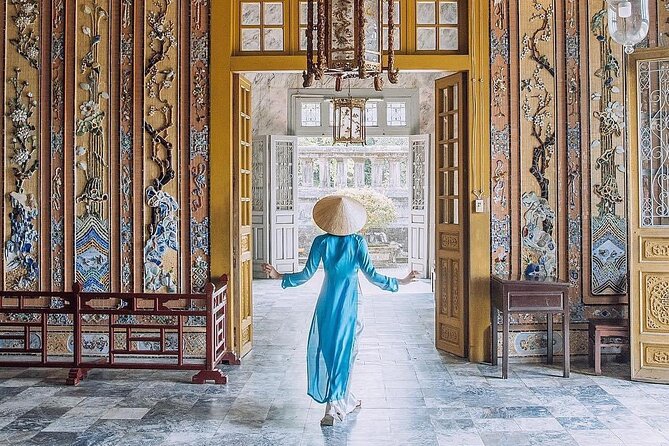
At $30 per person, this tour is priced as a solid “first orientation” experience. The catch is that the Imperial City entrance fee is not included—listed at $9 per person. So you should mentally plan around about $39 total before any personal spending.
Where the value comes in is the combination: guide + route planning + photo-friendly pacing + a guided narrative tied to specific places. If you tried to DIY this, you could still see a lot, but it would take longer to understand why Thai Hoa Palace and Mieu Temple matter in the same way as Noon Gate or the Flag Tower. This tour compresses that learning curve into a half day.
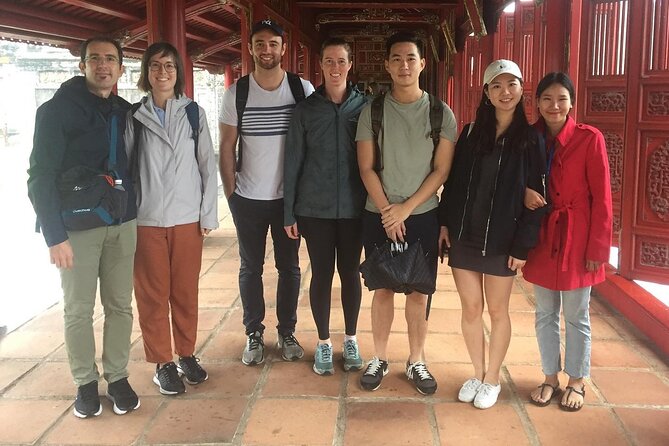
Group size also affects value. With a maximum of 8, you get fewer blank looks from the guide and more chances to steer the focus. If you want a more personal pace, there’s also an option to upgrade to a private tour.
What to expect from the guide (names you might hear)
The tour is described as having an excellent English-speaking guide, and names that have come up for guides include Du, Thanh, Thor, David, Sue, Cam, and Bem. Most of the guides are praised for making the emperor stories feel lively and for pacing the walk so you don’t get steamrolled by the schedule.
That said, there is at least one caution worth taking seriously: some people felt the experience leaned more toward showing places than telling deeper history. If you want more story and less sign-reading, I’d show up with two or three questions, like how court life worked or why the dynasty’s political structure changed.
Also watch for pacing. Some tours run closer to 3 hours, others closer to 4, depending on the group and how much your guide chats. If you’ve got another appointment, aim for a little buffer.
Morning vs. private upgrade: choosing the right version
You can opt for a morning tour to see the palace with fewer crowds. If you like photos without constant weaving through groups, mornings usually feel calmer and cooler. For families or anyone who gets frustrated by crowds, this option often makes the whole Imperial City feel easier.
If you want more flexibility—slower stops, more questions, or a tighter focus on what you care about—the private tour upgrade can be worth it. It also reduces the chance of your experience being “averaged out” by the group’s interests.
If you’re traveling solo, the private upgrade can also turn the tour into your own guided walk instead of a shared itinerary. Either way, the guide is the engine of the experience.
Who this is for (and who might want a different plan)
This tour fits best if you:
- want a fast, guided overview of Hue Imperial City in about 3 hours
- like walking and learning as you go, with photo stops built in
- value emperor-centered context to understand the complex
It might not be your top choice if you want a very academic deep-dive. The tour is built to cover key highlights rather than to exhaust every debate about architecture and dynastic politics. Still, it can be a great foundation—then you can return on your own for the specific areas that stick with you.
Finally, this experience requires good weather. If rain rolls in, your plan might shift, so keep your Hue schedule a bit flexible.
Should you book this Hue Imperial Walking Tour?
Book it if you want to get your bearings fast in the Imperial City and leave with a clear sense of how gates, palaces, and temple spaces connected to Nguyen imperial life. The combination of guide storytelling, small group size, and meal included makes it feel like real value for a half-day commitment.
Skip or adjust expectations if you’re looking for a very academic lecture or you need a very precise focus area. Ask questions early, especially about court life and how the dynasty’s system worked. And remember to budget for the entrance fee on top of the $30.
If you do those two things—clear expectations and a little extra curiosity—this tour is an efficient way to see Hue’s signature imperial sights without getting lost.
FAQ
Are entrance fees included in the tour price?
No. The Imperial City entrance fee is listed as $9 per person and isn’t included.
How long does the tour take?
The tour runs about 3 to 4 hours.
Is lunch or dinner included?
Yes. Lunch or dinner is included.
Is it a small group tour?
Yes. The tour has a maximum of 8 travelers.
Can I choose a morning time slot?
Yes. You can opt for a morning tour, which is described as having fewer crowds.
Is there an option for a private tour?
Yes. You can upgrade to a private tour for a more personalized experience.
What if weather is poor?
This experience requires good weather. If it’s canceled due to poor weather, you’ll be offered a different date or a full refund.
Can I cancel for a full refund?
Yes. You can cancel up to 24 hours in advance for a full refund.

More Walking Tours in Hue


More Tours in Hue
- Easy Rider private tour via Hai Van pass from Hue – Da Nang – Hoi An (1Way|Loop)
★ 5.0 · 1,542 reviews



More Tour Reviews in Hue
- Easy Rider private tour via Hai Van pass from Hue – Da Nang – Hoi An (1Way|Loop)
★ 5.0 · 1,542 reviews