Saigon feels different on a scooter. I like this tour because it takes you into back alleys you won’t reach on buses, and you get local student-guided conversation while you move through the city’s real rhythm. I especially enjoy how the stops mix meaning (a protest monument and a small pagoda) with daily life (apartments, flowers, and a wet market).
The one thing to think about is that this is still street riding. You’ll be on a motorbike for about 3 hours, and even with an open-face helmet and coaching on how to sit, busy traffic may not feel comfortable for everyone.
In This Review
- Key things I’d prioritize before you book
- Why Ho Chi Minh City changes when you travel by motorbike
- Entering the day: pickup, timing, and what “private” really means here
- Stop 1: The Venerable Thich Quang Duc Monument—protest, tragedy, and context
- Stop 2: Nguyen Thien Thuat apartment buildings from 1969—everyday Saigon, preserved
- Stop 3: Ho Thi Ky flower market alleys—where wholesale meets street life
- Stop 4: Chùa Văn Phát (Ten Thousand Buddhas)—tiny alley pagoda, huge visual impact
- China Town Saigon by scooter—seeing the commercial pulse without big-road glare
- Cafe sua da with local students—where the tour turns human
- Price and value: $24 for a private motorbike day with tickets and coffee
- Who this motorbike tour is best for (and who should think twice)
- Practical tips so you get the most from the ride
- Should you book this scooter tour?
- FAQ
- How long is the Ho Chi Minh City motorbike tour?
- What is the price per person?
- Is pickup and drop-off included?
- Where is pickup and drop-off free?
- Is there an extra fee if I’m outside the free pickup zones?
- Are admission tickets included for the stops?
- Is Vietnamese coffee included?
- Is this tour private?
- What’s the cancellation policy?
Key things I’d prioritize before you book
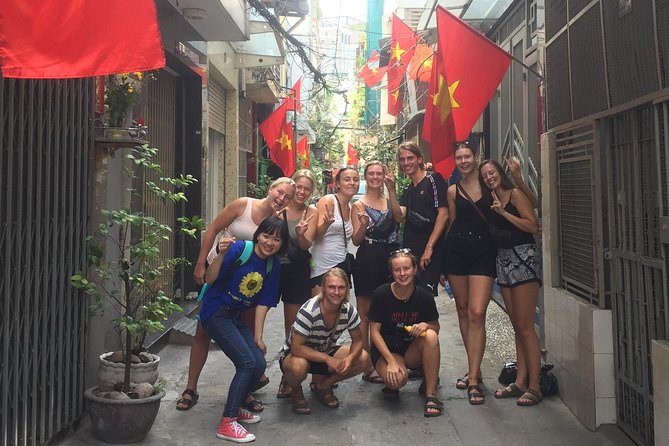
- Local student + English-speaking driver setup: You get guidance and conversation, not just a scripted checklist.
- Admission tickets and drinks included: The price covers tour stops plus Vietnamese coffee and water.
- Back-alley access in multiple districts: District 5 features heavily, plus China Town areas.
- A mix of emotional and everyday sights: From Thich Quang Duc’s monument to apartment blocks and markets.
- Vietnamese coffee like locals: Cafe sua da is part of the flow, not an afterthought.
Why Ho Chi Minh City changes when you travel by motorbike
Ho Chi Minh City is loud, fast, and full of side streets. On a scooter tour like this, you’re not stuck staring at the city from behind a window. You travel the way locals do—along main roads, then into narrow alleys where life happens at human speed.
What makes this work well is the start. Before you go anywhere, the driver helps you feel steady on the bike and explains how to sit properly. They also use a high-quality open-face helmet and provide transportation fuel. That combination matters because it sets the tone: you’re not guessing what to do, and you’re not clinging to the seat in panic.
Also, it’s designed as a private tour for your group. That means you can set the pace with your driver and make the experience feel less rushed than fixed-group formats.
You can also read our reviews of more city tours in Ho Chi Minh City



Entering the day: pickup, timing, and what “private” really means here
The ride is about 3 hours total. That includes time at each stop and a final coffee break. Pickup and drop-off are included for certain areas, so you’re not burning time finding a meeting point.
You can get picked up for free if you’re staying in District 1, 3, 4, or 10, or at the Saigon Opera House. If your lodging is outside those areas, there’s an extra $5 USD paid directly to the guide for pickup or drop-off.
One more practical point: you’ll get a mobile ticket and group discounts are available. But since this is private, your “group” is just your party—no swapping people in and out mid-ride.
Stop 1: The Venerable Thich Quang Duc Monument—protest, tragedy, and context
The first stop is the Thich Quang Duc Monument. This is not a casual photo stop. The driver brings you to a green memorial park area where you learn about the monk who self-immolated in protest over alleged persecution of Buddhists under Ngo Dinh Diem.
It’s easy to walk past things like this in a big-city rush, but the monument’s scale—the statue and large relief—makes it hard to ignore. Even if you don’t know the full historical background, the guide’s explanation gives the visit weight.
Practical note: this stop is around 20 minutes, and admission is included. It’s long enough to take in the memorial and absorb the story, but short enough that the day never turns into a lecture marathon.
Stop 2: Nguyen Thien Thuat apartment buildings from 1969—everyday Saigon, preserved
Next you head to an apartment building area dating back to 1969, an area that hasn’t changed much over time. You’re looking at small apartments and the kinds of details that are easy to miss when you only see downtown landmarks.
Here the value is in the contrast. One moment you’re facing a major historical protest monument. The next you’re watching how people lived—wrought iron windows, wooden louver shutters, cement tiles, and an entire street-scale environment built for daily use.
This stop is also about 20 minutes with admission included. And since you’re traveling by motorbike between districts, it doesn’t feel like you’re being taken far out of the city. You stay inside that “real Saigon” zone where neighborhoods still feel local.
Stop 3: Ho Thi Ky flower market alleys—where wholesale meets street life

After the apartment area, you move into District 10 toward Ho Thi Ky Flower Market. What I like here is the setting: it’s not just a single building you can point at. The wholesale market is hidden in the alleys of Ho Thi Ky Street.
The point isn’t only the flowers. The real interest is the flow—lines of popular flowers and the movement of sellers and goods through narrow lanes. It’s a good place to understand how supply works in a city this big: flowers move fast, and they’re handled with purpose.
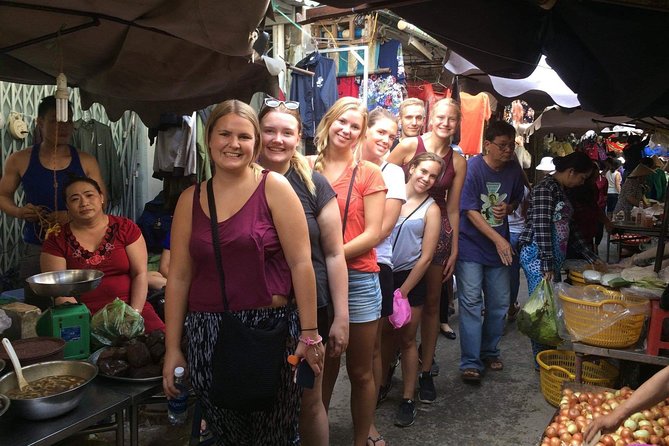
You get about 30 minutes here, and admission is included. Right next to the market is a wet market where you can see everything from food and clothing to raw ingredients and meat, plus street food. This is the part where your senses go on full alert.
If you’re sensitive to sights and smells, keep that in mind. Still, it’s exactly the type of place that tour buses tend to skip.



Stop 4: Chùa Văn Phát (Ten Thousand Buddhas)—tiny alley pagoda, huge visual impact
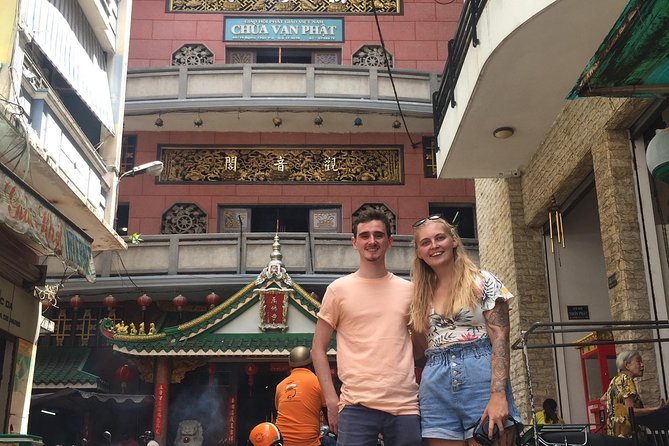
In District 5 you’ll stop at Chua Van Phat, a pagoda in an alley known for Ten Thousand Buddha statues. This is one of the most memorable stops because the statues aren’t just one wall or one room. They appear repeatedly—on walls, in niches, and across the space in different sizes and gestures.
The guide helps you look with intention: you notice the patterns, the lotus seat, and the way the carvings fill the small setting. Even if you’ve visited temples before, this one works because it’s tucked into an alley. You get that feeling of discovering something while still understanding why it matters to worshippers.
This stop runs around 30 minutes, with admission included. After that, you head into the surrounding streets to connect the dots of the area, especially the China Town Saigon vibe and its trading culture.
China Town Saigon by scooter—seeing the commercial pulse without big-road glare
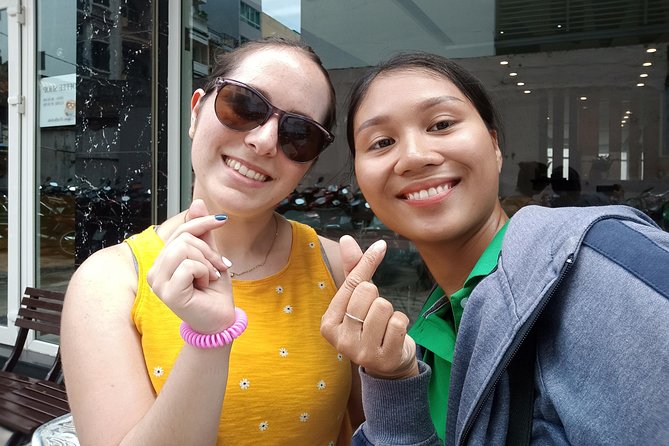
One of the smartest parts of this tour is how you get China Town Saigon access without relying on one major avenue. When you ride on a scooter, you’re close enough to see what shop fronts are doing and how people move between stalls and storefronts.
You’re not just looking at a sign and moving on. The aim is to learn about the trading area’s character through the way the streets function. It’s still a quick view—this tour is only 3 hours—but it feels more grounded than the usual postcard approach.
The China Town section happens after the Ten Thousand Buddhas stop as part of the District 5 weaving. So you get a religious interior experience, then immediately a street-commerce experience. That shift is a good way to understand how close different sides of city life can be.
Cafe sua da with local students—where the tour turns human
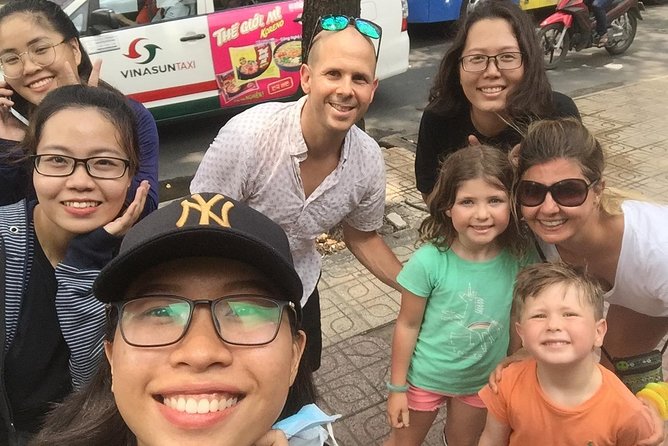
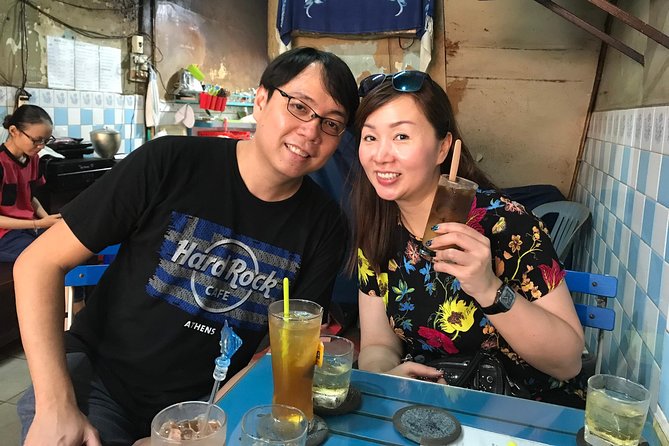
At the end, you sit at a local coffee shop and enjoy Vietnamese coffee: Cafe Sua Da, plus mineral water. This is not a rushed stop. You get about 30 minutes to drink, chat, and ask questions.
The best part is the conversation. In particular, recent groups have mentioned guides such as Heidi and also guides named Thao and Quang, with strong English and friendly, easy back-and-forth. One reason that feels special is that you’re not only collecting information. You’re learning how people see their own city.
If you’re the kind of traveler who likes to compare what you’ve seen with what locals think is important, this coffee time is the payoff. It also makes the whole day feel lighter after the heavier emotional stop at Thich Quang Duc.
Price and value: $24 for a private motorbike day with tickets and coffee
At $24 per person for about 3 hours, this is one of those prices that seems almost too low—until you look at what’s included.
You’re paying for:
- Motorbike transportation with fuel
- An open-face helmet
- Admission tickets for multiple stops
- Vietnamese coffee (Cafe Sua Da) and mineral water
- Free pickup and drop-off for Districts 1, 3, 4, 10 or Saigon Opera House
- English-speaking drivers
- A private format where only your group rides
Also, the tour tends to be booked about 18 days in advance on average. That’s often a sign that people find it useful as a first-day orientation in the city—especially if you want something beyond the standard landmark circuit.
One caution on value: you still might want to budget for gratuities, since those aren’t included. And if you’re outside the free pickup zones, that $5 USD pickup/drop-off fee is separate.
Who this motorbike tour is best for (and who should think twice)
This tour fits well if you want:
- A more local view of Ho Chi Minh City through side streets
- A short, organized route that covers meaningful stops plus everyday places
- Easy conversation time over Vietnamese coffee
- A private group experience with English support
It may not be ideal if:
- You strongly dislike motorbikes or struggle with street riding in traffic
- You’re very uncomfortable in markets with intense sights and smells
- You need fully wheelchair-friendly or step-free access (the tour uses motorbike transport, and the data doesn’t promise special accommodations)
That said, most travelers can participate, and service animals are allowed. The driver also explains how to sit, which helps many people feel more confident quickly.
Practical tips so you get the most from the ride
A few common-sense ideas, based on how the tour runs:
- Wear something comfortable for riding and moving in and out of alleys.
- Pay attention during the first moments of instruction on how to sit on the motorbike.
- Bring a camera plan: some stops are photo-friendly, but the Thich Quang Duc memorial and religious sites are also places where respectful attention matters more than quick snapshots.
- If you’re hungry, remember the day includes coffee near the end, not a full meal stop. The markets are for seeing, tasting options may vary, and your comfort level matters.
Should you book this scooter tour?
Yes—if your goal is to experience Ho Chi Minh City as a city people live in, not just a list of major monuments.
I’d book it if you want a smart mix: a powerful memorial story, an apartment neighborhood that shows how Saigon lived decades ago, flower alleys that reveal how goods move, a Ten Thousand Buddhas pagoda in a tight alley space, and a final Cafe sua da chat that helps it all click.
Pass if you can’t handle motorbike street riding or you’d rather stick to mainstream areas without wet market exposure. For everyone else, this is a solid way to spend a few hours learning what makes Saigon feel like itself.
FAQ
How long is the Ho Chi Minh City motorbike tour?
It runs for about 3 hours.
What is the price per person?
The price is $24.00 per person.
Is pickup and drop-off included?
Yes. Pickup and drop-off are included for eligible areas, and you’ll also have transportation back to your drop-off point.
Where is pickup and drop-off free?
Pickup and drop-off are free if you’re staying in District 1, 3, 4, or 10, or at the Saigon Opera House.
Is there an extra fee if I’m outside the free pickup zones?
Yes. If pickup or drop-off is outside District 1, 3, 4, and 10, there is an extra $5 USD fee paid directly to the guide.
Are admission tickets included for the stops?
Yes. Admission tickets are included for the stops listed in the experience.
Is Vietnamese coffee included?
Yes. You’ll get Cafe Sua Da and mineral water.
Is this tour private?
Yes. It’s private, meaning only your group participates.
What’s the cancellation policy?
You can cancel for a full refund up to 24 hours in advance of the experience start time.