REVIEW · HANOI
Hanoi On the Tracks Photo Tour
Book on Viator →Operated by Vietnam in Focus - Day Tours · Bookable on Viator
Morning trains make Hanoi feel real. This 4-hour photo outing takes you to a working railway stretch between Hanoi and Long Bien, where you’ll photograph how people live and move right alongside the tracks, not from a distance. You’ll also get hands-on coaching for street photojournalism, plus time in nearby morning spots where locals are already out and about.
I really like the way this tour pairs a professional photography guide with practical, on-the-street feedback. In the reviews I saw names like Tung, Fuong, and William getting called out for teaching camera techniques that work with both DSLRs and phones, and for guiding you toward good spots as the morning unfolds.
The main thing to consider is timing: the start is 5:30 a.m., and the experience is weather-dependent, so you’ll want a flexible mindset if plans shift.
In This Review
- Key things I’d circle before booking
- Why Hanoi’s railway stretch is a smart photo target
- 5:30 a.m. timing, hotel pickup, and what to expect
- Hanoi Railway Station: the real morning rhythm for your photos
- Learning street photojournalism, not just taking photos
- Personalized guidance in a small-group format
- Weather, patience, and the pace of a working neighborhood
- Price and value: is $144 per person worth it?
- Who this tour suits best (and who should think twice)
- Should you book Hanoi On the Tracks?
- FAQ
- What time does the Hanoi On the Tracks Photo Tour start?
- How long is the tour?
- What’s included in the price?
- Is food and drinks included?
- Where does the tour take place during the session?
- What happens if the weather is poor?
Key things I’d circle before booking
- Early access to a working railway: you shoot while the city is just starting up, not after the crowds arrive
- Pro-led photo coaching: you practice street photojournalism skills rather than just taking photos
- Guided talks with locals: the tour’s built around real neighborhood interactions
- Small-group attention: the pace is set for personalized guidance and quick adjustments
- Hotel pickup and drop-off: you avoid the hassle of figuring out early-morning transport
Why Hanoi’s railway stretch is a smart photo target
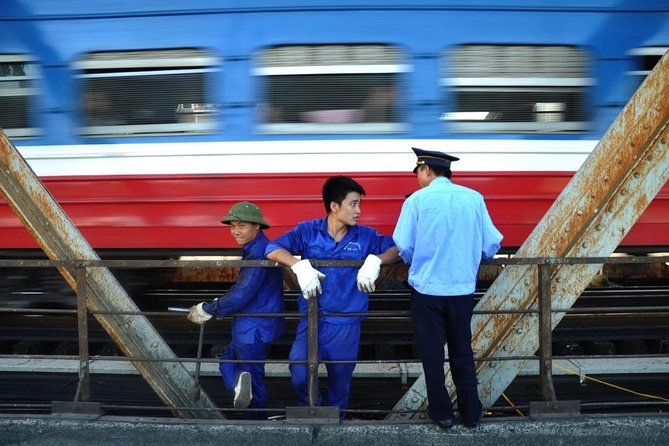
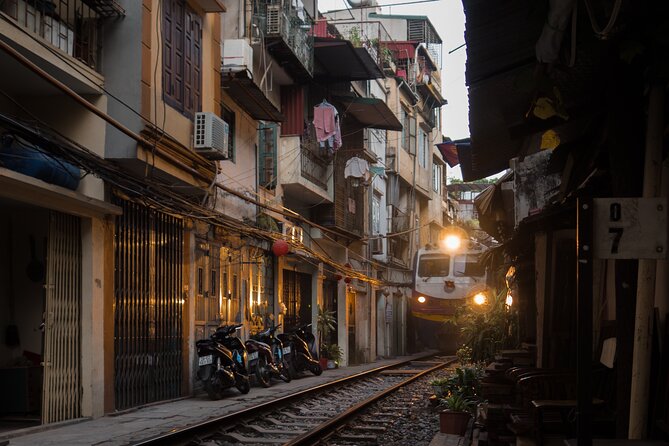
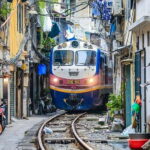
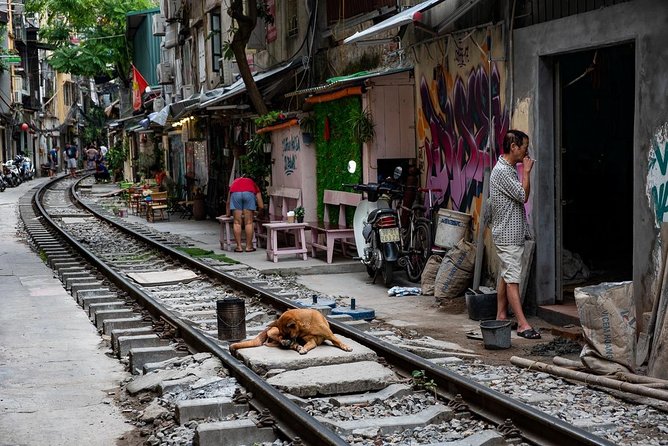
If you want photos that feel true to Hanoi, a train-line neighborhood is a strong choice. This tour focuses on the gritty, everyday space around the railway between Hanoi and Long Bien stations, where houses and daily routines sit close to the tracks. Instead of chasing landmark views, you’re capturing movement, closeness, and the lived texture of the area.
What I like about this setup is that it’s not pretending to be a theme park. You’re photographing trains rolling through a part of the city that many visitors never slow down to see, which means your images can tell a story—people working, people shopping, people starting the day. And since it’s early, the light and atmosphere usually match the idea of street scenes: brief, honest moments rather than staged ones.
Also, this isn’t just about scenery. The tour is structured to help you find angles, anticipate action, and improve how you compose shots where subjects can change fast—exactly the kind of challenge that makes street photography skills worth learning.
You can also read our reviews of more photography tours in Hanoi
5:30 a.m. timing, hotel pickup, and what to expect
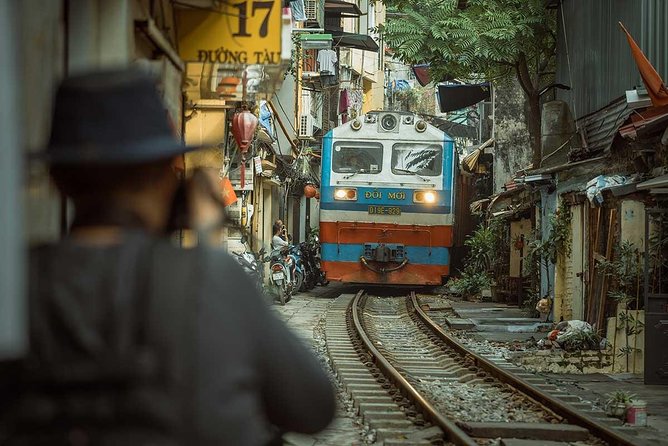
The meeting start is 5:30 a.m., which is early enough that you’ll likely feel like you’re beating the day. The upside is that you’re there when locals are awake and out—so your photos aren’t just of empty streets or people in tourist mode. The downside is obvious: you’ll want sleep earlier the night before, and you should treat this like an active morning, not a slow stroll.
Good news: hotel pickup and drop-off are included. That matters more than it sounds for a start this early. You don’t have to figure out transport at dawn or worry about being late while you’re juggling camera gear.
The tour lasts about 4 hours, and the structure is simple: a key stop around Hanoi Railway Station, plus time in nearby morning activity areas. Admission is listed as free (so you’re not budgeting for entrance fees), and food isn’t included—so bring water and plan a snack if you know you’ll get hungry.
Finally, this is listed as a private tour/activity, meaning it’s geared for your group only. Even if you’re traveling solo, you’re not automatically merged into a big crowd.
Hanoi Railway Station: the real morning rhythm for your photos
The anchor of the itinerary is Hanoi Railway Station, with a focus on the local atmosphere around daily life along the railway. The goal here is to capture trains moving between the houses, while you also photograph early-morning activity like markets, lakes, and parks where Hanoians start their day.
What makes this stop work for photography is that there are usually multiple layers happening at once:
- People moving through morning routines
- Market energy (shopping, sorting, grabbing necessities)
- Open-air spaces nearby where you can frame subjects with more breathing room
- Then the train element, which adds speed and timing to the equation
You’ll spend time exploring those local settings before the action gets too loud and busy in a more touristic way. That’s the tour’s whole pitch: you get real neighborhood life without relying on cafe hopping or instagram-perfect viewpoints.
One practical consideration: shooting around an active railway line means you’ll be working with real-world movement and timing. Your guide’s job is to help you find spots and keep you in positions that make sense for photography—so listen carefully when they point out where to stand, what direction to aim, and when to watch for the train.
Learning street photojournalism, not just taking photos
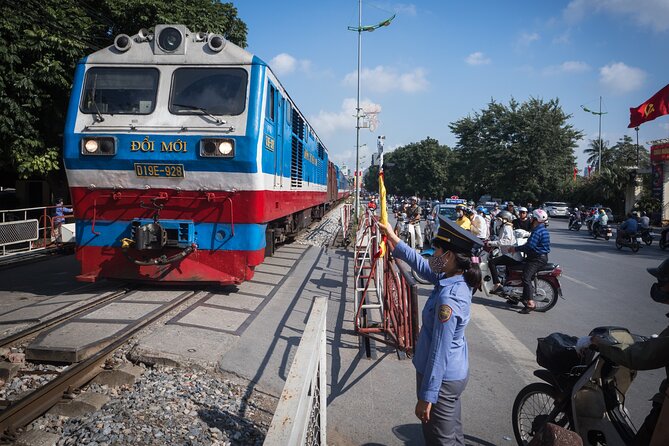
This is a photography tour that treats your camera like a tool you can improve, not a passport stamp for bragging rights. You’ll learn photography skills from a professional photographer guide, and the tour is built around street photojournalism—meaning you’re encouraged to capture real moments, with an eye for storytelling and human detail.
The reviews highlight this coaching component clearly. People mention getting tips right from the start, and advice that helps both DSLR users and phone photographers. One review praises Tung for offering hints and suggestions early on, and another calls out Fuong’s journalistic photographer perspective. William is also mentioned as being helpful when it came to learning techniques.
Even without knowing the exact style of each guide, the consistent value is this: you’re not wandering and hoping for great shots. You’re getting direction for how to see—angles, framing, and timing. And you’re doing it while the neighborhood is actually happening, so the skills you practice have immediate feedback built in.
You’ll also visit places like markets and cafes, and you’ll have time for direct interactions with locals. That part matters for more than photos. It changes how you approach subjects. You’re learning how to talk, how to blend, and how to respect the pace of a real street scene rather than treating people like background props.
Personalized guidance in a small-group format
This tour is sold as a small-group experience with personalized attention, and that’s exactly what helps when you’re learning on the fly. In street photography, the difference between a decent shot and a strong one can be something tiny: a half-step left, a different height, a slightly earlier shutter, or choosing a simpler background.
With a small group and a guide focused on photography, you can get that kind of course correction during the morning. The tour’s built around helping you find interesting photography spots and practicing while you’re there, which is far more effective than learning from generic advice later.
Another advantage: because you’re learning in the same area you’re photographing, you don’t waste time commuting between random points. Everything is concentrated around railway-adjacent life and the nearby morning activity zones. That makes the 4 hours feel purposeful.
Weather, patience, and the pace of a working neighborhood
This experience requires good weather. That’s not a minor footnote—it affects whether you get the conditions for comfortable walking and clear shots, especially early in the morning. If the weather is poor and the tour gets canceled, the plan is a different date or a full refund.
Even when weather is fine, be ready for the pace of a working neighborhood. The area you’re photographing isn’t designed for visitor schedules. Trains don’t run on your camera’s timeline, and people don’t stop for your framing. Your job (with your guide’s help) is to be observant and patient, and to react quickly when the scene lines up.
Also, bring the mindset that street photography involves imperfect moments. You may get shots that are a little messy at first. That’s normal. The value is that the guide can point out what’s working and what to adjust—so your next attempt improves.
Price and value: is $144 per person worth it?
At $144 per person, this tour isn’t a budget street walk. But it also isn’t just paying for a location. You’re paying for a professional photography guide, hotel pickup and drop-off, and a guided route focused on getting you to the right railway-morning moments.
Here’s how the value adds up in practical terms:
- You save hassle with early transport thanks to pickup/drop-off included
- You get coaching instead of self-guided wandering (that’s often what makes the difference in photos)
- You focus your time on a specific area that’s hard to “DIY well” because of timing and positioning needs
- You skip food planning pressure by focusing your energy on photography (food isn’t included, but at least the tour isn’t priced around meals)
You might also notice the booking pace—this tour is booked, on average, about 98 days in advance. That’s a sign people value the early timing and the photo coaching enough to plan ahead.
If you already know street photography basics and you’re comfortable navigating on your own at dawn, you might feel the price is steep. But if you want learning plus access to the right moments, $144 can look reasonable fast.
Who this tour suits best (and who should think twice)
This tour fits best if you:
- Want real Hanoi more than tourist-photo spots
- Like street photography with people, markets, and action
- Appreciate learning from a pro guide who can give feedback as you shoot
- Prefer a tour structure that saves you from figuring out where to stand and when
It’s also a good match if you shoot with different gear. Reviews mention one person using a DSLR and another using an iPhone, and the coaching helped both.
You might think twice if:
- You hate waking up early (the 5:30 a.m. start is real)
- You want a relaxed, slow sightseeing pace instead of a guided photo mission
- You’re traveling when weather reliability is uncertain for your dates (since the experience requires good weather)
Should you book Hanoi On the Tracks?
I think you should book this tour if you want photos with story and you’re hungry to improve your street photography—not just collect a few “seen it” images. The combination of early railway access, pro coaching, and hotel pickup makes it a strong value for the kind of morning experience you usually can’t replicate easily on your own.
If you’re on the fence, here’s the simplest decision rule: if dawn + working-neighborhood realism + guided learning sounds like your thing, this is a smart booking. If not, you’ll probably feel the early start more than you’ll enjoy the payoff.
FAQ
What time does the Hanoi On the Tracks Photo Tour start?
The tour starts at 5:30 a.m.
How long is the tour?
The duration is about 4 hours.
What’s included in the price?
Included are a professional photography guide and hotel pick-up and drop-off.
Is food and drinks included?
No. Food and drinks are not included.
Where does the tour take place during the session?
You’ll focus on the railway area around Hanoi Railway Station and the stretch of railway between Hanoi and Long Bien stations, with time in nearby morning activity areas like markets, lakes, and parks.
What happens if the weather is poor?
The experience requires good weather. If it’s canceled due to poor weather, you’ll be offered a different date or a full refund.