REVIEW · HANOI
Photo Tour to Capture The Vanishing Craft of Making Fish Traps
Book on Viator →Operated by Momentlives Photography tours · Bookable on Viator
Your camera will learn patience here.
This photo tour is interesting because you get a close look at a craft that’s fading fast: elderly workers weaving bamboo fish traps into intricate shapes, right in front of an old weathered house. I love the way the scene practically builds a shot for you, with hands as the subject and time-worn walls as texture. I also love the practical photo guidance (including composition and lighting ideas) that helps you turn observation into stronger frames. One possible drawback: it’s weather-dependent, and the experience centers on one main craft location, so if you’re hunting for lots of different stops, keep your expectations focused.
Small groups matter here: the cap is 4 travelers, and that makes it easier to get time with the artisans without feeling rushed. In earlier groups, people have specifically praised guidance from names like Mike, along with local expertise credited to Son Trieu and James, and the founder Son for setting a respectful tone with locals. You’ll be in an air-conditioned vehicle with bottled water, which is a real comfort in northern Vietnam. Just know this is a craft-centered outing—less about ticking off sights, more about capturing a vanishing skill before it’s gone.
In This Review
- Quick takeaways for your camera bag
- Fish trap weaving in Hung Yen: the kind of subject your photos need
- The 4.5-hour timing that keeps it doable from Hanoi
- What you’ll actually do at the craft stop (and what makes it photo-friendly)
- The photo coaching: what it means for your final images
- How to shoot bamboo hands like you mean it
- Price and value: what $168 buys you in real terms
- Weather, flexibility, and how to plan the day
- Who should book this tour?
- Should you book? My straight answer
- FAQ
- How long is the photo tour?
- What is the price, and what’s included?
- Are meals included?
- Do you offer pickup, and how many people are in the group?
- What happens if the weather is bad?
- Can I cancel or change my booking?
Quick takeaways for your camera bag
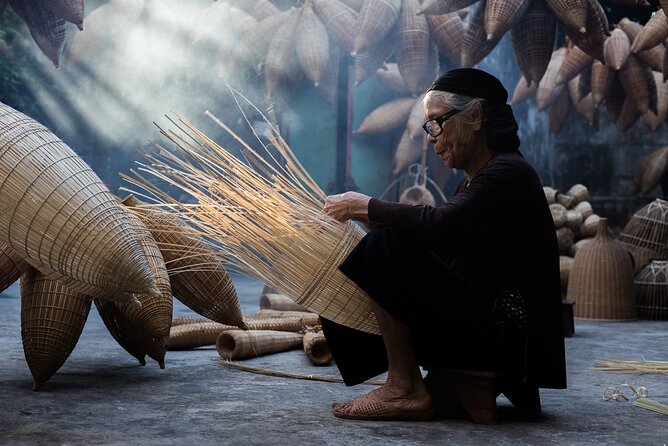
- Elderly artisans + bamboo hands give you a naturally cinematic subject without hunting for it.
- Two hours on-site in Hung Yen means you can shoot wide, medium, and close-ups without burnout.
- Small group (max 4) helps you get personal coaching and more chances to refine angles.
- Photo coaching is part of the value, with feedback on composition and lighting coming through in past groups.
- Admission is free for your stop, so your money stays focused on the experience itself.
- Weather matters, so build in flexibility for the date you book.
Fish trap weaving in Hung Yen: the kind of subject your photos need
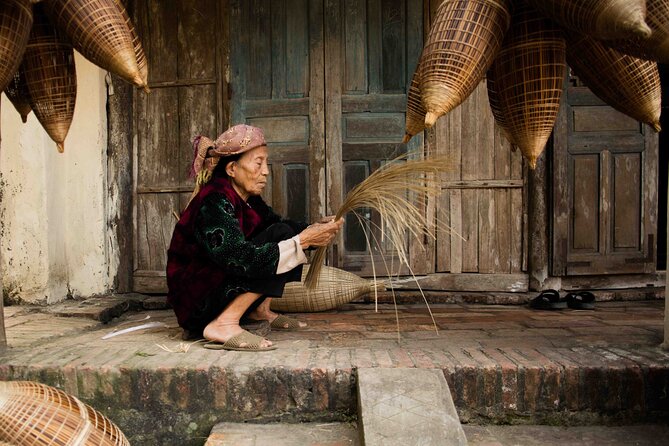
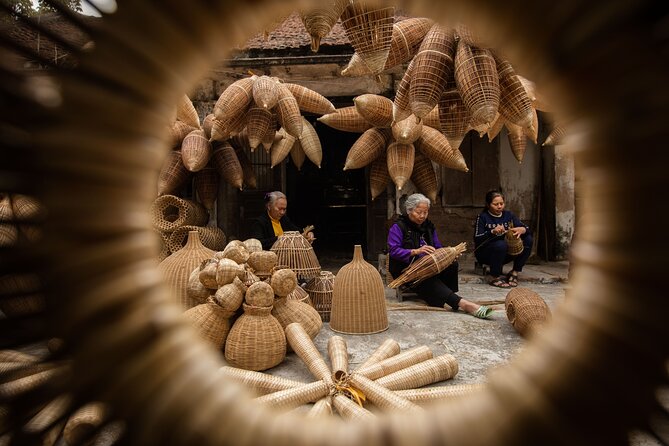
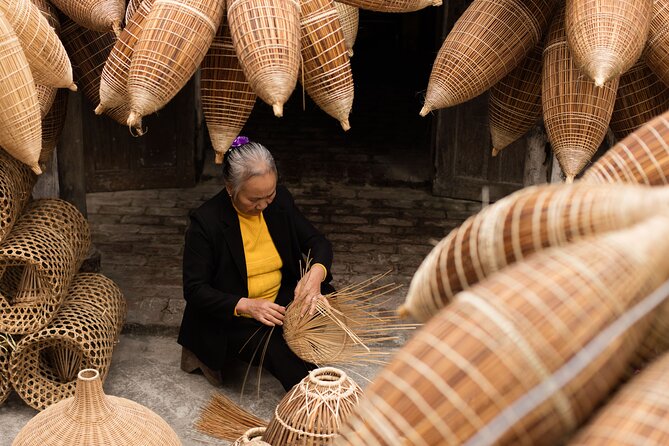
The heart of this tour is simple: you’re photographing a disappearing craft. In Hung Yen, you’ll watch elderly workers weave fish traps using bamboo and other natural materials. The visual payoff is immediate. The subject isn’t a posed model in a studio—it’s real hands doing real work, with deliberate motions that repeat until the trap takes shape.
What I like about this kind of photography assignment is that it trains your eye. You start looking for patterns: how the material bends, where the weaving tightens, how the hands hold pressure while staying relaxed. And you start looking for contrast: aged skin and quick movements in front of an old, weathered house.
This is also the kind of scene where you can choose your style:
- If you like documentary shots, you’ll aim for story and process.
- If you like portraits, you’ll focus on hands, faces, and the quiet concentration of the maker.
- If you like detail work, you can hunt for texture—bamboo fibers, knots, and the geometry of the trap.
You can also read our reviews of more photography tours in Hanoi

The 4.5-hour timing that keeps it doable from Hanoi
Even with “Hanoi” listed as the starting location, you’re really doing a short countryside photo mission. Your total time is about 4 hours 30 minutes, including travel. The actual on-site focus is about 2 hours at Hung Yen.
That time structure is part of the value. Two hours at the craft site is long enough to get past the first burst of photos and start improving. Early on, you’ll likely shoot wide to understand the setting. Later, you’ll get closer, refine framing, and try different lighting angles.
Also, you’re not doing this as a solo scouting mission. An air-conditioned vehicle handles the commute, and you’ll have bottled water included. Pickup is offered, which helps if you don’t want to spend energy coordinating transport while you’re trying to shoot.
What you’ll actually do at the craft stop (and what makes it photo-friendly)
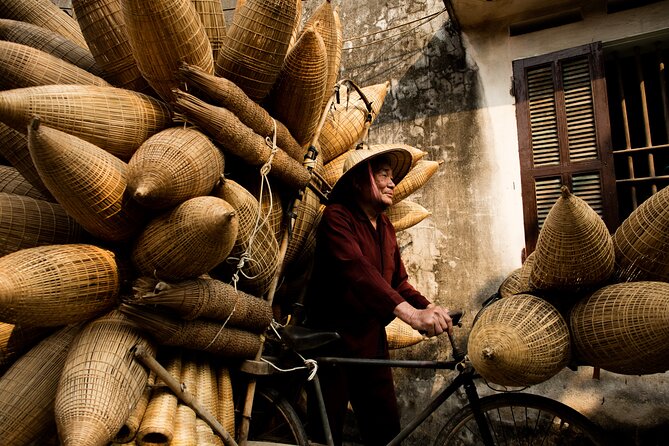
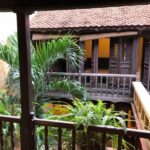
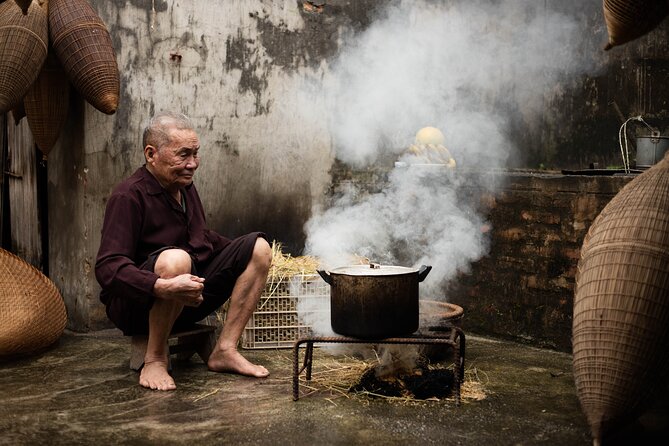
At the Hung Yen stop, the experience is built around watching fish trap making up close against that old house backdrop. You’ll be in a setting where the “background” is already doing part of your job: the walls add texture and age, so your subject doesn’t float in front of a blank blur.
Here’s what to expect as the shooting flow:
- You’ll arrive with time to set your camera positions without feeling like you’re rushing a workshop.
- You’ll watch artisans weave and build traps, giving you repeating moments to capture.
- You’ll shoot from different distances as the craft develops—wide for environment, medium for hands at work, close for detail.
Admission to the stop is free, which matters more than it sounds. It keeps the experience tied to the creative session rather than turning the day into an expense puzzle.
One small consideration: because the tour centers on one main stop, you’ll get better results if you show up ready to slow down and concentrate on this specific craft. If you bounce between too many themes in your head, you’ll miss the best frames—those quiet seconds when the maker pauses, checks the weave, and resumes.
The photo coaching: what it means for your final images
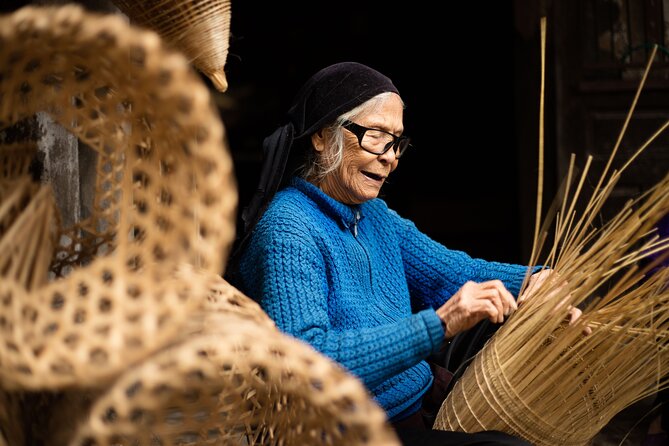
The tour’s “photo tour” label isn’t just branding. Past participants have highlighted practical support—ideas for angles and lighting, plus guidance that helps you make environmental portraits and stronger compositions.
Even without overcomplicating it, good coaching shows up in specific ways:
- You get help deciding where to stand and how close to go for the shot you want.
- You get suggestions about composition so your frame tells a story, not just “a person doing something.”
- You get lighting ideas so you don’t end up with portraits that look flat or overexposed.
Names mentioned in past experiences include Mike, Son Trieu, and James, and the founder Son has been credited with making the experience organized and grounded in local relationships. You can treat that as a hint about the vibe: the focus is on respectful access and real rapport, not a hard sell of photography tricks.
If you care about your portfolio, this is where you’ll benefit most. Watching bamboo being woven is interesting. But turning those moments into images that feel intentional—that’s the coaching part.
How to shoot bamboo hands like you mean it
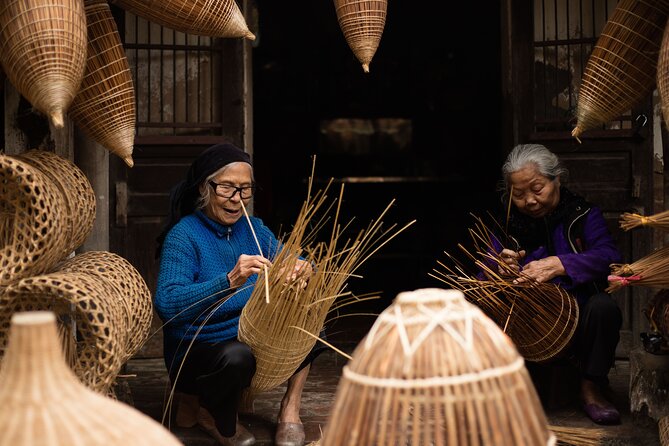
This kind of subject rewards a few practical choices. I’d plan your shooting like you’re building a set: start with context, then move in.
1) Start with process shots.
Shoot the sequence: materials come together → weaving tightens → the trap becomes recognizable. These frames are your “story spine.”
2) Then commit to detail.
Bamboo has a lot of structure. Try close-ups where the viewer can almost feel the fibers. You’re looking for geometry—intersections, tension points, and the edges of the weave.
3) Finish with hands-and-face moments (when appropriate).
This is where portrait-style thinking helps. Even if the maker is focused on the work, your goal is to frame the human presence with the craft.
4) Use your environment on purpose.
That old, weathered house isn’t just scenery. It’s a texture partner. If you place your subject against darker wall areas or rough surfaces, your subject pops more naturally.
5) Keep your shutter choices realistic.
Because hands are moving, you’ll want enough shutter speed to freeze key moments—yet not so high that you forget about light. If you don’t know your camera settings, focus on consistent exposure and shoot short bursts rather than single “hope” frames.
You don’t need special gear beyond a camera you’re comfortable with, but a lens that can do both close detail and environmental shots will make your two hours more productive.

Price and value: what $168 buys you in real terms
At $168 per person, this isn’t a bargain-basement activity. But it’s also not just you and a location pin.
Here’s what you’re paying for, in practical value:
- Air-conditioned vehicle (and fewer logistics headaches)
- All fees and taxes
- Bottled water
- A local escorted photographer who helps you convert what you see into stronger photos
- Admission ticket free for the on-site stop
- Pickup offered (when available)
What’s not included matters too: meals and airport transfer are not part of the package. If you plan to eat right after, I’d budget time and money. Also, if your day already has transport plans, you may want to double-check how pickup fits with your route.
One more value point: the experience is capped at 4 travelers. In photo tours, small-group time is everything. More attention from the escort means fewer wasted minutes, and you come away with more usable frames rather than a memory card full of “almost.”
Weather, flexibility, and how to plan the day
This experience requires good weather. If it’s canceled due to poor conditions, you’ll be offered a different date or a full refund. That’s a clean policy, but it does mean you shouldn’t book it as the one fixed thing you cannot move.
If you’re building a Hanoi schedule, treat this like a “capture window.” Give yourself buffer time before and after. Bring something simple for comfort—water is included, but you’ll still want to stay practical for humidity and sun.
Who should book this tour?
This is a good fit if you:
- Want high-focus photography instead of a checklist of attractions
- Enjoy close-up craft photography—hands, materials, repetition, and texture
- Value coaching that improves composition and lighting
- Prefer small groups (max 4) so you’re not fighting for attention
You might skip or reconsider if you:
- Need a tour with lots of different subjects in one day
- Want a meal included (it’s not)
- Can’t shift your schedule if weather forces a change
Should you book? My straight answer
If your goal is to photograph a living craft with real people doing real work, this is worth booking. The mix of small-group access, a focused craft setting in Hung Yen, and the inclusion of a local escorted photographer makes the price feel more justified than many “camera tours” that are really just transport to a spot.
Book it when you can be flexible about weather. And do yourself a favor: spend a few minutes before you go deciding what you want your final set to be—process, portrait, or detail. With only about two hours on-site, that focus will pay off fast.
FAQ
How long is the photo tour?
The tour runs for about 4 hours 30 minutes total, with travel time included. The on-site craft time at Hung Yen is about 2 hours.
What is the price, and what’s included?
The price is $168.00 per person. Included are an air-conditioned vehicle, all fees and taxes, bottled water, and a local escorted photographer. The Hung Yen stop has free admission.
Are meals included?
No. Meals are not included.
Do you offer pickup, and how many people are in the group?
Pickup is offered, and the group size is capped at a maximum of 4 travelers.
What happens if the weather is bad?
This experience requires good weather. If it’s canceled due to poor weather, you’ll be offered a different date or a full refund.
Can I cancel or change my booking?
The experience is non-refundable and cannot be changed for any reason. If it’s canceled because the minimum number of travelers isn’t met, you’ll be offered a different date/experience or a full refund.