REVIEW · HANOI
Hanoi Knife Making Traditional Workshop
Book on GetYourGuide →Operated by Vietnamtravelers · Bookable on GetYourGuide
Steel in your hands, Hanoi-style. This is a hands-on class in Da Sy village, outside Hanoi, where a craft linked to generations of forging has shifted from weapons to agricultural tools. I especially like the step-by-step shop teaching, because you see the logic of each action, not just a demo. I also like how English guides (often people like Tee, Nathan, Khoi, or Minh) help you keep up with instructions and safety while the master craftsperson leads the key work.
The main thing to consider is that you will not control every risky step yourself. One or more processes are handled with specialized equipment and safety rules, so if you’re hoping for full DIY control like a workshop at home, you might find the pace more guided than you expect.
In This Review
- Knife-making in Da Sy: quick highlights
- Da Sy Village Forging Legacy: Why This Workshop Feels Different
- Price and What You Get for $50 (Including Pickup)
- The 3-Hour Flow: Sketch, Forge, Shape, Sharpen
- 1) Design first: sketching the blade shape
- 2) Forging: cut out blade and tang from the metal
- 3) Shaping: alternating blows and correcting imperfections
- 4) Sharpening: the grindstone and the secret wash step
- 5) Handle work (often included in the full experience)
- Safety and How Much You Actually Do Yourself
- Guides Make or Break the Experience (And These Ones Help)
- The Finished Knife: Souvenir Quality You Can Use
- Picking Your Workshop Style: Hands-On vs. Mostly Guided
- Who Should Book This Workshop (And Who Might Skip)
- Should You Book Hanoi Knife Making in Da Sy Village?
- FAQ
- How long is the Hanoi knife making class?
- What is the price per person?
- Is pickup from my hotel included?
- Will the instruction be available in English?
- Do I need to bring my own tools?
- Can I choose what type of knife to make?
- What should I wear or bring?
- Is alcohol allowed?
- Are there any holiday surcharges?
- What is the cancellation policy?
- Is it suitable for everyone?
Knife-making in Da Sy: quick highlights
- Da Sy forging tradition: a village craft tied to past weapon making and today’s practical metalwork
- You choose the blade design before you forge, rather than picking from only one generic pattern
- Hands-on forging time with supervision, including hammering and shaping
- Multiple sharpening phases, including a special tar-based chemical wash mentioned as a family recipe
- English support from a live guide, with translation that keeps the process understandable
- Pickup and a take-home product: you leave with the knife you helped create
Da Sy Village Forging Legacy: Why This Workshop Feels Different
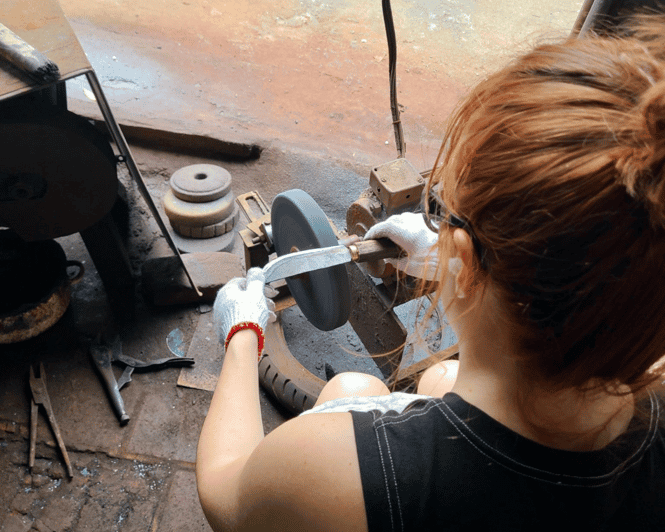
Hanoi has plenty of culture stops, but this one is about work. Da Sy village is known for forging, and you’re not just watching metal get shaped—you’re seeing how a long-running craft turns rough material into a working tool.
The workshop description explains how the village’s role evolved. Da Sy was once a major source of weapons during the Vietnam wars. Today, the tradition continues through forging agricultural implements. That shift matters. It means the skills you learn are built for real use, not just decoration.
You’ll also notice the tone of the place: less performance, more practice. Even when the guide is translating and simplifying, the master craftsperson is running a working shop. That’s why it feels grounded. You’re learning process and discipline, the same way people learn trades in any country.
A few more Hanoi tours and experiences worth a look



Price and What You Get for $50 (Including Pickup)
The class costs $50 per person and lasts about 3 hours (check current start times). For a souvenir, that’s fair. For a craft, it’s a bargain—mostly because the experience is not a short viewing. You get real involvement through the production steps, and you take home the finished knife.
What’s included helps the value argument:
- English-speaking instruction
- Master craftsperson
- Equipment (you don’t show up carrying your own tools)
- Products (you leave with the knife you made)
- Water (500ml)
- Pickup from your hotel, with a short wait in the lobby
If you’re comparing this to other hands-on workshops in Hanoi, the key is that pickup reduces friction. You don’t have to figure out how to reach an outskirt village, and you’re not wasting time hunting transport. When a workshop includes transport and a take-home item, the value math gets easier.
One small cost note: there’s a $10 surcharge on major holiday periods including New Year, Tet, Liberation Day/Reunification Day (30/4), International Workers’ Day (01/05), and National Day (02/09). If your dates fall near those, price can tick up.
The 3-Hour Flow: Sketch, Forge, Shape, Sharpen
You’ll spend the session going through the full sequence for making a simple knife. The exact emphasis can vary by group and the master’s teaching pace, but the core steps are consistent.
1) Design first: sketching the blade shape
You start by designing. The workshop process begins with sketching the blade outline on metal. The sheet is selected for durability, which is a practical detail you won’t get from a “craft for tourists” class. You’re learning that knife making isn’t random hammering. It starts with choices.
In many sessions, you also get to select from blade options (and sometimes can bring or choose a design idea). That part is fun because you’re not stuck with one style.
2) Forging: cut out blade and tang from the metal
Next comes forging, using hammer tools and an anvil setup. The blade shape and tang (the extension for the handle) are cut from the metal and worked into crackling embers. This is where the class shifts from planning to impact.
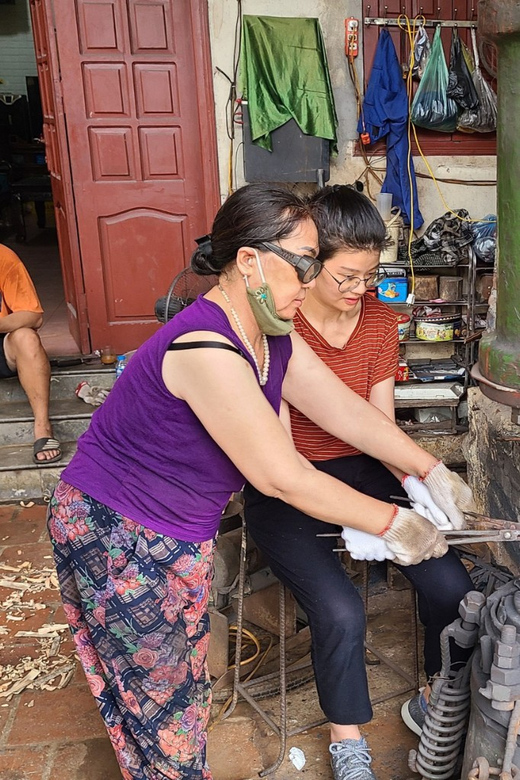
You’ll likely do some hammering while instructors supervise. The master handles the parts that require tight control and safety. One of the most common compliments about the workshop is that the staff helps you learn without making it reckless. You get hands-on time, but they manage risk.






3) Shaping: alternating blows and correcting imperfections
Once the rough form is made, shaping begins. You alternate blows with the maker to shape the blade. Any imperfections get trimmed by a hydraulic cutting machine, not by guesswork with a hand tool.
This is another reason the class feels authentic. It’s industrial-minded even though it’s traditional forging. Hand craft meets practical equipment.
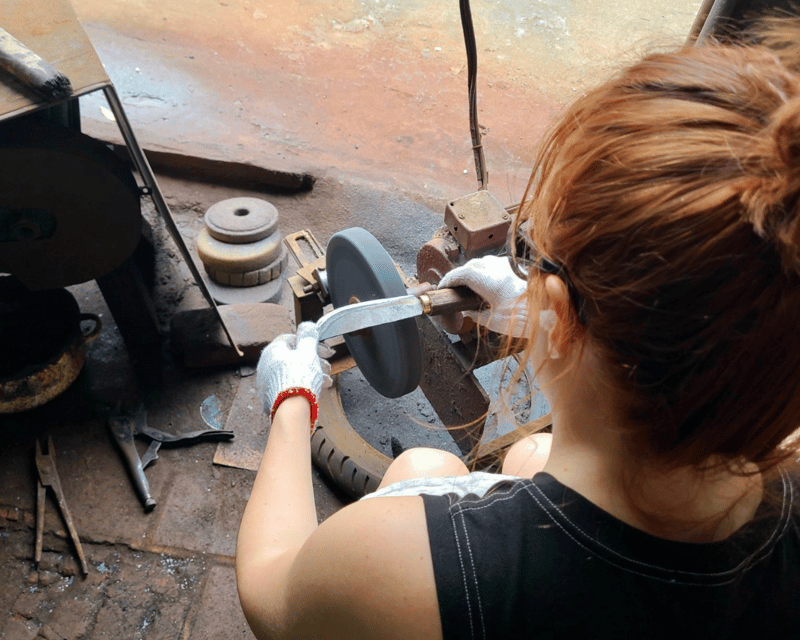
4) Sharpening: the grindstone and the secret wash step
Then comes sharpening on a grindstone. The process includes several phases, including a phase where the blade is soaked in a tar-based chemical wash, described as a family recipe.
That tar-based step is the kind of detail you remember. Even if you don’t fully replicate it at home, it gives you respect for what craft families guard: small steps that make a big difference.
5) Handle work (often included in the full experience)
The structured steps above focus on the blade, but participants frequently end up involved in handle creation too. In practice, you may carve or fit handle parts with guidance so the knife feels comfortable in your hand. If you want a souvenir that looks good but also feels right when you hold it, this is the part you’ll care about.
Safety and How Much You Actually Do Yourself
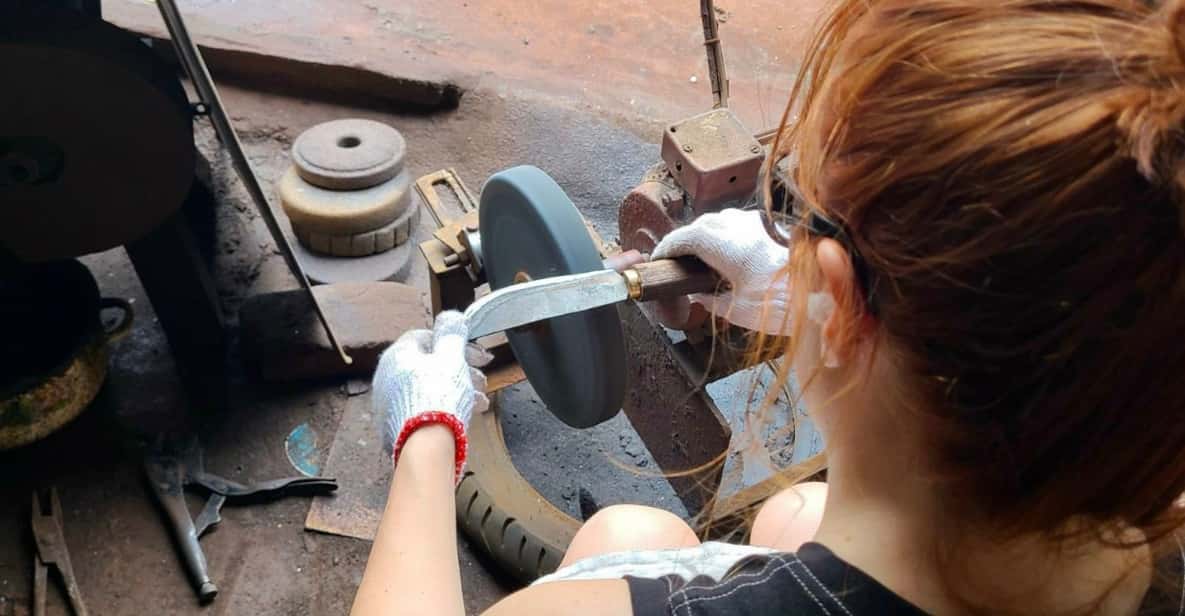
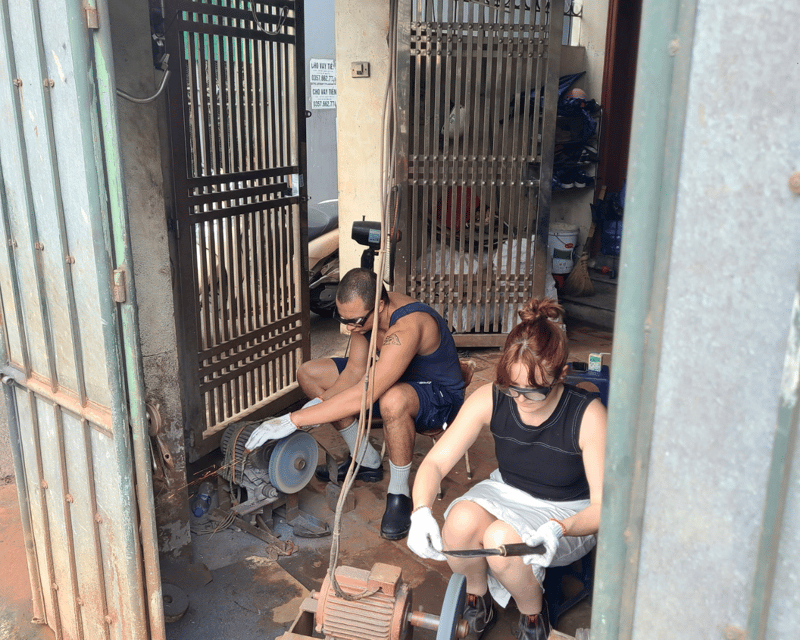
The workshop is hands-on, but it’s not a DIY survival game. Wear comfortable shoes. Expect gloves and safety rules during metalwork steps. In at least some parts of the process, there’s a clear line between what you do and what the master does.
Here’s the practical takeaway: if you want to try every action yourself, you might be able to do a lot of it under supervision. If you want a guided experience where the final knife turns out excellent, this is very likely your match.
One common theme from participant feedback is that true beginners usually enjoy this because the class is approachable. People with DIY experience sometimes wish they could do more independent metalwork, but most still leave impressed by the quality of the finished knife.
Guides Make or Break the Experience (And These Ones Help)
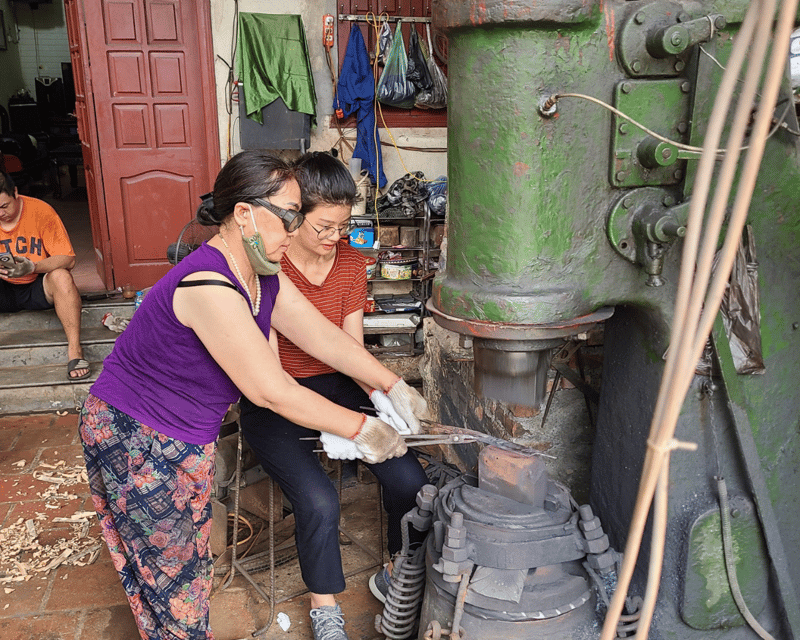
A workshop can be impressive on paper and chaotic in reality. Here, the guide role is a big part of the value.
English support is built in. Guides like Tee, Nathan, Khoi, and Minh are referenced by name in participant notes. Even when the master craftsperson is teaching without English, the guide translates the what and the why, not just the instruction.
You’ll also see the difference between a guide who talks and one who manages your day. Pickup is included, with a pickup point at the hotel lobby. That alone reduces stress. And on the cultural side, a few participants mention little food stops and snack moments on the way, like local fruit, tea, and candy—nothing complicated, just the kind of small hospitality that makes the trip feel cared for.
The Finished Knife: Souvenir Quality You Can Use
Some souvenirs sit on a shelf. This one is meant to function.
Participants describe the knives as very sharp and practical, with some mentioning kitchen use and an overall sense of quality that looks professional. That matters because knife making isn’t just about a nice shape. It’s about edge work, grind consistency, and finishing.
You should also think about what you’re taking home. You’re not buying a factory product from a stall. You’re receiving a knife that went through a multi-step process: forging in embers, shaping with attention to imperfections, and sharpening through multiple phases. Even the tar-based soak step gives you that sense that someone with experience is doing the finishing.
Real talk: if you buy a knife in Hanoi and it feels dull or uneven, you’re stuck. Here, the workshop’s whole goal is to help you leave with a knife that works.
Picking Your Workshop Style: Hands-On vs. Mostly Guided
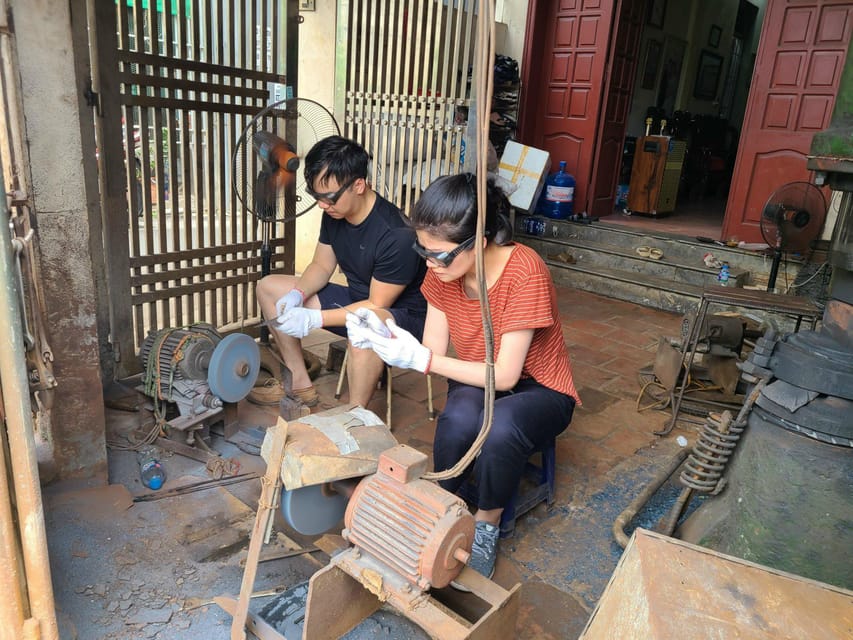
The workshop tends to work well for different comfort levels. If you’re eager, you can usually take on more hammering and tool-guided steps. If you’re cautious, you can focus on learning and let the master handle the dangerous or high-control processes.
One practical way to think about it: this is a class where your skill is developing, but the craft family still protects the outcome. That balance is part of why the knives end up good, and why the group experience stays safe.
If you’re bringing kids or teens, this is often easier than you’d expect because supervision is clear and the sequence is structured. Still, always follow staff instructions closely, especially during heat and grinding-related phases.
Who Should Book This Workshop (And Who Might Skip)
This is a great fit if you want:
- a hands-on craft experience with real technique behind it
- a chance to meet and talk with locals in a working setting
- a take-home item that is both meaningful and usable
- an English-friendly day trip outside Hanoi’s center
It may be less ideal if:
- you want a full independent workshop with no safety restrictions
- you are extremely sensitive to manual work around heat and equipment
- you are looking for purely sightseeing (this is a making class, not a tour of monuments)
There’s also a stated note that it’s not suitable for people over 95 years. If age or mobility is a factor for you, it’s best to check with the provider before booking.
Should You Book Hanoi Knife Making in Da Sy Village?
Book it if you want a Hanoi day that isn’t just photo stops. This is about work, learning, and leaving with a knife you actually respect. For the price, the inclusion of pickup, English support, and a take-home product makes it a strong value.
I’d also book it if you like seeing the “why” behind craft. Starting with design, then forging into embers, then shaping and correcting imperfections, and finally sharpening through multiple phases shows how knowledge becomes an edge.
Skip or consider something else if your main goal is sightseeing or if you’re set on doing every step yourself with total control. The workshop is hands-on, but it is still guided by safety and by a master’s expertise.
If you’re on the fence, here’s the simplest decision rule: if you enjoy making things, learning process, and carrying home something practical, this workshop will likely be the kind of day you remember long after the blade is in your kitchen drawer.
FAQ
How long is the Hanoi knife making class?
The duration is about 3 hours. Start times vary, so you should check availability when booking.
What is the price per person?
It’s listed at $50 per person.
Is pickup from my hotel included?
Yes. Pickup is included, and you wait about 5 minutes in the hotel lobby.
Will the instruction be available in English?
Yes. The workshop includes English-speaking instruction and a live English tour guide.
Do I need to bring my own tools?
No. Equipment is included.
Can I choose what type of knife to make?
Yes. You are able to choose the knife design you want to make.
What should I wear or bring?
Wear comfortable shoes.
Is alcohol allowed?
Alcohol and drugs are not allowed.
Are there any holiday surcharges?
Yes. A $10 surcharge applies on New Year, Tet holidays, Liberation Day/Reunification Day (30/4), International Workers’ Day (01/05), and National Day (02/09).
What is the cancellation policy?
Free cancellation is available up to 24 hours in advance for a full refund.
Is it suitable for everyone?
It is noted as not suitable for people over 95 years.