REVIEW · HO CHI MINH CITY
Half Day Ben Duoc Tunnels Tour Ho Chi Minh City
Book on Viator →Operated by The Sun Tourist · Bookable on Viator
Tiny tunnels, big lessons.
This half-day Ben Duoc tunnels tour takes you from Ho Chi Minh City into an underground world where people actually lived, worked, met, treated wounds, and even cooked using smoke-disguising tactics. I love the way the experience mixes practical tunnel details with real wartime context, and I love that you get an English guide who can bring the story to life with names you’ll hear in the group—Thang, Thanh, Khang, Minh, Mark, and James have all been praised for energy and clear answers. One note to keep in mind: you should expect some extra time because traffic out of the city can be slow.
You’ll start in the morning with District 1 hotel pickup (or meet at the address in Quận 1 if that’s easier), then ride out in an air-conditioned minivan. The group stays small (up to 12 people), which means you’re not stuck watching from the back while you’re trying to read signs, follow your guide, and catch your breath.
In This Review
- Key things to know before you go
- Ben Duoc tunnels: what you’re really walking into
- Morning logistics in Ho Chi Minh City: pickup, timing, and the drive
- Walking the tunnel complex: hidden entrances and underground rooms
- Hoang Cam kitchen: the daily-life detail that sticks
- Outdoor museum and weapons display: how to handle it thoughtfully
- Ben Duoc Memorial Temple: reading names, not headlines
- Reconstructed liberate-era zone: understanding daily life during the war
- Price and value: what $29 buys you (and what to add)
- Who should book this Ben Duoc tunnel tour?
- Should you book the Ben Duoc Tunnels Tour?
- FAQ
- How long is the Ben Duoc tunnels tour?
- What time does the tour start?
- Is hotel pickup included?
- What’s included in the ticket price?
- What’s not included?
- How large is the group?
- Is the ticket mobile?
- Does the tour require good weather?
- Is free cancellation available?
- Are service animals allowed?
Key things to know before you go
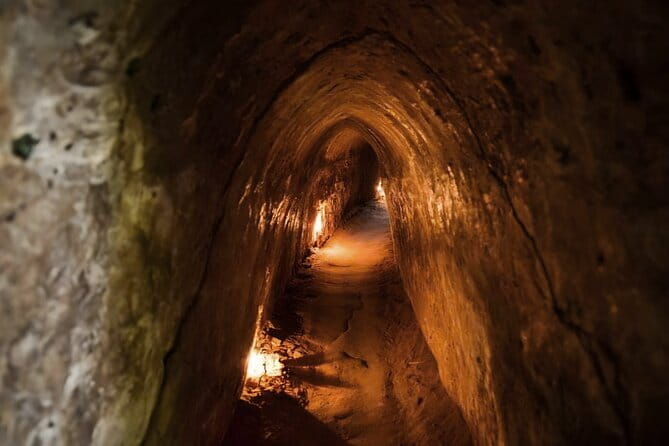
- Up close tunnel experience: narrow passageways, hidden entrances and exits, ventilation holes, and wartime traps.
- Detailed life-support rooms: living quarters, working areas, meeting spaces, medical chamber, weapon storage, and the Hoang Cam kitchen method.
- More than underground: an outdoor museum with aircraft, tanks, bombs, and assorted weapons.
- Memorial + learning zone: Ben Duoc Memorial Temple with names of tens of thousands of martyrs, plus a reconstructed liberate-era setting.
- Small group pacing: maximum 12 travelers helps you move through tunnels without feeling rushed.
- Budget for extras: shooting a gun is not included and costs per bullet; tips are also not included.
Ben Duoc tunnels: what you’re really walking into
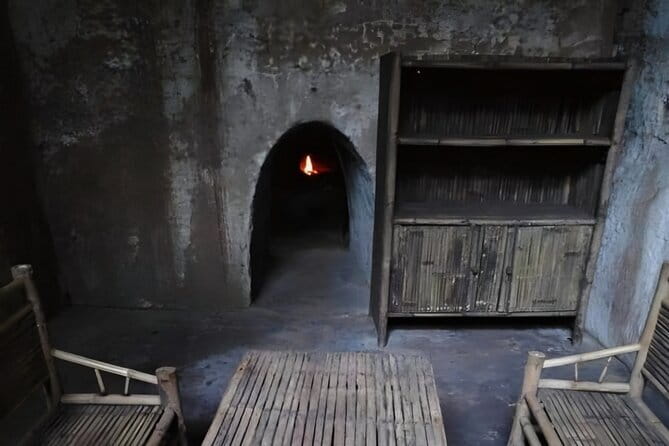
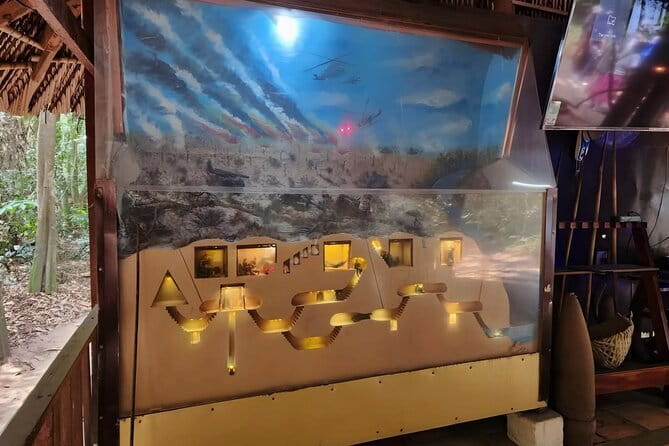
Under the surface, this tour is built around one idea: the tunnels weren’t just hiding spots. They were functional spaces, designed for days, weeks, and longer stretches underground. You’ll see a multi-level tunnel system with areas tied to real needs—living quarters to sleep, working areas to maintain tools and supplies, and meeting rooms where coordination could happen without being noticed.
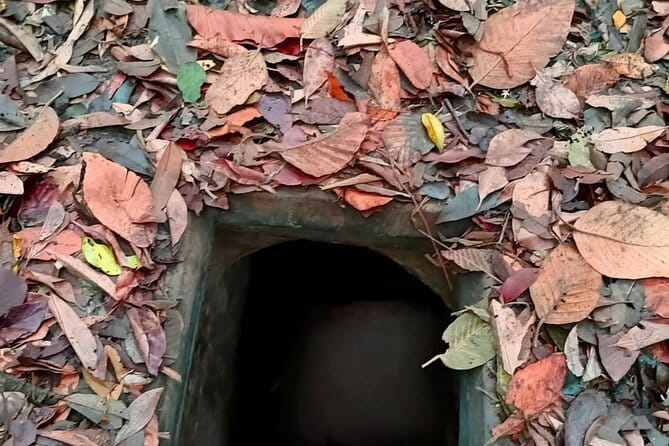
The tour highlights practical wartime ingenuity. Look for ventilation holes, which tell you how they managed air flow. Watch for hidden access points—doorways and routes that weren’t meant to be spotted by someone walking past on the surface. And pay attention to the concept of traps. You’re not just viewing history. You’re trying to understand how fear and engineering mixed when survival depended on secrecy.
One of the more memorable elements is the Hoang Cam kitchen. It’s described as a smoke-disguising cooking technique. That detail matters because it shows how daily life had to be engineered too, not only defense. Even simple acts like cooking became something that had to avoid giving their position away.
This is the kind of site where you’ll feel the scale differently than you expect. Everything looks small and tight once you’re inside. That’s part of the lesson. The tunnels weren’t built for comfort; they were built for staying alive and keeping operations going.
You can also read our reviews of more city tours in Ho Chi Minh City



Morning logistics in Ho Chi Minh City: pickup, timing, and the drive
You start at 8:00 AM, with pickup offered from centrally located hotels in District 1. If you’re staying elsewhere, you’ll likely meet at the address in Quận 1 (203 Đề Thám, Phường Phạm Ngũ Lão). Either way, the tour is structured so you can focus on the day once you’re on the road.
Duration is listed at about 7 to 8 hours, even though it’s often labeled half day. Plan for a full stretch. The drive itself is part of the experience. You’ll head into the countryside, and your guide provides background about the tunnels and the Vietnam War, plus some local culture context along the way.
A practical consideration: traffic. One person summed it up as a battle getting through Ho Chi Minh City traffic, and that’s believable. If you’re the kind of traveler who hates delays, give yourself patience buffer energy. On the flip side, once you’re out of the city, the day tends to shift gears and become more focused.
The vehicle is air-conditioned, and the tour includes bottled water—small details, but they help when you’re out early and moving through hot outdoor areas later.
Walking the tunnel complex: hidden entrances and underground rooms
The tunnel exploration is the core of the tour. You’ll get the chance to explore underground passageways with narrow spaces and hidden entrances/exits. Expect routes that feel deliberately complicated. The goal wasn’t convenience; it was confusion and protection.
As you move through the complex, your guide’s job is to connect what you see to how guerrilla fighters lived. You’re not just checking boxes like narrow tunnel, camouflage, trap. You’re trying to understand how someone could function under constant threat.
Here’s what the tour emphasizes in the underground experience:
- Living quarters: a reminder that this wasn’t just hiding. People slept, rested, and tried to keep routines.
- Working areas: space for repairing gear or handling day-to-day tasks.
- Meeting rooms: communication and coordination had to happen somewhere—even underground.
- Medical chamber: a sign that injuries were expected and dealt with on site.
- Weapon storage: the tunnels supported ongoing readiness, not just escape.
- Ventilation holes: air flow engineering matters when you spend long hours underground.
- Wartime traps: defensive design built into the environment itself.
The way these features are presented helps you connect the tunnels to survival logic. When you stand near a hidden entrance, you understand why it was hidden. When you see ventilation openings, you understand why air mattered for endurance.
Also, you’ll likely spend time inside at least one tunnel segment. That’s where the experience turns from museum-style viewing to something more visceral. It’s also where you’ll feel why planning mattered: tight spaces demand slow movement and attention to signage and guide direction.
Hoang Cam kitchen: the daily-life detail that sticks
Among the tunnel features, the Hoang Cam kitchen segment is one of those details that makes the tour memorable. The concept is smoke-disguising cooking. On paper, that sounds like a technical footnote. In practice, it changes how you see the tunnels.
Because it tells you that daily life had to be compatible with secrecy. Cooking isn’t just food. It’s smoke, heat, noise, timing—everything that could expose a position. When the tour presents a kitchen method tied to smoke control, you’re being shown how guerrilla life required creative solutions for ordinary needs.
This is also where good guiding makes a difference. A strong English-speaking guide (the kind people name in their feedback) can connect these details into a clear story you can follow without needing specialized background.
If you like history that feels grounded—how people managed problems, not just battle facts—this kitchen detail is worth paying attention to.
Outdoor museum and weapons display: how to handle it thoughtfully

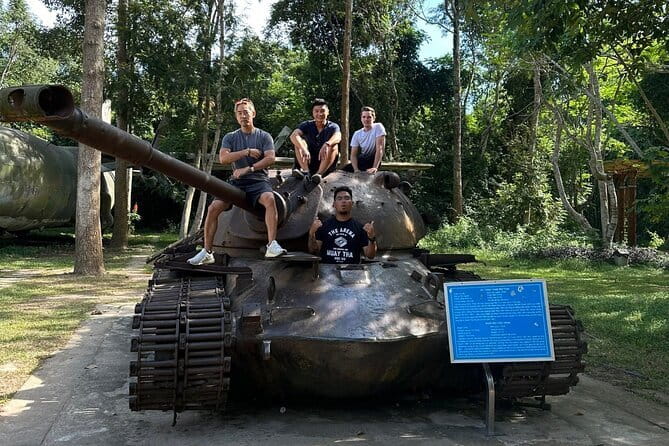
After underground sections, the tour shifts to an open-air museum. Here you’ll see aircraft, tanks, bombs, and other weapons displayed outdoors. This part is less about walking through tight spaces and more about taking in scale—machinery of war placed in a way you can look at from multiple angles.
For many people, this works well as a palate cleanser between underground crawling and memorial reflection. It’s also a useful learning stop because visual items help you understand the tunnel purpose. When you see what they were up against, the emphasis on stealth, air flow, and hidden access makes more sense.
A small practical note: open-air museum time means sun and heat exposure. The tour includes bottled water, but you’ll still want to plan for warm weather conditions if you’re going in the warmer months. Take it slow, and don’t rush photos. Looking calmly usually gives you a better sense of the objects and their context.



Ben Duoc Memorial Temple: reading names, not headlines
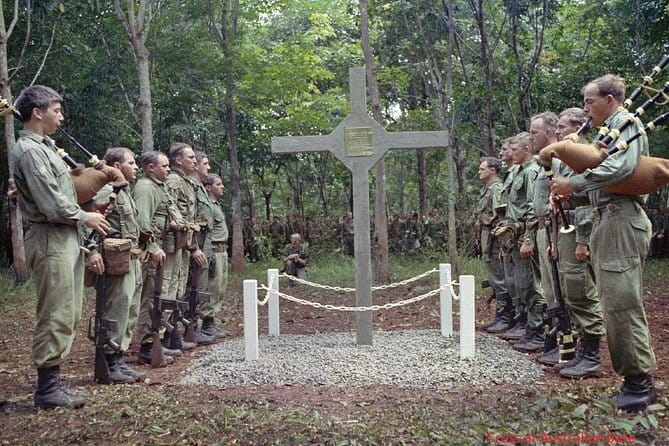
The Ben Duoc Memorial Temple is a major emotional anchor. Instead of focusing only on tactics, it honors fallen soldiers. The tour includes stone tablets engraved with the names of tens of thousands of martyrs.
This stop matters because it shifts the tone from strategy and engineering to human cost. The tunnels can be fascinating, even impressive in a technical sense. But the memorial forces you to remember why the tunnels existed and what the people behind the story endured.
If you’re bringing a teenager or you’re trying to make the history connect to real stakes, this temple is often the section that lands. It’s not a long lecture; it’s an act of remembrance you can slow down for.
Try to take time here instead of treating it like a quick photo stop. The names are the point, and you’ll feel the weight more when you don’t rush.
Reconstructed liberate-era zone: understanding daily life during the war

Another standout part is the reconstructed “liberated zone.” The tour presents wartime scenes meant to recreate day-to-day life and the environment during the conflict.
This area helps you connect the tunnel experience to what life looked like outside the tunnels—work routines, community rhythms, and the feel of a wartime setting. For many visitors, this reconstruction answers the unspoken question: what did people do when they weren’t ducking into underground rooms?
The best way to use this stop is to pay attention to details your guide points out. Reconstruction areas work best when you treat them like a conversation with the past. Ask questions if your guide invites it, because the underground world can feel abstract until you see how it fit into the broader wartime life.
Price and value: what $29 buys you (and what to add)
The listed price is $29.00 per person, and the core package is sensible for a guided day out. Included are:
- Air-conditioned vehicle
- English tour guide (described as friendly and very informative)
- Entrance fee
- Bottled water
- Hotel pickup and drop-off in the central of District 1
That’s solid value if you’re staying in central Ho Chi Minh City and you don’t want to piece together transport and tickets on your own. For a tour that includes multiple stops—tunnels, outdoor museum, memorial, and reconstructed zone—you’re not paying only for one entrance.
Two costs to remember:
- Shooting a gun is not included and is listed at 60,000 VND per bullet.
- Tips are not included.
You can skip the gun range and still get a complete tour experience. But if you’re the type who likes hands-on add-ons, treat it as optional extra spending.
Also, with a maximum of 12 travelers, you get a smaller-group experience than many bigger Ho Chi Minh tours. That matters in tight tunnel spaces where you want room to follow your guide and not constantly bump into people.
Who should book this Ben Duoc tunnel tour?
I think this tour is a great fit if you want:
- A practical, story-driven look at how tunnel life functioned
- Strong English interpretation (guides like Thang, Thanh, Khang, Minh, Mark, and James have been highlighted for that skill)
- A day that balances engineering facts, emotional memorial time, and visual exhibits
It’s also a good choice if you visited a history museum in Ho Chi Minh City first and want the lessons to become more physical. Seeing the tunnels after reading about the war makes the concepts click faster.
If you’re sensitive to tight spaces or crowded movement, take extra care. The underground sections involve narrow passageways and underground rooms, so go slowly and follow your guide’s pacing instructions.
Should you book the Ben Duoc Tunnels Tour?
Book it if you like history that’s specific and hands-on: hidden doors, ventilation logic, medical and storage spaces, and a real memorial stop that centers human loss. The combination of underground tunnels, outdoor weapon displays, Ben Duoc Memorial Temple, and the reconstructed liberate-era zone gives you multiple angles on the same story.
Don’t overthink it if you just want the highlights. The tour structure is set up so you see the major components in one outing with a small group and hotel pickup.
One final piece of advice: plan for a longer day than the words half day suggest, and carry patience for the traffic leaving the city. Then, when you reach those tight tunnels, you’ll be glad you took the time.
FAQ
How long is the Ben Duoc tunnels tour?
The duration is listed as about 7 to 8 hours.
What time does the tour start?
The tour starts at 8:00 AM.
Is hotel pickup included?
Yes. Pickup is offered from centrally located hotels in District 1. If not using pickup, the meeting point is in Quận 1 at 203 Đề Thám.
What’s included in the ticket price?
Included are an air-conditioned vehicle, an English tour guide, entrance fee, bottled water, and hotel pickup and drop-off in central District 1.
What’s not included?
A shooting gun is not included and costs 60,000 VND per bullet. Tips are also not included.
How large is the group?
The tour has a maximum of 12 travelers.
Is the ticket mobile?
Yes. The tour includes a mobile ticket.
Does the tour require good weather?
Yes. The experience requires good weather, and if it’s canceled due to poor weather you’ll be offered a different date or a full refund.
Is free cancellation available?
Yes. You can cancel for a full refund up to 24 hours in advance of the experience’s start time.
Are service animals allowed?
Yes, service animals are allowed.